
Collecting the Evidence, Part 2


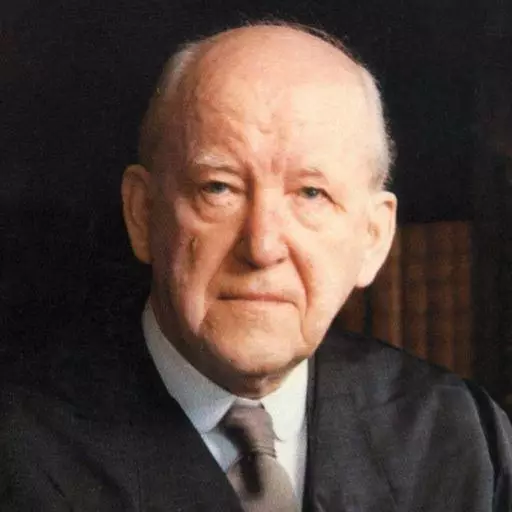
Romans 11:25-32 — In this sermon on Romans 11:25–32 titled “Collecting the Evidence (2),” Dr. Martyn Lloyd-Jones expounds on Paul’s statement concerning the deliverer that comes out of Zion. He says that Paul, like the other apostles and writers of the New Testament, is not simply retelling the prophecies and teachings of the Old Testament, but revealing new mysteries of God. This is seen in how he uses the Old Testament. According to Dr. Lloyd-Jones, when Paul talks about the deliverer out of Zion, he is not talking about physical places but the heavenly dwelling place of God. This is in accordance with the promise that God will send a savior to redeem Israel. Jesus came in faithfulness to God’s covenant with Israel to restore the people of God. Jesus not only saves individuals, but He comes to redeem the whole world and to make a new people of God that all know Him. The fulfillment of God’s promises to Israel are brought about by Christ Jesus who died on the cross in order that all who believe might be saved and freed from sin. This is the glorious message of the new covenant.
Dr. Martyn Lloyd-Jones: I'm going to read in the Epistle of Paul to the Romans in chapter 11 from verse 25 to verse 32. For I would not, brethren, that ye should be ignorant of this mystery, lest ye should be wise in your own conceits; that blindness in part is happened to Israel, until the fullness of the Gentiles be come in. And so all Israel shall be saved: as it is written, There shall come out of Sion the Deliverer, and shall turn away ungodliness from Jacob: for this is my covenant unto them, when I shall take away their sins.
As concerning the gospel, they are enemies for your sakes: but as touching the election, they are beloved for the fathers' sakes. For the gifts and calling of God are without repentance. For as ye in times past have not believed God, yet have now obtained mercy through their unbelief: even so have these also now not believed, that through your mercy they also may obtain mercy. For God hath concluded them all in unbelief, that he might have mercy upon all.
I read that in order that we may have the connection clear in our minds. You will remember that we are dealing with this great prophetic utterance of the great apostle here with regard to the future of the Jews. We've already considered most of the actual statement of the prophecy. Indeed, we have considered it all except the very last statement.
But let us remind ourselves as to what we've already discovered. Let me explain my method. I have deemed it wisest first of all to deal with the actual statements, and then I am proposing, when we've gone through the actual statements, to look at the statement as a whole and to consider objections to what I am putting before you as an exposition.
Some of you are finding it a little bit of a trial to your patience to wait. You want to settle the thing finally before we've finished with the exposition. I must just ask you to be patient. Indeed, I'm hopeful that as we go on working out the actual phrases this evening, some of your questions will be answered and some of your difficulties will be resolved. It seems to me to be wrong to argue about the main matter until we've got all the evidence before us. Obviously, as I go along and am interpreting the phrases, I'm giving clear indications as to the view I am taking and I do try to deal with the particular objections with each phrase as we go along.
Still, I'm going to reserve the whole argument until we've collected the whole of the evidence. I think you'll find tonight that in dealing with some of the things we're going to deal with, it will be casting very interesting light upon what I've already suggested to you. I think you'll find confirmation tonight for what we were putting before you last Friday night. Well, that's just a question of method, but I know that many of you are really not only interested in this but very concerned about it, and rightly so. I think nothing is more encouraging for a man like myself than to know that you are really concerned about getting an understanding of this great and wonderful statement which the apostle makes at this point.
The prophecy is to this effect. The apostle says blindness for the time being has fallen upon Israel and it will continue until the fullness of the Gentiles has come in. Then, and indeed even so as the result of the coming in of the fullness of the Gentiles, that in itself is going to be used by God to bring in the bulk of the nation of Israel. That's the position at which we have arrived. I'm interpreting the "so" as including "then". It's not only the method but also the time. It shows how God is going to bring in the Gentiles by bringing in the Jews by provoking them to jealousy, as he's already told us earlier in the chapter at the sight of what has happened to the Gentiles.
The one phrase we've got left in connection with the prophecy itself is just this: "so all Israel shall be saved." We haven't dealt with that. We've given our exposition of what is meant by "all Israel," but what we are told about all Israel is that they shall be saved. This is most important. I don't want to work it out in all its fullness tonight; I'm reserving that also until we have completed the exposition as such of the entire passage.
But I've got to emphasize it at this point, that what he's concerned about is salvation. He doesn't say anything here about the future of the Jewish race or nation from any kind of governmental point of view, nor even in terms of the land of Palestine. That isn't what he's talking about. He's talking about salvation, their salvation. And they are to be saved in exactly the same way as everybody else. The comparison is that as the Gentiles have been saved, they will be saved. There is no special salvation for the Jew.
You know there is a teaching which says that quite definitely and explicitly. There are even those who say that the Jews in the future are going to be saved by keeping the law, which is to me the most monstrous thing that anybody can ever say. There is only one way of salvation in the whole Bible. It is always by faith. It is always by faith in Jesus Christ and him crucified. There is, there never has been, there never will be, there cannot be any other kind or type of salvation.
The salvation that they're going to experience is precisely the same salvation as that which was being experienced then by the Gentiles. That, of course, is the point of the whole chapter. That's the thing that the apostle is dealing with. He's referring to Christian salvation because, as I say, it is the only salvation and it is always through believing in the Lord Jesus Christ.
Now, you may remember that last Friday night we read together the third chapter of Paul's second Epistle to the Corinthians, and there the same kind of thing is stated. He says even unto this day, when Moses is read, the veil is upon their heart. Nevertheless when it, Israel, shall turn to the Lord, the Lord Jesus Christ, the veil shall be taken away. That's the thing. It's exactly the same idea as we are dealing with here in this eleventh chapter of the Epistle to the Romans.
Or indeed, if you like, it's exactly the same thing as the apostle has already said in chapter 10 in verse 13: "whosoever shall call upon the name of the Lord shall be saved." That's it. That's the teaching. Remember the context of that is the 12th verse: "there is no difference between the Jew and the Greek: for the same Lord over all is rich unto all that call upon him." There is no difference. This thing we really must get quite clearly in our minds.
The prophecy therefore is to this effect: that at some future time, when the fullness of the Gentiles shall have come in, this great movement, as it were, will take place amongst the Jews. The fullness of the Jews will come in, as he's told us in verse 12, and they will come into the church. They will come into the kingdom of God, and they will come in in exactly the same way as every one of us has come in, namely by repentance toward God and faith in the Lord Jesus Christ. That's the prophecy. That is this mystery that has been revealed to him and which he in turn is now revealing and making known unto them because he is the apostle to the Gentiles and magnifies his office and is anxious that they shouldn't remain in ignorance, nor that they should be wise in their own conceits.
That completes then the statement of the prophecy. Now the apostle goes on and again does something which is so characteristic of him. He wants now to confirm and to support this prophetic utterance of his by means of quotations from the Old Testament. We've now got to look at that. But again I want to emphasize this point. What is happening here is not simply that the apostle is interpreting Old Testament prophecies. He isn't doing that. He is giving a new prophecy.
He is uttering something that has been revealed unto him in exactly the same way as the truth was revealed to the prophets under the old dispensation. So he's not now going to say to us that after all he's only giving an interpretation of Old Testament prophecy. It is a new prophecy, but he says that in a very general way this same thing is taught in the Old Testament.
The very form in which he handles these quotations that we're going to look at proves the point I've just been making to you, because we shall see that this is not an exact or a particular quotation from the Old Testament. What the apostle gives us here is the general sense of a number of Old Testament statements. This is important. Those of you who have been reading this chapter and are familiar with it, and if you've taken the trouble to turn up his quotations, he's quoting from passages in the Old Testament, you may very well have been puzzled at the way in which he does this.
You will find, as I'm going to show you, that he doesn't give exact quotations. Now, we've come across this point before, but as people do tend to be stumbled by it, I must turn aside for just a second to remind you of this all-important point. You will often find that the apostle's quotations from the Old Testament are not word-perfect; they're not exact. Why is that? Is he casting any doubt upon the verbal inspiration of the Old Testament? The answer is of course that he's not.
What is happening is this. Here is an apostle, himself under the same inspiration of the Holy Spirit as were the Old Testament prophets. It isn't that the apostle was slack or negligent and trusted to his memory instead of turning up the scriptures in order to get his exact quotation. It isn't that; that's impossible. It's unthinkable, especially with a man like this who had been trained as a Pharisee. The Pharisees were so meticulous in this respect.
What is happening is that the same Spirit who gave the message to the Old Testament prophets is now giving this message to this New Testament apostle, who is also a prophet. And so the Spirit who gave the original words sometimes varies the exact expression. Why? Well, in order to show the particular application of the message at this point.
This is a most important principle with regard to the whole of prophecy. You remember that in the Old Testament prophecies, there are generally two meanings. There was an immediate application to the situation of Israel at that time. But then, so often there is this further remote application, pointing forward to this very time with which we are dealing here after the advent of our Lord.
So you've always got those two. And thus it comes to pass that when the apostle is showing that a fulfillment has taken place of a particular prophecy, the words will be varied just a little in order to show the present immediate application. In other words, far from casting any doubt at all upon the divine inspiration of the scriptures and the inerrancy of the scriptures, this does the exact opposite.
No man would ever dare to vary words and expressions like this as the apostle does, least of all the great apostle as I say, an ex-Pharisee. No, he is just showing here that he is under the immediate, direct inspiration of the Holy Spirit. That is why of course the apostle Peter, recognizing that in his second Epistle and in the third chapter, refers to the writings of this apostle as a scripture. He compares it to the other scriptures.
This is a very wonderful thing. It helps us to see the uniqueness of the calling of an apostle, how he does correspond in this way to the prophets of the Old Testament. The apostles were men to whom the Lord revealed the truth in exactly the same way as he did to the Old Testament prophets. So here is the great apostle writing under divine inspiration and giving this wonderful truth to us.
Now then, we come to the actual quotation. He says, "so all Israel shall be saved: as it is written, There shall come out of Sion the Deliverer, and shall turn away ungodliness from Jacob: For this is my covenant unto them, when I shall take away their sins." That's the end of the quotation. Here I say, you can't go to the Old Testament and find just that. What the apostle has done is this: he's taken phrases out of a number of Old Testament statements. These are the statements: Isaiah 59 verses 20 and 21, Isaiah 27 verse 9, Jeremiah 31 verses 31 to 34, Psalm 14 verse 7.
Isaiah 59:20-21, Isaiah 27:9, Jeremiah 31:31-34, and Psalm 14:7. He seems to have looked at all these statements together and he's extracted out of them the statement which he makes here. He's giving us the general sense and drift of those particular statements. That's what he's doing. Now, I'm putting this before you because as I say, if you don't realize what he is doing, you might very well get into trouble as to the behavior of the apostle and as I've been indicating with regard to the whole question of the nature and the character of the scriptures.
Paul handles these statements in this new way to give us this particular statement. Now let me show you what I mean. If you turn up Isaiah 59:20, you will find that it reads like this: "The Redeemer," listen to every word, "the Redeemer shall come to Zion, and unto them that turn from transgression in Jacob." That's how Isaiah 59:20 reads. "The Redeemer shall come to Zion, and unto them that turn from transgression in Jacob."
Now, you notice at once that that isn't what the apostle says here. He says, "there shall come out of Sion the Deliverer, and shall turn away," the Deliverer shall turn away ungodliness from Jacob. Now, how do you explain this? What's the apostle doing? Well, there is no question at all, it seems to me, that the apostle here, as was generally his custom, was using that translation of the Hebrew scriptures into the Greek which is known as the Septuagint. It was translated by 70 men and was done mainly for the sake of Jews in Egypt who no longer were familiar with their Hebrew, and indeed proselytes. It was felt that the Old Testament scriptures should be translated into Greek, and these 70 translated them into Greek.
In the New Testament generally, and by this apostle in particular, you will find that most of these quotations are taken from that particular translation. But watch even this. If you turn up this Septuagint translation, you will find that in the Greek of the Septuagint, it is "for the sake of Zion." The Deliverer will come for the sake of Zion. But then those people who translated the Greek Septuagint into English, they translated it "to Zion." "The Redeemer shall come to Zion."
Well now then, why does the apostle say therefore "out of Zion"? Now here it seems, and I'm very ready to accept what the authorities seem to be agreed about at this point, the apostle had in his mind that seventh verse of the 14th Psalm. That's why I read that to you at the beginning. There you remember it is put in this form: "Oh that the salvation of Israel were come out of Zion! When the Lord bringeth back the captivity of his people, Jacob shall rejoice, and Israel shall be glad."
The great apostle's mind was filled with these Old Testament scriptures. What he's concerned about is this general idea. Now, the end of the verse, this verse that we're looking at which says this: "and shall turn away ungodliness from Jacob." The end of this verse in the Hebrew original and as the English translators have rendered it is this: "to such as turn from transgression in Jacob."
But you see Paul seems to say the exact opposite. He doesn't say that they are going to turn from transgression, that they in Jacob are going to turn from transgression. He says that the Deliverer shall turn them away from transgression or ungodliness. How does he come to do this? Well, here again he follows this Septuagint translation which is "and shall turn iniquity or transgression from Jacob." He's there definitely following that particular translation.
And again this does correspond to what you read in Isaiah 27 and verse 9, which is "the iniquity of Jacob shall be purged, or the iniquity of Jacob shall be taken away, or he shall take away his sin." That is the translation of that in the Septuagint, and there it does agree with the Hebrew. Now this is purely a question of mechanics, but to me it's of tremendous importance because the apostle under this divine inspiration changes it in this way.
Let me show you. "The Deliverer," that's all right, that's clear, that is the Messiah. One is going to come who is going to do this for them. That's what he's saying. Well now, take this "out of Zion" which we have before us. As I've just been showing you, the Hebrew and the Septuagint have there between them "to" or "for". But the apostle here changes it to "out of". In other words, he changes this around and makes it say that the Deliverer shall come out of Zion rather than to Zion or for Zion.
Now, we mustn't make too much of this, but nevertheless it is a very vital and significant point that the great apostle with his knowledge of the scriptures deliberately chooses to put it in terms of the Psalm 14:7 rather than that which you find in these other places. And it seems to me that we've got to face this action of the apostle and we've got to try to interpret it. What does it mean? What is this coming of the Redeemer out of Zion?
Well, there are those who say that this is a reference to the first advent of our Lord, that those prophecies in the Old Testament are a reference to the first coming of our Lord, that the Savior came out from among the Jews, and that indeed the whole passage we are dealing with is simply an account of the consequences of the first advent and that the apostle is just here dealing with the conversions that take place in Jews and Gentiles as the result of the coming of our Lord.
But I must reject this interpretation for two main reasons. This cannot be the true explanation for two reasons. He did not come out of Zion. You never have him described in that way as coming out of Zion. Out of Galilee, yes. Out of Egypt, out of Bethlehem, but never out of Zion. I'd have thought that that's sufficient in and of itself.
But then in addition to that, the first advent of our Lord didn't do this thing about which the apostle is speaking. He says that when the Deliverer comes out of Zion, he shall turn away ungodliness from Jacob. Well, if there was one thing that our Lord's coming into this world did not do, it was just that. Far from turning away ungodliness from Jacob, he emphasized and exaggerated the ungodliness of Jacob. They refused him, they rejected him. He didn't turn away their ungodliness.
He brought it to a head, as you find for instance at the end of the 23rd chapter of the Gospel according to St. Matthew, when he says that upon this generation shall come all that has been piling up from the day that Zacharias was murdered between the altars, you remember. That's the teaching of the New Testament, that our Lord's first advent did in no sense turn ungodliness from Jacob.
The whole point indeed of this chapter that we're dealing with is to show that the effect of our Lord's coming into this world was, in a sense, to aggravate the unbelief and the unrighteousness of Jacob, leading to its being cast away, torn out of the olive tree temporarily if you like. That's the whole statement, not only of this chapter but of the whole of the New Testament. So this cannot possibly be a reference to the first coming of our Lord, and that is why I entirely disagree with those who find a parallel in this statement to the statement made by James in the Council of Jerusalem as recorded in the 15th chapter of the book of the Acts of the Apostles. That does not refer to this at all; that is an explanation of why the Gentiles were coming into the Christian church.
But there are those who say that this is a reference to the second advent of our Lord. "The Redeemer shall come out of Zion." They say this is the second coming. Well, again I must reject this for this reason: that all the references to the second coming in the New Testament put it in terms of his coming out of heaven, not out of Zion, not out of the literal Zion, the earthly Jerusalem.
And in any case, the teaching of the New Testament is that when he does come again, he will come for judgment, not to turn iniquity from Jacob. He will come for final judgment. However, we'll deal with this in greater detail I trust later on. I'm just noting it at this point. Well then you may ask, what is your interpretation of this statement that the Redeemer shall come out of Zion?
Well, it seems to me that we are driven back to some such exposition as this, and it seems to suit the whole context admirably, and it's something that the apostle does elsewhere. When he talks about Zion here, he's speaking in a spiritual sense. Zion is the home, the dwelling place of the Lord. It is where he is amongst his people.
Now, you noticed that we read at the beginning that fourth chapter of the Epistle to the Galatians, and I did that in order to show you how the apostle does much the same thing there as he does here. He says this Agar is Mount Sinai in Arabia and answereth to Jerusalem which now is, and is in bondage with her children. But Jerusalem which is above is free, which is the mother of us all. He says there are two Jerusalems, and Zion of course and Jerusalem are interchangeable terms. The Bible speaks about Zion, it speaks about Jerusalem. It's the same thing.
So as the apostle in Galatians 4 speaks about an earthly Zion or Jerusalem and a heavenly Jerusalem and Zion, or a Zion and Jerusalem which is above, he shows that he sometimes speaks of Zion in a spiritual sense. And I wouldn't hesitate therefore to say that here in Romans 11 what he is saying is that the Redeemer will come from that Jerusalem, that Zion which is above. This is the church, the headquarters of the church, if you like. It's there.
Our citizenship is in heaven, and as the author of the Epistle to the Hebrews puts it, we come to the heavenly Jerusalem. When we gather together, we come to the heavenly Jerusalem. This idea is characteristic of the New Testament outlook, you see. Or again in the book of Revelation, that Jerusalem that's going to descend from heaven to earth. In other words, that's where Zion is now. Zion is in heaven, it's the one that's above. Paul says, you Galatians, you know, you're thinking of the material earthly Zion far too much. The Zion is now there. Well, you've got the same thing here.
So this is no forcing of exposition; it's just to follow what is done elsewhere in the New Testament. The Zion out of which he will come is indeed heaven itself. His influence will come from there. I'm not saying that this is the second coming; I'm simply saying that the apostle is saying here that in this spiritual manner, the Redeemer will exert this tremendous influence upon the race, the nation of the Jews, and will turn iniquity from them and will bring them to faith and salvation and bring them into membership of the Christian church.
Now then, there it seems to me is the explanation of this statement. And of course you can see now why the apostle changed from "to Zion" into "out of Zion". He's anxious to show what he now goes on to put plainly in this expression: "shall turn away ungodliness from." You remember how I pointed out to you that if he'd taken the exact quotation, he would have said that he will come for those who have turned from ungodliness.
But he isn't saying that because he knows that that isn't what's going to happen. What is going to happen is that the Lord will turn Jacob from his transgression. Now, here again we see this principle that we've already met in this exposition. It is his power that's going to do this. It isn't going to be the case that the Jews at a given point are going to decide to believe the gospel. They can't do that; nobody can ever do that. This is always the action of the Lord.
You remember that in interpreting blindness in part as happened to Israel, I emphasized the fact that it is God who does that to them. It is the God who hardened Pharaoh's heart of old is the same God who has hardened the heart of these unbelieving Jews. It is a judicial hardening, a judicial blindness. It is God's action. And what he is saying here is this: that the same God who is hardening them now is going to soften them. It is he who is going to turn them from iniquity, turn away ungodliness from Jacob.
In other words, he's putting in other language what he has already said in verse 23: "And they also, if they abide not still in unbelief, shall be graffed in: for God is able to graff them in again." And that's how he will graff them in again. He will turn ungodliness away from them, and then he will graff them in again. They will come in by faith.
But you see, this is this tremendous action that the apostle has kept on speaking about. This is going to be the greatest phenomenon of all the centuries of the Christian church. This is the thing that will produce an effect which can only be compared to, as he says in verse 15, life from the dead. That this race, this nation that throughout the centuries has rejected the Messiah and has still been waiting for the coming of the Messiah, these people who have been so bitter in their persecution of Christians, whether amongst themselves or Gentile Christians throughout all these long centuries, this will be the phenomenon: that we shall find them repenting, turning back to him whom they smote and rejected and crucified, and as little children, and as all the Gentiles have done, believing in him.
God will have turned away their iniquity and unrighteousness, he will open their eyes, they will see it, they'll believe it. What he has done to individual Jews throughout the centuries, what he's done to masses of Gentiles, he is going to do for them as a block, as a body. And this will be so astounding that it'll be nothing comparable to nothing but as it were life from among the dead, and the whole church will be amazed at it and will be filled with a spirit of rejoicing and of praise. Now, that's what these quotations as handled by the apostle are saying, that God is going to do this glorious and tremendous and wonderful thing.
Very well, then we come to this further statement in verse 27 which is again difficult: "For this is my covenant unto them, when I shall take away their sins." Where do you find that in the Old Testament? And the answer is you can't. But what you do find is this: you will find the first part of it in Isaiah 59:21. In other words, he'd already been thinking of Isaiah 59:20; he now thinks of Isaiah 59:21.
But he just takes a phrase out of it, the first part of it. And that's the first part we've got here. But you don't find the second part of this statement in Isaiah 59:21, but you do find it in Isaiah 27:9. You find it in both the Hebrew, the original, the sense of the original Hebrew, and in the Septuagint translation. So again you see he's taken two bits from different parts of Isaiah, he's put them together, and he's got this one statement.
Again, he's doing two things. He is giving the general sense and meaning of the Old Testament on this great question, and he is stating this prophecy of his which has been given to him by the direct inspiration of the Spirit. Now then, how do we understand this? Well, these are the bits: "This is my covenant," "that I will take away their sins." That's what it really is saying. "This is my covenant with them, that I will take away their sins." Or here's another way of putting it, this is a more literal translation: "This is the covenant from me with them when I take away the sins of them." Now that's a literal translation of the Greek.
What's it mean? Well, the best way I can help you I think is to give you the translation of Sandy and Headlam at this point, which I think really does convey the meaning. They translate it like this: "And whensoever I forgive their sins, then shall my side of the covenant I have made with them be fulfilled." In other words, he's saying this: I've got a covenant with these people. And when I do turn away iniquity from them and forgive their sins, my covenant with them will be fulfilled. That's what it really means. "This is my covenant to them, when I shall take away their sin." In other words, when I take away their sins from them, what I will be doing will be to fulfill my covenant with them.
I will show then that I am fulfilling my covenant, I will have fulfilled all that I have promised to them. Whensoever I forgive their sins, then shall my side of the covenant I have made with them be fulfilled. But that statement you see consists of those two parts which I've already indicated to you. So what he's saying you see is this, and this is where we see the correspondence between the Old Testament and the New.
In the Old Testament, we find God casting away his people as it were. Wasn't it God who raised up the Chaldeans against the Jews? Wasn't it God who brought them to attack the city of Jerusalem and destroy it and raze it to the ground and cause his people to be carried away to the captivity of Babylon? It was God who did that to them; God was there as it were casting away his people.
And many of the nations thought, jumped to the conclusion, that they were finished as a race and as a people. Their land was desolate; there they were in the captivity. They'd got no army, they'd got nothing at all. But you see, what happened was this: God hadn't finished with them. They were still God's people. So God in his own miraculous manner brought them back to Palestine and to the very city of Jerusalem which was rebuilt.
God did that in the Old Testament. He promised he would; he promised it, the prophets were prophesying that even before the destruction of Jerusalem. Jeremiah in particular was given to see that clearly; you remember in that incident of buying that plot of ground. Isaiah has got it equally clearly. Now then, what the apostle is saying, as God did that with these people, his own people, his covenant people in the Old Testament, he's going to do that again.
He has as it were for the time being again sent them off to a kind of captivity of Babylon. He's broken them out of the olive tree, he has cast them aside. But it isn't permanent. Don't jump to that conclusion. He's again going to do in this matter of salvation and the church exactly what he did with them under the old dispensation. His covenant with them still remains. It is still in force.
And it will be fulfilled when he does this great thing to them, when he turns away their iniquity, when he gives them the spirit of grace and of repentance, when he forgives their sins, when he gives them the gift of faith, and so brings them to salvation and entry into the Christian church, or if you like, when he grafts them back again into their own olive tree. That's what the apostle is saying. That's the prophecy, and here he's showing how in this general way the Old Testament prophecies have anticipated this.
But that is the thing that he's anxious to impress upon them, that this is the glorious thing that is going to happen to this people to whom God has pledged himself in his covenant. Now, you know that you get statements similar to this in the Old Testament. You've got for instance in Zechariah 12 and in verse 10: "And I will pour upon the house of David and upon the inhabitants of Jerusalem the spirit of grace and of supplications: and they shall look upon me whom they have pierced and they shall mourn for him as one mourneth for his only son and shall be in bitterness for him as one that is in bitterness for his firstborn."
Very well, I see that my time has gone. And perhaps it was right that we should have spent our evening in this way, getting this particular statement clear in our minds. Now let's see where we've got to. We have got to the point in which he is saying that the future restoration of Israel as a nation is certain. He puts it in the form of this prophecy, which is an announcement of a great mystery in the ultimate plan and purpose of God, something entirely outside the realm of human understanding, something no one would ever have thought of. Now there's no difficulty about seeing how individual Jews can be converted because we see that they are; they were at the beginning as he's told us, and this has continued.
But this other thing, who would ever have thought of this? Nobody has; indeed it's got to be revealed to us. And it has been revealed to us in this way through this prophetic utterance of the great apostle. And then as is his custom, he confirms it by saying this is actually been taught, it has been taught in the Old Testament. There is this hint that has been thrown out. I am telling it you now explicitly.
The same thing as we find in Ephesians 3. There were hints in the Old Testament about the coming in of the Gentiles, but it was peculiarly, specially, clearly revealed to the apostles and prophets as it had not been so clearly revealed before. It's exactly the same with this. So the apostle you see brings these bits of quotations together. He says in effect, "that is what the Old Testament says about this." It's an absolute confirmation of what I have uttered to you as the prophecy given to me of the Lord.
Very well, that brings us to the end of the prophecy. Now then, next week, God willing, we shall look at the section verse 28 to 32. What have we got there? Now then, there we're going to come to Paul's comment on all this. And at the same time we shall find that he is summing up the argument of the whole chapter. And he will make still more plain and clear what he means by "all Israel," the thing that is causing people some difficulty.
But I trust we've got this clear now. He's made his statement, he's uttered his word as a prophet, he's made his announcement, supports it from the Old Testament, and then he comes to his own comment, exposition, explanation, to make it easier for us to understand what he's saying. And as I say, God willing, we'll go on to consider that next Friday evening.
Oh Lord our God, we do again thank thee for thy patience with us, and above all we thank thee that thou hast so honored us as to give us an insight into these things. Oh Lord, we do indeed see that thy ways are past finding out. We realize that thou hast raised us to the realm where thou dwellest in thy glory and where all human ability is nothing. Oh God, we come to thank thee that thou hast ever revealed these things unto us thy people. Thou art treating us as thy children, thou art giving us proof that thou art our father, thou art telling us something of the secrets of thy grand and eternal purpose. Oh God, as thy children, we humbly thank thee together and worship and adore thee. Grant us thy blessing, we pray thee now as we part from one another. And oh God, so deal with us that we shall be able in turn to help others to come into the knowledge of the truth and to rejoice in it. Hear us, oh Lord. And now may the grace of our Lord and Savior Jesus Christ and the love of God and the fellowship and the communion of the Holy Spirit abide and continue with us now and evermore. Amen.
Featured Offer

Find peace and comfort this season with your complimentary guide that includes access to 6 free bonus sermons on overcoming spiritual depression from Dr. Martyn Lloyd-Jones, one of the church’s most beloved Bible teachers. Topics include: true Christians can and do struggle with depression, recovering the joy of your salvation, dealing with crippling guilt over past sins, dealing with yesterday’s haunting regrets, encouragement to keep moving forward, and understanding God’s purpose for suffering.
Past Episodes
This ministry does not have any series.
Featured Offer
Find peace and comfort this season with your complimentary guide that includes access to 6 free bonus sermons on overcoming spiritual depression from Dr. Martyn Lloyd-Jones, one of the church’s most beloved Bible teachers. Topics include: true Christians can and do struggle with depression, recovering the joy of your salvation, dealing with crippling guilt over past sins, dealing with yesterday’s haunting regrets, encouragement to keep moving forward, and understanding God’s purpose for suffering.
About From the MLJ Archive
From the MLJ Archive is the Oneplace.com hosted ministry of the MLJ Trust. Our mission is to promulgate the audio ministry of Dr. Martyn Lloyd-Jones.
About Dr. Martyn Lloyd-Jones
Contact From the MLJ Archive with Dr. Martyn Lloyd-Jones
info@mljtrust.org
http://www.mljtrust.org/
PO Box 953
Middleburg, VA 20118