
Church and the State, Part 6


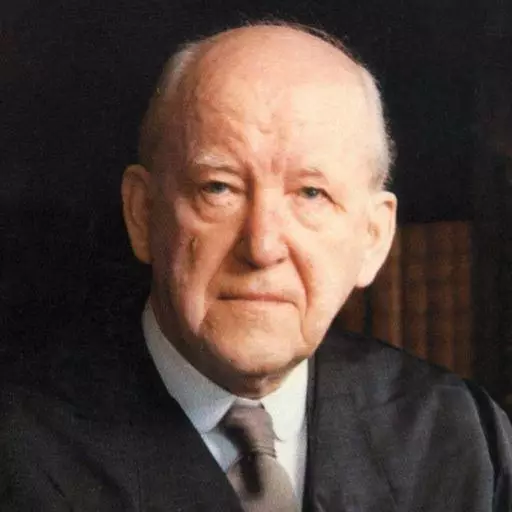
Dr. Martyn Lloyd-Jones: As most of you will realize, we are still dealing with the first seven verses in the 13th chapter of Paul's Epistle to the Romans, the great passage which starts with the words, "Let every soul be subject unto the higher powers, for there is no power but of God. The powers that be are ordained of God. Whosoever therefore resisteth the power, resisteth the ordinance of God. And they that resist shall receive to themselves damnation or judgment." And then the apostle in the remaining five verses of this little section goes on to elaborate that proposition.
I call it a little section, that's simply because it's seven verses, but actually, of course, as we've been seeing, it is a very great section, and a particularly important one at the present time. Because here the apostle in a more extended manner than perhaps anywhere else in all his writings, deals with the problem of the relationship of the Christian men to the state in which he lives, the country to which he belongs, and the government under which he has his life and being. And we are considering this.
Now, having dealt with it from the personal standpoint, we've now reached the stage at which we are looking at it from the standpoint of the relationship of the church to the state, not the individual Christian, so much as the gathering of Christians, those who constitute the church. And we've looked at it like this. We've taken it historically. We've seen that it has played such a prominent part in the whole history of Christianity, that it deserved our historical review.
Then we've looked at our historical view in the light of the teaching of the Scriptures and have drawn certain conclusions or deductions. I would sum it up by saying this: the clearer the lesson we should all have learned is this: the danger of traditionalism. Not tradition, but traditionalism. The trouble is, we tend to abuse traditions and harden them. We turn them into laws, and good traditions often become legalisms. And that is what has happened so clearly with respect to this particular matter.
So we must beware of the danger of traditionalism, of closed minds, fighting for an established position, being unprepared to consider any criticism of it, or any alternative to it. If you like, we can sum it up by saying, the lesson of history with regard to this subject is to emphasize the terrible and often the tragic danger of bigotry. The bigot is an impossible person always. He denies the faith which he claims to believe because of his traditionalism and his blindness and his refusal to open his mind. God preserve us all from from bigotry or becoming bigots.
Very well, we've seen all that. Now then, we said the real question is this: it comes back to this in the end always, what is our view of the state and its function? And I raised this question last Friday night: has the state anything beyond a negative function? By which I mean what we are told here where the function of the state is put in negative terms. That it is to punish evil doers and to reward them that do well as Peter puts it also in one Peter 2 in verse 13 and so on.
Has it any function beyond that? Is it merely only to keep sin and its evil manifestations within bounds? Or as the apostle puts it, you remember, in the first epistle to Timothy, in the second chapter, where he exhorts him and others to pray for all who are in authority, for kings and so on, that we may lead a quiet and peaceable life in all godliness and honesty. That's why he says, we should pray for kings and for all who are in authority.
But now, the moment you say that, you are face to face with a teaching that says, yes, but what of the Lordship of Christ? Doesn't the Scripture teach that he is the Lord over the whole of life? Didn't he say himself after the resurrection and before his ascension, "All power is given unto me in heaven and in earth"? Doesn't this teach that there is a Lordship of Christ over the whole world? Not merely, his Lordship isn't confined only to the members of the church.
They say, what of that statement of his there at the end of Matthew 28? And what of the statement which Paul makes at the end of the first chapter of the Epistle to the Ephesians where he says that God had put all things under the feet of Christ and gave him to be the head over all things to the church, which is his body, the fullness of him that fill all in all, having said that he has set him at his own right hand in the heavenly places far above all principality and power and might and dominion and every name that is named not only in this world, but also in that which is to come.
Now, what do we say about all that? Now, in order to concentrate our thinking on this, let me read to you a statement, a comparatively new, modern statement of this whole position that would emphasize in that way the Lordship of the Lord Jesus Christ over the whole of life, not only over the church, but also over the unregenerate world as well. It puts it like this.
"The Apostle Paul teaches us that God the Father has committed all power and authority upon earth to his Son, through whom he now rules all things." 1 Corinthians 15, verse 24 and following. He goes on, "The risen and ascended Christ has been entrusted by God the Father with the great task of transforming not only individual lives, but all cultural, legal, political, scientific, and economic life."
Now you notice what he says: "The Lord has been entrusted by God the Father with the great task of transforming not only individual lives, but all cultural, legal, political, scientific, and economic life. As the Lord of history and of time and space, Jesus Christ can be satisfied with nothing less than a Christian organization of human society as a whole. And it therefore becomes the bounded duty and privilege and glorious task of all Christians to struggle for a condition of modern society which will give the maximum opportunity for other people, as well as for themselves, to live a full, free, more abundant human life, and to make sure that Christians are never controlled by an apostate and rebellious world, but that they control that world in the strength and power of Almighty God."
Now there, I think, is as good a statement as you can get of this point of view which stresses a positive function of the state as the instrument of God. The apostle tells us here, as we've seen, that the powers that be are ordained of God. That it's God's ordinance that they should function. And so it is argued that that is a part of the function. And there are others who, as I was reminding you last Friday, even talk about winning the whole world and all culture for Christ, or of Christianizing society and culture and so on.
Well now, we've already started replying to this position. And the first proposition I laid down was that we must never talk about Christianizing anything. You can't Christianize anything. People can become Christians as the result of the preaching of the church, and if you like, they can become more and more Christian. That's the only legitimate use of the term Christianizing. But you cannot talk about Christianizing either an individual or a community which is not Christian. It is a contradiction in terms and a denial of so much plain teaching in the Scripture.
The natural mind is enmity against God, is not subject to the law of God, neither indeed can be. That's not only for the individual, it's for society, it's for the whole world that is not Christian. The second point I suggested was that we must never speak of our Lord's kingdom as coming gradually, except in one sense only, and that one sense is in the church. The work of salvation is a gradual one. From age to age, generation to generation, people are being won from the world and transferred and translated into the kingdom of God's dear Son.
In that sense, the kingdom is coming and growing gradually, but in no other sense. I gave you Scriptures such as the passage out of Luke 17, which showed quite clearly that the kingdom of God cometh not with observation, and that the whole tenor of New Testament teaching is that this is going to happen suddenly, in a great crisis, indeed, in the second coming of our Lord. So that you cannot transform the world and society gradually. That's the teaching of the Scripture, and I ended by saying that surely, history confirms this.
That what you find is that in periods of revival, and especially the periods that follow revival, there has been a general influence upon the whole of society, but it's never lasted. It's always been temporary. And as the spirituality of the church and so on fails and wanes, so its influence in the world wanes correspondingly. And I gave instances of this, the restoration period and so on, and I suggested that we are living in such a period now. That we see society going down, going back because of the godlessness that has become more evident, and because of the decreasing power of the Christian church and her proclamation of the message.
So that we've arrived at that point, which I would summarize like this: that the New Testament teaches very plainly, and indeed this is in a sense still more patent in the old, that there is always a tension between the two kingdoms, the kingdom of God and the kingdoms of this world, dominated by the God of this world who is the devil. So the world as such will never become Christian in any sense.
Now this is the important point, it seems to me. We must never talk about society outside Christ becoming Christian in any sense. It cannot. It is only the one who has become a Christian who can act as a Christian. It is heresy surely to teach anything else. And so we are told so plainly that our Lord, far from transforming society now, is waiting until his enemies shall be made his footstool. He is waiting. This is something to which we look forward.
It is nothing, I say, but the second coming of our Lord, to judge the world and to set up his eternal kingdom that will make his kingdom visible on earth and functioning from shore to shore as the hymn has just put it, which we've been singing together, "Jesus shall reign wherever the sun doth his successive journeys run." Materially, culturally, and in every other respect, the earth shall be full of the knowledge of the Lord as the waters cover the sea. But that is something which is yet to come.
Now this is a contrast that runs, of course, for the whole of Scripture. We've already had it in the eighth chapter, where the apostle put it for us, "I reckon that the sufferings of this present time are not worthy to be compared with the glory which shall be revealed in us." He goes on to say that the earnest expectation of the creature waiteth for the manifestation of the sons of God. This is something which lies in the future, and which will follow the coming of our Lord at the great second coming.
Very well. Now there we've got to keep this clear in our minds. That is the essential teaching of the Scripture with regard to the relationship of the unsaved world to the Lord Jesus Christ. In other words, the state and all who belong only to the kingdoms of this world. But now then, we now are in a position to ask, what then are the implications of this teaching? Does this mean that as Christians, we therefore have nothing to do with the world? Well, it's politics, its culture, and all these other things that have been mentioned.
Does it mean then that we have no interest in that? We're not concerned about it at all? That as we now have been translated into God's kingdom, we have no interest in, no concern about the kingdoms of this world to which we belong? Or if you like it, in a more particular manner, is the Christian to take any interest in various Christians like Sabbath observance? The various moral issues that are crowding life at the present time? The whole question of education? The whole question of culture and so on?
Well now, this is, of course, a most important matter. We must get these things plain and clear. We start with laying down the general teaching of the Scripture. But we must be very careful that we don't limit it. Now, I've felt that there were two lines in our first hymn that put this very well. The third verse of that hymn by Isaac Watts: "The whole creation is thy charge, but saints are thy peculiar care."
You see, there's the difference, if you like, between common grace and special grace. "The whole creation is thy charge, but saints are thy peculiar care." There is this special grace which only his own people know and experience. But that isn't the only grace. There is this common grace, this more general grace, which is equally true. And this is the thing, I say, which we must never forget: that though we are Christians, we have no right to cease to be concerned about or interested in men and women who are not Christians, and the world that is not Christian in which we find ourselves living.
Very well then, that leaves us with this question: how are we to interpret this relationship? You see, it is a part of our whole relationship to the state and its activity. I suggest, therefore, that we put it like this: that while we are to be concerned, it is vitally important that we should always maintain and preserve the distinction between what the church does as church and what individual members of the church do as Christian people living in society.
Now, this, I think, is the first great principle we've got to get quite clear. In our thinking, we must draw this sharp line between what the church does qua church and what the individual Christian does as a Christian living in society with other people. If we don't maintain this distinction, we shall be reintroducing the old muddle, which, as I've shown you historically, has characterized the life of so many of the centuries.
They muddled it, you remember, by talking about the unity of the church and the state. Whether they did it in the Roman Catholic way, or the Erastian way, from this standpoint doesn't matter at all. There was a confusion between these realms. We must hold to the distinction that we have established between the sphere and the realm of the church, and the sphere and the realm of the state. They're both ordained by God. They both have their functions to perform, and we've seen how different they are in so many ways, but there they both are, we must never confuse them.
But there's always a tendency to do this. And it's a tendency that's very evident at the present time. We find this confusion so often today. You see it on the one hand in the tendency of those who are ministers of the church to bring in the confusion. You have the phenomenon known as the preacher-politician. Perhaps it isn't quite as common as it used to be, but it was very common indeed in the early years of this present century.
I think it was the point at which nonconformity went astray in the last century. But let me say this for nonconformity: nonconformity was only doing what the Anglicans had done before. As long as you have bishops in the House of Lords, I say, a nonconformist preacher is equally entitled to dabble in politics. If you uphold this view of spiritual lords who take part in political procedure in the houses of Parliament, well then, you mustn't criticize Free Church nonconformist ministers who spend most of their time preaching and talking about politics.
There is no difference in principle at all. But what I'm trying to suggest is that they're both wrong. That your preacher-politician is wrong and that your spiritual lords are equally wrong. And that if we are to come back to the New Testament position, you should do away with both. Well now, these, you see, are the ways in which the confusion comes in from the side of the preacher, the minister in the church.
But it's very interesting to notice how it tends to come in equally also from the sides, from the side of those of you who are members of the church, but not in a ministerial position. This is something that I've been observing for years, and I've tried to draw attention to for years, I'm afraid with very little success. And that is that you get men, Christian men, in the various professions or in business or in industry. And they form societies amongst themselves, Christian unions amongst themselves.
But it is almost invariably the case to say this: that instead of doing what they should be doing, which is to interpret Christian teaching in terms of and through the medium of the profession to which they belong, instead of doing that, which they're competent to do and which it is their duty to do, they spend the whole of their time in evangelizing and in preaching, and in trying to convert the fellow members of their profession. Now, don't misunderstand me.
It is the business always of every Christian to be concerned about the lost, particularly his friends, colleagues, relatives, and so on. And we must do all we can to bring them under the sound of the gospel. But what I'm saying is this, that when Christian unions in the professions or civil service, industry, wherever you have it, if they spend their time just in evangelizing, they are causing this same confusion. They're now doing the work of the church, the ministers, instead of applying Christian teaching in the various walks of life to which they belong.
And I think you'll agree that there is a great deal of this confusion at the present time. Well now then, what can we do to straighten this out? Well, what we've got to do, of course, is this. I must give you the headings of what is the real function of the church. Then we look at the real functions of the individual Christian believer. What is the business of the church? Well, the prime task of the church, of course, is to preach the gospel, preach the gospel of salvation.
The business of the church, if I may so put it, is to produce Christians. She's called to do that. Heralds of the gospel. We are sent forth to preach. How shall they hear without a preacher? We are to evangelize, we are to preach the gospel, to make Christians. Not only that, the business of the church and the preacher is to build up these Christians who've been converted. Build them up in their most holy faith. Not always active evangelistically, not perpetually meeting Sunday morning and Sunday night, always evangelizing.
No, no. They're to be built up, they're to be rooted and grounded and established and instructed, so that they may comprehend with all saints what is the breadth and the length and the depth and height, and to know the love of Christ which passeth knowledge. That's the business of the church. But you see, in doing that, she has got to expound and make known the whole counsel of God.
And this is where she fails so often, and particularly perhaps the evangelical section of the Christian church. Our danger is to confine our attention solely to the matter of personal salvation and a certain amount of edification of those who are saved. Others do none of that at all and give the whole of their time to applications, social implications and so on, and never preach an evangelistic gospel. The fact of the matter is, they're both wrong.
The church is to present and to expound and explain the whole counsel of God. We have no right to omit anything that is in this book. We must face it all. Every part of the teaching. We must not say, I'm not interested in that. I'm concerned about the state of my soul. You've no right to say that, you're limiting the Scriptures. You're becoming a higher critic, and you mustn't do that. You must submit yourself to the whole of the Scripture, to the entirety of its teaching.
And we must take trouble to understand the meaning of every passage, every statement that is in it. And you see, when we come to a passage like this which is before us, we see how we are driven of necessity to do so. And so I would say again, if there's anybody here tonight who says, now look here, I came in because my soul's in trouble, and I wanted a little comfort and a little devotional help. I'm not interested in all this. My dear friend, what you need is to be put right with regard to the teaching of the Scripture.
You have no right to contract out of life. You have no right to limit the teaching of the Scriptures just to please you. You were saved in order that you might function under God in the way that he wants you to function. And it's your business to discover what that is. And we must all do exactly the same. There is the comforting devotional side. We've had it in great abundance in this great Epistle. But when you come to a thing like this, you don't skip over this and say, I'm not interested now.
I'm only interested in my personal feelings. This is written to you exactly in the same way as the first eight or indeed 11 chapters of this great Epistle have been written. We must face the whole counsel of God. Now then, and the church is to expound all this. How is she to do so? Over and above the preaching of the gospel of salvation and the edification of the saints. What is the church to do? Well, I say she is to be concerned with the whole of life, as the Scripture tells us tells her, she must do.
How is she to do it? Now here is the distinction. She must do it only in terms of laying down principles. Now this is where the confusion comes in. The church, as I'm going to show you, is not to enter into politics, but she is to lay down principles that should govern politics and everything else. But she does it solely in terms of definition and laying down of the principles that are so plainly taught her in the Scriptures.
What is what does she do? Well, as we've already seen, she defines the function of the state. We've already dealt with that. It's here quite plainly in these seven verses. And in doing this, she must emphasize that the church, that the state is ordained of God. Now we've got to say that. People don't believe that any longer. They think that men invented the state. They think that men have invented government, but they haven't. It is God who's done so.
And it is the business of the church to say this. She's got to say this as against an oligarchy. She may have to say that at times as against monarchy, as they had to in the time of the Commonwealth. She's got to say it in terms of democracy or any form of tyranny that may arise. She's got to keep on making this assertion that the powers that be are ordained of God. Therefore, it is a part of the function of the state constantly to be declaring that.
Now, the state doesn't do so very often. It didn't do so when Paul wrote these words, but she should do so. It is her business to do so. And it is the business of the church to point this out, that this is one of the functions of the state. Then in the more or less purely political realm, the teaching is that the state is, as I say, to maintain order. She is to make sure that there is freedom for the citizens of the state. Political freedom.
Freedom of worship, freedom of religion. You see, you read history, and you'll see how the state has so often failed to do that, and especially when the state was dominated by the Roman church, or when the state dominated Anglicanism, there was tyranny and oppression. And as I pointed out to you, even the nonconformists did exactly the same thing when they had the opportunity. They did it in Massachusetts. Now this is wrong.
The state must never do that. There must be liberty, there must be freedom. The state is here to see to that. She must never therefore tyrannize over people. She's abusing her calling when she does so. Now, it is the business of the church in her preaching and teaching to make this clear. She's to lay down these great principles and point out what is the business and the duty and the function of the state.
But then we come to what we may call the cultural aspect. What do I mean by this? Well now, we're looking at a thing like education, for instance. Popular education in this country since 1870, state education. Our children are involved in all this. What's our attitude to be towards this? Now, it is a part of the teaching of the Scripture to help us and to enlighten us with regard to this. The state compels our children to be educated.
Now, what's our attitude to this? Well, here it seems to me again there are certain principles which are quite plain and clear. It is never the business of the state to compel people to have Christian teaching. Now, she's often done that. She did that when governed by Rome, she did it when she governed the Anglican church. People were compelled to have Christian teaching. We have no right to do that. It is not in accord with the teaching of the Scripture that any pressure, whether military or physical or monetary or anything else, should ever be brought upon anybody to make them Christians.
It is one of our criticisms of Mohammedanism that it spread at the point of the sword. They were compelled to become Mohammedan with a physical force of armies and of spears. We condemn that, but we must condemn it equally when Christian people have tried to do the same thing. That is wrong. The state must never try to do that. But, and this is perhaps what we need to emphasize today. The state must not also try to force people to become atheists.
And this is where this matter becomes a rather urgent one at the present time. Can it be said honestly that the present state education in this country does not bring a certain amount of pressure on children to take an atheistical view of life? It seems to me that it is doing so in its teaching of evolution, for instance. You see, not to teach Christianity does not mean of necessity that you are in a kind of neutral position. It is not neutrality.
There is an anti-God teaching. It doesn't say that it's that, but that is its effect. Little children are given the impression that there is no God, that there has never been a creation. And it's given with authority, the authority of a teacher, who can bring pressure to bear on a young mind. Now, surely, as we say on the one hand that we have no right to force people to become Christians, so we must assert that it is never the business of the state to try to prevent people from being Christians, or to force them into the straight jacket of some atheistical teaching concerning life.
But as you examine education today, I say you will find not only a lot of this atheistic attitude, but a lot of, well, another manifestation of the same thing actually, the Freudian influence, the Freudian psychology influence upon modern teaching and modern methods of teaching and so on. Now, it is a part of this teaching to say that the church has no, that the state has no right to do that. That it is wrong on both sides to try and bring such pressure to bear.
So there is teaching with regard to this and with regard to the whole of the cultural life of society. So the church has really got something to say about art. Now, I'm not talking about detailed criticism. I'm not saying that the church must speak about a particular picture. What I'm saying is this, that the church can show that there is a type of art which ministers to the glory of God. There's a type of art that is blasphemous, and that contradicts the whole notion of the glory and the Lordship of God.
Now, the church is entitled to say this. She can point out that there are these distinctions. You see, the artist today, he claims that he's a philosopher, that he's presenting a view of life. And undoubtedly, they're all trying to do so. So the church has the right to speak. What view of life are they presenting? And she can show that even through your art, you can do one or the other. Exactly the same with music. I've often pointed this out, not often, but I've done it many times from this very pulpit.
There is a type of music which is unChristian, even anti-Christian, which is not merely pagan at times, it's worse. It is blasphemous. And the church can point this out. Now again, she shouldn't enter too much into details, that's not her function. She's not always qualified technically. She can simply point out that through your music you can be guilty of this. You see, there is music that suggests harmony. The harmony of creation, the harmony of God.
And there is music which is a cacophony, which is a riot, which which which is a rebellion, which deliberately breaks all rules, which is just noise. This is a part of the exposition of this whole teaching. And the same applies, of course, to science. Once science becomes philosophical, she's going out of her realm. And it's the business of the church to indicate these things. Now, I'm simply saying that she's concerned about all this in the realm of laying down certain great general principles.
And when you come to the realm of morals, it is still more plain and clear. And this is perhaps one of the most urgent matters confronting the whole world at the present time. As things are, for instance, in this country today, it is the voice of the majority that decides questions of morals. Now, this is a very serious thing. It's a serious thing in theory, it's still more serious in practice. Now, you will find that the controlling idea behind most legal teaching in this country today is this: is that you must never propose in your Acts of Parliament something that is contrary to the will of the people.
The will of the people is supreme. In other words, you decide moral issues in terms of counting heads, in terms of the majority. Now, this has been the argument behind this whole modern attitude towards these horrible sexual perversions, homosexuality, and so on. It is really the reasoning behind the famous Wolfenden Report. It argues like this: that the common consensus of opinion of the general opinion of the people is that which is to decide.
And so they argue like this: there was once a time, they said, when people were horrified at this sort of thing, and they passed acts of Parliament and they prohibited it and they regarded it as crime. But, they no longer do so, and therefore, we are no longer entitled to enforce those laws. The public opinion has changed. So you see, you have your changing moral standards from century to century, according to the whim of the mass of the people. Everything is to be decided in terms of the majority.
Now, the church, I'm giving you this as an illustration to show you that the church has got a good deal to say about these matters. That this is a very false way of deciding morals. That it's not good for mankind, it is not good for the world. That it's based on a failure to understand the true nature of men and the capacity of men. In other words, you see, you've got to raise certain great questions.
Are you happy about the will of the majority of the people deciding these profound issues? Now, the church is here to show that according to the biblical teaching, that is not the basis on which you arrive at these decisions, either with regard to the matter I've referred to, or with regard to divorce, or abortion, or birth control, or any one of these questions. You don't just count heads and say, well, the majority is in favor of that, that must be right, therefore.
That can't be right because you will find that the majority will change its opinion, and that even in the same generation it may do so. But it's almost certain to do so in the next generation. It's always done it in the past. What is so unreliable as public opinion? And yet that is the whole basis on which people are facing these profound questions at the present time. And to me, it is a most serious and important matter.
Now, the church should instruct along these lines. Of course, she's got to be careful that she she preserves a balance. There is a balance in the Scripture. And the church should always preserve the balance. The preacher should always preserve the balance. I've already shown you that the danger is that we don't do that. That we're all evangelistic or we're all social. Both are wrong. We've got to give these things in their right and in their due proportion.
And indeed, in evangelizing, the preacher can often, as I have often tried to do, with what success I don't know, to prepare the way for the gospel by a general introduction which deals with these very things. I mean, I once, I was going to be putting it here in terms of some of these modern buildings that are being put up. Now, I wasn't speaking as an architect because I'm not an architect. I have no technical knowledge, but I can say this, that there is a type of architecture that is wrong in principle.
As there is a type of music, and art, and so on, and so forth. But we must preserve this balance, and not be spending the whole of our time with one thing only. So the church is to deal with all these matters in terms of principles. She doesn't enter into politics. She doesn't take sides on particular issues in a detailed sense. She lays down the principles. But she doesn't, as it were, enter the arena, either through preaching politics, or sitting in the House of Lords, or wherever else they may choose to sit.
That is what she must not do, because it brings back the old confusion. And as I've tried to show in a previous evening, it also does harm to the preaching of the gospel and the prospects of a successful evangelism. So the church keeps in the realm of principles and not detailed programs. That, of course, introduces me to the second heading which is, if that is what the church has to do, what does the individual Christian do?
And his function, I think, becomes quite plain in the light of what I've been saying. It is the business of the individual Christian member of the church to work out these principles in detail everywhere in the whole of life. You must not confine your Christianity to your own personal life and piety or your own acts of worship. Christianity takes up the whole man. If a man really believes the gospel, it must govern the whole of his outlook, the whole of his thinking about everything. It's inevitable. He's got a new mind.
And this is bound to show itself in the various realms and departments of life. So the Christian has got to live out his Christianity in the whole of his life. And that makes it very important that he should discover the principles which are to guide him in doing this. He comes to church and he gets help and guidance in doing that very thing. But it is for him, I say, to work this out in detail and in practice.
So his object should be to try to influence the powers that be in the country to which he belongs as much as possible in what he regards as the right direction. It is his duty to do this, and he mustn't abdicate from his duty. How does he do this? Well, it's not for me to enter into this, it's really for the Christian layman to work this out for themselves. But they can do it in these ways.
They can have associations of Christians in their different callings, professions, as I've already shown you. And they now must address their minds to this. How do we as Christian doctors, lawyers, architects, tradesmen, trade unionists, whatever you are, how do we apply our Christian understanding and view of life in this realm? They should meet together to do that. If they want their friends converted, let them take them to a church where the gospel is preached.
It is not their business to evangelize or to hold evangelistic services. Their task is to work out the Christian implications. That may be the very means of attracting somebody who belongs to the same group or profession to the faith. They see them behaving or thinking differently, they say, why, why are you different? They then tell them and that creates an interest in the gospel. That's one thing. Another way is this: then it would be a good thing if all these various associations could get together at times and express a common opinion with regard to certain pressing, urgent questions of the moment.
Or they can go further, they can enter into local or national politics. This idea that a Christian should never enter politics is utterly unscriptural. I'm not talking about preachers, I'm talking about church members who are not ministers and preachers. This idea that you don't do that is utterly unscriptural. And it is negative, as you're taught by some of the great and outstanding examples of men who've done this in the past, and who have been such benefactors to the entire human race.
So, he can go in for national or local politics. But now, this is what he must remember: it is his business always to express in terms of practical politics his Christian understanding of these various subjects. That's what he's called upon to do. So, I think that over and above individual Christians going into Parliament or onto the local council, they should come together, whatever party they belong to, and express the Christian standpoint, the Christian point of view.
There are some who would go further even than that and say that they should form a Christian political party. I'm never clear about that. You know, on the continent of Europe, there are such political parties. The Gaullist party in France at the present time is nominally a Christian party. You've got two Christian parties in Holland. One of them is reformed and one of them is Roman Catholic. Have you been reading your papers recently about a general election in Holland?
And you've read about these two parties. Two Christian parties in the same country, one Roman Catholic, one reformed. These people believe in having Christian political parties. You've got the same in Germany, and I think I'm right in saying that the controlling party in Italy at the present time is nominally a Christian political party. That's I say something for you people to work out for yourselves. The same applies to the idea of having Christian schools.
So that when your children go to school, they will not be subjected to this atheistical scientism of today, but will have a balanced view presented. That the theory of evolution will be put forward, but the answers will be given. Christian schools, Christian universities. There are friends who believe in this. They've done this again in Holland. There's an attempt to do it in America. They have schools, they have certain colleges, and they're talking about having a true Christian university in America.
I'm not committing myself as to whether I believe in these things or not. I'm simply saying that these are possible ways and means whereby these things may be done. But now you must always keep clear as to what your motive is, what your objective is. You are not to force Christianity upon people, but what you are to do is to show the superiority of your views to every other view. And you are to try legitimately through the ballot and through public speech, writing, anything you like, which is legitimate, to persuade the powers that be to see things in the way in which you see them.
That, I suggest, is the function of the Christian layman, not the church, but the Christian layman with regard to these questions. Now, this has been tried in the past in many ways. You know something, I'm sure, about the religious societies that were formed in the 1670s and went on right to the time of Whitfield and the Wesleys. They did a great deal of good, even in that degenerate period. These were Christian men who said, we must do something about the declension in morals.
So they formed religious societies. Then you've got the famous Clapham sect, the term the end of the 18th and the beginning of the 19th century, including people like Wilberforce and others, people who took up the question of slavery and so on. All honor to them. The Clapham sect, you can read about them. And then the work of a man like Lord Shaftesbury and others. Very well. These are but ways along which these things can be done.
But I say again, you must never lose sight of the goal. You must never be too positive. You will never create a Christian society. I mean by that, a Christian state or a Christian country. It cannot be done. Many men have talked about this, written about this. I remember reading a book during the last war by the late Mr. T.S. Eliot, the poet, the idea of a Christian society. Roman Catholic writers have often written the same thing.
Protestants are now doing much the same thing and have done so, as I told you last week. I think this is something that can never happen. The Lordship of Christ is only recognized when you recognize him as the Lord. You cannot recognize the Lordship of Christ in practice without recognizing it in theory also. What the Christian layman can do is to try to get people to see the excellence of his ideas and to adopt them.
But he will not do so because he believes in God or because he believes in the Lord Jesus Christ, for if he believed that, he'd become a Christian. So you mustn't talk about Christianizing. What you can talk about is that you can do your utmost to get these principles to be recognized in practice by the state of the country in which you happen to live. But again, I end as I began. Do what you will, the function of the state is mainly negative.
She is here to keep order and rule. She is here to restrain the evil effects of sin. Try to make it as positive as you can. But always recognize that ultimately, you will never get much beyond the negative. That is surely the main purpose of common grace. It is an assertion of the Lordship of God and of Christ. That though the world does not believe in him, it is not to be given freedom, it's not abandoned. It is still his world.
And he will assert that finally when he comes again, and he will destroy all who've not recognized him and believed in him and subjected themselves to him in the totality of their personalities. He will destroy them with the breath of his mouth. And he will set up this perfect, eternal kingdom in which he will reign supreme as Lord in the whole range and realm of life, and everything that is opposed to him shall be committed to everlasting destruction.
Well, there it is, we leave it at that. And having done that, we are now, I think, at the end of our consideration of this important section, the first seven verses of the 13th chapter of Paul's Epistle to the Romans. I've dealt with it sketchily of necessity, but those seem to me to be the principles that govern this matter. Let us pray.
Oh Lord our God, we again turn unto thee and thank thee once more that we can do so. We thank thee for thy word. We pray thee to keep us faithful to it. We realize, oh Lord, how we go astray on both sides of either limiting thy word or else adding to it. Setting our limits upon it or going beyond it. Keep us, oh Lord, subject to thy word in its fullness and in all its glory.
Keep us, oh Lord, from an obscurantism which dishonors thy name. And keep us, we pray thee, from a philosophy which is more human than Christian and spiritual. Keep us from pressing our logic and understanding beyond that which is revealed. Keep us, we pray thee, ever to that simplicity which is in Christ, and yet enable us to show forth the fullness and the wonder and the glory of thy way. Hear us in this our prayer.
And now, may the grace of the Lord Jesus Christ and the love of God and the fellowship and the communion of the Holy Spirit abide and continue with us, now this night and until he shall come again and conquer his every enemy and reign from pole to pole. Amen.
Featured Offer

Find peace and comfort this season with your complimentary guide that includes access to 6 free bonus sermons on overcoming spiritual depression from Dr. Martyn Lloyd-Jones, one of the church’s most beloved Bible teachers. Topics include: true Christians can and do struggle with depression, recovering the joy of your salvation, dealing with crippling guilt over past sins, dealing with yesterday’s haunting regrets, encouragement to keep moving forward, and understanding God’s purpose for suffering.
Past Episodes
This ministry does not have any series.
Featured Offer
Find peace and comfort this season with your complimentary guide that includes access to 6 free bonus sermons on overcoming spiritual depression from Dr. Martyn Lloyd-Jones, one of the church’s most beloved Bible teachers. Topics include: true Christians can and do struggle with depression, recovering the joy of your salvation, dealing with crippling guilt over past sins, dealing with yesterday’s haunting regrets, encouragement to keep moving forward, and understanding God’s purpose for suffering.
About From the MLJ Archive
From the MLJ Archive is the Oneplace.com hosted ministry of the MLJ Trust. Our mission is to promulgate the audio ministry of Dr. Martyn Lloyd-Jones.
About Dr. Martyn Lloyd-Jones
Contact From the MLJ Archive with Dr. Martyn Lloyd-Jones
info@mljtrust.org
http://www.mljtrust.org/
PO Box 953
Middleburg, VA 20118