
Christ's Way of Making Peace


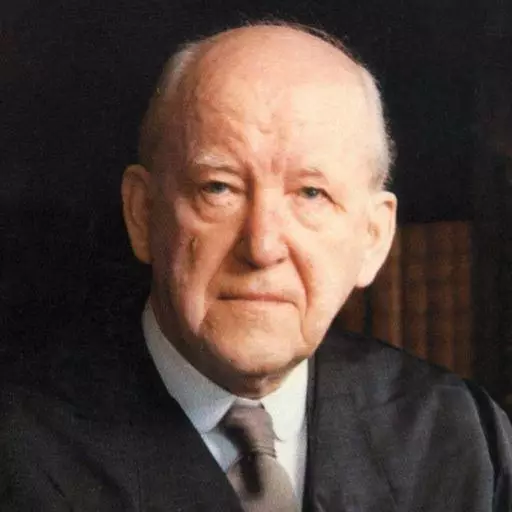
In Jesus Christ a new harmony formed, not along the lines of race, family, or country, but in the basis of membership in the family of God. In this sermon on Ephesians 2:15 titled “Christ’s Way of Making Peace,” Dr. Martyn Lloyd-Jones proclaims the words of Paul, saying all who believe are adopted into God’s family and become inheritors with Christ of the whole world. In this new people there is neither Jew nor Gentile, for the people of God are those who are the children of Abraham by nature of their faith in Christ and their adoption into God’s family. This is why division in the church on the basis of age, race, and nationality are such a travesty. The peace of God transcends all divisions and walls. This peace, as Dr. Lloyd-Jones describes, is one that makes fallen men and women righteous before God and it also puts them in a right relationship with one another as brothers and sisters in the family of God. This new relationship is the first fruits of what is to come in the new creation that Christ will bring to completion when He returns in glory and judgment on the last day. The church should look to the peace that Christ has granted in the gospel as the greatest hope in the Christian life.
Dr. Martyn Lloyd-Jones: I should like to call your attention this morning to the words which are to be found in Paul's Epistle to the Ephesians, in the second chapter, and the second half of the 15th verse. The second half of the 15th verse in the second chapter of Paul's Epistle to the Ephesians, for to make in himself of twain, one new man, so making peace.
But again, I must remind you of the immediate context. The Apostle says, "But now in Christ Jesus, ye who sometimes were far off, are made nigh by the blood of Christ. For He is our peace, who hath made both one, and hath broken down the middle wall of partition between us, having abolished in His flesh the enmity, even the law of commandments contained in ordinances, for to make in Himself of twain, one new man, so making peace. And that He might reconcile both unto God in one body by the cross, having slain the enmity thereby."
We come back in other words to this tremendous statement and this most subtle argument which the Apostle puts before us in these verses. He is dealing with this amazing thing that has taken place. He's looking at a Christian church, and there he sees as fellow members together, Jews and Gentiles. People who had belonged to the old commonwealth of Israel, and those who hitherto had been aliens from it, and strangers from the covenants of promise.
And what he's doing here is he's showing how this has come to pass. It's the power of God that's done it. Nothing else could do it. Nothing else could bring Jew and Gentile together in a common act of worship but the power of God, and the power of God which brought Christ from the dead, nothing less than that.
Now, that's the thing that he's expounding. And he puts it here, he elaborates it. The argument, I say, is a subtle one. I don't think that in the whole range and realm of scripture, there is a more closely knit argument anywhere than in this particular section. Every phrase is important, almost every word is important. If we really are to grasp the mighty statement and appreciate its full richness and glory.
You see, he adds statement to statement, each one follows the other with a logical precision that is quite remarkable. The mind of the great Apostle comes out here in a most amazing manner. The thing was so clear to him and he puts it before us clearly, if we take the trouble to look at his phrases one by one, to see the connection of any one with the previous one, and how it inevitably leads to the next one.
But in addition to that, we do need the enlightening which the Holy Spirit alone can provide. And the Apostle, before he ever embarked on this mighty demonstration of the wondrous grace of God, had already prayed for these Ephesians, who were to receive the letter, that the eyes of their understanding might be enlightened. Without that, the whole thing is hopeless.
And therefore a very good way of testing whether the Holy Spirit has enlightened the minds of our understanding is this: Are we following the argument as we go on from Sunday to Sunday? More, are we rejoicing in it? Are we thrilled by it? Do we see that we are looking at the most astounding thing in the world this morning?
Very well, we come back to it, I say, again. Now, here is the essence of the argument. Christ Himself is our peace. He is our peace. It's all in Him. And it's also true to say that he makes peace. For to make in himself of twain one new man, so making peace. He himself is the peace, he makes peace.
And we have seen that the Apostle tells us that the Lord Jesus Christ makes peace between man and man, and between man and God. He is the peace in every respect. Peace between man and God, peace between man and man.
Now, the Apostle puts them in that order. He puts man and man first. And then he goes on in verse 16, which we hope to consider later, to show how both are reconciled together in one body to God.
The order, of course, is interesting. Theologically, the order is the other way around. But the Apostle was dealing with it in a practical and in a pastoral sense. He's starting with the concrete fact of a church, with Jews and Gentiles on their knees together, worshiping in the same way. He starts with that, man and man. And then he shows how they both go together to God. And we at the moment are looking at the way in which He reconciles men to men.
And I indicated last Sunday morning that he tells us that this is done in two ways. First of all, negatively, and then positively. Now, last Sunday morning, we were looking at the negative. How does the Lord Jesus Christ bring the Jew and the Gentile together? Well, the negative thing he did is this: He has abolished the law of commandments in ordinances. And so he has removed the middle wall of partition that was between them, that was the enmity.
That's the negative way. There was this Jewish ritual and ceremonial, and it was a standing barrier. It was ordained of God. Yes, but the Jews had misunderstood it, and it had become a matter of enmity and of hatred. Very well, the Lord Jesus Christ in his flesh, you notice, having abolished in his flesh, which means his death upon the cross. He has abolished it. It's no longer necessary to take the blood of bulls and of goats and the ashes of a heifer. It is no longer necessary to go to a temple with your burnt offerings and sacrifices. There is but one sacrifice. Christ is our Passover.
Once and forever, he has done this. All that has been abolished. Therefore, that cause of division and distinction has been entirely done away with. But that's only negative. And that isn't all. Indeed, it isn't enough. And this is the point I'm anxious to emphasize this morning.
To abolish middle walls of partition alone doesn't produce peace. And that is the tragedy of so much thinking today, it seems to me, that they haven't a true conception of peace. Peace, according to the scripture, does not merely mean the cessation of hostility. Neither does peace merely mean the prevention of actual hostility. But as the word peace is used currently today, I think it'll be obvious to all that that is what they mean by peace.
Peace is regarded as just a state in which you're not actually fighting. Peace, they think, is an absence of war. Well, that may be men's idea of peace. It isn't God's idea of peace. That isn't the scriptural notion of peace. Merely to cease fighting isn't peace. Merely to prevent future hostilities is not peace. And you see at once how the gospel is being misused, misinterpreted, and misrepresented so grievously by people today who think that merely to apply the teaching of Christ, as they think, to the international situation can solve the problem. But we shall see further reasons for saying that as we proceed.
God is not content merely with the absence of outward and aggressive enmity. And the manifestation of that enmity. God, when he makes peace, does something inward, does something vital. God is not content merely that men shouldn't be at one another's throats. God's idea of peace is that men should embrace one another and love one another. That's Christian peace. Nothing less than that.
Not merely that you're not fighting, but that you're loving. That there's a unity, that there's a oneness. That you've really become one. And you love one another as you love yourselves.
Now, that is the whole thing that comes out in this particular bit of argument that we're looking at together this morning. Peace is a matter of heart. It's a matter of attitude. It's a matter of essential, vital, inward unity and of love. And that is what Christ, he tells us, has produced.
Well, how has he done it? Well, here is the answer: "to make in himself of twain one new man, so making peace." He's done the negative. Here is he now doing the positive. What does this phrase mean? What is it? Well, you can put it, if you like, doctrinally and theologically in this form.
The Apostle here introduces to us the profound New Testament doctrine of the Christian church. The nature of the Christian church. The new man, the new body is the church. And Christ's way of making peace is to form and to make and to bring into being the Christian church.
And therefore, any attempt to understand the Christian way of peace must immediately bring this in. Let me put it again in this form. According to this argument, peace amongst men is only possible as they all together belong to the body of Christ and are Christians. So patently, it is not something that can be applied to nations. And therefore, to preach the Christian message as if it's something that can be applied to nations which are not Christian, and which don't think in Christian terms, and who do not belong to the body of Christ, is rank heresy and is a denial of the teaching of the Apostle.
And yet, as I was saying last Sunday morning, that's the very thing that's being done. There are people saying that all the statesmen of the nations have got to do is to apply this teaching. No man can apply this teaching unless he's a Christian. And no man will apply it unless he's a Christian. Indeed, as I'm going to show you, even Christians are very defective in their application of it. But it demands, it postulates, a Christian character.
Now, then, let's see how the Apostle works that out. You see the immediate relevance of all this. You see how important it all is. This isn't dry as dust theology and doctrine. This is the very thing that is uppermost in the minds of men today, the desire for peace. But they must see it in the right way. But apart from its general application, I know of nothing that is more edifying, nothing that is so strengthening to one's faith.
Nothing, therefore, that is so comforting as to realize the truth of what the Apostle is telling us here. Well, what is it? Well, let me put it like this. The church, he tells us, is a new creation. "For to make in himself of twain one new man." Now, this word make here is much too weak. It shouldn't have been translated as make. The word means to create in himself. A creation.
Now, our well-known hymn puts it well, doesn't it? The church's one foundation is Jesus Christ her Lord. She is his new creation. That's absolutely correct. By water and the word.
Now, here then is the thing. The church is something absolutely new that has been brought into being. Something that wasn't there before. It is comparable to the very beginning when God created the heavens and the earth. There was nothing there before. God created. Creation means bringing into being something that was previously not there, nonexistent. It is making something out of nothing.
That's the phrase that's used here. You see, therefore, the implications of this, and you see how this makes peace. How does God make peace between Jews and Gentiles? Well, it is not by a modification of what was there before. It is not even by an improvement of that which was there before.
God doesn't take a Jew and just do something to him, and take a Gentile and do something just to him, and thereby bring them together. Not at all. It's something entirely new. Creation. Now, this is, of course, vital to the whole position, that as we enter into the Christian church, we do so as new creations into something that is entirely new.
There is a sense in which it has no relationship at all to what existed before. I wonder whether I may attempt an illustration to show the point I mean. The church must not be conceived of as a kind of coalition of a number of parties. No. It's the abolition of the old and the creation of something entirely new.
Well, let me try another illustration. It's occurred to me that the point which needs to be illustrated here is illustrated very perfectly by the difference between the United States of America and the United Kingdom. Or it's the difference between the United States of America and the British Commonwealth of Nations.
In the United Kingdom, in the British Commonwealth of Nations, you have got an association of a number of nations, nationalities and peoples and tribes. They all belong to the same commonwealth, yes, but they still belong to the same nations. Their nationality is not demolished, it's not destroyed. They still remain separate nations, but they have chosen for certain reasons to work together.
That is the overall characteristic of the British Commonwealth of Nations, at one time held together by force and power, now held together by common interests, common purposes. They choose to come together. Yes, but the Indian is still an Indian. And a Britisher is still a Britisher, and so on. And this idea of individual nationhood still remains, but voluntarily they come into an association. And, of course, it is therefore an association which may be broken and which can be broken, because they haven't ceased to be these particular elements.
I say it's the same in the United Kingdom: English, Welsh, Scots, and Irish. The nationality hasn't been abolished, it's still there. But they have chosen to work together and to do certain things in common. It doesn't mean that the fundamental unit has been done away with. But in the United States of America, you've got something very different.
The United States of America is not a United Nations. It's not a unity of nations. No, no. It's United States. In other words, men have gone out to that country from the various countries of Europe. And in order to be true citizens of the United States, they've got to finish with that past. It's a new nation. It isn't a collection of Germans and Swedes and Finns and Norwegians and British and French and Italians and Greeks. Not at all.
They're all doing their utmost, and absolutely rightly, to forget all that. They're Americans. They've finished with the old alignment, the old national ties. There's a new nation. Now, that is the kind of thing that we have here. The church isn't a sort of coalition of Jews and Gentiles. No, no. There's something absolutely new in being which just was not there before.
Creation, for to create in himself of twain, one new man. This is a most important principle, but we'll see it as we go on. Let me, therefore, put down a second principle. The church is formed in Christ. "For to create in himself of twain, one new man, so making peace." The church is formed in him. It results as the result of her relationship to him.
We've already seen something of this in the first chapter, at the end of the first chapter. We've already seen it hinted at and suggested in the first 10 verses of this second chapter. But here it is once more: The church is the body of Christ. And He is the head. And the church derives her life, her sustenance, her power, her everything from Him. To create in himself of twain, one new man. How does he do it? Well, he does it like this.
As members of the church, we are members of the body of Christ. Paul puts that to the Corinthians, the first epistle, the 12th chapter, verse 27 like this. He says, "Ye are the body of Christ and members in particular." So, we are all particular individual members of this one body. You see, there's a unity to the body. A body isn't a collection of parts. It isn't a mere loose attachment of fingers and hands and forearms and arms and legs and toes. Not at all. It's an organic whole, a vital unity with individual parts. But the whole is greater than the part, than the sum of the parts.
There again, you've got the same idea. You mustn't think of a finger in isolation. It's always a part of the whole. So, he has created in himself of twain. It's all in himself. We must get this idea, therefore, as the church, as the body of Christ, with Christ as the head, and the organic unity, and all the joints supplying something, as he'll tell us in the fourth chapter. There it is, this organic unity, all in Christ.
So, I go on to my third proposition, which is this. The church then, he says, as the result of this, is a new man. "For to create in himself of twain, one new man." Now, he's not thinking of the new man in the sense that he talks elsewhere about the new and the old man in the individual Christian. The one new man here, the one body, is the church, consisting of these various parts, all as a representation of the body of Christ.
Or, if you like, we can call it a new humanity. And that, it seems to me, is the best way of looking at it. In Jesus Christ, and as the result of his perfect work, something absolutely new has come into being. What is it? It's a new humanity. You can think of the church therefore not only as a body but as a humanity.
And of course, the comparison and the contrast which at once suggests itself to us is this: Formerly, we were all in Adam. We were all one in Adam. The whole of humanity was in Adam. So, what Adam did, the whole of humanity did. As in Adam, all died. That's the statement. We were all in Adam. He was the head and the representative of the entire human race. There was a unity. It was one body in Adam. Adam was the head. There is the humanity. Adam and his seed, his posterity, all one.
Now, this is the astounding thing that's happened, and this is where, I say, the encouragement and the comfort and the consolation comes in. As a Christian, I have finished utterly and absolutely with that old humanity. I no longer belong to Adam. The old man has been crucified with Christ. The old man has died.
In Christ, we have the second man. In Christ, I see the last Adam. The first Adam, the last Adam. The beginner of one humanity which went wrong and went into sin and failed, the beginner of the new humanity that can never fail, because it's in Him. The last Adam, the second man. He calls, Paul refers to him as, "the firstborn of many brethren." That's it, same idea.
So that you see, when we look at the Christians, when we look at the Christian church, we are looking at a new race, a new humanity, which is absolutely different from the old. It isn't the old taken and improved a little bit. No, no. It's a new creation. It's a humanity that is coming out of Christ, as that other humanity came out of Adam. It's absolutely new. It's a new creation. No other term is adequate.
So, you see, it amounts to this: In our new birth, in our regeneration, in our being born again, we are born into this new race. We are born into this new body. We are born into this new family. That is how Christ makes peace. He doesn't produce a conglomeration of differing people. No, no. He produces a new people. A new family, a new household, a new race. He'll tell us that in detail towards the end of the chapter. But here it is at once in principle.
And that is how Christ makes peace. That you may persuade nations not to fight one another isn't peace in this sense. Peace is only made in God's way and in Christ's way, when we all belong to the same family of the same bloodiness, as it were, are members of the same humanity, members of the same body, in this living, vital relationship to God. That's the only peace that the New Testament is interested in.
And you see how monstrous it is, therefore, for the church to say to the statesman, "All you've got to do is to apply our teaching, and you'll produce peace amongst the nations." It's a denial of the whole doctrine of the church. It's a denial of the doctrine of regeneration. It is, indeed, a complete misinterpretation of the teaching of our blessed Lord himself.
Now then, there is the argument as such. But there are certain things which we must emphasize. And here they are. The old is entirely done away with. That follows of necessity from all we've been saying. The Jew has been done away with as much as the Gentile has been done away with in Christ. If you believe in this new creation, well, then you must realize that the other has been entirely done away with, put aside.
That leads me to a second principle, which is this. And here again is a most comforting and consoling thing. Nothing that belonged to the old state is of any value or has any relevance at all in the new state. Do you dispute that? Well, listen to Paul's way of putting it in Galatians 6:15. "In Christ Jesus, neither circumcision availeth anything, or uncircumcision, but a new creature."
What a tremendous statement. In Christ Jesus, circumcision is irrelevant. It availeth nothing. Uncircumcision is equally irrelevant. It availeth nothing. In Christ Jesus, in the realm of the church, in this matter of relationship to God and peace amongst men, there is only one thing that matters: a new creation. So that Jew is gone, Gentile is gone. All that belonged to Jew, all that belonged to Gentile, irrelevant, henceforward. It's the new creature that matters.
Where is the consolation? says someone. Oh, I'll tell you where the consolation is. All that was true of me in my old life doesn't matter anymore. The sins I once committed no longer matter. They matter as little as circumcision and uncircumcision. If I'm in Christ, I'm a new creature. That old man has been dealt with. He's dead. He's gone.
There is therefore now no condemnation to them that are in Christ Jesus. "I have been crucified with Christ. I am dead." No longer I, but Christ liveth in me. That's what this means. What a glorious, what a blessed doctrine. Christian people, are you still foolish enough to listen to the devil when he makes you look back at your old life? You shouldn't. You should reject him. You should resist him. You should say, "That's finished with. I am dead. I have nothing to do with it."
It's something absolutely and entirely new. But then I go on to my third principle, which is this one. We are all the same in this new relationship because we have all become something new. How does Christ form the church? How do the Jew and Gentile come together? Well, it isn't by the Gentile becoming a Jew. You see there were many who thought it was that. That isn't the way. It isn't that the Gentile has got to become a Jew, that he's got to submit to circumcision and take up all the ceremonial. That isn't the method. But on the other hand, the Jew doesn't have to become a Gentile either. The glory of this way is this: that the old is entirely done away with. It isn't a modification of the Gentile and a modification of the Jew. It isn't meeting round a conference table and the two opposing sides. One says, "No, I'll compromise to this extent. You can, will you meet me halfway? Shall it be 50/50?" Not at all. All that side is off. All this side is off. Something absolutely new is brought into being. The Jew doesn't become a Gentile. The Gentile doesn't become a Jew. It's a new man, a new creation.
And I must go further to a fourth principle, which is this one. That the unity of this new body is an absolute unity. And I use my term advisedly. There is no such thing as a Jewish section of the Christian church. There is no such thing as a Gentile section of the Christian church, and there never will be.
The old has been done away with. The Lord Jesus Christ himself put it like this once and forever in a most important statement from this standpoint. Let me read it to you, in Matthew 21:43. Addressing the Jews he said, "Therefore, I say unto you, the kingdom of God shall be taken from you and given to a nation bearing forth the fruits thereof." And the new nation is the church. The Jew, as such, has ceased to be the special people of God. There is a new nation. And there will never be a Jewish section in the church in a different position from the Gentile section. All that is finished. There is the statement of the Lord himself. You remember how the Apostle Peter says the same thing in his first epistle, in the second chapter, verses 9 and 10. "Ye," he says, using of the church, consisting of Jews and Gentiles, he uses the very words that God spoke to the nation of Israel, just before the giving of the law: "Ye," the church, "are a chosen generation, a royal priesthood, an holy nation, a peculiar people."
That's the new nation. And it's made not of mixture of Jew and Gentile. No, no. A new man. Jew finished, Gentile finished, the new creature, the new creation. There is no more, says Paul, Jew nor Gentile, barbarian, Scythian, bond nor free, male nor female. Thank God. All that is finished. There is but one new man in Christ Jesus.
Very well, then, the way in which he makes peace finally, I can put like this: You and I only have peace and enjoy peace with one another and there is only peace in the church. On condition that we realize and put into practice the principles that we've just been enunciating. There are, therefore, two big principles, and here they are. We must cease to think of ourselves in the old way and in the old terms in every respect. Let me repeat that.
The essence of faith, the essence of practicing Christianity, is to cease to think of ourselves in the old terms and in the old way in every single respect. What am I thinking of? As Christians, as members of the church, we must cease to think of one another in terms of nationality. Politically, you still do so. In the Christian church, you don't do so. You forget that. You cease to think of people in terms of their natural birth. You cease to think of them in terms of their ability. All these things, you see, divide. Nationality divides, birth, upbringing, caste, all these things divide. Ability, lack of ability, they divide. Wealth, poverty, they divide.
We mustn't think of ourselves any longer in those terms in the church and as Christians, because the moment we begin to bring in those categories, there's no longer peace. There is division, separation, enmity. Not only that, we mustn't even think of one another any longer in terms of our former life and behavior. Our previous goodness or badness, our previous morality or immorality. It doesn't matter. It doesn't count in the church. I mean this: that if in the Christian church, men begin to look at one another and say, "There they are, they're members of the same church," but they still go on thinking like this of one another. A highly respectable man looks at another man and says, "Well, of course, I remember what he was. I remember where he's come from. Has he an equal right in the church? A man who lived like that?" That's the very antithesis of peace. That's the attitude of the elder brother that our Lord condemns in the parable of the prodigal son.
No, no. All those categories have gone. I'll go further. In the Christian church, in this realm, you even forget your former religion. It doesn't matter whether you were highly religious or not. The question is, "Were you a Christian?" You may have been very devout, it doesn't matter. "Were you a Christian?" You can be devout without being a Christian. All that is finished. All the old terms and categories no longer apply. And in the realm of the church, you don't ask any one of those questions about a man.
You simply look at him and you see the marks of Christ in him. I think I've told you before the immortal story connected with old Philip Henry, the father of the great commentator Matthew Henry. Philip Henry, as a young man, fell in love with a young lady who came from a very much higher position in life than himself, and she was in love with him. And then the question came of getting the consent of her parents. And the parents, turning to their daughter, said, "This man, this Philip Henry, where has he come from?" And she said, "I don't know where he's come from, but I know where he's going." That's the thing. It isn't where he comes from that matters. Where's he going? Is he destined for glory, for God, for eternity in the presence of Christ? Does he belong to him? That, she says, is the only question. And it is the only question. Nothing else matters in this realm, because the moment you bring in the others, there's division at once.
So I put it positively in this way. We must always and actively think and conceive of ourselves in this new way. Always. Failure to do these two things always leads to trouble. Do you know there are marvelous illustrations of this in the New Testament itself. Do you remember how our Lord caught his own closest apostles and disciples one day quarreling amongst themselves? What were they quarreling about? Which of them should be greatest in the kingdom? And he turned to them and he said, "You don't understand it. In my kingdom, things are absolutely different from the kingdoms of the world. In the kingdoms of the world, your great men are served by others. In my kingdom, greatness consists in service. The son of man," he says, "came not to be ministered unto, but to minister and to give his life a ransom for many." He who shall be greatest amongst you is he who shall be your servant. It's a complete reversal. They hadn't grasped it. Then you remember there's an account in the very sixth chapter of the book of the Acts of the Apostle, the church, as it were, had only just come into being. This is what I read. "In those days, when the number of the disciples was multiplied, there arose a murmuring of the Grecians against the Hebrews, because their widows were neglected in the daily ministration." These people had been converted. They were saved. They'd become Christians. Yes, but they hadn't learned this lesson. Grecians, Hebrews, "It isn't fair!" they said. They were dividing up in terms of nationality, and the peace had gone. Immediately.
Well, then there's another very wonderful illustration. You're all familiar with it. You'll find it in the 15th chapter of the book of the Acts of the Apostles. Let me read it to you. "And after some days, Paul said to Barnabas." Barnabas was a very nice man, you remember, the Son of Consolation. He and Paul had been traveling together. "Paul said to Barnabas, 'Let us go again and visit our brethren in every city where we have preached the word of the Lord, and see how they do.' And Barnabas determined to take with them John, whose surname was Mark. But Paul thought it not good to take him with them, who departed from them from Pamphylia, and went not with them to the work." John had deserted on a previous journey. And Paul said, "No, it's not right." "And the contention was so sharp between them, that they departed asunder one from the other: and so Barnabas took Mark, and sailed unto Cyprus; and Paul chose Silas, and departed, being recommended by the brethren unto the grace of God."
Why was it then, do you think, that Barnabas wanted to take John Mark with them? Do you know the answer? They were relatives. They were related. And this excellent, noble Christian man, Barnabas, just forgot the doctrine for a moment. He said, "I say we take Mark with us." And his only reason for saying it was that Mark was his relative. And in the Christian church, you must forget that. You don't take your relative with you if he's already failed and if there's a better man. You don't give preference to a man who belongs to your family. No, no. Neither Jew nor Gentile. The old has gone, it's something new. So you don't drag your family relationships in. How often has that been done?
I see it so frequently. A man is called of God to start a work, undoubtedly called of God. And then when he comes to die, he appoints his own son as his successor. Sometimes it may be right, very often it's very wrong. And you'll find the work will begin to droop and to dwindle, and it'll eventually die. Why? Well, the son wasn't really called. But it's very natural. I agree, it is natural, but it's not Christian. Paul and Barnabas separate because the question of family relationships comes in. Oh, it's everywhere. Don't you remember how Paul had to withstand Peter to the face over this very matter? Certain people came down from Jerusalem, certain Jews, and told Peter, "You shouldn't eat with the Gentiles." Peter listened to them, and division came in. The whole effort of the Judaizers was based on this. They said, "You know, it isn't enough to believe in Christ. You've got to be circumcised as well." And thereby they caused division. They didn't realize that the old had gone. Circumcision no longer matters. The Jew doesn't matter.
Well, if you want a perfect illustration of what I'm trying to say, you simply got to make an analysis of the first epistle to the Corinthians. There was a church that was in great trouble, and Paul has to write a letter to them. What was the trouble? I'll tell you. They were dividing up in a wrong way. What about? Well, first of all, about men. "I am of Paul, I am of Apollos, I am of Cephas." Which is the best preacher? Which is the most eloquent? Which is the one I like? Worshiping, following men, putting men before Christ. That's the old, that's the carnality, that's what the world does. That shouldn't happen in the Christian church. What else? Well, they were going to law against one another. They'd got certain disputes and they took them to the open courts. Paul says, "But you're not behaving as Christians. If you had some conception of the church, you'd appoint the humblest member of the church as judge and umpire. You take your case to him, and if he decides against you, you'd say, 'All right. I'm happy to do it for the sake of the body of Christ.'" That's the new.
What else? Well, the strong and the weak brother. You've heard it in Romans 14 at the beginning this morning. It's in 1 Corinthians 8 in exactly the same way. The strong brother who'd seen the matter, the other who hadn't. And they'd quarreled about this. The strong was despising the weak, and the weak were stumbled by the strong. Paul says, "Look here, don't destroy with your meat a brother for whom Christ died. Realize the new relationship. You're brethren in Christ. Do without your meat for the sake of peace and Concord and for Christian happiness. You mustn't divide the body of Christ because you say you've got a right to do certain things, and your brother is stumbled. The kingdom of God is not meat and drink, but righteousness and peace and joy together in the Holy Ghost."
And they were dividing even on the question of spiritual gifts. The people with the flashy, spectacular gifts were boasting and despising the others. "The eye was saying, 'I have no need of thee to the foot,' and so on." You see, it was because they were not realizing the doctrine of the church as the body of Christ. And if we do not realize this, there will always be division.
I mentioned just now that even wealth shouldn't come in. James deals with that, you remember, in the second chapter. He says, "Look here, if you're in your church, in your assembly, and a man comes in with a great gold ring, you don't lead him right to the front because he's a very wealthy man. And another man comes in with rags, and you say, 'You sit there at the back.'" You don't do that sort of thing in the church, says James. "We don't recognize such distinctions. We don't assess men by their clothing or by their appurtenances. We look at the soul, the relationship to God, and to Christ, and all are one. The old has been done away with."
All has become new. Or if you like for me to sum it up in a positive word, I can do it like this. Here it is positively in Colossians 3:15. Paul has been dealing with the quarrelings and the disputings. "This is," he says, "the thing to remember. Let the peace of God or the peace of Christ rule in your hearts, to the which also ye are called in one body." Do you know what he means by that phrase? "Let the peace of Christ rule in your hearts?" It means this: "Let the peace of Christ act as arbiter. Let the peace of Christ act as umpire amongst you." You all of you with your rival positions and differences say, "Let the peace of Christ decide this. I am not going to decide it. It isn't my rights, my demands. I am prepared to agree to anything that promotes the peace of Christ amongst us, as well as the peace of Christ in my own heart. Set that up as umpire," says Paul, "and peace will reign among you."
Oh, yes. We are called into one body, "for to make of himself of twain, one new man, so making peace." And it's the only way. Oh, it's as I know I am in Christ, and look at another and know that he is in Christ. That I can forgive and forget. I can join hands and humble myself with him. We are all one in Christ, and we're going to spend our eternity in glory together. It's as we remember that. And only as we know that that is true of us, that there can be a true, a real, a lasting peace. Blessed be God for the new creation in Christ Jesus. Amen.
Featured Offer

Find peace and comfort this season with your complimentary guide that includes access to 6 free bonus sermons on overcoming spiritual depression from Dr. Martyn Lloyd-Jones, one of the church’s most beloved Bible teachers. Topics include: true Christians can and do struggle with depression, recovering the joy of your salvation, dealing with crippling guilt over past sins, dealing with yesterday’s haunting regrets, encouragement to keep moving forward, and understanding God’s purpose for suffering.
Past Episodes
This ministry does not have any series.
Featured Offer
Find peace and comfort this season with your complimentary guide that includes access to 6 free bonus sermons on overcoming spiritual depression from Dr. Martyn Lloyd-Jones, one of the church’s most beloved Bible teachers. Topics include: true Christians can and do struggle with depression, recovering the joy of your salvation, dealing with crippling guilt over past sins, dealing with yesterday’s haunting regrets, encouragement to keep moving forward, and understanding God’s purpose for suffering.
About From the MLJ Archive
From the MLJ Archive is the Oneplace.com hosted ministry of the MLJ Trust. Our mission is to promulgate the audio ministry of Dr. Martyn Lloyd-Jones.
About Dr. Martyn Lloyd-Jones
Contact From the MLJ Archive with Dr. Martyn Lloyd-Jones
info@mljtrust.org
http://www.mljtrust.org/
PO Box 953
Middleburg, VA 20118