
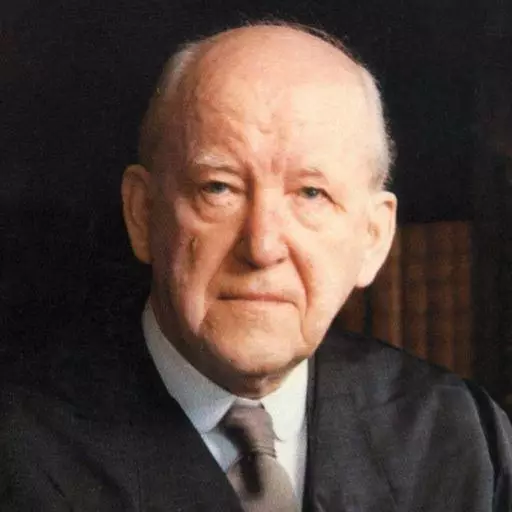
Christian and the State, Part 2


Dr. Martyn Lloyd-Jones: I think it will be well that I should read again the first seven verses of the 13th chapter of Paul's Epistle to the Romans. Let every soul be subject unto the higher powers, for there is no power but of God. The powers that be are ordained of God.
Whosoever therefore resisteth the power, resisteth the ordinance of God, and they that resist shall receive to themselves judgment, punishment, damnation. For rulers are not a terror to good works, but to the evil. Wilt thou then not be afraid of the power? Do that which is good and thou shalt have praise of the same. For he is the minister of God to thee for good.
But if thou do that which is evil, be afraid. For he beareth not the sword in vain. For he is the minister of God, a revenger to execute wrath upon him that doeth evil. Wherefore, ye must needs be subject, not only for wrath, but also for conscience sake. For for this cause, pay ye tribute also. For they are God's ministers, attending continually upon this very thing.
Render therefore to all their dues, tribute to whom tribute is due, custom to whom custom, fear to whom fear, honor to whom honor. Now, having expounded those words in detail, I indicated last Friday night that we were in a position now to consider some of the great questions, the great problems, the great principles which are raised and dealt with in this most important section of scripture.
It is quite a unique section this, as you will realize all of you who are familiar with your Bibles. It deals more extensively with some of these practical problems of the Christian in his relationship to the state than any other portion of scripture. Therefore, it is of very great importance.
Now, we have already considered the Christian's relationship to the world in general. And we also last Friday dealt with the Christian's view of the state and its functions. That is what is dealt with here, and we have seen what our view should be of the state and the functions of the state.
Now, having done that, we come on this evening to this, the Christian's attitude toward the state and his relationship to it. This seems to me to be the logical order in which we should proceed. We must have a right view of the state first of all. You cannot determine what your relationship should be to the state, nor what your attitude should be to its enactments or its commandments and its laws, until you are clear in your mind as to what the scriptures teach us concerning the nature and the function of the state.
Now, having done that, we then, I say, are in a position to consider, now then, how do we relate ourselves to the state in which we find ourselves living? Now, as we come to this subject, I think you will find that there have been two extreme views which people have been in danger of falling into or of holding with regard to this subject.
The first is what I may well call the traditional view. What I mean by that is this, that there have been Christians, and many of them, who seem to have regarded the teaching as being to this effect, that we as Christians should always be concerned in maintaining the status quo. And that the Christian faith and its teaching about our relationship to the state is always on the side of privilege.
Now, as you read the history of this country and other countries, you will find that this has been the case throughout the centuries. I must not go into the history of all this. It really does date back to the time when the Emperor of Rome, Constantine, decided to take the Roman Empire into the Christian Church, around about 325 AD.
Now, this has therefore tended to persist ever since. The church has been the friend of kings and emperors and princes and dukes and earls and nobles. And there has been the tendency therefore, for some to interpret this teaching as being strongly in support of what we may call in general the aristocracy and the aristocratic view of government and the whole function of the state.
This has been put forward so often throughout the centuries, and it is still put forward by many that this is entirely in support of a kind of aristocratic or hierarchical view of government. And that therefore, the main effect of Christian teaching is to make people content with their lot, and indeed, not only that, to teach them that it is their business and their duty to continue as they are.
Now, the most extreme form perhaps that I have ever encountered of this particular attitude is the attitude which I discovered to my amazement. It amazed me the first time that I met it amongst certain friends across the Atlantic in the United States, in their view of the Negro people.
Now, these were Christian people, good evangelical Christian people, and they strongly held the view that the Negro people were meant to be servants. They said they came from Ham, and the descendants of Ham were always intended surely to be the hewers of wood and drawers of water, and so on. And that they were meant to be in a position of subservience, and that therefore, it was wrong ever to consider even the idea of giving liberty to such people, still less the whole notion of segregation, or regarding them in any way as being equals.
Now, I am simply mentioning this to illustrate what I am trying to put to you. But we need not go to the United States. There is a well-known writer of hymns whose hymns we often sing, Mrs. CF Alexander. She wrote this last century, "The rich man in his castle, the poor man at his gate. God made them high or lowly and ordered their estate."
Now, if you believe that, as many evangelical people did believe that in the last century, "The rich man in his castle, the poor man at the gate of the castle, God made them high or lowly and ordered their estate." That God ordained that they should be like this and ordered them to be like that. Now, this was very popular and common teaching.
That is why, you see, it is so important for us to be careful in our reading of the scripture here and in our interpretation of the scripture. That was why I went out of my way last Friday night to point out that what God has ordained is government, powers that be that govern and maintain law and order. That he has not ordained or prescribed any particular form of government, neither has he ordained any particular holder of the office.
You see, it is the same fallacy as that of Mrs. Alexander, who says that God has ordered the estate of the rich man in his castle and the poor man at his gate. Of course, if you believe that, you must go on logically to say that they must continue in that position, and that it would be very wrong to mitigate the sufferings of the poor man at the gate or to ameliorate his conditions and perhaps to take a little from the rich man in his castle.
And so, there are many people like that throughout the centuries, and still some left who regard the scriptures as maintaining the status quo, and that you must never do anything about changing. That is one of the extreme views. The other extreme, of course, is anarchy, or if you like, the idea of democracy run wild, run out of bounds.
And there have been many who have dropped into that view. I could give you illustrations again throughout the centuries. This happened particularly towards the middle of the 17th century in this country of ours, after the Civil War, or at least after the first part of it, when Cromwell and the army got into power. There were people called Fifth Monarchists and others.
These men, now having got a certain amount of liberty, really were advocating what was a kind of anarchy. No law and order whatsoever. Everything being turned right upside down. They went to extremes over this. And there have been others who have followed them in this, of course, ever since then, and there are still many in that position at the present time.
Well, there are the two extremes, the maintenance of aristocracy, or the status quo, that those who are in authority must ever remain there, that they are ordered of God, that he has put them there, and you must never think of changing them. And then the other extreme, that of anarchy. But now, these two extremes surely are quite wrong.
And the teaching of the apostle in these seven verses does not support either of them. Well, what does it teach us? Well, I suggest it teaches something like this. It is clear that we are to be subject to the state, to the governing powers that be. This is something we will all agree about. The Christian is always to be a good citizen.
He is always to be a peaceable citizen. We can go so far, I think, as to say that the Christian should always be the best citizen in the country because he is a Christian, and because of what that involves. He does not do harm to his mind by drinking too much or eating too much, and so on.
He should be a better man therefore than anybody else, and therefore should be a better citizen. It does not give him greater brain power nor anything like that, but what I am saying is that he should be the best citizen always simply because he is a Christian. Now, why is this so? Well, as I say, it is because he is a Christian.
As the apostle puts it here, you should be subject, he says in verse five, not only for wrath. You see, this is one of the great differences between a Christian and a non-Christian. The non-Christian, his main motive and reason for observing the law is that he does not want to be punished. So he will go as near the line as he can, just short of being caught or being punished.
Wrath, fear of wrath is the thing that governs him in the main. There are, I know, exceptions, but speaking generally, this is true. People live as near the borderline as they can. Nothing but fear makes them conform with the law. But that is not to be the case with the Christian. You must needs be subject, he says, not only for wrath, but also for conscience, which means this, that as a Christian, you have an understanding of this matter.
It is the Christian alone who sees the real need of the state. It is the Christian alone who really believes in sin and knows what sin is, and the power that sin is in the personal lives of everyone and also people collectively. And he therefore realizes as nobody else can the possible extent to which sin can lead us individually or collectively.
He therefore, of all men, sees clearly the necessity for controlling sin and the manifestations and the results of sin. He sees the need of this. And that is why Christians should always be on the side of law and of order. They see the possibilities. The humanist, the non-Christian, does not believe in sin at all, so he does not see the need, and generally, you will find therefore that they are opposed to various laws.
I am going to deal with this a little bit later. But not only does the Christian see the need of law and of control and of order, he knows that God himself has made this provision for the maintenance of life. Try to think what life in this country would be if you banished all the laws suddenly, banished your police force and everything that is designed to preserve law and order.
Now, the Christian has an understanding of these things. This is what is meant by conscience. And he therefore knows the need of discipline and of punishment. Well, for those reasons, he must be subject to the state and to its enactments. But I must hasten to add that there is a qualification to that statement.
There is a limit beyond which this is not true. What is that limit? Well, it is quite clear in the scriptures. If the state should ever come between me and my relationship to God, well, then I must not obey it. I am subject to the state and must be subject to the state right until that point that it begins to interfere with my relationship to God.
Now, let me give you my evidence for this. You have got it in the Acts of the Apostles. You have got it, for instance, in the fourth chapter of the Acts of the Apostles. You remember that Peter and John had been arrested for preaching and for healing the man at the beautiful gate of the temple, and they were put before the ruling powers.
And I read in verse 18, "And they called them and commanded them not to speak at all nor teach in the name of Jesus." But Peter and John answered and said unto them, "Whether it be right in the sight of God to hearken unto you more than unto God, judge ye." "For we cannot but speak of the things that we have seen and heard."
And you get the same thing repeated in the fifth chapter, verse 29 and following. Again, they are told the same thing, that the authorities say to them, "Did not we straightly command you that you should not teach in this name? And behold, you have filled Jerusalem with your doctrine and intend to bring this man's blood upon us."
Peter and the other apostles answered and said, "We ought to obey God rather than men." Now, at first, you might think that that contradicts what the apostle says in the first verse of this 13th chapter of Romans, where he says that every man must be subject to the higher powers. Well, you see, this is the qualification.
The powers that be are designed to carry out God's will. But if they thwart or try to thwart God's will and try to prevent people from observing and carrying out God's will, well, then you are entitled to say to them, "We ought to obey God rather than men." And that is quite clear there in the book of Acts, and that was the principle on which the early Christians acted.
Later on, of course, many of them were confronted by this position. The state, the Roman state, which by this time had started its emperor worship, they not only looked to the emperor as a governor and as a leader, they deified the emperor, and they were worshipping the emperor. And they said, "Caesar is Lord."
And they told these Christians that they must say that. And the Christians said, "We cannot say that because we know that Jesus is Lord, and we cannot worship any man." And they were confronted with this choice. Either they said that Jesus, that Caesar is Lord, or else they would be put to death. And they were very ready indeed to die rather than to say that Caesar is Lord.
At that point, they rightly refused to be subject to the powers that be, and they disobeyed and were ready to suffer the consequences of their disobedience. So, we are to be subject to the higher powers until they in any way come between us and our loyalty to God himself and his commandments to us.
There is a second limit which I also want to notice, and it is a, I think, a very important one and may become very important for all of us. It is very important at the present time to many of our fellow Christians in other countries. What I have been laying down in my first qualification, in a sense, is this, is it not? Liberty of conscience.
The state must never tyrannize over my conscience. And when my conscience tells me that they are asking me to do something that contravenes my relationship to God, I listen to my conscience and not to them. Liberty of conscience. Now, this has been a great principle on which Christian people have often stood.
If the state tries to prevent your preaching the gospel, you do not listen to it. You see, these apostles that I have been reading about, you remember how they were thrown into prison for doing it. Then they were liberated in a miraculous manner, and what they did immediately was to go back and preach again. They were deliberately disobeying the law, because the law was telling them not to preach, not to teach in the name of this Jesus.
And they said, "We must." And of course, this has happened many times since. At the time of the Reformation and in the Puritan period, this kind of thing was repeated so frequently. And these people went on preaching the truth, feeling that this has got to be done, whatever the state might say. Liberty of conscience.
But I want to qualify that also. And this is again very important. There is a limit even to our claim of liberty of conscience. What do I mean? Well, now here again, I will illustrate what I mean by referring once more because it is a convenient illustration, to some of those groups of people who flourished here in London in particular, in the late 1640s and the early 1650s.
There had been the rebellion, revolution, King put to death, and so on. Freedom, liberty. Now, some of these people lost their heads, I mean, in a metaphorical sense. Um, and they felt now that this entitled every man to say, "Well, I am going to do what I think is right." Now, this is anarchy.
When a man says that he is going to obey his conscience always without any exception, he is now not a believer so much in liberty as in license. That is the difference between liberty and license. That is the difference between an ordered society and anarchy. That is what is meant by lawlessness.
Now, while in general, it is right and true to say that a man should always obey his conscience, he must not at all points do that in spite of the enactments of the state. What do I mean? Well, I mean something like this. Men, after all, have got to live in society. No man lives unto himself.
The fact that you have got the powers that be, the fact that God has ordained states, means that we are all meant to live in community. You cannot live as an isolated being, and you should not even desire to do so, as this is clearly the will of God. Very well. We have got to live then in communities.
And community or communal life is quite impossible unless we all know the limit to our assertion of liberty of conscience. Let me put it to you like this. If every man says, "I am only going to do what I think is right." Well, you can see that life would soon become impossible. We all have to recognize at certain points that though we do not quite see it like that, if the state has enacted accordingly or the majority of the people in the country, we have got to abide by that decision.
Now, remember again, I am excluding your relationship to God. I am excluding your liberty of worship. I am thinking of things where people are involved in with enactments. There was a notorious case recently, was it not, about somebody making a great fight and even going to prison about it over the question of a drain going through a part of her garden or something.
Now, that is the sort of thing I mean. When people stand out on things that really are debatable, questionable, when there are possible views about it, to be rigid and to say, "Well, I will only do what I think is right," and put your opinion over and against the general opinion of your fellow citizens and men and women. That, I say, is to abuse the whole notion of the liberty of conscience.
Now, that is what many of those Fifth Monarchy men did. Indeed, they went so far as to say that they did not believe in government or law and order at all, that every man should do according to his own conscience. And some of the very, very early Anabaptists on the continent did exactly the same thing, and they brought the Protestant Reformation into considerable disrepute.
And that was why Martin Luther and John Calvin tended to react so violently to them. I think too violently, but there was a good deal to be said for them. These people, you see, were taking this whole notion of the liberty of the Christian man, liberty of conscience, to a ridiculous extreme and making a community life impossible.
We all, the moment we stop to think of it, know, of course, how we perpetually and constantly do these things in daily practice. There are many things we dislike in the laws of this country, and we do them with a grudge, as it were, yet we do conform to them because we know it is right for us to do so.
We must not take the law into our own hands in these matters. You will find sometimes people refuse to send their children to school and things like that, and they always do it in the terms of liberty of conscience. Well, I think it is very difficult to make out a case for such people. There are exceptional cases, no doubt, but speaking generally, people who do that kind of thing are cranks, and their misunderstanding this great principle of the liberty of conscience.
Very well. There is our first great principle, that we must be subject to the state, to the powers that be, whoever they may be and whatever they may be. But there are those special limiting statements. Very well, we go to the second principle. It is right for us as Christians to claim the protection of the state and of its law.
This need not keep us unsure. But there are some people who think that it is the hallmark of spirituality not to do that. They have nothing to do with the state at all, and they would not dream of claiming the protection of the state. Well, all I want to say to them is that they are not being as spiritual as they think, but they are very differently being unscriptural.
That is why I read to you that section from Acts 16 at the beginning. You know how the great apostle stands on his rights as a Roman citizen. He had been treated most unjustly, and he does not allow these magistrates just to send down an order to say, "Set the prisoners at liberty." Not at all, says Paul.
"They have got to come down themselves." And they came very quickly when they realized that he was a Roman citizen. Roman citizenship was not a trivial matter to the great apostle. He, and later on, you will find references in the book of the Acts to his asserting that on other occasions. But you see, he demands that these people carry out the law.
He reprimanded those magistrates by taking the action that he did, showing them that they were appointed to carry out the law and that they must do so. And this, I think, is a very important principle. You remember that later on also, he appealed to Caesar. He was on trial. He was not satisfied. He said, "I appeal to Caesar."
He wanted to go to the highest court, and as a Roman citizen, he had a right to do so. Now, that is what the great apostle did. And surely, that is a principle that governs our actions also. And you will find, as those of you who are familiar with their stories will remember, that Whitfield and Wesley in the 18th century, they did not hesitate to employ the same principle.
There they were, preaching in the open air and evangelizing the people. But a local magistrate would suddenly come along and try and stop them or would gather a mob. The local magistrate and a local vicar would come together and try and break up the meeting and try and do damage to them. They never hesitated to make use of the law.
These men were breaking the law in doing that. And Whitfield and Wesley were ever ready to invoke the law. Indeed, Whitfield often used the services of the Countess of Huntingdon in order to put a stop to this kind of thing. She had influence in government circles, and he reported these things to her and asked her to use her influence to put an end to this.
It is perfectly right that we should do so. We are citizens. We have this view of government and the state and law and order, and it is right that we should use this. Now, there is something then that we are taught also. The Christian is not always to suffer grievous injustices. He is entitled to invoke the law and to insist that the law be carried out.
But thirdly, the Christian must not glory in the state or any particular form of it. Now, this is again a very important principle. Much damage has been done to the Christian faith and to the Christian Church because people have forgotten this at two extremes once more. Far too often, the Christian Church has given the impression that she is entirely on the side, as I say, of the higher powers.
Sometimes the Christians have been the greatest royalists in the country, and they have gloried in this and have been ready to fight and to die for it. I would suggest to you that that is putting themselves into an unscriptural position. The Christian is not to glory in any particular form of the state. You may say, "What has this got to do with us today?"
Well, I think it has got a lot to do with us today. I have often found that some of the greatest royalists I have ever met have been evangelical Christians, and this has been almost more prominent in their lives and in their whole demeanor and in their whole attitude than anything else about them. And this is something that I would query.
There is a kind of mystique about royalty, which one can understand in the man of the world, but which I never can understand at all in the case of a Christian. I mean by that these rumors that go around periodically that such and such a person has been converted, and it is all very hush-hush, and they are not all ready to believe it only, but they glory in this as if this were something unusually wonderful.
Now, that seems to me to be quite unscriptural. I am passing by the whole idea of credulity, which is bad enough in and of itself. But the Christian is not to glory in any aspect of the state. His view of the state should make that impossible. However, let us take the other extreme. The Christian is not to glory in democracy either.
Now then, this comes a little bit nearer home to most of us perhaps. I believe that the present condition of nonconformity or the free churches in this country is mainly due to the fact that nonconformist preachers and people towards the end of the last century and the beginning of this one began to glory in democracy.
There is no question at all that we are suffering as the result of that. Nonconformity became political, and all its energy and enthusiasm was put into that rather than into its understanding of the gospel. It is as wrong and as unscriptural to be a mad democrat as it is to be a mad royalist. The Christian should never glory in any form whatsoever of the state.
And I go on to a fourth principle, which will show you why I am emphasizing that. The Christian is never to expect too much from the state. This is the difficulty always. People always expect too much from it. I see I have got a note here. The Christian should never get excited about the state.
What I mean by that is, the Christian should never get excited about politics. He is to be interested. He is to vote. He is to be intelligent. But the Christian should never get excited about one political party or the other. But Christians often do. To that extent, they are coming under the condemnation of the scriptures.
You see, that was the whole fallacy surely behind the French Revolution of 1789. People went mad. They lost their heads. Liberty, equality, fraternity. This was going to solve all problems. It was going to put the world right. Well, it has not put the world right, and it never will put the world right.
As I say, towards the end of the last century, and the beginning of this one, I am old enough to remember a good deal of it. Christian people really believed that by act of Parliament, you could make a new world. They were confident of this, and the enthusiasm was something that the younger people present tonight cannot even imagine.
The great days in old religious assemblies was the day when the statesman came and addressed the gatherings. The biographies since then have made it very plain and clear to us that if any men needed to be preached to and to listen to Christian preaching, it was those very statesmen. But that was just a part of this wild excitement.
We were going to legislate in the sermon on the mount. We were going to legislate in the kingdom of God. It is all wrong. That is the state cannot do that. In other words, we must not expect too much from the state, I say. The business of the state is mainly negative. The main function of the state is to limit evil and the manifestations of evil.
The state can do very little positive good. And men have got into trouble when they think it can, either in the form of monarchy, oligarchy, or democracy, or any other form that you may choose to have. The function of the state is mainly a negative one, a controlling one. And the less we think of it in positive terms, the better.
So, I come to my last principle under this whole question of the Christian's attitude towards the state, which is this. Whatever your view of the state is, you must never allow it to affect your relationship with other Christians. If your interest in the state or your view of the state, or your reaction to the state, comes between you and other Christians, you are in a wrong and in a false position.
Now, what I mean, of course, is this, that so often, to the shame of all such Christians, Christian people have quarrelled over politics. Now, that is quite unforgivable. It is altogether wrong. It is ultimately due to a false view of what the state can do and can achieve. Otherwise, they would not get so heated.
Otherwise, they would not dream of quarrelling. But I have known this. I have known churches divided on political issues. I have known Christian people not even speaking to one another because of their different political views. It is almost unthinkable, but it has often happened. It is all, I say, due to a failure to understand the teaching of this great and important section.
It is right to have differences of opinion, as I indicated last Friday night. You can have equally good Christians in all the political parties. But Christians must never hold such views in such a manner as to allow them to come between their fellowship with one another as Christians. Let me sum it all up by putting it like this.
We are to remember that as Christians, our relationship to the state is, at its very best, only a temporary relationship. This is our position. Our citizenship is in heaven. Now, I warned you last Friday night not to misinterpret that and to say, "Therefore, I have nothing to do with the state." That is wrong.
But still, it is our fundamental position that our citizenship is in heaven. That is the place we belong to. That is our capital city. That is the place we belong to. We are strangers here. We are men away from home. We are colonists, as somebody translates it. We must never lose sight of that.
So, you see, we realize that we are only here as journeymen, strangers, and pilgrims, travellers, sojourners. That is again one of the great differences between a Christian and a non-Christian. The non-Christian lives for this life and this world alone. So he gets excited about the state and about his political party.
He believes things can be done, full of a false optimism. The Christian should never be. The Christian says, "Thank God. I have been delivered. I belong to that kingdom that is to come visibly on Earth." That is what I really belong to. Now, but I have still got to live in this world. It is God's will that I should live in this world.
And God has appointed the powers that be. I, of all people, must recognize them. I have got to live in these strange conditions while I am here. I have got to do my utmost to keep the world and its life within bounds because this is the will of God. But he does not set his affection on this. He does not get excited about this.
He does not believe this is going to be wonderful and that the whole world is going to be reformed and made perfect. Of course not. He knows it cannot happen. He has got his eye on that second coming and the ushering in of the kingdom in a visible manner. So, you see, his his relationship to the state is, in a sense, a detached one.
He is in it. He is subject to it. He observes its rules and its laws. He is the best citizen, and yet the whole time there is this detachment. And he is not lost in it, involved in it, thrilled by it, excited by it, ready to quarrel with people over it. He cannot, because his citizenship is ultimately in heaven.
Well, there in general, as I understand it, and as you take this passage and collate it with the incidents which you have in the book of the Acts and various other teachings in the New Testament, those are the conclusions to which I think you are inevitably bound to come. Now, there is another matter I must just touch on this evening.
And that is, of course, the question of capital punishment. Here it is, "If thou do that which is evil, be afraid, for he beareth not the sword in vain. For he is the minister of God, a revenger to execute wrath upon him that doeth evil." The sword. Here again is a very vexed question. What is the teaching?
Well, can I try and put it like this to you? It is clear from the use of the sword and the fact that the sword is the ultimate emblem of the authority of the state, the governing power. It is clear then that the state has power to take life, and that this power is granted to it by God.
Now then, there are objections to this. There have been objections to this recently in this country. Capital punishment has been abolished, as you know, as the result of a decision in the Houses of Parliament. What is the correct teaching on this? What should be the attitude of Christians towards this?
Well, I want to try to show you that the opposition to capital punishment, and I am confining it, may I say, entirely as the punishment of murder only. Of course, there was a time in this country when people were put to death for all sorts of things, for stealing sheep and things like that. Now, all that has been reformed, and it had come to this, that it was confined to this question of murder.
And I am my remarks are entirely confined to that. Now, what about these objections to capital punishment even in cases of murder? Well, these are the objections that are generally put forward, as you know. There are those who say that killing, killing in any shape or form, is always wrong. There is only one answer to give to that, that the Old Testament makes it perfectly plain and clear that that is not the case.
That God commanded the children of Israel to kill certain people, and indeed even to exterminate certain nations. It is quite clear in the Old Testament. I will give you further evidence in a moment. And the saints, of course, throughout the centuries have acted on this principle. You have had some very saintly men in the armies and navies of countries, outstanding Christians, some of them.
And you have had outstanding Christians, such as Oliver Cromwell and others in this country, who clearly give an answer to that statement that killing is always wrong. But then says somebody, "Does not the commandment say, 'Thou shalt not kill'?" And what about turning the other cheek? These are the stock arguments.
And the answer to those is that all those commandments are to the individual. The individual is not to kill. The individual is to turn the other cheek. We did we dealt with that towards the end, you remember, of the 12th chapter. However, we are now dealing with the power of the state to take life in the form of capital punishment.
So, it is no use quoting one of those 10 Commandments or the teaching on the sermon on the mount. They are addressed to the person, to the individual, and not to the state. And thirdly, the argument is hot and strong always about the deterrent effect. Well, I just do not deal with that at all. It is not relevant to our scriptural and spiritual discussion.
That is a debatable point, which is for lawyers, it seems to me, but does not really concern us at all. Well then, what is the scriptural answer? Well, it is this. It is the positive duty of the state to use the sword. He beareth not the sword in vain. How does he bear it at all? It is given to him of God.
The state is the representative of God. The state is the minister of God. He is the minister of God, a revenger to execute wrath upon him that doeth evil. So, the power of the sword that the state has is a power that God himself has delegated to the state. It is not the state that has taken it.
It is God, according to this teaching, that has given this power to the state. Why has he done so? Well, surely the answer of the whole of the Old Testament is this. God is the author of life. It is the greatest gift that he gives to men. And as God is the author and the sole author of life, he alone has a right to take life.
It is at that point, you see, the enormity of murder. That is why murder is a very special and unique crime. It is the thing that makes it the most terrible crime of all, that a man should take it upon himself to take another man's life. Let him take his goods, his money. It is all right. But to take a man's life.
This is the most precious thing of all that a man possesses. It is God who has given it. Only God has a right to take it from him. In other words, it seems to me that the argument for capital punishment based on this teaching here can be put like this, that capital punishment is designed to maintain and to emphasize and to establish the sanctity of life.
It has no vindictive quality in it at all. It should not have. And if the vindictive element comes in, it is wrong. The purpose of capital punishment is not to say to a man, "Well, you have taken his life, I am going to take yours." It is not that at all. The purpose of capital punishment is to vindicate God's Lordship over life.
And to tell men that if he passes beyond that border, that bound, he has got to lose and forfeit his own life. Now, you see, that is the way to look at this teaching. It is God who has given and has delegated the power of the sword to the state. No man has a right to do this himself. The state is given the right as the minister of God.
He is a minister of God, a revenger to execute wrath upon him that doeth evil, and he beareth not the sword in vain. It is not the state that is doing it. It is God who is doing it through the state, saying, "I am the author, the creator, the sustainer of life. No man has a right to touch life. I alone have the power over life.
And if a man touches this, he forfeits his right to live at all." There is nothing, in other words, that should teach us the sacredness and the sanctity of life so much as the execution of capital punishment. And of course, for me to close, it is a very interesting thing to notice and to observe the people who are opposed to capital punishment.
Generally, you will find that they are the humanists, the atheists, some of the leaders are Jews and have given up their religion. They are atheists. They are humanists. And generally, it is the same people who have been advocating for what they call this new morality. And who are trying, indeed, have succeeded, have they not, to get this bill passed to allow homosexual practices between adult males, and so on.
The same people always. And you see, they are acting on the same consistent principle. They do not recognize God. Their view of men is that he is only an animal. They know nothing about the sacredness, the sanctity of life. They do not know that God alone is the author of life. It is because they are ignorant of all this and blinded to it by the God of this world.
It is because they are humanists. They start and end with men. And they have got no other considerations and no other reasons whatsoever. But here, there is this specific statement, and as you see, it is in accord with the Old Testament teaching as well, where God commands the children of Israel to do this kind of thing in a judicial manner with other nations, and so on, that we must assert, it seems to me, the principle that underlies the idea of capital punishment.
Well, my time, unfortunately, has gone, and I will have to leave over the question of pacifism and the question of the relationship between the state and the church until next Friday evening. Let us pray. Oh Lord, our God, we again would thank thee for thy perfect provision for us. We see that we are involved with great problems, great decisions.
We see, O Lord, how often we have spoken unadvisedly with our lips, spoken out of prejudice or out of emotion rather than on the basis of the teaching of thy word. Lord, keep us humble. Make us careful. Keep us diligent, we pray thee, lest at any point in our life and witness, we may bring this glorious gospel into disrepute, but rather enable us ever in our thinking and in our speaking and teaching and life and practice, to show its perfection, its completeness.
Oh God, bless us. We pray thee to that end, and pardon and forgive us all our many sins and our many failures. And now, may the grace of the Lord Jesus Christ and the love of God, and the fellowship and the communion of the Holy Spirit, abide and continue with us, now this night, throughout the remainder of this our short, uncertain earthly life and pilgrimage, and until we shall stand before the judgment seat of Christ, and give an account of the deeds done in the body, whether good or bad.
Amen.
Featured Offer

Find peace and comfort this season with your complimentary guide that includes access to 6 free bonus sermons on overcoming spiritual depression from Dr. Martyn Lloyd-Jones, one of the church’s most beloved Bible teachers. Topics include: true Christians can and do struggle with depression, recovering the joy of your salvation, dealing with crippling guilt over past sins, dealing with yesterday’s haunting regrets, encouragement to keep moving forward, and understanding God’s purpose for suffering.
Past Episodes
This ministry does not have any series.
Featured Offer
Find peace and comfort this season with your complimentary guide that includes access to 6 free bonus sermons on overcoming spiritual depression from Dr. Martyn Lloyd-Jones, one of the church’s most beloved Bible teachers. Topics include: true Christians can and do struggle with depression, recovering the joy of your salvation, dealing with crippling guilt over past sins, dealing with yesterday’s haunting regrets, encouragement to keep moving forward, and understanding God’s purpose for suffering.
About From the MLJ Archive
From the MLJ Archive is the Oneplace.com hosted ministry of the MLJ Trust. Our mission is to promulgate the audio ministry of Dr. Martyn Lloyd-Jones.
About Dr. Martyn Lloyd-Jones
Contact From the MLJ Archive with Dr. Martyn Lloyd-Jones
info@mljtrust.org
http://www.mljtrust.org/
PO Box 953
Middleburg, VA 20118