
Christian and the State, Part 1


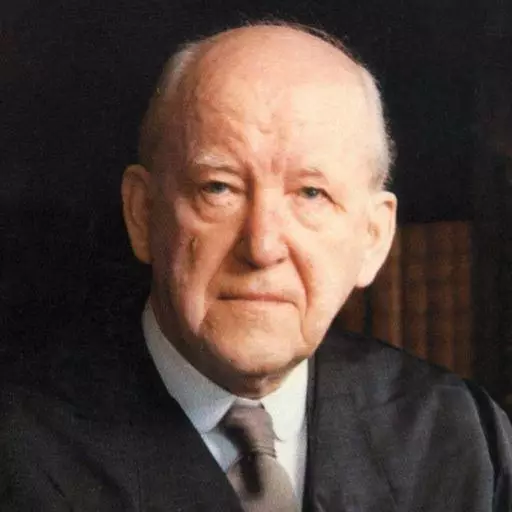
Dr. Martyn Lloyd-Jones: Most of you will remember that we are dealing with the first seven verses in the 13th chapter of Paul's Epistle to the Romans. We spent last Friday evening in going through and giving a detailed exegesis of the seven verses. We dealt with what I described as the mechanics, and you've got to do this. You can't arrive at a knowledge of doctrine or teaching unless you are clear in your minds as to what the Apostle is saying exactly.
Well, now, having done that, we're in a position, as I said at the end last Friday, to consider the teaching which the Apostle gives us here. It is most important teaching, and it is unique teaching, because here the Apostle deals with the whole question of the relationship of the Christian to the State and to the laws of the country in which he happens to live. Now, this is a subject that is not dealt with frequently in the Scriptures. That is what makes this a most important passage, a kind of *locus classicus* with regard to this matter. And that is why from time to time in the long history of the Church, it has received such special attention.
As you read the history of the Church, you will find that God's people, when they are truly spiritual in their thinking and their outlook, have often had to consider very carefully the teaching of this section because they were involved in difficulties with regard to the states in which they lived. Clearly, the early Christians were, and this has been true of Christians at many other times in the history of the world. And once more, this is becoming a very vital subject. In this very century, Christian people have been forced to consider this passage more frequently than they have for several centuries because of fascism, Nazism, communism, and these various other teachings that have gained ascendancy in the minds of various rulers and governors of different countries in the world.
It seems to me that as time goes on and the world continues upon its present course, this will become an increasingly important subject. Many of these young emerging countries have had to consider this very acutely. We've had people worshipping here who have come from different countries in Africa who already have had to face this very teaching because of situations that have arisen in their own country. They've been in countries where there's been rebellion, revolution, everything changed. And they as Christians have had to decide what is their relationship to all this and what are they to do about it. And who knows but that we all may have in various ways to face these very issues in the years that lie ahead.
Well, you see the importance of this whole section. Now, the first matter that must engage our attention is this: the Christian's relationship in general to the world in which he finds himself. That's the first principle of all. There is the tendency, as I was pointing out a fortnight ago, for some people to think that because they become Christians, that somehow or another they contract out of life as the result of that, that they no longer are involved in the life of this world as they were before.
This, therefore, is a very important matter. We are still in this world and are a part of the life of this world. I know we say, and say rightly, that we are in it but not of it. But remember, that must be interpreted very carefully. We are not of it in a spiritual sense, but we are of it in practically every other sense. And that is where the difficulty has so often arisen. Let me put it like this: the fact that we have become Christians does not mean that what we may call the orders of nature have been cancelled or abrogated.
What do I mean by the orders of nature? Well, I'm thinking of things like not only our relationship to the State but marriage, male and female. Now, take that passage that I read to you just now: 1 Timothy 2. The Apostle there, you notice, reminds Timothy to teach others that though it is true to say that from the standpoint of salvation and being saved, there is no longer male nor female, it is still true to say that there is a difference between male and female even in the Church. That hasn't been done away with.
The fact that we become Christians doesn't do away with the distinction of the relative positions in life of man and woman. He suffers not a woman to teach. Why does he say that? Now, people have often tried to explain that away by saying, "Oh well, it was just the circumstances at that particular time, and especially amongst pagan people." But you see, that won't do. The Apostle says it is because of what happened at the Fall. He doesn't say that in terms of local, temporary conditions. He says it; this is something he says that has been true ever since the Fall. He points out that it was the woman who first fell and that because of that, there follow certain consequences. And you remember what they were as you can read them in the book of Genesis.
Now, that's what I mean by the orders of nature. There are certain fundamental relationships in life laid down in the Scriptures, and the fact that we become Christians does not make any difference to them. So, marriage and the relationship of husband and wife and men and women, the relationship of parents and children, and work and things like that, none of these have been changed simply because we have become Christians.
Now, why is this? Now, this is the important point. The answer is because it is God's world. God created the world. He made men; he's made everything. But this is still God's world. The fact that the world has fallen doesn't mean that it is no longer God's world. It is still God's world. He still sustains it. He still causes the sun to rise upon the evil and the good and sends the rain upon the just and the unjust. All that goes on in exactly the same way, and God sustains the universe.
In other words, we must be very careful that we never say that God has abandoned the world because of sin. He hasn't. God has not abandoned the world because of sin. It is still His. Indeed, we must be bolder and say that it is God's plan and purpose to restore the world, not only to its original condition, but to something which will even be more glorious than that. Now, we must never forget this, that God's plan of redemption applies to the whole universe.
I'm not meaning by that, of course, that everybody's going to be saved; that isn't what I'm saying. I'm saying that He is going to redeem the whole cosmos. This is stated clearly in Ephesians 1:10, that in the dispensation of the fullness of times, He might gather together in one all things in Christ, both which are in heaven and which are on earth, even in Him. Now, that is God's purpose. The world is still His, and the world is not going to be abandoned to the devil. No, no. The whole cosmos is going to be restored to a state of perfection.
And that is why I say that we as Christians have to bear this in mind, and we don't contract out of the world. It is God's world. Or let me put it like this to you: the Lord Jesus Christ is not only the personal Savior of all who believe in Him. He is the Lord of the universe. We must never forget this. You see, there is this grave danger that we view our salvation in such subjective, personal terms that we exclude so much of the teaching of the New Testament, the greatness and the glory of it all. And we reduce God's purpose to just something that makes us happy while we're here and saves us from hell. Thank God it does that, but it isn't only that.
The Lord Jesus Christ is not only our personal Savior. He is the Lord of the universe. Peter tells the Sanhedrin that God has made Him both Prince and Savior. He's the Lord of history. Read again chapter 5 of the book of Revelation about the book that was sealed and how there was nobody anywhere who was strong enough to break the seals and to open this book of history. There was only one: the Lion of the tribe of Judah, who hath prevailed. Let's never forget that our Lord said, "All power is given unto Me in heaven and in earth." He is seated at the right hand of God, waiting until His enemies shall be made His footstool. And He is already ruling. He is already reigning. The world doesn't know that, but all things are in His hands and in His power. He is the Lord of history and already controlling it in a most amazing manner.
So, you see the Christian, in the light of all this, is not merely to cultivate his own soul. That's the first thing he does; that is the most important thing that he does. But he doesn't stop at that. He mustn't think of himself as someone who's not interested in the world but simply in his own soul. He mustn't say, "Nothing matters but my own soul and its cultivation." While he puts that first, he does not exclude these other matters for these reasons. Well, there very well, there is the background, it seems to me, to all this teaching.
Of course, actually, no one does contract out of life. That's where people who fall into this fallacy are inconsistent. They still eat like everybody else and drink. They've still got to do some work; they still have to work with other people. So, they're not contracting out of life. But you mustn't do it even in thought. That's the point that I'm trying to establish. But now we come to one of the particular applications of that general teaching and principle, and that is the Christian's view of the State and the powers that be.
Now, I want to emphasize that I'm dealing with the Christian's view of it, not tonight his relationship to it, but his view of it, his understanding of it. If our understanding of this is not right, well, then obviously our practical relationship is going to be wrong. So, we must be clear first of all in our view of the State and government, what is described here as we've seen as the powers that be.
Now, there is much confusion about this, and there's a lot of sentimental thinking about this which isn't scriptural. That's why this passage is so crucial and so all-important. Now, what are we taught here? Well, this is what we see, isn't it? First and foremost, as Christians, we believe that the powers that be are ordained of God. "There is no power but of God," says the first verse. "The powers that be are ordained of God." Now, that is a fundamental statement.
The State and government, magistrates and so on, are not a human invention, not a human desire. In spite of great authorities, we assert from the Scripture that man has not evolved either from the animal; neither has he evolved his culture, government, and things of this kind. Not at all. These things are the result of God's action and activity, and it is God who has ordained the State. You see, that evolutionary view will tell you that man has gradually evolved these things, thought them out, experimented and tried, and we've come to our present position. It's quite wrong, that. You find all this laid down in the Old Testament. Government is not a human invention, not a human device, not a human arrangement at all.
No, this is all ordained of God. Now, let's be clear about this: what the Apostle is saying is that the idea of government and of law and of order is God's idea. He is not saying that every ruler is of necessity ordained by God, every particular ruler, bad rulers and so on. He's concerned about the idea, the notion, the whole conception of government and law and of order. That's our first proposition.
The second is this: that the Apostle does not tell us that any one particular form of government is the one that has been ordained by God. What he says is that the idea of government is ordained by God. In other words, he doesn't say that monarchy only has been ordained by God. No, he doesn't deal with this. He doesn't say that monarchy alone is right, or that an emperor alone is right, or that a democracy alone is right, or that an aristocracy alone is right, or an oligarchy alone is right. He doesn't take that up at all. All he is saying is that God has ordained that there should be government, that there should be law, that there should be order.
Now, I'm putting this point because it really is a very important one. You remember that James I used to teach the divine right of kings. There is no scriptural warrant for that whatsoever. Kings in particular are not ordained in contradistinction to others. There is nothing in the Scripture to say that a republic is wrong, nothing whatsoever. All the Apostle says is that there must be government, and you can have government under a republic as well as you can under a monarchy or under an emperor or the various other forms of government.
Now, you see the importance of all this. There are many Christian people like ourselves in various parts of the world tonight, and some of them belong to republics. Are they less Christian because of that? Of course they're not. The Scriptures do not say that any particular form is the one that has been ordained by God. All the Scripture teaches is that there must be a constituted authority, that God has ordained that there should be some constituted authority, whatever the form that may happen to take in different countries and at different times.
Now, we shall see again the importance of all this. I know certain people who are the greatest royalists I know, and they seem to think that they really do believe, it seems to me, in the divine right of kings. But that's not scriptural. I defy you to produce any scripture that can establish that. Indeed, there are many interesting contradictions about this. Some of these friends would argue in terms of the Old Testament, not realizing that Israel was a theocracy, a very special case and position. And they even forget that there it was laid down very clearly and very specifically that a woman should never be the ruler. I just say that to you in passing to make you think it out, to see how if you haven't got scriptural principles, you'll soon find yourself involved in a mass of contradictions. No, no, the particular form is not laid down.
Well, that's our second point, second principle. Now I come to another. The Christian, then, recognizes the State; he recognizes government. He recognizes that there must be some constituted authority to keep law and order, whatever it may be. Now then, should the Christian take part in this? Should the Christian take any part whatsoever in the government of a country? Here again is a source of much confusion, and people again get into these contradictory positions.
Let me give you one instance of what I mean. I remember at the outbreak of the last war, I happened to be in a conference, and there this whole question of the relationship of the Christian to the State was on the agenda, obviously because it was the beginning of the war, Christian people were in a quandary many of them as to what they should do. And so, it was first taken in this general form of the Christian taking part in the government and the ordering of the life of a country. And there was one man who was violently opposed to this. He said a Christian shouldn't touch it. Politics is a dirty game; Christians should have nothing to do with it, either local politics or imperial politics, shouldn't touch it at all. Politics is a dirty game.
And yet, that self-same man was a man who held an honored rank in the British Army and was very proud of his record in the army and would urge all young men to join the army immediately, as he did at that time in order to fight. So, I simply had to point out to him that while he regarded politics, which should prevent wars, as being a dirty game, apparently fighting and killing people was not a dirty game. You see, that is the kind of sentimental, superficial thinking that takes place. He regarded fighting, being in the army, as a most honorable profession, but no Christian should ever even dream of going into Parliament, of being interested in local politics. This, you see, is just a sheer failure to think things through, and especially in a scriptural manner.
You'll often find the text quoted in this connection, "Come out from among them and be ye separate," that you must not have anything to do with these things because it means mixing with people who are not Christians. Now, there is an obvious superficial answer, as it were, to this, isn't there? Again, as I point out that people who are very vociferous in saying that very often are actually working day by day with people who are not Christians. They have to do so in order to earn their livelihood, and they're not aware that they're doing there the very thing that they say should never be done.
Now, let me give you an illustration of the point I'm making. I've got a little book here published in 1863: *Pridham on the Romans*. He's a very good expositor. But when he comes to this section, he really does say some quite remarkable things. Let me read it to you. He says, "The believer, if he would adorn the doctrine of God, must exercise himself so as to have a conscience void of offense. All right. He is to endeavor to walk blameless under the eye of the Master whom he serves. Quite right. With the decision of political questions, he has properly nothing to do. He has to submit himself—and he italicizes this—he has to submit himself to every ordinance of man for the Lord's sake. God comes before him in the ordinances of men," and so on.
Then he's got an interesting footnote here: 1 Peter 2:13-15. "The Scripture does not contemplate the Christian, I believe, anywhere as a ruler. Let me repeat that: the Scripture does not contemplate the Christian anywhere as a ruler. The reason of this is not only the fact that at the time, at that time, none such had embraced the faith, but rather, as it seems to me, the incompatibility of pure Christian principle as a realized thing with those maxims on which alone the world will consent to be governed. Flesh will not acknowledge spirit, nor will the world obey Christ. A government conducted in the energy of the Holy Ghost and according to the truth of God would be none other than the Church itself."
Now, there is a perfectly clear statement, isn't it? And you see what he is really saying: that the Christian should have nothing to do with this question of government and of ordering of government. He says that in his opinion, a Christian can never be a ruler, a king or a queen or an emperor, a prime minister or anything else, or even a magistrate. He goes so far as to say that the Christian should have nothing to do with these things at all. Now, let me try to show you what a complete muddle that is, how he says that in the context of this 13th chapter and how sadly he misses the very principles that are laid down here.
It's interesting that when he does deal with this, he makes these statements rather than giving us an interpretation of the particular verses. Now, he says there were no Christian rulers at that time. Well, that is actually, of course, the truth. But what does that got to do with it? I read to you at the beginning tonight the Apostle's teaching that we should pray for kings and all that are in authority. What should we pray for them? Well, you notice he goes on to say we should pray for their salvation. It is the will of God that all men, which means all kinds of men, kings and those who are in authority as well as others. You see, some of the early Christians didn't pray for them. They said, "They're outside the pale. They're the governors; we don't pray for them." "No, no," says Paul. Pray for the salvation of every kind of man. Pray for kings that they may be saved as well as the most ordinary person.
But that would be ridiculous if it would follow that immediately the king is converted, he ceases to be a king and has to abdicate from his high position. The thing is quite ridiculous. There is no reason whatsoever for saying on the basis of the Scripture that a Christian can never be a ruler. Why not? Well, for this good reason: that if the powers that be are ordained of God, well then, surely you are entitled to argue that we should be concerned about getting the best people conceivable to be the powers that be. And there is why we're told to pray for them in that way and manner.
But there's a further fallacy in what Pridham says, and it seems to me that this is worse. He drops into the fallacy of thinking that the Christian has no concern and should have no concern or interest in things that are not specifically and directly Christian. That's his real fallacy. He says it's the difference between flesh and spirit, from which he obviously argues that the Christian is not to be interested at all in the flesh. He says, "How can Christians take part in this? The world is the flesh, and it won't listen to the spirit, and the Christian is in the spirit; therefore, he has no interest in the flesh." Now, that is really a very dangerous heresy because we are still in the flesh and we still have to function and live in the flesh.
The Christian is still living his life in this world. As I said, all the orders of nature are still there, and these still go on. And it is indeed further, we are told here, the duty of the Christian to conform to these things, to conform to government as best he can and to obey it in all ways. There are certain qualifications which I'll deal with later, but as a principle, that is what we are told. We not only recognize them; we submit ourselves to them. So, we are concerned in things in life which are not specifically Christian.
Let me go one step further. There are matters in which the Christian is involved like everybody else. There are matters which are not specifically moral or spiritual; they are neutral matters. Let me give you an example or two what I mean. What is government concerned about? Well, government is concerned about preventing robbery and theft, keeping order, regulating the traffic, public health laws, proper drainage, things like that and various aspects of public health and so on. Now, I'm arguing that those matters are not moral matters; they're not spiritual matters. I would call them neutral matters.
But we as Christians are involved in these things in exactly the same way as the non-Christian. There is no difference. From the standpoint of public health, there is no difference between a Christian and a non-Christian. From the standpoint of law and order, keeping on the left of the road, observing the signs, highway code, all these things, they're non-moral; they're non-spiritual matters. They're all neutral. But the Christian is involved in all these, and therefore, I say that he should be interested in all these things. Or take economic questions. I hold the position that economic questions, speaking generally, are not spiritual; they're not moral. They're neutral. They're very important. If they're handled properly, it'll be to the benefit of all of us. If they're handled badly, we shall all suffer, Christians and non-Christians alike.
And as Christians, we ought to be interested in these things. It is our duty to be concerned about them. We should be anxious that the best minds should be applied to these things. So, we don't contract out of these things, but we realize that as these things are essential to the running and the ordering of life and making life possible with a community of men and women, we not only recognize this, we submit ourselves to it.
So, there you see is this essential fallacy. He seems to think that the Christian should only be interested in spiritual matters. But you can't live like that. You are of necessity involved in these neutral matters, and the things that are dealt with by government mainly fall into this category of the neutral. Now, I shall make this I trust still more clear when I come to deal with the relationship between the Church and the State, but I leave it as a general principle for this evening.
Then my last point under this particular heading is this: that Pridham obviously makes another false assumption, and that is that there is only one Christian view on these matters. You remember his argument was this. He said a Christian can't and shouldn't take part in these things because it is the difference between spirit and flesh. He says the world wouldn't take the Christian's view because the world is flesh and the Christian is spirit. So, he thinks, you see, there's only one Christian view on all these matters with which government is concerned. But surely, that is a tremendous fallacy.
Is there only one view amongst Christians with regard to economics or with regard to any one of these questions? And the answer is quite plainly, no. That is why I have always opposed the idea that there should be a Christian political party in this country. Some countries have gone in for that. In some countries, you will find there is a Christian political party. That, that to me is based on a complete misunderstanding of this teaching. You can't have a Christian political party. Why? Well, because Christians, equally good Christians, may hold different economic views.
So, you can have equally good Christians in the Conservative party, the Liberal party, the Labor party, equally good Christians. What is it that divides them? Not their Christianity, not their spiritual point of view. It is their actual point of view with regard to specific problems in the realm of economics or drainage even or any one of these other questions that law and government and order have to consider. Now, I'm not saying that the fact that a man is a Christian doesn't make any difference at all to his views on these matters. What I am saying is this: you cannot say that there is the Christian view with regard to most of these questions that have to be considered by the powers that be. And historically, this has always been the case, of course, that Christian people have found to differ from one another on many of these questions. But it is no reflection whatsoever upon their Christianity.
So, the upshot of all this is that I am arguing that it is the business of the Christian to be interested in these things. And it may well be that certain Christians are called upon to be some of these powers that be. They may be called to high and exalted positions. You can have a Christian king, a Christian queen, a Christian prime minister, Christian magistrates or any one of these things. This idea that the Christian cannot do this and should not do this and would be virtually sinning if he did do it is a complete fallacy. You see, it is a Christian turning in upon himself, only interested in his own soul and the culture and cultivation of his own soul. That seems to me to be a real denial of the teaching of these seven verses.
The next question, principle that comes up under this general heading of the Christian's view of the State is this: what is the Christian's view of the function of the State? What is the purpose of the State? What is the object of the State? What is the State supposed to do? Now, there is no difficulty about this answer. The Apostle gives it here in these very verses that we are considering, and he gave it again, you notice, in that passage that we read at the beginning. "I exhort, therefore, that first of all, supplications, prayers, intercessions, and giving of thanks be made for all men, all kinds of men, for kings and for all that are in authority." Why? "Well, that we may lead a quiet and peaceable life in all godliness and honesty."
That is really the function of government: to order a quiet and a peaceable life. That is the real function of the State. It does this in two ways. It does it negatively by restraining evil and its manifestations. Government has become necessary because of the Fall of man. If man had never fallen, these powers that be would probably not have been necessary. But because man has fallen, he's become lawless, he's become selfish, he's become cruel, he's become vile, and he has got to be kept in order.
The reason for that ultimately is, as I say, that this is God's world, and God has put a limit to the effects of evil. If God hadn't put these restraints, well, it's almost impossible to contemplate what would have happened. The world would undoubtedly have destroyed itself centuries ago. God has put a limit to evil and to the effects of evil. He's called in the powers that be to restrain the effects and the results and consequences of evil.
But it is not only negative, you notice. It is also to promote the wellbeing of all. Now, how does the State do this? Well, it's put here by the Apostle quite plainly for us. He says that, again, it's got these two sides. "Rulers are not a terror to good works but to the evil. He is a minister of God to thee for good, but if thou do that which is evil, be afraid, for he beareth not the sword in vain, for he is the minister of God, a revenger to execute wrath upon him that doeth evil."
So, the State, it restrains evil by its warnings and its threatenings and by its actual punishment of evildoers and wrong and evil doing. That's one side. But there's another side. The State is also appointed for the praise of them that do well. It isn't one-sided. "Wilt thou then not be afraid of the power? Do that which is good and thou shalt have praise of the same. He is a minister of God unto thee for good."
So, you see there are two sides to this. Now, what does he mean by this second? In what way does the State praise us if we live a good and a lawful and an honorable life? Well, there are many answers to this. In what way is the State a minister for good to the Christian? And the answer is what Paul says there in 1 Timothy 2. When the State is functioning as it should do, we are able to live a quiet and an orderly life. That's a great advantage to the Christian.
The State encourages us to be law-abiding citizens. And to the extent that we are and others are, it is good for us. We are able to pray more; we're able to give more time to the reading of the Scriptures; we're able to come safely to the house of God to worship together and to praise the name of God. It is a good thing for Christian people that the State should be serving its true function and keeping order and peace. It is always of great help to the Christian. And as the Christian does this himself, keeps the laws and encourages others to do so, the State praises him for that. The State is well pleased with him.
Now, I want to give you just one illustration of this. I shall never forget being told soon after the end of the last war by that great man of God, Professor Kiss of Hungary, great anatomist. He came over to this country, and he told me a most interesting thing. He told me what had happened in Russia during the last war. We had heard that there had been some relaxation in the persecution of Christians in Russia. I remember seeing it in the newspaper, that Stalin had said that the Christians were not to be persecuted and molested as they had been and that there was to be some relaxation of the laws against them.
And one wondered why this was the case. Professor Kiss, with his knowledge, of course, of Russia and of Russian soldiers and what he was hearing because they're so near to Russia, he gave the full explanation. It was this. Reports kept on reaching Stalin that the best and the most reliable workers in the factories were these odd and strange people who called themselves Christians. This was just an observation made by his commissars, that the best and the most reliable and conscientious workers—and they needed every man because their position was desperate—the best workers of all were these Christians. They were doing what the State commanded them to do and doing it better than anybody else.
And what happened? Well, they received praise of Stalin, the very thing Paul says. Do that which is good and thou shalt have praise of the same. The laws against them were relaxed. That's a form of giving praise, and they had that and the encouragement that came with it because they were simply being obedient to the laws. Now, we shall consider further aspects of the way in which the State does function in keeping down evil and rewarding the good when I come to deal with the question of capital punishment, which is a subject on its own indeed in dealing with the sword.
There is one final question this evening, and it is this, the fifth point: should the Christian therefore ever take part in changing the character of the State? He recognizes that the State is ordained of God. He realizes that he's to be concerned and interested in this, that he's to be subject to it and so on, that he's not to contract out of it and all these other points I've been making. He realizes what the function of the State is.
Now, here is a question: should the Christian ever take part in changing the character of the nature of the State? In other words, should the Christian ever be involved in a rebellion, in a revolution? There are friends probably here tonight from different countries in South America. It's my privilege to know some of them. Well, in some of their countries, there are rebellions and revolutions quite frequently. Where does the Christian come in all this? They've had it in Africa, I say. They've had it in other countries. We had it in this country in the 17th century. That was the great question confronting the Puritans. They had it in America in the 18th century. Think of those Christians, the descendants of the Pilgrim Fathers and others who'd gone over from this country, fine Christian people. What was their position in the American War of Independence? Was it right for them to take part or was it not?
Now, here you see are questions that have so often arisen in the past and are likely to arise again in the future, even as they are arising in the present. Now, there are some people who think there's no difficulty about this. Pridham obviously held that view. They quote that statement in 1 Peter 2 where we are told, "Servants, obey your masters in all things, not only to the good and gentle but also to the froward. For this is thankworthy with God, if a man for conscience endure grief, suffering wrongfully. For what glory is it if, when ye be buffeted for your faults, ye take it patiently? But if, when ye do well and suffer for it, this is acceptable in the sight of God."
Now, they think that that settles it, that the Christian, in other words, is always to obey the State, he is always to go on however much the suffering, he is never to do anything at all about changing the form of government. But is that right? Well, now, Pridham, as I say, is quite specific about this. Let me give you his actual words. He says, "The recognition of divine mercy in a tranquil and well-ordered polity where personal liberty and a large variety of desirable immunities are very generally enjoyed is a daily obligation on the heart of every thoughtful Christian," the kind of government we've got.
He says we should thank God for it. "But for men in Christ to be contending for such things as their rights, still more that Christians, as is often the case in the present day, should be endeavoring to compel the ruling power to their will, too surely indicates the loss of that separate standing of heavenly strangership which pertains to the believer as united to the risen Christ." In other words, he says it is never right for a Christian to try to change the government. Never.
He's got a footnote again. "One of the most common and mischievous fallacies of the day is the assumed distinction in principle between moral compulsion and physical force. In either case, it is man's will attaining its end by subduing the opposing force. God's word commands subjection to Himself in the person of the ruler. Revolutionary movement of any kind has its rise in the dissatisfaction of the governed party. A grievance is no sooner felt than it is sought to be removed. If refusal be given to a request, dictation by the moral force of expressed opinion is resorted to." And he disapproves of this very much indeed. Is this according to the mind of God, he asks? Thereby condemning Oliver Cromwell and all the Puritans of the 17th century who fought for the change in government that took place then, condemning all the Christians that took part in the American War of Independence when they obtained their freedom from this country.
But now, is this just a matter of prejudice or of opinion? Well, I would answer that these surely are the principles. God has ordained law. Very well. If the law itself allows us the possibility of changing the system, if the law itself allows us that, well then surely, we are entitled to take advantage of it and to do so. In other words, the law allows us to vote at a general election, and you can change your government by so doing. It is a right thing to do and a right thing for Christians to do.
But you carry it beyond that. I think the whole question of a Christian belonging to a trade union comes under this particular heading. If the system by which men work today is that of cooperation between masters and trade unions and government and so on, if that is what the powers that be have decreed and have put down as law, well then, I say it is a part of the Christian to be involved in this. He doesn't contract out of it. It is not sinful for a Christian to be a member of a trade union. It is a part of the running of society, of the ordering of our affairs at the present time. So, there's nothing wrong in belonging to a trade union.
But wait a minute, what about taking part in a strike? Well, the question I would ask is this: is a strike lawful? And the answer is it is. The law of this land permits strikes. And as long as they are lawful, if the Christian is satisfied that this is something which is going to produce better conditions, he is entitled to take part in it. Now, remember, contracts must always be honored. That's an absolute principle. A contract is always to be honored. But if the law allows you to reconsider the contract and try and get a better contract, you are fully entitled to do so. There is nothing un-Christian in that. It is indeed again one of these neutral things which doesn't involve the direct question of a spiritual consideration. Honor your contract, but try to get a better one. Always try to improve if you can. A strike is the last measure, and it should only be indulged in because it is allowed by law. It is the last resort, but there is nothing inherently wrong in it as long as it is allowed by law.
But what about rebellion? What about a rebellion? Surely we're entitled to argue like this as Christians. If a State, a king, or an emperor or a governor or a dictator or anybody else becomes tyrannical, well then, we can say as Christians, "This State is violating the law of its own being and constitution as laid down in Romans 13." Romans 13 says it is the business of the State and the government to repress evil and to reward good. It is to maintain a quiet and a peaceable life, order. That is what it's called by God to do.
So, the State is to be the servant and not the master. The State in this sense is the servant of mankind. It's for the benefit of mankind. The moment the State, therefore, turns itself into a master and into a tyrant, it is disobeying the law of God that has brought it into being, and it itself must be punished. And the form of the punishment is that it is turned out and replaced by a government or a form of government that is prepared to abide by the teaching of Romans 13:1-7.
Now, I'm not going into the question tonight of whether you should fight to do that. That'll come when we again consider this question of the sword in terms of pacifism. Well, I leave it at that tonight. May I at this point express my sense of astonishment and amazement at the way in which you've listened to all this in spite of the fact that there is no heat whatsoever on in this building tonight? It's now I'm giving you the information. If I had told you this before I began, you all would have been shivering. But I didn't tell you deliberately, and you see it hasn't made so much difference, at least I hope it hasn't. I've been speaking, and I've been keeping myself warm, of course, in doing so.
But we've only looked at one aspect tonight: the Christian's general relationship to life, the Christian's view of the State. Now, don't jump to too many conclusions. I'm simply so far laying down general principles, and we'll consider them more in detail, God willing, next Friday night and the following Friday night. Let us pray.
Oh Lord our God, we do again thank Thee that Thou hast made such provision for us. Lord, give us understanding. Deliver us from thinking in a prejudiced manner; deliver us from thinking only in a traditional manner. Oh God, keep us open to the teaching of Thy Word. Give us ever the grace to be ready to admit that we have been wrong if we have been wrong. Keep us all humble, we pray Thee, but above all, give us all a single desire to live to Thy glory and to Thy praise. Now, oh God, follow us with Thy blessing. Bless Thy dear and faithful people. Bless all their loved ones and dear ones. Make them a blessing wherever they be, whatever they may have to do. Hear us, oh Lord, and receive our unworthy praise. And now, may the grace of the Lord Jesus Christ and the love of God and the fellowship and the communion of the Holy Spirit abide and continue with us now and evermore. Amen.
Featured Offer

Find peace and comfort this season with your complimentary guide that includes access to 6 free bonus sermons on overcoming spiritual depression from Dr. Martyn Lloyd-Jones, one of the church’s most beloved Bible teachers. Topics include: true Christians can and do struggle with depression, recovering the joy of your salvation, dealing with crippling guilt over past sins, dealing with yesterday’s haunting regrets, encouragement to keep moving forward, and understanding God’s purpose for suffering.
Past Episodes
This ministry does not have any series.
Featured Offer
Find peace and comfort this season with your complimentary guide that includes access to 6 free bonus sermons on overcoming spiritual depression from Dr. Martyn Lloyd-Jones, one of the church’s most beloved Bible teachers. Topics include: true Christians can and do struggle with depression, recovering the joy of your salvation, dealing with crippling guilt over past sins, dealing with yesterday’s haunting regrets, encouragement to keep moving forward, and understanding God’s purpose for suffering.
About From the MLJ Archive
From the MLJ Archive is the Oneplace.com hosted ministry of the MLJ Trust. Our mission is to promulgate the audio ministry of Dr. Martyn Lloyd-Jones.
About Dr. Martyn Lloyd-Jones
Contact From the MLJ Archive with Dr. Martyn Lloyd-Jones
info@mljtrust.org
http://www.mljtrust.org/
PO Box 953
Middleburg, VA 20118