
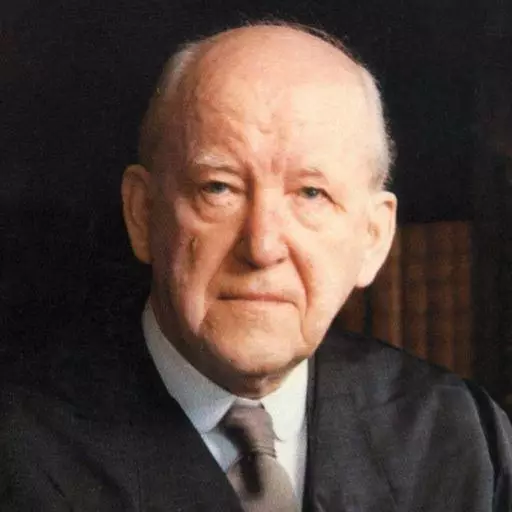
'But God': The Christian Message to the World


It is not merely the outwardly wicked who are saved by grace who should be amazed at their salvation. Every Christian, even those who lived a supposed moral life before salvation, should be amazed at God’s grace. Salvation is entirely God’s work. In the sermon on Ephesians 2:4 titled “‘But God:’ The Christian Message to the World,” Dr. Martyn Lloyd-Jones examines Paul’s introduction of the chief characteristics of the gospel. What makes the gospel good news? It is that in one’s salvation, they become a new creature. Conversion is not merely something added to life, but rather a new realm of thinking. The dead have become alive. Dr. Lloyd-Jones remarks that Christ’s redemptive work for such sinners seems impossible and yet it’s true. He died for the dead so the dead may be made alive. God has done this to show His unmerited favor. His kindness and love are displayed through the salvation of wretched sinners. Come to Christ and discover the exceeding greatness of His power to all who believe. Through the gospel, God has found a way of liberating sinners from all their sin. The Christian, therefore, should be amazed that God would save a sinner such as themselves and not be ashamed because it is the power of God.
Dr. Martyn Lloyd-Jones: And the words to which I should like to call your attention this morning are to be found in Paul's Epistle to the Ephesians, the second chapter, verses 4 to 7. Verses 4, 5, 6, and 7. In the second chapter of Paul's Epistle to the Ephesians.
But God, who is rich in mercy for his great love wherewith he loved us, even when we were dead in sins, has quickened us together with Christ by grace ye are saved, and has raised us up together, and made us sit together in heavenly places in Christ Jesus, that in the ages to come he might show the exceeding riches of his grace, in his kindness toward us through Christ Jesus.
We come back again to this majestic and mighty statement. I hesitate and I pause because I am again tempted to say that this is conceivably the most moving passage, the most moving statement that is to be found anywhere in the Scripture. I pause because I know full well that I have said that before.
And there is something which is quite right in one's continuing to say that about different passages in the Scripture. There are these exceptionally moving, gripping, exalting, melting statements, and surely there is none which is superior to this.
It is one of the most wonderful expressions of the very essence of the Christian gospel, the Christian message, the good news of salvation which even this mighty Apostle ever penned. It is, of course, in a sense, an elaboration of what he said in the seventh verse of the first chapter, where he put it like this: "In whom we have redemption through his blood, the forgiveness of sins, according to the riches of his grace."
But here you notice he goes further, that in the ages to come he might show the exceeding riches of his grace. Riches before, exceeding riches now. In a sense, of course, he is not adding to what he said before. And yet, he was so moved as he contemplated it again that he felt he must pile on adjective upon adjective.
And it is a sign always of a true understanding of the gospel that one should do so. Your purists and your pedants are more literary men than Christian men. There is always a rich abandon about the gospel. And surely, one of the whole curses of this age in which we live is that it depreciates this particular element and quality in our understanding of the faith and in our expression of it.
We are all so polite, we are so correct, and the result is we don't enjoy our Christianity ourselves as we should, and we don't attract any others to come to us. But this man, as I say, he is lost, as it were, in wonder, love, and praise. Riches of his grace, yes, exceeding riches of his grace. How can he ever express it adequately?
Well, here, I say, he is doing that. I pointed out some time ago that in a sense, this epistle to the Ephesians from the beginning of the second chapter onwards is just an elaboration of what he said in the first chapter. The first chapter is the kind of overture in which you get all the major themes put together in one chapter. That's why it took such a long time to go through it.
But now he takes them up one by one, and he elaborates them. You see, there is a structure to this epistle comparable to many a great and moving piece of music. But here in particular, what he is concerned to deal with is the thing that he had mentioned in the 19th verse of the first chapter. He is praying for these Ephesians. Three things particularly: that they may know what is the hope of his calling, what the riches of the glory of his inheritance in the saints. And thirdly, what is the exceeding greatness of his power to usward that believe.
Now, that's the thing that he takes up here. And we have seen that he does it in two ways. He says, you will never realize the greatness of this power of God toward you until you realize your sinful condition before he touched you. You've got to realize the depth out of which you've been raised. We've dealt with that, that's the first three verses. There is the negative aspect of this matter.
But now he comes here in verse 4 to the positive aspect. We've not merely been brought out of the pit, much more has happened to us. And here he proceeds to describe it and puts it, as I say, in this positive form. He shows us what God now has actually done to us and for us in our Lord and Savior Jesus Christ.
In other words, in these verses, we have what is the very essence of the gospel and of the Christian faith. And you will notice that the Apostle introduces it with the word 'but'. Having given us that awful picture of ourselves in sin, dead in trespasses and sins, wherein in time past he walked according to the course of this world, according to the prince of the power of the air, the spirit that now works in the children of disobedience, among whom we all had our conversation in times past, in the lusts of our flesh, fulfilling the desires of the flesh and of the mind, and whereby nature the children of wrath even as others, but, and then comes the whole of the gospel.
Now that's how he introduces it. And he always introduces it in that way. The gospel always comes in with some such word as this: "Nevertheless," says Isaiah, having pictured his terrible picture of the world in sin, "nevertheless," and then comes that great passage about the birth of our Lord, "Unto us a child is born" and so on. The contrast.
And here then the Apostle does something which is so characteristic of him. The one word 'but' opens the door. So that here I say we have the essence of the gospel, and are reminded of all its main and essential characteristics.
Now I want this morning to look at them in general. We looked at this last Sunday morning in a still more general manner, just taking the description of man in sin to represent the modern world and to show the relevance of the gospel to that. I come now to the more personal aspect, which is really the thing that the Apostle had in his mind.
I want to look at this word 'but' and to show how it really does introduce us to all the chief characteristics of this Christian message. Take for instance, the way in which it introduces us to the hope of the gospel. This 'but' is the 'but' of hope, the hope that comes in to a condition of hopelessness and of unutterable despair.
Now that's quite obvious, isn't it, in this particular setting. Can you imagine anything more utterly hopeless than the state and the condition of man in sin, as described by the Apostle in these first three verses? It is completely hopeless. The word 'dead' in and of itself is the last word in that respect. While there's life, there's hope. Yes, but when there is death, there is none whatsoever. It is the end of all hope. Death is the end.
Well, now then, that's the condition of man in sin, says the Apostle. He is dead in trespasses and sins. He is entirely governed by the god of this world. He's an absolute slave, and he's polluted in his mind, in his understanding, in the whole of his being. It is complete helplessness.
But it is into that that the message of the gospel comes. When all things seem against us to drive us to despair, we know one gate is open, one ear will hear our prayer. That's it. It suddenly brings hope into a position which was entirely and completely hopeless.
Now, this is something that you will find always when the gospel is introduced in the Scriptures. It's so frequently compared to light, isn't it? Light suddenly coming into the darkness. You remember the description of the coming of the gospel at the beginning of the gospels? You get it in Matthew: "The people that sat in darkness have seen a great light."
They were absolutely hopeless. They were paralyzed. They were sitting in darkness. There was nothing to be done. They had even given up trying to do anything. There was no point in walking about because they couldn't see. They just sat in darkness. That's men without the gospel of Christ. But suddenly they've seen a great light. And there's hope, there's a possibility after all.
Now that is the way, I say, in which the gospel is always introduced. This therefore surely is a very serious point for us. Doesn't it entitle us to say this: that if the gospel does not come to us like that and has not come to us like that, it probably never has come to us at all.
To me, this is an absolute test of our whole position, that we realize that we are entirely without hope apart from this message. You see, that at once will tell us what our view of ourselves as sinners is. It will also give us a very good idea as to our conception of the gospel itself, as to what it is.
You remember the Lord Jesus Christ said that he had not come to call the righteous, but sinners to repentance. He said, "They that are whole have no need of a physician, but they that are sick." The man whose writhing in agony with pain is delighted when the physician puts his head through the door. He knows that relief is at hand. There is hope for him.
But of course, if you don't feel sick, if you are not ill, if you are not aware of the need of a physician, the entry of the physician will be very little to you. You may be glad to see him in general, but he doesn't come to you as someone who is going to bring you relief and hope and possibility. But the gospel invariably comes like that.
Take the Apostle writing about himself to his disciple Timothy. He says, "I myself was before a blasphemer and an injurious person and a persecutor." That's what I was. "But," he says, "I obtained mercy." The same thing exactly. The hope that came in into his terrible hopelessness.
So that it seems to me we can put it in this way. It is only the man who has ever turned to himself and has said, "Oh, wretched man that I am, who shall deliver me from the body of this death?" It's only the person who has known something of that hopelessness and of that final despair who really sees the hope of the gospel.
He's a man who has been struggling and striving against sin. Temptation and evil are ever present with him. He's made his resolutions, he's taken his decisions. He really wants to, but he finds another law in his members. He finds this essential contradiction in himself, and at last he despairs of himself. He says, "What can I do with myself?" He's desperate. He doesn't know what to do nor what to say. He's utterly hopeless. Then suddenly, well, let's put it as the Apostle himself puts it.
"Oh, wretched man that I am, who shall deliver me from the body of this death?" And then the blessed answer, "I thank God through Jesus Christ my Lord." There is hope even for me. "Vile and full of sin I am, thou art full of truth and grace." You see the 'but'? You see the difference? There's a hope after all.
And that is how the gospel, I say, should always come to us. Is there a 'but' in your life, my friend? Do you know something about this blessed 'but'? Ah, what really decides that, you know, is whether you've agreed with what we said about the first three verses. If you are an essentially good person who now and again does something that's a little bit wrong, there's no 'but' in your life. You've never seen any need of Christ. You can do it all yourself. And if you can do it, the 'but' is nonexistent.
But if you realize the truth about your vile, sinful, foul nature, that you're born in sin and shapen in iniquity, if you really understand what that means, well then this 'but' is the most glorious thing in your life, the most wonderful thing you've ever heard: the 'but' of hope. Hope for the hopeless, help for the helpless, light in darkness. What a blessed 'but' it is!
But let's go on. It is the 'but' also that introduces us into an entirely new realm. And this again I regard as most important. I've already been using the comparison which is so frequently used in the Scripture about the contrast between light and darkness. And I've used it so far as an expression of hope. But you see, there is this other thing also. There is an essential qualitative difference between light and darkness.
There is no correspondence between them as the Apostle argues, you remember, in the Second Epistle to the Corinthians in the sixth chapter. There is no communion between light and darkness. They belong to two different realms. And when light comes into darkness, it is the introduction of an entirely new category, a new dimension, if you like. Something which is essentially different. It means that there is a break.
And here again is something that is everywhere emphasized in the Bible with regard to the gospel. To come to the gospel, you see, means that you begin to think in a new way. You are thinking in a new dimension altogether. Here it is very perfectly in our context, isn't it? Take those first three verses: you're looking at men, you're looking downwards, as it were. You're looking into blackness and darkness, and there you've looked until you know that you're wretched and miserable and absolutely hopeless. Then suddenly you're caused to lift up your eyes. A 'but', something arrests you, there's a flash, and you're looking up instead of looking down. And you discover that your whole thinking has suddenly been revolutionized.
So far, you see, we've been thinking in a human manner, in an earthly manner, in a spiritual, in a temporal manner. But now, as we come to the gospel, all that is changed. We are beginning to think in a spiritual manner, in a supernatural manner, in a miraculous manner. The 'but', you see, leads us at once to this tremendous decision, to this tremendous transition.
And this, of course, is something that so many people fail to grasp. It's been a stumbling block from the very beginning until now. Let me give you the supreme illustration of it. Take the Virgin Mary, the mother of our blessed Lord. You remember the story, don't you? There she was, living her life as she'd always lived it. Nothing special about her, nothing unique in any way or manner, a woman like every other woman.
When suddenly she is visited by an angel, who begins to speak to her and who tells her about some holy thing that is going to be born of her. That she's going to have a child, a son, this holy thing. And she stands back aghast and amazed and astonished. She doesn't understand this kind of speech, and she begins to expostulate and to express her doubts. She says, "How can this be unto me? This is impossible. This cannot happen. It's cutting right across the course of nature. This really is something that I don't understand." And you remember the reply of the angel to her. He simply said, "With God nothing shall be impossible."
"You were thinking along an earthly level," said the angel to Mary. "You were using human reason, and what you're saying, of course, is perfectly right. If it's a matter of human activity, you're perfectly correct. These things cannot be. So you're right in saying, if you're thinking only along that line, 'How can this be unto me, since I have never known a man?'"
"But Mary," said the angel, "I'm not a human being, and I haven't come with an earthly and a human and a temporal message. With God, we're dealing with God. We're in another realm. This is the realm of the spiritual, the miraculous, the supernatural. Nothing shall be impossible with God." Here's a new category, a new dimension. We are looking up. We are not looking simply downwards. And that is again of the very essence of the gospel.
"If any man be in Christ, he is a new creature. Old things are passed away. Behold, all things become new." Now this was the great stumbling block, wasn't it, to the Greeks? And that is why so much attention is paid to this matter in the epistles of the Apostle Paul. They would persist in judging it all with their human understanding, and men and women are still doing the same. And that is why they are not Christians. That's why they're outside Christ.
This is not human. It is not philosophy. It is not man's thinking. It is not man's activity. This is all of God. "It was when the world by wisdom knew not God that it pleased God by the foolishness of preaching." This tremendous reversal, you remember. "How God takes the weak things of the world to confound the mighty, the things that are not to confound, to bring to naught the things that are, the foolish things of the world to confound the wise." That is his argument, you remember. And that is essentially the gospel and the Christian method.
It's an entirely new dimension. "The natural man understands not the things of the spirit of God." But these are the things of the spirit of God. "They are foolishness unto him." They are not foolishness unto us, says Paul. "We have the mind of Christ. He that is spiritual judges all things, yet he himself is judged of no man." He's got a new understanding. A 'but' has come into his life. He was thinking along that level. He was a failure. He was miserable. He didn't understand. Suddenly there's an illumination. There is a revelation, and he begins to see things. But he says, he's opened into a new realm altogether. He has an understanding which he'd never even imagined in his previous life and existence.
"If any man be in Christ, he is a new creature. Old things are passed away. Behold, all all things are become new." Have we got this new understanding? Is our Christianity, our profession of this faith this morning, something that can be truly described in the terms I've just been using? If your Christianity is just a little bit of morality, you can't speak of it like this. If it's just something that you add on to your life, it doesn't merit this 'but', and there's no 'but' there, because many people who don't even claim to be Christian can do all that. They've got their code. They've got their ideas of rectitude and of correct behavior and so on, and they do it admirably. They're highly moral, wonderful people. But they're not Christians. Why? Well, there's none of this new realm of thinking in their lives. The miraculous hasn't come in. There's nothing supernatural about them. There's nothing divine about them. They don't know God, and they're not in correspondence with him. The 'but' has never come in.
"But God," they can't say that because they're not aware that God has done anything to them. They're in control of their lives. They're doing everything. There's no 'but God'. What a tragedy that that so often passes us Christianity. Just a decent, moral, conventional life added on to the other kind of life. That is regarded as Christianity. What a travesty! It's not surprising that the masses are outside the Christian church.
But come, let's go on to a third 'but'. The third 'but' is the 'but' that introduces the element of unexpectedness. And what a wonderful thing this is again: unexpectedness. There you were jogging along the road, not expecting to see anything at all. The next stretch looked like the last stretch. There was a time when you expected something was going to happen and that your life was going to be different from all who'd ever lived before you. But you've long since got out of that. You're tending to become cynical. The journey has become hard. The road is dusty, and the sun is setting, and the rain is beginning to come down. There you are, just plodding along. You've given up all hope, when suddenly, but, the suddenness and the unexpectedness, which leads to surprise and astonishment and amazement.
It's not surprising that this Apostle of ours should write like this, is it? How could he ever forget what happened to him on the road to Damascus? Going down with the authority, breathing out threatenings and slaughter, pondering in his own mind how he was going to exterminate Christianity, believing he was doing God's will by doing so. And there it was going round and round in his mind until his face had become vicious and vile, the very anticipation of massacring these people. And he was full of it. There's the one picture of darkness. What can you ever expect to happen to such a man but that he should continue doing that and go to a miserable and a wretched grave? Then suddenly, but, the light, the face, the eyes. And in amazement and astonishment, he cries out, "Who art thou, Lord?" And back comes the last thing he'd ever expected to hear, "I am Jesus whom thou persecutest."
And he worked it out, and he began to see that that blessed person had died even for him. "Even for me," he says, "the Son of God, who loved me and gave himself for me." He never got over it. How could he get over it? That he, who had been an injurious person and a blasphemer and a persecutor, who hated this person, that Christ had even died for him. Oh, it's not surprising that Charles Wesley has put it once and forever in those immortal words, "And can it be that I should gain an interest in the Savior's blood? Died he for me?"
"The thing's impossible. It can't be." And yet it's true. In spite of it, in spite of what I was, but God, who is rich in mercy. Are you amazed at the fact that you're a Christian? Oh, I don't hesitate to say it: if you don't, if you're not amazed, well, I'm afraid you're not a Christian. At any rate, you have no right to assume you are. You need to go back to the first three verses and to stay there until you've seen yourself, because it's only when you've seen that you'll see this, and you'll be amazed that it's possible even for God himself to forgive you when you see the rottenness and the vileness and the ugliness of your natural, unregenerate heart.
You see, it's people like the Apostle Paul who speak like that. It's an excellent young man like Charles Wesley who says things like that. Not a man who'd lived as a drunkard or as an adulterer or a wife-beater, but moral, religious men. They are the ones who say it because the Holy Spirit has given them a view of themselves, and then of this amazing love of God, the surprise, the unexpectedness, the amazement, the astonishment.
But come, let's go on. This 'but' also, in the fourth place, emphasizes that salvation is entirely and solely the result of God's action. Entirely and solely the result of God's action. That is obviously the Apostle's whole point here. You notice his comparison. The comparison is between the Lord Jesus Christ crucified, dead, and buried in the grave. He literally did die. There was no life left. He died. And as the Apostle was telling us at the end of that first chapter, it's the power which he wrought in Christ when he raised him from the dead and set him at his own right hand. That's the power that's working in Christians. And that's the analogy. It is entirely God's work. It must be, of course. It can't be man, can it? At least if you believe verses 1 to 3, it can't be man. For man is dead in trespasses and sins. He is entirely the slave of the prince of the power of the air, the spirit that now works in the children of disobedience. He is entirely walking according to the course of this world. He is led. He is held by the polluted nature that's in him. This lust of the flesh, expressing itself in desires of the mind and desires of the flesh, are of the body. He's guilty. He's under the wrath of God. That's man. He doesn't even desire God. The natural mind is enmity against God. Is not subject to the law of God, neither indeed can be. That is man in sin. Well, what can he do? He doesn't even want to do it. He's opposed to God by nature.
Of course, he's got a god of his own making, not the God of the Bible, not the God and Father of our Lord Jesus Christ. He thinks he can please his god, but it's his god. He can do nothing about this God because he's utterly opposed to him. "Enemies," says Paul, in this Ephesian epistle later on, "enemies and alienated in your mind." What can be more hopeless? Dead in trespasses and sins. There he is. It can't be man. How can such a person do anything? But the answer is, you see, it's all of God. There's man, but God. When man could do nothing, as the hymn puts it again, it was when all was sin and shame, a second Adam to the fight and to the conflict came. Oh, blessed wisdom of our God. When all was sin and shame, a second Adam to the fight and to the conflict came. And you know what followed. Well, now then, I say this is the great message of the Scripture from beginning to end. You know, my friends, the Bible is nothing but a record of the activity of God. And there has been no more devastating result of the appalling higher critical movement that has so controlled the thinking of the Christian church for 150 years almost than the way in which it has persuaded people to think that this is an account of man's quest for God. What a travesty! It's the exact opposite. It's all the record of God's activity in saving man.
And the Bible, I say, is nothing but a record of it. You remember how it began at the Fall? There in the garden of Eden, God came down into the garden and addressed man and spoke to him. It's there in the call of Abraham, isn't it? Called out of paganism in order that God might turn him into a nation. It was God who did it. The call of Moses, who was a shepherd there, you remember, 40 years. Seemed to have given up all hope, and suddenly one afternoon he takes his flock of sheep to the back side of the mountain, not expecting anything at all. Suddenly the burning bush. He's arrested. He's met. God coming. But God. Read your Old Testament from beginning to end, and you'll find it everywhere. Every man who's ever figured in the history of these things is a man called of God. Take Isaiah, the vision he had on that occasion, and the posts of the door were shaking and the house was filled with smoke. God visited him. As he called and visited every subsequent prophet. It's the whole story, culminating in this tremendous statement: "When the fullness of the times was come, God sent forth his Son, made of a woman, made under the law." Not because people had been praying for weeks and months and years for him to do so. It was when they'd given up all hope. God did it. It's all God's action. And it is still God's action.
Again, there's a hymn that puts it very perfectly. There are many hymns that put it very perfectly. "Lord, I was dead. I could not stir my lifeless soul to come to thee." That's the Christian confession. "Lord, I was blind. I could not see in thy marred visage any grace." Oh, but not only blind, "I was dead. I could not stir my lifeless soul to come to thee." Or take another putting it. Listen to Toplady putting it. "Nothing in my hand I bring, simply to thy cross I cling. All, not the labors of my hands, can fulfill thy law's demands. Could my zeal no respite know, could my tears forever flow, all for sin could not atone. Thou must save, and thou alone." Oh, it's all of God, my friends. But God, it's God's action. It's God's activity. It's the whole purpose of the Apostle at this point. And as we shall see, he goes on to repeat it and to elaborate, and to stress it, and to underline it because it was to him everything, that he owed it all to him.
Let me hurry on to my next 'but', the fifth. The fifth 'but' is the 'but' that tells us why it is that God has done all this. And you notice that in each instance, there is a marked and a striking contrast between man and God. It's this absolute qualitative difference, if you like, according to the modern theological jargon, between God and man that's being emphasized here, and nowhere is it more wonderful than at this point. You see, it's the contrast between God and us in the matter of his nature. God is so unlike us, and it's because God is so unlike us that we are saved and we are Christians. If God were like us, we would all be damned and doomed. What are we like? Well, we've already seen. We are creatures of lusts and passions. We are governed by the lusts of the flesh and the desires of the mind. Which means this: that we are selfish, and we are self-centered. We are self-important. We are self-righteous. We are therefore sensitive, and we are wounded very easily, and we don't forgive when we are wounded. We are always justifying ourselves, so we are vindictive. We are unforgiving. We are hard. We say, "Why should I? After all, it wasn't my fault. And if he or she had done this or that..." Isn't that us? And if God were like that, we'd all be doomed and damned.
That is how we are. But God, what a striking difference. "Who is rich in mercy." What does that mean? Well, it means that he is full of pity. He looks down upon us and he sees us in that pitiful, wretched condition. And though we are in that condition because we've sinned against him and rebelled against him, he feels sorry for us. He is full of compassion with respect to us. Go back and read that 103rd Psalm again. And there it is. He is sorry for us, and he wants to do something to help us and to succor us. He's rich in mercy. But not only that. "For his great love." How inadequate is language! Love, you see, is positive. Mercy, in a sense, was negative. Mercy simply is a sense of feeling pity and of sorrow for us. But love is active. Love says, "I must do something about them." "For his great love wherewith he loved us." But what am I talking about? He goes on again to this gigantic phrase of his. He says that he might show the exceeding riches of his grace. He's already slipped it in in brackets in verse 5: "By grace ye are saved." But that wasn't enough. It's the exceeding riches of his grace. What's this mean?
Well, grace means unmerited favor. Grace means to show kindness and mercy and compassion and love to somebody who really deserves nothing at all from you, who deserves nothing but wrath and punishment and hell. That's why we are Christians: because God has this exceeding riches of his grace. You notice how Paul puts it: "Even when we were dead in sins," he's done this for us. It's in spite of us. We are saved in spite of our being what we are and as we are. God has not been moved to do this for us by anything in us. It's entirely of his own loving mercy, the exceeding riches of his grace. And then he adds still another word, the word 'kindness'. "That in the ages to come, he might show the exceeding riches of his grace in his kindness toward us." In Jesus Christ. Kindness means benignity. He looks upon us with a smile which is benign, as it were, upon his countenance. He is well-disposed toward us. But it's all summed up for us here in one phrase, "That in the ages to come, he might show the exceeding riches of his grace in his kindness toward us through Jesus Christ." It's all there. There are we, wretched, vile, foul sinners. And yet such is the mercy and the grace and the love and the kindness of God that he not only felt sorry for us and felt kindly disposed towards us. Not only did he show us certain general blessings upon us. He sent his only Son out to the courts of heaven to be born as a helpless babe in Bethlehem. He made him under the law. He made him under a woman. His own eternal, beloved Son. He exposed him to all the malignity and bitterness and malice of men. They tried to kill him even as a babe. His enemies plotted against him. Look at the way he suffered the contradiction of sinners, but it didn't end even there. "He spared not his own Son, but delivered him up for us all to the cruel agony and shame and death of the cross." He didn't spare him even that. For us, for us. That's the meaning of the exceeding riches of his grace. That he should do all that for us, vile sinners as we are, in and through the Son of his love, the only begotten, the beloved. Oh, thank God for this 'but', that eternally separates God from us. It is because of his heart of love, because God is love, that we are saved at all.
But let me say just a word as I close about the last 'but'. It is the 'but' that leads us, of course, to and tells us of the greatness of the power wherewith and whereby God does all this. That is Paul's particular stress at this point: "The exceeding greatness of his power toward us that believe." And were it not for this power, you see, the love of God would be helpless. You see the power that's needed, don't you? We are under the wrath of God. Our natures are vile, polluted, foul. We are held captive by the devil, who is mightier than any man the world has ever seen, one of the most powerful angels that God created. There we are, and we need to be liberated, be taken out of the wrath of God, out of the dominion of Satan, out of the dominion and the thraldom of sin and lust within us. How can it be done? Man can't do it, as we've seen. But you remember how this same Apostle puts it in the fifth chapter of the Epistle to the Romans: "While we were yet without strength, in due time Christ died for the ungodly." "I am not ashamed of the gospel of Christ." Why? The answer is, "It is the power of God unto salvation to everyone that believeth." It's God's power this. Not man deciding something or determining to do something. No, no. It's the mighty power of God laying hold upon them.
"What's my ambition?" you ask the Apostle Paul. "What's your ambition, Paul?" And he'll tell you, "That I may apprehend him of whom I have been apprehended. I want to lay hold of him who's laid hold of me," says Paul. The grip, the grasp, the hold of God. And thank God his power is so great that he can do it all. He has found a way to appease his own wrath, to satisfy his own holy law and nature. He has found a way of conquering the devil and Satan and hell and all their forces. He has found a way of liberating us from all our besetting sins. We shall go on to consider it on some future occasion. Thank God for this 'but'. This in many ways is the most hopeful 'but' of all. For it means this, you see, that there is hope for all, that no one is beyond the reach of this redemption because it's God's power. No one's hopeless. And the world is full of hopeless people. Education hasn't made them go straight. Money can't keep them straight. The love of a dear wife and children can't keep him straight. The man can't help himself. He's a victim of a lust and a passion and a desire, a heat in the flesh, and he can't control it, much as he would like to do so. He's hopeless, you say. The world has given him up. But God, the whole power, the eternal, everlasting power of the almighty God is engaged, and no one is hopeless. Don't talk to me therefore about the difficult temperament of that person. I don't care what his temperament is. He can be created anew. Don't tell me about the particular type of sin and what a vicious one and what a vile one it is. I'm preaching one to you who's conquered the devil himself, who is the author of all sin. Tell me nothing about the depth of sin. I preach a Savior who's descended into Hades and has ascended into the highest heaven. There is hope for all in this redemption. There is none who can sin himself beyond its reach and ambit. Am I speaking to someone who's feeling hopeless at this moment about himself or herself? In the grip of sin, in the grip of something that gets you down. My dear friend, the power of God. But God, with God nothing shall be impossible. Go on. Keep on. Pray. Continue. Hold on to the promises of God. Surely we'll all agree therefore that there is nothing that we need to know more than this thing which the Apostle felt the Ephesians needed to know above everything else, which is this: the exceeding greatness of his power to usward that believe. If your life is a defeated life, if it's a depressed, unhappy, miserable life, it's due to this finally. You don't know his power. For if you knew it, you'd confide in it. You'd trust it, and you would be delivered. May God enlighten the eyes of our understanding that we may know the exceeding greatness of his power to usward that believe. Amen.
Featured Offer

Find peace and comfort this season with your complimentary guide that includes access to 6 free bonus sermons on overcoming spiritual depression from Dr. Martyn Lloyd-Jones, one of the church’s most beloved Bible teachers. Topics include: true Christians can and do struggle with depression, recovering the joy of your salvation, dealing with crippling guilt over past sins, dealing with yesterday’s haunting regrets, encouragement to keep moving forward, and understanding God’s purpose for suffering.
Past Episodes
This ministry does not have any series.
Featured Offer
Find peace and comfort this season with your complimentary guide that includes access to 6 free bonus sermons on overcoming spiritual depression from Dr. Martyn Lloyd-Jones, one of the church’s most beloved Bible teachers. Topics include: true Christians can and do struggle with depression, recovering the joy of your salvation, dealing with crippling guilt over past sins, dealing with yesterday’s haunting regrets, encouragement to keep moving forward, and understanding God’s purpose for suffering.
About From the MLJ Archive
From the MLJ Archive is the Oneplace.com hosted ministry of the MLJ Trust. Our mission is to promulgate the audio ministry of Dr. Martyn Lloyd-Jones.
About Dr. Martyn Lloyd-Jones
Contact From the MLJ Archive with Dr. Martyn Lloyd-Jones
info@mljtrust.org
http://www.mljtrust.org/
PO Box 953
Middleburg, VA 20118