
Apostle to the Gentiles


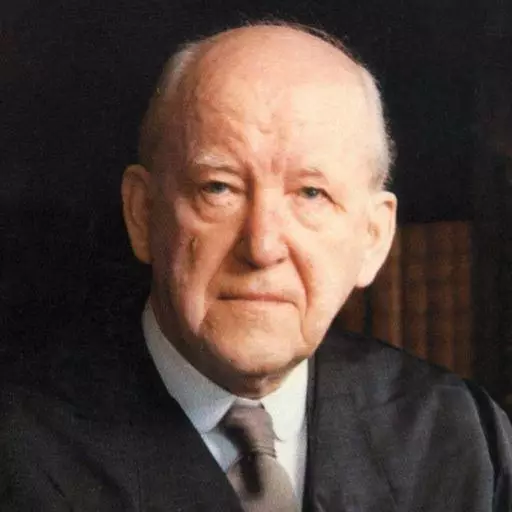
Romans 11:13-15 — In this sermon on Romans 11:13–15 titled “Apostle to the Gentiles,” Dr Martyn Lloyd-Jones works through the teaching of Paul to the Gentiles. Different interpretations of these controversial words by Paul are examined and the various out-workings of each are addressed. He explains the difference between translation and interpretation. Paul preaches as an apostle to the Gentiles and he emphasizes this office, perhaps with an ultimate and ulterior motive for the salvation of the Jews. Dr. Lloyd-Jones addresses these questions along with the false notions that surround both the Jew and the Gentile. Evangelism, teaching, and warning are all essential to Paul’s word to these people and for today’s believers. Is the gospel different for Jew and Gentile? Listeners are encouraged to be diligent in study and see the full blessing that God has offered through Christ, embracing the word of God and the hope of the gospel that is now available for every human, no matter the race, gender, or ethnicity. Salvation has been purchased through the blood of Christ for the purification of more than just the Jews.
Dr. Martyn Lloyd-Jones: I would like to call your attention this evening to the 13th, 14th and 15th verses in the 11th chapter of Paul's Epistle to the Romans, verses 13, 14 and 15 in the 11th chapter of Paul's Epistle to the Romans.
For I speak to you Gentiles, inasmuch as I am the apostle of the Gentiles, I magnify mine office. If by any means I may provoke to emulation them which are my flesh and might save some of them. For if the casting away of them be the reconciling of the world, what shall the receiving of them be but life from the dead?
Now here we come to a new subsection. In this section or division, which runs, you remember, from verse 11 to the end of verse 32. We indicated that you can subdivide this division or section into certain subsections. We've already dealt with the first subsection, which is verses 11 and 12. We've seen there that the apostle lays down this general theme that he's going to consider in the rest of the chapter, and which arises out of this major theme which he's dealing with in chapters 9, 10 and 11.
Now, having dealt therefore with the first subsection, in which he really lays down, as I say, the proposition that he's going to consider, he now goes on to take that proposal or that intent a step further. And he does so in the verses that I've just read to you. Now, I confess freely that I'm in a little difficulty to know exactly what to do with verse 15. I mean by that from the pure standpoint of the division of the matter of the section.
When I was giving you an analysis of the section a few weeks back, I think you'll find that I said that verse 15 should be taken on its own, that in verses 13 and 14, the apostle deals with this question of his ministry, and then states again in verse 15 the major theme which he'd already laid down in verses 12, in verses 11 and 12. Well, I still think that that's a legitimate way of regarding the matter.
But I wouldn't quarrel with those who would put verse 15 with verses 13 and 14 as constituting a little subsection on their own and in and of themselves. I think that is helpful and important, but of course ultimately, the meaning will be the same. Well now then, as you come to a new subsection, the first question you must always ask is this, what is the connection between this subsection and the previous one?
Why does the apostle go on to say what he says? Also, what is its connection with what follows? Now, this is a universal rule, but as we try on Friday nights not only to discover the meaning of the particular portion of Scripture with which we are dealing, but also try to arrive at a general method of biblical study, I call your attention to a point like that. It's always good to ask certain questions. Why does he say this? What made him say it? What's the relevance of what he's saying?
Is it something that is connected with what he's already said, or is it something quite new which is going to lead on to something he's going to say? Well, I think that in this instance the answer is both. That it helps to throw light upon what he has said and also to prepare the way for what he's going on to say. What is it? What's he doing here? Well, let's answer the question first of all, very generally.
By saying that he is here giving us an explanation, or rather giving the people to whom he wrote an explanation of why he is saying all that he's saying about the Jews to the Gentiles. That's what he's really doing here. He's giving the Church at Rome, which as I'm going to show you, was mainly a Gentile church, the reasons or the explanation for spending all the time that he has been spending in taking this particular case of the Jews.
And then, of course, having done that, he will be in a position to explain in greater detail the whole question of the relationship of Jews and Gentiles to the ultimate purpose of God with respect to the Church. Now then. So you see, he first of all is looking back to what he's been saying and says, now, I'm going to tell you why I'm doing it. But he's also looking forward.
From 16 to 24, he takes up this tremendous theme of the relationship of Jew and Gentile in the purpose of God to the Christian Church. And there he will work it out in details, but here he is preparing the way for that and making it clear to these people as to why he's going to do that. But also, at the same time, and in doing both these two things, he gives us a personal statement and tells us something about himself and his life as a minister and his own view of his office as a minister of the Gospel of our Lord and Savior.
So it is a very interesting little subsection, little in compass, but big, as you see in its content and in what it says. Now it's extraordinary, and this is again something that I make as a general remark about the study of the Scriptures. It is extraordinary how sometimes when you think that you've got a very simple matter to deal with, the moment you really begin to look into it, you'll find that it's not quite as simple as you thought it was.
And the reason for that sometimes is not because it's dealing with some abstruse doctrine. It is purely a matter which is more or less mechanical. Now, here is an instance of the very thing I'm saying. You will find that the learned commentators are in considerable trouble over this statement contained in verses 13 and 14 in particular. And the whole difficulty arises because of the odd construction which the apostle used in writing.
Let me be still more specific. The difficulty arises because the apostle here, as we have seen elsewhere also, was not as careful about his style of writing, well, as a man ought to be. Now does that surprise some of you that I am criticizing the style of writing of the Apostle Paul? I'm not criticizing it, but I'm calling attention to a fact. The Apostle Paul is guilty of what the learned authorities call writing an Anacoluthon.
What's an Anacoluthon? Well, an Anacoluthon is this. It is a statement which is not completed. It's an interrupted statement. It's as if a man writing in a hurry instead of working out what he began to say, leaves a loose end. Now, any preacher or speaker will know exactly what this means. I mean by preacher a man, not a man who reads a sermon, but a man who really preaches. He will know exactly this danger.
Sometimes, especially if a man is tired or hard-pressed, he may start a sentence and never complete it. He may with a glance or a move of the hand, as it were, convey the rest of the meaning. But of course, when you come to read that in writing, it's rather difficult. You're left, as it were, with a sentence more or less in mid-air. Well now then, something like that has happened here.
The apostle in making this statement, he uses two words which translated one by one mean indeed and therefore. He uses them together. Indeed, therefore. Now, our authorized translation doesn't bring them out, neither do most of the other translations. That's where the difficulty came in. They all have more or less to interpret. But the apostle used these two words, indeed, therefore.
And this is the point I'm making. In all his other uses of the words, indeed, therefore in the New Testament, you find them always followed by the word but. However, in this particular instance, he doesn't give us the word but. He just leaves it unsaid, and hence the whole difficulty. Now, that is what is called an Anacoluthon. It's an interruption in the run of a statement or of a sentence.
He's, as it were, assuming that we'll work it out for ourselves. Now, we've had instances of this before, so that I needn't stay with them this evening. Now, the whole difficulty therefore has arisen because this word but is not put in. And therefore, you will find that people disagree about the exact statement which the apostle is making. Should this word but be supplied by us in our translation and in our interpretation, or shouldn't it?
And you will find that there are three main replies to the question. There are translations which evade the problem altogether, and they just sort of translate as literally as they can and leave it to us. There are others which definitely take the view that the word but should not be supplied. And the third possibility is the supplying of the missing word but. Now, let me show you what I mean.
Now, the authorized translators, they evaded the problem. They just left it to us. So they translate like this. For I speak to you Gentiles, comma, inasmuch as I am the apostle of the Gentiles, comma, I magnify mine office. Colon. If by any means I may provoke to emulation them which are my flesh, comma, and might save some of them. That's the authorized version.
The revised version follows the example of the authorized and evades the problem. So they translate like this. But I speak to you, there's a difference, then notice the difference. But I speak to you that are Gentiles. Full stop. Inasmuch then as I am an apostle to the Gentiles, comma, I glorify my ministry. Colon. If by any means I may provoke to jealousy them that are of my own flesh, etc.
Now, the big difference there is that they end a sentence at the word Gentiles instead of just putting a comma as the authorized version has done. But essentially, of course, the two are agreed in leaving it to us. And it's very difficult to interpret it as it is. Now, let's move to the second division. Those who say that this missing word but should not be supplied.
In other words, they would absolve the apostle of being guilty of an Anacoluthon. In spite of the fact that it's the only instance in all his writings where he is guilty of this, they say he isn't guilty of it, and there is no need of this but at all. So they translate like this. Now here is the revised standard version. Now, I am speaking to you Gentiles. Full stop.
Inasmuch then as I am an apostle to the Gentiles, comma, I magnify my ministry in order to make my fellow Jews jealous and thus that some of them might be saved. Now, you notice that here you see is a distinct meaning given. I magnify my ministry in order to make my fellow Jews jealous and thereby save some of them.
The new English Bible, as it's called, translates like this. But I have something to say to you Gentiles. Full stop. I am a missionary to the Gentiles, comma, and as such, I give all honor to that ministry, when, when I try to stir to emulation the men of my own race, so as to save some of them.
Now, you see that goes even further than the revised standard. Here's the statement. I am a missionary to the Gentiles. And as such, I give all honor to that ministry, when I try to stir emulation in the men of my own race and so to save some of them. You notice that that is not translation, that is interpretation. They're actually interpreting.
The words used by the apostle don't justify them in saying that, but they're interpreting and saying this is, after all, the apostle's meaning, and that is the thing that we should be concerned about. It isn't translation, we've now reached the point of interpretation. And A.S. Way, whose translation of Paul's Epistles is well known and a very good one on the whole, he puts it like this.
I turn now to you Gentiles. In so far as I am the apostle to the Gentiles, I insist upon the grandeur of my function. Dash. If only to stir up the emulation of the Jews. Same idea, you see. I am the apostle to the Gentiles, inasmuch as I am the apostle to the Gentiles, I insist upon the grandeur of my function if only to stir up the emulation of the Jews.
The same kind of interpretation again. And Way quite honestly admits that his is an interpretation rather than merely a translation. And then I quote another modern translator in America by the name of Williams, again a good evangelical translator. He puts it like this. Yes, I am now speaking to you who are a part of the heathen peoples. As I am an apostle to the heathen peoples, I am making the most of my ministry to them to see if I can make my fellow countrymen, the Jews, etc.
jealous. You notice he takes the same line. This is again interpretation. As I am an apostle to the heathen peoples, I am making the most of my ministry to them to see if I can make my fellow countrymen jealous, and so save some of them. Now, there you have examples of translators who say that this word but is not needed.
So now we come to the third group. Those who say that you should add the word yes. And I'm only going to quote one authority to you, W.G.H.T. Shedd again. He puts it like this. Because I am the apostle to the Gentiles, I magnify my office indeed. But I wish to stimulate my fellow countrymen to emulation, if by any means I might save some of them.
Now, you see he supplies the word but, and therefore he introduces a new element into the understanding of what the apostle is saying. Very well, now then, there are the translations. What have we got to say about them? Well, it seemed to me that the most helpful thing that I could do would be this. To ask a question, what then is the apostle actually saying in this statement?
And it seems to me that we can classify what he's saying, and thereby I shall show you which of these translations I think is the correct one and the one to adopt. The first thing he tells us is this. He is now addressing the Gentiles specifically. Now here everybody's agreed. I speak to you Gentiles. Now, it's better to translate the first word there by but rather than by for.
But suggests that there is a break, that there is a new element coming in. And there is. And the new element is that he is now going to speak to the Gentiles directly. He's not done that before. But now he's going to do it. But I now speak to you Gentiles. He's got something very important to say to them, and it is to them in particular.
Now, this is an interesting point, because it does, I think, show quite clearly that the majority of his readers in the Church of Rome were undoubtedly Gentiles. You go through this epistle, and you'll come to that conclusion. It can't be proved conclusively, but I think you'll arrive at that conclusion. And a very good argument is this. This very way that he says but here.
And he's addressing them directly. You will have noticed that in the previous two and a half chapters, the whole of 9, the whole of 10, and this early portion of 11, every time the apostle has referred to the Jews, he has referred to them in the third person all along. From here on, you will find that he will refer to the Gentiles always in the second person.
He always refers to the Jews as they. Well now, if it had been a mainly Jewish church, he couldn't possibly have done that. But he does that because the majority of the members in the Church at Rome were undoubtedly Gentiles. So this is a part of the evidence for coming to the conclusion that he that the Church at Rome was mainly a Gentile church. Undoubtedly there were some Jews in it, but on the whole it was a Gentile church.
So he can turn and say, now then, I say this to you Gentiles. You who are members of the Church at Rome. What is he addressing them about? Well, the first thing, it seems to me, is this. He wants to tell them and to explain to them why he is giving all this attention to the question of the Jews. After all, they're Gentiles. Why all this about the Jews?
He says, now, I want to tell you, Gentiles, why I've been doing what I've been doing. There were no chapters then, of course, but if I may put it in that form, he is, as it were, saying, now, I've given two and a half chapters to this question of the position of the Jews and as to why they're not in the church. I want to tell you now why I've done it. That's really his main object.
But not only does he want them to know why he's been doing it, he wants them to have a clear understanding in this all-important and vital matter. In other words, he wants them to see that it's not just a bit of dry theology, that he's not concerned to do all this simply because he's a Jew, or because his mind is full of this sort of thing and that it's got nothing at all to do with them.
He wants to show that it has great relevance with respect to them. So that's the first proposition. This is what he is now setting out to do. But then secondly, he tells us why in particular he is doing this. And the reason is because he is preeminently the apostle to the Gentiles. Now, this is where this personal statement comes in.
For I speak to you Gentiles inasmuch as I am the apostle to the Gentiles. Now, this is a most interesting and important statement. I read that portion from the 15th chapter to you because the apostle there again makes this selfsame point in the 16th verse, you remember, that I should be the minister of Jesus Christ to the Gentiles, ministering the Gospel of God, that the offering up of the Gentiles might be acceptable.
And of course, we know how this ministry was committed to him. It's very interesting to trace these matters. You remember the account which the apostle gives of his conversion, as it's to be found in the 26th chapter of the Book of the Acts of the Apostles. He puts it like this. He tells us how the risen Lord met him on the road to Damascus and says to him, stand upon thy feet, for I have appeared unto thee for this purpose to make thee a minister and a witness both of these things which thou hast seen and of those things in the which I will appear unto thee.
Delivering thee from the people and from the Gentiles, unto whom now I send thee to open their eyes and to turn them from darkness to light and from the power of Satan unto God, that they may receive forgiveness of sins and inheritance among them which are sanctified by faith that is in me. Now, there is the first great statement of this. But of course, it isn't the only one.
We are told in the 13th chapter of Acts how the Holy Ghost said, separate unto me Saul and Barnabas, and how they went on their journey to do this very thing. But there is a very interesting statement in the 22nd chapter of the Book of the Acts of the Apostles. Here now the apostle is giving his defense before that mad crowd that had first of all tried to kill him at Jerusalem.
And the apostle speaks and speaks in this in this way. He said, the God of our fathers hath chosen thee that thou shouldst know his will and see that just one and shouldst hear the voice of his mouth. And so on. Now then in verse 17, he says, and it came to pass that when I was come again to Jerusalem, even while I prayed in the temple, I was in a trance.
And I saw him saying unto me, make haste and get thee quickly out of Jerusalem, for they will not receive thy testimony concerning me. And I said, Lord, they know that I imprisoned and beat in every synagogue them that believe not on thee. And on it goes and then verse 21, and he said unto me, depart, for I will send thee far hence unto the Gentiles.
So that confirming his call on the road to Damascus was this vision given to him in a state of trance, when he was praying in the temple at Jerusalem. And this is a part of his appointment and calling as the peculiar apostle to the Gentiles. And of course, he tells us this explicitly in the second chapter of the Epistle to the Galatians in verses 7 and 8, where he puts it like this.
But contrarywise, when they saw that the Gospel of the uncircumcision was committed unto me as the Gospel of the circumcision was unto Peter. For he that wrought effectually in Peter to the apostleship of the circumcision, the same was mighty in me towards the Gentiles. There again is a very clear statement of this. And if you like, there is also a statement of it in the third chapter of the Epistle to the Ephesians.
How that by revelation he made known unto me the mystery. What is it? Which in other ages was not made known unto the sons of of men as it is now revealed unto his holy apostles and prophets by the Spirit, that the Gentiles should be fellow heirs and of the same body and partakers of his promise in Christ by the Gospel. And indeed, you've got it also in the first chapter of the Epistle to the Colossians.
Very plainly and very clearly. So he just reminds them of this. He says, now, I want to speak a very special word to you Gentiles. I want to tell you why I'm saying all this about the Jews, and of course, I'm doing this because I am preeminently the apostle to the Gentiles. Very well. So far, all is clear. But now we come to this statement about his magnifying his office.
Or magnifying his ministry, which is a better translation. What does he mean by this? Well, up to a point, everybody's agreed. He is proud of the fact that he is the apostle to the Gentiles. And he wants them to know that. Inasmuch as I am the apostle to the Gentiles, I magnify my office. He's very conscious of the great dignity of his office, the great privilege of his office, and he wants them to be quite clear about this.
But it isn't only that. He goes beyond that. He is very concerned that none of them should think that the fact that he has given all this space and time and attention to the question of the Jews means in any respect, or to any degree, that he is neglecting the Gentiles. That on the one hand, he calls himself the apostle to the Gentiles, but seems to be showing very clearly now that after all, he's much more interested in the Jews than he is in the Gentiles.
He says, don't draw that false deduction. I magnify my office as the one called peculiarly and specially to be the apostle to the Gentiles. Don't misinterpret. He says, all I've been saying about the Jews and even my concern about them. Very well. But now we come to the very crux of this problem. How exactly does he magnify his office?
And here you come to the disagreement. And it is a disagreement that leads to those variations in the translation which I was giving you just now. Now, let me first put to you what he is not saying. Or if you like it in another form, let me give you my reason for rejecting the translation of the revised standard version, the new English Bible, Arthur S. Way and Williams.
The people who do not supply the missing but. Now, he is not saying that he magnifies his office as the apostle to the Gentiles in order to save the Jews. See that is what they made him say. Here it is. New English Bible, I am a missionary to the Gentiles, and as such, I give all honor to the ministry, when I try to stir to emulation in the men of my I tried to stir to emulation the men of my own race.
And again, Way, in exactly the same place, and as far as I am the apostle of the Gentiles, I insist upon the grandeur of my function, if only to stir, I'm preaching to the Gentiles. I magnify my office as the apostle to the Gentiles. If only I may be able to stir in order that I may stir. And Williams in exactly the same way, you remember, put it, as I am an apostle to the heathen peoples, I am making the most of my ministry to them to see if I may make.
See if I may rouse my fellow countrymen to jealousy and so on. Now, but the one who most clearly commits himself to this is a very well-known and a most excellent commentator, speaking generally in America again, a Lutheran commentator of the name of Lensky. Now, Lensky goes as far as to say this. One would expect his glorification of his ministry to lie in what by God he had been able to accomplish among the Gentiles.
He says, you would expect that. He says, I am the apostle to the Gentiles, and I magnify my office. One would expect his glorification of his ministry to lie in what by God's grace he had accomplished among the Gentiles. But no, says Lensky, all his accomplishments among the Gentiles, I'm afraid I can't read my own writing at this point.
You'll have to forgive me. I must put on my other glasses. All, one would expect his glorification of his ministry to lie in what by God's grace he had accomplished among the Gentiles. But no. All his accomplishment among among the Gentiles. No, he looks beyond all his accomplishments among the Gentiles, and he looks to the Jews.
Then here is the crowning statement. The full glory of Paul's apostolic ministry among the Gentiles lies in its repercussion upon the Jews. So you see what that amounts to is this. That the apostle is saying that he really magnifies his office among the Gentiles and he exerts himself among the Gentiles and has been preaching so indefatigably among the Gentiles in order that through that he might save the Jews.
His ultimate motive is the salvation of the Jews, according to their teaching. And all his zeal among the Gentiles has this ultimate and ulterior motive. Now, that's why I reject those translations, because this to me is a totally untenable explanation. Why do I say that? Well, I say that for this reason. To me, verse 14 is enough in and of itself.
He says, if by any means I may provoke to emulation them which are my flesh, and might save some of them. All he's hoping at the time is that some of the Jews are going to be saved. Now, you don't, you don't glory in that. You don't magnify your office if your attitude is that at the best, all you can hope for is that some of them are going to be saved.
But quite apart from that, it is to me inconceivable that this man glories in the fact that he is the apostle to the Gentiles should say, all I'm doing among the Gentiles is really designed to save the Jews. Why is that untenable? Well, I think for a number of reasons. And that is that the apostle was aware that this commission, which he had to be the apostle to the Gentiles, was given to him, as I say, by the Lord himself.
And it was something of which he was tremendously proud, that he had been singled out in spite of his past as a Pharisee. And all he tells us in Philippians 3, that he had been singled out for this unique privilege. He regards this as something wonderful in and of itself. That's why he gives us all these quotations that he has given. He used not to see this as a Jew.
He now sees it. He sees that the salvation of the Gentiles is as precious in the eyes of God as the Jews themselves. The other interpretation, obviously, says that it isn't. The salvation of the Gentiles is only incidental to the salvation of the Jews, whereas, as we shall see as we go on with the chapter, the apostle's great case is that God is concerned to save Jew and Gentile.
And he's only concerned to show us here why for the time being the Gentiles are cast away, are outside. No, he has been given a special commission, and that is why he magnifies his office. Now, I don't want to spend time on this tonight, but this is something that any man who feels called and commissioned to preach the Gospel and to be a minister of the Gospel, it is the way in which every such man should react.
No man should preach unless he's aware of a special commission, a special calling. And therefore, he must know exactly what he is called to. And the apostle says, I have been called especially to be the apostle to the Gentiles. This is the work he's given me. He gave it me on the road to Damascus. He confirmed it by the vision when I was in the trance in the temple.
This is my special task, and I glory in this, and I give myself to it. Very well. That's the first meaning then of I magnify my ministry or my office. But secondly, he says, I magnify my office. I give myself to it. I am as zealous and as enthusiastic as a man can be. I don't spare myself. I travel, I suffer. I've been imprisoned.
He gives us lists in various places of all that he's endured. He does all this. That's the way he magnifies his office. And he does it in order to show the privilege of his position. Now that hymn of Charles Wesley's that we sang just now really expresses it all so perfectly. A man who feels all that Charles Wesley says there is a man who is magnifying his office, and a man has no business to be in the ministry or a preacher unless he is that sort of man.
Unless he gives the whole of himself in the propagation of this Gospel to which he has been called, and in the special way in which his commission has come to him. But thirdly, he's now here particularly anxious to show this. How does he magnify his office? Well, in the ways I've described, but not only that. He magnifies his office not only in evangelizing the Gentiles, but also in explaining to them fully the great truth of the purpose and the plan of God.
The very thing that he's doing here. He wants them to have a full understanding of all this. And so he's going to give them an explanation of it. Now, I think that that is perhaps the most essential point of the use of the phrase here. I magnify my office. Now, look here, he says. I want to, I want you to know exactly why I've given all this attention to the Jews.
I am your apostle, and I magnify my office. I want to do my job absolutely perfectly. I want you to be a complete lot of people as Gentile Christians. So I want to give you the full explanation of not only why I'm doing this, but of the ultimate plan and purpose of God in regard to this whole matter. So now there is a third way in which he magnifies his office.
He is he is instructing them, and he is and he is teaching them also. But then there is a fourth way in which he magnifies his office. And it is this. Now, why am I doing this? He says, why am I telling you all this about the Jews? Though you are Gentiles. Well, he says, I'm doing it for this reason also. I want you to see that what happens to the Jews, and especially what is ultimately going to happen to the Jews, is going to be the greatest source of blessing to you.
That's verse 15. If the casting away of them be the reconciling of the world, what shall the receiving of them be but life from the dead? He says, it's vital you should understand this. And I'm magnifying my office, therefore, by dealing with this question. I am helping you as Gentiles. I am magnifying this special office of mine of minister, apostle to the Gentile.
I'm going to show you how all this about the Jews is ultimately going to do something for you which can only be compared to life from the dead. But fifthly and lastly, he magnifies his office also in this way. By warning them against error. Now, we shall see that one of the dangers confronting the Gentile believers was to get a false notion about themselves and a false notion about the Jews.
He's going to deal with this in great detail. He says, boast not against the branches. He says, you be very careful. All that follows, you see, from verse 16 to verse 23 and 24. He's got a most solemn warning. He says, they've been cut off. You be careful, lest you be cut off. Don't you get an inflated notion about yourselves? Don't you say, oh, we are the people, we are in the church.
That's the very thing the Jews said, and they've been put out because of that. Now, this is a part again, you see, of how the apostle magnifies his office. He magnifies his office not merely by evangelizing the Gentiles. But as I say, also by teaching them, and also by warning them. He sums it up very well at the end of the first chapter of the Epistle to the Colossians.
Where again he's dealing with himself as the apostle to the Gentiles. He says, where I have been made a minister according to the dispensation of God which is given to me for you to fulfill the word of God. Even the mystery which has been hid from ages and from generations, but is now is made manifest to his saints. To whom God would make known what is the riches of the glory of this mystery among the Gentiles, which is Christ in you, the hope of glory.
Whom we preach, warning every man and teaching every man in all wisdom that we may present every man perfect in Christ Jesus. Whereunto also I labor, striving according to his working which worketh in me mightily. That's magnifying your office. Now, I've gone into this in detail. Because it seems to me to be a very special word to ministers and preachers.
We don't magnify our office unless it is what you may call in the words of Spurgeon, an all-round ministry. The man who is called to preach, to be a minister of the Gospel, he must evangelize. But he doesn't stop at evangelism. He must also teach. He must also warn. He must also reprimand. The apostle's doing all of these things here.
That's how he magnifies his office. He's saying, in effect, to these Gentiles, you know, if I didn't put this whole question of the Jews before you, I wouldn't be doing my job properly. I'd be neglecting an aspect of my ministry and of my calling. I'm not sent merely to bring you into the kingdom. I'm here to build you up. So I've got to warn you against false notions about yourself and the Jews.
I've got to show you also the purpose of God. I've got to show you the relevance of all this to you. That means teaching. Now, this is a great statement this about magnifying his office. And I think we'll therefore leave it at that this evening, especially in view of the time. I haven't come to the very crux and nerve, as it were, of the absolute necessity for this, but that's the thing that comes next.
All we see at the moment is this, that the apostle is mainly concerned to get a clear idea into the minds of these Gentile believers, as to why he has been giving all this attention to the question of the Jew. It's very relevant to them. If they don't understand this, well, they're going to miss a great blessing, and they're also in grave danger.
So he says, look here, I'm not neglecting you by telling you all this about the Jews. I'm in the very center of my commission. I am the apostle to the Gentiles, and I am magnifying my office. This is how I'm doing it. I'm doing this very thing in order that I may fulfill the commission given to me, to so preach to you Gentiles that I shall eventually be able to present you perfect and entire in the presence of God.
Very well. We must leave it at that, as I as I say for tonight. And then, God willing, we shall take it up at this point next Friday, and especially open out that statement in the 15th verse about life from the dead. Let us pray. Oh, Lord, our God, we again come into thy presence, and we come to thank thee, oh, Lord. We thank thee for the marvel of thy word.
We bless thy name, oh, Lord, that we find this beyond everything and before everything. We find it to be supreme. We thank thee, oh, Lord, for the wealth of the teaching. We thank thee, oh, Lord, that it is something that thrills us, that we enjoy discovering the meaning and the mind of the Scripture. We bless thy name, oh, Lord, for these things that thou hast given to us so freely to enjoy.
Oh, we pray thee that thou wouldst enable us to learn these lessons, to absorb this teaching. Forgive us for our superficiality. Forgive us for our laziness. Forgive us for being so preoccupied with ourselves that we often miss many blessings because we do not submit to thy way. We are here confronting, oh, Lord, in thy word this very danger as it applied to those Gentiles in the Church at Rome.
Oh, God, help us to see its relevance to us, that we may realize that everything thou hast given in thy word has relevance to us, that thou wouldst never have given it were it not for that. Help us therefore to search the meaning and to be diligent in our inquiry in order that we may ever derive that full blessing that thou hast for us as thy people. Hear us then, oh, Lord, and receive our humble and unworthy prayers.
And now may the grace of the Lord Jesus Christ and the love of God, and the fellowship and the communion of the Holy Spirit abide and continue with us now this night throughout the remainder of this our short and certain earthly life and pilgrimage and evermore. Amen.
Featured Offer

Find peace and comfort this season with your complimentary guide that includes access to 6 free bonus sermons on overcoming spiritual depression from Dr. Martyn Lloyd-Jones, one of the church’s most beloved Bible teachers. Topics include: true Christians can and do struggle with depression, recovering the joy of your salvation, dealing with crippling guilt over past sins, dealing with yesterday’s haunting regrets, encouragement to keep moving forward, and understanding God’s purpose for suffering.
Past Episodes
This ministry does not have any series.
Featured Offer
Find peace and comfort this season with your complimentary guide that includes access to 6 free bonus sermons on overcoming spiritual depression from Dr. Martyn Lloyd-Jones, one of the church’s most beloved Bible teachers. Topics include: true Christians can and do struggle with depression, recovering the joy of your salvation, dealing with crippling guilt over past sins, dealing with yesterday’s haunting regrets, encouragement to keep moving forward, and understanding God’s purpose for suffering.
About From the MLJ Archive
From the MLJ Archive is the Oneplace.com hosted ministry of the MLJ Trust. Our mission is to promulgate the audio ministry of Dr. Martyn Lloyd-Jones.
About Dr. Martyn Lloyd-Jones
Contact From the MLJ Archive with Dr. Martyn Lloyd-Jones
info@mljtrust.org
http://www.mljtrust.org/
PO Box 953
Middleburg, VA 20118