
An Introduction to Romans 12-16


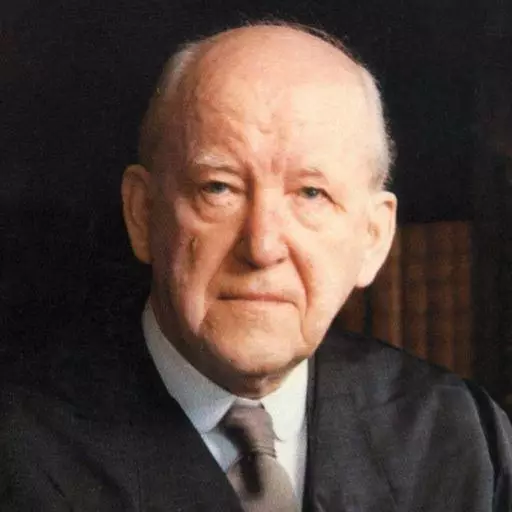
Romans 12:1-21 — The apostle Paul is a master at connecting doctrine and practical matters. He seamlessly weaves both together in his apostolic writings. While there is a change in emphasis in Romans 12 – from doctrine to practice – Paul never leaves doctrine behind. As a pastor he is concerned with helping this congregation in Rome and this always includes doctrinal appeals and arguments. In this transitional sermon on Romans 12:1–21 - his first in a series of thirty-five sermons on Romans 12 - titled “Introduction,” Dr. Martyn Lloyd-Jones challenges those in the church who view practical matters as anticlimactic. There is something wrong in the church’s thinking if it only focuses purely on doctrine. Dr. Lloyd-Jones counters this error by expounding five biblical and theological reasons why the church should focus on more than just doctrine. Moreover, he gives a general analysis of the rest of Romans and prepares his listeners with a particular outline of Romans 12. Listen to this unique and compelling sermon on Romans 12 by Dr. Lloyd-Jones as he calls the church to holistic ministry and a Christian faith that is lived out.
Martyn Lloyd-Jones: Well, as I've said, we are resuming our studies in Paul's Epistle to the Romans, and we come now to the beginning of the 12th chapter. Incidentally, for the sake of the statisticians, we are considering this epistle for the 297th time this evening. Now, the statistics, I think, have a little bit of importance at this point. If you include tonight and say 297, and then divide that by 11 because we've finished the first 11 chapters, you will see that roughly speaking, it has been 27 addresses for each of the chapters.
Of course, it hasn't worked out like that. Some have taken longer than others, but it did strike me as being interesting as I saw this figure 297, that you divide that by 11 and you come to 27. Very well, that's not what's important. The wonderful thing is, of course, that this is such a rich epistle that it has taken us all this time to work our way through it. So let me remind you again, those who've attended here regularly and let me say for the information of those who have not been here hitherto, that we must always remember that an epistle is in itself a synopsis.
People have sometimes playfully said to me that they're quite sure that the Apostle Paul would be astonished if he could but know what I find in his epistles. Well now, that, of course, is to display a very profound ignorance. Take this epistle. Why did the apostle write it? Well, he tells us at the beginning. He wrote it because he was not able to visit them at Rome. He wanted to, he intended to, but he tells us in the first chapter in verse 12 and 13 that he'd been hindered hitherto. In chapter 15, we shall find that he tells them again with more assurance that he's hoping to call upon them on his way to Spain.
But not being able to be there in the flesh and to talk to them day after day and expound the glories and the mysteries of this Christian faith, he sends them this kind of synopsis. And remember, therefore, this is nothing but a synopsis, and the business of an expounder of an epistle is not to give a synopsis of the synopsis, which is what many seem to do, but it is rather to work out, to draw out what the apostle has condensed in this particular manner. Now then, that is how it comes to pass that we have been able to spend all this time in dealing with this great epistle.
But now tonight, we come to a new section. I've often said that before, haven't I? But I'm saying it tonight in a very special manner for this reason. We have found many divisions and subdivisions in the first 11 chapters, but there is a division here at the end of chapter 11 and the beginning of chapter 12, which is a major division in the way that none of the others have really been. Indeed, the nearest we've ever come to this has been right away back at the first chapter, verses 16 and 17, because until then, the first 15 verses or so of that first chapter were just preliminary introductions and salutations and personal statements.
Then he begins with his great doctrine, and from there right until the end of chapter 11, he has been expounding doctrine. So that in the first 11 chapters, you're entitled to say that you're dealing with matter which is almost exclusively doctrinal. Of course, I say almost exclusively. There have been applications here and there as he's gone along, but the main teaching has been more or less purely doctrinal, and it is granted by everybody as the greatest masterpiece ever written in that sense. It is this colossal statement of Christian truth, which is quite incomparable.
But now, having done that, the apostle comes on here to what we can call the practical section. Having finished with his doctrine, he comes to his application, if you like, to the practical side. And from here, the very beginning of this 12th chapter, he goes on with that until he finally finishes the epistle at the end of chapter 16. So that here, there is a very big division in the matter. Now again, I must point out that we, while we make this and we must emphasize this point, we must not make too much of it. This apostle is an amazing man, and he was such a combination of men.
With his great intellect, with his unusual teaching power and gift, he is also at the same time a pastor with a very tender pastoral heart. And all the time, he is concerned with helping these people to whom he was writing. So that while he does divide up his matter all along, other aspects of the man keep on insinuating themselves and breaking in. I'm saying that in order to prepare you for this: that though we're dealing from now to the end of the epistle, as I say, mainly with practical matters, the outworking and the living of the Christian life, you will find that he keeps on bringing in doctrine also.
He can't separate these two things. And so you must expect doctrine as argument and doctrine as appeal. It's always fascinating to me to watch him in this respect. He isn't one of these cold people who can divide a thing up mechanically. A burning heart is always there, and it's evident in the most intellectual passages, in the most practical passages. The whole man, as it were, keeps on bursting forth upon us. This is characteristic of all his epistles but is very evident and obvious as we shall see in the case of this particular epistle.
Very well then, we are dealing with a main new division: practical. Now I want to ask a question, and I'm asking this question particularly of those who've been following this whole series. How do you feel as we approach this new division? Now, I think that's a very important question. I'm trying to be a pastor also. I'm constantly saying that. I don't like the division of a man's ministry to say, "Of course, on Sunday I do this, Friday night I'm different, I'm only a teacher." That's a very artificial and indeed a very wrong division of a man's ministry.
There should be this same unity in our ministry as you find in the ministry of the Apostle Paul. And because of that, I'm putting this as a question to you because I want to try to show you that it will tell you a great deal about yourself. What's your reaction? As we finish the great doctrinal section and come to this practical section, have you got a feeling within you that it's going to be a bit of an anticlimax? Are you sorry you've finished the first 11 chapters? Do you wish that he went on in that way instead of coming down to this practical application? Is that the feeling?
Do you in any sense feel like the Apostle Peter? You remember on the Mount of Transfiguration, "Let us make three tabernacles. Let's stay here. Let's not go down again to the dull plains of life. It's so marvelous here on top of the mountain with this cloud, illuminated cloud, and all the wonder and the splendor of it all. Let's stay here. Let's make three tabernacles." Is that your feeling? Do you want to stay in the realm of pure doctrine, as it were, and do you find it a little bit irksome and against the grain to have to come down to the level of the practicalities of the Christian life?
Well now, that I say is a most important question because if any of us feels that what we shall find from here on to the end of the epistle is an anticlimax, well, there's something wrong with us, seriously wrong, as I'm going to try to show you. The apostle goes on. The same man who wrote the first 11 chapters is the man who has written the remainder of these chapters. He goes on, we must go on. Why must we go on? Very well, let me introduce this great section to you therefore this evening. Why must we go on? Well, my first answer is this: we must go on because the Scriptures go on.
And that ought to be enough for us in and of itself. We must read the whole of Scripture. If we believe that the Scripture is indeed the Word of the living God, well then, we must read it all. Now, the danger is with many of us, isn't it, to read certain sections only? Many people have their favorite sections, favorite passages, and they're always reading them and they read nothing else. Or some read only certain books in the Bible and never read others. There's a tendency today amongst Christian people to discount the Old Testament and especially the historical portions. They say that's got nothing to do with me.
Now, that's quite wrong. If you believe this is the Word of God, it all has something to do with you and you must read it all because it is the Word of God. So we have no right just to enjoy the doctrinal portions and not worry about the practical, or others only enjoy the practical and don't bother about the doctrinal. They say they can't follow them and they can't understand them. And in their laziness, they in the same way exactly are dividing up the Scriptures in a way that should never be done. The Scriptures being the Word of God are to be read right through. We must read it all.
And of course, that is so because it is a whole and we must neither detract from the Scripture nor add to it. You can detract from the Scripture by ignoring it. You say, "This is all that matters in the Scripture." There are many people teaching that at the present time. There are some people, as you know, who only concentrate on our Lord's moral, ethical teaching, as if the whole of the Bible was just the Sermon on the Mount, that's all they're interested in. But then there are others, you see, who divide the Scriptures up wrongly and say that that has got nothing to do with us now and they start in certain epistles and just a bit of them.
It's equally wrong. The whole of the Bible is for us and it speaks to us and has a message to give us all as much today as it has at any other time. Therefore, I say, because the Scriptures go on, we must go on. It is not for us to say, "Well, now I've had all I want out of the Epistle to the Romans. I'm a man who's only interested in doctrine, not interested in behavior." You are doing violence to the Scriptures and as I'm going to show you, you're also doing something which is extremely dangerous. So I give as my second reason: we must go on because after all, Christianity is a life.
It's a life to be lived. Christianity is not merely a teaching. It is primarily, essentially a way of life. There's a very beautiful description of Christian people. I think you get it two or three times in the book of the Acts of the Apostles. They are referred to as "the people of that way." Well, that's a very good description of them. Not only a way of thinking, but a way of living, a way of behaving: the people of that way. Now, that is the very essential characteristic of this Christian faith. In other words, it is not doctrine only. It is doctrine, and the doctrine comes first.
But it is never meant to be doctrine only. It is truth, and truth comes to the mind and truth demands an intellectual response and assent, but it is not intellectual only. Now, you see, this is where the whole subtlety comes in and where our artificial distinctions not only do violence to the Scriptures but do harm to us. This is primarily a way of life and the object of the doctrine is to enable us to live in this way and manner. God made man, put him in the world, intended him to live in a given way. Man has sinned and fallen, no longer lives in that way.
What is the object of salvation? To restore man to that way of living. So I say, it isn't doctrine only. That's one part only. The whole man is involved and all the activities of the man: not only his understanding, but his heart and feeling, his will and practice and conduct and behavior. The Bible regards a man as a whole and we must always do so. And that is why these sections are as important as the doctrinal sections. Or if you like, you can put it like this: that Christianity is not experience only. There is a great and a glorious experience.
But the end and object of the Christian faith is not to give us experiences. The purpose of the experience is to affect our life, our daily life and living. That is the end and object of it all. Now, I am saying therefore and it's most important we should always remember this. The Apostle Paul puts it quite plainly in his epistle to Titus. He tells us in that second chapter of the epistle to Titus that the Lord came from heaven and gave Himself for us on the cross on Calvary's hill for this reason: to redeem us from all iniquity and to separate unto Himself a peculiar people, zealous of good works.
That's why He did it. What our Lord did by coming into this world and living and teaching and dying on the cross, being buried and rising again is that. Not just to give us intellectual interest, excitement, and satisfaction, not merely to give us experiences. They're included. But the ultimate grand end and object is to purchase and to prepare and to train a people for God, God's people in the totality of their being and personality, in all their activities. Not just meant to be intellects or people with sensibilities. The whole man redeemed and living and functioning as a people for God's own special possession.
That's what it means, a peculiar people, His own personal, peculiar possession. And therefore, you see, that we have to put this tremendous emphasis upon the practical aspect as we do upon the doctrinal aspect. Or take the way in which our Lord put it. "If ye know these things, happy are ye if ye do them." Here it is, you see, and we're reminded of that by this very introduction of the subject: "I beseech you therefore by the mercies of God." But let's go on to a third reason why we must do this and why we must do it with the whole of our being.
With no sense of anticlimax, with no sense of, "Oh well, of course we've done the really great things in the Epistle to the Romans, now we've got to trudge through these ordinary things." Oh, you must get rid of that. You must approach this exactly as you've approached all the other. So let me give you a third reason. This section is essential because of the difficulties that inevitably arise in the life of the true Christian. What do I mean? Well, I mean this. Here we are, we've become Christians, but we are still in this world. We are not of it, but we are in it.
And now the great problem of Christian living is the problem of adjusting ourselves to the world in which we live. And this is a tremendous thing. We believe that when a man is a Christian, becomes a Christian, he becomes a new man. "Old things are passed away, behold all things are become new." He's a new man. But here he is, still in this world. Now, what he's got to do now is this. Here he is with this new faith, this new belief, this new understanding. He's got to apply that to the whole of his life. Obviously. He's in the world, he comes against problems and difficulties and questions.
And now because of what's happened to him, he's got a problem which he never had before, he's got a problem which the man who's not a Christian hasn't got at all because he is now being governed by an entirely new outlook. This is again a most important matter. If your becoming a Christian hasn't raised problems in your life, well, you can take it from me that you're not a Christian. You agree with it? If the fact that you are a Christian doesn't create problems in your life which the non-Christian doesn't know about, I say you are not a Christian.
You see, the Christian is not merely a man who goes to a place of worship on Sunday and goes through a certain form of worship and then goes back into the world and lives exactly as he did before or as other people do. That's not the Christian. There's something wrong with a man who's in that position. I doubt whether he's a Christian at all. The Christian by definition is a man who is born again. He is regenerate. He's undergone the profoundest change a man can ever undergo. And here he is then with this new outlook upon everything.
The Christian in other words is a man whose view of everything in life is determined by his doctrine, his faith, his belief. "I beseech you therefore." And obviously, he must come up against many and difficult and grievous problems. The sage tells us that as a man thinks, so he is. Quite right. The way in which a man thinks is going to determine his outlook upon every conceivable question and detail in his life. And this is where the Christian finds himself in difficulties and confronted by great problems. Here he is now then, he's got this entire new view and he's in the same world as he was before.
How is he going to apply it? How is he going to relate it? The New Testament epistles show us very plainly and clearly how the early Christians got into difficulties at so many points in just doing this very thing. You see, as I'm going to show you, there are difficulties on all sides and therefore we need guidance, we need help, and we need instruction. I've got to live my life now to the glory of God, not to myself and not to my own glory. As an unregenerate man, I live to please myself, I live to mine own glory.
As a Christian, I don't live for myself. I live to the glory of God. Paul will tell us that in detail in chapter 14. "No man liveth to himself and no man dieth to himself." The Christian by definition is concerned about the glory of God. Therefore, I must know how am I to apply this great salvation to every single question and detail and problem. The apostle puts that in a very picturesque way in writing to the Philippians. Philippians 1:27: "Only let your conversation, only let your conduct and behavior, your whole deportment be as becometh the gospel of Christ." Same thing exactly.
Very well, therefore you see we must inevitably come up against these questions and problems. And we ought to be grateful to God that He ever put it into the mind of His great servant, this apostle, and inspired him with the Holy Spirit to take up these questions and to deal with them and to resolve them for us so that we have something to guide us in this tremendous process. I say again, if you say to me, "Oh, I'm not concerned about that. I'm a man who grapples with the great doctrines. I'm a theologian."
But my dear friend, the question is how are you living? There's no advantage in being a great theologian if you deny it all in your life and living. You may be a great theologian, but if you're rude to your wife or children or to your next-door neighbors, you're a denier of the gospel and all your knowledge is of no value. The whole man is involved, as I say, and therefore we need help and instruction at every single point. Another reason, this is my fourth reason why we must do this, is this: it is because of course of this intimate connection between doctrine and practice, belief and behavior.
You simply cannot separate them. Each reacts upon the other. We recognize these divisions with our mind. That's purely a matter of convenience. But if we press the division to a point in which we really make them distinct and separate, I say we've misunderstood the doctrine. Evil communications corrupt good manners. Quite right. If you go wrong in your doctrine, it'll affect your life. But don't forget, it works the other way around. A man who becomes a backslider is a man who will soon be compromising his doctrine. Why? Well, he does it to protect himself.
As long as he holds onto the true doctrine, he'll be very miserable as a backslider. So what the devil persuades him to do is to query the doctrine. You can't divide these things and separate them. Each one reacts upon the other. And therefore, what God hath joined together, let no man put asunder. You must take the whole epistle, second part as well as the first part. And lastly, we are always confronted by an adversary. A brilliant, able, subtle, knowledgeable adversary. This apostle reminds the Corinthians in the second epistle that he can transform himself into an angel of light.
And we know that he can. We see him tempting our Lord and quoting Scripture to Him in order to try to trip Him and to trap Him and to make Him misunderstand and misapply. Now, he's there always facing us. And you will see as we work our way through this practical section that he does this kind of thing in two main ways. The first way in which he does it is this: he tells us that this practical section doesn't matter at all. He says the practical section is all right, of course, for those unintelligent people who can't read books on theology and who can't be bothered with doctrine.
They're interested in the practicalities, that's all right for them. But for you, these things are of no importance whatsoever. So he turns you into a kind of pure intellectual as you ignore your practice and conduct and behavior and you'll soon make shipwreck of your faith. That's why Paul, you see, had to write these epistles. But there's another side and it's equally important. When he fails to make a man ignore the practicalities altogether and just live in this delightful, rarified intellectual atmosphere, he then comes to the same man and he tries to make him overdo the practical section.
He makes him become overscrupulous with respect to them. He makes him become legalistic with respect to them. Now, we shall have examples of all this. Chapter 14 deals with that almost entirely. This question of meat offered to idols and observation of days and so on. The devil is so subtle he'll change right over from one extreme to the other. He'll make you ride cavalierly over the whole thing or he'll make you become so punctilious and so careful and so lost in details and minutiae that you've lost your liberty as a Christian man and you've become a legalist back under the law once more.
Now then, we're always confronted by the devil. And we should be very grateful, I say, to God that He ever caused His servant to take up these various problems for you and I are still confronted by precisely the same problems and difficulties and questions as confronted the early Christians, the Christians of the first century. Very well. Now, there is my general introduction for this whole matter. Now, what I want to do further tonight is this. I thought it would be a good thing for us to give a general analysis of the whole of this practical section so that we can see now in practice how what I've been trying to say in the form of principles is actually being done by the great apostle.
So I suggest some such analysis as this for you. Chapter 12, verses 1 and 2 are a general introduction to the whole section. In the first two verses of this 12th chapter, the apostle shows us why we must do what he's going to do. "I beseech you therefore by the mercies of God that you present your bodies a living sacrifice, holy, acceptable unto God, which is your reasonable service, and that you be not conformed to this world, but you be transformed by the renewing of your mind that you may know and prove what is that good and perfect and acceptable will of God." There's your whole case stated.
Then having done that, he proceeds to take up a number of separate problems. Now, these problems were obviously troubling the church at Rome at that time. The apostle knows this. He got messages from churches, he was in touch with them all. He talks about the care of all the churches. And he knew that there were certain things threatening the life of the church at Rome and threatening the life of all the churches. Problems arising simply in the attempt of these early Christians to apply their new-found faith.
So he now, in order to help them, takes them up individually, lays down his principles, deals with them. And I say again, we should thank God for this because you and I are still confronted by exactly the same problems. Sometimes they take a slightly different form, that's the mere dress. The essential problem is still exactly what it was at the very beginning. The Christian is the new man in Christ. He was that in the first century, he is that in the 20th century. Still the same. So we thank God for this. Very well, let's go on with our analysis.
Chapter 12, from verse 3 to the end, at least from, yes, from verse 3 to the end is dealing with the Christian in his relationship to the church. The Christian in the church. And there, as I'm going to show you later, he divides that up into two portions, but we'll deal with the subdivisions when we come to the particular chapters. I'm giving a general analysis and review now of all the chapters to the end. Christian in the church.
Chapter 13. What's this? Well, now here he takes up the question of the Christian in his relationship to the world. The Christian in his relationship to the state, the Christian in his relationship to the magistrates and the powers that be. Isn't this a contemporary question? We've all got to face this. There are countries in the world where today Christian people are having to face this very acutely. What does a Christian do if he's in a dictatorship? Christians have had to face this in this century more than once in various dictatorships.
What is the relationship of the Christian to the state? You see, it's a very acute problem. It's a problem for the non-Christian, but not in the way that it is to the Christian. He's got a greater tension here than the non-Christian. And here were these people born again, but they've got to grapple with this problem, how to work this out. And as I showed you, the devil would often come to the early Christians and say, "Because you're a Christian now, you've got nothing to do with the state at all. Pay no attention whatsoever."
And they got into trouble because of that, and they brought the whole gospel into disrepute. All these problems arise. But there's chapter 13: the Christian in his relationship to the world, the state, and not only the state, the government and powers, but other people also, non-Christians. How do you live with them? How do you get on with them? How are you to conduct yourself with respect to them? Here they are. These were tremendous difficulties to the early Christians. Are they not difficulties for us today? Very well. Thank God we've got help here.
Chapter 14. Chapter 14 now again brings us back into the realm of the church. There are things always that are tending to break up the unity of the church. The devil always wants to do that. The church is God's creation, created in Christ. It is God's masterpiece. Therefore, the devil, as he tried to ruin and so marred the original creation, is trying to ruin and to spoil this new creation. And he tries therefore to upset the life of the church. How does he do it? Well, he tries to do it by causing misunderstandings and differences and quarrels with regard to the problems that arise in the application of our Christian principles even to the detail of our lives.
I've told you. Which day should you observe as the Lord's Day? Should it be the Jewish Sabbath? Should it be the first day of the week, the Lord's? They were quarreling, they were getting into trouble over that. Meats, relationship to masters and so on. And he points out that there were two main difficulties. Some of the more enlightened members of the church were condemning and despising and regarding with contempt their weaker brethren, and the apostle corrects them for that.
You see, there's a sort of Christian who says, "But this is no problem. This is quite clear to me. I see now that those idols have no being and therefore the meats are quite irrelevant and unimportant. I can do what I like." And they were doing this. "Well now," he says, "you're wrong in regarding your weaker brother like that. Christ died for him as much as He did for you. You're wrong. Whatever may be true about meats, what your attitude to your brother is is wrong." And then he says, "You're misusing, indeed you are abusing the liberty of the Christian man."
So you see it's a highly practical question. And as we come to deal with it, we shall apply it in its modern setting and connotation. It isn't meats offered to idols with us, but it's many a problem that arises and we need guidance very much along these lines. Not only for our own peace and happiness, but for the sake of the life of the church and because of maintaining the unity of God's people. That's chapter 14.
Chapter 15, verses 1 to 13. He goes on with this question of the unity of God's people, especially in terms of the relationship of the Jew and the Gentile as Christians together in the church of God. Of course, that was a tremendous problem in the first century at the beginning. The Jew and the Gentile, the ancient division, the feud, the feeling. The middle wall of partition. Christ has broken it down. I know, it's all right to say that in theory, but when you've got to live it in practice, oh this problem. Not so much Jew and Gentile today perhaps as white and black, yellow and white so-called.
How are these things to be worked out? Thank God we are given practical help and guidance with regard to these matters here. That's the first 13 verses. Then from verse 14 to the end of chapter 15, the apostle is now finishing his letter and he is just speaking in a purely personal manner. He says, "I'm related to all these questions." He says, "I've written to you because of that. I've been given the honor of being called to be the apostle to the Gentiles in particular."
He's already told us that, but he magnifies his office again as he's already told us. And he says, "I, I've written to you simply because I want to help you. I want to help you." He's told them that away back in the first chapter. He desired, "I desire to impart unto you some spiritual gift to the end that you may be established." As a Christian, as an apostle, as a teacher, he wants to help them. His heart yearns for them. He says, "I wish I could have been with you. I'm hoping to come on my way to Spain. But in the meantime, I'm sending you this. I do hope this is going to help you."
"I'm not interfering in your lives. I'm not building on other people's work. I'm really just out to try to bring you to an understanding to increase your joy and that the church in Rome may be entirely to the glory of God." That's the remainder of chapter 15. Chapter 16. First 16 verses. Oh, just a series of wonderful human greetings, good wishes, and salutations to various people. This is what's so wonderful: that this astounding genius, this brilliant brain, this great man of God comes down to details, to persons, to individuals.
Thank God, you see, we all count in the economy of God. Great, outstanding men. Yes, but He's as interested in the most unimportant person who's a true Christian as He is in the great people. More interested in them really than He was in the emperor and so on. You see, this is how the Christian shows himself in everything and he sends his kind regards, as it were, his greetings, his salutations to a number of people who'd been good to him and kind to him and who'd helped him at various times and who are playing a part in the life of the church.
Then verses 17 to 20, he gives them a final warning and encouragement against false brethren. The Apostle Paul, you see, not only preached at great length, you remember him preaching once until midnight and the poor fellow fell down. Paul found it very difficult to stop preaching. He found it equally difficult to stop writing. He's really finished but he's so concerned, this pastoral heart comes out. So verses 17 to 20, a warning against false brethren and an encouragement to them as they have to deal with such, showing them how to do it.
Verses 21 to 24: greetings from the people who were with Paul to the church at Rome and various members in particular. Probably the apostle dictated a good deal of this letter. He had these amanuenses and they were with him and he doesn't ignore them. They're all playing a part if you merely take down a letter dictated. You're serving God because you're helping His apostle. And so he says, "These people who are here with me, they send their regards also."
What a life this Christian life is. You soar in the empyrean, as it were, but you're always firmly on earth and nothing is too small and too trivial. It's a great life. It's a supernatural life but it's a natural life. It includes, as I say, the whole man. So there in verses 21 to 24, you get these special greetings. And then, as is usually the case with him, he seems to stand back and look out upon it all once more and there's only one thing to do and that is to burst forth into a great doxology. And so he ends his mighty epistle.
Well now, my friends, there is your general analysis of the remainder of this majestic, mighty Epistle to the Romans. Let me finish with all the mechanics tonight. Let me just give you the analysis, the general analysis of chapter 12, and then we finish. Chapter 12, verses 1 and 2: general introduction, as I've already told you. Verses 3 to 8: the Christian's life of service in the church. The Christian exercising the gifts that have been given to him. The Christian as a man who works in the church, his life of service in the church. That's verses 3 to 8. 9 to 21: the Christian in his relationship to his fellow members in the church.
You see, there is the life of the Christian in the church. Everybody's got a gift and we are to exercise it. He tells us how to do so. But in addition to that, we've got to live with one another. And we are in relationship to one another. He takes that up: quite as important. It doesn't matter how gifted you are if you're difficult to get on with, your gifts are of no value. See this balance, always the balance. And so in this 12th chapter, as I'm hoping to show you beginning next Friday night, we have this view of and this look at the Christian living his life in the church.
But we've got to start, of course, with the general introduction to the Christian living the whole of his life while he remains in this world: his life in the church, his life in the world. And there are these great principles that cover it all and what he has to do is to apply the teaching, the doctrine he's already received in these various and varied ways. And the apostle, blessed be the name of God, was raised up of God and called to be the apostle to the Gentiles in order to help us and to aid us in that application and outworking.
I say, before we start on it again: blessed be the name of God. Glory be to God the Father, glory be to God the Son, glory be to God the Spirit. Great Jehovah, three in one. Glory, glory, while eternal ages run. Let us pray.
Oh Lord, our God, we do indeed come to Thee to thank Thee and to bless and praise Thy name. We never look at Thy great plan and purpose of salvation, oh Lord, but that we are filled with a sense of wonder and amazement at the perfection of it all, at the majesty, at the glory, at the balance of it all. Oh Lord, receive our humble and unworthy praise. Bless Thy word to us tonight. Lord, we all are so prone to go to extremes, on one side or the other and are ever failing to maintain this blessed balance.
Keep us ever we pray Thee to that simplicity that is in Christ Jesus, and enable us all to live in such a way and in such a manner in the church and outside the church that men and women shall ever be attracted and amazed as they see us because we are Thy people. And now may the grace of the Lord Jesus Christ and the love of God and the fellowship and the communion of the Holy Spirit abide and continue with us now this night, throughout the remainder of this our short uncertain earthly life and pilgrimage and evermore. Amen.
Featured Offer

Find peace and comfort this season with your complimentary guide that includes access to 6 free bonus sermons on overcoming spiritual depression from Dr. Martyn Lloyd-Jones, one of the church’s most beloved Bible teachers. Topics include: true Christians can and do struggle with depression, recovering the joy of your salvation, dealing with crippling guilt over past sins, dealing with yesterday’s haunting regrets, encouragement to keep moving forward, and understanding God’s purpose for suffering.
Past Episodes
This ministry does not have any series.
Featured Offer
Find peace and comfort this season with your complimentary guide that includes access to 6 free bonus sermons on overcoming spiritual depression from Dr. Martyn Lloyd-Jones, one of the church’s most beloved Bible teachers. Topics include: true Christians can and do struggle with depression, recovering the joy of your salvation, dealing with crippling guilt over past sins, dealing with yesterday’s haunting regrets, encouragement to keep moving forward, and understanding God’s purpose for suffering.
About From the MLJ Archive
From the MLJ Archive is the Oneplace.com hosted ministry of the MLJ Trust. Our mission is to promulgate the audio ministry of Dr. Martyn Lloyd-Jones.
About Dr. Martyn Lloyd-Jones
Contact From the MLJ Archive with Dr. Martyn Lloyd-Jones
info@mljtrust.org
http://www.mljtrust.org/
PO Box 953
Middleburg, VA 20118