
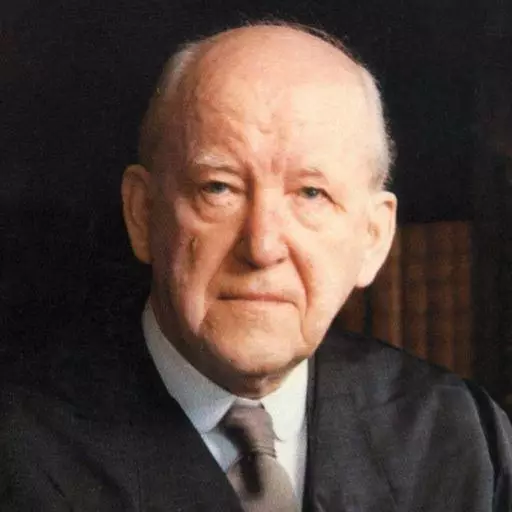
An Habitation of God


In his continued exposition of the analogies that are used for the church, Dr. Martyn Lloyd-Jones comes to what he views as the deepest analogy of them all—a temple of God. In this sermon on building the temple of God from Ephesians 2:20–22 titled “A Habitation of God,” Dr. Lloyd-Jones points to the two themes of unity and privilege. Unity can be seen by the closeness and necessity of each brick of a building. Each brick can be different, but if one begins to take away bricks, the building will start to fall apart. The privilege of the church can be seen by the nearness to God. “God dwells within her” and this is the greatest privilege. Also, this is a temple being built by God, not by people, and it is a vital building. He exhorts grabbing hold of the nature of the church because a false view leads, and has lead, to issues in the church.
Dr. Martyn Lloyd-Jones: The words to which I should like to call your attention this morning are to be found in Paul's epistle to the Ephesians, the second chapter, verses 20, 21, and 22. Verses 20, 21, and 22, in the second chapter of Paul's epistle to the Ephesians.
And are built upon the foundation of the apostles and prophets. Jesus Christ Himself, being the chief corner stone in whom all the building fitly framed together, groweth unto an holy temple in the Lord. In whom ye also are built together for an habitation of God through the Spirit.
You remember this connects with the previous verse where the Apostle says, "Now therefore, ye are no more strangers and foreigners, but fellow citizens with the saints and of the household of God." And he goes on, "and are built," or as other translations have it, "being built or having been built upon the foundation of the apostles and prophets."
Here then we come to the third of these three pictures which the great Apostle uses here in order to give these Ephesian Christians some understanding and conception of the character and the nature of the Christian church. That is the thing that he has in his mind here.
He's been dealing with it really right through the whole chapter. This amazing and astounding thing that people like the Ephesians, who had been pagans, worshiping Diana and other gods, that they know were to be found side by side with the Jews, all together in the Christian Church, worshiping the same God as Father.
Now, he wants them to lay hold on this great truth. He's concerned about it. He's already told them that in that first chapter. They've not only believed, they've been sealed with the Holy Spirit of promise. They've got the earnest of their inheritance until the time of the redemption of the purchased possession. And yet now they have all that in the so rich. He prayed that the eyes of their understanding may be enlightened.
They haven't finished. They haven't arrived. They're only beginning. And he is so concerned that they should understand these bigger, larger, fuller aspects of this glorious truth by which they've been saved and into which they've come. And this in particular is anxious that they should lay hold of. This conception of the church.
And he wants them to remember two things particularly, as we've seen. The first is this great principle of unity. No longer Jew nor Gentile, barbarian nor Scythian, bond nor free. Middle wall of partition is gone. Of twain he has made one new men, so making peace. And therefore, he says, "You are no more strangers and foreigners."
That's finished with. That's come to an end. There's this new thing. And in this new thing, the two important principles are, first, the principle of unity, and secondly, of course, the tremendous privilege which has become theirs as the result of this operation of the grace of God upon them.
Well, now then, in order to bring all that out, he uses these three comparisons, these three pictures. The first was they must look at the church as a city state, or as a state, or as a kingdom. You are fellow citizens with the saints. Not only that, he says, "You are also of the household, members of the household of God."
You are members of a family. Now, we've dealt with those two pictures already and we come on now to this third and last picture which the Apostle uses. And that is the picture of the church as the temple of God. The house of God.
The place in which he dwells. Now, it's very interesting to observe the working of the Apostle's mind. I wonder whether you've ever thought to yourself and wondered when you've been reading this statement, as to why it was the Apostle goes on to this last statement.
Well, it seems to me there's only one explanation. The thought of a household suggested to him at once the thought of a house. And it is a kind of natural transition. From the household, the family, to the house in which they dwell.
Now, I say it's interesting to observe the working of the Apostle's mind. And I say so deliberately. And it's important as we think of the whole doctrine of inspiration of the writers of the scriptures, that we should always bear in mind that the doctrine of inspiration does not do away with the individual characteristics of the writers. Otherwise, there would be no variation in style at all.
They'd all write in exactly the same way. But though all these different writers are filled with and controlled by and governed and led by the Holy Spirit, their own individual characteristics are given full play. So that no one should ever have any difficulty. If one listens to a piece of scripture, one should never have any difficulty in knowing whether it's been written by Paul or by Peter or by John.
They have their own individual characteristics. And this is here, I feel something very characteristic of this great Apostle. Now, his mind moves always with some kind of reason or logical link and connection. Household, house. It's very typical and characteristic of the working of this Apostle's mind.
Very well. The thing for us now then is to look at this picture. Now, last Sunday morning I was indicating in dealing with the idea of the church as the family of God. I was at pains to point out that I thought that the Apostle was moving upwards from the first picture. "You're no more strangers and foreigners."
Well, what are you? Well, you are fellow citizens with the saints. You are now citizens of this great kingdom. But then I said the Apostle went upwards and forwards. Ah, he says, "Beyond that, you are members of the family of God, of the household of God."
And I tried to show by a series of comparisons and contrasts, why this was an advance in the thought that he was taking us up to a higher conception. We were climbing a ladder, as it were. So that now as we come to this third picture, the question at once arises in our minds, is he still advancing?
Is this third picture a climax, or is it an anti-climax? It may well be that as you first read it, you may say, "Well, surely, whatever may have been true of the second, this third must be an anti-climax, because to go from a family to a house is surely to go down. You go going from the personal to the impersonal, from the personal to the material. Is the thought of the Apostle advancing? Is he taking us still higher?
Or has he suddenly forgotten all that and here comes back to some kind of mechanical picture?" Well, I think that that's a very important question. Not only from the standpoint of exactitude of exegesis and exposition, but still more perhaps from the standpoint of spiritual truth.
I propose, therefore, to show you that the Apostle is still advancing. And that in the third picture, he brings us right up to a great climax, beyond which nothing is possible. Very well, then, how do we, how do we establish that? Well, it seems to me that we can show that it's an advance upon the previous two pictures in this way.
He in its definition and description of the relationship that exists between the members of the church. Now I emphasize just now that his leading principle here all along is that of unity. And what he's trying to do with these three pictures is to bring out this great fact of unity. And I say, therefore, that in this third picture, he is showing us the essence of the unity even in a greater way than he did with his first two illustrations.
Let me try to justify that. All I need to do is to show you the superiority of this in that respect over the last, the second picture, that of the family, because we've already shown that that was superior to the picture of the state. And I suggest, therefore, that you can look at it like this. That after all, the members of a family, while they're more closely bound together than are the citizens, the fellow citizens in a state, are still in a kind of free and loose association.
What I mean is this, that the family, after all, is a collection of individuals. Whereas when you come to a building, that is no longer the case. There is a merging. Now, the phrase the Apostle here uses in the 20th verse, in whom all the building. The whole building.
I know that there are others who translate that as every building, but still, it's the same point that he makes. If you do prefer to take it as every building and think of it as the different sections of the temple, still, the different sections are part of a whole. So you've still got the idea of a whole building.
I suggest therefore that when you come to think of a building as distinct from a family, there is a unity obtaining between the different bricks or stones in a building, which is even closer than that which exists between the members of a family. Or to put that, I can put it like this. That the members of a family, after all, are still separate and distinct individuals.
All the members of a family are not identical. They don't have to submerge their characteristics in order to be members of a family. Individuality still remains and sometimes it's very striking. So that people often say when they see a group of people, they say that certain members of a family are perhaps less like one another than some of them are like other people to whom they're not related at all.
They are members of a family. And yet, you see, this individuality still is maintained and remains. And the connection and the attachment is to that extent a loose one. Whereas, of course, the very essential point about a structure, a building, is the cohesion. What he calls here, fitly framed together.
And that therefore, I'm suggesting, is an advance in the whole conception of unity. Well, perhaps I can put it best of all in the third way in this manner, that the members of a family, after all, can separate from one another. That doesn't mean they cease to be members of a family, but they can separate from one another. They may even quarrel. They may not even see one another. They may not speak to one another.
I know that the fundamental union is still there, and nothing can dissolve it, but as regards fellowship and communion and companionship and being together, because they are distinct and separate entities, they can separate from one another and almost give the impression that there is no relationship at all or connection between them.
But of course, if you begin to do that sort of thing in a building, the end will be that you'll have no building. If you take out a number of stones out of a building, your wall will collapse. Your building will be non-existent. So that here, I think the principle of unity is shown to be still closer and nearer.
Separate the bricks in a wall or the stones in the wall, and the building is gone. But you can separate the members of a family and still the family remains as a unit. It's a looser connection than is that in the case of a building. So I therefore suggest to you that the Apostle is really advancing in the thought. And that he shows us that the relationship between Christian people as members of a church is indeed as close and as intimate as is that which obtains in the different parts and portions of a building.
But when we come to look at the other aspect, I think it is still more evident that the Apostle is advancing in his thought. Look at it from the standpoint of the privilege. We saw that a child is in a more advantageous position than is a citizen. The humble citizen can appeal to the king, the head of the state.
Oh, yes, but not in the same way as a child can approach his father. Well, that shows a more intimate relationship and a higher and a greater privilege. But here is something beyond which, I say, it is impossible to think of anything or to imagine anything.
The Apostle's conception of the church here is that the church is the holy temple of the Lord, built together for an habitation of God through the Spirit. Now the child has access to the father, but the child is still outside the father. The whole idea that he gives us here is God dwelling within us.
Taking up his abode within us. Now that surely, we all must agree, is a tremendous advance in the thought, as the second was upon the first. It is not only that we are in that near relationship to God and have this closeness of access. Beyond and above all that. The final mystery and glory of the church is this, that God dwells within her.
She is the temple, the holy temple of the Lord. As he dwelt in that inner most sanctuary in the old temple amongst the children of Israel, so now he dwells in the church amongst his people. And therefore, I say, there is nothing that can advance beyond that. It is, of course, similar to the teaching which our Lord himself gave just before the end.
When he said, "It is expedient for you that I go away. For if I go not away, the Comforter will not come unto you. But if I go away, I will send him unto you." He means this. It was a great privilege to be there standing in the presence of the Son of God, looking at him, listening to him, being able to question him, being helped by him.
It was marvelous. It was wonderful, but there's something better. And that is that he should come and dwell in us, and live in us, and take up his abode in us. And he said, "That's what I'm going to do. I will come unto you. I will manifest myself unto you. The Father and I," he says, "will dwell in you. Take up our abode in you. That's beyond speaking to him externally. He now comes to dwell within. I live yet not I but Christ liveth in me."
Now, that's the idea, the kind of conception which the Apostle is holding before us in this third and last picture that he here uses. And you notice that what he says is this. That the Ephesians, verse 22, "In whom you also." That's it again. Do you see? He's all along dealing with it very practically.
Here is this great building. Very well, you also, you Ephesians, that were so far away, you've been built into this and are being built into it. And it's going on. Well, now this whole teaching concerning the church as a great building is a very important one in the New Testament. And believing as I do that there is nothing more vital today than that Christian people should again grasp this New Testament teaching about the church.
There is nothing more important for us than to take hold of this wonderful teaching. You remember that this teaching first was propounded by our Lord himself in the great incident at Caesarea Philippi. When Peter made his confession, "Thou art the Christ, the son of the living God."
And our Lord said unto him, "I say unto thee, thou art Peter. And upon this rock I will build my church." Now there it is. There's the first use of it. There there is the kind of basis on which all the others obviously have gone. I shall hope to refer to that later in order that we may have some understanding as to what the, what our Lord means by that particular statement.
It's dealt with indirectly and by implication by the Apostle here. But there it is. Well, then you noticed that statement we've read together at the beginning. In the third chapter of the first Epistle to the Corinthians, running from verse 9 to verse 17. There the Apostle says that he is a master builder. And he's got this whole conception of the church as a building.
Other foundation can no man lay than that which is laid, which is Christ Jesus. And there are all sorts of people who are building upon this foundation, says the Apostle. But they're not all building in a true way and there's going to be a judgment, and every man's work will be tried and so on. But it's the building, "Know you not," he says, "that you are the temple of the living God."
The whole trouble in the church at Corinth was that they'd forgotten this. And so they were dividing up. I am of Paul. I am of Apollos. I am of Cephas, and so on. He says, "Don't you realize you are the temple of the living God? You mustn't destroy God's temple in that way. You're violating the principle of unity." Now there, you see, we are reminded of the all importance of this doctrine. All the troubles in the church, finally, come from our failure to realize the nature of the church.
That's why all these New Testament.
Featured Offer

Find peace and comfort this season with your complimentary guide that includes access to 6 free bonus sermons on overcoming spiritual depression from Dr. Martyn Lloyd-Jones, one of the church’s most beloved Bible teachers. Topics include: true Christians can and do struggle with depression, recovering the joy of your salvation, dealing with crippling guilt over past sins, dealing with yesterday’s haunting regrets, encouragement to keep moving forward, and understanding God’s purpose for suffering.
Past Episodes
This ministry does not have any series.
Featured Offer
Find peace and comfort this season with your complimentary guide that includes access to 6 free bonus sermons on overcoming spiritual depression from Dr. Martyn Lloyd-Jones, one of the church’s most beloved Bible teachers. Topics include: true Christians can and do struggle with depression, recovering the joy of your salvation, dealing with crippling guilt over past sins, dealing with yesterday’s haunting regrets, encouragement to keep moving forward, and understanding God’s purpose for suffering.
About From the MLJ Archive
From the MLJ Archive is the Oneplace.com hosted ministry of the MLJ Trust. Our mission is to promulgate the audio ministry of Dr. Martyn Lloyd-Jones.
About Dr. Martyn Lloyd-Jones
Contact From the MLJ Archive with Dr. Martyn Lloyd-Jones
info@mljtrust.org
http://www.mljtrust.org/
PO Box 953
Middleburg, VA 20118