
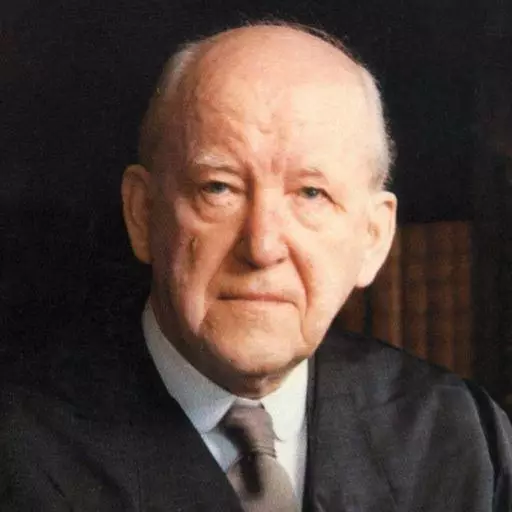
All Things Reunited in Christ


How does one make sense of today’s world? What message do Christians have for those around them? According to Paul’s letter to the Ephesians, Christians have been given the ultimate revelation that gives an unique, supernatural perspective of everything. What natural humanity cannot see or understand, God has revealed to the Christian this profound mystery: God is reuniting together all things in Christ. In this sermon on Ephesians 1:10 titled “All Things Reunited in Christ,” Dr. Martyn Lloyd-Jones expands upon this cosmic theme. While he maintains the orthodox position in rejecting universalism, Dr. Lloyd-Jones also pushes against the narrow view that only the redeemed and angels are part of God’s universal purpose. Instead, he argues, all of creation, excluding fallen people and fallen angels, will be united in Christ in perfect harmony at the end of the ages. Christians are face to face with a reality beyond personal salvation. Paul is taking the reader to a place finite minds can barely consider. Hear Dr. Lloyd-Jones explain this great truth and see what it means for engagement with the world.
Dr. Martyn Lloyd-Jones: The words to which I should like to call your attention this morning are to be found in Paul's Epistle to the Ephesians, the first chapter and the 10th verse. The 10th verse in the first chapter of Paul's Epistle to the Ephesians: "That in the dispensation of the fullness of times he might gather together in one all things in Christ, both which are in heaven and which are on earth, even in him."
It may help to read the ninth verse as well: "Having made known unto us the mystery of his will, according to his good pleasure which he hath purposed in himself, that in the dispensation of the fullness of times he might gather together in one all things in Christ, both which are in heaven and which are on earth, even in him." In other words, we continue our study of this tremendous, overwhelming statement which the great Apostle makes in this introduction to this Epistle to the Ephesians.
The statement, you remember, begins at the beginning of verse three and goes right on without interruption right until the end of verse 14. And so we notice that all these verses and divisions, as we have them in our Bibles, in each case link us on to what has already been said. It is a continuation of the same great statement. We have been analyzing it like this: the Apostle here tells us three main things. The first is that we ourselves have been chosen by God before time unto certain great privileges, including sonship, etc.
He has told us also that that has been made possible for us by the redemption which we enjoy by the blood of Christ, the forgiveness of sins, and everything else that follows from that. And the third thing he tells us is that not only has God done all that for us, but that he has gone beyond that in the riches of his grace, which he has caused to abound toward us, in that he has given us a certain spiritual knowledge and understanding, which enables us to look even into the mystery of God's own eternal will.
Now, that is the point at which we arrived. We were dealing last Sunday morning with the statement in the ninth verse where we read that he has made known unto us the mystery of his will, according to his good pleasure which he hath purposed in himself. And the thing we concentrated on then was that he has given us that knowledge through giving us this spiritual wisdom and prudence, as it's translated here. Were it not that God had given us that ability to understand by the Holy Spirit, we would still be ignorant of the mystery.
The mystery is something that is unattainable by unaided human effort, but it is something which is revealed to those to whom God gives the spirit. So it is now to the Christian an open secret. And we were there together magnifying the grace of God because it is the grace of God that gives us that. It has abounded toward us in all its riches, in all this wisdom and spiritual insight and understanding that we have, so that we are enabled to look at this open, revealed mystery.
Well now, then, the question is, what is the mystery? What is this knowledge which has been given to us in that remarkable manner? And the answer is to be found in this great 10th verse, which we are looking at together this morning. Now, there can be no doubt at all but that in every way this verse is the key verse to the understanding of this Epistle to the Ephesians. I mean by that, that it is the verse in which the Apostle states the particular theme that he was anxious to expound.
Of course, he was anxious to tell them all the other things as well which we've already been considering. Yes, but the peculiar feature of this Epistle to the Ephesians is that it is meant to be an exposition of this particular theme. There is every reason, therefore, why we should say that this is one of the greatest verses in the entire range of Scripture from the standpoint of conception, from the standpoint of thought, from the standpoint of the range of meaning. Now, you notice how I put it.
I am not saying, and I cannot say, that it is a greater verse from the standpoint of our experience, from the standpoint of some overwhelming emotional content. I don't think it compares in those respects with the seventh verse, where we have seen that we have redemption through His blood, the forgiveness of sins, according to the riches of His grace. But if you look at these things from the standpoint of intellect, from the standpoint of a mighty conception, well then, I think we have to agree that this 10th verse is even superior to the seventh.
Because the fact is that in this verse, we are taken right up into the heavens, and there we find ourselves looking face to face at God's final purpose. Now, there's nothing higher than that. There is nothing beyond God's final purpose, and here it is. It is something bigger and greater than your personal salvation and mine. That is why I do contend that this is still the greatest verse in this particular Epistle.
We are now being transported right above our own personal salvation into the realm of the ultimate thing: God's grand, comprehensive, final, ultimate purpose. Oh, it is the biggest thing that a human mind can ever look at and consider. And what a privilege it is that we are allowed to come together in this way to look at it. Well, what is it? Well, if you like it in a phrase, we can put it like this: it is God's purpose, final purpose, for not only world unity but for the unity of the whole cosmos.
Now, that's our theme. And isn't it interesting to realize that we are considering this theme on a Sunday morning such as this, with our world in its present state and condition? What lies ahead of us? We see the nations torn and divided. We see turmoil. We see dread possibilities that we don't even want to mention. And the great question is, what's the matter? What's the matter with the world? And what can be done about it?
I trust I shall not be misunderstood in what I am about to say. To me, perhaps the greatest tragedy of all this morning is that I have no doubt that from many Christian pulpits, the sermon or the address this morning will have reference to this world situation. Statements will be made as to what the statesmen should do and how the present crisis can be solved and certain dangers averted. And men will stand in pulpits and thus express their opinions and give their advice.
God forbid that anybody should be in this congregation expecting anything like that. I am in no position to advise statesmen; neither is any other Christian preacher. That is the task and the business of statesmen. Oh yes, let's have Christian statesmen if we can. But no man in my position is sufficiently aware of the facts, and it would be sheer presumption for me to attempt to speak on such a subject. I have my own thoughts and ideas, as everybody else has, but they have no authority whatsoever above that of anybody else.
But, my dear friends, I am not commissioned to do that. I am commissioned to expound the Scriptures. I don't know what's going to happen on the world plane. Nobody else knows. I don't know whether it's going to be peace or war, and I'd be wasting your time if I tried to address you on such a subject. But I'm going to talk to you about something that I do know. And I'm going to talk to you about something on a much bigger scale, and I'm going to do so with the authority of God.
The immediate may be war, the immediate may be peace—I don't know—but I can tell you about the ultimate. And this is the point at which I think the Christian and the non-Christian are differentiated and separated from one another. The Christian is interested in the ultimate; the Christian is interested in God's plan. And he knows that this can only happen in a certain given way. If there is somebody still who believes that you can apply Christian principles to a world that is godless and pagan, well, of course, that's a separate discussion altogether.
But there is nothing so hopeless and futile as to expect men and nations that are not Christian suddenly to like your Christian principles and to say, "Well, let's all put them into practice together." That behooves the attitude and the mentality of the merest tyro. Such views are based on a colossal ignorance of sin and its ways, as they are revealed in the Bible. What I'm going to tell you about is going to happen, whatever men and nations may do, because it is God's plan and it is absolutely certain.
And if you understand these things as I do, well, it enables you to look at the present world crisis and remain absolutely calm, because you know this ultimate. Well, very well, let's look at it. The best way, perhaps, of approaching it is just again to take the words that the Apostle uses, because if we are not clear about the meaning of the words, our whole understanding of his teaching will obviously and of necessity be wrong.
Now then, the first word that he uses is this word "dispensation"—"that in the dispensation of the fullness of times." What a sadly overworked great word this word "dispensation" is. It's been so abused and misinterpreted that we're almost afraid, some of us, to use it at all because there are people, you know, who divide up the Bible into so many dispensations that you scarcely know where you are. But what's the meaning of the word "dispensation"?
Well, the authorities are all agreed that it has two main meanings. It's a word that is used three times in this Epistle. You've got it again in the second verse of the third chapter. Paul says how that by revelation he made known unto me the mystery. In the second verse: "If ye have heard of the dispensation of the grace of God which is given me to youward: how that by revelation he made known unto me the mystery."
And again in the ninth verse: "And to make all men see what is the fellowship"—it's translated here—"what is the fellowship of the mystery, which from the beginning of the world hath been hid in God, who created all things by Jesus Christ." It's the same word, "dispensation." And you've got the same word exactly used by the Apostle Paul in his first Epistle to the Corinthians in the ninth chapter and the 17th verse. He's talking about himself as a preacher.
He says, "For if I do this thing willingly, I have a reward: but if against my will, a dispensation of the gospel is committed unto me." Now, what's the meaning of this word? I say it has two main meanings. It all depends whether you regard it from the standpoint of the one who is in authority or whether you regard it from the standpoint of the one who is under authority. If you regard the word from the standpoint of one who is in authority, its meaning is a plan, a scheme, an economy.
If you look at it from the standpoint of the one who's under authority, it means an office, a stewardship, or an administration. Now then, if you take those two meanings, which are granted by all scholars as the two meanings, I think it's perfectly obvious what the meaning is here. Now, in the second verse of the third chapter, it's perfectly obvious, isn't it, that it's the second meaning, the one of office? Paul says, "Ye have heard of the dispensation of the grace of God which is given me to youward."
That's his work, that's his office. A stewardship, he says, has been given to me. An administration has been given to me. But in the ninth verse of that third chapter, it's equally clear that it's a plan: "And to make all men see what is the dispensation of the mystery, which from the beginning of the world hath been hid in God." And in exactly the same way, we see that here in this first chapter and in this 10th verse, it obviously is applied to God, the one who is in authority.
And therefore it means a plan. It means a scheme. It means an economy—God doing this work. In the Corinthian example I gave you, it is obviously again the office. "If I preach the gospel willingly," says Paul, "well then I have a reward. But if I'm doing it unwillingly, well, my position is this: that a job has been given me, it's my administration, it's my office, it's the thing which has been imparted to me to do." There it is from the standpoint of the one under authority.
But here I say it has a reference clearly to God, and therefore it means God's plan. We have been given this knowledge and this insight, says the Apostle, this knowledge of God's great plan. That's the mystery. The mystery that has been revealed is that God has got a great plan. He's got a great scheme, a tremendous economy that he is bringing into play. Very well, that's our first word. Let's go on to the second: "the fullness of times"—"that in the dispensation of the fullness of times."
Well, what's the meaning of "fullness of times"? Well, it's a term that you're familiar with elsewhere in the Scripture. Here the Apostle tells us when this great plan of God is to be put into operation and into action—when this great thing that was in the mind of God from eternity is really going to be brought to pass. Now, you remember that the Apostle uses the same expression exactly in the Epistle to the Galatians in the fourth chapter and in the fourth verse, referring to our Lord's coming into the world.
He says, "But when the fullness of the time was come, God sent forth his Son, made of a woman, made under the law, to redeem them that were under the law, that we might receive the adoption of sons." Now, that's exactly the same phrase as we have in this verse that we're looking at together now. And this, of course, is a great expression and a great idea in the whole of the New Testament. The whole of time has been divided by the coming of the Lord Jesus Christ into this world.
That is, if you like, what can be described as the climax of the ages. That's the division that is always recognized in the New Testament. The times in which you and I live are called the last times, the last days. You'll find in the prophets in the Old Testament that they talk about the last days and the last times. What are they? Well, they're all time that follows the coming of the Lord Jesus Christ into this world. He came in the fullness of the times. Everything was leading up to this.
Now the fullness has arrived, and all beyond that is the last times. Let me give you some examples of it. Paul, in writing to the Corinthians in the first Epistle in the 10th chapter, says, "Now all these things happened unto them"—that's to say the Israelites—"as ensamples: and they are written for our admonition, upon whom the ends of the world are come." From the moment the Lord Jesus Christ came into this world, the end of the world had started.
The ends of the world, says the Apostle, are come upon us. Then you remember the author of the Epistle to the Hebrews makes the same point: "God, who at sundry times and in divers manners spake to the fathers through the prophets, has in these last days spoken unto us by his Son." Ever since Christ came, we are in the last days. Now then, that then helps us to understand the meaning of the term "fullness of times" in this great statement that we're looking at together.
The climax of the ages happened at the incarnation. Time has been divided once and for all. That's the fullness of the times—He's come. And what the Apostle therefore teaches us here is this: that God's great plan is something that began to come into operation at the birth of the Lord Jesus Christ. And what is happening at this present time is that this great plan of God is being worked out in this fullness of the times, in these last days, in the ends of the world, and it'll go on until it is finally completed.
Now then, that's the second part of the statement. God has given us the knowledge, he's given it by means of the wisdom and the discrimination, the prudence that he's given us, that we can see that what is now happening is that this great original plan of God has come right into the world there, it's being carried on, this great dispensation, this great business, beginning actually in practice at the fullness of the times and continuing. The next thing we notice is this: that he tells us that this great plan is being carried out in and through the Lord Jesus Christ.
Look at this: "That in the dispensation of the fullness of times he," God, "might gather together in one all things in Christ, both which are in heaven and which are on earth, even in him." You notice the repetition. I wonder whether my best way of emphasizing the repetition is this. I regret to have to say a thing like this, but it has significance to me. If you look into your Revised Standard Versions, those of you who have it, you'll find that the repetition isn't made.
They're content with just saying it once. Why, I wonder, when the Apostle took the trouble to repeat it? He isn't content with saying "in Christ," but he says again, "even in him." And did you notice how he did exactly the same thing there in writing to the Colossians? I read that chapter in order that we might emphasize it. It's there translated like this: "In him, I say," lest somebody might think that God was going to do this in anybody else or without Him.
Oh, we've had occasion to emphasize this since the very beginning of our study of this great Epistle. It's Christ all along. He keeps on mentioning His name. Why, well, it all is in Christ. And the Apostle worshipped Him and adored Him, so He doesn't merely say "in Christ," but He says again, "even in him." How often can I say it, he seems to say? I can never say it too frequently. It's all in Him. Give Him all the glory and all the credit, even in Him, in Him, I say.
Christ is central. Christ is essential. And anything that calls itself Christianity, which doesn't go on repeating the blessed name, is a denial of Christianity ultimately. It is all in Him, even in Him, in Him, I say. Let's give Him the glory. Let's worship Him. Let's adore Him, the one in whom all comes to pass. But let us carry on. What is the nature of the plan? And that is the specific thing that we're taught here.
The plan is that He might gather together in one all things in Christ. Now then, here is the very nerve and center of the statement. Let me put it in this form: here I've read it out to you, "that he might gather together in one all things." In the Revised Version, you read "to sum up all things in Christ." In the Revised Standard Version, you read "to unite all things in him." Now, there is to me something truly remarkable here, and it is this: that all these translations, for some astounding reason, have left out a most important word, a most important addition.
And the important addition means "again." If you take the word that the Apostle used here, which is translated "summing up" or "bring together," "gather together" and so on, turn up that word in your Greek and you will find that it is a compound word, beginning with ana, which means again. And yet these translations leave out the "again." Now, if you turn up a standard lexicon like the Grimm-Thayer Lexicon, you'll find that they have it absolutely right.
He says it means this: to bring together again for himself. And let me pay this tribute to a translation of the Epistles of Paul and the Epistle to the Hebrews with which some of you are familiar, the translation—a rather loose translation—by A.S. Way. But let us pay Way this compliment: he's seen it. He translates like this: "For his purpose was to reunite all things in him." That's it: to gather together again, not merely to unite but to reunite, not to sum up only but to sum up once more again.
And it opens out the whole meaning. I know these translations; they take it for granted. But, my friends, it is something to be emphasized. And it is only as we see that that we really arrive at the Apostle's doctrine. Now, this word that Paul used also carries the idea of "heading up." I confess I don't like the expression; it's a slang expression which is coming increasingly into currency. You talk about such and such a man "heading up" a team or something like that.
Well, in a sense, it's right. That is the original root meaning of the word that the Apostle used. So what he is saying, in a sense, is this: that God is going to head up again all things in Christ. But now we come to the most important thing of all. What does he mean by this "all things"? The plan is, this dispensation, this plan, this purpose, which is being carried out at this present time, which began with the incarnation, is well, that God might reunite in Christ all things.
And you notice that he gives us an amplification of that. He says, "both which are in heaven and which are on earth." All these things are to be reunited in Christ. Well now, the question is, what's he mean by "all things"? And a number of views have been put forward to explain this term. Some people do not hesitate to say that it means absolutely everything everywhere. They say that there is to be a universal redemption of everybody and everything.
The second group don't go quite as far as that; they say there is going to be a universal redemption of all intelligent beings. They don't hesitate to say, therefore, that both good and bad men and both good and bad angels and the devil himself are going to be redeemed and saved and everything and all are going to be restored to God—universalism. That's a second view and, alas, an increasingly popular one today. Another view says that the "things in heaven and things on earth" refers to Jews and Gentiles.
How do they get that? Well, they say, of course, the Jews belong to the kingdom of heaven and therefore they're in a special position, and the Gentiles belong to the earth. That's one of those extravagances that you find in a certain school of interpretation that draws a great distinction between the Kingdom of Heaven and the Kingdom of God, though the terms are used interchangeably in the Scriptures. But there's this division in their minds between the Jew and the Gentile.
The Jew is going to have a special place in the kingdom of God, he's going to be apart from everybody else, he's going to be higher, he belongs to the heavens; the rest belong to the earth. They, therefore, explain this "heaven and earth" in terms of Jews and Gentiles. Others have said that this is a reference to all the people of God, all the redeemed. Things in heaven and things on earth therefore mean those Christians who have already left this world and are in glory, they're already in heaven so that they're in the heavens, and those who will be left on earth at the return of Christ, they're the ones that are on earth.
So "all things which are in heaven and which are on earth" means the redeemed who have gone on and the redeemed who remain, the totality of the redeemed. I mustn't keep you with these explanations and expositions, but surely we cannot possibly accept those first two universalistic ideas because if we do, it just means that we find ourselves in blank contradiction to the plain teaching of the Scripture elsewhere, which teaches a division between the saved and the unsaved, the good and the bad, the redeemed and the lost, so plain and clear from beginning to end of the Scriptures.
"Ah, but," people say, "what about the love of God?" Well, that's philosophy; that's your idea of the love of God, it isn't Scripture. The Scripture has this ultimate distinction: eternal salvation, eternal destruction. And there is not a vestige of evidence to show that the fallen angels are touched in any way by the scheme of redemption; indeed, as I'm going to show you, not even the good angels. So we reject those first two views.
And as I've tried to indicate, we must reject the view that regards this as descriptive only of the Jew and the Gentile. There is no longer Jew nor Gentile, barbarian nor Scythian, bond nor free. All this has gone; the middle wall of partition has been broken down, and all in the kingdom are one and always will be. There is only one salvation by the blood of Christ, and no one can enter the kingdom of God except through belief in Christ. That's the universal teaching of the Scripture.
So we reject that exposition. But what of the fourth possibility? That this is but descriptive of the totality of the redeemed. Well, I make bold to reject that also. It includes that, but I want to suggest to you that it doesn't go far enough. And that especially in the light of the parallel passage in the first chapter of the Epistle to the Colossians, which we read together at the beginning, that it is inadequate. What then?
Well, I want to suggest to you that the "things which are in heaven and that the things which are on earth" include in the heavens the good angels which kept their first estate. And that the "things which are on earth" includes not only the redeemed which will be on earth when Christ returns, but more. It includes creation itself. It includes the earth; it includes animals, beasts—creation. Now then, let me try to substantiate my contention.
The key to all this, it seems to me, is that little word "again," which I've already indicated to you is left out in our translation. What is God's plan? Well, God's plan is to reunite all things in Christ. Reunite, gather together again, to bring back to the head up once more all things in Christ. Very well, here's the doctrine. Things have already been in that condition once, but they're no longer like that. But they will again be like that. Reunite.
Let's look at it like this. Originally, all things were in a perfect state of harmony under our Lord and Savior Jesus Christ. Now here it is in the Epistle to the Colossians, the first chapter, let me read verses 15 to 20 again, they're so glorious. "Who," referring to the Lord, "is the image of the invisible God, the firstborn of every creature: for by him were all things created, that are in heaven, and that are in earth, visible and invisible, whether they be thrones, or dominions, or principalities, or powers: all things were created by him, and for him: and he is before all things, and by him all things consist. And he is the head of the body, the church: who is the beginning, the firstborn from the dead; that in all things he might have the preeminence. For it pleased the Father that in him should all fullness dwell," and so on.
Now there, I say, was the original condition. There's a very significant statement in the 10th verse of the second chapter of Colossians, which again puts it: "And ye," says the Apostle, "are complete in him," in Christ, "which is the head of all principality and power." Now principality and power and dominions and thrones and so on always has reference to the angelic beings, the angelic powers, the great powers in the heavens. And you see what we are told is this: that the Lord Jesus Christ was the head of all these.
He was the head of the universe. Everything that was made and created was made and created in Him and by Him and through Him and for Him. Not only the world and men and animals, but angels and thrones and principalities and powers. And there was this perfect harmony of God as God had made everything. In the beginning, God created the heavens and the earth, and Christ was the head of all. And everything came down from Christ and was in a perfect, complete state of harmony.
Look at it from above downwards, if you like. The Lord Jesus Christ, the angels and all these great powers and authorities and mights, then the world, the animals, the fruit of the earth, and over them all, man was made the lord of creation. And it was absolutely perfect. It was entire harmony; everything worked downwards from the great head and everything worked upwards back again towards the supreme head, the Lord Jesus Christ. It was a perfect state of harmony.
But, alas, it didn't continue like that. And you and I are worried about the present position because it didn't continue like that. What happened? Well, the harmony has been destroyed. And how was it destroyed? Well, it was destroyed like this: first of all, there was a revolt, a rebellion in heaven itself. The devil rebelled and fell, and a large number of the holy angels fell, followed him, and fell with him. And immediately there was discord—yea, discord in heaven.
Do you remember that significant statement which is made in the book of Revelation in the 12th chapter? It's one of the most extraordinary things in the whole realm of Scripture, but it does throw a very great light upon this thing that we're looking at this morning. I read this in the seventh verse of the 12th chapter of Revelation: "And there was war in heaven." Discord in heaven, confusion, fighting. War in heaven: Michael and his angels fought against the dragon; and the dragon fought and his angels. Read it for yourselves.
There there was discord, loss of harmony, this pristine, perfect, original harmony. It began in heaven. But it didn't remain only in heaven. You remember what happened: this fallen angel, this devil, this Satan came and tempted man, and man fell. And the result of that was discord amongst men: dispute, quarreling, misunderstanding, warfare, bloodshed, murder, jealousy, envy, and all the foulness that has followed. That's where it's all come from: the loss of the original harmony.
Yes, but remember that even creation itself suffered as the result of it. "The creature itself," says Paul in the eighth of Romans, "was made subject of vanity, not willingly, but by reason of him that has subjected the same in hope." When man fell, the earth was cursed. And the story of creation ever since is this: nature, red in tooth and claw, briars and thorns and troubles, diseases, pestilences. The harmony is gone. The original perfection has vanished and has disappeared.
That is the position of the world as the result of the fall of the angels and the fall of men and all that has eventuated out of it. Now then, you see the doctrine of this verse. The mystic secret into which you and I as Christians have been let is just this: that God is doing something to restore the original harmony, to reunite again all things in Christ, that again we may have a position in which Christ is over all and the old harmony has once again come back. How has it happened?
How is it going to happen? Well, obviously time fails me. Let me just give you the headings; work it out for yourself. As regards men, we've already been told what happens: redemption through the blood of Christ, reconciliation to God, reconciliation with one another. By His blood, by His cross, He's made peace. The middle wall of partition has gone, the old enmity, all the divisions have gone. There must be a complete harmony.
That is one reason for saying again that there will not be a perpetual distinction between Jew and Gentile in Christ. Impossible. It is going to be a harmony—all one in Him. Very well then, I say that as regards man, it's going to be like that. But let's be careful to observe this: that only applies to those who believe on the Lord Jesus Christ. There's no harmony promised to the others. They are sent to everlasting destruction, but they'll be out of this cosmos, as it were.
They'll be out of the harmony; they'll be outside eternally. But those who are redeemed will be within. What about the angels? Well, again it's equally clear that there is no hope for the fallen angels. We are told that they are reserved in chains in the pit until their final damnation comes. Satan is to be cast into the lake of fire; he and all his followers are to be destroyed forever. Likewise outside—that's Hell. But not so with the good angels.
In a most extraordinary way, the Scriptures tell us and teach us that the good angels come into this plan and into this purpose. Because if you turn to your book of Revelation, you will find in the fifth chapter that not only the saints and the redeemed sing the praises of the Lamb that once was slain, but angels—10,000 times 10,000 of them and thousands of thousands—and the beast and the elders, they all join in with the saints in the same chorus.
The unity, the harmony has come back. And indeed, you remember that in the Epistle to the Hebrews in the 12th chapter, we are really given the same idea. And we are told that it is true even of us now. Where have we come to, as we come like this together this morning? Well, let me tell you. You are come unto Mount Zion, and unto the city of the living God, the heavenly Jerusalem, and to an innumerable company of angels, to the general assembly and church of the firstborn, which are written in heaven, and to God the Judge of all, and to the spirits of just men made perfect, and to Jesus the mediator.
But you notice the thing I want to emphasize. Did you notice "an innumerable company of angels"? Yes, they're a part, as it were, of the church ultimately. Not that they're redeemed—they've never fallen—but they're brought into it to adore him and to worship him. They're with us, they'll be with us in it. We are uniting with them at this moment, an innumerable company of angels. But, you know, it doesn't stop there. The earth is involved.
Thank God. And this is one of the most marvelous things of all. Peter tells us in the second Epistle in the third chapter that a day is coming where there shall be a great destruction of the earth and of the world, as we now know it. The elements shall melt with fervent heat, etc. Evil and sin will be burnt out of the universe. There shall be a new heavens and a new earth wherein dwelleth righteousness. Not only that, listen to the Apostle again in the eighth chapter of the Epistle to the Romans: "The whole creation," he says, "groaneth and travaileth in pain together until now."
Nature, red in tooth and claw, all this conflict in nature—it's all groaning, waiting for something. What's that? The manifestation of the sons of God. Creation is going to be involved. It's to be delivered from the bondage of corruption unto the glorious liberty of the children of God. Listen to the author of the Epistle to the Hebrews again putting it in this way, a most significant statement in the second chapter. He says, "For unto the angels hath he not put in subjection the world to come, whereof we speak.
But one in a certain place testified, saying, 'What is man, that thou art mindful of him? Or the son of man, that thou visitest him? Thou madest him a little lower than the angels; thou crownedst him with glory and honor, and didst set him over the works of thy hands.'" I've reminded you of that. He goes on: "Thou hast put all things in subjection under his feet. For in that he put all in subjection under him, he left nothing that is not put under him." That's men.
But now, we see not yet all things put under him, under man. But we see Jesus, who was made a little lower than the angels for the suffering of death, crowned with glory and honor. And as He represents us and we are in Him, we are going to be elevated to where man was meant to be. We shall be restored to that. We shall be the lords of the creation. Know ye not that the saints shall judge the world—judge men, judge angels? The harmony, the glory of it all.
The old original harmony will again be restored. Isaiah, of course, saw it in prophecy and he put it like this. Listen to it: "There is a day coming when the wolf also shall dwell with the lamb, and the leopard shall lie down with the kid; and the calf and the young lion and the fatling together; and a little child shall lead them. And the cow and the bear shall feed; their young ones shall lie down together: and the lion shall eat straw like the ox.
And the sucking child shall play on the hole of the asp, and the weaned child shall put his hand on the cockatrice' den. They shall not hurt nor destroy in all my holy mountain: for the earth shall be full of the knowledge of the Lord, as the waters cover the sea." You see it? The perfect harmony will be restored. Harmony in men and between men, harmony on the earth and in the brute creation, harmony in heaven—and all under this blessed Lord Jesus Christ, who will be the head of all, and everything will again be united in him.
And wonder of wonders, marvelous beyond compare, when all this happens, it will never be undone again. Reunite forever and ever, to all eternity. That's the message. That is God's plan; that is the mystery which has been revealed unto us. My dear friends, I can't let you go, time or no time, without asking you a few questions. Do you know these things? Are you prepared to go without a meal for these things?
Do you know that these things are so marvelous that you never hear anything greater, either in this world or the world to come? Do you realize that you have a part in these things? I said just now, I say again, I don't know whether a war is coming or not—nobody else knows. But whether it be war or no war, I am in this plan of God. And there is no bomb that can be invented, there are no bacteria that can be cultivated and used, there are no chemicals, no gases that can be invented by the inferno itself that can ever touch, to the slightest extent, these things.
That's God's plan. And God's plan is going to be carried out. And if you and I are in Christ, well, we are in this. We are going to be elevated to where man was meant to be. We shall be restored to that. We shall be the lords of the creation. Know ye not that the saints shall judge the world—judge men, judge angels? The harmony, the glory of it all. Beloved people, let us decide to read less of our newspapers and more of our Bibles.
And God forbid that we should fritter away the Scriptures by trying to reduce them to terms of contemporary events. Look at the ultimate. Look at this grand thing, this glorious thing. Don't be over-particular in your interpretation of contemporary history. Don't waste your time with that. Come back to this. This is the thing: God's plan, God's eternal scheme, this dispensation, this economy, this thing that we're in, that's being worked out since the beginning of the fullness of the times.
And the ultimate restoration of that glorious harmony, where with our whole being we shall praise the Lamb that once was slain, and say blessing and honor and worship and power be unto him that sitteth upon the throne and unto the Lamb forever and forever. Let wars come, let pestilences come, let hell be let loose. Nothing shall be able to separate us from the love of God, which is in Christ Jesus our Lord. That is the Christian message for today. Thank God for it. Let us rejoice in it. Amen.
Featured Offer

Find peace and comfort this season with your complimentary guide that includes access to 6 free bonus sermons on overcoming spiritual depression from Dr. Martyn Lloyd-Jones, one of the church’s most beloved Bible teachers. Topics include: true Christians can and do struggle with depression, recovering the joy of your salvation, dealing with crippling guilt over past sins, dealing with yesterday’s haunting regrets, encouragement to keep moving forward, and understanding God’s purpose for suffering.
Past Episodes
This ministry does not have any series.
Featured Offer
Find peace and comfort this season with your complimentary guide that includes access to 6 free bonus sermons on overcoming spiritual depression from Dr. Martyn Lloyd-Jones, one of the church’s most beloved Bible teachers. Topics include: true Christians can and do struggle with depression, recovering the joy of your salvation, dealing with crippling guilt over past sins, dealing with yesterday’s haunting regrets, encouragement to keep moving forward, and understanding God’s purpose for suffering.
About From the MLJ Archive
From the MLJ Archive is the Oneplace.com hosted ministry of the MLJ Trust. Our mission is to promulgate the audio ministry of Dr. Martyn Lloyd-Jones.
About Dr. Martyn Lloyd-Jones
Contact From the MLJ Archive with Dr. Martyn Lloyd-Jones
info@mljtrust.org
http://www.mljtrust.org/
PO Box 953
Middleburg, VA 20118