
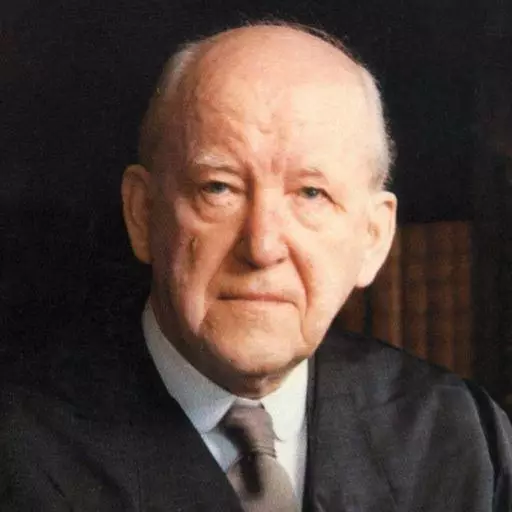
All By Grace


Dr. Martyn Lloyd-Jones: We resume these Friday evening meetings and these studies in Paul's epistle to the Romans. God willing, we shall go on Friday by Friday until and including the Friday before Good Friday. Whatever the date is, we go on until the Friday before Good Friday every Friday evening, God willing.
Tonight we start with the third verse in the twelfth chapter of this mighty epistle to the Romans. Most of you will remember that we spent a number of weeks dealing with the first two verses. That was because of their great importance. They are the general introduction to the whole of the remainder of this epistle and, at the same time, the apostle's general introduction to the whole subject of the conduct of the Christian.
We've been considering the doctrine in the first great eleven chapters. How is the man described there to live in this world? How is he to conduct himself, comport himself? How is he to make known the riches of God's grace to others? That's the theme which the apostle takes up. He shows, as is his custom, the link between the general introduction and the practical application by using the word "for." "For I say, through the grace given unto me."
It's important that we should appreciate the significance of this connecting link, this introductory word "for." It reminds us that what the apostle is going to say is the result of what he's said, that it comes out of what he has said, and that it indeed ought to be inevitable from what he has said. He goes on now to show us how what he has been saying should show itself in our daily lives and how, if we are to be truly Christian, it must show itself in our daily life and practice.
He has been pleading in the first two verses for two big things. One is that we surrender ourselves to God: body, mind, and spirit. We present our bodies a living sacrifice. We present the whole of ourselves. At the same time, he has been pleading for a new way of thinking. We are not to be conformed to this world, but to be transformed by a renewing of the mind.
We considered that new outlook, that new way of thinking about everything, that new approach to all problems, that attitude to life which is based upon some comprehension of God's great plan and scheme of redemption. That's what he's been saying to us. Now he shows us what should be inevitable in the light of that: this dual action of self-surrender and new thinking, a new way of conceiving of everything.
For the moment, we're confined to this twelfth chapter. In October, I gave a general analysis of the whole of the remainder of the epistle. But now we're dealing in particular with what he tells us in this twelfth chapter. It's very simple to divide it into two sections. The first section runs from the third verse to the eighth verse. There the apostle gives us a picture of the Christian man exercising his gifts in the church.
That's where he starts. It's inevitable in a way that he should start there. Christians are people who come together. That's the church. They come together because they've been born again, because all the things that he's been expounding in the first eleven chapters are true of them. The first place you find a Christian, therefore, is in the church. He starts with the Christian living his life in the church. The point he takes up is the Christian exercising his spiritual gifts in the realm of the church.
Then the second section is that which runs from verse 9 to the end of the chapter, verse 21. There he deals with the Christian in his relationship to other people: other people in the church, other people in the world. Many have tried to divide it up still more particularly, but it seems to me that you just cannot do so and you must be careful not to impose an artificial division upon the matter.
It is the Christian in his relationship to others, both in the church and in the world. Or, if you prefer it, it is the expression of the Christian character in daily life, not only in the realm of the church but still more general. Here he deals with its general characteristics and its particular manifestations. That is the way in which you divide up the subject matter of the chapter from this third verse right through to the end of the chapter.
That being the case, we now proceed to consider the first major section, the section that runs from the third verse to the eighth verse. He takes up the question of the manifestation of the gifts of the Spirit in Christian believers in the life of the church. Here he deals with a subject that caused a great deal of trouble in the early church. It is a subject with which he has to deal fairly frequently in his epistles.
As we've often reminded ourselves, the epistles in the main are the outcome of situations that had arisen. We mustn't conceive of this apostle nor any of the others as literary men who just delighted in writing and whose occupation was to write. They were much too busy for that. I don't think they'd have written at all unless they'd had to write. They generally had to write because of circumstances and conditions that had arisen in the lives of the members of the various churches in various parts of the world.
This is a problem that had to be taken up on more than one occasion. In many ways, that is the great theme of the First Epistle to the Corinthians. That's the epistle in which this particular subject is dealt with with the greatest thoroughness, and there in particular in chapters 8, 12, 13, and 14. The problems that had arisen particularly in the church at Corinth but obviously, in a sense, in the case of the church at Rome and various other churches. The outstanding case is the church at Corinth. There the apostle deals with it in a very thorough manner.
What we've got here is a kind of summary of what he teaches in especially the twelfth chapter of the First Epistle to the Corinthians. It's an interesting thing. Truth is one. Whether the church is in Corinth or in Rome, because Christianity is one and because all Christians are people who are born again and of the Spirit, it doesn't matter what their nationality may be, what their background is, or what their culture is, you will always get the same sort of problems.
Wherever you find Christians, you're likely to get the same problems. The New Testament gives us abundant evidence of that. So here the apostle deals in a very condensed and almost summary way with a problem that he expands and deals with at greater length in the First Epistle to the Corinthians, especially in chapter 12, but also to an extent in chapters 13 and 14 as well.
What is obviously a matter of interest which we all of us must have noticed is that his method of dealing with it is identical. Though it's in briefer compass, his method is exactly the same here as it is in 1 Corinthians 12. He even uses the same illustration. That's the sign of a good teacher. He's a man who's inspired by the Spirit on top of that, and when he's given the perfect illustration, he uses it. He doesn't mind repeating it. It conveys the truth better than anything else, so he doesn't hesitate to employ it.
Therefore, we can say in many ways that 1 Corinthians 12 is a commentary on this, or this is a summary of 1 Corinthians 12. What does he say? Let's give you a kind of analysis of this first major division of this twelfth chapter, verse 3 to verse 8. As I do so, you will see at a glance that he's true to his own method. Every man has his own method. Own idiom. As a man who knows anything about music, if you play a few bars to him, he will be able to tell you the composer. So you can do with writers. A man betrays himself by his style.
This is particularly true of this great apostle. He does things always in the same way. He has his characteristic method. Here he does it like this. First of all, he starts with himself. He uses himself as an illustration. "I say through the grace given unto me." We'll see in a moment why he does start with himself. It isn't because of any conceit or any boastfulness. It's quite the reverse, as a matter of fact. He does it because this is essential wisdom. He sort of takes the ground from beneath their feet by putting it first of all in his own particular case.
Notice that in starting with himself, he does two things: he asserts his authority, and yet at the same time displays his humility. That's a very wonderful thing. "I say." Here you might think that he's speaking as a kind of Pope, but he isn't. "I say," yes, but "through the grace given unto me." There's the perfect balance. He's speaking with authority. He is, after all, an apostle and he speaks with an apostolic authority.
But he's very careful to make it plain and clear that his authority is one which he has received and which he has derived elsewhere. So he wants to do these two things. He wants them to listen to what he's saying because he is speaking as an authoritative apostle. But at the same time, he wants them to know that what is true of them is true of himself also in principle.
So he disarms all objections at the very beginning. He puts himself in with them. He's apart, and yet he's with them. He's a unique man, and yet as a Christian, he's the same as every other. These two things come together. That is something which you'll find in this man's epistles almost everywhere. It's the great characteristic of his writing, the way in which he always combines these two elements.
Well, that's how he begins. Then what he does is to lay down two big principles which must always govern our thinking with regard to this matter of the exercise of the spiritual gifts. Having started with that kind of personal note, he then lays down the two great principles. The two principles clearly are meant to lead us to the same point and to the same conclusion. They're both out to obtain the same desired result.
The object in the two principles is to destroy at the very beginning any tendency to self-assertion and to boasting. That's the thing that he's tackling. That's the problem. Spiritual gifts have always been one of the greatest causes of self-assertion and boasting, with all the resulting quarreling and the tendency to division. It's an astounding thing, but there is nothing that so proves man's essential sinfulness as this very thing: that he will even abuse the very gifts, the highest gifts of God, and appropriate them unto himself and cause them to militate against the interests of the church.
This is the object which he has in mind and which he's now going to approach in terms of his two principles. Here again, let me indicate and emphasize this. Once more, we are looking at one of the ways in which Christian morality and Christian ethics differs from all other views of morality and ethics. There have been moral systems outside Christianity. There have been people and there are still people who are concerned about ethical conduct and behavior who are not Christians at all.
Some people have therefore foolishly thought that there is no difference between Christianity and these other philosophical, moral, ethical systems. Indeed, there's a popular teaching today which says the pity is that Christianity has allowed these various miraculous accretions to come in. If only you could get rid of them, then you'd have a wonderful view of life to put to people and they'd be ready to accept it. But, of course, they've got to swallow all this about the Virgin Birth and the incarnation and the miracles and the atoning sacrifice and the resurrection and so on.
Quite apart from the historicity of Christianity, there is a feature and a characteristic of the Christian teaching even about conduct and morality and behavior which marks it off from every other system that ever has been or is still in vogue today. What is it? It is this insistence upon humility. That is what is unique in the Christian teaching.
If you take the great teaching on morality and ethics in terms of Greek philosophy or something like that, you will always find that it was something that tended to provoke conceit. There were the people who knew. Later some of them were known as Gnostics: the elite, the thinkers, the philosophers. There was always an element of conceit, not to say arrogance, about them. They despised the ignorant. They regarded everybody else as barbarians, as fools.
They divided up the world, as the apostle has already reminded us in the first chapter of this great epistle, when he says, "I am a debtor both to the Greeks and to the barbarians, both to the wise and the unwise." All these other systems always have this element of pride, conceit, and self-satisfaction. You are what you are and you're such a good person because you take the trouble and you think and you've got the ability and you've got the understanding and you've read the great books on the subject.
You're a man apart. You put yourself up on a pedestal. That's always the characteristic. It's equally true today. You listen to the discussions of some of these people on your televisions or on your wireless sets and you'll find it always comes out: that there is a touch always of arrogance and of conceit. We are the men who know, the wise.
But here, the thing that is emphasized above everything else is the humility. The apostle puts himself in and they're all of them shown that any boasting or any appearance of self-satisfaction or any self-assertion is a negation of their whole position. Humility. This is something quite new. Christianity brought something quite new into the world. Let me illustrate what I'm trying to say by putting it like this to you.
People have often asked, "Why did the great apostle ever write that thirteenth chapter of the First Epistle to the Corinthians? Why did he say so much about love? Why didn't he content himself by just saying that they must show love in their dealings with one another? Why say all that he said about it?" There's only one answer to that: there was literally not a word in the Greek alphabet, in the whole of the Greek vocabulary, to express what is meant by the Christian notion of love.
The apostle has to say a whole series of things about it. "Though I speak with the tongues of men and of angels, though I do this and that." Love is like this and isn't like that. He had to do it because there literally wasn't a word that he could lay his hands on which could convey this idea. It was foreign to the whole of Greek thinking. Exactly the same thing is true of Roman thinking. In other words, modesty and humility were regarded by the best pagans as weakness.
Of course, the modern world is full of the same thing. "Believe in yourself," says the world. "Trust yourself, self-expression." Their attitude of opposition to the gospel is generally in terms of that. I read even in the paper today some great authority in some conference, or two or three of them have been at it again this week as you must have noticed, making these sweeping assertions of how it's wrong to teach the children the Bible. It's going to cramp them.
If you teach them the Christian way of life, it'll interfere with their emotional stability or something. This teaching of sin, they say, it cramps one. All this teaching here about self-abnegation and so on, it's bad for the psyche. That's always been their attitude. They regard this glorious characteristic of humility as being a weakness.
That was very true at the time of our Lord and the apostle, and it has continued to be true throughout the centuries. But here at once, in introducing his subject, the apostle reminds us of this. Quite apart from the historical facts on which our faith is based, this great central characteristic is in itself a proof that we have here something unique, something new, that has come into the world through our Lord and Savior Jesus Christ.
What then are these principles that he now lays down to bring us to the practice of this humility? Because if we don't manifest this, we're not carrying out what he's been saying in the first two verses. If we're not carrying out what he said in the first two verses, it means that all our knowledge of the theological principles of the first eleven chapters are of no value whatsoever to us and may indeed be doing us more harm than good. If we are proud of our knowledge, then the knowledge is of no value to us.
That's the argument. Well then, what are the principles? The first is that it is all of grace. "I say through the grace given unto me." Here it is, and he goes on repeating this: "as God has dealt to every man the measure of faith." It's all of grace and of faith. This is an argument with which those of us who are familiar with the earlier part of this great epistle already know very well because he's already dealt with it many times in establishing his great doctrine of justification by faith only.
He's had to go on repeating this. Take for instance at the end of the third chapter, he brings it in there. He says, "Where is boasting then?" Chapter 3, verse 27. "Where is boasting then? It is excluded. By what law? Of works? Nay, but by the law of faith." There is no room for boasting in any part of the Christian life.
In other words, his whole argument there has been that you never become a Christian because you are what you are or because of what you've done. Never. It is in spite of what you are. It is in spite of what you've done. Salvation is by grace through faith. "By grace are ye saved through faith, and that not of yourselves: it is the gift of God: lest any man should boast." No boasting.
He's always emphasizing this. He's emphasized it again in the eleventh chapter in verse 6. He says, "If by grace, then it is no more of works: otherwise grace is no more grace. But if it be of works, then it is no more grace: otherwise work is no more work." There it is once more.
That has been a great point which he has been emphasizing about our entry into the Christian life. What he's saying here is that that principle not only holds with regard to your entry into the Christian life, it is a principle that governs the whole of your Christian life. You don't merely start like this, you continue like this. If you don't continue, you've gone wrong. You've lost connection with your point of origin. This is the first principle that he lays down. Our entire position is the result of grace. Our whole activity is based upon grace.
The second principle is the one which you get in verses 4 and 5. Here is again a very familiar one. "For as we have many members in one body, and all members have not the same office: so we, being many, are one body in Christ, and every one members one of another." What's he doing here? He's putting before us the famous picture which he used in so many of his epistles of the church as the body of Christ.
He uses an illustration. The object of the illustration is precisely the same as that of the principle of grace that he's already laid down. It's a very wonderful illustration. He uses this analogy concerning the body, the point being that the parts of the body are always parts of a whole and that the parts have no sense nor meaning except in their relationship to the other parts and all of them together to the whole, and especially to the head.
There are the two principles that he lays down: the principle of grace that governs the whole of the Christian life, and the idea of the church as the body of Christ. Then having done that, he goes on to the third point which you get in verses 6 to 8. Having laid down his principles, he comes to the application and he gives us examples and illustrations of how these two principles now in operation show themselves.
If it's prophecy, you prophesy according to the proportion of faith. If it's ministry, wait on your ministering, teaching, and so on. These are but practical examples and illustrations to show how these two great principles show themselves in the life of the church with respect to this whole matter of the exercising of the spiritual gifts.
There then is our analysis of this first major section. Having looked at it like that in a general naked-eye view, we must now produce the microscope and come to a more detailed exposition. This Bible is very scientific and that's how you approach it. You've got a specimen in front of you on the table. You don't start with your microscope. You start with your naked eye. You look at it in general. You get a general impression. Having got a general impression of the parts, you come to the individual portions.
It's a most rational procedure and it is a very scientific procedure. So we come to our detailed exposition. The first phrase that of necessity arrests our attention is this one: "I say, through the grace given unto me." Here is the key statement. I don't need to be reminded as to what is meant by grace. And yet we can't take any risks. The whole argument here depends upon the meaning of grace. It means undeserved favor. Undeserved favor.
Something that comes out of the heart of God, not in response to anything in us, but in spite of us. Altogether from God. Favor, kindness, blessing, entirely, utterly undeserved from our side. But what does he mean here in particular by saying, "I say through the grace given unto me"?
Is he referring to the general grace that he had received as a Christian? The grace that brings the gift of faith? The grace that we all must have before we could ever be Christians? Does he mean it merely in general, or is he referring to something more particular? I want to suggest that he means both, but particularly the second. He is, of course, referring to the grace that had made him a Christian at all. He never got over that.
He would have been a persecutor and a blasphemer and an injurious person. He had so hated Christ. The fact that he's a Christian at all is an amazing thing that can only be explained by the grace of God. But here, I think he's got something more particular in his mind. He is referring here to the grace in particular that had made him an apostle.
He's asserting his apostleship. Why do I emphasize this? I think that the analogy of what he says elsewhere in this epistle and in other epistles compels us to say this. It's something that he says so often. Let me give you some examples. Take for instance in the very first chapter of this epistle, in the fifth verse. He's talking about how he says he's a servant of Jesus Christ, called to be an apostle and so on.
Then he says, "By whom we have received grace and apostleship." We indicated at the time, and it's generally agreed, that what he means here is the grace of apostleship for the obedience to the faith among all nations for his name. The grace of apostleship. Or take the way in which he will come to say it later on in the fifteenth chapter and in the fifteenth verse, where he puts it like this: "Nevertheless, brethren, I have written the more boldly unto you in some sort, as putting you in mind, because of the grace that is given to me of God."
He's there in this whole context referring to himself as an apostle: "that I should be the minister of Jesus Christ to the Gentiles, ministering the gospel of God, that the offering up of the Gentiles might be acceptable, being sanctified by the Holy Ghost." Then same point: "I have therefore whereof I may glory through Christ Jesus in those things which pertain to God" and so on. It's there very definitely: the grace of apostleship. The peculiar grace that was given to him to enable him to function as this great apostle to the Gentiles.
But there is a very notable and remarkable example of the same thing in the First Epistle to the Corinthians, in the third chapter and in verses 5 to 10. You remember that in the church at Corinth, they were tending to divide themselves up in a very partisan manner in terms of the various apostles and teachers. Some said "I am of Paul," others "I am of Apollos," a third group "I am of Cephas," the fourth group "We are of Christ."
The apostle has to take up this great theme. This is how he puts it in the third chapter from verse 5 to verse 10. Here's the very same thing that he's telling us here in Romans 12:3. "Who then is Paul? And who is Apollos? But ministers by whom you believed, even as the Lord gave to every man? I have planted, Apollos watered; but God gave the increase. So then neither is he that planteth any thing, neither he that watereth; but God that giveth the increase. Now he that planteth and he that watereth are one: and every man shall receive his own reward according to his own labour. For we are labourers together with God: ye are God's husbandry, ye are God's building. According to the grace which is given unto me, as a wise masterbuilder, I have laid the foundation, and another buildeth thereon. But let every man take heed how he buildeth thereon."
According to the grace given unto me, I am a wise masterbuilder. I am an apostle, I am a teacher, I am a planter of churches, and so on. There it's quite plain that the grace to which he is referring is the grace that had made him an apostle. But take what is perhaps one of the most moving statements of this that he ever made in 1 Corinthians 15, and especially in verses 9 and 10.
"For I am the least of the apostles, that am not meet to be called an apostle, because I persecuted the church of God. But by the grace of God I am what I am: and his grace which was bestowed upon me was not in vain; but I laboured more abundantly than they all: yet not I, but the grace of God which was with me." There it is: the particular grace that had made him an apostle.
As he's dealing with teaching in Romans 12:3, I am arguing that he's still saying the same thing. He's talking about the grace that is given to me that has made me an apostle and a teacher, and that is why they should listen to him. Then of course you've got him saying the same thing once more in the epistle to the Galatians, in the first chapter and in verses 15 and 16.
"But when it pleased God, who separated me from my mother's womb, and called me by his grace, to reveal his son in me, that I might preach him among the heathen; immediately I conferred not with flesh and blood." His calling as an apostle. Not his conversion so much as his calling as an apostle.
And again he says it in Ephesians chapter 3, verses 7 and 8. These to me are all very glorious statements which we can never afford to neglect. "Whereof I was made a minister, according to the gift of the grace of God given unto me by the effectual working of his power. Unto me, who am less than the least of all saints, is this grace given, that I should preach among the Gentiles the unsearchable riches of Christ."
The grace that called him and made him an apostle. Then take that last very personal example of it which we have in the first epistle to Timothy and in the first chapter, where he puts it again in a particularly moving manner beginning at verse 11. He's been working out an argument and he winds it up by saying, "According to the glorious gospel of the blessed God, which was committed to my trust. And I thank Christ Jesus our Lord, who hath enabled me, for that he counted me faithful, putting me into the ministry; who was before a blasphemer, and a persecutor, and injurious: but I obtained mercy, because I did it ignorantly in unbelief. And the grace of our Lord was exceeding abundant with faith and love which is in Christ Jesus. This is a faithful saying, and worthy of all acceptation, that Christ Jesus came into the world to save sinners; of whom I am chief. Howbeit for this cause I obtained mercy, that in me first Jesus Christ might shew forth all longsuffering, for a pattern to them which should hereafter believe on him to life everlasting."
I've produced that evidence because I'm anxious to show you that the apostle was very jealous, in the right sense of the word, on this particular point. This was the thing that staggered him and filled him with amazement: that he of all men should have been called to be an apostle. It is entirely the result of the grace of God.
He speaks now to the Romans and he asks them to listen to him because he's an apostle. The grace of God has made him an apostle. This grace not only calls a man, it equips him and it enables him. What he's really saying is this: "I'm asking you to listen to what I'm saying because not only am I actually an apostle, but I've received understanding in these matters. I've received wisdom. I've got knowledge. I have received as the result of his grace certain gifts of the Spirit. I've got discrimination. I'm able to teach, I'm able to expound, I'm able to explain. I've been made an apostle in all these ways by this grace of God."
That's what he's saying. It's a tremendous statement. But for the grace of God, he would never have been an apostle at all. But for the grace of God, he would never have been able to teach in the way that he teaches. It required this unusual insight, this special understanding, this peculiar faculty of discrimination in which this man shines out so wonderfully in all the writers of the New Testament.
Peter even pays him a tribute in his second epistle in the third chapter. He says there are things in this man's writing that are difficult to understand, by which he means that even he found it difficult to understand. But there it is. It is the grace of God, says Paul, that has made me the man I am. It isn't anything in me. "I say unto you by the grace that has been given to me."
In other words, what he's conveying to them is this: that he has nothing whereof to boast in and of himself. He's not saying, "I, the great man Paul, am telling you. I, the brilliant pupil of Gamaliel, am telling you. I, the giant intellect, I, the man who has studied as very few men have, I'm saying to you, listen to me." It isn't that. I've got nothing but what I have first of all received.
My very office, my calling, my abilities, all I am and all I'm doing is solely the result of the grace of God. I have authority, but it is an authority that has been given to me. It is an authority that was given to me by the Lord himself, who said that he was going to make of me a minister and a witness and a teacher of the Gentiles.
That's what the apostle is saying. You remember how he put it in his testimony before Agrippa and Festus? You'll find the account in the twenty-sixth chapter of the book of the Acts of the Apostles. There it is: he was called, he was taken hold of, apprehended, and he was appointed, and he was told what he was going to do and what God was going to do, Christ was going to do through him and in him. He equips him with the abilities and the gifts necessary to do this.
We remember, in the eleventh chapter of this epistle to the Romans, he has already told the Gentiles, "I speak to you Gentiles, inasmuch as I am the apostle of the Gentiles, I magnify mine office." All that is conveyed here in this phrase "through the grace given unto me." This is a very wonderful thing.
Here again is this perfect combination of these two characteristics. Here is a man who can say on the one hand, "Be ye followers of me. Treat me as your example." He is a man who can say, "Now, you've not had many fathers in Christ; I, and I alone, am your father." He can speak like that. But when he does so, there is never a touch of arrogance.
He is always careful to add that he is what he is solely because of the grace of God. It's nothing in him. So you get this curious paradox, this assertion of authority and yet this immediate showing that he is an exceptionally humble man because he's aware that he has nothing but that which he has received and received freely, utterly undeservingly, as the result of the grace of God.
My friends, this is a very important matter. Actually, at the present time, it is a subject which has unusual significance. Let me show you. Let me illustrate what Paul is saying by what Peter says. Peter puts it in his way in his first epistle in the fifth chapter. Let me read to you the first four verses: "The elders which are among you I exhort, who am also an elder, and a witness of the sufferings of Christ, and also a partaker of the glory that shall be revealed: Feed the flock of God which is among you, taking the oversight thereof, not by constraint, but willingly; not for filthy lucre, but of a ready mind; neither as being lords over God's heritage, but being ensamples to the flock. And when the chief Shepherd shall appear, ye shall receive a crown of glory that fadeth not away."
There's Peter's way of saying exactly the same thing. Notice how he starts: "The elders which are among you I exhort, who am myself also an elder." Not only that, "I am a witness of the sufferings of Christ, and also a partaker of the glory which shall be revealed." I'm Simon Peter. I was with him on the mount of transfiguration. There were only two others with me, even all the apostles wasn't there. I am a very exceptional person. And yet you notice the perfect balance. "Neither as being lords over God's heritage, but being ensamples unto the flock."
This is important for this reason: we're living in what is called an ecumenical age when men are pressing us to become parts of a great world church, including the Roman Catholic Church. As you face questions like that, you are facing the whole question of authority. This question of authority is one of the most urgent and pressing problems at the present time. Where does authority lie in the church?
The Pope in Rome is the authority. He speaks ex cathedra, ipse dixit. It has the authority of Christ himself, we are told. All I'm trying to show you is that that is a complete denial of what the apostle says in this one phrase here in Romans 12:3 and which he says everywhere else and which the apostle Peter is equally careful to say: "Not as lording it over God's heritage." The minister of Christ is never to be addressed as "Your Lordship" or "My Lord."
But that's unfortunately what's happened in the church. That's what's gone wrong with the whole history of the church: the church has departed from the New Testament conception of authority. It has forgotten this perfect blending of authority and humility. Separateness yet sameness. You are, I am. We're all in this together. Fundamentally we are the same. The division is not a division in terms of men. Authority in the New Testament is always spiritual, never official.
That seems to me to be the important principle here. It isn't the office that matters, it's the man. But with the church as she has become, it is the office that matters. It's the office that makes the man. But in the New Testament, it's different. The authority is in the man and it is a spiritual authority.
In other words, there is no such thing as a hierarchy in the New Testament. There are divisions. I'll have to emphasize that. That's what the apostle is doing. There are different offices, there are different callings, there are different gifts, but there is never a hierarchy. There is never this gradation leading up to some ultimate Lord who is almost worshipped and who speaks with great authority.
All that has come into the church from the world, from the state. That's where the church went wrong. It didn't even begin at the time of Constantine. It had already been happening in the century before that. You get no trace of that kind of thing in the first two centuries of the Christian era. But the moment you get into the third century, it was beginning to come in.
These various offices developed. At first you just got presbyters, bishops if you like—presbyters and bishops, interchangeable terms—and deacons. But in the third century, they began to divide up. You got your bishop, your presbyter, and your deacon. Then you had not only a bishop, but you had a kind of civic bishop—bishop in a town as distinct from a bishop in the country. Then you had what was called a metropolitan, a man in a great capital who was even above the bishops of the cities. And eventually you get the man who was over the whole lot: the Pope of Rome. The Lord of Lords, as it were, the one who is supreme.
That's what is meant by this notion of hierarchy. All I'm trying to show you is that it is something that is entirely remote from the New Testament and is indeed a blank contradiction of this essential teaching. "I say unto you through the grace that is given unto me." The apostles were not afraid to be humble. The apostles had no need to dress themselves up or to sit on so-called thrones or to be removed as far away as possible from the people. They're always amongst the people. They're one with all other Christians.
There is the common element that they never forgot. You have a combination of authority and humility. That is always the characteristic of the New Testament teaching with regard to authority. We must leave it at that for tonight. But this is such a tremendously important matter that I felt I must place unusual emphasis upon it.
As you think about this whole question of church unity and its being pressed upon us in all the denominations and in every conceivable kind of church, do it all in the light of the New Testament teaching. Ask questions: Where has all this come from? Where do I find it in the New Testament? Can I find it there at all? And where has it come from? You will find that there is great light on all these subjects here.
Here is the greatest perhaps of all the apostles who says, "I am the least of the apostles, that I'm not worthy to be an apostle, but by the grace of God I am what I am." And as I speak to you and teach you, I'm not doing it as a man, not doing it merely as an official. I am doing it through the grace that has been given unto me. Let us pray.
O Lord our God, we thank thee for thy word. We pray thee to open our understandings that we may see the relevance of all this to ourselves and to the situations in which we find ourselves, that we may be able to think and reason in a spiritual and in a scriptural manner. O Lord, we pray thee to bless thy word to us to this great and glorious end: that in all things and in all ways we may worthily represent thee in this our day and generation. Hear us, O Lord.
Pardon and forgive us for all the imperfection of our service and all that thou dost see in us amiss. Lord, we thank thee for the grace that sought us and bought us, that leads us and sustains us, and which will hold us to the end. We bless thee more than ever that we are what we are by thy grace. And may that grace, the grace of the Lord Jesus Christ, and the love of God, and the fellowship and the communion of the Holy Spirit, abide and continue with us now this night, throughout the remainder of this our short, uncertain earthly life and pilgrimage, and evermore. Amen.
Featured Offer

Find peace and comfort this season with your complimentary guide that includes access to 6 free bonus sermons on overcoming spiritual depression from Dr. Martyn Lloyd-Jones, one of the church’s most beloved Bible teachers. Topics include: true Christians can and do struggle with depression, recovering the joy of your salvation, dealing with crippling guilt over past sins, dealing with yesterday’s haunting regrets, encouragement to keep moving forward, and understanding God’s purpose for suffering.
Past Episodes
This ministry does not have any series.
Featured Offer
Find peace and comfort this season with your complimentary guide that includes access to 6 free bonus sermons on overcoming spiritual depression from Dr. Martyn Lloyd-Jones, one of the church’s most beloved Bible teachers. Topics include: true Christians can and do struggle with depression, recovering the joy of your salvation, dealing with crippling guilt over past sins, dealing with yesterday’s haunting regrets, encouragement to keep moving forward, and understanding God’s purpose for suffering.
About From the MLJ Archive
From the MLJ Archive is the Oneplace.com hosted ministry of the MLJ Trust. Our mission is to promulgate the audio ministry of Dr. Martyn Lloyd-Jones.
About Dr. Martyn Lloyd-Jones
Contact From the MLJ Archive with Dr. Martyn Lloyd-Jones
info@mljtrust.org
http://www.mljtrust.org/
PO Box 953
Middleburg, VA 20118