
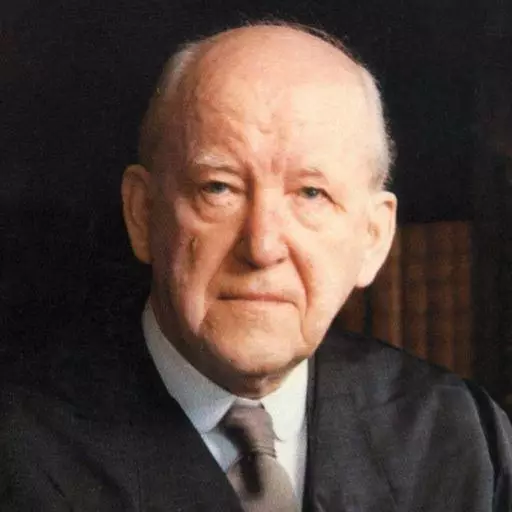
A Sense of Balance, Part 2


Dr. Martyn Lloyd-Jones: The words we are considering at the present time, you remember, to be found in Paul's Epistle to the Romans, in the 14th chapter, considering particularly verse 17. But let me read verses 17, 18 and 19.
"For the kingdom of God is not meat and drink, but righteousness and peace, and joy in the Holy Ghost. For he that in these things serveth Christ is acceptable to God, and approved of men. Let us therefore follow after the things which make for peace, and things wherewith one may edify another."
But we are considering particularly this great statement in the 17th verse, and as most of you will recall, we've already looked at it more than once. I am suggesting that here the great apostle, leaving pure argumentation for the time being, is lifting up this whole question in dispute in the church at Rome. Namely, this matter of eating particular meats, and observing certain particular days.
He now lifts it up out of the realm of argument and disputation and puts it into the great context of the whole of the Christian life. In other words, the principle I've suggested is that he is showing them how their real trouble is, they've lost their sense of proportion. They've lost their sense of balance.
And we've seen how failure to maintain a sense of proportion and of balance has been more productive of division and trouble in the Christian church than perhaps anything else. The great tragedy of the church, indeed, so often has been entirely due to a failure to understand and to implement the teaching of this great verse. So we've already deduced certain general principles from this statement.
And in a sense, they can be summed up in this, that the great thing for us always to remember is the relationship between parts of a whole and the whole itself. And what he is really saying is that you must never emphasize any one part at the expense of the whole. But then he goes on of course, and as I say, he puts this in the form of this statement.
The thing we've always got to remember is the Kingdom of God. We've got to remember that we are citizens of the Kingdom of God. That's his way of dealing with it. He says, "Look here, you've been talking about this and that. You've got your rival views. You're dividing amongst yourselves." The Kingdom of God is not meat and drink.
Very well. So the first great thing for us always to remember is the Kingdom of God. And that as we've seen, means the sphere of God's rule, the sphere of God's reign. Seen in the children of Israel, the nation of Israel in the Old Testament. Seen now in the Christian church.
It's something that happens in a corporate way. It also happens in the individual. Wherever there is surrender and obedience to God, there is the Kingdom of God. Wherever His fear and His reign are acknowledged and recognized. So the Kingdom of God is within us in that sense. And yet the Kingdom of God is something that is visible. And we saw how eventually it's again going to be visible in an almost glorious manner.
Now the kingdom of course, is particularly the prerogative and the sphere of activity of the Lord Jesus Christ. He is the mediatorial King. The Father has handed the Kingdom and all pertaining it to him. So this is what is meant in essence by the Kingdom of God. "Now," says the Apostle, "what you people have been guilty of is you've rather forgotten all about the Kingdom of God."
So he brings them back to this. And having thus looked at what the kingdom is in general, we must now go on to apply this a bit further. You see, you can apply these principles at every single stage. And so what we're applying now is this, that the Kingdom of God must be our controlling thought.
What does that mean in practice? Well, the kind of thing that the Apostle is telling these people therefore is this, we must always remember that we are people who belong to this Kingdom. We have been translated from the Kingdom of Darkness into this Kingdom of God's dear Son. That is what it really means to be a Christian.
The Christian is not merely a man who has taken a certain decision. The real important thing about him is what has been done to him. And he has been translated, moved over from one kingdom into another. And he is now a citizen in the Kingdom of God.
I indicated to you last time how in our Lord's own teaching and preaching, nothing received greater prominence than His teaching concerning this Kingdom of God. And it is a measure of our departure from the New Testament emphasis, to observe the way in which this teaching concerning the Kingdom tends to be neglected by us. It's a part of this subjectivity of ours.
We are so concerned about our feelings and states that we forget where we are, and who we are, and our citizenship of the Kingdom of God. So that is the first great deduction that we draw from this. Whatever else we may remember or forget, we must always remember that we are citizens of the Kingdom of God.
The Kingdom of God is not meat and drink. Very well. So secondly, we have to remember that because we are citizens of this Kingdom of God, that we are no longer our own. Now this is a most important point. The Kingdom, a kingdom, any kingdom means rule. It means reigning. It means government. It means laws, it means rules and regulations.
The very notion of kingdom carries that with it. The King as the head and the ruler, and everybody subservient to Him and obedient to Him. Now this again you see is one of these primary points. A kingdom does not consist of a collection of individuals. That doesn't make a kingdom. A rebel consists of a collection of individuals, but not a kingdom.
Where you've got a kingdom, there is a cohesion, there is a general submission together to certain fundamental laws and rules, particularly submission, I say, to the King himself. Now, the Apostle as you know, has already really been saying this earlier on in this very chapter in the seventh verse, "None of us liveth to himself, and no man dieth to himself. For whether we live, we live unto the Lord, and whether we die, we die unto the Lord. Whether we live therefore or die, we are the Lord's."
That's exactly the same idea. So that he, what he's really saying is this: "You people have forgotten that you are citizens of a kingdom. You're all behaving as if you were kings, but you're not. You're citizens of a kingdom. You belong to the Kingdom of God." Now you see, here are the principles that come out of this great general statement.
And as you see, it covers the problem that he was dealing with in the church at Corinth. So we then remind ourselves in that way, that a citizen is in this peculiar position. He doesn't decide what is right or wrong. That's decided for him. We don't decide what to do. The laws of England decide what we do. And if you break one of those laws, it's no use your saying in a court of law that you don't agree with it.
You'll be told that it isn't your opinion that's of interest. The question is, what is the law of England? And you'll be judged according to that. Well, it's exactly the same in the Kingdom of God. It's because people don't remember this that you get the kind of conditions which you had here in the church at Rome. So then the next third step obviously is this one.
We've got to realize and to remember the character of this Kingdom. And of course, this is the most important thing of all, the character of the Kingdom. It's because we forget that the Kingdom of God is entirely different from every other kingdom that we tend to get into trouble. And that is why our Lord, as I said just now, gave such emphasis in His teaching to this matter of the Kingdom.
Now take two illustrations of that which we had in that reading at the beginning out of the 20th chapter of the Gospel according to Saint Matthew. Take that parable of those workers in the vineyard. You remember the story of the men going out and employing a man early in the morning, promising to give him a penny a day. Later on he goes out again and again and he goes out at the 11th hour.
And he sees men standing by unemployed, and he sends them into the kingdom. And then the time comes for payment. And the last are called in first, and they're given a penny. And then only you go through the others until you come back to the people who went in at the beginning. And we are told that they were not only amazed but they were annoyed, that they likewise were only given a penny, like these people who had gone in at the 11th hour.
"This is unjust, not equitable, this isn't right. They've only worked for an hour. We've borne the heat and the burden of the day, are you only giving us the same as you're giving to those others?" What was the matter with those men? Well, what our Lord tells them was this. They've not understood the nature and the character of this kingdom.
They are thinking in earthly, worldly, human, legalistic terms. You see, he starts off by saying, "For the Kingdom of God is like unto." This is the sort of thing that happens in the Kingdom of God. It doesn't happen anywhere else. And the man who thinks in terms of earthly kingdoms, he can't understand this. And he feels it's quite wrong.
And so the trouble. And later with those sons of Zebedee. They think you see in terms of the earthly kingdoms. Our Lord therefore says, "You know that the princes of the Gentiles exercise dominion over them. And they that are great exercise authority upon them. But it shall not be so among you." He says, "You're in an entirely different realm. That's how the world does it. It isn't like that in this kingdom, because this kingdom is entirely different."
Indeed, the astounding thing about this kingdom is this: that even the King himself has not come to be ministered unto, but to minister and to give His life a ransom for many. What a kingdom! But this is the Kingdom of God. And we've got to realize, and the sooner the better, that everything in this kingdom is different from the kingdoms of this world.
Indeed, our Lord specifically later on put it like this, you remember, "My kingdom is not of this world." You remember his statement to Pilate. Well, now then, there is the next important step. We've got to realize the character of the Kingdom to which we belong. It's because they've been failing to do that in the church at Rome that they were in these grievous troubles over these matters.
But let's go on to a fourth deduction. Obviously therefore, in the in view of the nature or the character of this kingdom, the first thing we have to learn is that we've got to think in a new way. Now this is the great problem of the Christian life. This is indeed the theme of all the New Testament epistles. All these epistles have one great object and that is to teach us how to think in a Christian manner.
Now the fact that you're born again doesn't mean that you do that automatically. If it did, there would be no problems in the church at Rome or Corinth or anywhere else. And indeed, you would never have needed a New Testament epistle. It is because we have to learn to do this that the epistles were written. Now, if you want a really a ethical account of this, you've got it in the first Epistle to the Corinthians, especially in chapters two and three.
The Apostle's whole argument with these people in Corinth, he puts, you see, in this interesting way. Take the beginning of the third chapter, "And I, brethren, could not speak unto you as unto spiritual, but as unto carnal, even as unto babes in Christ. You are yet carnal, for whereas there is envying and strife and divisions, are you not carnal and walk as men?"
In other words, he's saying, "Though you are Christians, truly Christian and born again, you are still thinking as you used to think. You are still thinking with your old worldly wisdom." He says, "You don't realize that you're in a new realm here. The wisdom of this world is foolishness with God. You mustn't go on thinking in those terms therefore any longer." And he says, "Your whole attitude is a proof of the fact that you haven't spiritualized your thinking."
You haven't Christianized your thinking. You don't realize the nature of the Kingdom to which you belong. Now all the troubles in Corinth really arose from that one thing. Take the different problems which he takes up in that great epistle, and you'll find they all come back to this. If they'd only thought in a proper way, in the Christian way, they would never have got into these difficulties.
Take a way in which they were going to law against one another in the public courts. He says, "You don't realize what you're doing. You don't realize that you're citizens of the Kingdom of God, that the day is coming when you'll judge angels." That's the trouble. It's a matter of thinking. Now this is ever the great trouble in the Christian life, that we've got to relearn how to think.
The old way of thinking is of no value here. It's entirely different. We're in an entirely new realm. So you see that's why the Apostle says at the end of 1 Corinthians 2, "We have the mind of Christ." And we need this mind, and we've got to learn to cultivate and to develop that mind, and to think of all these various problems and difficulties in that particular way.
Now let me show you in detail what I mean by all this. One of the first things we learn therefore in this Kingdom is this: that what happens now is not my opinion. Of course in the world it is, my opinion, my political opinion. It's my opinion that matters. And of course we're accustomed to this. It becomes habitual.
We take up our positions, and this is the basis. What I say, what I think, my opinion. The moment you come into the Kingdom of God, that's got to go. That whole attitude, that whole approach is wrong. That's what they were doing in Rome. My opinion as to eating these meats offered to idols. My opinion about these days. And so everybody was saying that.
Paul says, "Don't you realize that you're in the Kingdom of God now? You're not in a human society. You're not in a political party. You're not in any kind of human institution. That's got to go." In the same way, my rights. This is the world, isn't it? My rights, of course. You join the society to safeguard your rights. Trade union, employers' union, consumers' union, my rights, always my rights.
You stand up for these. This is the habitual way of thinking. The moment you come into the Kingdom of God, that's wrong. You don't that that doesn't happen any longer. "Let this mind be in you that was also in Christ Jesus. Look not every man on his own things, but every man also on the things of others." It's a revolution. It's entirely different.
Now the whole trouble arises because people, though they're in the Kingdom of God, still go on thinking in the old way as citizens of the old kingdom. And hence there is this grievous trouble. Now, these are only illustrations that I'm giving you in passing to bring out this point. It's most important in the life of the church.
Let me give you one application on perhaps a slightly bigger scale in this ecumenical age in which we live. The whole question of the conduct of the church, the government of the church, all these things are involved. Very soon in the history of the early church, there arose difficulties. You find them here in the New Testament. They became still more aggravated later.
Where parties would arise. And this assertion of private opinion and rights and so on. There is no doubt at all that the whole idea of bishops came into being exactly in this way, that there was such disorder and confusion that they said, "We must regularize this." And so they appointed one man as chairman, and his powers gradually increased.
Eventually you had a bishop, and then archbishops, metropolitans and so on, eventually a pope. Now, it all arose because of a failure on the part of Christian people to adjust themselves to this new kingdom. So that in the end, you get a system, a tyrannical system that is the exact opposite of what he starts in the New Testament.
I'm simply showing you how it ever came into being. In other words, in the church, even those of us who believe in the right of the individual member, and who would assert the right of the individual member to have a place and a portion in the life and the government of the church. Even those of us who believe that must be careful always to show the difference between this and what is commonly called democracy.
It's a very important point this. So often the worldly, secular idea of democracy has come into the church. And people have said, "We're going to settle this matter by voting." And so you canvas, and you get round people, and you work up a party, and you're concerned about the vote. Now, that type of thinking is the exact opposite of the Kingdom of God.
You see where the thing becomes subtle. It's wrong to avoid this danger by having bishops and archbishops and popes. But it is equally wrong to assert a democracy which thinks in terms of voting and the majority and having thing. You're no longer thinking in terms of truth, and of brotherhood, and of unity, and of the whole spirit of the Christian faith, and the spirit of the Kingdom of God.
Now, that's the kind of thing that's implicit here. You see, there they were, forming these factions in Rome over these particular questions. And some would say, "Well, I will decide this by vote. When you're dealing with this question whether they should eat meats offered to idols or not, you state the case and now you have a vote. And those in favor of eating meats offered to idols, those against." Now, that's that's not the Kingdom of God.
That's political parties. That's the world democracy. Christian people do not decide things in that way. The church in one sense is not democratic at all. But she is not monarchical either, or oligarchic. She is something entirely different. We believe in the universal priesthood of all believers. But that does not mean political democracy in the sense in which it is normally understood.
Well, I don't want to go into this too much, but I'm only trying to show you some of the implications of this great teaching. Let me finish with this particular point by reminding you of a well-known saying of Mr. Spurgeon to his students, warning his students what to expect at times in their churches. He said this to them on one occasion, and how true it is, and how perfectly it brings out this aspect of this teaching.
He said, "Gentlemen, you will sometimes find that some of your members in the prayer meeting are most spiritually-minded people, and they can pray in a most fervent and spiritual manner." He said, "Gentlemen, you will sometimes find that these selfsame people, when they come to a church meeting, become devils." And it's perfectly true. What's the matter with them?
Well, you see, they haven't carried out their thinking. In their prayers, they're spiritual, but in a church meeting, "This is a matter of business now, and I've got my right and my opinion, and I don't see why I should give in." And so you get excited, and you get heat. "They become devils," said Mr. Spurgeon. And they do. And that is because they don't know how to think.
They've reverted to the old, worldly, carnal way of thinking. And they have forgotten that they are citizens of the Kingdom of God, and that the church meeting is as much a part of the Kingdom of God as is the prayer meeting, or any other aspect of the life and work of the church. Now these are but illustrations, I say, of the way in which we have to realize that we not only realize what is the character of this kingdom, but because we do realize it, we see how it's going to affect the whole of our thinking.
All our outlook, and the whole of our thinking in every single respect. And so we sum it up by saying that everything we do as Christians, and particularly in the realm of the church, must be considered in the light of this whole, the Kingdom of God. I must never lose sight of it. It must come in at the whole of my thinking.
I say to myself, "I am a citizen of the Kingdom of God. It's the most amazing thing that could ever have happened to me. It's my highest privilege. This must dominate the whole of my thinking." Very well. Now then, we go on from that, having put it like that in general. The Apostle now himself takes us a step further in detail, putting it like this.
Having reminded us thus of the whole character and nature of it and things that immediately result from that, he now says, "I want to help you still further." So he says, "Let's remind ourselves of what the Kingdom of God is not." "The Kingdom of God is not meat and drink." Now what does this mean?
Well, what he's saying is, you mustn't ever conceive of the Kingdom of God as merely one aspect or one part of the Kingdom of God. Indeed, you must not even think of it as a collection of parts or portions. The Kingdom of God, he says, is not eating and drinking. That comes into it. He doesn't say that the questions are not legitimate or right questions for consideration.
What he's saying is, the Kingdom of God is not only eating and drinking. Though these things are involved. Well, what is he concerned with? Well, you see what he comes back to is this. Is this great whole, this grand thing, this big thing, this glorious thing. That's what they'd forgotten in Rome. They'd become petty, they'd become small.
And they were giving the impression that the Kingdom of God is something small. My dear friend, the most terrible thing that you and I can ever do is to give the impression that Christianity is something small. Or that the church is something small. That's what makes this verse such a vital one. I believe there are so many people outside the Christian church today because you and I have given the impression that it's something small.
Little Christians, that we are little people, that we are just negative people. That's the thing that the Apostle is concerned about. He said, "Look, are you saying that the Kingdom of God is a matter of eating and drinking? Are you really reducing this to this?" That's what he's saying. And you see the relevance of all this to us, not only at the present time, but at all times.
What he's saying is, "Never give the impression that the Kingdom of God is negative, never give the impression that it's small, that it's just something narrow." Now, our Lord, you see, himself, of course, was constantly having to deal with this whole thing. So much of his time was spent, as you remember, in argumentation and disputation with the Pharisees and scribes and the doctors of the law, these little pedants, these little meticulous men with their little bits of detailed knowledge and with their microscopic detailed attitude.
And he was always holding before them the glory and the bigness and the greatness of this Kingdom. Take for instance, how he puts it in the Sermon on the Mount, as recorded in the Gospel according to Saint Matthew. In the sixth chapter, verse 25 and following. "Therefore I say unto you, take no thought for your life, what ye shall eat or what ye shall drink, nor yet for your body, what ye shall put on. Is not the life more than the meat?"
See this is the same principle. Meat is everything to these people. He says, "The life is bigger than meat." And and so on. It's the whole tragedy of this pharisaical way of thinking. So our Lord goes on, "Behold the fowls of the air, for they sow not, neither do they reap, nor gather into barns. Yet your Heavenly Father feedeth them. Are you not much better than they? Which of you by taking thought can add one cubit unto his stature? Or why and why take ye thought for raiment? Consider the lilies of the field, how they grow. They toil not, neither do they spin. And yet I say unto you, that even Solomon in all his glory was not arrayed like one of these. Wherefore, if God so clothe the grass of the field, which is today is, and tomorrow is cast into the oven, shall he not much more clothe you, O ye of little faith? Therefore take no thought, saying, 'What shall we eat? Or what shall we drink? Or wherewithal shall we be clothed?'"
Here they are with their little questions. "After all these things do the Gentiles seek. For your Heavenly Father knoweth that you have need of all these things." And then here it is in principle, "But seek ye first," what? "Well, not what you eat or drink, nor what you put on. Seek ye first the Kingdom of God and His righteousness." And all these things shall be added unto you.
That's the principle. It's exactly the same thing. The Kingdom of God is not meat and drink. Don't seek after these things. Seek after the Kingdom of God and His righteousness. Go after the big thing, and the little things will be included. All these things shall be added unto you. This was the whole difficulty, as I say, with the Pharisees and scribes.
They were so immersed with details, they couldn't see the big thing. There it was standing before them, the very Son of God incarnate. Everything they needed. The Kingdom itself, as it were, in the person of the King, and they couldn't see it because of subsections of subsections of subsections of the law. Now these people in Rome were really guilty of exactly the same thing.
Here they are. They've reduced the Kingdom of God to a matter of eating and drinking. Anybody entering into the church at Rome and listening to them would have thought that the Kingdom of God is really just a matter of what you eat and don't eat, and what you drink and don't drink, and which days you observe. They have thought this is the Kingdom of God.
"Paul says, 'What are you talking about? Have you forgotten what the Kingdom of God is? It's not that! It's not small! It's not mean! It's not narrow! It's not negative!'" But my dear friends, this comes to us as a question, doesn't it? What impression are we giving of the Kingdom of God?
What impression do you think you give to others as to what Christianity is, as to what it means to be a Christian, as to what the whole Kingdom of God is about? That's the question that comes to us from all this. When we talk about these things, what impression are we leaving on others, as to what Christianity really is, what makes a man a Christian? What impression do our lives leave upon them?
This is what we are concerned about. What is the big impression? What is the Kingdom of God? Is it eating and drinking? Or is it something else? This is the issue that he puts before us so plainly and so clearly. Now, bear this in mind. The Kingdom of God includes many things. There are many parts to it. But this is the question: are we giving an impression of the whole and the bigness or merely of parts?
For instance, morality. Morality is a part of the Kingdom of God. But the Kingdom of God is not only morality. That's the difference. So let me give you some questions. Or let me put it in forms of statements. There are certain things which we as Christian people must never do. There are certain impressions, if you like, of ourselves as Christians, as members of the Christian church, as citizens of the Kingdom of God. There are certain impressions that we must never give.
Here's one. We must never give the impression that a Christian essentially is just a man who doesn't do certain things. That bothers, doesn't it? Now, don't misunderstand this. A Christian is a man who doesn't do certain things, but we must never give the impression that a Christian essentially is just a man who doesn't do certain things. You see the importance of this.
Is there not a danger that some of us might give the impression that a Christian is just a man who doesn't drink, or who doesn't smoke? There are certainly many and some might consider outstanding Christians, who give the impression that a Christian essentially is a man who doesn't fight. That the Christian is a pacifist. That's the big impression they give. You're familiar with such people.
They're always talking about it. You listen to them, and you get the impression the Kingdom of God is pacifism. This is *the* thing. If a man doesn't believe in war and in fighting, if he's opposed to what's happening in Vietnam, he is a Christian. But you say, "But he doesn't believe in the deity of Christ," it doesn't matter. "He doesn't believe in war. He doesn't believe in fighting." This is their argument.
So they argue that men like the late Mr. Gandhi was a Christian just because he was a pacifist. The Kingdom of God is pacifism. Now these are but illustrations. This is the thing the Apostle is concerned about. I'm not discussing the question of pacifism. I know Christians who are pacifists. I know equally good Christians who are not. All I'm saying is this, that if a man gives me the impression that what makes a man a Christian is that he's a pacifist, he's wrong.
If he gives me the impression that what makes a man a Christian is that he fights for certain principles, he's equally wrong. They're both wrong. The Kingdom of God is not merely a question of fighting or not fighting, any more than it is a question of whether you eat or drink, or whether you don't. So there is one. But let's go on to a second. It is equally right to say that we should never give the impression that a Christian essentially is a man who does good, and is a moral man.
Now, you're familiar again with this. There is a certain man who is often described in the papers as the greatest Christian of this present century. Why do they say that of him? Oh, it is because of good work which he did. He made a sacrifice and he did a lot of good work. That's all right. But whether they don't worry about what he believes, they don't worry about what he denied, and did it quite openly, and made it quite plain that he was not a Christian at all, but that doesn't matter.
"Look at the good he does. Look at the sacrifice he's made. Look at his desire to help people. This is Christianity, philanthropy." And especially if you sacrifice for it. All I'm saying is this, it's covered by Romans 14:17. "The Kingdom of God is not doing good." There are many, many people in the world who are doing great good and are sacrificing for it, but they are deniers of the Christian faith. That isn't the Kingdom of God.
The Christian does good. The Christian is moral. But you mustn't identify Christianity or the Kingdom of God with just one aspect or one portion. Or come along, let's put it I'm trying to show you how we're all guilty at some point or another. Now the Christian, I say, must never give the impression that what essentially makes a man a Christian is that he believes in election.
But he says, "There anybody who gives that impression." Well, all I say is this, that if you're always talking about election, you mustn't be surprised if some people think that what makes a man a Christian is that he believes in the doctrine of election. Now, I'm not discussing the rightness or the wrongness of the view. All I'm saying is this, that if you are giving the impression, "Well, of course, the one thing that matters is that you believe in election."
You come under the ban of the great Apostle. Others give the impression that essentially what makes a man a Christian is that he's been immersed when he was baptized. This is *the* thing. Equally wrong. I've known others who really have given the impression virtually that the essential thing about the Kingdom of God is that you only sing Psalms and never hymns.
Why do I say am I being unfair? I'm not being unfair. This is the thing that they keep on talking about. This is the thing that they emphasize. This is the thing that's central. And that seems to be the essence of the Kingdom of God. That's the kind of thing the Apostle tells us that we must never do. There are people who give the impression that what makes a man essentially a Christian is that he speaks in tongues, or that he believes in healing.
I am again not discussing the question. All I'm saying is this, that the Kingdom of God is neither speaking in tongues, nor spiritual healing, nor any one of these things. These may be parts of the Kingdom, but the Kingdom of God doesn't consist in these things. Or to put it still more generally, and it's still true. It's perhaps not as true as it once was.
It's been the curse of the last hundred years to give the impression that a Christian is a man who belongs to a particular denomination or to a particular organization. I've often said that in my vestry here throughout the years, at the close of a service, I've stood and listened to men telling me everything about themselves in one phrase. And it's true of practically all.
I've had men have come in and have said to me, "I'm a Methodist." I need to know no more about them. I've had others who said, "I'm a Congregationalist." "I'm a Salvationist." They've told me everything about themselves. I've realized that the important thing to them is not the Kingdom of God. How we betray ourselves. You see, we do so by what we emphasize.
By that to which we give prominence. That about which we're always speaking. That which seems to absorb us and to thrill us and to excite us. These things. Always. Now this is the thing, the Kingdom of God is not meat and drink. It's not eating and drinking. Very well, my friends, my time has gone and perhaps something else as well.
But so we leave it at that for this evening. Now, there, you see, in a sense is the negative aspect of all this. The Kingdom of God isn't that. That's the point at which we've got to start. What is it to you? What is the Kingdom of God to you? What's the big thing? But above all, I say, let's ask ourselves this question. What impression are we giving of it?
I'm so concerned about this, because to me, this is the thing that controls evangelism ultimately. You see, all this is impressed in evangelism. People who are outside, what can we do to get them in? And you begin to talk about details of how to approach and methods you employ, and all the rest of it, and the excitement, and the money, and the advertising.
It's all in my opinion due to the fact that we haven't asked the original and preliminary question. What's that? Well, it's this. Why are the masses of the people in this country outside the Christian church? That's the question, isn't it? They are outside. It's very well, it's because they're outside, we say, we must evangelize. We must do something about it.
But here's the question: why are they outside? And I have a terrible feeling within me that the real answer to that question is this, that you and I who are inside have somehow given them the impression that this business of the Kingdom of God and of Christianity is so small and contemptible that it's not even worthy of their thought and consideration.
It's so small. They want something big, they say. They want real life, not this negative smallness. This finicky little thing. Concerned here and there about details and self-important people and so on. "Ah," says the man, "I'm not interested. I want something big, something moving." And we've given the impression that it's something so small that they've dismissed it with contempt and regarded it as being beneath their consideration.
Oh, my dear friend, there's nothing more important for you and for me to answer than this question. What impression are we giving to others as to the nature of the Kingdom of God? Let every man examine himself. Oh Lord, our God, we come unto Thee, and we come with shame. We realize how often we have misrepresented Thee and Thy glorious Kingdom.
Oh Lord, we know that we would be undone were it not for Thy grace and for Thy mercy and for Thy compassion. Lord, have pity upon us. And open our eyes, we pray Thee, more and more to the greatness and the glory and the wonder of Thy Kingdom and of the privilege of belonging to it. Lord, bless us to that end, and use us all in our several spheres to Thy glory and to Thy praise. And now may the grace of the Lord Jesus Christ and the love of God, and the fellowship and the communion of the Holy Spirit, abide and continue with us, now this night and evermore. Amen.
Featured Offer

Find peace and comfort this season with your complimentary guide that includes access to 6 free bonus sermons on overcoming spiritual depression from Dr. Martyn Lloyd-Jones, one of the church’s most beloved Bible teachers. Topics include: true Christians can and do struggle with depression, recovering the joy of your salvation, dealing with crippling guilt over past sins, dealing with yesterday’s haunting regrets, encouragement to keep moving forward, and understanding God’s purpose for suffering.
Past Episodes
This ministry does not have any series.
Featured Offer
Find peace and comfort this season with your complimentary guide that includes access to 6 free bonus sermons on overcoming spiritual depression from Dr. Martyn Lloyd-Jones, one of the church’s most beloved Bible teachers. Topics include: true Christians can and do struggle with depression, recovering the joy of your salvation, dealing with crippling guilt over past sins, dealing with yesterday’s haunting regrets, encouragement to keep moving forward, and understanding God’s purpose for suffering.
About From the MLJ Archive
From the MLJ Archive is the Oneplace.com hosted ministry of the MLJ Trust. Our mission is to promulgate the audio ministry of Dr. Martyn Lloyd-Jones.
About Dr. Martyn Lloyd-Jones
Contact From the MLJ Archive with Dr. Martyn Lloyd-Jones
info@mljtrust.org
http://www.mljtrust.org/
PO Box 953
Middleburg, VA 20118