
Oneplace.com

Serving the Lord

April 17, 2026
00:00
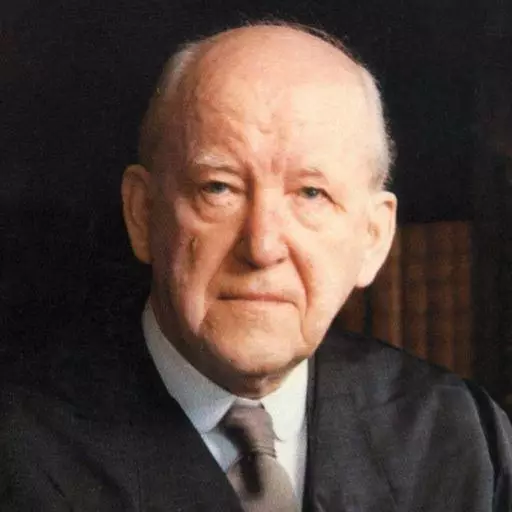
In this sermon on Romans 12:11­–12 titled “Serving the Lord,” Dr. Martyn Lloyd-Jones preaches about the importance of serving the Lord with zeal. The Christian may be tempted to do things half-heartedly as they go from task to task. Dr. Lloyd-Jones preaches that this approach is second to demon possession in that the Christian has allowed the devil to influence their actions. Slothfulness, he expresses, can manifest itself in doing something half-heartedly. This lazy form of action is one way in which the devil corrupts God’s good creation. Similar to the body and mind, exercise of the Spirit is what promotes its health within the believer. The Christian must continually fan the flames of the Spirit within them. Before long, the sluggish Christian can become the diseased Christian who falls into sin easily and becomes entangled by it. Dr. Lloyd-Jones also preaches that when the Christian feels lethargic or sluggish, they must meditate on, read, and study the actions of God in His people. God will bring to fruition the seeds sown by the Christian. God’s people must be sure to keep fervent in spirit, which literally means that they must be “at the boiling point” in their hearts and in their passion for the Lord.

Dr. Martyn Lloyd-Jones: This week, in our study of the twelfth chapter of Paul's Epistle to the Romans, we come to verse 11, the eleventh verse in the twelfth chapter of Paul's Epistle to the Romans.

"Not slothful in business, fervent in spirit, serving the Lord."

Now here, as most of you will recall, we are dealing with these particular injunctions that the Apostle gives to and addresses to these Roman Christians. This is the last section of this most important chapter. The theme of the chapter, you remember, is the practical application of the doctrine that the Apostle has already been laying down in the first eleven chapters.

He starts therefore by saying, "I beseech you therefore, brethren, by the mercies of God," which he has been expounding to them, "that you present your bodies a living sacrifice, holy, acceptable unto God, which is your reasonable service. And be not conformed to this world, but be ye transformed by the renewing of your mind, that ye may prove what is that good and acceptable and perfect will of God."

Now, there, in two verses, you rarely have the whole, a summary of the whole of the remainder of the teaching of this great Epistle. Doctrine is not something merely to be contemplated intellectually. It is something to be applied, something to be put into practice. And there is no point or purpose in our knowledge of doctrine, unless it has led to a radical change in our lives and in our living.

And there, in two verses, the Apostle really gives us all the great motives for Christian living. But he doesn't leave it at that. We have seen how after doing that, he goes on to deal with the life of the Christian believer in the realm of the church. The Christian becomes a member of the mystical body of Christ. And as such a person and in such a position, he is given a gift. As every member of the body has its own peculiar function. All together work as a whole and harmoniously. The body functions as a whole, but it does that through the individual functions of the separate and the individual parts.

And he uses that comparison to remind us that we are all members of the body of Christ and that having therefore gifts differing according to the grace that is given to us, we must exercise these gifts. And he specifies some of them. Right, that brought us to the end of the eighth verse. Then I'm suggesting that from verse 9 to the end of the chapter, he now is dealing with us in our more general relationships.

There, it was peculiarly our functioning in the body, the church. But now he's a bit more general. And we have seen that he approaches this again in his customary manner. He starts by laying down two great fundamental principles. The first is the great principle of love. "Let love be without dissimulation."

Love is the fulfillment of the law. So if we are clear about this, if our love is pure, without dissimulation, without hypocrisy, without any sham. Well, we're not likely to go far wrong in our conduct. But again, you see, he adds to that a great practical principle. "Abhor that which is evil." Not only don't do it, hate it. "Ye that love the Lord, hate evil." Abhor that which is evil. "Cleave, be glued to, fixed fast, cemented to that which is good."

Then having laid down, there are the two great principles again, you see, that in a practical sense, govern the whole of conduct. Love to God, love of your neighbor. Avoidance of evil, cleaving to the good. These are the general points. But then, you see, he comes down and puts it a little more in particular. Verse 10 we saw, he, in that, he deals with our relationship to one another as Christians. "We are brethren, be kindly affectioned one to another with brotherly love." "Let your brotherly love," he says, "as Christian people have the characteristics of your natural love to your natural brothers."

You're not merely associated in a in a general or superficial sense in the church. Christian people should love one another with a deep affection. And then he adds to that, "in honoring preferring one another." An inculcation of humility again. Go ahead of one another in being humble, he seems to be saying, and in honoring one another. And if only these individual precepts were put into practice by us, oh, how much trouble would we save ourselves, and how much trouble would have been saved in the life of the church throughout the running centuries. In other words, I remind you again, as we proceed, that these injunctions are not something to be skipped over, as they so often are by the commentators.

I think I told you two or three weeks back of how I read in an American journal, which was working its way, a man working his way through this epistle, when he came to this, said, "There's no need to stay with this, these are obvious." Obvious. They are not only not obvious, it's the failure to see them and to realize them. I say that accounts for most of the troubles that the Christian church has ever known in her long history. You cannot skip over these. Each one of them is of vital and crucial importance. So we come to this next, verse 11. What have we got here?

Well, here he obviously is dealing with our general spirit. Our attitude to our calling as Christians. How we do our work, the spirit in which we do it. And he puts that in these ringing words, "Not slothful in business. Fervent in spirit, serving the Lord."

Now then, we are all, I say again, the members of the body of Christ. Now how are we to function? How are we to do this work to which we are called? How what's to be the characteristic of our lives as Christian people? Well now let's look at these terms that he uses. "Not slothful in business."

Here we must agree with what is pointed out, it seems to me, by all the commentators and by most of the translations, that it's better not to use this word "business," although, of course, in a sense, it conveys the right meaning. But the Apostle has already used the word that is translated here as "business" in the eighth verse. There he said, "He that ruleth with diligence." Now the word translated "diligence" is exactly the same word as is translated here "business."

So, you might if you like translate it like this, "In diligence, not slothful." Or if you like, "In zeal, not slothful." As I say, it comes to very much the same thing. Except that that better translation, using the same translation as in the eighth verse, it does help us to concentrate on what he is concerned to teach us here. And what he is concerned about here is what you may call, if you like, moral earnestness. We are to be earnest. We are to be alive. We are to be vigorous.

Now, once more, you see, we discover that this is something that has got to be dealt with in terms of thought and understanding of doctrine. I have to keep on saying that about every single one of these injunctions. It's no use taking them in isolation. You mustn't look at any particular injunction in this chapter, except in the light of verses 1 and 2. Otherwise, you'll go wrong. And that is something that can happen very easily with regard to this particular injunction.

The Apostle is not just saying to them, "Pull yourselves together." He is saying that, but he's saying much more than that. And that's the thing that we've got to bring out. And that means thought. This has got to be considered, as I'm going to show you again, in the light of the "therefore" of the first verse. "I beseech you therefore, brethren." It's the "therefore" of the mercies of God. All these things, this one included, have got to be taken in in terms of that original pronouncement.

Otherwise, we may obey this injunction and merely become busy people, in the sense of busyness. Now, I'm going to show you what it means, but it doesn't just mean that you're fussy people and just activists, rushing backwards and forwards. It doesn't mean that at all. But you can only realize that if you take the injunction in the light of the whole of the doctrine. Here he's telling us that in this question of moral earnestness, we must work out the doctrine. Otherwise, we'll never do it at all.

Let's approach it therefore like this. He's telling us that we mustn't be slothful. We all know what sloth is. It's laziness. It's slackness. It's half-doing a thing. It's it's the opposite of being energetic and vigorous. Now, what are the causes of sloth? Well, there are many. There is no doubt at all, and the Apostle here and everywhere else doesn't exclude the natural. It's a very false teaching of the Christian doctrine to exclude that which is natural.

We are all different. We are different temperamentally and constitutionally. And all these things have their effect and their influence upon our Christian lives and living. And we've got to realize that, we've got to be aware of it. So many people, in neglecting that, trying to produce a kind of stereotyped, standard kind of Christian. And that seems to me to be quite wrong. God's work is always characterized by variety and variation. And it's equally true in the Christian church. So I say that sometimes the main cause of sloth is temperamental and constitutional.

It's something that, in a sense, up to a point, you cannot help. We don't all have exactly the same problems in life. And that is because, I say, we're different in this kind of temperamental and constitutional sense. What I mean is something like this, just to illustrate it. There are some people who are born energetic, active. Others are are more the lethargic type, the phlegmatic type. Now, you you don't determine that, you're born like that. And we've got to recognize these things. And there are some people who are born, if you like, bilious. And born with a kind of constitutional, physical slackness. They can't help it.

They're born like that. Their circulations are different, their nervous systems are different. Though essentially the same in all, there are these tremendous possible variations. And these things, of course, do affect us and they make a difference to us. Now, this is sometimes almost a national characteristic. You know how Paul, in writing to Titus, says, "One of themselves, even a prophet of their own, said, 'The Cretians are always liars, evil beasts, slow bellies.' This witness is true." There are national characteristics.

It is said, I don't know with how much real justice, that the southern nations of Europe tend to be more slothful than the northern ones. I think it's probably right. It's probably a question of geographical conditions even. The colder the climate, the more energetic, the more invigorating. Great heat tends to be enervating. Well now, all these things come in. Not only temperament and constitution, but these other conditions. And well, there it is. We start with that. Well, then, add to that, of course, the work of the devil.

The devil's supreme ambition is to ruin or to mar the work of God. As he did that in the first creation, he tries to do it in the second creation, in the new creation. And if he can produce lethargic, slothful Christians, he's very pleased indeed. That is what he's out to do. And the devil can attack us, as we know, in many different ways. Even he can attack us in the body again. And in the mind, and in the spirit. He can depress us. He can make us feel slack and lethargic. There are endless illustrations in this. Devil possession, demon possession is the sort of gross manifestation of this influence of the devil. But short of that, he can influence us in so many different ways. And he has often caused grievous trouble in the lives of many a Christian through just producing this kind of slothfulness, this slackness, this disinclination for work, this kind of heaviness of spirit.

This feeling, "Well, I can't do anything today. I don't feel like doing it. I hope I shall feel better tomorrow." But you don't feel better tomorrow. And so it goes on. And the result is you're always like that. Now that's slothfulness. And the devil, I say, is often extremely active in producing that kind of condition in us. And then, on top of that, discouragements tend to produce slothfulness. I read that first chapter of Second Epistle to Timothy at the beginning, because Timothy seems to have been a remarkable example of this very thing. I think probably he was one also temperamentally and constitutionally. But he certainly was a man who was easily depressed. And when things went against him, as they were going against him then, he became very discouraged. And if you're discouraged, you'll soon be slothful. You'll be half-hearted. And to try and do something in a half-hearted manner is the most killing thing of all.

Well, these are some of the reasons. Discouragements and trials and tribulations and so on. That was the trouble with the Hebrews to whom the Epistle was written, and various people of that type. Well, now then, there are some of the causes. We needn't delay with them any longer. We all know something about this in experience. The great thing for us to discover is, what are we to do about it? And now this is what the Apostle deals with. He says, "In zeal, in diligence, don't be slothful."

Well now, how how are we to do this? How are we to obey this injunction? And here, it seems to me that there are three answers in this one verse. And I keep myself to that and to that alone. It is an injunction. The Apostle is very fond of doing this. He does it again very much in that those Epistles to Timothy. He seems to issue an order of the day, or almost at times even seems to crack the whip, stirring him up. "Remember," he says to Timothy, "that Jesus Christ of the seed of David was raised from the dead according to my gospel. God has not given us the spirit of fear, but of power, and of love, and of a sound mind."

Now all these, put in that form, were designed to stimulate this man. There is a natural or a general answer to this question, therefore, of how we are to deal with slothfulness. And I put it therefore in this form. He's telling us here that we've got to rouse ourselves. Now he's not asking you to try and turn yourself into something that you are not by nature. He's not telling you that you can't change your nature, you can't change your temperament. So he's not trying to make a man who is perhaps a bit lethargic in a natural sense, he's not trying to get this man to put on a mask or to play a part, as it were. It isn't that, but what he is telling us is to rouse ourselves.

We are never quite as bad as we think we are, any one of us. And that's an important psychological principle. Sometimes people who claim great results in the matter of what is called faith healing are simply doing this very thing. When we're ill, we're never quite as ill as we think we are. We always add on a certain proportion. And it's therefore an easy thing to get rid of that extra bit that we put on psychologically. So that we can always do this much. We can rouse ourselves. And we need to do this. And it's one of the great and important lessons in life.

You've got to know yourself, and you've got to understand yourself, and you've got to deal with yourself. You've got to talk to yourself. You've got to reprimand yourself. You've got to shake yourself. This is part of Christian preaching. Slothfulness is bad in and of itself. And therefore you start by saying, "You shouldn't be like that." Now I'm not saying that you should be like a man who's born brim full of energy. All I'm saying is you can shake yourself so that you are functioning as yourself and not as you have been doing recently. You rouse yourself. And you can apply various arguments to yourself.

The body, for instance, is always at its best when it's in a good condition and when it's being exercised. If you don't take sufficient exercise, you'll soon become lethargic. And that means you become slothful. Now, as that is true of the body, it's true of the man as a whole. If you don't exercise your mind, well, you'll find it more difficult to exercise your mind, and you won't want to exercise your mind. And that's one of the modern problems, isn't it? One of the great modern diseases. That the newspapers and the television are discouraging people from using their minds, and they're now got into a state where they don't like doing it, and they don't like to be asked to do it. I've been talking to ministers this week, and they've been telling me that how their congregations no longer want to be taught, they want to be entertained, always.

You see, that is slothfulness in an intellectual sense. Now, it's as it's true of the body, it is true of the mind, or any part of us, our spirits included. They're always at their best when they're being exercised and when they're being used. So you apply that as an argument to yourself. You you find yourself one morning, perhaps, and you don't feel like work. You don't feel like reading your scriptures, or praying, or whatever it whatever it is you want to do. And the danger is to say, "Well, of course, I I'm not well today, and I I cannot do this." Now, I say that's where you say to yourself, "Well, now, I must rouse myself, and perhaps I'm in this condition because I've been too slack. I haven't been exercising myself sufficiently."

So you begin to do that. You apply that particular argument. And then you can go further and point out to yourself that there are dangers in sluggishness and in slothfulness. Eventually, sluggishness and slothfulness leads to disease. If you allow the organs of your body not to be used, or if you don't use them as they should be used, well, eventually, this sluggishness will even turn into a diseased condition. It is said by recent research workers that if you take a bit of muscle or living tissue, and keep on changing the medium in which it's kept, it can go on working and acting forever.

And I believe that is true. And so many diseases are really the result of sluggishness. You can get crippled in your joints if you start protecting them. The more you use them, the better they're likely to be, and the more supple. And you go on doing that, and you can get rid of so much, just by using them in that way. Now, you apply all this in the spiritual realm. You say to yourself, "If I go on like this much longer, I shall be diseased spiritually." And you undoubtedly will. Any man with pastoral experience will know this. That it is the sluggish Christian who eventually becomes the diseased Christian. And his problem is more difficult to deal with. But then, remember, here is another argument.

Remember that you are a part of a body. We are members severally of the body of Christ. And therefore it follows, as we saw in working out that analogy, that if there's something wrong with one part, all the other parts are going to suffer. So you cannot isolate yourself. "No man liveth unto himself, no man dieth unto himself," we shall find the Apostle saying in chapter 14. Very well. So you can't say, "I'm an independent unit." If you are lethargic, and slack, and slothful, you are going to affect your neighboring members, and eventually, the whole is going to be involved in this condition. So, for these various reasons, and there are other arguments you can adduce and work out for yourself, you turn upon yourself and you say, "Away, dull sloth and melancholy." You just literally have to rouse yourself.

And I am asserting that that is a part of one's Christian duty. Now, we are still on the natural level, remember. But Christianity doesn't exclude the natural. Oh, how many heresies have arisen in the past because of that. It doesn't exclude the natural. So you start on the natural level, and it's surprising when you do when you do that to find how much you really can do. You see, you think you need this, that, and the other. Sometimes you need just that, to take yourself in hand and make yourself do it.

If you're always, as the wise man puts it, in the Old Testament, observing the wind and so on, you'll never sow. And the result is you will never reap. So you just get up and you begin to do things. Whether you feel like it or not. You say, "It's my duty to do it." And you begin to do it. There's the natural. But let's go beyond that, because the Apostle takes us beyond that. Having just put it in general, "Not slothful in zeal." He then goes to the second point, which is much more important. "Fervent in spirit."

Now, here is a most important and at the same time a very interesting statement. There's been a good deal of arguing about this as to what the "spirit" means here. In this Authorized translation, it's spelled with a small "s." But then in other translations, you'll find it's spelled with a capital "S." And the whole question is, is he referring to a man's natural spirit, or is he referring to the Holy Spirit, which is in the believer? Now, I have no hesitation whatsoever for myself in saying that it is the second. That he is referring here to the Holy Spirit that resides in every Christian. "If any man have not the Spirit of Christ, he is none of his."

I'm arguing, it is a reference to the Spirit that is in us. Now, the argument which is adduced by the people on the other side, of course, is what we are told, you remember, about Apollos. In the eighteenth chapter of the book of the Acts of the Apostles, verses 24 and 25. "And a certain Jew named Apollos, born at Alexandria, an eloquent man, and mighty in the scriptures, came to Ephesus. This man was instructed in the way of the Lord, and being fervent in spirit, he spake and taught diligently the things of the Lord, knowing only the baptism of John." Now there, I am prepared to agree that it is a reference to his natural spirit.

Apollos was one of those men who was naturally fervent, fervent in spirit. This energetic type, this mercurial type, high pressure type, we tend to call them at the present time. I say that for this reason, that we are told specifically about him that he had only known the baptism of John. And surely that was the defect in that man and in his ministry, on which he was put right by the ministry of Priscilla and Aquila to him, who told him about the baptism of the Holy Ghost, as Paul himself had to do, and as is recorded in the next chapter, the nineteenth chapter of Acts, with those men whom he found at Ephesus. There, I think, you're right in saying that it is a man's natural spirit. But here, I reject that, and for this reason. That this is a command. And as I've already been explaining, you cannot change your temperament.

If you're born fervent in spirit, you are fervent in spirit. But if you're born with a phlegmatic temperament, you will not be fervent in spirit in a natural sense. But here, we are all told to be "fervent in spirit." Now, you can't produce that. You can't turn yourself temperamentally, or by nature, into a fervent kind of person. But this is a command. And therefore, I say that it must mean the Holy Spirit, who is in us. Because here is something that is true of all of us as Christians. The Holy Spirit is in all of us, whatever we are by temperament, and whatever we are by nature. So the "spirit" here, I I'm going to try and show you, is a reference to the Holy Spirit that is in us.

Don't forget that it is a command. Therefore it is possible, that as you cannot change your temperament and nature, it cannot be a reference to one's natural temperament. Well now then, what does he tell us to do about this? Well, he says, "Be fervent in spirit." And what does that mean? Well, the word that was used by the Apostle, translated as "fervent," means to boil, to be hot. Or if you like, to be aglow. That's the word. It's a very strong word. Always be at the boil in the Spirit.

Now here is something which surely is expounded to us by that chapter, which we have read together at the beginning. You see, the Apostle puts it like this in writing to Timothy. First of all, he puts it negatively to him, "God has not given us the spirit of fear." Timothy was in a state and condition of fear. He he was fearful. He says, "Look here, that isn't the spirit God has given us." You see? He says, "But God has given us a spirit of power, and of love, and of a sound mind," discipline, not slackness, indolence, slothfulness, lethargy, discipline. Power, love, sound mind.

Now, the Spirit, in other words, he's reminding Timothy there, and I suggest he's doing exactly the same thing in this eleventh verse in the twelfth chapter of Romans, he's reminding us that the Spirit is a spirit of power. An energetic spirit. The Holy Spirit of power. And that is the term that is used about the Spirit right through the New Testament. Or take it as he puts it again to the Philippians. "Work out your own salvation with fear and trembling." How can I do that? Well, the answer is, "It is God that worketh in you." And that is through the Spirit. "It is God that worketh in you, both to will and to do."

There is your energy. In other words, you see, he's taking the ground from beneath our feet if we are trying to explain our indolence away in natural terms. He says, "Look here, whatever you are by nature, as a Christian, you've got the Spirit in you, the Holy Spirit. And He is a spirit of power. He's a spirit of energy." So now, you see, there is some point and meaning in this exhortation. He's entitled to address this to all of us. You may be lethargic and phlegmatic and so on, doesn't matter. If you're a Christian, the Holy Spirit is in you. And he says, "Now then, in this life in the Spirit, be energetic."

Well, very well, the question that comes again to us is, how are we to do this? And there again, we have the answer in what the Apostle wrote to Timothy. In the sixth verse. "Wherefore I put thee in remembrance," he says, "that thou stir up the gift of God, which is in thee by the putting on of my hands." He says, "The gift is in you. Stir it up." Now, here again, is a great phrase. "Stir up the gift that is in thee." Somebody else translates it, "Fan the flame. Fan the flame of the Spirit that is in you." You've received this gift.

The form in which you, the way in which you received it, is not the important point. The important point is that the flame of the Spirit, the fire of the Spirit, has been given to him. And he's being exhorted to fan the flame, stir it up, keep it alive. Now, a very good way of looking at this is this. You remember how in the fifth chapter of Paul's first Epistle to the Thessalonians, he puts this point negatively by saying, "Quench not the Spirit." You see, the Spirit is thought of as fire. The energy of fire. Think of the things that fire can do. Think of your steam engines, everything that is done as a result of the power of heat and of fire. Very well, so negatively, he says to those, "Quench not the Spirit." Don't dampen down the fire.

But here, you see, it's the opposite, "Fan the flame." This "fan the flame of the gift of God" that is in you. Now, the question that arises is, how are we to do this? Now, listen, keep you, you can work it out for yourselves. How are we to fan the flame? How are we to stir up the gift? Well, again, you start with your negative. Rake the ashes. You've allowed ashes, you see, to gather. You've been lethargic, you haven't tended to the fire. And there's more ash than fire. There's only just a little bit of redness to be seen. And the first thing you've got to do is to shake it, you've got to rake it. Now, this is something that you and I can do. You see, he's not asking you to produce the fire, you can't do that.

And when men try to produce the fire, it's chaos, it's a false fire, a carnal zeal. There's a lot of that about. There's a lot of that even in evangelical circles, a false fire, a carnal zeal. Oh, the Apostle is thinking of the exact opposite of that. You can't produce the fire. Any more than the sons of Aaron could. But what we can do is to get rid of the ashes. The fire has been given. This is always the great teaching. So we do that. We we rake the ashes. But then that isn't enough. You've got to make sure that there's a plentiful supply of air. Make sure that there's a current of air. What's that? Well, that's prayer.

Then you add a little more fuel. You can do that, and I can do that. We do that by reading the scriptures. And when you've read the scriptures, another very good thing to do is to read about revivals. There's the fuel that this fire likes to have put unto it. Read the lives of saints. Read the lives of great revivals. And you'll find this, there is nothing that so fans the flame of the Spirit within you as to read about men filled with the Spirit in the past, whom God has used. I've always said this, and I say it now more than ever, next to the Bible itself, there is nothing more profitable, more stimulating, more invigorating than to read the accounts of revivals. I believe I've put it like this before.

I remember reading about Anatole France, that infidel novelist. He used to say, "When I am tired and jaded," he said, "I never go for a change to the country. I always go to the eighteenth century." And I say exactly the same thing. The finest tonic I know, better than any air, better than any country that I've ever known, or any climatic conditions, is the eighteenth century. When I'm tired and jaded and feeling slothful, I have never yet in my life ever read anything about Whitfield and the Wesleys and Jonathan Edwards but that I'm immediately restored. And the flame is fanned again.

Well now, these are the things, you see, which you and I are called upon to do. But then the great thing is this, remind yourself of the gift that is in you. Remember that the Holy Spirit is in you. You see, we will keep on forgetting this, even as Christian people. We think of ourselves in natural terms and in natural abilities. It's all wrong. We've got to remember that the Spirit of God is in us. "Know ye not that the Spirit," he says, "dwelleth in you?" We've already seen that in the eighth chapter, from which I have already quoted. You see, he keeps on saying this, "For the Spirit is in you. You are not in the flesh, but in the Spirit, if so be that the Spirit of God dwell in you."

"Now, if any man have not the Spirit of Christ, he is none of his. It's Christ be in you, the body is dead because of sin, but the Spirit is life because of righteousness." It's all the same thing. He's summing it up here, enforcing it, driving it home once more. And you and I have got to realize that the Spirit that is in us is a spirit of power, a spirit of strength. We are not expected to do these things ourselves, and we can't. But we are told, you see, we can put on and take unto us the whole armor of God. "Be strong in the Lord and in the power of his might." However weak and lethargic you may be by nature, however slothful by temperament. You've got to remind yourself of this. "Stir up your minds," or take it as Peter puts it in his second Epistle, "I'm stirring up your pure minds," he says, "by putting you in remembrance."

And this is something that we all stand in need of. The devil is so busy with us, and he makes us forget these things. And we say, "Oh, how can I do this? Oh, how I to do this?" And the answer is, "It isn't you, but there's the Spirit in you. The flame, the power of the Spirit, the energy of the Divine Spirit is in you." So you've got to remind yourself of that. And that is one of the ways in which you are fervent in the Spirit. The moment you remember him and think of him, already you begin to feel the heat and the warmth within you. Now, thank God, we do know something about this, all of us, don't we?

I've already referred to John Wesley. You see, the thing that made that man an evangelist was that his heart, he says, was strangely warmed. That's the Spirit coming in. And it's not only the warmth of comfort, it's the warmth of energy. This is the motive power. This is the thing that drives us along, and energizes us. Well, the Apostle, you see, is is constantly putting this thing to us. You remember that statement he makes there at the end of the first chapter of the Epistle to the Colossians. It's a description of himself as a minister and as a preacher. There it is. "Whom we preach, warning every man and teaching every man in all wisdom that we may present every man perfect in Christ Jesus." Now, listen to this. Here's that here are the two sides, "Whereunto I also labor, striving according to his working." That's the power. "It is according," or as the result of, "his working, which worketh in me mightily," the energy of the Spirit.

And the way, I say, to be filled with that energy is to remind yourself that the Spirit is in you. And that He is a spirit of power and of love and of discipline, a sound mind. So you overcome the natural, which is true of you. We'll all have our different problems. You see, the man who is lethargic, he has that problem. But the naturally energetic and fervent man in the spirit, like Apollos in the natural sense, he's got to watch carnal zeal always, that he isn't confusing his own carnal energy with the energy of the Spirit. And it sometimes isn't easy to differentiate, but the thing is for all of us to realize that it is the energy of the Spirit that matters. And you do that by reading, as I say, reminding yourself of these things, by prayer, by meditation, and so on. And then another excellent way of doing this is this.

That you remind yourself of the work to which you've been called. What is that? Well, we are given this great dignity that we are co-workers together with God. That's the work. We are in His kingdom, and we are workers in His kingdom. Oh, there are many ways in which this is put. You remember that our Lord Himself tells us, "You are the light of the world." We are the light of the world. He is the light of the world. But because we are in Him, we become the light of the world. "A city that is set upon a hill cannot be hid," He says. Now, here's a way to rouse yourself. When you're feeling slack, you see, and feeling you haven't got energy, and you're doubting whether you'll read your Bible, or whether you'll pray, or whether you'll go to God's house to study the scriptures, or to worship Him, and to sing His praise.

"Remember what you're called to. Remember the state of the world in which you're living. Men die in darkness at thy side without a hope to cheer the tomb. Take up the torch. Wave it wide." That's the way to rouse yourself. Think of the people in this great city of London this evening, who are in utter darkness, complete darkness. They just don't know. They don't know their condition, they don't know what's facing them. They don't know their awful plight. They know nothing about the hell to which they're going. And you and I are called to be the light of the world, co-workers together with Him. You see, that's how Paul always thought of himself. "He's the man who plants, Apollos waters."

But, you see, they're but being used. It's God always who giveth the increase and indeed does everything. Or take the way in which the Apostle puts it to the Philippians in the second chapter. Listen to him putting it like this. He says, "Do all things without murmurings and disputings." But do all things, remember. Don't be slothful. Do them without murmurings and disputings. "That you may be blameless and harmless, the sons of God, without rebuke, in the midst of a crooked and perverse generation, among whom you shine as lights in the world. As lights or luminaries in the heavens, as stars in a dark night." That's what you are, he says, as Christian people. Now, my friends, the moment we realize these things, you can't remain lethargic and slothful. You say, "I must get up. I must be zealous."

"I think of these people in the darkness, and they're all watching me, and they're judging him by what they see. Therefore, you rouse yourself." The nature of the work itself helps you to be fervent in spirit. You've been given the spirit in order that you may function. And then you think of what the function is, and that in in its in its turn stimulates the fire and the power of the Spirit that is in you. Or take it in one other way. And I've often, as I'm sure we all have, fallen back on this kind of argument. It's the famous story, you remember, about Nehemiah doing his work, rebuilding the wall. And the men coming to him and saying, "Look here, this is extremely dangerous. Don't you think that you and I ought to go and hide ourselves in the temple?"

"Otherwise, we shall be killed." And, of course, it was a very tempting suggestion. It appeals to the natural. Protecting yourself, saving your life, or if you're feeling a bit lazy, good excuse. "You'll be needed again, so don't do anything now." And so on. But you see, there's only one answer to that, and it's the answer he gave. "Should such a man as I flee?" It's unthinkable. And so, you see, we apply this argument to ourselves. And as you do so, you remind yourself that the Spirit of God is in you. You are not your own. You're bought with a price. And He's put His Spirit within you. So you can't argue in any natural terms. He's not asking you to turn yourself into something that you're not.

He's not just asking you to be a fussy, busy kind of person. No, no. He's telling you to let the energy of the Spirit work in you and manifest itself through you. Clear away the hindrance and the obstacles. Give free course to the Spirit. Maintain the glow. That's what we can do. We can't produce the fire, but we can maintain the glow. We mustn't quench. We must take these positive and active steps. Well, now, let us sum it up, therefore, by putting it like this. That we must realize that we are called to do things of this nature. You remember that remark of the saintly William Chalmers Burns, through whom God did a great and a notable work in Scotland, roundabout 1840. You'll find his name in connection with the biographies and memoirs of Robert Murray McCheyne. A man greatly neglected, it seems to me, William Chalmers Burns. Whom God used so much in revival.

And one of his favorite expressions, it seems, was this. At least he used it so frequently. He would put his hand on the shoulder of a brother minister and say, "Brother, we must hurry." He realized the shortness of the time. And you and I should realize that. We see the world as it is, I say, around and about us, and the time is short. "Redeem the time," as the Apostle, "for the days are evil." That was true in his generation. Isn't it true today? The times are out of joint. The days are evil. We must redeem the time. Buy up the opportunity. It's as you think of these things. You see, it isn't just an exhortation, to tell you only to rouse yourself on the natural level and leave it at that. No, no. You see, all this great doctrine is behind it. The doctrine of the Spirit, the doctrine of the new man, the Spirit dwelling within us. The work to which we are called as members of the body of Christ. You've got to work it out. It's the working out of verses 1 and 2 in this particular sense.

And then, you see, you realize the need of hurrying, and not wasting time, because the awfulness of the problem, the condition of men and women. And as I say, we must buy up the opportunity. Well, let me sum it up for you in the words of a well-known hymn. "Take my soul, thy full salvation. Rise, O sin, and fear, and care. Joy to find in every station something still to do, or bear. Think what Spirit dwells within thee, what a Father's smile is thine. What thy Savior died to win thee. Child of heaven, shouldst thou repine? Hasten on from grace to glory, armed by faith and winged by prayer. Hymns eternal days before thee. God's own hand will guide thee there. Soon shall close thy earthly mission. Swift shall pass thy pilgrim days. Hope soon change to glad fruition. Faith to sight and prayer to praise."

Well, I'm afraid we've got to leave it at that for tonight. My time is gone. I haven't given you the greatest answer yet, have I? The third. I've only given you two. I've given you the natural, the general. I've given you the second. "Fan the flame of the Spirit." "Let the Spirit that is in you be always at the boil." The third is the one we shall have to go on to consider at the beginning of next Friday night, God willing, and then go on to further exhortations. But here is the supreme motive, the way to get rid of sloth once and for ever. "Serving the Lord."

Oh, Lord, our God, we thank Thee for Thy Word. We thank Thee for it, in that it ever meets our condition and state. We thank Thee, oh, Lord, that Thou has so dealt with us that we know Thy Word is true. We bless Thy Name for this. We thank Thee that the energy and the power and the fire of the Spirit can overcome all our natural states and conditions and defects, whatever they may be. We do thank Thee, oh, Lord, that this injunction and command we've been considering together is something that we can implement. And we bless Thee for the many occasions when, hearing this command, we have been obedient and have found the Spirit again flaming within us. Oh, God, forgive us that we are ever different, ever otherwise. But grant, as we pray Thee, by that self-same Spirit, this understanding, which will enable us at all times to maintain the glow. That others may feel the warmth and see the energy, the life and the power, and be drawn out of the darkness into Thy most marvelous light. Hear us, oh, Lord, our God, and receive our praise for the Spirit whom Thou has given us to dwell within us. And now may the grace of the Lord Jesus Christ, and the love of God, and the fellowship and the communion of the Holy Spirit, abide and continue with us, now this night, throughout the remainder of this our short and uncertain earthly life and pilgrimage, and evermore. Amen.

This transcript is provided as a written companion to the original message and may contain inaccuracies or transcription errors. For complete context and clarity, please refer to the original audio recording. Time-sensitive references or promotional details may be outdated. This material is intended for personal use and informational purposes only.

Featured Offer

FREE GUIDE: 6 Keys to Overcoming Spiritual Depression

Find peace and comfort this season with your complimentary guide that includes access to 6 free bonus sermons on overcoming spiritual depression from Dr. Martyn Lloyd-Jones, one of the church’s most beloved Bible teachers. Topics include: true Christians can and do struggle with depression, recovering the joy of your salvation, dealing with crippling guilt over past sins, dealing with yesterday’s haunting regrets, encouragement to keep moving forward, and understanding God’s purpose for suffering.

Past Episodes

This ministry does not have any series.

About From the MLJ Archive

From the MLJ Archive is the Oneplace.com hosted ministry of the MLJ Trust. Our mission is to promulgate the audio ministry of Dr. Martyn Lloyd-Jones.


About Dr. Martyn Lloyd-Jones

Dr. Martyn Lloyd-Jones (1899–1981) has been described as "a great pillar of the 20th century Evangelical Church". Born in Wales, and educated in London, he was a brilliant student who embarked upon a short, but successful, career as a medical doctor at the famous St Bartholemew's Hospital. However, the call of Gospel ministry was so strong that he left medicine in order to become minister of a mission hall in Port Talbot, South Wales. Eventually he was called to Westminster Chapel in London, where thousands flocked to hear his "full-blooded" Gospel preaching, described by one hearer as "logic on fire". With some 1600 of his sermons recorded and digitally restored, this has left a legacy which is now available for the blessing of another generation of Christians around the world — "Though being dead he still speaks".

Contact From the MLJ Archive with Dr. Martyn Lloyd-Jones

Mailing Address
PO Box 953
Middleburg, VA 20118