
Lord, Teach Us to Pray


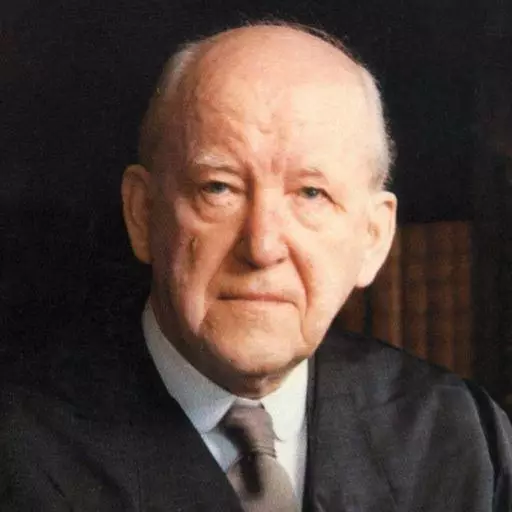
Dr. Martyn Lloyd-Jones: The words to which I should like to call your attention this morning are to be found in Paul's Epistle to the Ephesians. In the second chapter and the 18th verse. The 18th verse in the second chapter of Paul's Epistle to the Ephesians. For through him we both have access by one Spirit unto the Father. For through him we both have access by one Spirit unto the Father.
We come back again to this great and mighty and remarkable verse than which, as I was saying last Sunday morning, there is surely no greater in the entire range of Scripture. It holds us face to face with the most exalted and sublime truth that a human being can ever confront. There is no doctrine higher than the doctrine of the Blessed Holy Trinity. And here we are face to face with it.
But still more remarkable as we saw last Sunday morning is the statement here that the three persons in the Blessed Holy Trinity are concerned about us and about our salvation. And have worked and are working in the matter of your salvation and mine. But above all, we saw that the end of salvation is to bring us to God as our Father.
This is the purpose of salvation. This is the grand end and object of it all. And our whole conception of Christianity and of salvation is incomplete and imperfect unless we do realize that it was designed above everything else thus to bring us to God. And we noticed that the Apostle changes his term and says unto the Father. So we've looked at that. That as the result of all this, we have access unto the Father.
But now the question arises at once as to how we have that access. That being the end and the goal and the object of it all, the great question is, how do we arrive there? In other words, we are brought face to face here with the great question of prayer. Now, I'm not proposing to deal with the question of prayer in its entirety or in its fullness. We're concerned only to deal with it as it is dealt with in this particular verse. And this verse of course, does concentrate our attention upon the most important thing of all in connection with prayer. And that is our knowledge as to how we obtain the access, the way of drawing nigh unto God.
So that as we approach it, I would begin by putting certain questions which I put at the end last Sunday morning. Here are the questions, the obvious questions. Do we know God? Do we know God as Father? Are our prayers real to us? Do we enjoy freedom in prayer? Or perhaps the best question of all, I sometimes think, is this. Have we confidence in our prayers?
I like to put it like that for this reason, that we all know, alas, from experience, what it is to pray when we've got some difficulty, or some problem, or some crisis in our lives. And we don't know what to do. We've exhausted our own reasoning, we've listened to others and consulted them. We've read the Bible, and still we don't seem to know. And we say there's nothing for me to do but to pray. And we pray, but even then, we still feel uncertain. We haven't real confidence in our prayers. And our prayers seem to be more or less useless, therefore. And of course, such prayers really are useless. Because unless we have true confidence in them, it isn't real prayer, as I think this verse will show us very clearly.
Therefore, I say, it is important for us to start with those preliminary questions. We have access, says Paul, to the Father, we being Christians, not only the Apostles. He's talking about these Ephesians, these people who until very recently had been pagans, outside Christ, without God, without hope, in the world, strangers, foreigners, far away, aliens in their minds. But now, says Paul, we, you and I and all who are Christian. We have access, introduction, entry unto the Father himself.
It's one of the things in which the Apostle rejoices more than anything else at all. He goes on, he repeats it many times in this Epistle as he does in all his other Epistles. In the next chapter, he says for instance, for this cause, I bow my knees unto the Father of our Lord Jesus Christ, and goes on to pray for them. Well, very well, I say, there is nothing which is more important than this. Are we enjoying the benefits of our Christian faith? And this is the point at which that can be tested, above all other points. If our Christianity doesn't help us when we're in trouble, well, to say the very least, it's very defective.
If it doesn't help us and sustain us and make all the difference in the world to us, at our moments of crisis, what's the value of it? There are many other things that seem to be very wonderful when the sun is shining, and when everything is going well. The world and its ideas, they all seem perfect. And it's when things go wrong that the testing time comes. And when everything seems against us to drive us to despair, the question is, can we go on to say, I know one gate is open. One ear will hear my prayer. That's the question. There has no temptation taking news as the Apostle Paul to the Corinthians, but such as is common to men. But God is kind, who will not suffer us to be tempted above that which we are able to bear, but will always with the temptation provide also a way to escape.
And the question is, I'm asking, do we know that? Are our prayers effective, efficacious? Have we confidence in them? Do you feel when you've prayed that the burden is lifted? When you go to God in prayer, do you really leave the things with Him? Now, the child and the Father, I say, are the perfect illustration at this point. The little child in trouble goes to the parent and at once it's happy because it has a feeling and a belief and a consciousness that the parent is able to take it all. And at once it relaxes and is at ease and is happy again. We are meant to be like that with God. We have access to the Father. So I'm asking, are we enjoying this access?
Do we know what it is to enter in? Are we availing ourselves of the introduction? Well, now, that is inevitably the question that faces us as we consider this great statement. And it seems to me the best way we can look at it is this. We can say that there are many who fail to enjoy the benefits of salvation. There are many who do not avail themselves of this access unto the Father, and to whom prayer, therefore, is not real for the reason that they either ignore or have never grasped clearly the teaching of this particular verse. Because here is the key to prayer.
I say that they fail because they've either ignored it altogether, or else they've never grasped it in its fullness and therefore obviously have never acted upon it. Now, let me put it like this. Prayer is not a simple matter. And there's no greater fallacy than to think that prayer is simple. There are so many people, you know, who contrast prayer with teaching, with doctrine, with theology. Ah, they say, I can't be bothered about doctrine and so on, but prayer is everything to me. It doesn't matter what you believe. It's praying to God. That's the thing. Well, now, that of course, is a complete denial of the statement of this verse.
If this verse does nothing else, it does this very clearly. It shows us that prayer is not only as simple as that, but that prayer is something which is based upon teaching, upon a true understanding. Now, let's look at it like this. You remember our the disciples on one occasion they went to our Lord and they said, Master, teach us to pray as John taught his disciples. Have you ever felt like that? I make bold to say that unless you have ever felt the need of being taught how to pray, the reason is because you've never prayed.
We need to be taught how to pray. You see, these disciples, they observed their master. They saw him arising a great while before dawn, going up unto the mountain and praying, and praying for hours, praying right through the night sometimes. And they said, well, now, how does he do that? Because I find five minutes seems to be an eternity. I can't pray for five minutes. He prays for hours. How does he do it? What is it? Master, teach us how to pray. And quite right. We need to be taught how to pray. And there are very definite matters in connection with this teaching.
You remember again our Lord in speaking to the woman of Samaria puts it like this. The woman of Samaria talks glibly about worshiping God. She said, you say, you Jews say that it's in Jerusalem that one ought to worship. Our fathers say that you should worship in this mountain. As if she knew all about worship and prayer. And our Lord turned to her, you remember, and said, the hour is coming and now is when neither in this mountain nor yet in Jerusalem shall the true worshipers worship the Father. God is Spirit and they that worship Him must worship Him in Spirit and in truth. You worship, he said, you know not what. We Jews know what we worship for salvation is of the Jews.
By which he means this, you see, that you've got to worship in truth. The trouble with the Samaritans was that their whole idea of God was wrong. They localized him to a particular mountain and so on. And indeed, many of the Jews were guilty of the same thing. They would localize God to the temple. And our Lord says, you know, you can't worship with those wrong ideas. God is a Spirit, and they that worship Him must worship Him in Spirit and in truth. We must know certain truths before we can worship God. And the moment I say that, I think we all see how inevitably it is that so much of what we call our praying and our prayers must of necessity be useless and valueless.
So often we rush into prayer because we are desperate, and in the words of the poem, we cry to whatever gods may be almost. We don't know the God to whom we are praying. And that is obviously useless. Teaching, I say, is therefore essential to prayer. Because I must know to whom I'm praying, and I must know as to how I can enter into his holy presence. Now, that's exactly the subject that is dealt with in this verse. There are two things which are absolutely essential to prayer, according to the Apostle's preaching at this point. There are two truths we have to grasp, two doctrines we must lay hold of.
Through him, by one Spirit. Now, these two are absolutely essential. That's the Apostle's teaching. Not only here, it's the teaching of the whole Scripture. There is no such thing as praying unto God unless we are clear about these two doctrines, these two principles. Both are essential, not one or the other, but both and both always together. Now, I do want to emphasize this because I think you'll agree that there is a great deal of confusion about it.
There are those who do not hesitate to teach that this whole matter of approaching God and of prayer to God is, as I say, something which is supremely simple and easy. They say, are you in trouble? Are you in difficulties with regard to your future? And do you need guidance and so on? Well, they say, it's all right. It's perfectly simple. All you need to do is to sit in a chair and relax and begin to listen to God. It's as simple as that. Nothing more is necessary, they say. It's just that. God is there waiting to speak to you. And all you've got to do is to down tools as it were, and listen to Him.
You have immediate contact with God. You get directly into the presence of God and nothing more is necessary. Now, that's a very common teaching. It is the sort of thing we all tend to assume and to take for granted. But if the teaching of the Apostle in this particular verse is right, well, then that is not only wrong, it is dangerously wrong. It is tragically wrong. There are those then who say that there is no need of any teaching at all, that you can immediately go into the presence of God.
But then there are others also who tend to go astray at this point. There are some who emphasize one of these two principles and leave out the other. There are some who emphasize the correct doctrine concerning the Lord Jesus Christ and his atonement and so on. Quite right. But they neglect the absolute necessity of the operation of the Holy Spirit. And according to this teaching, their prayer is equally useless. You can be absolutely orthodox, but at the same time, you can be spiritually dead.
You can say all the right things and still not know God and have no confidence in your prayers. Alas, I've known such people. They were absolutely orthodox, but they didn't know God. They'd never realized the vital importance of this doctrine of the Spirit in this matter of prayer. And so their prayers were mechanical, correct, but useless. But then, you see, on the other hand, there are those who put their whole emphasis on the Holy Spirit and completely ignore our Lord and his work. This is the peculiar danger, of course, of all mystics.
The mystics have discovered this, that there is a very definite teaching about the Holy Spirit. The mystics have discovered this and they're absolutely right that Christianity is something live. It's living, it's real. They say, you know, all this orthodoxy, it's all right in its way, but so many people are orthodox like that, but they're so utterly dead. They say the great thing about Christianity is that it's alive. Now, you read the story of George Fox, the first Quaker, the real founder of the Society of Friends. That was the great message of George Fox.
He would look at those places of worship in his day, three hundred years ago. And he'd say, look at those people, they're saying all the right things, but look at their lives and talk to them and you'll find they're dead. He said the great thing about Christianity is that it brings one into a living knowledge of God. It's something within, it's a power, it's a life within. And up to a point, he was emphasizing the right thing. The work of the Holy Spirit is absolutely essential. Ah, yes, but the tragedy of subsequent Quakerism, I'm not speaking of George Fox himself at this point, because he did hold the true doctrine.
But the tragedy is that throughout the centuries, the movement that came out of that has been tending to put its exclusive emphasis upon the Spirit, and has been ignoring and forgetting the whole doctrine concerning our Lord and Savior Jesus Christ. Well, according to the Apostle's teaching here, that is equally wrong. Any teaching that bypasses the Lord himself is of necessity wrong. Through him by the Holy Spirit. The two are absolutely essential. But I want to go a step further and to say this, that not only are these two absolutely essential, nothing must ever be added to them.
This is all, this is exclusive. Why do I say that? Well, I say that for this reason, that you're well aware of the fact that Catholic teaching, Roman Catholic and other forms of Catholicism that imitate Roman Catholicism without believing in the Pope. They all make their additions. The Roman Catholic Church, as you know perfectly well, puts alongside the Lord Jesus Christ and the Holy Spirit, the Virgin Mary. She is brought in as an additional mediator, as an additional medium, as one who is vital in our coming to God.
Now, I say that to add anything or anyone to the Lord Jesus Christ and to the Holy Spirit is not only to deny the Scripture, it is indeed again to go tragically astray in the whole matter of prayer. So that if you pray to the Virgin Mary, if you pray to the saints, who have lived in the past, and who were so saintly that they're able to exercise the function of what they call supererogation, they have such an abundance and an overplus of righteousness that they can give a little of it to you and help you. All that I say is a denial of this teaching. We must add nothing and no one to what is here plainly indicated.
Through him we both have access by one Spirit unto the Father. Now, you see the importance of teaching. You see what our Lord meant when he said, in Spirit and in truth. You see how vital it is that before we begin to speak in prayer, that we should stop and think and be guided by the plain teaching of Scripture in what we're about to do. Very well then, let's look at them one by one. Through him is the first thing. That's what the Apostle puts first here. That's what he puts first everywhere. And this, of course, is a reference to our Lord and Savior Jesus Christ.
Is it still necessary to emphasize this? And to say again that there is no access to God except in and through our Lord and Savior Jesus Christ. I am the way, the truth and the life. No man cometh unto the Father but by me. And yet people rush into the presence of God and think he's their Father without mentioning the Lord Jesus Christ at all. In spite of his plain, explicit statement. Oh, listen again to this Apostle putting it in his first Epistle to Timothy in the second chapter. There is one God. And one and only mediator. That's what it means. One God and one mediator between God and men. The man, Christ Jesus, who gave his life a ransom for all. What could be plainer?
Or listen to him saying it again, other foundation can no man lay than that which is laid, which is Christ Jesus. Oh, take again that great passage which we read at the beginning in the 10th chapter of that Epistle to the Hebrews, having therefore, brethren, boldness to enter into the holiest by the blood of Jesus. The only way, not the blood of bulls and of goats, not through an earthly human priesthood. That, says the man there, arguing it out in detail, obviously was inadequate and insufficient. The very fact that they had to go on doing it day after day and repeat it was a proof that that it wasn't enough. The fact that the high priest has to keep on going in to the holiest of all every year to make a fresh remembrance of sins, is sufficient proof that he couldn't do it finally and fully. But this man, having made one offering for sin once and forever, entered in, sat down.
Could teaching be plainer? Could anything be more explicit? And yet, I say, how obvious and evident it is that all this teaching is being bypassed. And men and women talk of having contact with God, and knowing God, and being blessed, and led of God, without even mentioning the name of the Lord Jesus Christ at all. As if he'd never been in the world, and as if he'd never died upon the cross. Do you feel that I'm laboring a point needlessly?
Well, I would ask you to consult your own experience, and to listen to what is said, and to read what is being written. Do you always, when you pray to God, remember that apart from the Lord Jesus Christ, you have no access at all? Well, now, let me try and put this plainly and clearly. There's a verse in the first Epistle of Peter, that seems to me to show it very explicitly. It gathers up into itself, it seems to me, the great teaching of this whole second chapter of the Epistle to the Ephesians. Peter puts it like this, in 1 Peter 3:18. For Christ also hath once suffered for us, the just for the unjust, that he might bring us to God, being put to death in the flesh, but quickened by the Spirit.
Now, there, it seems to me, is a perfect statement of this doctrine. Christ, you notice, has once suffered for us, the just for the unjust, with what end and object? Well, here it is again, to bring us to God. Being crucified in the flesh, being put to death in the flesh, but quickened by the Spirit. Or again, you'll find the Apostle Paul puts it in the 25th verse of the fourth chapter of the Epistle to the Hebrews, equally clearly, referring to our Lord, he says, who was delivered for our offenses, and raised again for our justification. Now, what's it all mean? Well, let me put it like this.
It is through Christ, it is in Christ, it is by Christ, and what he has done, that we have this access unto God. And apart from that, we have no access unto God at all. Now, you see, you can't read your Old Testament without seeing very clearly that obviously there is need of instruction about this approach to God. The Old Testament is full of it. That's the meaning of the burnt offerings and the sacrifices and the meal offerings and all the rest of the ceremonial. God has told these people, now, if you want to approach me, this is the way to approach me. He appointed a high priest, called Aaron, told him exactly what to do, gave him all these instructions. Aaron has to go in bearing the blood. Why? Well, because God is thereby teaching us that it is only in his way that we have access into his presence. Very well, this is the great statement here.
That now it is in and through the Lord Jesus Christ, we have our access to God. How? Well, let me put it in this form. The Lord Jesus Christ admits us into the presence of God, because he is our great sin bearer. That is what we must put first. The Apostle has been putting it first. But now in Christ Jesus, ye who sometimes were far off, are made nigh by the blood of Christ. Have you noticed the repetition of the terms? The blood, his flesh, his body, his cross. That's what must ever come first.
Mr. Spurgeon used to say, and I'm increasingly convinced of the rightness of his dictum, that the ultimate way to test whether a man was truly preaching the gospel or not was to notice the emphasis which he placed upon the blood. It isn't enough to talk about the cross and the death. The test is the blood. Oh, yes, but now in Christ Jesus, ye who sometimes were far off, are made nigh by the blood of Christ. There are people who say you're made nigh by the death of Christ, by the cross of Christ. How? Well, they say it's like this. That though cruel men crucified our Lord in that way, he forgave them still.
In spite of the fact that they did that to him, God still brought victory out of the apparent defeat, and you can trust a God who does that sort of thing. That's their interpretation of the death and of the cross. The blood of Christ doesn't come in, but Paul says, it's the blood of Christ. And the author of the Epistle to the Hebrews says the same thing. It is the blood of Christ that is essential in the first instance. Why? Well, for this reason, our Lord Jesus Christ is the Lamb of God that taketh away the sins of the whole world. The blood, you see, makes you think of necessity in terms of sacrifice, in terms of atonement. And if people don't mention atonement, they're not preaching the death of Christ truly. But the blood fixes it to sacrifice and to atonement. The sins of men are placed upon the head of that animal, and the animal is slain, the body is burned, the blood is presented. Christ is the Lamb of God that taketh away the sins of the whole world. The sins of men have been placed on him. They've been dealt with in him. He's been smitten because of them. His blood has been shed. And that's how we have our entry. He has borne our sins.
In his own body on the tree. We must start with that. Without shedding of blood, there is no remission of sins. You can't throw away the Old Testament. The Church, the early Church, was led by the Holy Spirit to keep its Old Testament, and to incorporate it with the new literature. Why? Well, because it's an essential part of the teaching. It is God who has taught that without this offering, without a sacrifice, he cannot forgive. He cannot have dealings with men. So any view of the cross and of the death of Christ, which doesn't bring the blood to the very center, and make it an absolute necessity, is a misrepresentation of the cross.
He's our sin bearer. He died on Calvary's hill for our sins to receive the punishment of our sins. The just and holy God had to punish sin, and he punished it there. A preaching of the cross which doesn't mention the righteousness and the justice of God, and the absolute necessity of punishment, is a complete misrepresentation of the doctrine of the death of Christ. Here it is, you see, it's opened before us, by his blood, his body, his death. Everywhere repeated, it's the whole theme of the New Testament. Go to the book of Revelation even, and you'll find that these people, who are arrayed in their white robes, are white for this reason. They've washed their robes in the blood of the Lamb.
And to him that loved us and gave himself for us, it's everywhere. Oh, how can men try to explain their entry into God without this most wonderful thing of all, that the Son of God was put to death by his own Father through the Law, because of our sins, and in order that we might be reconciled? But it doesn't stop there. He is first of all, our sin bearer. But then, after that, he is our great high priest. Put to death, says Peter, in that verse in the flesh, but quickened in the Spirit. Delivered for our offenses, says Paul, raised again for our justification. And this is wonderful. Or again, take it as it's put by the author of the Epistle to the Hebrews in the fourth chapter. You see, all these men had the same doctrine. This is apostolic preaching. Seeing then that we have a great high priest that is passed through the heavens, Jesus the Son of God, let us all fast our profession. For we have not an high priest which cannot be touched with a feeling of our infirmities, but was in all points tempted like as we are, yet without sin. Let us therefore come boldly unto the throne of grace, that we may find mercy and find grace to help in time of need. What's it mean? It means this.
After the high priest in Israel had killed the animal, and collected the blood, he then took this blood, and he went in through the veil into the holiest of all, and the atonement was finally made when he presented the blood of sacrifice. The Lord Jesus Christ died upon the cross, his blood was shed, his body was buried in a grave. Ah, says someone, that's the end, therefore. Even he was defeated. No, no. He rose again. And having risen and having manifested himself, he entered into the holy place. He has passed through the heavens, into heaven itself. He has gone immediately into the presence of God, and he has presented his own blood.
He hasn't presented the blood of bulls and of goats. He doesn't try to cleanse with the ashes of an heifer. No, no. He has taken in his own blood. It's by the blood of Jesus. He's entered in. God has accepted him. God has said, in other words, that he is satisfied with his work. God pronounces that the death of Christ is sufficient. That his justice is satisfied. He admits the high priest right into his own presence, and he asks him to sit down at his right hand. And what is the result? Well, it's this. That the throne of God, which is a throne of judgment, becomes a throne of grace. Let us therefore, says that man, in Hebrews 4:16, let us therefore come boldly to the throne of grace.
And how do I know that it is a throne of grace? My only way of knowing that is this, that the Lord Jesus Christ is seated by the side of God. My representative. One who came and took my nature upon him, and who has borne my sins. He's been accepted of God. He's a high priest. He knows me. He suffered temptation as I have. He's he knows my weakness and my frailty. He's there with God. And the fact that he's there assures me that it's a throne of grace. God is eternally righteous and holy. Yes, but because of Christ, and what he has done for us and for our sins, God smiles upon us in his grace, and receives us as his children.
Christ saves us then, not only by shedding his blood, but by entering into the heavens as our great high priest. But then another way in which he helps me to have access to the Father is this. You may say to me, all right, I can see that my sins are forgiven in that way. But still, when I think of God in his eternity of power and of majesty and of might, when I think especially of his holiness and his absolute purity, I feel that I'm unclean. I believe my sins are forgiven, but oh, there is still unrighteousness left within me. How can I appear before God? How can I draw nigh unto God? I read in the Scriptures that even a man like Isaiah, when he gets a dim vision of God, says, woe is unto me, for I am a man of unclean lips. How can I draw nigh unto God?
And the answer is still in Christ. And in this way, that he has not only been delivered for our offenses, he's been raised for our justification. But more than that, he has been made our righteousness. But of him, says the Apostle Paul to the Corinthians, are ye in Christ Jesus, who of God is made unto us wisdom, even righteousness, sanctification, and redemption. Or listen to him putting it again like this. He hath made him to be sin for us, who knew no sin, that we might be made the righteousness of God in him. It's like this. Let me use a simple illustration. Here is a great banqueting chamber.
With wonderful people inside it and great ceremony taking place. There am I out in the street. I'd like to go in. I'm invited in, but I feel that I'm in rags. My clothing is unworthy. If I go in, I say, everybody look at me and I'll feel that I'm an odd person, and I'll be unhappy, and I shan't enjoy it. What can I do? The answer is that I am given a new robe, a robe of righteousness. I am clothed with the righteousness of Jesus Christ. That's what the Scripture teaches. That his good, perfect life, his life of holiness is given to me. It's attributed to me. It's imputed to me. As my sins were attributed and imputed to him, his righteousness is attributed to me. He kept the Law perfectly. God gives me that keeping of the Law. He puts it to my account. I am clothed with the righteousness of Christ.
It was because of that, you see, Count Zinzendorf was able to say in the hymn that Charles Wesley has translated, Jesus, thy blood and righteousness, my beauty is, my glorious dress. Midst flaming worlds in this arrayed, bold shall I lift up my head. Clothed with the righteousness of Jesus Christ. Is this dry dust doctrine? My friend, it's as vital as this to you, that if you don't believe it, you can't pray. It is only as you're conscious that you're covered by the righteousness of Christ. You can go in through the presence of God with confidence and with assurance. But with this, you can. As that hymn puts it so perfectly, no one can bring a charge against me. Even God cannot. It is God that justifies me and gives me the righteousness of his own Son. And finally, I'd put it like this.
We have this access through Christ because we are not only given his righteousness, we are given his life. We are born again of him. We become partakers of the divine nature. He is the firstborn among many brethren. Indeed, Paul has been saying it at great length already in this second chapter of the Epistle to the Ephesians. He tells us, you remember, in those wonderful steps, even when we were dead in sins, hath quickened us together with him, and raised us up together, and made us sit together in the heavenly places in Christ Jesus. Christ having finished his work, entered through the heavens, has taken his place, is seated at the right hand of God, and in a marvelous way, in Christ, I am also there.
That's how I have my access into the presence of the Father. If Christ had not died for my sins, God would not receive me. I'll go further. God could not receive me. It's an absolute necessity. Do you imagine that the heavenly Father would ever have sent his only begotten, dearly beloved Son into the world, to such suffering and agony, unless it was absolutely essential? Would the cross ever have happened unless it was an utter necessity? It's unthinkable. There was none other good enough to pay the price of sin. He only could unlock the gates of heaven and let us in. It is through Christ. You're absolutely dependent upon him. Were it not that he'd gone in with that blood of his, you could never go in. But because he has, you can go in.
And remember that he is there, sympathizing, sympathetic high priest because he's been here, and because of all he has suffered. He transmits our prayers with his holy incense to the Father. He takes us in. We have his righteousness upon us. We are in Christ. You see, it's natural therefore that they should end with those exhortations, isn't it? Having boldness therefore, brethren, to enter into the holiest by the blood of Jesus. Or, in the other form, let us therefore come boldly with confidence, with assurance, with certainty. Therefore, in the light of the doctrine of Christ as the sin bearer, as the high priest, as our righteousness, as the one in whom we're incorporated, the one with whom we've been crucified, the one with whom we have died, died to the Law, died to sin, risen again in newness of life. Reckon yourselves therefore to be dead indeed unto sin, but alive unto God, through and only through our Lord Jesus Christ. Beloved friends, had you realized your utter dependence upon the Lord Jesus Christ and his perfect work? If you haven't, it's not surprising that your prayers have seemed rather vain and futile and empty. Henceforward, when you go to God, start with Christ. Thank Christ for what he's done for you. Thank God for sending him to do it. Tell him that you realize your entirely dependent upon it. But that believing it, you know he's waiting to receive you. Call him your Father. And tell him that you know that he's your Father, because he is the Father of your Lord and Savior, Jesus Christ. Through him, we have access by one Spirit unto the Father. Amen.
Featured Offer

Find peace and comfort this season with your complimentary guide that includes access to 6 free bonus sermons on overcoming spiritual depression from Dr. Martyn Lloyd-Jones, one of the church’s most beloved Bible teachers. Topics include: true Christians can and do struggle with depression, recovering the joy of your salvation, dealing with crippling guilt over past sins, dealing with yesterday’s haunting regrets, encouragement to keep moving forward, and understanding God’s purpose for suffering.
Past Episodes
This ministry does not have any series.
Featured Offer
Find peace and comfort this season with your complimentary guide that includes access to 6 free bonus sermons on overcoming spiritual depression from Dr. Martyn Lloyd-Jones, one of the church’s most beloved Bible teachers. Topics include: true Christians can and do struggle with depression, recovering the joy of your salvation, dealing with crippling guilt over past sins, dealing with yesterday’s haunting regrets, encouragement to keep moving forward, and understanding God’s purpose for suffering.
About From the MLJ Archive
From the MLJ Archive is the Oneplace.com hosted ministry of the MLJ Trust. Our mission is to promulgate the audio ministry of Dr. Martyn Lloyd-Jones.
About Dr. Martyn Lloyd-Jones
Contact From the MLJ Archive with Dr. Martyn Lloyd-Jones
info@mljtrust.org
http://www.mljtrust.org/
PO Box 953
Middleburg, VA 20118