
Oneplace.com

Subject to Government

May 6, 2026
00:00
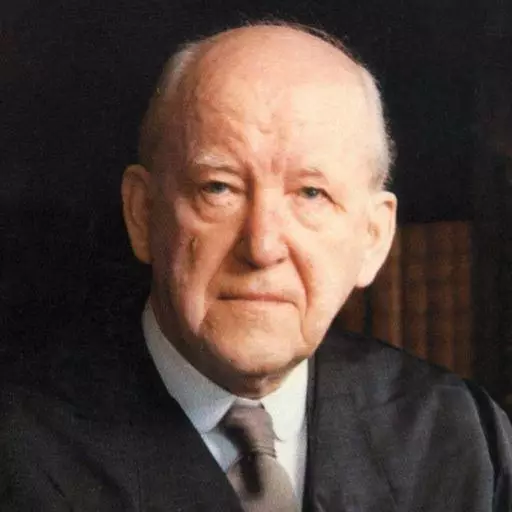
How are Christians supposed to read the Bible? If there are many different views on what the Bible says, how are they to know the right interpretation? The answer is that they must read the Bible as one work of God. In the sermon on Romans 13:1–7 titled “Subject to Government,” Dr. Martyn Lloyd-Jones shares that this is because the only way to understand Scripture properly is by taking a holistic approach to everything that God has revealed. Christians should not use philosophy to create doctrine but doctrine is to come from the text. With all these things in mind, Dr. Lloyd-Jones seeks to expound the biblical view of government. He says that the submission to authorities and powers that the apostle Paul speaks of is not slavish servitude, but godly submission to the authorities that God has ordained for their good and the good of all people. In this attitude, Christians are to seek to live in peace with all those around them in a way that brings honor to Christ and his gospel. God in his providence has put magistrates in place as a means of restraining sin and evil in the world, though they are often corrupt and sinful. Nevertheless, Christians ought to strive to obey God first and foremost and to obey the government when doing so does not contradict the commands of God.

Dr. Martyn Lloyd-Jones: Most of you will recall that we are studying at the moment the first section of the 13th chapter of Paul's epistle to the Romans. I suggested that you can divide up the chapter into three sections. The first section contains the first seven verses. The second section, verses 8, 9, and 10. And the last section from verse 11 to the end of verse 14.

I gave a hurried resume of the argument of this first section. But I want to deal with it in detail tonight, so I better read the first seven verses.

"Let every soul be subject unto the higher powers. For there is no power but of God: the powers that be are ordained of God. Whosoever therefore resisteth the power, resisteth the ordinance of God: and they that resist shall receive to themselves damnation. For rulers are not a terror to good works, but to the evil. Wilt thou then not be afraid of the power? do that which is good, and thou shalt have praise of the same: For he is the minister of God to thee for good. But if thou do that which is evil, be afraid; for he beareth not the sword in vain: for he is the minister of God, a revenger to execute wrath upon him that doeth evil. Wherefore ye must needs be subject, not only for wrath, but also for conscience sake. For for this cause pay ye tribute also: for they are God's ministers, attending continually upon this very thing. Render therefore to all their dues: tribute to whom tribute is due; custom to whom custom; fear to whom fear; honour to whom honour."

This is a most important and vital section of scripture, as I was showing you in an introductory statement last Friday evening. And you remember how I did two main things last Friday evening. The first was we had to give a kind of justification or defense of the Apostle Paul for introducing this subject at this present point.

There are those who say that it's got nothing to do with the surrounding context, and we tried to show that that is a completely fallacious idea. Indeed, some people would almost say that the apostle never wrote it, but that somebody else inserted it. We didn't waste any time with that suggestion. But we did show how the apostle here, far from interrupting the line of thought that he'd been following in the previous chapter, is in reality continuing it, expanding it, and working it out.

Having done that, I showed you how some of the most urgent problems that trouble the minds of Christian people in many parts of the world at the present time are dealt with in this section. For instance, the whole question of the relationship of the Christian to government, to the state. And that involves immediately a number of other questions. What is the power of the state? How does a Christian view the state at all?

That in turn raises the question of capital punishment. Also raises the question of pacifism. Is it a duty of the Christian to take part in certain activities of the state, even to the extent of fighting during a time of war? Then the whole question of the relationship between church and state, and the relationship between the two and the delimitation of the powers of the two. All these subjects and others are dealt with in this most important section of scripture. Therefore, it behooves us to examine it very carefully indeed.

Before we can possibly deal with these urgent, relevant questions that are dealt with here—and this is the kind of locus classicus for several of those questions—it is absolutely essential that we should be quite clear in our minds as to what the apostle is actually teaching. I would digress for just a second to say something about the whole question of theology.

Theology must always be based upon an accurate interpretation of the teaching of the scriptures. There is a danger sometimes in the case of some people to derive their theology more from philosophy than from a careful study of the scriptures. They tend to extract just a certain number of great principles from the Bible, and from there on, they more or less forget the Bible and just work these out for themselves. I suggest that that is a very wrong procedure. The true theology should always be based upon a careful and an accurate exegesis and exposition and understanding of the scriptures.

But at the same time, we've got to be careful of one thing in particular. We must be careful that we don't derive any theological principle from one statement only of the scripture. We must be careful to compare scripture with scripture. We must also be careful that our exposition of any particular statements in the scripture do not contradict what is the plain tenor of scriptural teaching in general concerning that matter or indeed concerning any other matter.

What I mean is this. You are familiar with the fact that there are certain well-known views, particularly perhaps with regard to prophecy, based entirely upon one scripture. That is always a very dangerous thing to do. If our interpretation of one portion of scripture is not in accord with the teaching of the scripture elsewhere, then we must go back and examine our interpretation. So we've got to bear these two principles in mind.

Theology must be the outcome of true exposition. It is the word that throws up and throws out the great principles. But let's be always careful that we don't base a doctrine entirely on one statement or upon a particular interpretation of one statement. There is this correspondence, this balance in the scripture. We must compare scripture with scripture.

We have to handle a number of very, very important subjects. There are Christian people in the world tonight who are having to face these matters very acutely. What is their relationship to the state? What is their relationship to certain forms of government? There are Christians behind the Iron Curtain. How do they work it out, do you think?

How could we work it out if we were in the same position? There are many other countries in which the same thing is true and is becoming true. God alone knows what may be awaiting us in the future. We ought to be clear about all these questions. We ought to be able to give a reason for our attitude and for our practice.

We have to become laborers tonight. I mean by that in the sense of getting down to doing the hard work of digging out the truth. Sometimes it's more difficult to do that than it is to deal with general principles. But as I say, we've got to do this. If we can't establish our doctrine in terms of what the apostle's actually saying, our doctrine is probably going to be wrong. So we've got to gird up the loins of our mind this evening, roll up your spiritual sleeves, and be prepared to do some hard work. I'm proposing just to run through what the apostle is actually saying in these seven verses.

Then we should be in a position to be clear about our doctrines. We start with an injunction. "Let every soul be subject unto the higher powers." There is the first thing. This is an injunction. This is what he commands us to do. Let's see exactly what he tells us about that. Notice that this is something that is addressed to every soul, every man. Not some Christians, all Christians.

In the original, this is put in the emphatic position at the beginning, showing that he regards it as something very important. I gave you many reasons for that last Friday night. The scriptures often deal with this. The apostles had to deal with it in the early church because of the foolish misinterpretations of the Christian teaching into which people fell. This idea that once you become a Christian you've finished with this world, as it were, finished with the state, and you contract out of it because you're a Christian. The fallacy of that. Every soul must be subject to the powers that be.

There is one other matter with regard to these higher powers that we've got to look at, because anybody who is familiar with this word "powers" and this term "powers" in the New Testament epistles will know that we are compelled to do so. You will find that this word "powers" in the plural, as it is generally used in the New Testament, refers to angelic powers. Not to earthly powers, but to angelic powers.

In almost every instance, apart from probably Titus 3:1, the reference is to these angelic powers. Let me give you an illustration or two to show you what I mean. Take for instance, in 1 Corinthians 15:24. "Then cometh the end, when he shall have delivered up the kingdom to God, even the Father; when he shall have put down all rule and authority and power." But there are others which are still clearer.

Take for instance the well-known statement at the end of the first chapter of the Epistle to the Ephesians. He talks about our Lord, "when he raised him from the dead, and set him at his own right hand in the heavenly places, far above all principality, and power, and might, and dominion, and every name that is named, not only in this world, but also in that which is to come." You've got the same thing exactly in Ephesians 3 and in verse 10, where he says, "To the intent that now unto the principalities and powers in heavenly places might be known by the church, through the church, the manifold wisdom of God."

You've got the same thing in the well-known statement in Ephesians 6:12. "We wrestle not against flesh and blood, but against principalities, against powers, against the rulers of the darkness of this world, against spiritual wickedness in high or in the heavenly places." You've got the same thing in Colossians 1:16, in Colossians 2:10 and 15, and in the first Epistle of Peter, chapter 3 and verse 22.

Now, that is the way in which this word is generally used in the plural in the New Testament. So there are many who have thought that the apostle here is referring to that, or at any rate he is saying this: that the earthly human powers are under the control of these angelic powers, so that ultimately we are to be subject to these angelic powers that are set over and above us.

Is he actually referring to that in this particular instance? We can't prove this, of course, absolutely. But it does seem to me that here it is almost certain that the apostle was thinking only in terms of the earthly human powers. Why do I say that? My main argument would be that this is a very practical section of this epistle. He really is concerned all along, as we've seen in chapter 12, with our relationships with human beings as we come into contact with them in various realms and in various ways.

For that reason, I would suggest that here his mind is concerned exclusively with the earthly powers. That doesn't mean to say that I don't believe that these earthly powers are not influenced by the unseen spiritual powers. I believe that very definitely. I've often said from this pulpit that it's the only way in which I could explain a man like Hitler and many other powers that have been in the history of mankind, that you don't explain them merely as human beings. There was undoubtedly a demonic power behind and in and working through a man like Hitler and others of the same type. For our practical purposes, he is dealing with earthly governments and authorities and powers.

What he tells us is this: we are to be subject unto these higher powers. Here again is a most interesting term. "Be subject unto." What exactly does this mean? According to the learned authorities, the word that the apostle used in its root meaning stands for a military word, speaking of soldiers arranged in order under a general. They're subject to his orders. There they are lined up on the parade ground, as you can often see them in Wellington Barracks across the road. Lined up, and they're subject to the command and to the order of their officers. That's the original meaning of the word.

But the question that has been raised is this. Does this mean to obey? Is he bringing out the idea of obeying these powers that be, these higher powers? Is he saying, "Let every soul obey the higher powers"? There are many who have taken that view. But it does seem to me that that is taking it a bit too far. I shall be making use of this point when we come to elaborate our doctrine of the relationship of the Christian to the state.

Why do I hesitate, at any rate, to say that it means to obey? There are many reasons for this. There are three other words which mean to obey that are used generally when the writers want to convey the notion of obeying in the New Testament. But the apostle doesn't use any one of them here. He uses this particular word. This word translated here "be subject to" is used 30 times in the New Testament.

In all these 30 instances, it is not the idea of obedience that predominates in the use of this word. You've got it, for instance, in Romans 8:7 where we read, "Because the carnal mind is enmity against God: it is not subject to the law of God, neither indeed can be." There is a suspicion of an idea of obedience there, and yet I don't find it too powerfully even there. I think it's this other idea that I'm going to put to you.

In Ephesians 5:21, we are told, "Submitting yourselves one to another in the fear of God." Same word. "Be subject one to another in the fear of God." Surely it's very difficult to interpret that as meaning obey one another in the sense that you think of obeying these higher powers. We are told here to be subject one to another in the fear of God.

In Ephesians 5:22 and the parallel passage in Colossians 3:18 and in 1 Peter 3:1 and 5, wives are told to be subject to their own husbands as unto the Lord. Again examine that and see whether you're quite happy about interpreting in terms of some almost mechanical obedience. It isn't the idea of obedience that is uppermost there. Wives are to be subject to their husbands. But already he's told them all, husbands and wives, to be subject one to another. You see it would be chaos. How can the wives obey their husbands if the husbands are also to obey the wives, if you press that notion of obedience too hard?

In Titus 3:1, it is a question of being subject to the civil authorities. And in a very interesting way there, you get the two ideas coming out. Put them in mind to be subject to principalities and powers, to obey magistrates, to be ready to every good work. Peter in his first epistle, the second chapter and the 13th verse, has this same idea. "Submit yourselves to every ordinance of man for the Lord's sake: whether it be to the king, as supreme; or unto governors, as unto them that are sent by him for the punishment of evildoers, and for the praise of them that do well."

James has got a particularly useful use of this word in his fourth chapter and in the seventh verse. "Submit yourselves, be subject therefore to God. Resist the devil, and he will flee from you." Those are just some of the examples at random of the use of this word. Be subject unto. What does it mean then?

I agree here with the commentators who say that the apostle has really himself given us the key to the understanding of this word in chapter 12 in verse 10. You remember we dealt with it. "Be kindly affectioned one to another with brotherly love; in honour preferring one another." That's the idea. And you remember how we worked that out. This is a part of the Christian's character. He doesn't assert himself, but he makes room for others. He prefers, he gives the priority to other people.

You've got exactly the same thing taught in Philippians 2:3, where you read this: "Let nothing be done through strife or vainglory; but in lowliness of mind let each esteem other better than themselves." Now, there I suggest to you is the real connotation of this expression "be subject unto." It means that we recognize other Christians as Christ's representatives and that they should have greater claims on us than we have on ourselves.

We are told that we are to regard these higher powers like that. Don't look at them in and of themselves, but realize what they are and what has ever given them their being and their position. And as Christian people, honor them, respect them, put yourselves under them, as it were, submit yourselves unto. He's not thinking of a blind obedience. We must get rid of that notion altogether. He's not talking about some uncritical obedience that if anything is said to us, we automatically must do it. He's not saying that.

When we come to the doctrine, you will see how important it has been that we should interpret this expression "be subject unto" in the right way. Don't forget Ephesians 5:21, where we're told to be subject one to another. You see, he's describing an attitude of mind where we recognize certain things as being in position and we act and behave ourselves in accordance with that recognition. Let every soul, every man, be subject unto the higher powers.

From here on, he gives us reasons for doing this. We start with a positive reason, and he gives it in two statements. The first is: why should I be subject to the higher powers? The answer is: "there is no power but of God." And then he repeats it by saying that "the powers that be are ordained of God."

What does he mean by "the powers that be"? He means the powers that are in existence. And at that time, of course, he was thinking particularly of the imperial government of Rome headed up in the emperor. The powers that are in existence, the powers that are maintaining law and order and are governing at the present time. What he says is there is no power in and of itself; all these powers come from God. There is no power but of God.

More specifically still, "the powers that be are ordained of God," which means he has appointed them, he has assigned them their place. They are in existence by means of God. They've been constituted by God. It is God that has ordained that there should be such powers, and it is he who maintains them in their position. They remain what they are because God has determined and decided that this should be the case.

Let's notice in passing that he is not saying of necessity that every particular occupier of this exalted position has been ordained of God. It may include that, but he's not actually saying that. All he is saying is that government and law and authorities are ordained by God.

Whether God ordained that Nero in particular should occupy this imperial position, he doesn't actually tell us. But what he does say is that the office into which Nero went was certainly something that had been ordained by God. It is the notion, the idea of law and of government that the apostle is telling us is something that has been ordained of God.

This is not new teaching. Any Jew was more than familiar with this teaching in his Old Testament scriptures. That is why we should always denounce any teaching which puts a kind of wedge between the Old Testament and the New, still more a teaching that says that a Christian doesn't need the Old Testament. Here is one of these statements that shows the continuity of the two. It is the same God working out his great purpose in the Old as in the New. There is no change in these orders of creation, in these natural orders, as the result of the coming of Christianity.

So, you will find that this whole idea about the powers that be being ordained by God is taught in the Old Testament. The real first statement of this, it seems to me, is in the 9th chapter of the book of Genesis and in verses 5 and 6 where we read: "And surely your blood of your lives will I require; at the hand of every beast will I require it, and at the hand of man; at the hand of every man's brother will I require the life of man. Whoso sheddeth man's blood, by man shall his blood be shed: for in the image of God made he man." We should, of course, have to return to that when we're dealing with the whole question of capital punishment.

There are other statements of this same doctrine to be found in the Old Testament. For instance, in the second book of Samuel in chapter 12 and in verse 7: "And Nathan said to David, Thou art the man. Thus saith the Lord God of Israel, I anointed thee king over Israel, and I delivered thee out of the hand of Saul; And I gave thee thy master's house, and thy master's wives into thy bosom, and gave thee the house of Israel and of Judah," and so on. Now, there is a clear statement of the same thing.

You've got precisely the same thing in the book of Jeremiah, in the 27th chapter and in verse 5 and following. Let me just read to you verse 5 of Jeremiah 27. "I have made the earth, the man and the beast that are upon the ground, by my great power and by my outstretched arm, and have given it unto whom it seemed meet unto me. And now have I given all these lands into the hand of Nebuchadnezzar the king of Babylon, my servant." Notice "my servant." "And the beasts of the field have I given him also to serve him. And all nations shall serve him, and his son, and his son's son, until the very time of his land come: and then many nations and great kings shall serve themselves of him," etc.

I read those verses from the second chapter of Daniel because they put this point very clearly indeed. It is God who raises up kings and dominions and potentates and powers and emperors and all others. You've got exactly the same in the fourth chapter of Daniel, verses 17, 25, and 32. And in the fifth chapter of Daniel in the 21st verse also. The powers that be are ordained of God. There's your positive reason.

He goes on to give us negative reasons. And this is what we find in this second verse of this 13th chapter. "Whosoever therefore resisteth the power, resisteth the ordinance of God." The word "resist" means "set himself against." Setting himself in array against, arranging a battle against. What he's saying is this: as the powers that be are ordained of God, if you resist the powers, you are resisting God.

It's interesting he changes his tense here. Any man who does this is a man who puts himself into the position, into the permanent position of antagonism to God. And that is something he says, of course, which you should not do. "Whosoever therefore resisteth the power, resisteth the ordinance of God." That's your first negative reason for not resisting the power.

He gives a second one. "They that resist shall receive to themselves damnation." Which means judgment, a sentence will be passed upon them. Judgment, a sentence: who will judge them? Who will pronounce this sentence upon them?

There are those who say that this is a reference to God only. As he's taken the trouble to say that there is no power except of God, and that the powers that be are ordained of God, and that if you resist the powers you're resisting God, well then they say it means obviously that it's God who's going to punish.

I can't accept that because I think that in the light of the context where he goes on later to explain that God uses the earthly powers to carry out his judgment and his sentence, we mustn't confine the meaning here to the judgment of God.

In the light of the context and especially of what follows, it is probably better to interpret it as saying that the judgment and the punishment will come to us from God through the civil powers that he has ordained and brought into being to do that. Of course, they will get the judgment of God directly in addition, but not in this world. They may even in this world, but ultimately they shall get it at the final judgment.

There is a second reason for subjecting ourselves to the powers that be. If you don't, you're resisting God, not the powers, and you're going to get punished for doing so. He then leads to a third reason where he's trying to help us by saying, "You needn't be afraid of these rulers." The natural man is afraid of the rulers and of the powers. He says there is no need for this.

He refers to his general subject and says rulers and the powers are not against us if we subject ourselves to them. If we are good, we've nothing to fear. They are really only against evil. "Rulers are not a terror to good works, but to the evil." You see his argument: don't be afraid of them. They are not against you if you don't put yourself against them. They are a terror not to good works, but to evil works.

He puts a question: "Wilt thou then not be afraid of the power?" which really means this: "Do you wish then, is it your will that you or your desire not to be afraid of the powers?" Well if so, "do that which is good, and thou shalt have praise of the same." I don't go into that tonight. I'm keeping that back for the doctrine, which will explain to us our relationship to these powers and what they do for us and so on. Do that which is good, and thou shalt have praise of the same. Far from being punished, you will be praised by them. They will help you, and it'll all be to advantage in your Christian life.

We come to the fourth reason for being subject to these higher powers. That is he tells us in the fourth verse that the state or these higher powers are actually the ministers of God whose function it is to minister to our positive good and also to punish us if we are wrong.

The higher power "is the minister of God to thee for good. But if thou do that which is evil, be afraid; for he beareth not the sword in vain: for he is the minister of God, a revenger to execute wrath upon him that doeth evil." But you notice the two things are said, the positive and the negative. He is the minister of God to thee for good, and you only need to be afraid if you do evil, because then you've got to remember that he beareth not the sword in vain and that he is the minister of God, a revenger to execute wrath upon him that doeth evil.

Now, I must call your attention to the word "ministers" that appears here twice. Minister of God to thee for good, minister of God, a revenger to execute wrath. The word used by the apostle here translated "minister" means a servant as seen in his activity. A servant can be a servant when he's doing nothing. But the idea here is a servant carrying out his task, a servant as seen in his activity. That's the word used twice here in this fourth verse.

The sword. There's no difficulty about this, is there? You know that it has been the custom from time immemorial that a sword is the symbol of the authority of magistrates. It is a sign and a symbol of the right and the authority and the power of the magistrate ultimately to inflict capital punishment even, to take the life of a transgressor.

It was the custom of the Roman emperors, it seems, when they appointed a provincial governor to govern a certain part of their great territory, to give to the appointed governor a dagger as he started upon his function. There is a story about one of the well-known emperors, the Emperor Trajan. He gave a dagger on one occasion to a man whom he'd appointed as governor of a part of his great territory, and as he gave it him he handed him the dagger and said, "For me, if I deserve it, in me."

You see, showing this great principle of justice. "I'm giving you this dagger," he says, "to use it for me. But if you find that I am the transgressor, in me." It is a sign of this authority. So it is the custom still, I believe, on certain occasions when the chief magistrate is appointed and goes to a civic service, that somebody carries the sword in front of him. This is to represent this authority and power that is given by God to such authorities, if necessary, even to take life as a part of the punishment of misdeeds.

It is all on behalf of God. He is the minister of God to thee for good, yes. But if you do wrong, he is the minister of God, a revenger to execute wrath upon him that doeth evil. And he has a sword as a symbol of this. So don't forget that. That is the argument then of that fourth verse.

We come to the fifth verse. In the light of all this, he says you've got two reasons for subjecting yourselves to these higher powers. He gives us a positive reason: you must not only be subject for wrath—you must be subject because you'll have punishment if you don't—so be subject to the higher powers for the sake of avoiding this wrath.

He says over and above that, "be subject to the higher powers for conscience sake." What does he mean by this? He doesn't just mean that your own conscience is speaking. What he means is you as a Christian have now got an understanding of the nature of the powers that be. You're no longer ignorant. Here is the teaching. It's in the Old Testament. I'm telling you that there is no power apart from God, that the powers that be are ordained of God.

Very well, you know this now, so that if you go against it, you'll be going against what you know. And not only what you know, but what your fellow Christians also know with you. You will be going against this combined common knowledge of Christian people who understand the teaching of God's word on this vital subject. That's the statement of verse 5.

He uses a very powerful argument in verse 6. "Look here, you shouldn't be in any trouble about this," he says, "because you are already really doing this. For for this cause ye pay tribute also," which means you pay the taxes. Why do you pay taxes? Well, you pay taxes because you recognize this authority and power of the state. You believe it is a right thing to do and you do so. "For for this cause you pay tribute also."

Now comes a most interesting statement. "For they," the people to whom you pay the taxes, "are God's ministers, attending continually upon this very thing." Now then, we've had the word "minister" before, haven't we? Twice in the fourth verse. Here we've got it again in verse 6. But in a most interesting way, we find the apostle didn't use the same word. In the Greek, it is a different word.

What is the word here? The word used in the fourth verse carried the whole notion of a servant as seen in his activity. Here we've got a public minister. The emphasis now is upon the solemnity and the dignity of the office. Not a man doing the work, but the office as such, the solemnity and the dignity of the office.

It is the same word as is used of the priests working in the temple. It is a word that you find used in the eighth chapter of the epistle to the Hebrews in this way, first two verses: "Now of the things which we have spoken this is the sum: We have such an high priest, who is set on the right hand of the throne of the Majesty in the heavens; A minister of the sanctuary, and of the true tabernacle, which the Lord pitched, and not man."

The dignity and greatness of the office: it refers to one who carries out a divinely ordained service. The apostle is saying here that these powers that be have been set into this divinely ordained office which in certain respects is comparable to the position of the priests in the temple. By God, they are God's ministers, attending continually upon this very thing.

I trust that you're all already seeing in anticipation the importance of all this when we'll come to the question of the relationship between church and state, leave alone the relationship of the Christian to the state and to the powers that be. He says they're the ministers of God, attending continually upon this very thing. Exercising these very functions about which the apostle has been talking in the entire section. We pay the taxes to keep the state and its functions in being and to keep them going because we have recognized that they are appointed of God.

He sums it all up in verse 7, in a final exhortation. "Render therefore to all their dues: tribute to whom tribute is due; custom to whom custom; fear to whom fear; honour to whom honour."

"Render." Here's an interesting word. What's it mean? It really means to give back or to pay something which we owe as a debt. That's our relationship to these powers. When you pay taxes, that's what you're doing. You're giving back something, you're paying back. You're paying back a debt which you owe, and the word "dues" carries the same notion. It is something which is owed, it is a debt, it is a moral obligation.

This is how we are to view this whole question of taxes and paying taxes. The word translated "tribute" here means a tax, a direct tax. Custom means an indirect tax. We know the difference between direct taxation and indirect taxation, at least we should do. It applies to every one of you. You pay direct taxes, you pay indirect taxes. The first word means direct taxes. The second word means indirect taxes.

You remember the question put to our Lord whether should we pay tribute to Caesar or not. That's what they meant by saying that, they meant these direct taxes. The only real difficulty in this verse is over this word "fear." fear to whom fear, honour to whom honour. Is he asking us here to fear the powers that be? It looks as if he is.

But there are various reasons which should bring us to the conclusion that he is not thinking of them at that point. Of whom is he thinking? I agree here with the commentators who say that this is a reference to God. There's an obvious parallel here. When they did come to our Lord and ask, "Should we pay tribute to Caesar or not?" the answer he gave was: "Render unto Caesar the things that are Caesar's, and unto God the things that are God's."

He puts them together. Generally in the New Testament when this word "fear" is used, it does refer to God. The New Testament really never tells us as a general exhortation to fear the civil authorities. It tells us to honor them, to be subject unto them, but not to fear. Peter is saying much the same thing in 1 Peter 2:17.

"Honour all men. Love the brotherhood. Fear God. Honour the king." Now, it's so similar that we really can't ignore this. Fear God, honor the king. Here we've got fear to whom fear, honour to whom honour. That seems to me to be determinative in our interpretation at this point.

This will be most important when we come to the doctrine. We are not told to fear man. we are not told to fear powers. Indeed, we are told very frequently not to fear them. Let them do what they like. Think of the great statements that we've already found in the eighth chapter of the Epistle to the Romans ending off with the triumphant statement, "Nay, in all these things we are more than conquerors through him that loved us. even though they may lead us as sheep to the slaughter all day. I am persuaded that neither death, nor life, nor angels, nor principalities, nor powers, nor things present, nor things to come, nor height, nor depth, nor any other creature, shall be able to separate us from the love of God which is in Christ Jesus our Lord."

That's our attitude. What finally clinches it for me is what you read at the beginning of the 12th chapter of Luke's Gospel in the fourth verse. "I say unto you my friends, Be not afraid of them that kill the body, be not afraid of them that kill the body, and after that have no more that they can do. But I will forewarn you whom ye shall fear: Fear him, which after he hath killed hath power to cast into hell; yea, I say unto you, Fear him."

So for these reasons, I would say that when the apostle tells us fear to whom fear, he is telling us to fear God. Honour to whom honour. The king, the emperor, the parliament, the magistrate, the civic authorities, whatever you like. Here he winds it all up by exhorting us as he did at the very beginning to be subject in this way to the higher powers.

Well now, having done what we may call the spadework, having examined the statement in detail, we should now be in a position to face these great challenging questions, principles, and doctrines of our relationship to the state in various ways and forms and aspects. Next Friday evening, and God willing, we shall proceed to do that.

Oh Lord our God, we thank thee at the beginning for finding ourselves in thy house in such a large and a wealthy place, with thy word before us in a language that we can understand. Oh God, we thank thee now for it more than ever. We marvel at thine infinite condescension to us, that thou didst ever raise up thy servants, give them the light and the understanding and the knowledge and give them the ability by thy spirit to write these things, that we be not left to our own devices or our own thoughts and imaginations, but might have this sure word to lead us and guide us and direct us.

Oh God, bless this thy word to us this evening. Make us wise in this our day and generation, lest we in any way should bring thy word, thy gospel, and thy kingdom into disrepute through our ignorance. And now, may the grace of the Lord Jesus Christ, and the love of God, and the fellowship and the communion of the Holy Spirit abide and continue with us, now this night and evermore. Amen.

This transcript is provided as a written companion to the original message and may contain inaccuracies or transcription errors. For complete context and clarity, please refer to the original audio recording. Time-sensitive references or promotional details may be outdated. This material is intended for personal use and informational purposes only.

Featured Offer

FREE GUIDE: 6 Keys to Overcoming Spiritual Depression

Find peace and comfort this season with your complimentary guide that includes access to 6 free bonus sermons on overcoming spiritual depression from Dr. Martyn Lloyd-Jones, one of the church’s most beloved Bible teachers. Topics include: true Christians can and do struggle with depression, recovering the joy of your salvation, dealing with crippling guilt over past sins, dealing with yesterday’s haunting regrets, encouragement to keep moving forward, and understanding God’s purpose for suffering.

Past Episodes

This ministry does not have any series.

About From the MLJ Archive

From the MLJ Archive is the Oneplace.com hosted ministry of the MLJ Trust. Our mission is to promulgate the audio ministry of Dr. Martyn Lloyd-Jones.


About Dr. Martyn Lloyd-Jones

Dr. Martyn Lloyd-Jones (1899–1981) has been described as "a great pillar of the 20th century Evangelical Church". Born in Wales, and educated in London, he was a brilliant student who embarked upon a short, but successful, career as a medical doctor at the famous St Bartholemew's Hospital. However, the call of Gospel ministry was so strong that he left medicine in order to become minister of a mission hall in Port Talbot, South Wales. Eventually he was called to Westminster Chapel in London, where thousands flocked to hear his "full-blooded" Gospel preaching, described by one hearer as "logic on fire". With some 1600 of his sermons recorded and digitally restored, this has left a legacy which is now available for the blessing of another generation of Christians around the world — "Though being dead he still speaks".

Contact From the MLJ Archive with Dr. Martyn Lloyd-Jones

Mailing Address
PO Box 953
Middleburg, VA 20118