

Oneplace.com

True Holy Week: The Price To Pay for Separation

April 2, 2026
00:00

As most Christians and Jews prepare to celebrate Holy Week, I was impressed to share a perspective we desperately need. I have been especially grieved, telling the Lord, "Father, this is Holy Week…and we are an unholy nation!"


This predicament – sincere believers struggling to live among those who adopt unholy behavior – happened in Noah's day before the Flood. It's happening now…and God is prompting us to do something about it.


**********************

NOTE: For the resources mentioned in this episode: Go to my PODCAST PAGE, locate this title and click on it. All the resources are listed in the description notes.

**********************

Candace Long: I'm Candace Long with Lessons in the Latter Days, offering biblical commentary to make sense of the times that we're living at. This morning I went out on my deck as usual to put fresh water in the bird bath for the birds to drink. As I dumped out the old water, I noticed a ring of encrusted excrement around the edges of the bowl. In other words, petrified poop.

As much as I hated the thought, I knew what I had to do. I had to take the top off the bird bath, bring it into the house, and scrub it clean. No matter how clean the water is that I put out for the birds, it would nonetheless become contaminated because the container itself was impure. I knew then I had to write this episode because God was speaking to me through this bird bath.

Here we are in Holy Week. But no matter how clean the water of the Word is, if it is poured into an impure container, even the purity of that water becomes contaminated and has to be thrown out. I woke up very grieved and I said, "Lord, this is Holy Week, and we are an unholy nation." Today's topic: True Holy Week: The Price to Pay for Separation.

Recently, I took several weeks off from writing new episodes because I've been teaching an online course called Navigating the End Times. It's a new course I've been developing because people are hungry to understand where we are on God's timeline leading to the Day of the Lord and what we each should be busy doing since we're so close. One of the books we're using in the course is my seven-part monograph called The Days of Noah.

As you recall, Jesus said that the time of his reappearing would be as it was in the days of Noah. But most people don't know what really happened during his day. Every week, the class read and discussed the stages that God put Noah through leading up to the flood. We learned to spot the signs that are manifesting today and how God would want us to apply them. Here's a list of Noah's seven stages that formed the backbone for this course.

Number one was Noah's backstory: what he went through, what his culture was like, and why he was chosen by God to teach us how to survive what's coming. Number two, we looked at the timetable of Noah's day and how God used that timetable so we could recognize that we are the generation preceding the Day of the Lord. Third, we examined in depth the prophetic warnings that God gave Noah, followed by key warnings that we have received in our generation.

The fourth section is how Noah survived living among perversion. How did he handle it? What are the spiritual battles that we're involved with, and how can we know when we're in danger? Section five addresses why so few people were saved from the flood, and what did Noah do to assure him of God's 100% protection and promise of rescue?

Week number six was all about when to separate from the culture. How did God tell Noah it was time to pull away, and is this happening today? The final section ripped the lid off of Satan's scheme to pollute the bloodline, which ultimately sealed the fate of over 700,000 people who had to go through the flood.

Now, concurrently with Noah's progression, the class also went through a parallel curriculum. We explored the wonderful things that God put inside of each one of them before they were born. The ultimate goal of the course was to help them understand what they should be doing while our culture is imploding. You see, God's desire and his promise is for his people to rise above everything that is going on, to be found faithful in doing what we were each created to do, and navigate safely to meet the Lord.

In our final session just recently, I pulled together everything that we had learned and presented the class with an overview of the three overarching time periods within the days of Noah to figure out where we are now. Let me sum up these periods for you because what the class concluded is where I am focusing in this episode.

Period number one included the entire Nephilim invasion and the corruption of the human race as well as plant and animal life through genetic engineering. Period number two was the explosion of evil that followed the growth of this mixed-seed phenomenon. All of the class members saw unequivocally that in our day, we have mirrored these two periods completely, backed up by the many supporting references that we had been studying.

We all concluded that we are now in the final third period where God began to separate the righteous. So what does this separation have to do with Holy Week? Before I explain, I do want to say here that people have been encouraging me to repeat this online course and make it available to others. It's called Navigating the End Times.

If this is something that you're interested in, it's only for mature believers who have a solid foundation in the Word of God. You can reach out to me through my website at candacelong.com and put in the subject line, "I'm interested in your end times course." I'll send you more information. The reason you have to be screened for this course is because when things really start to fall apart the closer we get to the end, God needs his leaders prepared to know how to help your family and friends because they will be looking to you for help.

For the time remaining, we're going to briefly look at four things. Number one: what it means biblically to separate. Number two: some biblical examples of separation. Number three: today's issues that families are facing that call for separation. And number four: God's promise to those who separate.

So what does it mean biblically to separate? When it comes to God's people, the Hebrew word used is Badal, which means to divide asunder, to distinguish, to sever out, to put a difference between one group and another group. What distinguished God's people was that they always stood out as different from the culture. That's what God desired. He wants others to look at how well his children are cared for and say, "Wow, look at what a wonderful God they have."

King Solomon, in his prayer of dedication of the temple, prayed in 1 Kings 8: "For you did separate them," referring to Israel, "from among all the peoples of the earth to be your heritage." Let's look at what the word holy means. The Hebrew is Kodesh or Kadash, which means to be sanctified, consecrated, dedicated to God, and separated from the world and worldliness.

We read in Leviticus 19 where God instructs Moses to tell his people: "Be holy for I am holy." The apostle Peter writes the same thing in his first epistle. Holiness is God's nature, and he requires that quality of character in his people. That's what distinguishes us from others. Our words should be holy, our actions should be holy, and our thoughts should be holy. This is what sets his people apart from all the other nations of the world, and that has not changed.

In Noah's day, Noah was the only one whom God referred to as blameless in his sight. He described him as one who "walked with God." There's a difference between someone who says they are a Christian and goes to church, or a Jew who attends a synagogue, and one who walks with God. That means committed to walk in his ways, all of the ways that he set up for us.

I just celebrated my 54th spiritual birthday when I gave my life to the Lord and made a decision to follow Jesus the Messiah. In 2006, as many of you know, the Lord led me in my walk to begin studying Judaism and become Torah observant. Why? Because Jesus, whose sacrifice for my sins I chose to receive, was Jewish and observed all of God's ways. I became convicted.

For instance, in John 8, Jesus was in the temple celebrating Hanukkah, also called the Festival of Lights. He announced for everybody to hear, "I am the light of the world. He who follows me will not walk in darkness but will have the light of life." The word follow means to walk the same way with, in the same direction, doing the same things. So what was Jesus doing? He was doing Judaism. He was observing Hanukkah in the temple during that appointed festival.

How many believers really walk in the same way that Jesus walked? Do you celebrate Hanukkah or Christmas? He says if we do not follow him, the implications are that we could walk in darkness and be open to deception. Years ago, I made a choice to follow Jesus, who was the Torah. I refer to myself now as a Gentile who chose Jesus as my savior and who studies Torah, learning God's ways to prepare me for the kingdom. I put these things out there for your consideration.

The sages teach that God offered his ways to the descendants of Ishmael and to the descendants of Esau. Both were firstborn sons of Abraham and Jacob, but they refused to receive the Torah because they did not want to live in holiness. Israel, on the other hand, chose to be bound together with God in a ceremony of betrothal. That was the covenant that Israel made with the Lord at Mount Sinai: to receive his ways, to learn to walk in them, and to teach them to the rest of the world. That was Israel's calling and still is.

God separated Israel from all the other nations, and he kept separating. You remember when they came out of Egypt, he led them straight into the wilderness where they were a confused, broken, and traumatized people. What did God do? He separated another group from among them. Those were the Levites. He had a different place for them to live. They were positioned closest to his presence.

It's not that they were better than the other tribes; they simply had a different calling and a greater need to live a consecrated life. In Numbers 8, God chose this smaller group, referred to by the sages as God's royal guard. I believe very strongly, and even wrote a book about it, showing that God is calling out a Levitical people for himself today from every nation and denomination. These are called to live a more consecrated life than others and to attend God in ministering to his people.

If you know that you are called to live in closer proximity to the Lord to prepare others for what's ahead, I want to refer you to my book, The Levitical Calling, which you'll find on my website at candacelong.com. It has taken me 17 years to walk out this calling and write about it. This book is not for everybody, but it is for some of you. It is not easy to live a consecrated life and be attentive 24/7 to what the Lord calls me to do. Many others are likewise called, and if you are, you need instruction and encouragement to learn the disciplines that the Levites can teach us to prepare others for his coming.

Here are three other examples of biblical separation that we see in the Bible. Number one was when Korah, who was Moses' cousin, rebelled against his authority. He got 250 leaders to challenge the leadership that God set up. Numbers 16 tells the story when the Lord said to Moses and Aaron, "Separate yourselves from them." Once they did, God opened up the ground and swallowed them up and their families, saying, "Then you will know these men have despised the Lord." Here we see that when God is ready to judge something or someone in the earth, he separates his people so they will be saved.

A second example is found when Ezra and Nehemiah went back to Israel to rebuild the temple after being in exile 70 years in Babylon. A crisis came to light when they realized that many of the priests, the Levites, and the leaders had fallen into immorality by marrying women whose god was not the Lord. This was exactly like Noah's day with mixed marriages. Ezra the priest was distraught. He preached a passionate sermon in chapter 10 and said, "Now then, make confession and separate yourselves from the people of the land and from foreign wives."

This was a cultural, moral, and religious crisis. 6% of the leaders had to sever their marriages. That meant to put away the women and children that they had together. But if they had any hope of walking further with God, they had to separate from everyone who was considered unholy.

Number three, the worst example, happened in the final year of Israel's time in the wilderness. Miriam and Aaron had both died, and Moses was leading the group in the final leg to the Promised Land. That's close to the time period that we're living in now. There was a demonic strategy released through a false prophet named Balaam who instructed the leaders of Midian to seduce Israel.

The sages explain that sexual morality is a foundation of Jewish holiness and that God does not tolerate immorality. In fact, the only times the Torah speaks of God's anger as wrath is when it is provoked by immorality. The plan was to lure the Jewish leaders, so the high-class women of Midian were part of the plot. They invited the Jewish men to party with them, and when the men became aroused and wanted to have sex, the women pulled their idols from under their robes and insisted that the Jewish men bow to them. The men fell like rats on cheese.

One of the leaders of the tribe of Simeon was so bold that he brought the heathen daughter of a Midianite ruler to the holy place where Moses and Aaron were, flaunting his immorality in front of them. They could do nothing but weep because they knew what God was about to do. That's when Phinehas, Aaron's grandson, took his spear and pierced through both of them, killing them on the spot. Numbers 25 records that because of what Phinehas did, the plague was stayed. Nonetheless, 24,000 died that day.

Phinehas was consumed by zeal for the Lord's holiness, and God so commended him for turning back his wrath from destroying the people that the very next Torah reading is named Phinehas. In it, the Lord said, "My covenant of peace shall be for him and his offspring after him, a covenant of priesthood that is eternal after he made atonement for the children of Israel."

You may think, "Good grief, God doesn't expect me to take an AK-47 and light into my family members who are doing immoral things, does he?" Of course not. But what he is calling us to do today is to defend his holiness, and it may seem just as radical. Remember, we who are at the end of the ages are told by the apostle Paul to learn instruction from our spiritual forefathers who experienced firsthand these warnings.

Here's what we read about separation in the New Testament. In Matthew 10:35, Jesus said something very troubling: "Do not think I have come to bring peace on earth. I have not come to bring peace, but a sword. For I have come to set a man against his father and a daughter against her mother, and a man's enemies will be those of his own household. He who loves father or mother more than me is not worthy of me."

There's a verb phrase used here that we need to look at, and it's the Greek word Dikazo, which is translated as setting someone at variance against someone else. Dikazo means to cut into two parts, to sever the bond. That's pretty graphic.

Let's look at some real-life examples of what today's families are experiencing. Those who shared their stories with me have paid a great price by choosing God's standards of holiness and separating themselves from wrong behavior, often losing friends and family as a result. For many years, I raised my son as a single mom, and I faced this issue whenever I would take him to visit my father. Daddy had a girlfriend whom I cared for a great deal, but they decided not to marry and would basically live together on the weekends.

This was a difficult conversation for me, but I asked my father not to stay overnight together during the times that my son and I visited because it conflicted with the standards with which I was raising him. Thankfully, they agreed. I feel very strongly about the sanctity of marriage and did not want mixed messages of compromise while my son was in his formative years. That was a tough decision.

Over the years, I've also been asked if friends could come and visit me, and I have had to say on several occasions, "You're welcome to come, but if your boyfriend is with you, you'll need to stay in separate rooms." You might think, "Good grief, everybody's doing this. What's the big deal?" I am standing with the holiness of God. Does that separate me from others? Absolutely. Have I lost friends? Probably.

A pastor friend of mine told me the other day that her son went to his pastor and offered to play drums for the church music group. The pastor was quiet for a bit and then said, "Are you still living with your girlfriend? If so, no, you cannot join the music group. I cannot have anyone participating in our worship gatherings who thinks so little of the Lord's standards. Come back and see me if you make a different decision."

This was an excellent answer and so convicted the young man that he moved out. He and his girlfriend are now living separately and agreed to a covenant of celibacy until they marry, and they're planning to get married soon.

The biggest issue families are facing now is when a son or a daughter chooses a gay lifestyle. One pastor friend told her daughter, "You're welcome to come visit anytime, but you cannot stay together overnight in the same room." Yes, this puts separation between parents and children. But as parents, we are accountable for how well we honor the holy ways of the Lord, and this is what separates us from the world.

There is a price to pay to stand for holiness and be willing to sacrifice a relationship with a family member you dearly love. Jesus said, "He who loves son or daughter more than me is not worthy of me. But when you lose your life for my sake, you will find it. Everyone who acknowledges me before others, I will also acknowledge before my Father who is in heaven."

I want to thank you for listening today. God is sifting through families like never before, testing to see what's in our heart: whether we will choose an earthly relationship filled with moral compromise or a holy God whose ways are narrow but whose words have eternal life.

Please email me and let me know if you were interested in learning more about my course, Navigating the End Times. If you'd like to share this episode, you'll find it on my podcast page at candacelong.com/podcast. And if you subscribe to my website, I'll let you know about the latest resources and training opportunities. I hope you join me again next time for Lessons in the Latter Days. God bless.

This transcript is provided as a written companion to the original message and may contain inaccuracies or transcription errors. For complete context and clarity, please refer to the original audio recording. Time-sensitive references or promotional details may be outdated. This material is intended for personal use and informational purposes only.

Featured Offer

The Levitical Calling

Writing this book shifted forever my relationship with the Lord…I have been chronicling this calling since 2006. It sheds light on why so many believers are no longer content with “church as usual” and find themselves undergoing tremendous trials. It is not that God is displeased with you…on the contrary, chances are you are being called, refined, separated and consecrated for this most holy assignment. The Day of the Lord is at hand! His Levites MUST be in place and know who they are to prepare for Messiah’s coming.

Past Episodes

This ministry does not have any series.

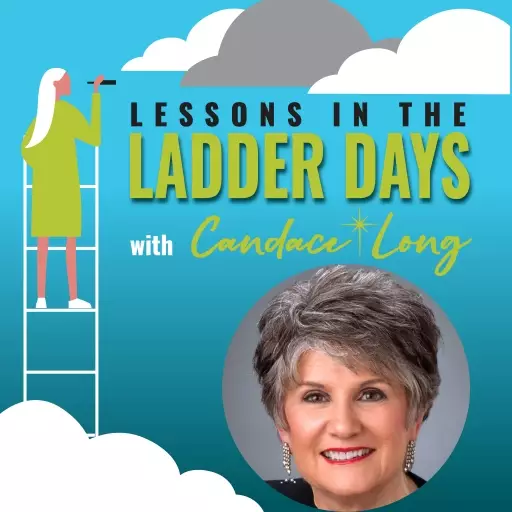
About Lessons in the Ladder Days

Lessons in the Ladder Days is a radio programming series rooted in a 35-year study of the biblical end of days. As a 55-year follower of Jesus who is Torah observant, Candace Long launched the program in early 2021 to: 1) Chronicle how the prophecies are being fulfilled in the final years of the Church Age; and 2) Reconnect Christians with our Jewish roots. She is emerging as one of today’s most thought-provoking teachers, with multi-part series such as: The Days of Noah…The Return of the Nephilim…The Nephilim-UFO Connection…The Final Kingdom…and Uncovering The Ancient Snare.

About Candace Long

Candace Long is an ordained Marketplace Minister who has been teaching since 2004. She has walked with the Lord beginning in 1970 with the music ministry of Campus Crusade for Christ (CRU) during the Jesus Movement. In 2006, the Lord called her to begin studying Judaism and become Torah-observant to connect with our Jewish roots.

With 50 years of accomplishments as a Writer-Producer in the Arts and Business Sectors, Candace served as President of the National League of American Pen Women, the nation’s oldest organization for creative women, as well as VP of Women in Film & Television International. Author of two theatrical musicals, six screenplays and five books, she was honored as a 2018 Georgia Author of the Year Finalist for her latest book, The Ancient Path to Creativity and Innovation: Where Left and Right Brains Meet.

Her career shifted during the Pandemic when she realized we are living in the biblical end of days! Following Jeremiah’s calling to invest in the land of his forefathers while his nation was under siege, she felt called to air Lessons in the Ladder Days on radio stations in the “land of her forefathers” and prepare listeners for the Day of the Lord. Through auDEO Media Group, LLC, she produces this program as well as online resources to help others fulfill their calling and find their place in these end times.

Lessons in the Ladder Days can be heard weekly on WEZE/WROL (Boston), WFIL (Philadelphia), 920 AM The Answer (Atlanta), WORD (Greenville, SC), WPTF (Raleigh, NC) and WRHI (Rock Hill, NC)…as well as all major podcast platforms.

She leads a contemplative life away from social media in the Georgia mountains.

Contact Lessons in the Ladder Days with Candace Long

744 Noah Drive, Suite 113 - #250

Jasper, GA 30143