

Oneplace.com

The Final Kingdom, Pt. 3 (The Rise of the Patriarch of Rome)

June 9, 2026
00:00

(Note: This series was originally released in January, 2023 and is extremely relevant today!)


In this episode, I reveal the identity of the patriarch of Rome, the final kingdom in power before the Day of the Lord. Once you understand who he is, his backstory and what drives him, you will more clearly be able to spot the signs of what is unfolding today – especially with the explosive growth of the Climate Change agenda - a global movement that reflects his nature.

**********************


NOTE: For the resources mentioned in this episode: Go to my PODCAST PAGE, locate this title and click on it. All the resources are listed in the description notes.

**********************

References: Genesis 25 , Genesis 36

Candace Long: I'm Candace Long with Lessons in the Latter Days, offering biblical commentary to make sense of the times that we're living in. In part three of climate change, the final kingdom, the tentacle I want to talk about today is the rise of the patriarch of Rome, the final kingdom that will be in power before the day of the Lord.

If you've listened to this series for any length of time, you know that I love to explore backstory because the only way to understand a main character that is taking center stage in the plotline of an unfolding drama such as the end of our world as we know it is to explore that person's backstory.

So who is the character taking center stage now? There are actually three of them: the one who was, the one who is, and the one who is to come. Now, if this sounds like a riddle, it is, but let me break it out for you using the reverse order.

The one who is to come is referred to as the Antichrist or the man of sin, who will lead the world into a war with God Himself. The one who is, is the final Roman kingdom itself, from which the Antichrist will come. And the one who was, is where we're going to focus today, the unseen influence, the root of the prophecies leading to this time. The biblical patriarch who founded the kingdom of Rome. And I'll give you a hint: it is not the Pope. He's found in the book of Genesis. His name is Esau.

Today, we're going to dive into the book of Genesis and look at three things. Number one, what Esau has to do with Rome, with the Antichrist, and how biblical prophecies are driving this one-world agenda known as climate change, seen through the eyes of a rivalry that is thousands of years old. Number two, where Israel is in all of this and what we can expect to see for them in the days ahead. And number three, what Esau's rise means for us.

First, though, I want to do a brief review so you will be reminded where we are now relative to the day of the Lord and how these three characters fit together. Jewish doctrine says the day of the Lord is a thousand years long, but it begins when the world has been in existence for 6,000 years.

The day of the Lord begins on the first day of the Hebrew month of Tishrei in the year 6001. This day is regarded as the birthday of the world, also called Rosh Hashanah or Yom Teruah, the day of sounding the shofar. That day, which is when two things happen simultaneously: number one, Messiah comes to the clouds at the sound of the shofar and calls His followers out of this world in the twinkling of an eye. And number two, that very moment also begins the seven-year birth pangs, which you may know as the tribulation.

We learn a little more in 2 Thessalonians 2, where the Apostle Paul tells us that the man of sin will not be revealed until the one who restrains him is out of the way. You see, it is the presence of Holy Spirit within believers who is restraining the Antichrist from becoming known. So once we, the followers of Messiah, are gone and out of the way, that's when this evil world leader will be revealed, and not before.

So right now, we are seeing the Antichrist's empire building, the ungodly forces at work binding themselves together through alliances and deals among world leaders and corporate CEOs. Now, please note that the United States is one of these primary leaders. It is not a good thing that we are complicit in this global movement. As I said last time, God is not global.

Part one: how is Esau connected to Rome? Interestingly, our weekly Torah studies have been in the book of Genesis, and it was in one of these studies where this episode began coming together. The Torah portion known as Toldot, which means generations, covers Genesis 25 through 28, and it focuses on the generations of Isaac.

As I break out a few verses, I want you to notice the tavniyot, or metaphorical pictures, that God hid in this passage for us to find. They are loaded with insight. Here's Genesis 25:19: "Now these are the generations of Isaac, Abraham's son. Abraham fathered Isaac, and Isaac was 40 years old when he took Rebecca. Isaac prayed to the Lord for his wife because she was barren, and the Lord answered him and Rebecca conceived."

"But the children struggled together within her, and she said, 'If this is so, why am I living?' So she went to inquire of the Lord." The sages look deeper into the verse which says Isaac was 40 years old when he took Rebecca as a wife. Now, why should we care how old Isaac was?

From the Jewish perspective, everything in the Torah is there for a specific reason. The Torah is God's language. In this case, the sages all say that this detail is a tavnit with a whole other layer of meaning. You see, according to Jewish doctrine, Isaac has always been viewed as a picture, or tavnit, for Messiah.

Think about it. Isaac was prepared as a sacrificial offering by his father, Abraham. So did the heavenly Father offer His only begotten Son as a sacrifice for the souls of mankind. Now, with this parallel in mind, God wants us to know that Isaac was 40 when he took a wife.

Would it surprise you to learn that the Lord did the same thing? The sages say that Isaac's 40th year refers to the year 4000 after creation, which was when Messiah was betrothed to His bride because the year 4000 was when Jesus was crucified.

Now the story of the generations of Isaac has a deeper meaning because if Isaac is a picture of Messiah, then Isaac's bride Rebecca is a picture for the bride of Messiah, which is us. The Torah says Rebecca was barren. She knew the important role she was to play in birthing a kingdom of God's children who would be light in this world and teach others about Him and His ways.

She shared the promise that God had given Isaac and his father before him, and that vision burned inside of her. She endured years of barrenness and cried out to God for help. And finally, she conceived, and the Torah describes how the children struggled together within her to such an extent that she said, paraphrased, "I can't stand this. I have to seek the Lord for what's going on."

In the Hebrew, it says she went to inquire of the Lord. Now, the biblical records tell us where she went. Following the flood, Shem was the righteous one of Noah's sons. In an earlier episode that I'll link to in the description notes, I tell the story about Abraham, who was forced into hiding for 49 years when Nimrod was king and trying to kill him.

Abram spent the first ten years of his life in a cave and then went to live with Noah and his son Shem for 39 years. According to the Mishnah, Shem established an academy in the town of Shechem when he left the ark and settled his family after the flood. Shem cared for Noah as he aged and was the one who taught both Abraham and Isaac God's ways.

The Mishnah also records that whenever Rebecca walked by Shem's house, one of the babies in the womb started running. But when she walked by the house of an idol, the other baby would start running. So with the two children wrestling inside of her, she had to hear from God, and she went to visit Shem.

Genesis records for us what Shem heard from God regarding these two babies. This is a 3,800-year-old prophecy unfolding today: "The Lord said to her, 'Two nations are in your womb, and two manner of people will be separated from your bowels. And the one people shall be stronger than the other people, and the elder shall serve the younger.'"

Let's break out some of these words in Hebrew and pull it all together to find what God is saying. Two nations are in your womb. The word for nations is goyim, which refers to Gentile heathen nations. It says two manner of people will be separated from your bowels. The word for manner is derek, which means a road or a course of life, a way of life. The word separated is parad, which means to be severed from something and scattered abroad.

So in the natural, inside Rebecca's womb are two distinct people groups representing two different ways of life. These two will become nations or kingdoms, and they will be severed from her womb and scattered through the earth. One of them will be stronger than the other. Scripture tells us that when the boys grew up, Esau was a skillful hunter, a man of the field, while Jacob the shepherd was described as "a plain man dwelling in tents."

Esau was clearly the stronger of the two, but many people have misinterpreted the text and believe that Jacob was a mama's boy who sat around the house all day. That's not correct. The word for plain in Hebrew, which was the word God used to describe Jacob, is the word tom, which means gentle, perfect, morally upright, and undefiled. Jacob spent a lot of time studying the ways of God in Shem's tent.

Esau had no desire to do that. The Torah goes on to say the elder shall serve the younger. Who was the elder? Esau. And his ultimate destiny? To serve Israel. God gave Esau two names. The name Esau means hairy, like a man. But God also gave him the name Edom, which means red, since he sold his birthright for a pot of red lentils.

The rabbis say God also named Jacob. The word Ya'akov, or Jacob, means heel-catcher or someone who comes from behind. There's an interesting conversation that Ezra the priest has with the Lord about Jacob and Esau. It's found in the book of Second Esdras in the Apocrypha. Ezra is perplexed about the time of the end, and he asked God a question.

He asked, "What will mark the parting of the times?" And here's how God responded: "And God said to me, 'From Abraham to Abraham, for from him sprang Jacob and Esau, but Jacob's hand held Esau's heel from the beginning. For Esau is the end of the age, and Jacob is the beginning of the one that follows. For the beginning of a man is his hand, and the end of a man is his heel. Between the heel and the hand, look for nothing else, Ezra.'"

Most believers look at Jacob as the supplanter, always trying to pull Esau back and take what he wants for himself. But that isn't true. What God is saying in Genesis is that these two opposing kingdoms are never strong at the same time. When one kingdom is preeminent and ruling, the other has no power but is enslaved, and vice-versa.

What he says to Ezra is that at the end of this present age, which is where we're living now, Esau will be at his preeminent strength, which is what we will see as we come to understand the iron control evidenced through the final kingdom, which the Bible calls Rome, which is generationally and genetically tied to Esau. At Esau's height of power, Jacob will be trampled.

But the division comes in that split second in which we will see the sudden collapse of Esau's power as the wrath of God is poured out on the earth, and Israel or Jacob assumes his rightful place of leadership when the heavenly kingdom comes to earth. Jacob's hand holding Esau's heel is a picture that one follows the other with no measurable time period between this world and the world to come. This time is Esau's. The world to come belongs to Jacob and all that God has promised to Israel.

What is Esau's connection to Rome? There are many places in the Old Testament that say plainly, Esau is Edom. In fact, there's an entire chapter, Genesis 36, that is all about the descendants of Esau. Now, that is significant because of the role that his descendants play in this present world leading up to the day of the Lord. Remember Esau is a descendant of Abraham. But remember too that the Word of God says in Romans 9, "Jacob I loved, Esau I hated." This was said before they were born and had done nothing either good or bad, in order that God's purpose of election might continue.

Esau was the one who separated himself from Jacob, and he settled in what was called Edom. Now, what many believers have not known is that to the Jews, the name Edom has always been synonymous with Rome. Let me read you the definition of the word Edom in the book called the Encyclopedia of Jewish Symbols: "Edom, the nation supposedly descended from Esau, was also a symbol for Israel's eternal enemy."

"Edom participated in the destruction of the first temple with Babylon, and their legendary descendants, the Romans, destroyed the second temple. Herod, the despised agent of Rome, was an Edomite. And when Rome embraced Christianity, Edom became a symbol for Christian Rome, and then a symbol for Christianity in general."

What I want you to see is that to a devout Jew, Edom is evil and against everything they believe in. Rome is evil and Christianity is evil. What was Esau like? Genesis 36 is devoted to Esau's descendants. His firstborn, Eliphaz, had a child by a woman named Timna. Now, the biblical records explain that she was so desperate to connect to the bloodline of Abraham, she agreed to become a concubine.

The child she bore was named Amalek, whom the Torah describes as an eternal enemy of Israel by tempting God's children to dismiss Torah study and pursue idolatry and licentiousness instead. Overall, many of Esau's descendants were products of incest and illegitimacy. His father-in-law, Anah, was a native of Mount Seir. The ancient Book of Jasher records that Anah crossbred a donkey with a mare and created mules.

Anah himself was illegitimate, for he is called Zibeon's brother in one verse and Zibeon's son in another, indicating that Zibeon committed incest with his own mother. Therefore, the illegitimate Anah introduced into the world a tainted animal that came from a forbidden form of breeding. We also learn from Jasher that Esau's son Zepho rose to power, and the people of Chittim, which became known as Rome later on, took Zepho as their leader and hired him to fight their battles.

Zepho became very rich and powerful and ended up uniting all of Italy and became the first Roman king and ruled for 50 years. Part two: where is Israel in all of this? Now, the Torah is clear that at the end of this age before the kingdom, Esau or Rome will become a great power. We're seeing this now as the nations align under the agenda known as climate change.

The stronger that this New World Order becomes, the more Israel will be under attack. I see Israel falling all over itself trying to fit into this climate change agenda. A recent headline read, "At the 2022 United Nations Climate Change Conference, known as COP 27, ten of Israel's most promising climate tech startups won the chance to demonstrate their innovations to the world."

Now, this is not surprising because Israel has always wanted to be accepted by other nations and valued for their contributions. But biblically, this acceptance will not come. It's not that Israel is not gifted—God gifted them in many ways—but His calling for them as a nation was not to become corporate moguls, but to be a nation of priests who would teach the world who God is and how to follow His ways.

The world under Esau's control will always turn against Israel. Just the other day, a leaked document from American Thinker said the European Union is seeking to clear the Jews out of Judea and Samaria. The article began with this sentence: "Europe has always dreamed of being Jew-free." This is one of many betrayals the Jewish people will likely witness.

As they try to help the world, they will be betrayed time and again because Esau is in control. Finally, part three: what does all this mean for us? If Rebecca is a tavnit for the bride of Messiah, then the biggest lesson for us is that every one of us has two kingdoms living inside of us. There is a part of us that identifies with Esau.

We don't care about our birthright as a child of Abraham. We don't want to hear about the Sabbath and honoring the festivals. We don't want the narrow ways of Judaism; we want to be free to enjoy life with all of its riches and possibilities. Now, think about this. Almost everything in your financial portfolio includes shares in companies that are already aligned with environmental, social, and corporate governance—the climate change agenda.

It is a global movement. It is spreading. It is powerful. Its network is vast. Now tell me, are you going to sell every stock you own that is aligned with the ESG movement in order to walk the narrow path of God? I believe that decision is where each of us is heading, and it's not going to be easy for any of us.

The bottom line is, if we long to live in Esau's world of glory and power, we will turn our backs on Israel. The two cannot be strong at the same time. And if we choose to align with Jacob, it will come at a great cost. From now until the day of the Lord, we will each be tested to see which kingdom inside of us we choose. God is watching.

This transcript is provided as a written companion to the original message and may contain inaccuracies or transcription errors. For complete context and clarity, please refer to the original audio recording. Time-sensitive references or promotional details may be outdated. This material is intended for personal use and informational purposes only.

Featured Offer

The Levitical Calling

Writing this book shifted forever my relationship with the Lord…I have been chronicling this calling since 2006. It sheds light on why so many believers are no longer content with “church as usual” and find themselves undergoing tremendous trials. It is not that God is displeased with you…on the contrary, chances are you are being called, refined, separated and consecrated for this most holy assignment. The Day of the Lord is at hand! His Levites MUST be in place and know who they are to prepare for Messiah’s coming.

Past Episodes

This ministry does not have any series.

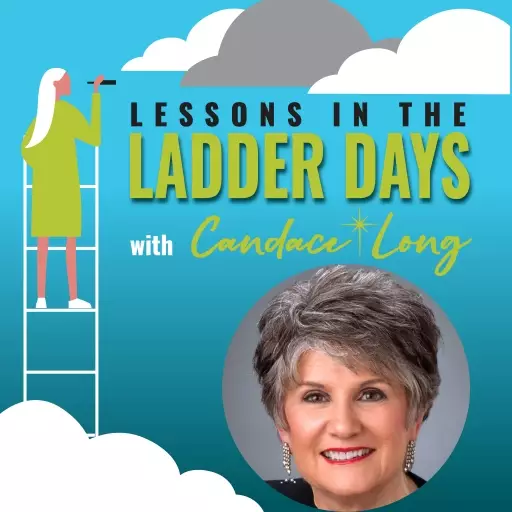
About Lessons in the Ladder Days

Lessons in the Ladder Days is a radio programming series rooted in a 35-year study of the biblical end of days. As a 55-year follower of Jesus who is Torah observant, Candace Long launched the program in early 2021 to: 1) Chronicle how the prophecies are being fulfilled in the final years of the Church Age; and 2) Reconnect Christians with our Jewish roots. She is emerging as one of today’s most thought-provoking teachers, with multi-part series such as: The Days of Noah…The Return of the Nephilim…The Nephilim-UFO Connection…The Final Kingdom…and Uncovering The Ancient Snare.

About Candace Long

Candace Long is an ordained Marketplace Minister who has been teaching since 2004. She has walked with the Lord beginning in 1970 with the music ministry of Campus Crusade for Christ (CRU) during the Jesus Movement. In 2006, the Lord called her to begin studying Judaism and become Torah-observant to connect with our Jewish roots.

With 50 years of accomplishments as a Writer-Producer in the Arts and Business Sectors, Candace served as President of the National League of American Pen Women, the nation’s oldest organization for creative women, as well as VP of Women in Film & Television International. Author of two theatrical musicals, six screenplays and five books, she was honored as a 2018 Georgia Author of the Year Finalist for her latest book, The Ancient Path to Creativity and Innovation: Where Left and Right Brains Meet.

Her career shifted during the Pandemic when she realized we are living in the biblical end of days! Following Jeremiah’s calling to invest in the land of his forefathers while his nation was under siege, she felt called to air Lessons in the Ladder Days on radio stations in the “land of her forefathers” and prepare listeners for the Day of the Lord. Through auDEO Media Group, LLC, she produces this program as well as online resources to help others fulfill their calling and find their place in these end times.

Lessons in the Ladder Days can be heard weekly on WEZE/WROL (Boston), WFIL (Philadelphia), 920 AM The Answer (Atlanta), WORD (Greenville, SC), WPTF (Raleigh, NC) and WRHI (Rock Hill, NC)…as well as all major podcast platforms.

She leads a contemplative life away from social media in the Georgia mountains.

Contact Lessons in the Ladder Days with Candace Long

744 Noah Drive, Suite 113 - #250

Jasper, GA 30143