

Oneplace.com

JEWISH ROOTS: How I Reconnected

February 6, 2026
00:00

In this episode, you will hear about the growth of two parallel movements: 1) The Messianic movement as growing numbers of Jews discover Yeshua as the Messiah; and 2) The growing restlessness among Christians to reconnect with their Jewish roots.


I found myself in this second movement's awakening. I share how God awakened me to study Judaism…the three major steps I took…and how God poured out His blessings after each step.

**********************

NOTE: For the resources mentioned in this episode: Go to my PODCAST PAGE, locate this title and click on it. All the resources are listed in the description notes.

**********************

References: Exodus 20:8-11

Candace Long: I'm Candace Long with Lessons in the Ladder Days, offering biblical commentary to make sense of the times that we're living in. In the last two episodes, I introduced a topical series called Connecting to Our Jewish Roots to introduce some concepts, terminologies, and lessons that we need to learn to prepare us for the kingdom. Today, I want to share with you how I reconnected. As you will hear, there is a growing number of believers who are looking for something deeper.

I do not believe this is a random statistic. Rather, I see it as a significant sign of living in the latter days with God letting His children know that something is missing. And that something is our Jewish heritage. I've made three trips to Israel. My last was in 2017, and it was very different in many ways. This time, I decided to go by myself rather than being part of a tour.

I had done a traditional tour just two years earlier and befriended a woman who was referred to by our tour guide as a mother of Zion. I later learned that this woman, Lisa Lowden, and her husband David were among the first group of Messianic Jews from the United States who were called by God in the 1970s to make aliyah to Israel. The Lord cemented a spiritual sisterhood between me and Lisa during that tour, and she invited me to stay in their home during my 2017 visit.

This was such a God-ordained trip because while I was with them, I learned about the entire Messianic movement up close from those chosen to pave the way and witness its growth firsthand. I want to give you a brief outline of the Messianic movement's growth beginning in 1950, right after Israel became a nation. This was chronicled in a book that Lisa co-authored called Through My Enemy's Eyes.

This book was a pioneering assignment that God gave her to bring about reconciliation between Israelis and Palestinians using two of Yeshua's followers: Lisa Lowden, a Messianic Jew, and her co-author Salim Munayer, a Palestinian Christian. I want to show you that just as the movement is growing here in the United States among believers who feel called to connect with our Jewish roots, there has been an equally vibrant growth in the number of Jews who have come to faith in Yeshua.

Both movements are God-inspired, showing His heart for reconciliation between His Jewish and Gentile children. I also want to show you in this episode that no matter how much the enemy has tried to separate believers in Jesus from our Jewish roots, God is at work, especially at the appointed times such as now, right before the Messianic kingdom.

Now, we've talked before in this series that the early church was a community of Jews who followed Jesus. But tensions began to grow between them and the surrounding Jewish community at large. Our Lord was crucified in 30 or 33 AD according to records, and just 100 years later, there was an event called the Bar Kokhba revolt, which was a Jewish rebellion against Roman domination.

It was led by a leader named Simeon Bar Kokhba, who many believed was the Messiah. Now, the Jewish believers who believed Jesus was the Messiah could not accept Bar Kokhba, and this created a split between them and other Jews who followed this false messiah. What came next was that the Roman Emperor Constantine ordered the church to become exclusively non-Jewish.

So, the Jewish believers went underground, struggling how to maintain their identity and live as Jews within a new movement that was becoming more Gentile and less and less Jewish. The definitive split came to a head in 325 AD at the Council of Nicaea, when the early church adopted the Roman calendar. This one act separated the date of the resurrection, which Romans called Easter, from the date of the Jewish Passover, which is the 14th day of the Hebrew month of Nissan.

Now, according to Lowden, this event of changing God's times and seasons stripped the church from its Jewish influence and set a course for the future that would effectively sever any Jew who believed in Jesus from his Jewish roots. Now, their only choice as Jews was to identify with this new culture of Christianity that intentionally cut itself off from what was biblically called the commonwealth of Israel.

In the 19th century, after almost 2,000 years, significant numbers of Jews began to come to faith in Jesus and still identify clearly as Jews. Now, because the term Christian had come to mean such antagonism to Jewish ways, the Jesus-believing Jews began to call themselves Messianic rather than use the term Christian. But I want you to listen how God grew this movement.

By 1967, which was the year of Israel's Six-Day War capturing the city of Jerusalem, the Messianic Jewish community saw this as a significant sign of the times that would lead to the second coming of Messiah and the establishment of the Messianic kingdom on the Earth. At this time, then, in 1967, there were an estimated 150 Messianic Jews in Israel.

In the mid-'70s, when Lisa and her husband made aliyah, that number had doubled to 300, with the majority coming from North America. The Lowdens helped to establish a small Messianic congregation where they lived in Israel. Now, by the end of the 1980s, there were approximately 45 Messianic congregations and small groups meeting in Hebrew, with numbers estimated between 2,500 and 3,000.

The 1990s saw a massive immigration from the former Soviet Union. At the end of the '90s, Russian-background believers amounted to 42 percent of the number of local believers, consisting of approximately 5,000 Messianic Jews. There were about 80 congregations, the majority Hebrew-speaking fellowships. But alongside this group was a large number of Russian-speaking congregations, one of which had more than 450 people.

At the beginning of the 21st century, after a little more than a decade, the number of Israelis believing in Yeshua and attending Messianic congregations was estimated between 10,000 and 15,000. But as high as 23,000 were seen. Now, a lot of that growth was due to the influence of the charismatic movement. By 2013, Lowden's best estimates from her book show approximately 150 congregations that met in Hebrew.

There were several Spanish-speaking groups, one Romanian-speaking group, between 30 and 50 groups that meet in Russian, and eight Ethiopian groups. So, as this explosion was going on in Israel with Messianic Jews, a similar movement was going on in the United States, and that's where I found myself. A shift began to take place in the United States with those who were looking for something deeper within mainstream Christianity.

I believe in fulfillment to the prophecy in Malachi 4, where before the day of the Lord comes, a move of God would be dispatched to bring about reconciliation of Gentiles with our Jewish forefathers. There is a visual picture that I see every day outside my back deck looking into the woods. There's a particular tree which has a branch that is broken way at the top.

That branch, rather than being severed from the tree completely and falling to the ground, just hangs upside down like it's hanging by a thread. There's still some life in the branch. But as the season changes, the leaves on that branch begin to turn brown. Like now in the middle of summer, I see a tree with green leaves, except for right in the middle where the leaves on this one branch show signs of death and decay.

This is a tough meet for what is happening with the church. We are showing visible signs of having been severed from the root and trunk of the tree, which is Judaism. Now, some believers feel that separation sooner than others, and that's where I found myself. Three major things happened in my life which reconnected me with my Jewish roots. Now, before I tell you about them, let me say that for me, this process has taken many years.

From 2005 to the present, over 16 years. Now, I share these things because I'm not alone in the longing for this reconciliation. But you may be at a different stage. A lot of this may be new to you, and I want to encourage you wherever you are in your journey. My first step was a commitment to seek the Lord in a deeper way.

When I wasn't working, I was spending time with the Lord and with small congregations who were known for their praise and worship. I had strong women of faith who mentored me in a deeper walk with the Lord. I spent a great deal of time studying the Old Testament because the Torah began to speak to me, especially from the book of Leviticus. And it was during this season where a dream showed me looking for a rabbi to fix what was broken.

Now, soon after that, the Lord connected me with Rabbi Michael Washer, who now leads the Lev Tzion Messianic Congregation in El Paso, Texas, of which I am a member. When I met him, the rabbi had also gone through a traumatic experience of his own. He is descended from the line of Aaron of the priestly Levitical family. And when you hear his story, the Lord put him through a horrific refining fire as He did me.

Now, while working his way through his, Rabbi Michael wrote his signature book called When All the Pictures are Restored. Rabbi is a gifted artist, and this 1,000-page book is filled with images and pictures of all that God began teaching him when he was so broken. He was teaching him a totally different way to view the Tanakh, which is the Hebrew Bible.

The Lord taught him that the Bible is a series of pictures, or tavniot, which instruct us about God and the Messiah and the kingdom. The second major step was committing over a year to study about Judaism. God used Rabbi Washer's book, which I refer to as Pictures, to teach me about the yearly lifestyle of the Hebrew calendar.

I read that book every year because it gives context to every feast, festival, and other appointed times that God desires to meet with His children. And I began to see huge changes take place in my life after taking this step. Prophetic dreams began to increase, and through them, my studies in the Torah and with new insights from the book Pictures, the Lord began to download such revelation that I could not stop writing.

The result of these spiritual downloads was writing my signature book, The Levitical Calling. This is a very Jewish book where God unlocked the understanding of the tavnit of His separation of the Levites. What I saw was that God is doing the same thing now as He did so long ago when He led the Jews out of Egypt. He brought all His children out into the wilderness, and while they were there, He organized them into how they would live and travel with Him in their midst all through the wilderness before arriving at the promised land, which has always been a picture of the kingdom.

Now, as to the Levites, He separated this smaller group to undergo a time of testing and refinement that He does not require of other believers. Now, the purpose of that testing was that the Levites were to live right next to His presence. Now, the Lord is the same yesterday, today, and forever, and must have a Levitical people trained and prepared when Messiah returns.

When all this revelation was unfolding, I knew that I was being called as a Levite. It is not a glamorous calling. It doesn't mean a Levite is some super Christian. In the same way that not every Jew was a Levite, not every Christian has a Levitical calling. In its essence, this calling is to live in proximity to the presence of the Lord, and this calling changed everything for me. I had to accept the call first of all.

But it is a lifestyle of quiet, contemplation, prayer, research, and study, monitoring who comes in and out of the house, being sensitive to stay away from anything defiling, and learning to attend to God's needs, such as writing and producing a podcast that only a few may ever hear. One of my places of ministry is to a small, spirit-filled church in Japan. They asked me to come and teach them about the Levitical calling, and I remember the translator said to me, "I need to listen to this teaching because whenever I hear it, I know you have heard it by being alone with God."

I can't tell you how blessed I have been when I hear from people from time to time from all over the world. One woman in Africa wrote, "One day in prayer, I heard the word Levitical in my spirit. I had no idea what it meant, so I Googled it and found your book, The Levitical Calling. It has literally changed my life." This movement is God's doing. The Lord told me a long time ago, the Levitical calling is not for everyone. I will bring the ones to your book that I'm calling in this way.

Another big change is that research and writing has become a greater priority. I believe He has called me as a chronicler to record what life is like in the end of days. The third major step in reconnecting happened when I began honoring the Sabbath. This was probably the biggest game-changer for my personal spiritual growth during the mid-2000s.

I didn't know about Messianic congregations at the times, so I kind of did this my own way, which God graciously honored. The more that I read Pictures, the book, and studied the scriptures for myself, I was convicted of the importance of the Sabbath to the Father. There are four words that show up over and over beginning in Exodus 20 regarding the Sabbath. Moses wrote: Remember the Sabbath to keep it holy.

The first word is remember, zakar. It means to mark so as to recognize, to make it be remembered. This was not a request of the Father. This is a spiritual law. It's number three in the Ten Commandments. Their entire culture was to revolve around setting apart and sanctifying this day. It's what sets them apart as Jews. God did not say remember the Sabbath only until Messiah comes and then you don't have to keep it anymore.

Now, the second word is Sabbath, the seventh day of the week. The Hebrew word Shabbat means rest. It is the first of the appointed times to meet with God. The Sabbath is a tavnit of the kingdom, God's day of rest that lasts a thousand years. So, honoring the Sabbath is a picture acted out by Jews all over the world, week after week, preparing us for the kingdom.

The third word is keep, as in the admonition to keep the Sabbath holy. Keep is one of my favorite Hebrew words. The word is shamar, which means to guard and protect as with thorns around it, to keep it protected, to attend to it and preserve it. And that's what the Jews were given to do: guard with their lives the ways of God.

The fourth word is holy, the Hebrew word kadosh. When something is hallowed, it is appointed or set apart and dedicated as holy. There is an atmosphere of holiness and separateness that God declared over the seventh day. And when we choose by an act of the will to honor it, all of the blessings surrounding that day comes to you.

Now, this is what I can testify to: how much God has blessed me with revelation, insight, protection, provision, and wisdom when I made the decision in about 2007 to honor the Sabbath and spend the entire day with the Lord. When I first began to do Shabbat, I didn't know what I was doing, but God knew my heart and He met me. So, if you are moving toward God in this way, be patient with yourself and take baby steps.

Before closing, let's look at a few ways to honor the Sabbath. Now, this is going to vary because we are still in the pandemic. Some people meet on Friday nights at a Messianic congregation or synagogue, or they share the Friday night Shabbat meal with a family or small group. Others may join an online congregation to enter a time of praise and worship.

So, whether you are alone or with a group, you light the two Shabbat candles at sundown and pray the Shabbat prayer, welcoming the light of Messiah into your home. You effectively set apart the next 24 hours as a time to take delight in the Lord. An important part of my Shabbat is following what's called the Parashat, which is a section of the Torah that's assigned for weekly readings every Sabbath.

So, when you follow the Parashat, you read through the Torah every year. I join my Messianic congregation on Saturdays online for more in-depth Torah teaching. Another important discipline that I do is use a biblical calendar for the Lord's appointed times, and I'll include a link to where you can get one of these calendars. You'll find it in this program's description notes on my podcast page at candacelong.com.

The calendars contain weekly Parashat readings and help you learn the Hebrew yearly cycle of God's appointed times and seasons. And finally, on high holy days such as Passover, Rosh Hashanah, and Yom Kippur, I try to attend a synagogue. These are special times of identification with the body of Messiah and our Jewish family.

Now, I realize this lesson may be difficult because Christians are just not used to thinking in terms of worshipping on Saturday and following traditions that are foreign to them. I understand. But I would be remiss if I did not encourage you to consider these things. You see, there is an important movement taking place where more and more Jews are discovering Yeshua as the Messiah, just as there is a shift going on within the church where many are feeling the need to be grafted further into our Jewish heritage.

The ideal, of course, is for these two movements to come together. And the question you need to at least ponder: which tradition, Judaism or Christianity, will be in the kingdom? How you view what that kingdom is like will determine how you choose to prepare yourself for it.

I want to thank you for spending this time with me. If you'd like to know more, I invite you to subscribe to my website at candacelong.com. When you do subscribe, I'll send you links to my books, my articles, online courses, and individual webinars that will help you understand the signs of these times and how to find what God would have you do while it's all unfolding.

To listen to more of my teaching, go anytime to candacelong.com/podcast. If you'd like to make a donation and help support this ministry, you'll find a donate button in the description notes to any episode. I hope you join me again for Lessons in the Ladder Days. God bless.

This transcript is provided as a written companion to the original message and may contain inaccuracies or transcription errors. For complete context and clarity, please refer to the original audio recording. Time-sensitive references or promotional details may be outdated. This material is intended for personal use and informational purposes only.

Featured Offer

The Levitical Calling

Writing this book shifted forever my relationship with the Lord…I have been chronicling this calling since 2006. It sheds light on why so many believers are no longer content with “church as usual” and find themselves undergoing tremendous trials. It is not that God is displeased with you…on the contrary, chances are you are being called, refined, separated and consecrated for this most holy assignment. The Day of the Lord is at hand! His Levites MUST be in place and know who they are to prepare for Messiah’s coming.

Past Episodes

This ministry does not have any series.

About Lessons in the Ladder Days

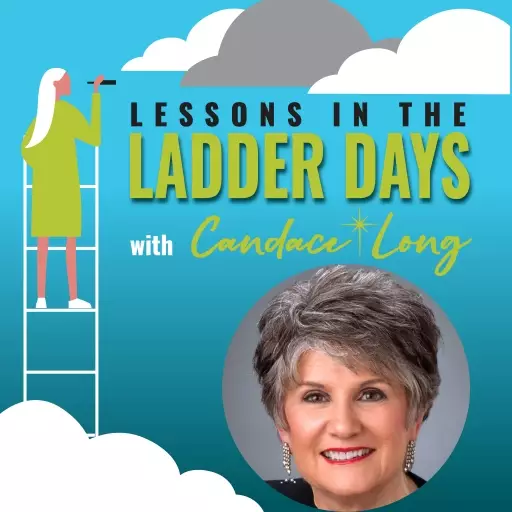
Lessons in the Ladder Days is a radio programming series rooted in a 35-year study of the biblical end of days. As a 55-year follower of Jesus who is Torah observant, Candace Long launched the program in early 2021 to: 1) Chronicle how the prophecies are being fulfilled in the final years of the Church Age; and 2) Reconnect Christians with our Jewish roots. She is emerging as one of today’s most thought-provoking teachers, with multi-part series such as: The Days of Noah…The Return of the Nephilim…The Nephilim-UFO Connection…The Final Kingdom…and Uncovering The Ancient Snare.

About Candace Long

Candace Long is an ordained Marketplace Minister who has been teaching since 2004. She has walked with the Lord beginning in 1970 with the music ministry of Campus Crusade for Christ (CRU) during the Jesus Movement. In 2006, the Lord called her to begin studying Judaism and become Torah-observant to connect with our Jewish roots.

With 50 years of accomplishments as a Writer-Producer in the Arts and Business Sectors, Candace served as President of the National League of American Pen Women, the nation’s oldest organization for creative women, as well as VP of Women in Film & Television International. Author of two theatrical musicals, six screenplays and five books, she was honored as a 2018 Georgia Author of the Year Finalist for her latest book, The Ancient Path to Creativity and Innovation: Where Left and Right Brains Meet.

Her career shifted during the Pandemic when she realized we are living in the biblical end of days! Following Jeremiah’s calling to invest in the land of his forefathers while his nation was under siege, she felt called to air Lessons in the Ladder Days on radio stations in the “land of her forefathers” and prepare listeners for the Day of the Lord. Through auDEO Media Group, LLC, she produces this program as well as online resources to help others fulfill their calling and find their place in these end times.

Lessons in the Ladder Days can be heard weekly on WEZE/WROL (Boston), WFIL (Philadelphia), 920 AM The Answer (Atlanta), WORD (Greenville, SC), WPTF (Raleigh, NC) and WRHI (Rock Hill, NC)…as well as all major podcast platforms.

She leads a contemplative life away from social media in the Georgia mountains.

Contact Lessons in the Ladder Days with Candace Long

744 Noah Drive, Suite 113 - #250

Jasper, GA 30143