

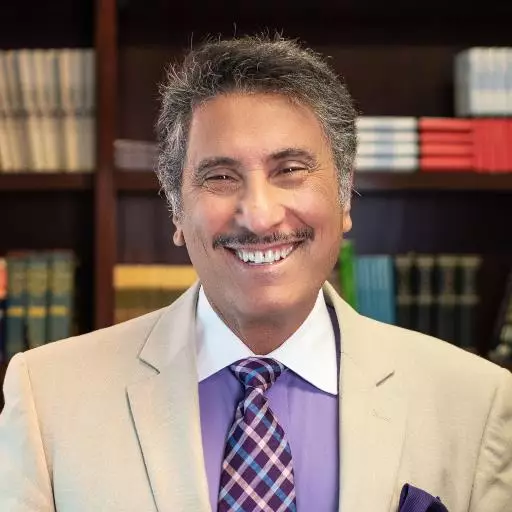
What Does God Think of Thanksgiving


Today on Leading The Way, Dr. Michael Youssef invites you to join a group of broken and hurting people who experienced a life-saving encounter with Jesus!
Unidentified Speaker: Hello, my friends. Blessed Thanksgiving. What a great opportunity and a time to remember to thank God for his salvation and escaping from the judgment of God into the heaven itself with God for all of eternity.
Announcer: Up next on Leading The Way, join a group of hurting people who experienced a life-changing encounter with Jesus and what it means for you. Here's Dr. Michael Youssef.
Dr. Michael Youssef: These people were the rejects of society. These people were rejected by their own families. They're rejected by their friends. They're rejected by everybody. These people were the untouchables of society, and Jesus changes their lives, and he turns it upside down in a split second.
Announcer: Welcome to the program known across 6 continents as Leading The Way with Dr. Michael Youssef. He's a best-selling author and international teacher. All right, imagine that you get a diagnosis that demands immediate and permanent separation from your family, your friends, your community, never to have contact again. Well, that's what happened to lepers during the time of Jesus. And today on Leading The Way, you'll experience how Jesus restored the lives of 10 such outsiders. It's a lesson in offering thanks, and it's appropriate as families are celebrating Thanksgiving. Here's Dr. Michael Youssef to begin this episode of Leading The Way.
Dr. Michael Youssef: Have you ever done something for someone that has taken so much of your time and so much of your energy that you have invested in that person or in that cause, and then you discover that that person didn't even say as much as thank you? Have you been there? Well, if you've been there, you understand the feeling that goes with that. You understand how that would do to you, and conversely, sometimes you do something so small for somebody who could never thank you enough. Every time he sees you or she sees you, say, thank you. We say, wait a minute, I can't even remember this was so small. But today I want to tell you that God feels the same way, both for those who are constantly expressing thanks and toward those who never say thank you.
God feels the same way. He has similar reaction to yours. Of course, he's a holy God, he's a righteous God, but he's a personable God, and one of his character, he's a feeling God. And therefore, I want to share with you today what God thinks of thanksgiving. I want you to turn with me, please, 17:11 of the Gospel according to Luke. Now, on his way to Jerusalem, Jesus traveled along the border between Samaria and Galilee. As he was going into a village, 10 men who had leprosy met him. They stood at a distance and they called out in a loud voice, "Jesus, Master, have pity on us." When he saw them, he said to them, "Go, show yourselves to the priests." And as they went, they were cleansed.
One of them, when he saw that he was healed, he came back praising God in a loud voice. He threw himself at Jesus' feet and thanked him, and he was a Samaritan. Jesus asked, "Were not all ten cleansed. Where are the other nine? Was no one found to return and give praise to God except for this foreigner? Then Jesus said to him, "Rise and go. Your faith has made you whole." Or in some translations you have, your faith has saved you. Only 10%, 10% of those whom Jesus healed expressed genuine thanksgiving. And it was the most unlikely 10%. It's not the ones that you would have expected. The 10% were the most unlikely people would have expressed thanks.
Well, the text said were a bunch of melancholy lepers, 10 of them, and in one of the villages on the border of Samaria and Galilee. They were a mixture, Jews and Samaritans. Common misery brought them together. As we say, misery loves company. And so they got together. You see, under normal circumstances, they would have been at each other's throat. Under normal circumstances, they hated each other. Under normal circumstances, they are at enemy. They were enemies of each other. They were at enmity with each other. But because of their common disease, they were all classified as unclean, whether they are in Samaria or whether they are in the land of Israel.
Both Jews and Samaritans were banishing lepers out of their community, out of their towns, out of their society, into a no man's land outside of the area. So, in their isolation, the only person that a leper can be in fellowship with, that the only person that a leper can have communion with, that the only person a leper can be with is another leper. The life of a leper was death while they're still living. And this border area is significant because obviously the Israelites who are living in Galilee in the northern part send those people out from their area, and the Samaritans send them out, and they come in the middle there where it's no man's land.
And imagine Jesus goes there specifically, specially, because not too many healthy people would go by the colony of lepers. You say, how do you know that? The border between Galilee and Samaria, it was a desolate area, and that's where they dumped what they call undesirables. Those 10 men stood from afar. They have to because by law they're not allowed to get anywhere near a healthy person. They have to stand long, long away. In fact, some of them would have a bell and ring a bell so people know that they're coming, and it says, leper, leper, leper, so everybody would run away, even if they make it into society.
Now, in this case, Jesus never told them that they were healed. You notice that in the text? He didn't say, well, you're healed. He did this before. He touched lepers, he healed them because he is the Savior, and he is the Savior of all from all of our sins and all of our diseases, and he laid hands on lepers. He's the only one who laid hands on lepers. And in this case, he did not. He just said, "Go and show yourselves to the priests." Why? So that they formally be accepted back into society. So they formally be declared that they are clean. So they feel that they are justified to be back into society.
Can-- I don't know whether you can feel the intensity of this situation. I'm trying to give you the best picture that I can draw, and but this is such an intense moment that all of a sudden they looked and, hey, even before they got to the priest, because these people were the rejects of society. These people were rejected by their own families. They're rejected by their friends. They're rejected by everybody. These people were the untouchables of society, and Jesus changes their lives, and he turns it upside down in a split second, and they were literally given a new lease on life. They were not only healed, but they can enter into society again.
They can participate in life's activities again. They can be treated with dignity again. They can work and earn a living again. They can marry and have children. They can have fellowship with family and friends again. It's a life-changing thing. It's not just a simple healing. And so they go to the priest, and obviously the priest declares them clean. But there was a damper on the situation here. There was a damper here. There was this incredible grace of God. There's a damper. There was a sad note after the excitement of the supernatural power of Jesus healing those people, there's a damper.
9 out of the 10 took the healing from Jesus and took off. 9 out of the 10 received the gifts, but then they disappeared after they got it, never to come back. 9 out of the 10 received the blessings, but never returned to give thanks to God. They never thought of expressing thankfulness. They never exhibited gratitude. They dropped out of sight. Only one of them, a Samaritan. And remember, Jesus said he came first to the household of Israel. In terms of priority, he came to Israel when Israel rejected him. Remember in John chapter 1, when his own received him not. So the Samaritans, in the sense, were the second-class citizens.
But it's the only one, is a Samaritan who was seized with the impulse of gratitude. He was the only one who made his way back to his benefactor, fell on his face and on his knees and thanked him. Look at verses 15 and 16 of Luke 17. You see, there were two separate acts here. This Samaritan, verse 15, he began to praise God in a loud voice, but that was not enough for him. Praising God in a loud voice was not enough for him, so he had to go back in person and thank Jesus, and he falls on his face in gratitude. What about the other nine? Well, really, we don't know. They could have praised God privately.
Oh, they could have sat before the meal and said, "Oh, for about what are we about to receive, may the Lord make us truly thankful." They may have done that. I don't know. We don't know. They were very private. My religion is very private, but at least we know they did not come back. We know they did not come back and say, "Thank you." Now, beloved, listen to me. Many of us can sing praises to God. Many of us can mouth the words of praise, but it is altogether different from expressing thanksgiving in the attitude of sacrifice. Well, I want to share four things with you before I get carried away.
Four things. First, many are the requests, few are the thankful. You know, when we need something from God, and I'm no exception, when we need something from God, oh, we never hesitate to call upon the Lord. We pray and we ask, and then we ask other people to ask on our behalf. We go to every prayer meeting in town. We become spiritual giants. We want something from God. And you know what? God often answers our prayers. He really does. But you know what God does after he answers the prayers of his people? He watches and he sees who's coming back with the same intensity and giving thanks and who's not.
That's what he does. You say, Michael, how do you know that? How do you get... Well, it's right here in the text. I'm not making it up. He's watching to see who's giving tangible thanks and who is not. Many are the requests, few are the thankful. Secondly, many believe, but few express thanks. All 10 believed. How do you know that? They took Jesus at his word. He said to them, "Go and see the priest." Didn't say, "Oh no, I'm not really sure. Why would I see the priest? Now he's going to tell me the same thing over again. I already been seeing him every seven days, and nothing is happening, nothing's wrong.
They could have doubted the words of Jesus, but no, no, no, they did not do that. They believed. They believed the words of Jesus, and they marched in confidence to see the priest. They were desperate, you see. They were ready to do anything. They were ready to receive. They were ready to believe. They were ready to do anything in order for their physical needs might be met. It's amazing to me. It's amazing to me. When people need something from God, they become great believers. I want you to hear me right, please. Listen to this very carefully. I have learned through the years that my thankfulness nets me closer to Jesus than when I'm asking.
I want to repeat that. Thankfulness knits you closer, bonds you with Jesus in a greater bond than when you're asking. Now, don't stop asking. I'm not saying that. Don't misunderstand me. Somebody's going to go out and say, well, Michael said... No, no, no, no. Listen, God said ask, and you got to ask. I'm not telling you not to ask, but I'm telling you from my personal experience that my time of thanksgiving and praise and adoration of God, my time of sacrifice, when I offer the sacrifice of praise to him, when times when I express my thanks in tangible ways, they bring me closer in bonding with Jesus than in the times when I want something from him.
Many are the requests, few are the thankfulness. Many believe, but few express thanks. Thirdly, thankfulness must be expressed promptly, determinedly, with intensity and fervor. Look at this man, and humility as well. This man returned to Jesus immediately, and he came to him alone. He was a Samaritan, and the others were Jews. They were like Jesus, to whom he came. He's their Messiah. And because he kept the company of the Jews, he could have easily said to himself, he could have easily have said, "Why should I go alone? I don't like to go alone, you know. It's just, what if he rejects me? What if he says that you're a Samaritan?
What are you doing here? I healed you because of the other Jews. What if he does this, and what if he does that, what if he does that? But this man couldn't be bothered to even doubt. He could have said, why should I go back to Jesus when these religious people did not go? He could have said to himself, I'm gonna wait and then return to Jesus when they return, which would have been never. No, because of his thankful heart, he went alone. Because of his thankful heart, he sang alone. Because of his thankful heart, he bowed to Jesus alone. Because of his thankful heart, he sacrificed alone. It didn't matter to him if others thanked him or not.
It didn't matter to him what others do or did not do. As if to say, I will not measure my thankfulness to God by others. Even if they seem to be more spiritual, even if they seem to be more versed in the scripture, even if they seem to be more visibly involved in the Christian activities, even if they seem to have more blessings than I do, my thankfulness to God will not be measured by somebody else's thankfulness to God or lack of it. In fact, there's something exciting about that person who goes alone to God and give thanks, regardless of what other people do or do not do. True thankfulness is expressed not only in promptness, determination, but also in intensity.
This man was not satisfied with the cold handshake of saying, thank you. He heard me saying, thank you. That is enough to turn your stomach. What does that mean? Thank you. He turned back with a loud voice. He glorified God. He was not showing off. He was not trying to attract attention, but he wanted the world to know the intensity of his thankfulness. He did not want to keep it a secret. His religion is not private. His thankfulness is not a secret. The whole world knows all about it. Thankful not only expressed in promptness and intensity, but also expressed in humility. This man who fell at the feet of Jesus, as if to say, without your grace, without your mercy, without your power, without your love, without your healing, without your goodness to me, I would have still being nobody.
I would have still being a dead man walking. I would have still remained in misery because I was dead while I was still breathing. Now I'm at your feet, Jesus, to say thank you, to say thank you. But I want you to notice his humility here. You know, when Jesus asked, where are the nine, this man in true humility, you know what he said? You know what he said? Nothing. He said nothing. This man, in true humility, did not point out to the weaknesses of others. He did not let somebody else's weakness come between him and his thankfulness to God. And therefore, fourthly, this man was blessed far more than all the other nine.
Let me remind you. First, many are the requests, few are the thankful. Secondly, many believe, few express thanks. Thirdly, thankfulness must be expressed promptly with intensity, determination, and humility. And fourthly, a thankful heart brings about a whole different set of blessings from the non-thankful. I'm going to show it to you. That's my fourth point, and it's very important. If you missed everything so far, don't miss this one, because some of you's eternity may be hanging on this point. I want you to listen carefully. This man was blessed far more than the other nine will ever dream of.
How? Oh, they were physically healed. They were back in society again. Yes, yes, yes. But all, only the thankful man who received the immeasurable gift of spiritual blessing, of spiritual healing, of receiving salvation from the hand of Jesus. When he returned to thank Jesus, Jesus said, "Your faith has made you whole. Your faith has saved you." What can be a greater blessing than to know that your eternal future is settled and that when you close your eyes in death, you will be with Jesus for eternity. What can be greater gift than that? You see, that's what called spiritual healing. I want you to hear me right, please listen carefully.
Physical healing will last for a lifetime, but spiritual healing will last forever and ever and ever. Physical healing will improve the quality of life, and I thank God for his physical healing, but spiritual healing will give you eternal life. And this thankful Samaritan was eternally saved, and I believe you and I are going to see him in heaven because of his gratitude to Jesus. And the faith that Jesus is talking about here for this man, he said, "Your faith saved you or your faith made you whole." That's not the same faith they exercised when they received physical healing. It's not the same faith.
And that's why only this guy got it, not the others, because his attitude of thankfulness developed faith in being saved. That faith that brought him back to Jesus is the faith that saved him. Did you notice how often God answered prayers of believers and unbelievers alike? I mean, and you say, why? Because possibly from this text, that one in ten might come back and receive him as Savior and Lord of his life or her life. You see, the theologians call common graces, that is, the sun will shine, believers and unbelievers, the rain will come for believers and unbelievers, but there are special graces that are given to the thankful person.
When he comes to Jesus, he'll receive salvation from his hand, assurance of eternal life. And if anybody here today has never received the incredible gift of God of eternal life. You can today. Say, Lord Jesus, thank you for dying on the cross for me. I receive you as the Savior of my life and the Lord of my life. And you spend eternity with him. So what does God think of thanksgiving? He rewards it. He blesses it. He's honored by it. And oh, he rejoices in it. Isn't that great? Isn't that great? It causes him to want to open the windows of heaven and bless you beyond measure. And if you're one of those people who feel thankful only around Thanksgiving season, begin today to develop the lifestyle of thanks living, of thanks living.
Announcer: Encouragement to welcome an attitude of gratitude into your life. Thank you for listening to a special episode of Leading The Way audio with Dr. Michael Youssef. Learn more about living a life of gratitude when you speak with a Leading The Way pastor or counselor. Start your conversation when you fill out a contact form at LTW. org/Jesus. Now, as we close out today's episode, allow Leading The Way to express our thanks to you by reminding you of some free resources available. The place to start, LTW. org. Now, when you get there, look for store and then digital resources. When that page loads up, you will have multiple free items on a variety of topics to choose from and just add them to your cart.
Once again, the website is LTW. org. You'll find so many encouraging items right there. Well, we thank you for listening, and we wish you a blessed Thanksgiving and hope that you'll gather with Dr. Michael Youssef right here next time for more Leading The Way.
Unidentified Speaker: As an encouragement to our fellow listeners, I would like to invite you to share how God is using this program to encourage you in your walk of faith. And if Leading The Way is part of that, we would want to know. You can call our testimony line at 877-941-7934. Do it today. Thank you in advance, and God bless.
Featured Offer

For the first time ever, friends of Leading The Way have offered to match every dollar given to the ministry in December. Every dollar—no limit! Through this year’s December Gift Challenge, your generosity will go twice as far to proclaim the Gospel and equip believers with Biblical Truth. Make this extraordinary opportunity count: Prayerfully consider your largest gift yet to help fund Gospel proclamation into 2027. Give before December 31 to double your impact!
Past Episodes

Video from Dr. Michael Youssef
Featured Offer
For the first time ever, friends of Leading The Way have offered to match every dollar given to the ministry in December. Every dollar—no limit! Through this year’s December Gift Challenge, your generosity will go twice as far to proclaim the Gospel and equip believers with Biblical Truth. Make this extraordinary opportunity count: Prayerfully consider your largest gift yet to help fund Gospel proclamation into 2027. Give before December 31 to double your impact!
About Leading The Way
Along with partners committed to changing the world, Dr. Michael Youssef is leading the way for people living in spiritual darkness to discover the light of Christ. By passionately proclaiming uncompromising Truth through every available form of media, this international team of experts is uniquely providing hope that is revolutionizing lives around the world.
What began as a small local radio ministry in 1988 has grown into an international ministry reaching millions for Christ, including a vast audience in the Muslim world seeking Truth in closed countries. Dr. Youssef's Biblically-based programs are broadcast in more than 28 languages to audiences across six continents. His books, MY Journal magazine, and daily e-devotionals continue to minister to a global audience. Leading The Way utilizes cutting-edge technology to advance the Gospel. Its solar-powered Navigators are reaching into remote villages, and the ministry's KINGDOM SAT TV channel—launched by Dr. Youssef in 2009—is reaching into the Middle East with programming in English, Arabic, and French. Field Teams follow up with viewers, including those in restricted areas, to lead the lost to Christ, disciple new believers, and support the underground Church.
Dr. Youssef and the Leading The Way team are committed to proclaiming the Good News of Jesus with the lost and equipping believers to grow in Christ. Learn how you can partner with this unique ministry today.
About Dr. Michael Youssef
Michael A. Youssef, Ph.D., is the Founder and President of Leading The Way with Dr. Michael Youssef, a worldwide ministry that leads the way for people living in spiritual darkness to discover the light of Christ through the creative use of media and on-the-ground teams. His Biblically-based teaching programs are broadcast more than 18,000 times per week in multiple languages around the world. He is also the Founding Rector of Church of the Apostles in Atlanta, Georgia, and founder of the AWAKE America prayer movement.
Dr. Youssef was born in Egypt and lived in Lebanon and Australia before coming to the United States. In 1984, he fulfilled a childhood dream of becoming an American citizen. Dr. Youssef holds theological degrees from Moore College and Fuller Theological Seminary and a doctorate in cultural anthropology from Emory University. He has authored more than 50 books, including popular titles Saving Christianity?, Life-Changing Prayers, Is the End Near?, How to Read the Bible, Heaven Awaits, and God’s Final Call. He and his wife reside in Atlanta and have four grown children and 15 grandchildren.
Contact Leading The Way with Dr. Michael Youssef
webmail@LTW.org
http://www.ltw.org
Leading The Way
P.O. Box 20100
(404) 841-0100
Toll-free line
(800) 337-5323