

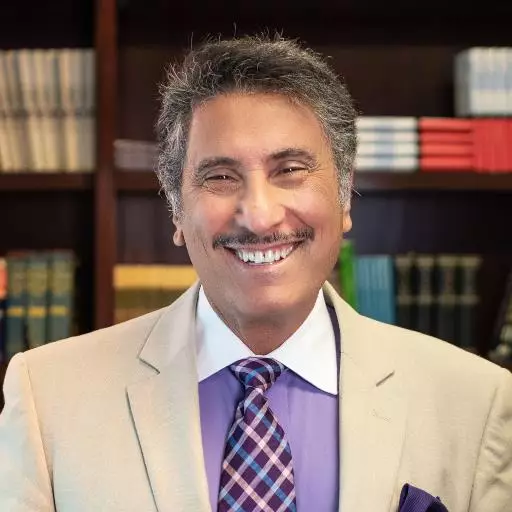
The Biblical Cure for Depression, Part 02


On the next Leading The Way with Dr. Michael Youssef. . . learn how when you experience times of loneliness, God offers a place of safety and comfort!
Dr. Michael Youssef: David gives us the cure for such times of discouragement, for such times of emotional and spiritual depression, and it's found in the very last verse, verse five, of Psalm 43. In fact, it's one word: Hope. That's the answer.
Guest (Male): Thank you for joining Dr. Michael Youssef for another encouraging episode of Leading The Way Audio. The words in Psalm 43 offer a reminder that even in times of loss and loneliness, there's a place of safety and comfort in the house of God. Dr. Youssef reveals more about that next on Leading The Way.
Now, before he begins, this quick reminder to consider expressing your generosity by becoming a frontline mission partner. Join Dr. Youssef in the Open Door campaign. You can learn about more ways to and benefits of standing with Dr. Youssef and Leading The Way when you go to LTW.org. Right now, though, listen with me as Dr. Michael Youssef begins today's teaching.
Dr. Michael Youssef: Perhaps there is no greater pain than the pain of betrayal. I'm, of course, talking about betrayal by those who are near and dear to us, a betrayal of a spouse, a betrayal of a trusted friend, a betrayal of a business partner, a betrayal of a child or a parent. For when we suffer physical pain, there's always a painkiller. But there is no pill or injection that you can take for the pain of betrayal.
However, if that pain is not dealt with biblically, it's not dealt with spiritually, it's not dealt with the right way, it can lead to a greater depression. And that is where we find the psalmist here in Psalm 42 and 43. As a matter of fact, some of the ancient scripts have both psalms as one psalm. Through the years, somehow they got split into two psalms, Psalm 42 and Psalm 43.
In the last message from Psalm 42, we saw how David, who was on the run from his palace, from his home, from the temple, from the praising of God, to a hiding place because of the betrayal by his son Absalom, who was trying to conduct a coup d'état against his father and was advised by a man called Ahithophel to kill his father, and yet that man was his father's friend. When Absalom would not receive and accomplish the advice that this wicked man gave him, he went out and killed himself.
So David, in this kind of a terrible predicament and the terrible situation he was in, we saw in Psalm 42 that he began to lift up his spirits by challenging his soul. And that's exactly what you and I must do. We have to challenge our soul. Literally, you have to challenge your emotions. You have to challenge your depression.
The way you do that is by reminding yourself of the promises of God in the word of God. And so we move from that part where David was lifting up his spirit by challenging his soul to Psalm 43 where he begins by crying to God for vindication. I hope you already turned with me to Psalm 43 and follow with me as we go along. Because in these two psalms alone, there are 10 times the psalmist asks the question "Why?"
Listen to me, there is absolutely nothing wrong with you asking God why. God is not going to fall off his throne because you asked why. In fact, all the great men and women of the Bible, of the word of God, they asked why. The Lord Jesus Christ when he hung on that cross, he knew the very purpose of God since before eternity, and yet when he hung on that cross, he said, "Why?"
And it is not difficult for so many of you to relate to what the psalmist is going through. I think most of us know what it is like to be attacked and criticized and maligned and slandered falsely. We know that. In fact, I'll make you a promise. If you try to live a godly life, you will suffer. Paul said that if you live godly, you will be suffering.
In fact, Jesus said that if they persecuted me, they will persecute you. If they hated me, they will hate you also. And it is a very extraordinary person, I think, in my experience at least, who does not occasionally get down by malicious and hurtful treatment. But thank God that when this happens, we are given the answer. We are not left in a hopeless despair.
David gives us the cure for such times of discouragement, for such times of emotional and spiritual depression, and it's found in the very last verse, verse five, of Psalm 43. In fact, it's one word: Hope. That's the answer. Now, I think most of you understand that the way we use the word hope today is not the same as it is used in the Bible, in the biblical texts.
The way we talk about hope is that we'll say, "Well, I'm not really sure, but I hope so." Or we say, "Well, I'm really putting hope against hope. I am desperately hoping." In other words, we use the word in terms of, "It's my wish, it's my ardent desire, it is my deepest longing." But when the Bible uses the word hope, it is an absolute certainty.
It means an absolute assurance. It means a definitive fact that has no shadow of doubt attached to it. And so when you put your hope in God, when you put your hope in the word of God, when you put your hope in the promises of God, it is not a wish, but is an absolute certainty that he will, not may, but he will keep his promises.
Listen to me carefully, please. When you place your hope on people, I don't care who they are, when you place your hope on people, they will let you down. When you place your hope on earthly securities, they will disappoint you. When you place your hope on yourself, even your own ingenuity, that too, my friend, might fail you.
But when our hope is in Jehovah God, that is a certainty. That is the certainty for the ultimate victory is yours. And that's why in verse one, the psalmist confidently is calling upon the Lord. "Vindicate me, O Lord, and plead my cause against ungodly nation. Rescue me from deceitful and wicked men."
He moves from what he did in 42, and that is lifting his spirit by challenging his soul, and he moves to a direct petitioning of God. He is saying, "Lord, do something. Lord, please move on my behalf. Lord, prove to the world that you are my God. Lord, let your roar be heard in Zion once again. Lord, tell the world that the gates of hell shall not overcome your faithful church."
"Lord, reveal yourself for who you are. Lord, show that our faith in you is based on confidence of who you are." And I thought about this and I was thinking about how so many Christians, particularly in our culture, they are too timid with God. They are too fakely polite with God. Do you understand what I'm saying? In petitioning God.
The reason why the psalmist is so bold in his petitioning of God is simply because he knew God. A lot of people today know about God, read all kinds of books, they don't spend time to be in intimacy with God. They don't know God like the psalmist did. And that is why in verse two, he said, "You are God, my stronghold," or "You are God who is my fortress."
And I can preach a couple of sermons just on one sentence alone because it's vitally important to understand the concept of a fortress in the mind of the psalmist. Back in the old days when warfare was fought hand-to-hand combat, they built high-rising walls or sometimes they take advantage of a natural rock formation, and they hide behind that.
They put all of their defenses behind that great wall or that great rock or that great fortress. And they come out briefly and then they go back immediately to take cover in that fortress. As long as they were behind that fortress, they were safe. They come out from behind the fortress for any length of time, they risk being exposed to the arrows of the enemy.
And the psalmist is saying, the word of God which is in so many homes and in so many translations but is hardly read, the word of God is that fortress behind which I take my stand. Others may waffle, but I'll stand. Others may get overwhelmed by the circumstances, but I'm steadfast. Others may rely on themselves and their own ingenuity, but I'll stand behind this impregnable wall, this fortress.
Others may wallow in self-pity, but I will stand firm behind this immovable wall. You know what he's doing? He's reminding himself by what he already believes. He's reminding himself of what he already knows, what he already deeply believe in his heart. You say, "What is it?" That there is no reason for him to be downcast at all.
That's really what he's doing. He's reminding himself there is no reason on God's earth that he would be downcast, even though the circumstances are tough, even though the things look dark and bleak, but there is no reason for him to be downcast. Now, listen, this is vitally important. It really is.
Because the difference between those who get victory over discouragement and over depression and those who don't is one thing. Do you want to know what it is? Listen carefully. Those who allow their circumstances, especially in the tough times, to speak to them, they will stay down in their discouragement.
But those who speak to their circumstances are going to get the upper hand. Did you get that? Say, "Amen." Those who allow their emotions to speak to their minds will stay in the muddle. But those who allow their biblically enlightened minds to speak to their emotions, they will have victory every time. If you have a pen, write it down. Write it down. It works every time.
The reason our Western culture is in deep trouble is because our thinking gave way to our feelings. That is really the bottom line, and it's a wholesale departure from thinking into feelings. We don't ask people anymore what they think. You know the question is that the media, of course, builds this up: "How do you feel? How do you feel?" Not what you think.
But listen, when your biblically enlightened mind become the thermostat, you will keep your emotions in check. But when your emotions become the thermostat, your mind and your life are in trouble. They're going to go haywire all over the place. That's why the psalmist here, he said, "Send forth the light of your truth," or "The light, your light and your truth to guide me and let them bring me to your mountain where you are."
He is saying the light of the word of God enlightens and guides my mind. And when our minds are enlightened by the word of God, they will pull our emotions and our feelings out of the ditch in which our emotions tend to get into. And the psalmist is telling us that the light and the truth of the word of God can pull me from the pit of despair to the mountain of joy.
It can pull me from the valley of hopelessness to the mountain of hope, from the quicksand of feelings into the mountain of trusting in the promises of God, out of the mud of my circumstances into the mountain of remembering who I am in Jesus Christ, out of the depth of fear into the height of faith, out of where I am to where God is. He will do it every time. He will do it every time.
Listen to me, just because evil men or difficult circumstances or temporary losses that you go through, and many of you are going through that right now, I know, because these things come our way, it doesn't mean it's all over, not by any stretch of the imagination. Verse four: "Then I will go to the altar of God, to God my joy and delight. I will praise you with the harp, O God, my God."
The psalmist now is saying to himself, he says, "I know that God," I'm getting ready to shout, "That God has not changed." Just because my circumstances change, just because I'm going through a tough time, God has not changed and therefore his purpose for me has not changed. Just because I get into a detour, it doesn't mean that I am permanently lost, and I get into many of those detours.
Just because I'm experiencing some delays in my life does not mean that I am not on God's schedule. It might not be yours, but it's God's. The fact that there is a blip on the screen does not mean that I'm done for. Not by a long shot. That's not biblical. But rather let your biblically enlightened mind begin to heal your hurt emotions.
Let your biblically instructed mind guide you in your muddled emotions. Let your biblically believing mind challenge your sagging emotions. Look at verse five. "Why are you downcast, O my soul? Why are so distraught within me? Put your hope in God, for I will yet praise him, my savior and my God."
Do you know what I'm going to say? Some of you know what I'm going to say. Those of you read my book, "Empowered by Praise," you know what I'm going to say. You see, praising God, which is the one thing and going to lift you out of whatever you are into the very place of the presence of God, praising God is a decision of your mind. It's a decision of your will.
It's not how you feel. I was talking to a dear, precious brother who was going through a tough time, and I began to share with him from my own experience, which led me to write that book, by the way, if you haven't read it, "Empowered by Praise," it will bless you. And I was sharing with him how praising God lifts me up from whatever I am, takes me into the very presence of God, and I've just started explaining how he needs to start by praising God. He said, "Well, I don't feel like it."
Well, I knew him well enough to tell him the heck with your feelings. I don't mean I'm careless. I'm not. It doesn't mean I'm thoughtless. I'm not. And I wanted to make a point that he understand that praise is not a decision up to your feelings and your emotions. It's a decision of your mind. Please listen carefully because I can tell you experientially that praise will place you behind God's fortress.
Praise will place you behind his impregnable wall. Praise will place you in the very hollows of his hand. Praise will place you at the very inexhaustible provision. And it's a decision of your mind and your will. You say, "I'm going to praise God whether I feel like it or not, whether my mouth can move or not. I'm going to praise God no matter what."
I'm going to tell you this as I conclude, because it really illustrates what I'm trying to tell you. Between the two World Wars, the French built a 78-mile defensive wall. And it was called, and I will mispronounce this and my wife who speaks French is going to correct me when I go home, but Maginot line.
And they built it to defend their borders with Germany. And there were three lines of defense that were incorporated in that wall. The first was small fortified barracks designed really to sound the alarm as soon as the enemy is seen. And the second line was a deep reinforced barrack, and its design to delay the enemy from coming in.
And the third line of defense was something called ouvrage, which was deeply buried multi-story forts every six miles. Below the barracks at the deepest level, they stored their ammunition, they stored food, and above all, they had endless supply of water from wells that were dug deep. And when the Germans did move against the French, they did not even try to attack this final fort.
In fact, not one single one of them, these ouvrage, were attacked by the Germans. And the reason is the Germans knew that the soldiers in these barracks could survive and resist almost indefinitely because of the deep endless supply of water. And beloved, listen to me, whenever the Lord is your fortress, regardless of the attack that you may be receiving or the attack that you're under, regardless of the difficulties you are facing right now, regardless of the discouragement that has come your way, his endless provision that he had promised you become your endless supply of his provision, and it's going to help you to withstand the siege no matter how long it may be. His provision will not only empower you, but abundantly give you the complete victory through the power of the promise of God.
But the question is, where are you? Where are you? Are you standing behind a fortress or are you standing on your own somewhere relying on your own hard work and ingenuity? Nothing wrong with that, by the way. I work hard, try to use all the creativity God's given me. But ultimately, it is where you stand deep down in your heart is what determine the level of victory. Are you standing exposed to the enemy, opening the doors for him to come in and harass you? Today, you can say to the Lord, "Lord, I will only stand behind the fortress of your promise in the word of God. Lord, empower me, never try to take things into my own hands, but to stand behind the wall of your provision."
Guest (Male): Miss part of today's Leading The Way or want to check out more content? Well, subscribe to the podcast, download the new Leading The Way app, or listen and watch online for free. The website to learn more is LTW.org. In the moments remaining, I want to share a note we received from a person living in a volatile place in the Middle East.
He writes: "I found Jesus through The Kingdom Sat." That's Leading The Way's satellite channel with Arabic language content seen around the world. He continues: "Immediately, I started sharing my new faith, even starting a Bible study in my home. However, I was soon arrested by police who then confiscated my Bibles and books. They're keeping me from returning home, so I'm forced to live on the streets."
Friends, this is just one of many stories that our field teams receive regularly. People sharing how they found Christ through ministries of Leading The Way and they need further discipleship and care. So, please know, when you support Leading The Way, you're making it possible for our field teams to reach into and minister to those making life-changing decisions for Christ.
The Middle East is home to 68% of the world's unreached people groups. Since Leading The Way first began impacting the Middle East through dual language audio programs in 1996, the ministry has had unique access to one of the most challenging regions in the world.
Dr. Michael Youssef: Growing up in the Middle East, I grew up hearing that Islam will dominate the world sooner or later. God began to burden my heart that the answer is not fear, is not anger, is not retaliation, it is not frustration, but proclamation.
Guest (Male): Leading The Way's Open Door campaign is continuing to focus on three strategic areas where the greatest need and opportunity exists.
Dr. Michael Youssef: God has given Leading The Way an unprecedented open door to proclaim the Gospel directly into this region. Join me and go through the open door of opportunity to reach these people for Christ through Leading The Way.
Guest (Male): Please help us today. Visit LTW.org to learn more about what God is doing through Leading The Way and how you can be a part of it. LTW.org. Or call a ministry representative at 866-626-4356. Right now is the perfect time to stand with Dr. Youssef during the Open Door campaign. This program is brought to you by Leading The Way with Dr. Michael Youssef.
Featured Offer

Our civilization is being infected by two toxic ideologies that have joined forces to undermine Biblical Truth and your faith. In his powerful new book An Unholy Alliance, Dr. Michael A. Youssef exposes the radical coalition reshaping America, revealing the common thread that unites these opposing movements. Drawing on decades of research and global experience, he uncovers what is truly happening and equips believers with clarity and courage in a time of unprecedented deception. At this critical moment, God calls His people to stand firm. Request An Unholy Alliance today for your gift of any amount and learn what believers must do now.
Past Episodes

Video from Dr. Michael Youssef
Featured Offer
Our civilization is being infected by two toxic ideologies that have joined forces to undermine Biblical Truth and your faith. In his powerful new book An Unholy Alliance, Dr. Michael A. Youssef exposes the radical coalition reshaping America, revealing the common thread that unites these opposing movements. Drawing on decades of research and global experience, he uncovers what is truly happening and equips believers with clarity and courage in a time of unprecedented deception. At this critical moment, God calls His people to stand firm. Request An Unholy Alliance today for your gift of any amount and learn what believers must do now.
About Leading The Way
Along with partners committed to changing the world, Dr. Michael Youssef is leading the way for people living in spiritual darkness to discover the light of Christ. By passionately proclaiming uncompromising Truth through every available form of media, this international team of experts is uniquely providing hope that is revolutionizing lives around the world.
What began as a small local radio ministry in 1988 has grown into an international ministry reaching millions for Christ, including a vast audience in the Muslim world seeking Truth in closed countries. Dr. Youssef's Biblically-based programs are broadcast in more than 28 languages to audiences across six continents. His books, MY Journal magazine, and daily e-devotionals continue to minister to a global audience. Leading The Way utilizes cutting-edge technology to advance the Gospel. Its solar-powered Navigators are reaching into remote villages, and the ministry's KINGDOM SAT TV channel—launched by Dr. Youssef in 2009—is reaching into the Middle East with programming in English, Arabic, and French. Field Teams follow up with viewers, including those in restricted areas, to lead the lost to Christ, disciple new believers, and support the underground Church.
Dr. Youssef and the Leading The Way team are committed to proclaiming the Good News of Jesus with the lost and equipping believers to grow in Christ. Learn how you can partner with this unique ministry today.
About Dr. Michael Youssef
Michael A. Youssef, Ph.D., is the Founder and President of Leading The Way with Dr. Michael Youssef, a worldwide ministry that leads the way for people living in spiritual darkness to discover the light of Christ through the creative use of media and on-the-ground teams. His Biblically-based teaching programs are broadcast more than 18,000 times per week in multiple languages around the world. He is also the founding pastor of The Church of The Apostles in Atlanta, Georgia, and founder of the AWAKE America prayer movement.
Dr. Youssef was born in Egypt and lived in Lebanon and Australia before coming to the United States. In 1984, he fulfilled a childhood dream of becoming an American citizen. Dr. Youssef holds theological degrees from Moore College and Fuller Theological Seminary and a doctorate in cultural anthropology from Emory University. He has authored more than 50 books, including popular titles Saving Christianity?, Life-Changing Prayers, Is the End Near?, How to Read the Bible, Heaven Awaits, and God’s Final Call. He and his wife reside in Atlanta and have four grown children and 15 grandchildren.
Contact Leading The Way with Dr. Michael Youssef
webmail@LTW.org
http://www.ltw.org
Leading The Way
P.O. Box 20100
(404) 841-0100
Toll-free line
(800) 337-5323