

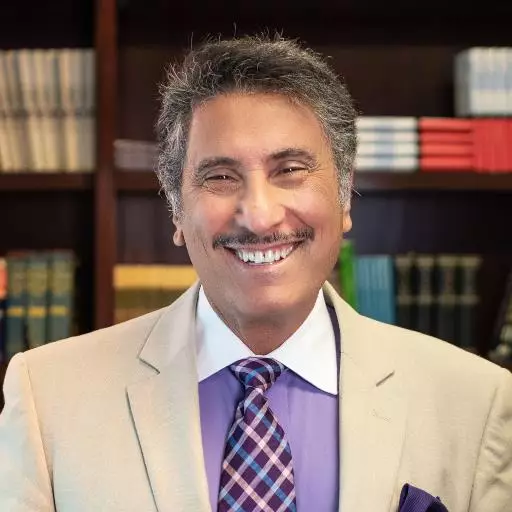
Loving the Unlovable


Listen to the next Leading The Way when Dr. Michael Youssef unpacks practical ways to be more like Jesus while facing relationship challenges!
Announcer: Welcome to Leading The Way with best-selling author and international Bible teacher, Dr. Michael Youssef.
Dr. Michael Youssef: My beloved friends in Christ, our world is lost, confused, and in desperate need of Jesus. Through Leading The Way's June gift challenge, you can share the only thing that matters eternally.
I have never seen a more urgent time for the preaching of the Gospel, the proclamation of the Gospel in our nation. Together, we can have an impact in these last days. God bless.
Announcer: If you would like to stand with Dr. Youssef and the passionate worldwide Leading The Way team so that the lost and hurting in your own neighborhood, the lost hurting in the Middle East, the lost and hurting in remote villages worldwide can all experience the transformational power of the Gospel. Please prayerfully consider participating in this month's giving challenge. Your generosity is so appreciated.
You can get additional details when you call us and speak with a ministry representative. We are at 866-626-4356 or online LTW.org.
Do you struggle with loving the unlovable? Well, get ready. Dr. Youssef unpacks practical ways for you to be more like Jesus as you face your relationship challenges on this episode of Leading The Way. It is part of Dr. Youssef's perspective-shifting audio series, "The 12 Evidences of Faith." So let's listen together as Dr. Youssef begins an engaging story.
Dr. Michael Youssef: During the Korean War, Communist North Korea, the Communist forces have overran a number of villages in South Korea. One of those villages that they overran, they, as always, have a policy of gathering all the community leaders first, and they kill them first.
But in one particular village, among those leaders there was a Christian man who ran an orphanage in that village. And when the Communist commandant, the officer, learned that this Christian man ran an ran an orphanage, he decided to spare his life.
But in order to instill fear, he forced that man, that Christian man, to watch him, the Communist, kill his son, the Christian man's son, who was 19 years old in cold blood. At the end of the Korean War, the Communist officer was captured and tried for crimes, atrocities that he has committed.
And he was tried before a United Nations tribunal. He was convicted and just before a sentence was imposed on him, the very man who was the head of that Christian orphanage, went in front of the tribunal and pleaded with them to spare this man's life, the man who killed his son.
He said, "Give him to me, and I'll train him." And sure enough, the tribunal released the prisoner to the custody of the orphanage director. And true to his word, the Christian man trained him, shared Christ with him. Then he discipled him.
That Communist officer later on went on to be one of South Korea's most prominent pastors. If you are anything like me when you hear these stories or read about them, you are bound to ask a question. Could I have done that? It's a great question to ponder. Could I have loved that man who killed my son?
Thankfully and mercifully, I don't have to answer the question. I think all of us know how easy it is to love the beautiful people, to love the lovable people, to love the influential people, to love those who serve our purpose. Nonbelievers do all that, and some will even do better than the believers. That does not require supernatural power.
That does not require a transforming faith in Jesus Christ. That does not require a new nature in Christ. Loving those who love us is not a big deal. One thing that we all must understand, however, as we look into this passage, is that this was a big problem in first century church, the very first church.
It was a big problem, I'm going to explain it to you. That's why you need to understand the Bible in context, historical and cultural. Although it was a first century problem, it has a 21st century application. Remember, this is the first church. It was planted in a Jewish culture.
And in the Jewish culture, there were certain group of people, a certain class of people who were manipulators, who were intimidators in the synagogues. And they demanded to be seated at certain places. And what's James trying to say to them is that this should not happen in the church of Jesus Christ.
Today, the problem is the same, although it has a different form. Today, many Christian leaders are so anxious to be accepted by secular society. So they say and do all sorts of things to be approved by society. They compromise their own convictions. They use double talk, use evasive language that does not stand for the truth.
They use this what I call double talk in order to confuse people, or not let people know exactly where they stand. And they express doubt about their own belief. Why? Oh, that the elite culture may accept them, so that the elite culture may approve of them, so that the elite culture may not call them narrow-minded, so that the elite culture may not call them prejudiced.
And who in the world wants to be called narrow-minded or prejudiced these days? No one, right? So the enemy of Christ uses this very form of intimidation to silence believers from proclaiming the whole truth as it is in God's word. Caused some church leaders to compromise what they know to be the truth.
Because they want to be accepted, so they will say things contrary to the truth. Nowadays, that's the equivalent of what was happening in the first century that James was trying to warn the people against. Now, there are many people misunderstand this passage, and they think that James basically is closing the door on the rich.
That is not what he's doing here at all. You got to understand it in context. Today, the power hungry, those who are self-seekers, those who are manipulators, those who are always seeking a place of honor, they come from all sorts of economic backgrounds. They're not necessarily the rich.
Jesus would never allow the Pharisees to manipulate him and to intimidate him. And they tried. Read the gospels. How many times they tried to put false guilt on him, and they tried to make him feel bad about this and bad about this. He would never allow them. And when they come to trick him and ask him a question, and they say, "What if?" He said, "Let me ask you a question." And they said, "We're not going to answer." He said, "Well, I'm not going to answer you."
He would never allow himself to be intimidated by those miserable Pharisees, who demanded attention, who demanded respect. So much so that they said to him in Matthew 22, this is what they said to Jesus, "You are not swayed by men because you pay no attention to who they are." And I say, "Amen" belongs here.
James was trying to ensure that the first century church would not fall in the trap of Pharisaism from which they came. Back then, most of the new Christians were coming into the church, thickly in Jerusalem and many other parts. They came from that environment of being intimidated by that class of people.
Those Pharisees were distinguishing themselves by the clothes they wear, and by the rings they have on their fingers. And they wore rings on every finger. As a matter of fact, they wore more than one ring in each finger except the middle one. And some who could not afford these rings, they would go out and they rent or hire rings for the time, so that they can walk in here and everybody's looking at them. "Ooh! He's got rings."
And that is why often in the early church, in their zeal not to fall into that Jewish practice of showing favoritism, they insisted that the slaves and the masters sit together in the same place. And sometimes the masters received the sacraments from slaves who were serving.
Which reminds me of an incident that took place after the Civil War when the great General Robert E. Lee returned home to Virginia to his Anglican church to worship, and in the classic small Anglican churches, you know, people would come for communion, they would kneel. The great General came and he knelt to receive communion, and a slave, a freed slave, just came and knelt next to him.
And an usher came in and he was trying to get him to move away from General Lee. And General Lee grabbed the slave by the arm and he motioned the usher and said, "Get away. He is my brother." As a matter of fact, some people think that although the Christmas carol that we often sing, "O Holy Night," was written ten years before the Civil War, that the line that was added after this incident, "For the slave is my brother."
James is making the point so clearly here. When you love the unlovable, you are fulfilling the royal law. What is that royal law? You love the Lord your God with all your heart, mind, soul, strength, and you love your neighbor as yourself. That's what James is saying, the royal law.
Why does he call it the royal law? Verses 8 to 11. Why is it called the royal law? Have you thought about that? There are several reasons why it's called royal law. It's called the royal law because it's supreme excellence. It is called the royal law because in Deuteronomy 6:5, the King of Kings gave that law.
And then in John 13, it was repeated and confirmed to the disciples by the Lord of all lords, God the Son. And then in Romans 5:5, He tells us that the Holy Spirit poured His love into our heart to enable us that we may keep this law. Without His power, we can't.
But there's another reason why it's called the royal law. It is because it is the king of all laws. It's the king of the Ten Commandments. Think with me for a moment here. Okay? If you love God, you're not going to break the first five commandments. You're not going to have another God beside Him and so forth.
If you love your neighbor, you're not going to break the last five commandments, 6 to 10. You're not going to covet what they have. You're going to rejoice when God blesses them. That's why it is the royal law. The main reason why this is called the royal law is because when you and I obey it, we become kings.
Become kings. When you exercise it, you become a royalty. Why? Just think with me. What does hatred do to you when you hate somebody? What does it do to you? Makes you a slave to the person you hate. You become a slave. You say, "How can I become a slave?" Well, just think again.
In your enslavement to the person you hate, you exert a lot of emotional energy. It dominates your thinking. It saps your emotional energy. It often actually causes physical pain. I have some doctors here in this church who have told me that sometimes can't diagnose a person who has pain, but they can't even figure it out. There's nothing wrong with them physically.
That's what's causes physical pain, even physical illness comes from hatred. It causes all sorts of illnesses. What does the person who is the object of your hate make you to be? A slave to that person. And that is why love liberates you from that slavery. Love gives you power over such slavery.
Love instills control over your emotions. Love makes you a king or a queen. Love makes you reign supreme as a monarch over your emotions. How does this relate to being respect of persons and being intimidated by someone, and being worried all the time whether you really are offending anybody or not? You'll never be candid, you'll never be honest if this is something consumes you all the time.
If you show partiality, you'll never be yourself. Someone would say, "Michael, Michael, my friend, I really wish that I could love unconditionally. I really wish that I could love like Jesus, but you just don't understand, Michael. I'm married to a jerk." "Michael, you don't understand. You don't know my in-laws."
"Michael, you don't understand. I have a beast of a boss. Michael, you don't understand. I have a dreadful neighbor. You don't understand. I have a miserable co-worker." Maybe I don't understand. Maybe I don't understand what you're going through. But I've lived long enough to experience few things myself.
But I go back to Romans 5:5. God has poured out His love into our hearts by the Holy Spirit who has been given to us. And that is why this is the fourth evidence of real faith. One of the things that can start practicing, not just for a day or two, but practice on a regular basis, is pray for that person who has hurt you deeply.
Just try it. Do it for several weeks and see what happens. You'll be amazed. No, I am not recommending that you would pray this prayer. I know the temptation. "Lord God, I pray for this person, and if there's lightning in heaven that can hit him or her, feel free to do it."
Now, I know the temptation of praying for this. That kind of prayer will not set you free because hate is like an acid. An acid corrodes the vessel in which it's stored, as well as the object on whom it's poured. And that is why the last message, the previous passage in James, he talks about anger, then he moves on to talk about hate.
Do you know why? Because hatred is just a settled anger. It's settled in you. Let me give you two helpful suggestions that may set some of you free. Loving the person does not mean that you have to get chummy with that person. Loving that person does not mean that you have to go on a vacation with that person. Not at all.
But it means that you have removed and continue to remove from your heart that corroding acid of hatred. The second thing I want to tell you is this. This kind of love that the Scripture talks about, that makes you king over your emotions that you can experience. It doesn't mean that all of a sudden you're going to have a warm and fuzzy feeling toward that person.
That's where a lot of people confuse things. You cannot manufacture fuzzy feeling toward someone who repeatedly hurt you. The royal law of love that makes you king, that sets you free, means that you don't necessarily try to put on a fake smile every time you see that person.
The love of which the Bible talks about, that Christian love has nothing to do with emotions and feelings. It has to do with the will. The will. Your will. Did you know that the word agape, the Greek word did not exist before Christ? It's a uniquely Christian word. The Greeks had phileo and eros and all the other words for love, but agape did not exist.
It's a uniquely Christian word. It came into the vocabulary on the Greek language after Christ died on a cross and rose again. It is a uniquely Christian love. And it is always action, not just feelings. Verse 13. We show mercy. Why? Because He has shown us mercy.
Let me share with you an experience. When God began to work in my life in that area, He began to teach me that every time a person that I know, a person try to hurt me or cause me pain or whatever, I began to pray, "Lord, give me an opportunity to show mercy to that person, to show kindness to this person."
And in those 40 years, at least twice God answered that prayer completely. One person literally, literally tried to destroy my future. And then I prayed, "Lord, give me an opportunity." And God gave me an opportunity to do something of great kindness to that person. And God will do that. He will answer that prayer.
And you know what? That's going to do more for your healing and set you free than anything in the world. I was thinking about this, and I remembered a true story that a an Armenian friend of mine told me years ago. And it comes from the days when the Turks were massacring the Armenian people.
Hundreds of thousands, maybe even in in the million. During those terrible atrocities, there was a young woman and her brother who were pursued by down the street by an armed Turkish soldier. And when he finally cornered them, the armed Turkish man killed the brother, but let the sister live, but not before letting her watch as he killed her brother.
Later, she worked in the hospital as a military nurse. And one day that same soldier who killed her brother showed up on a stretcher, critically wounded. And the slightest inattention on the part of this nurse, that soldier would have died.
And you can imagine the struggle. I know if you were there, I know if I'm there, I would go through the same struggle. The struggle within her, the flesh was saying, "Vengeance, vengeance, vengeance!" And then the Holy Spirit was saying, "Mercy, mercy, mercy!"
And finally, she yielded to the Holy Spirit and she nursed that man back to life. The soldier who had recognized her asked her the question, "Why did you not let me die?" She said, "Jesus loved me while I was sinner, and I'm trying to emulate my Jesus."
This man said, "I want to embrace your Jesus." Some people, different people from different parts of the world who have lived those experiences. Some of them have experienced a father, want to shoot his son and tried twice and missed. But he kept on loving his father.
And few years later, the father said, "Tell me about your faith." This story, beloved, is repeated many, many times every day around the world. Here's the question: Can you trust the Holy Spirit to empower you to love the unlovable? Can you? I know the Holy Spirit is ready and willing. Are you? Shall we pray?
Dr. Michael Youssef: Father, your word says that it does not return to you void. You have spoke it to me. You have spoke it to all of us. And Father, we pray and confess to you that without the power of that Holy Spirit who dwells in us, we cannot do it. It's an impossibility. But you have done it many, many times throughout life with your children. And you can do it again. Will you today set many people here free? I pray this in Jesus' name. Amen.
Announcer: This is Leading The Way, and we thank you for joining listeners across six continents for a teaching by Dr. Michael Youssef from his practical series, "The 12 Evidences of Faith." Maybe you'd like to speak with someone about what you heard today and how Dr. Youssef's message challenged you. Well, won't you consider speaking with a Leading The Way pastor or counselor?
You can begin your conversation at ltw.org/jesus. Hey, is your computer or your mobile device constantly interrupting you with alerts about work, church and personal activities? All right. You could probably use a little bit of encouragement, refocusing your heart and your head away from the hurriedness of life, directing you to the things of eternity.
My devotional can do just that. My devotional is an email. It arrives about the same time each day, most get theirs early in the morning. My devotional gives you several Bible verses you can read and reflect on, and a few thoughts too from Dr. Youssef about life, helping guide you through the hurriedness of mounting priorities and activities.
So get your free subscription to my devotional started when you visit ltw.org. If a podcast is more your speed, then the content you get in my devotional is also available through a podcast. Same name, "My Devotional." Look for it wherever you get your podcast, or you can go to ltw.org.
This program is furnished by Leading The Way with Dr. Michael Youssef, passionately proclaiming uncompromising truth around the world.
Featured Offer

Stand for Truth. Proclaim the Gospel. This month, generous partners have committed $1 million to Leading The Way and are challenging all of our partners to help match their gifts. Your gift today through our Fiscal Year-End Gift Challenge will have double the impact, helping us leverage every available means—satellite television, city-wide rallies, digital discipleship, and more—to reach the unreached, strengthen the Church, and lead the lost to Christ. Partner with us today!

Video from Dr. Michael Youssef
Featured Offer
Stand for Truth. Proclaim the Gospel. This month, generous partners have committed $1 million to Leading The Way and are challenging all of our partners to help match their gifts. Your gift today through our Fiscal Year-End Gift Challenge will have double the impact, helping us leverage every available means—satellite television, city-wide rallies, digital discipleship, and more—to reach the unreached, strengthen the Church, and lead the lost to Christ. Partner with us today!
About Leading The Way
Along with partners committed to changing the world, Dr. Michael Youssef is leading the way for people living in spiritual darkness to discover the light of Christ. By passionately proclaiming uncompromising Truth through every available form of media, this international team of experts is uniquely providing hope that is revolutionizing lives around the world.
What began as a small local radio ministry in 1988 has grown into an international ministry reaching millions for Christ, including a vast audience in the Muslim world seeking Truth in closed countries. Dr. Youssef's Biblically-based programs are broadcast in more than 28 languages to audiences across six continents. His books, MY Journal magazine, and daily e-devotionals continue to minister to a global audience. Leading The Way utilizes cutting-edge technology to advance the Gospel. Its solar-powered Navigators are reaching into remote villages, and the ministry's KINGDOM SAT TV channel—launched by Dr. Youssef in 2009—is reaching into the Middle East with programming in English, Arabic, and French. Field Teams follow up with viewers, including those in restricted areas, to lead the lost to Christ, disciple new believers, and support the underground Church.
Dr. Youssef and the Leading The Way team are committed to proclaiming the Good News of Jesus with the lost and equipping believers to grow in Christ. Learn how you can partner with this unique ministry today.
About Dr. Michael Youssef
Michael A. Youssef, Ph.D., is the Founder and President of Leading The Way with Dr. Michael Youssef, a worldwide ministry that leads the way for people living in spiritual darkness to discover the light of Christ through the creative use of media and on-the-ground teams. His Biblically-based teaching programs are broadcast more than 18,000 times per week in multiple languages around the world. He is also the Founding Rector of Church of the Apostles in Atlanta, Georgia, and founder of the AWAKE America prayer movement.
Dr. Youssef was born in Egypt and lived in Lebanon and Australia before coming to the United States. In 1984, he fulfilled a childhood dream of becoming an American citizen. Dr. Youssef holds theological degrees from Moore College and Fuller Theological Seminary and a doctorate in cultural anthropology from Emory University. He has authored more than 50 books, including popular titles Saving Christianity?, Life-Changing Prayers, Is the End Near?, How to Read the Bible, Heaven Awaits, and God’s Final Call. He and his wife reside in Atlanta and have four grown children and 15 grandchildren.
Contact Leading The Way with Dr. Michael Youssef
webmail@LTW.org
http://www.ltw.org
Leading The Way
P.O. Box 20100
(404) 841-0100
Toll-free line
(800) 337-5323