

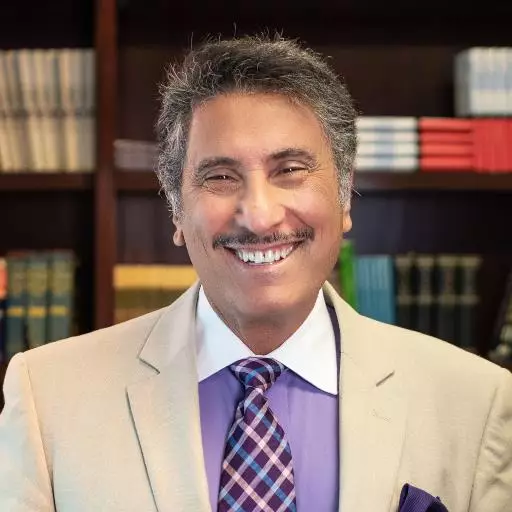
Civic Responsibilities for Christians


Don’t miss today’s Leading The Way with Dr. Michael Youssef! He’s bringing a pointed word about responsibilities Christians must not ignore!
Announcer: Just ahead, Dr. Michael Youssef with a timely and critical episode of Leading the Way Audio.
Dr. Michael Youssef: Hello, my dear friends and special welcome to a special program of Leading the Way. During the next few moments together, we're going to be exploring our responsibility as Christian believers in the society in which we live. We have a unique calling and we need to be faithful with that calling. As believers, we are commanded to be both salt and light. Now, that means you don't sit on your blessed assurance and do nothing. This is the most important time in the history of our world, literally. And I recently spoke to a gathering in Washington D.C. And I literally opened my heart and shared with them my own experience and my own love for this country and why growing up deprived of liberty to choose my government, to be able to do that here is a unique privilege in a special responsibility.
So, I wanted to please listen carefully and then I come back and talk to you later. And I want to speak to you as a legal immigrant to this great country. I did not come here to change this great experiment, the greatest experiments of all humankind. I did not immigrate here to this great country to bring some foreign ideology, but I rather came here to bless and to buttress the great republic as it was envisaged by the founding fathers. Here's the good news. Here's the good news. I know I speak for untold numbers of the silent majority of legal immigrants when I say that we love the America as it was envisaged by the founding fathers.
That we love the America and we want the America whose foundation is the Bible. That we love the America that feared God. That we love the America of which George Washington said, it is impossible to govern without God and the Bible. I speak for millions of legal immigrants in this country. When I say that we love the America of which Lincoln said, the only assurance of our nation's safety is to lay foundation in morality and Christianity. We want the America of which the Supreme Court of 1844 said, the Bible and especially the New Testament should be read and taught as divine revelation in the schools.
Otherwise, they said, where can the purest principle of morality can be learned so clearly or so perfectly as from the New Testament? Yes, we want that America of which the 1892 Supreme Court said, morality of the country is deeply grafted upon Christianity and not upon the doctrine and worship of other religions. Yes, I speak for millions when I tell you and I want to encourage you to know that's a fact. I speak for millions when I say that we want the America of which the 1811 New York Supreme Court said, whatever strikes at the root of Christianity tends to manifestly to the solution of several governments.
And then it continues because it tends to corrupt the morals of the peoples and destroy good order. Yes, we want that America that reflects the views of the vast majority, not a tiny minority. We want the America of which Webster said, the principles of all genuine liberty and of wise laws and administrations are to be drawn from the Bible and must be sustained by its authority. And then he continues. The man therefore who weakens or destroys the divine authority of that book may be accessory to all of the public disorder which society is doomed to suffer.
How prophetic is that? Now, those words are far more important today than ever. Because they are not heeded by many a courts across the land. Many courts are busily striking the Christian foundation stone of this great nation. Not only that, but some in the education bureaucracies are rewriting the great history of this great nation. Unruly mob are the facing and destroying historic landmarks. In many parts of the country now, we have a mob rule of an unholy alliance between the Marxists and the Islamists. And the Islamists are invading this country with vengeance. In that unholy alliance, they are busily trying to use democracy to destroy democracy.
They are using the freedom of speech to destroy our freedom of speech. They are using the freedom of religion to destroy our freedom of religion. As someone aptly said, if a foreign government has done to the nation's schools what we have done, we would have been considered it an act of war. The tragedy is this. We, the baby boomer generation, we, the baby boomer generation, got so busy making a living that we fail to teach the next generation what life and liberty is all about. We have sown the wind and now we are reaping the whirlwind.
And that is why all of this chipping away of our true history has now invaded even churches. Today, many a church are preaching a false gospel, pop psychology, and feel good messages. I've written the book an Unholy Alliance in 2026. And in it, I document how militant Islam is now deeply rooted in this unholy alliance with secular leftists. And both using the legacy media as their foot soldiers to destroy Western civilization. They are both bent on one thing, destroying the biblical foundation of America or whatever is left of it. Now, I only speak for myself.
And I can tell you this in this great arena that I for one will not be silenced. I will not be gagged and I will not stop calling evil evil. And you shouldn't either. It is my conviction that either we return to the word of God or face annihilation. Oh, my friends, I came here to tell you until faithful people rise up and say enough is enough. Until faithful people stop sleeping in the pews, until God's people get out of the salt shakers into the marketplace, until faithful people stop accepting the status quo, until faithful people give up their passivity and fear of rejection and wanting to be accepted by the world's system, we are going to go from bad to worse.
This is an important time and you play a very important role. The depths of my love for this country, for this great nation and its biblical foundation stems from the fact that I lived under the tyranny, the regime of socialism and Islamism. And I lived under a system that now being romanticized by some politicians, even those who are on our side. Now, when I grew up in the '50s, I saw with these eyes the damage that an unholy alliance between Islamists and Socialists can do to a country. They told us they're going to be free education, free medicine, free everything until one day we woke up in a nightmare, an utter devastation of a previously wealthy country.
Make no mistake about it. The reason that this great nation has become the greatest nation on the face of the earth was not because the founders took free stuff from the government, but rather they signed the covenant with each other pledging their fortunes, their lives, and for the cause of freedom. And most of them have suffered severely to give us the freedom that we now have. And since then, millions of other men and women who have given their lives to keep this nation free, and we must not let them down. They did not give up their lives so that our children and grandchildren can get free stuff, but to be free.
I can tell you that all of my education that I have reached to the highest level in the accomplishment that the education that I received in this country, I never once applied nor received financial help. I worked sometimes two or three jobs and paid for my own education just out of gratitude of being in this country. Now, I can tell you I can tell you not prophetically, but just as one man's opinion that if we fail this year, we may never be able to recover again. But we must affirm what Andrew Jackson affirmed many years ago when he said that books are referring to the Bible is the rock upon which this republic is founded.
Only when we capture the vision of Patrick Henry, when he said that the Bible is worth more than all of the other books that ever been written. And so I want to leave you with a encouraging, hopeful historical evidence, historical information. Information that gives us hope as we work and pray. We can do both. Sometimes we use prayers an excuse for not working or we work an excuse for not praying. Nehemiah said, you have the sword in one hand and the trowel on the other. We work and we pray. We watch and we pray. There were past times in our nation when the nation plunged headlong into departure from the truth and morality.
But when faithful people prayed and worked, God heard them from heaven and changed their dark trajectory. One example will suffice because of the limitation of time. Dr. J. Edwin Orr, whom Billy Graham described as a great historian, greatest authority on the history of revival. I have the privilege of sitting at his feet in 1977 and '78 in California. One of those situations that plunged this nation into darkness occurred right after the revolution. Church membership dwindled so much that denominations that normally don't get along with each other weren't thinking of joining together just to survive. Back then, the Chief Justice of the Supreme Court John Marshall wrote to James Madison, the father of the Constitution, and he said the following.
He said the Christian church has too far gone to ever be redeemed. Thomas Paine, one of the intellectual leaders of the revolution, said, Christianity will be forgotten in 30 years time. Then, as now, colleges and universities became the breeding ground for atheists and agnostics and enemies of Christianity. Or continue to say that a poll was taken at Harvard University student body. They found that not one single Christian among the student body. There was so much that I can tell you about that period of time, but you can go and Google J. Edwin Orr and read all about it in his amazing books.
But morality or lack thereof had dominated the nation at the time. My time is limited, so I'm not going to go into it. Suffice it to say this and I leave you with it. In 1994, when America's moral state was at the lowest ebb, a pastor by the name of Isaac Backus sent a letter to pastors of all denominations in New England. He urged them to set up a network of prayer meetings on the first Monday of each month. These prayer meetings were called the Concerts of Prayer. Believers were praying endlessly, crying to God for an awakening.
Backus himself was influenced by the great awakening that George Whitefield brought in the 13 colonies in the 1730s and the 1740s. That prayer movement brought about great awakening which led by Jonathan Edwards. As a result, the nation was bathed in peace and joy and prosperity for decades to come. Oh, my friends, change will happen when we ourselves come clean with God, repent of our sins and return to Him, and then go out to the highways and the byways and enlist others. God bless you.
Announcer: Thank you for joining Dr. Michael Youssef for Leading the Way. Reach out to Dr. Youssef and his team at ltw.org or phone us 866-626-4356.
Dr. Michael Youssef: As you have just heard, I spoke about ideologies that are working to dismantle faith, family, and freedom from within our great country. Socialism is one of those ideologies. There is a reason why socialism is dangerous. You probably grew up knowing that socialism doesn't work. It hallows out economies. It silences dissent. It seizes control and most importantly seeks to replace God with government. This ideology is now moving to the center stage. We are watching it happening in real time. But it is not new to our world. Here is such an example of a dear friend of this ministry whom God uses Leading the Way to bring to himself and a wonderful testimony that you will be blessed as you listen.
Guest (Female): I was born into a world in early 1950s existence that was uniquely different. A world of privilege, but also secrecy where everything everything about fellow man was exposed. They were watching and they were listening. It had all been designed for the common good of man, but the benefits were shared by few. This so-called new class seized power not by excellence in education or ethical integrity, but by political scheming and the complex machinations of organizing and running a society based on exploitation and deception. My family was the beneficiary of this society and its empty promises. My father was one of the architects of socialism and as such, we were launched into the inner circle of its feared, revered leader Marshall Tito.
This was Yugoslavia in the 1950s. Communism had reared its ugly head. I was born in Washington D.C., but when I was 4 months old, my family returned to Yugoslavia where my father was Minister Plenipotentiary of Foreign Affairs under Tito, Marshall Tito. An icon of his time and for generations to come, he was masterful in his ability to manipulate and control. Like all great despots, he had his way with people. I didn't know it at the time, but I was living under his iron-fisted rule. It is possible to live life even comfortably and completely misread its underlying realities.
One of the aspects of communism is that there is no religion. The state is your religion. So, I was raised with absolutely no no religious foundation. It it's like having something missing all the time, but you're not aware of it. And you simply go along through life and you're simply not aware of it. I had a deep spiritual need which I always always felt. But I went through 35 years without ever addressing it. When my father defected to America and brought his family to freedom, I learned for the first time what my parents had endured.
Little did I know that our new freedom was something people simply took for granted in America. They considered it their unalienable right to be born free. But real freedom would not come for me until 30 years later when I came to know Christ. I can see now how the Lord moved in my life, how each thing led to another. I'm a jogger. I would tune in to Michael Youssef. It happened to coincide with my jogging time. There was something about Michael where he really leads you into something through elliptical circles, honing in honing in on the point so that you really understand it in a very personal way.
It began to apply what he was saying to my life that I understood now who Christ was. When I think about what Michael and Leading the Way has brought to my life and I imagined how he's being broadcast all around the world now and how many people have the opportunity to have the gospel brought to them. I just think about how how much I love the program uh that seems to relate to something going on in my life. As I look back on my life, I know unequivocally that God has guided and protected me every step of the way.
It came to me through Michael Youssef. His presentation of the true gospel was what enabled me to make the personal leap of faith that has brought me to Christ. My eternal home is secure. And for the rest of my days on this earth, I will walk in freedom.
Dr. Michael Youssef: I know those realities only too well. I was born under a socialist regime. That dictatorship controlled every aspect of our lives. I remember when my father's small company was taken over by the government. I remember fearing which of my friends might be a government informant. I couldn't wait to escape and find freedom in the West. And so, you know my heart. We live in dangerous times. For example, one of our precious Leading the Way partners in England who was part of the parliament for many years, very influential, a member of parliament, who joined me at Leading the Way event in Windsor Castle.
She shared some powerful thoughts about our responsibility, no matter the cost.
Anne: I've always taken as my leitmotif uh Saint Paul's a famous exhortation. We believe and therefore speak as seems to me quite obvious. You know, you think something, so you say it. What's the point of thinking it if you don't say it? Just get on with it and speak and not be too afraid of the consequences. Dr. Youssef is absolutely right. I mean, if the early Christians had given up, where would we be now? You know, Christianity would not have spread throughout the globe. So, I don't understand people who think that religion is a private matter.
I mean, Christ didn't think it a private matter and Saint Paul doesn't think it a private matter. I grew up in a country which was completely free in terms of speech, but now you've almost got to take the words out and look at them before you put them back in your mouth and then utter them. I think already there's massive societal pressure against preaching from the Bible. I mean, the police will arrest street preachers. If you're an ordinary employee and you say something which is going to offend the rest of the workforce, your job or your record are going to be in jeopardy.
And the number of times that somebody will express an opinion to me and then look around and say, oh, but you can't say that these days. I say, yes, you can. Yes, you can. You know, everybody wanted Churchill to shut up. They didn't want another war. They were war-weary. It had only been 20 years since the last war. Millions died in the First World War. And he kept going and he kept going and it didn't matter about his career. He just kept going because he believed we had to go to war and that we mustn't peace.
And he was proven comprehensively right, but at the time, of course, you know, he wasn't necessarily perceived as right. It's what you're living for, worth Christ dying for. We have become as Christians we're far too complacent. We're also far too nervous. We don't want to offend people. Providing you do it with consideration, your message is vital. And if you don't send that message abroad, Christianity will dwindle. You don't stick your light under a bushel and if you do believe, well, of course you want to share the good news. Of course you want to speak. And never ever give up.
Dr. Michael Youssef: I know this is going to come as a shock to some of you, but just this summer Anne was brutally murdered in her home. At the time of this recording, the entire matter is still being investigated, but current reporting indicates that it may have been politically motivated. Sitting beside her and my wife at the last Leading the Way event at Windsor Castle, the last thing she said to me, stay strong. It is our responsibility, my dearest friends, as Christian believers to be salt and light, to speak out, to educate, to vote, to influence. This is the moment for Christians to be awake, to be informed, and to be faithful.
God bless you as you strive to be salt and light because our children and our grandchildren are depending on us. Socialists and Islamists are winning positions of political power at every level. Radical ideologies, once enemies in our culture, are now marching together. What can be done? In my book, an Unholy Alliance, I explain what these radical forces are, what their strategy is, and also give you the 1,400-year backstory. Many people are entirely unaware of that is shaping today's headlines. Get my book, an Unholy Alliance. It will open your eyes and give you practical ways to make a difference for Christ.
Announcer: Order your copy and Unholy Alliance and learn about the current special offer from Dr. Youssef when you call 866-626-4356 or online ltw.org ltw.org Also, you can write to us. We're at Leading the Way, Post Office Box 20100 Atlanta, Georgia 30325. That's Post Office Box 20100 Atlanta, Georgia 30325. This program is furnished by Leading the Way with Dr. Michael Youssef, passionately proclaiming uncompromising truth around the world. Connect further with audio and video content at ltw.org or through your favorite social media platform, including YouTube, Facebook, X, previously called Twitter, Instagram, and more.
Featured Offer

Cut through end-times speculation and discover what Jesus actually said about the last days. With your gift of any amount, request Dr. Michael A. Youssef’s Is the End Near? Book and Study Guide Pack, including digital access to a 4-part video series on the signs of the end times, the rapture, the Great Tribulation, the Antichrist, and Christ’s return. Be equipped to discern the times, stand firm in Biblical Truth, and live with confidence as the days grow darker.
Past Episodes

Video from Dr. Michael Youssef
Featured Offer
Cut through end-times speculation and discover what Jesus actually said about the last days. With your gift of any amount, request Dr. Michael A. Youssef’s Is the End Near? Book and Study Guide Pack, including digital access to a 4-part video series on the signs of the end times, the rapture, the Great Tribulation, the Antichrist, and Christ’s return. Be equipped to discern the times, stand firm in Biblical Truth, and live with confidence as the days grow darker.
About Leading The Way
Along with partners committed to changing the world, Dr. Michael Youssef is leading the way for people living in spiritual darkness to discover the light of Christ. By passionately proclaiming uncompromising Truth through every available form of media, this international team of experts is uniquely providing hope that is revolutionizing lives around the world.
What began as a small local radio ministry in 1988 has grown into an international ministry reaching millions for Christ, including a vast audience in the Muslim world seeking Truth in closed countries. Dr. Youssef's Biblically-based programs are broadcast in more than 28 languages to audiences across six continents. His books, MY Journal magazine, and daily e-devotionals continue to minister to a global audience. Leading The Way utilizes cutting-edge technology to advance the Gospel. Its solar-powered Navigators are reaching into remote villages, and the ministry's KINGDOM SAT TV channel—launched by Dr. Youssef in 2009—is reaching into the Middle East with programming in English, Arabic, and French. Field Teams follow up with viewers, including those in restricted areas, to lead the lost to Christ, disciple new believers, and support the underground Church.
Dr. Youssef and the Leading The Way team are committed to proclaiming the Good News of Jesus with the lost and equipping believers to grow in Christ. Learn how you can partner with this unique ministry today.
About Dr. Michael Youssef
Michael A. Youssef, Ph.D., is the Founder and President of Leading The Way with Dr. Michael Youssef, a worldwide ministry that leads the way for people living in spiritual darkness to discover the light of Christ through the creative use of media and on-the-ground teams. His Biblically-based teaching programs are broadcast more than 18,000 times per week in multiple languages around the world. He is also the Founding Rector of Church of the Apostles in Atlanta, Georgia, and founder of the AWAKE America prayer movement.
Dr. Youssef was born in Egypt and lived in Lebanon and Australia before coming to the United States. In 1984, he fulfilled a childhood dream of becoming an American citizen. Dr. Youssef holds theological degrees from Moore College and Fuller Theological Seminary and a doctorate in cultural anthropology from Emory University. He has authored more than 50 books, including popular titles Saving Christianity?, Life-Changing Prayers, Is the End Near?, How to Read the Bible, Heaven Awaits, and God’s Final Call. He and his wife reside in Atlanta and have four grown children and 15 grandchildren.
Contact Leading The Way with Dr. Michael Youssef
webmail@LTW.org
http://www.ltw.org
Leading The Way
P.O. Box 20100
(404) 841-0100
Toll-free line
(800) 337-5323