
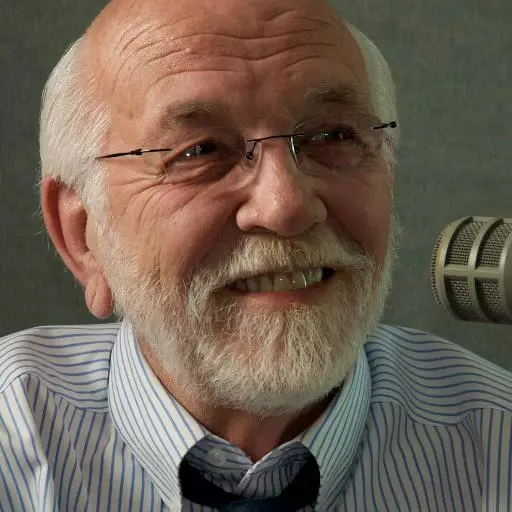
“You know, faith never saved anyone. Do you believe that?”


Matt Heard: Faith never saved anyone. Believe that? Let’s talk about it on Key Life.
Guest (Male): This is Key Life. We’re here to let you know that because of what Jesus has done, God will never be angry at you again. Matt Heard is a speaker, teacher, writer, pastor, coach, and the founder and principal of a ministry called Thrive, and he’s been teaching this all this week.
Matt Heard: Thank you, Matthew. We are in the midst of a journey looking at this whole notion of believing. We’re thinking about believing. Contrary to what a lot of people do, we’re putting those two words in the same sentence: thinking and believing. Believing the gospel is not a blind leap; it’s something that involves substance. We started yesterday just introducing these three elements of faith that make a difference, and now let’s go into a little bit more detail with them.
The three elements are appraisal, agreement, and acceptance. They're based on the ancient formula that the Reformers talked about of *notitia*, *assensus*, and *fiducia*. This first ingredient, appraisal, where we’re taking the *notitia* and looking at the credibility of the truth—bottom line, we’re talking about the object of our faith. It is way more important what you’re believing in than how much you’re believing in it.
A lot of people say that the amount of your faith is important, and that is true, but that’s not the most important thing. The most important thing is what you’re putting your faith in. It’s better to have a little faith in a strong chair than a lot of faith in a weak chair because your faith isn't what's going to enable you to put your body at rest. That’s why I said a few moments ago: faith never saved anyone. No, it’s Jesus that saves us.
Jesus gives us life. Faith is not just another word for positive mental attitude. It’s where I am basing my behavior on some truth—the truth of who Jesus is and what he came to teach, the truth of the credibility of the Scriptures, the credibility of the resurrection. This whole notion of applying our thought to belief is something that we’ve drifted away from, and it’s become downright dangerous.
Years ago, Allan Bloom wrote a book called *The Closing of the American Mind*, and we’ve seen that filter into the church. We’ve adopted, as Susan Jacoby says, the age of American unreason. She says it is difficult to suppress the fear that the scales of American history have shifted heavily against the vibrant and varied intellectual life so essential to functional democracy. During the past four decades, America's endemic anti-intellectual tendencies have been grievously exacerbated by a new species of semiconsciousness.
It is a semiconscious anti-rationalism feeding on and fed by an ignorant popular culture of video images and unremitting noise that leaves no room for contemplation or logic. That was a mouthful of words, but I hope you got that. That was written in 2008, before the social media addictions that we have now. The way it’s crept into the church is summarized by a man named Chad Walsh. He wrote back in the 1950s in an intriguing book called *Early Christians of the 21st Century*.
Millions of Christians live in a sentimental haze of vague piety, with soft organ music trembling in the lovely light from stained glass windows. Their religion is a pleasant thing of emotional quiver divorced from the intellect, divorced from the will, and demanding little except lip service to a few harmless platitudes. So, here’s my exhortation to you. Remember, we’re talking about John 20:31: believing. That kind of believing where he says, "pray that you would believe that Jesus is the Messiah, the Son of God," where we trust him for our salvation.
But he says also that by believing on a daily basis, you may have life, *zoe*, in his name. It’s us understanding that believing is connected to something that is substantive. I told you about just before that verse—John 20:26 through 29—where it says a week later, after the crucifixion, Jesus has risen, Thomas has heard about it, but he’s not met him. A week later, his disciples were in the house again, and Thomas was with them.
Though the doors were locked, Jesus came and stood among them and said, "Peace be with you. Shalom." Then he said to Thomas, "Thomas, come over here." I read this to you earlier: "Put your finger here; see my hands. Reach out your hand and put it into my side. Stop doubting and believe." Thomas said to him, "My Lord and my God." Jesus didn't condemn him for hesitating. He said, "Go ahead, do the appraisal that you need to do to become confident in who I am."
Then Jesus told him, "Because you’ve seen me, you’ve believed. Blessed are those who haven't seen, who are not here in time, space, and history, but also believe." But he’s not saying blessed are those who don’t do the appraisal. We just do it differently than with Jesus in person. We’re looking at the evidence, evaluating the evidence of the Scripture and, especially, the evidence of the resurrection. That’s where I go on a daily basis. Is Jesus risen or not?
That comes down to basically three elements: Is the tomb empty? Was Jesus visible? And were the followers transformed? That’s a yes or no. Historically and philosophically, there’s a credibility to each of those statements. Some people try to explain away the empty tomb by saying Jesus wasn't actually dead, or the disciples went to the wrong tomb, or the disciples stole the body, or religious and political leaders moved the body, or the grave was robbed.
All of those are possible explanations, but none of them hold water. What holds water is that Jesus really did rise from the dead. After that, the historical record shows that he was visible to the women witnesses who were the first. They would never, if they were fabricating this, have made women in that culture the primary witnesses validating the resurrection. They did not carry that weight in court, but they weren't concerned about trying to fabricate something.
This is what happened in the content of those testimonies. The reactions were so credible and real where people were incredulous that this had happened, the variety of appearances that Jesus went through, the way he appeared to unbelievers, the numbers of people—over 500 people at a time—the specific timeframe, the balanced proclamation. It all funnels back to the reality that Jesus really was seen after his resurrection. Then, to me, one of the biggest is how the followers of Jesus were transformed.
They were cowards that became emboldened; they were skeptics that became converted. The religious structures changed. They died for their belief. People might die for something that is a lie, but not for something that they know is a lie. The church was birthed. So all of that is something that I will do real quickly on a daily basis: Is Jesus risen or not? There’s historical credibility and a philosophical cogency to this whole notion of the gospel.
The appraisal that I do is going back to the illustration of sitting in a chair. I’m looking at that chair. Does it look strong enough to hold me? Yes. Okay, that’s ingredient number one. I’ve got to move to ingredient number two then: Do I agree that it’s relevant to my need right now? Or, if we’re looking at putting faith in a plane: Do I see that plane as being credible, mechanically put together? Yes, that’s the *notitia*, that’s the appraisal.
Then the second ingredient is: Am I agreeing that it’s relevant to my need? Do I need to get to where this plane is going? C.S. Lewis in *Mere Christianity* said Christianity is, in the long run, a thing of unspeakable comfort, but it does not begin in comfort; it begins in the dismay I have been describing—the sin, the need for forgiveness. This whole notion of embracing the relevance, assenting to the relevance of who Jesus is, starts with me humbling myself and acknowledging my own sin.
We reason together as Isaiah tells us, and then begin to look to say, "Is this gospel, in the midst of my sinful state, relevant to what I’m grappling with and what I really need right now in my journey?" Is it relevant to my thirst for significance and intimacy, my hunger for love, my need for identity and dignity, a sense of security? Does it fulfill my yearning to be a part of a big story? Is this whole notion of Christianity something that taps not just my religious needs, but taps my need as a human being?
I begin to grapple with the beauty of what Jesus came to do. When John says, "I’m praying that you would believe in such a way that you would experience life in his name," that believing has everything to do with knowing the credibility of the gospel—the appraising of the credibility—but also the agreement with the gospel's relevance to me. We’ll pick up on that a little bit tomorrow, but for the rest of today, I’d like to encourage you to spend some time thinking through: What is the "so what" of the gospel for me?
Do I not only understand the credibility of the gospel, but do I understand the relevance of the gospel to what I need today? When we start grappling with those, we enter into a realm in which we can thrive as men and women who are full of faith.
Guest (Male): Thanks, Matt. If you’re just joining us, our good friend Matt Heard is leading us through a special series called *Thinking About Believing*. We have one more amazing day of teaching to go, and I hope you will join us again tomorrow for that. By the way, have you been to keylife.org lately? We have some exciting new features that I think you want to know about. First, there’s the Key Life Podcast Network at keylife.org/podcastnetwork.
More voices, more grace, more love. We now have a brand new podcast from Drew Hensley. It’s called *Still Becoming*, that I know is going to become a new favorite listen. We also have some new Key Life merchandise available: t-shirts, hoodies, even temporary tattoos. No, I’m just kidding on that last one. I had to make sure you were still listening. Go to keylife.org/merch to check out all of that.
Finally, our latest print magazine is filled with powerful articles, plus exciting offers and news. Get that by going to keylife.org/freemagazine. So, how do we do all this cool stuff? The answer is you. We count on the generous support of listeners like you to make all of this possible. If you’d like to donate, then call us at 1-800-KEY-LIFE. That’s 1-800-539-5433.
If you’d like to send your donation by mail, go to keylife.org/contact to find our mailing addresses. And, of course, you can just email Steve@keylife.org. You can charge a gift on your credit card or include a gift in your envelope, or simply text "Key Life" to 28950. Key Life is a member of ECFA in the states and CCCC in Canada, and Key Life is a listener-supported production of Key Life Network.
Featured Offer

A recently-reprinted booklet taken from Steve’s classic book on radical grace, A Scandalous Freedom. Three freedom-stifling tendencies: The freedom we surrender…and the heritage that sets us free. The perfection we desire…and the forgiveness that sets us free. The Gospel we forget…and the joy that sets us free. We are free—no ifs, ands or buts. Jesus said we would know the truth and would be free indeed. Let’s see if he was right.
Past Episodes
- A Fresh Word from God (Steve Brown)
- Acts
- Acts (Steve Brown)
- Acts Overview (Steve Brown/Justin Holcomb)
- Adam and Noah (Steve Brown/Jerry Parries)
- All You Wanted to Know About the Bible but Didn't Ask (Steve Brown/Pete Alwinson)
- Amazed by Grace (Steve Brown/Matt Heard)
- Among Friends
- Anger and Forgiveness (Justin Holcomb)
- Babette and the Lavishness of Grace (Steve Brown/Matt Heard)
- Big Message, Little Place
- Big Message, Little Place (Steve Brown)
- Calibrate: Sitting at the Feet of Jesus (Matt Heard)
- Christmas Day (Steve Brown)
- Christmas Eve: A Grace Gift Exchange (Steve Brown/Matt Heard)
- Christmas Gifts: The Four Mondays of Advent - Part 1 (Steve Brown/Matt Heard)
- Christmas Gifts: The Four Mondays of Advent - Part 2 (Steve Brown/Matt Heard)
- Christmas Gifts: The Four Mondays of Advent - Part 3 (Steve Brown/Matt Heard)
- Christmas Gifts: The Four Mondays of Advent - Part 4 (Steve Brown/Matt Heard)
- Christmas Special (Steve Brown/Pete Alwinson)
- Comfortable Words (Justin Holcomb)
- Coming Alive (Matt Heard)
- Embracing the Story of the Gospel (Matt Heard)
- Engaging Your Story (Matt Heard)
- Epiphany: Light for the Nations (Steve Brown/Justin Holcomb)
- Experiencing Awesome (Pete Alwinson)
- Galatians
- Getting Saved (Steve Brown)
- God's Grace is Enough (Steve Brown/Jerry Parries)
- Grace Through the Centuries (Steve Brown/Justin Holcomb)
- Gratuitous Grace (Justin Holcomb)
- Harmony in the Band (Steve Brown)
- Heart Matters (Matt Heard)
- How to Handle Hallway Experiences (Steve Brown/Jerry Parries)
- How to Trust God in Difficult Times (Steve Brown/Jerry Parries)
- Humility and How We Achieved It (Steve Brown/Pete Alwinson)
- Is Pentecost Reproducible? (Steve Brown)
- It's about Forgiveness (Steve Brown)
- It's All About Grace (Jerry Parries)
- It's All About Worship (Steve Brown/Pete Alwinson)
- Jesus Saves Sinners for God's Glory (Steve Brown/Pete Alwinson/Justin Holcomb)
- Journey to the Cross (Steve Brown/Matt Heard)
- Joy is Plural (Matt Heard)
- Laughter and Lament (Steve Brown)
- Lent: God's Kindness Leads to Repentance (Steve Brown/Justin Holcomb)
- Lies from the Enemy (Steve Brown/Jerry Parries)
- Living Your Best Life (Jerry Parries)
- Love (Pete Alwinson)
- Loving Like Jesus (Matt Heard)
- Peter: The Patron Saint of Failures (Justin Holcomb)
- Philippians (Steve Brown)
- Psalms of Lament (Justin Holcomb)
- Real Power (Pete Alwinson)
- Resurrection: It Really Happened and It Changed Everything! (Steve Brown/Pete Alwinson)
- Thankful for the Gospel (Steve Brown/Matt Heard)
- Thanksgiving in Troubled Times (Steve Brown/Pete Alwinson)
- The Covenants: Abraham (Steve Brown/Jerry Parries)
- The Covenants: Adam and Noah (Steve Brown/Jerry Parries)
- The First Episode of Key Life (1986) (Steve Brown)
- The Gift of Forgiveness (Steve Brown/Jerry Parries)
- The Gifts Christmas Brings (Steve Brown/Jerry Parries)
- The Good Things God Has Done For You (Jerry Parries)
- The Graced Church (Pete Alwinson)
- The Grammar of Gratitude (Matt Heard)
- The Kingdom Manifesto
- The Kingdom Manifesto (Pete Alwinson)
- The Kingdom Manifesto: The Poor in Spirit, Those Who Mourn, & The Meek (Pete Alwinson)
- The Kingdom of God (Steve Brown/Pete Alwinson)
- The Last Week (Steve Brown/Justin Holcomb)
- The Liberating Power of Truth (Steve Brown)
- The Life We Long For (Matt Heard)
- The Life You've Always Wanted (Steve Brown/Matt Heard)
- The Power of Confession (Steve Brown/Jerry Parries)
- The Power of Pentecost (Steve Brown/Jerry Parries)
- The Purpose of Christmas (Steve Brown/Jerry Parries)
- The Spirit Who Gives Life (Steve Brown/Justin Holcomb)
- The Voice of Jesus (Justin Holcomb)
- The Weird Ways of God (Steve Brown)
- Thinking About Believing (Matt Heard)

Featured Offer
A recently-reprinted booklet taken from Steve’s classic book on radical grace, A Scandalous Freedom. Three freedom-stifling tendencies: The freedom we surrender…and the heritage that sets us free. The perfection we desire…and the forgiveness that sets us free. The Gospel we forget…and the joy that sets us free. We are free—no ifs, ands or buts. Jesus said we would know the truth and would be free indeed. Let’s see if he was right.
About Key Life Network
Because life is hard for everyone, grace is for all of us. And grace means that because of what Jesus has done, when you run to him, God’s not mad at you.
All of the radio shows, sermons, books, and videos we produce work together toward one mission: to get you and those you love Home with radical freedom, infectious joy and surprising faithfulness to Christ as your crowning achievement.
Learn more: http://www.keylife.org
About Steve Brown
He’s not your mother and he’s not your guru. He’s Steve Brown - a speaker, author, former pastor and seminary professor, and founder of Key Life Network, Inc.
At Key Life, Steve serves as Bible teacher on the radio program Key Life and the host of the talk show Steve Brown, Etc. Prior to Key Life, Steve served as a pastor for more than thirty years and continues speaking extensively.
Steve has also authored numerous books, including How to Talk So People Will Listen, Three Free Sins, Hidden Agendas and his latest release, Talk the Walk: How to Be Right Without Being Insufferable (now available as an audiobook).
Contact Key Life Network with Steve Brown
steve@keylife.org
http://www.keylife.org/
P.O. Box 5000
Maitland, FL 32794
In Canada, send requests to:
Key Life Canada
P.O. Box 28060
Waterloo, Ontario N2L 6J8
1-800-KEY-LIFE