
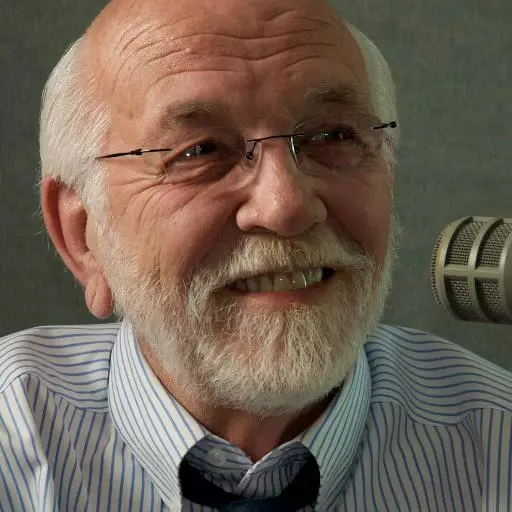
“Some say it doesn’t matter what you believe as long as you believe it. Is that true?”


Guest (Male): Some say it doesn't matter what you believe as long as you believe it. Is that true?
Steve Brown: Let's talk about it on Key Life.
Guest (Male): This is Key Life. We're here to let you know that because of what Jesus has done, God will never be angry at you again. Matt Heard is a speaker, teacher, writer, pastor, coach, and the main guy behind thrivefullyalive.com.
Steve Brown: Thank you, Matthew.
And that notion of belief and something being something that is not connected with thinking is what we're tackling this week with the topic, how thinking and believing go together. So let's do some thinking about believing, even though people think those two words don't belong in the same sentence.
And one of the reasons they think that is, as Richard Foster one time said, beginning of his book, Celebration of Discipline, "Superficiality is the curse of our age."
"The desperate need today is not for a greater number of intelligent people or gifted people, but for deep people." We're not a nation or a culture of thinkers these days.
And that bleeds into our Christianity and our walk with Christ. And then all of a sudden, we no longer have a keel, which I talked about yesterday. Something under the surface, or you can say a root system.
Ever looked at a giant old oak tree? It's massive and majestic, but underneath are roots that go deep. And the psalmist in Psalm 1:3 says that person is like a tree planted by streams of water, which yields its fruit in the season, its leaf doesn't wither, whatever they do prospers. What he's talking about is being rooted in the truth of God's word.
And so we're taking Paul's exhortation to heart this week in Romans 12:2, don't conform any longer to the pattern of this world, but be transformed by the renewing of your mind. And we're applying that to the whole notion of faith, and trust, and belief.
If we're going to believe in such a way as John 20:31 says, that we can know life in his name, we got to unpack that believing is something that's quite significant to understand, and we better pay attention. And it will involve my thoughtfulness, my depth, my substance. But so often people separate thinking and believing.
And it's not just out in the culture, it's within the church. There are several reasons. I kind of jotted down one, the whole history of revivalism emphasizes immediate emotional appeal, is something that where people say, "You don't need to think about it, just just trust." That whole blind leap type of scenario.
And it's something that has evolved over the course of church history in America. I was reading one statistic that back in the early Puritan days, the literacy rate for men in early Massachusetts, Connecticut was between 89 and 95%.
People were more substantive then, but then the revivalism started, and the awakening preachers pitching the appeal to emotion other than reason. And that that has stuck around for a while. JP Morland wrote that the overall effect of those was to overemphasize immediate personal conversion to Christ instead of a studied period of reflection and conviction.
And another guy, James Turner, years ago, wrote a book, he's a professor at, was a professor at the University of Michigan, wrote a book, "Without God, Without Creed, The Origins of Unbelief in America."
And he said, "How did the practically universal assumption of God disappear?" He says, "Put briefly, unbelief was not something that happened to religion. On the contrary, religion caused unbelief in the history of American religion."
He says, "And trying to adapt their religious beliefs to socioeconomic change, to new moral challenges, to novel problems of knowledge, to the tightening standards of science, the defenders of God slowly strangled him."
Man, that's something that kind of ricochets around with me. Has has that whole anti-intellectualism, not thinking, addictions to amusing, not thinking amusement, impacted my relationship with Christ? A lot of people say, "I'm not sure we should be talking about this because aren't you supposed to have a childlike faith? This whole notion of putting thinking, believing, saying we need a mindful faith, a thoughtful belief."
Didn't Jesus say, "Nobody's going to receive the kingdom of God unless they do so like a little child?" And he said that Mark and in Matthew 18, he says, "I tell you the truth, unless you change and become like little children, you'll never enter the kingdom of heaven."
Isn't he talking about faith there? No, he's talking about pretentiousness, and pridefulness, and arrogance, and us knowing our place. CS Lewis in Mere Christianity said, "Christ never meant that we were to remain children in intelligence. He wants a child's heart, but a grown-up's head."
So, the whole notion of God's opposed to the intellectual stuff is contrary to what you see over and over in scripture.
Paul talks about in Acts 17, where he said he reasoned in the synagogue. This is up at the Areopagus, the Rocky Hill of Athens, Mars Hill. And just dialoguing, he said he reasoned in the synagogue with the Jews and the God-fearing Greeks as well as in the marketplace day by day with those who happened to be there.
And people say, "Well, I just don't want to be arrogant, you know, that knowledge puffs up, but love builds up." First Corinthians talks about that in 1 Corinthians 8. But yes, arrogance and thinking is something we all see when we get a little prideful at our thoughtfulness. But not thinking is not the solution.
So, we're going to put some thought to what belief looks like, and how thinking can invades that and becomes a part of that. So what I want you to do is realize that everyone exercises faith.
It's not just a something that's reserved for Christians. When somebody walks over to a light switch, they're exercising faith. When someone gets on a plane, they're exercising faith, because what's going on is you are taking an action trusting that something else is true.
And so when we follow Jesus on a daily basis, we are taking some actions according to his direction, trusting that what he has says is true in terms of his validity, but also in terms of the relevance of what he's telling us to do.
So, the rest of the week, I want you to have something in mind. I want you to sit in a chair and think through what's involved in sitting in that chair. You know, the reformers, when they were summarizing what does saving faith look like, they come up with three ingredients: Notitia, Assensus, and Fiducia.
Notitia is looking at the the content, the credibility of the truth, where you're you're walking and there's an appraisal that you're doing, saying, "Okay, is this worth my trust? Is it trustworthy? Is it something that I can sit in?" When I sit in a chair, subconsciously, I do that. When I get on a plane, subconsciously, I do that. I'm doing Notitia, I'm doing an appraisal. I'm saying, "Is this chair credible? Is this plane credible? Will it hold me up? Will the plane keep me in the air?" So that's the the the first aspect of this belief that can ultimately lead me to experiencing life in his name.
The second is Assensus. It's a Latin word that means, you know, to to agree, to assent to the relevance of of this truth. So when I I come to a chair and I see that chair, am I I'm first, I'm appraising, is it credible? Is it strong enough? When I see a plane, I'm appraising, is it going to mechanically, is it something that's put together enough? But I've got to deal with that second level of Assensus, agreement. I'm agreeing that it's relevant to my need. I'm agreeing, I'm getting, I'm agreeing that that plane is relevant to helping me get from point A to point B. I'm agreeing with a chair, saying, "Okay, yeah, I'm I'm tired or it's a social setting in which I need to sit down."
But biblically speaking, I still haven't exercised faith until the third ingredient kicks in, which is Fiducia. It's the actual submission to the truth. First, there's that credibility where I'm appraising the credibility of it.
Secondly, I'm agreeing with the relevance of this, but third, I'm accepting and submitting to the truth of it. I have not exercised faith in a plane just by saying that plane is is credible and mechanically put together. I'm I've not exercised faith saying that that same plane is going somewhere where I need it to go. I'm only exercising faith when I actually get on the plane.
I'm not exercising faith in a chair when I look at it and just even subconsciously say, "Okay, it's sturdy enough." I haven't fully exercised faith when I said, "Yeah, I need to sit down. I'm tired, or I need to sit down. I'm in a social setting that requires that." I haven't exercised faith in that chair until I actually sit down.
And so when John, and John 20:31, he says, "I pray that you'll believe that Jesus is the Messiah," he's referring to all three ingredients. And we're going to unpack these in the next couple of days. He's saying, "Listen, appraise whether the Gospel is true. May your heart agree with its relevance, and then accept Jesus." You've got to sit in that chair. We've we've got to trust in the Gospel.
And someone told me one time when I was a young believer that faith never saved anybody. What he was referring to is what a lot of people talk about is, "Hey, if it doesn't matter what you believe so long as you believe it." Not so true.
Faith in a correct object is what's going to be relevant. It does matter what I believe, because what I'm believing better be able to deliver what I'm believing in it and. And so as you're going through the rest of this week, I'm praying that you'll start engaging a bit with the credibility of this truth, of the Gospel.
And start evaluating a little bit. Am I digging deep enough into how trustworthy this whole Christianity thing is? And am I seeing its relevance? And am I actually sitting down, getting on the plane, and starting to believe? As a result of that, I hope you thrive today in faith.
Guest (Male): Thanks, Matt. This week we're talking about thinking and believing and how we need both. Tomorrow, Matt is going to introduce us to three elements that are central to that. Make sure you join us.
Well, as you know, Jesus said we would know the truth and we would be free indeed. As in, no kickers, no catches. But boy, how easily we forget that, right? That's why we love to send you a free booklet called "Radical Freedom, Surprising Faithfulness." It's an excerpt from Steve's classic book on Radical Grace called "A Scandalous Freedom." Get your free copy right now by calling us at 1-800 Key Life. That's 1-800-539-5433. You can also email Steve at keylife.org to ask for that booklet. To mail your request, go to keylife.org/contact to find our mailing addresses for the US and Canada. Again, just ask for your absolutely free copy of the booklet called "Radical Freedom, Surprising Faithfulness."
And finally, before you go, if you've been blessed by the work of Key Life, would you help share that blessing with others through your financial support? You can charge a gift on your credit card or include a gift in your envelope. And of course, you can now give safely and securely by text. Just text Key Life to 28950 and then follow the instructions. And do remember that no matter how you give, big or small, one time or ongoing, every gift matters and every gift really does help. Thanks. Key Life is a member of ECFA in the States and 4C in Canada, and Key Life is a listener-supported production of Key Life Network.
Featured Offer

A recently-reprinted booklet taken from Steve’s classic book on radical grace, A Scandalous Freedom. Three freedom-stifling tendencies: The freedom we surrender…and the heritage that sets us free. The perfection we desire…and the forgiveness that sets us free. The Gospel we forget…and the joy that sets us free. We are free—no ifs, ands or buts. Jesus said we would know the truth and would be free indeed. Let’s see if he was right.
Past Episodes
- A Fresh Word from God (Steve Brown)
- Acts
- Acts (Steve Brown)
- Acts Overview (Steve Brown/Justin Holcomb)
- Adam and Noah (Steve Brown/Jerry Parries)
- All You Wanted to Know About the Bible but Didn't Ask (Steve Brown/Pete Alwinson)
- Amazed by Grace (Steve Brown/Matt Heard)
- Among Friends
- Anger and Forgiveness (Justin Holcomb)
- Babette and the Lavishness of Grace (Steve Brown/Matt Heard)
- Big Message, Little Place
- Big Message, Little Place (Steve Brown)
- Calibrate: Sitting at the Feet of Jesus (Matt Heard)
- Christmas Day (Steve Brown)
- Christmas Eve: A Grace Gift Exchange (Steve Brown/Matt Heard)
- Christmas Gifts: The Four Mondays of Advent - Part 1 (Steve Brown/Matt Heard)
- Christmas Gifts: The Four Mondays of Advent - Part 2 (Steve Brown/Matt Heard)
- Christmas Gifts: The Four Mondays of Advent - Part 3 (Steve Brown/Matt Heard)
- Christmas Gifts: The Four Mondays of Advent - Part 4 (Steve Brown/Matt Heard)
- Christmas Special (Steve Brown/Pete Alwinson)
- Comfortable Words (Justin Holcomb)
- Coming Alive (Matt Heard)
- Embracing the Story of the Gospel (Matt Heard)
- Engaging Your Story (Matt Heard)
- Epiphany: Light for the Nations (Steve Brown/Justin Holcomb)
- Experiencing Awesome (Pete Alwinson)
- Galatians
- Getting Saved (Steve Brown)
- God's Grace is Enough (Steve Brown/Jerry Parries)
- Grace Through the Centuries (Steve Brown/Justin Holcomb)
- Gratuitous Grace (Justin Holcomb)
- Harmony in the Band (Steve Brown)
- Heart Matters (Matt Heard)
- How to Handle Hallway Experiences (Steve Brown/Jerry Parries)
- How to Trust God in Difficult Times (Steve Brown/Jerry Parries)
- Humility and How We Achieved It (Steve Brown/Pete Alwinson)
- Is Pentecost Reproducible? (Steve Brown)
- It's about Forgiveness (Steve Brown)
- It's All About Grace (Jerry Parries)
- It's All About Worship (Steve Brown/Pete Alwinson)
- Jesus Saves Sinners for God's Glory (Steve Brown/Pete Alwinson/Justin Holcomb)
- Journey to the Cross (Steve Brown/Matt Heard)
- Joy is Plural (Matt Heard)
- Laughter and Lament (Steve Brown)
- Lent: God's Kindness Leads to Repentance (Steve Brown/Justin Holcomb)
- Lies from the Enemy (Steve Brown/Jerry Parries)
- Living Your Best Life (Jerry Parries)
- Love (Pete Alwinson)
- Loving Like Jesus (Matt Heard)
- Peter: The Patron Saint of Failures (Justin Holcomb)
- Philippians (Steve Brown)
- Psalms of Lament (Justin Holcomb)
- Real Power (Pete Alwinson)
- Resurrection: It Really Happened and It Changed Everything! (Steve Brown/Pete Alwinson)
- Thankful for the Gospel (Steve Brown/Matt Heard)
- Thanksgiving in Troubled Times (Steve Brown/Pete Alwinson)
- The Covenants: Abraham (Steve Brown/Jerry Parries)
- The Covenants: Adam and Noah (Steve Brown/Jerry Parries)
- The First Episode of Key Life (1986) (Steve Brown)
- The Gift of Forgiveness (Steve Brown/Jerry Parries)
- The Gifts Christmas Brings (Steve Brown/Jerry Parries)
- The Good Things God Has Done For You (Jerry Parries)
- The Graced Church (Pete Alwinson)
- The Grammar of Gratitude (Matt Heard)
- The Kingdom Manifesto
- The Kingdom Manifesto (Pete Alwinson)
- The Kingdom Manifesto: The Poor in Spirit, Those Who Mourn, & The Meek (Pete Alwinson)
- The Kingdom of God (Steve Brown/Pete Alwinson)
- The Last Week (Steve Brown/Justin Holcomb)
- The Liberating Power of Truth (Steve Brown)
- The Life We Long For (Matt Heard)
- The Life You've Always Wanted (Steve Brown/Matt Heard)
- The Power of Confession (Steve Brown/Jerry Parries)
- The Power of Pentecost (Steve Brown/Jerry Parries)
- The Purpose of Christmas (Steve Brown/Jerry Parries)
- The Spirit Who Gives Life (Steve Brown/Justin Holcomb)
- The Voice of Jesus (Justin Holcomb)
- The Weird Ways of God (Steve Brown)
- Thinking About Believing (Matt Heard)

Featured Offer
A recently-reprinted booklet taken from Steve’s classic book on radical grace, A Scandalous Freedom. Three freedom-stifling tendencies: The freedom we surrender…and the heritage that sets us free. The perfection we desire…and the forgiveness that sets us free. The Gospel we forget…and the joy that sets us free. We are free—no ifs, ands or buts. Jesus said we would know the truth and would be free indeed. Let’s see if he was right.
About Key Life Network
Because life is hard for everyone, grace is for all of us. And grace means that because of what Jesus has done, when you run to him, God’s not mad at you.
All of the radio shows, sermons, books, and videos we produce work together toward one mission: to get you and those you love Home with radical freedom, infectious joy and surprising faithfulness to Christ as your crowning achievement.
Learn more: http://www.keylife.org
About Steve Brown
He’s not your mother and he’s not your guru. He’s Steve Brown - a speaker, author, former pastor and seminary professor, and founder of Key Life Network, Inc.
At Key Life, Steve serves as Bible teacher on the radio program Key Life and the host of the talk show Steve Brown, Etc. Prior to Key Life, Steve served as a pastor for more than thirty years and continues speaking extensively.
Steve has also authored numerous books, including How to Talk So People Will Listen, Three Free Sins, Hidden Agendas and his latest release, Talk the Walk: How to Be Right Without Being Insufferable (now available as an audiobook).
Contact Key Life Network with Steve Brown
steve@keylife.org
http://www.keylife.org/
P.O. Box 5000
Maitland, FL 32794
In Canada, send requests to:
Key Life Canada
P.O. Box 28060
Waterloo, Ontario N2L 6J8
1-800-KEY-LIFE