
Is Pentecost reproducible? Part 4


Matthew Porter: Welcome to Key Life. I'm Matthew Porter, executive producer for Key Life. All this week, we've been enjoying a sermon from Steve called "Is Pentecost Reproducible?" Yesterday, Steve touched on the importance of equality I had never thought about in a spiritual context: flexibility. Then he touched on the vital nature of prayer and fellowship.
If you're enjoying this series, you can thank the supporters of the Vault Project. Over the last several years, we've been busy digitizing hundreds of these timeless messages of grace, and now they're available at keylife.org/vault. That's V-A-U-L-T. We're adding new content every single month, including the entire Hashing It Out TV series that Steve hosted with Tony Campolo back in the mid-90s. More about the vault later, but for now, sit back and let's enjoy the conclusion of the sermon called "Is Pentecost Reproducible?" from 1974. Here's Steve.
Steve Brown: One time John Wesley—I'm talking about a lot of John Wesley tonight and Francis Asbury and all these guys, those of you who are Methodists. I'll talk about Calvin next time. One time John Wesley was asked why so many people came to hear him preach. He said, "I set myself on fire and people come to see me burn." God's spirit, the Holy Spirit, is fire. I pray to God that the stale winds of old Mother Church will catch fire again and singe paganism to ashes.
Think about that. I have about four minutes. If you have some questions, I'd be glad to entertain them. I haven't done this before because I'm usually about 10 minutes over instead of three or four minutes ahead. If you have some, that's okay. If you don't, that's good. Marge?
Guest (Female): (Inaudible question regarding praying in the Spirit.)
Steve Brown: Let me give an incomplete answer and then maybe a more complete one sometime when we spend a lot of time talking about the Holy Spirit and what it means to be filled with the Holy Spirit. I'm on shaky ground now because there are many people here tonight who are charismatic and many people here tonight who are not charismatic. There's going to be some kind of disagreement here. But I'm going to tell you honestly just what I feel. Don't think that it comes from Mount Sinai. It doesn't because I've only been wrong one time in my life, and that's when I thought I was wrong.
We do everything in the Holy Spirit when we do it by faith. We can be experience-oriented if we want to. In other words, we can depend on the gift of tongues, or we can depend on miracles, or we can depend on whatever, as long as it's experience and we can see it, feel it, and touch it. Now, what did Paul say in Corinthians? He said, "We walk by faith and not by sight." Not by experience, but by faith. Whatever we do, we must do by faith. That means sometimes not feeling it, not seeing the lightning fall on us, not necessarily seeing the manifestation of the Spirit.
If God tells you to do anything, and He did under a direct commandment in Jude, and we know that the Bible tells us that if we ask anything according to His will, He will do it. When He does not answer, it’s because we ask amiss. If we ask right, we ask according to the promises of scripture. In Romans, the Bible says that when we pray, the Holy Spirit intercedes for us to the Father in sighs too deep for words because our words are inadequate.
Marge, if you want to pray in the Spirit, say this: "Father, I don't understand about my prayers. I'm not so sure that I'm verbalizing properly. I'm not so sure that my prayers are what You would have me to pray. But I've got a translation or a translator going between me and You. So I lift this up now in the Spirit of God, claiming Your promises." Now, there are charismatics here who are saying, "Wait a second. Praying in the Spirit means praying in tongues." Well, that can be true too.
I'm not saying it isn't. But I do think, and I've taught on this before, that tongues isn't the sign gift. I believe that some people speak in tongues and some people don't speak in tongues. Not everybody has the gift to pray in tongues. So we have to do in faith what we may not have the gift to do. Praying in tongues can be praying in the Spirit too. Cliff?
Guest (Male): Can you give the reference? Romans 8:26?
Steve Brown: Likewise the Spirit helps us in our weaknesses, for we do not know how to pray as we ought, but the Spirit Himself intercedes for us in sighs too deep for words. I'm glad. Have you ever been so depressed you didn't want to pray? I've been that way lots. When you pray when you only feel like it, Satan will use that. I appreciated what Guy said when the Lord gave him that song. He was feeling down. He felt like he just couldn't do anything, and the Lord gave it to him.
Pray when you don't feel like it, and God will honor it in a mighty way because you're praying out of obedience at that time. Remember, it isn't so much your words, but your heart because the Spirit is standing in between. Harper?
Guest (Male): I've heard that Pentecost was really the birth of the Christian church.
Steve Brown: In a sense, it was. In a sense, that was when the gasoline was poured into the engine for the church. But as Presbyterians and those of us who are reformed theologically—and the rest of you don't even care. I don't know if anybody really cares. But we consider ourselves, according to Ephesians 2, a part of something that began with creation and then through Abraham. We're heirs also to the promises and the church, in a very real sense, is something that doesn't just start at Pentecost but goes way, way back and that Abraham is also our brother.
When Paul says that the dividing wall of hostility in Ephesians 2 was broken down, Paul was saying that we were brought into a stream that was already moving. But there is a sense in which something very new, very real, and very different happened then. That was when the New Testament began. God was doing a new thing most certainly there. If the church means ecclesia—the Greek word meaning "called out"—maybe that's where it began. But we consider the church with its roots in something that goes back further. Others? Diana?
Guest (Female): In the Old Testament, God made himself findable, and in the New Testament, we see Jesus.
Steve Brown: The difference between the Testament—Testament means covenant, covenant means agreement. The old agreement was one that was drawn up by God with Abraham in Genesis 12 and a number of other places. Exodus 20, when you read the commandments and then the laws that follow, people who were under the law who found out they couldn't abide by the law and a sacrificial system was set up. The Old Testament was one where the law came to teach, and men were living by the law. If you talk to a Jew who's a practicing Jew, tears will come to his eyes when he gets talking about Holy Torah. That's as it should be.
We moved into the New Testament, and something new happened. It was an agreement not based on law but based on grace. You have to remember that people aren't saved differently in the Old Testament than they are in the New Testament. God's ways are always the same. He's the same as is Jesus, yesterday, today, and forever. It is still by grace, but it was through law, then through grace in the New Testament.
In the New Testament, Paul had tried what every one of us has tried if we've come the way most of us come to Christ. We saw the law. By the preaching of the law, we realized how guilty we were. We then cried out to God, and we said with Paul, as Paul said in Romans 7, "The good that I would, I cannot do, and the evil that I don't want to do is what I do. O wretched man that I am! Who will deliver me from this body of death?" was the cry of Paul. He realized he just couldn't live up to the law.
At that point, he realized that Christ had died and shed His blood on the cross so that he might be free from his failure to the law or free from the law, and he's saved by grace. Then obedience comes from a different way. In Romans 6, reckon yourselves dead. That's as dead in Christ because He died, we died also. The goodness comes not because we're obeying the law, but because Christ's Spirit, Ephesians 2:20, is in us. That's kind of confusing now that I look back on it. Does that help any? Kevin?
Guest (Male): I just want to say something about the charismatic. I go to a charismatic church. People are pushed to believe that if they don't speak in tongues, they're not filled with the Spirit. I don't agree. We are found born-to-be-baptized for one. So there's no need for a person to feel like they are not filled with the Spirit.
Steve Brown: I agree. But there are a number of Pentecostal groups who do teach that the tongues is a sign gift. Some of them are dear, precious brothers that I just love in the Lord. Some have helped me in ways you wouldn't believe. But I just don't believe the scripture teaches that. I agree with what you're saying, but I'm not trying to cause a doctrinal disagreement. There may be many here who disagree, and that's something that's minor. I don't think we have to make a big thing out of it. One other and then this, Virginia.
Guest (Female): Would you please explain to Virginia what the difference is between christening and baptism? I was baptized, and they say I was christened in the Presbyterian church.
Steve Brown: John, when are you going to cover this in your Sunday school class? Next week. Next week, John Montgomery is going to cover this subject of baptism. Praise the Lord. You, as an Episcopalian, and she as a Baptist will have a field day. Poor Harper is about ready to have a heart attack already. John is going to be dealing with that subject next Sunday morning at 9:30. If you're interested in pursuing it, talk to him because he's a lot more prepared than I am. I wrote a pamphlet on that about two years ago and I know that my way is right, but I'm not going to tell you what that way is.
Let's pray. Our Father and our God, we just want to thank You for this time in Your word, for the teaching that You've given. Anything that isn't of You this evening, we ask that You would erase it. If it is, bury it in our hearts. And now may the grace of our Lord Jesus Christ, and the love of God, and the fellowship and the power of the Holy Spirit be with us all. Amen.
Matthew Porter: Thank you, Steve. As a reminder, if you enjoyed this sermon, it's part of an entire series on the book of Acts that you can find right now at keylife.org/vault. Be sure to stop by and learn more about the work and how you can help preserve these sermons for as little as five bucks a month. That's the price of a cup of coffee at Starbucks. I mean, it's the little one, but you know, still.
Tomorrow we'll go back to the future for the newest Friday Q&A with Steve and Pete. That's when they'll address this question among others: why are Calvinists so mean? That should be a good one. So what good is guilt? It's a fair question, right? Steve spoke about this in a sermon called "What Good is Guilt?" We'll send it to you on CD for free. Just call us right now at 1-800-KEY-LIFE. That's 1-800-539-5433. You can also email Steve@keylife.org to order that CD or go to keylife.org/contact to find our mailing addresses. Again, just ask for the CD called "What Good is Guilt?"
Before you go, if you've been blessed by the work of Key Life, would you help share that blessing with others through your financial support? Giving is easy. Just charge a gift on your credit card or include a gift in your envelope. Or you can simply text Key Life to 28950. That's Key Life, one word or two doesn't matter, text that to 28950. Key Life is a member of ECFA in the States and CCCC in Canada. Key Life is a listener-supported production of Key Life Network.
Featured Offer
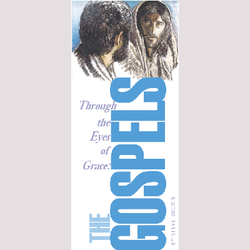
A companion booklet taken from Steve’s classic overview study of the New Testament. Highlights of the Gospels—Matthew, Mark, Luke, and John—including introductory comments, major themes, and important teaching. This is great preparation for Key Life’s Gospels broadcast series this year that begins this month.
Past Episodes
- A Fresh Word from God (Steve Brown)
- Acts
- Acts (Steve Brown)
- Acts Overview (Steve Brown/Justin Holcomb)
- Adam and Noah (Steve Brown/Jerry Parries)
- All You Wanted to Know About the Bible but Didn't Ask (Steve Brown/Pete Alwinson)
- Amazed by Grace (Steve Brown/Matt Heard)
- Among Friends
- Anger and Forgiveness (Justin Holcomb)
- Babette and the Lavishness of Grace (Steve Brown/Matt Heard)
- Big Message, Little Place
- Big Message, Little Place (Steve Brown)
- Calibrate: Sitting at the Feet of Jesus (Matt Heard)
- Christmas Day (Steve Brown)
- Christmas Eve: A Grace Gift Exchange (Steve Brown/Matt Heard)
- Christmas Gifts: The Four Mondays of Advent - Part 1 (Steve Brown/Matt Heard)
- Christmas Gifts: The Four Mondays of Advent - Part 2 (Steve Brown/Matt Heard)
- Christmas Gifts: The Four Mondays of Advent - Part 3 (Steve Brown/Matt Heard)
- Christmas Gifts: The Four Mondays of Advent - Part 4 (Steve Brown/Matt Heard)
- Christmas Special (Steve Brown/Pete Alwinson)
- Comfortable Words (Justin Holcomb)
- Coming Alive (Matt Heard)
- Embracing the Story of the Gospel (Matt Heard)
- Engaging Your Story (Matt Heard)
- Epiphany: Light for the Nations (Steve Brown/Justin Holcomb)
- Experiencing Awesome (Pete Alwinson)
- Galatians
- Getting Saved (Steve Brown)
- God, The Master Storyteller (Steve Brown/Matthew Porter)
- God's Grace is Enough (Steve Brown/Jerry Parries)
- Grace Through the Centuries (Steve Brown/Justin Holcomb)
- Gratuitous Grace (Justin Holcomb)
- Harmony in the Band (Steve Brown)
- Heart Matters (Matt Heard)
- How to Handle Hallway Experiences (Steve Brown/Jerry Parries)
- How to Trust God in Difficult Times (Steve Brown/Jerry Parries)
- Humility and How We Achieved It (Steve Brown/Pete Alwinson)
- Is Pentecost Reproducible? (Steve Brown)
- It's about Forgiveness (Steve Brown)
- It's All About Grace (Jerry Parries)
- It's All About Worship (Steve Brown/Pete Alwinson)
- Jesus Saves Sinners for God's Glory (Steve Brown/Pete Alwinson/Justin Holcomb)
- Journey to the Cross (Steve Brown/Matt Heard)
- Joy is Plural (Matt Heard)
- Laughter and Lament (Steve Brown)
- Lent: God's Kindness Leads to Repentance (Steve Brown/Justin Holcomb)
- Lies from the Enemy (Steve Brown/Jerry Parries)
- Living Your Best Life (Jerry Parries)
- Love (Pete Alwinson)
- Loving Like Jesus (Matt Heard)
- Peter: The Patron Saint of Failures (Justin Holcomb)
- Philippians (Steve Brown)
- Psalms of Lament (Justin Holcomb)
- Real Power (Pete Alwinson)
- Resurrection: It Really Happened and It Changed Everything! (Steve Brown/Pete Alwinson)
- Thankful for the Gospel (Steve Brown/Matt Heard)
- Thanksgiving in Troubled Times (Steve Brown/Pete Alwinson)
- The Covenants: Abraham (Steve Brown/Jerry Parries)
- The Covenants: Adam and Noah (Steve Brown/Jerry Parries)
- The First Episode of Key Life (1986) (Steve Brown)
- The Gift of Forgiveness (Steve Brown/Jerry Parries)
- The Gifts Christmas Brings (Steve Brown/Jerry Parries)
- The Good Things God Has Done For You (Jerry Parries)
- The Gospels: Mark (Steve Brown/Pete Alwinson)
- The Gospels: Matthew (Steve Brown/Jerry Parries)
- The Graced Church (Pete Alwinson)
- The Grammar of Gratitude (Matt Heard)
- The Kingdom Manifesto
- The Kingdom Manifesto (Pete Alwinson)
- The Kingdom Manifesto: The Poor in Spirit, Those Who Mourn, & The Meek (Pete Alwinson)
- The Kingdom of God (Steve Brown/Pete Alwinson)
- The Last Week (Steve Brown/Justin Holcomb)
- The Liberating Power of Truth (Steve Brown)
- The Life We Long For (Matt Heard)
- The Life You've Always Wanted (Steve Brown/Matt Heard)
- The Power of Confession (Steve Brown/Jerry Parries)
- The Power of Pentecost (Steve Brown/Jerry Parries)
- The Purpose of Christmas (Steve Brown/Jerry Parries)
- The Spirit Who Gives Life (Steve Brown/Justin Holcomb)
- The Voice of Jesus (Justin Holcomb)
- The Weird Ways of God (Steve Brown)
- Thinking About Believing (Matt Heard)

Featured Offer
A companion booklet taken from Steve’s classic overview study of the New Testament. Highlights of the Gospels—Matthew, Mark, Luke, and John—including introductory comments, major themes, and important teaching. This is great preparation for Key Life’s Gospels broadcast series this year that begins this month.
About Key Life Network
Because life is hard for everyone, grace is for all of us. And grace means that because of what Jesus has done, when you run to him, God’s not mad at you.
All of the radio shows, sermons, books, and videos we produce work together toward one mission: to get you and those you love Home with radical freedom, infectious joy and surprising faithfulness to Christ as your crowning achievement.
Learn more: http://www.keylife.org
About Steve Brown
He’s not your mother and he’s not your guru. He’s Steve Brown - a speaker, author, former pastor and seminary professor, and founder of Key Life Network, Inc.
At Key Life, Steve serves as Bible teacher on the radio program Key Life and the host of the talk show Steve Brown, Etc. Prior to Key Life, Steve served as a pastor for more than thirty years and continues speaking extensively.
Steve has also authored numerous books, including How to Talk So People Will Listen, Three Free Sins, Hidden Agendas and his latest release, Talk the Walk: How to Be Right Without Being Insufferable (now available as an audiobook).
Contact Key Life Network with Steve Brown
steve@keylife.org
http://www.keylife.org/
P.O. Box 5000
Maitland, FL 32794
In Canada, send requests to:
Key Life Canada
P.O. Box 28060
Waterloo, Ontario N2L 6J8
1-800-KEY-LIFE