
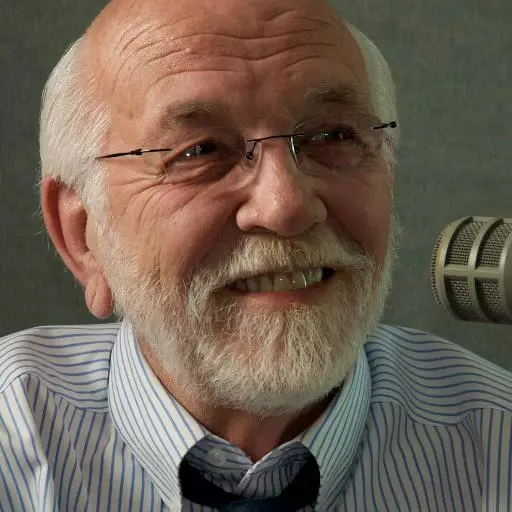
“All sins are not equal.”


Steve Brown: All sins are not equal. Let's talk about it on Key Life.
Matthew: That was Steve Brown. He doesn't want to be your guru, and he's not trying to be your mama. He just opens the Bible and gives you the simple truth that will make you free. Steve's a lifelong broadcaster, author, seminary professor, and our teacher on Key Life.
Steve Brown: Thank you, Matthew. Hey, listen, let me give you—we're talking about lies that people believe, and we're spending a good deal of time on the subject of repentance. If you were listening yesterday, we took the time to define it finally, biblically.
Repentance isn't what you think it is. We've been taught you turn or burn, you change yourself, you become obedient. If you have tried very hard to do all of that, you know how hard it is. Let me tell you something that's really helpful. I'm going to give you what I believe to be three different kinds of sin. Now, these three are not defined that way in Scripture, but the categories are profoundly biblical, so listen up.
First, there's simple sin. I may determine that I'll never use a curse word like "damn" again. Did you hear about the two men, strangers to each other, playing golf together? One used pretty rough language, and after three holes, his partner said, "Sir, just so you know, I'm a priest, and I find your language offensive." The other man apologized and said it wouldn't happen again, and he really tried.
But on the sixth hole, he hit a ball into the rough. He couldn't help himself, and he said, "Damn, missed again." To the man's horror, he noticed the priest kneeling on the fairway as a dark cloud moved over the golf course. Out of the cloud came a lightning bolt and hit the priest. And a voice from heaven said, "Damn, missed again." I'm sorry, but it is funny.
But for most people, saying "damn" is a fairly easy thing to stop. I can say I'm not going to use that word anymore, and I don't. I can say I'm going to be nice to this person who drives me nuts, and I'm nicer to him. I say I missed church last Sunday, and I'm not going to miss it this Sunday, and I can fix that. It goes on and on. There are little things in our lives all the time that we confess, that we simply stop and don't do anymore.
But there are other kinds of sin. There's besetting sin. That's the sin that hardly ever wholly dies. We get victory over it now and then and maybe even most of the time, but it almost always rears its ugly head again at the most unexpected times. I've always struggled with anger. When I was young, most people who knew me would describe me as an angry young man. Just so you know, that's no longer true.
Part of it is growing up and growing old. Part of it's Jesus. But I'm now defined by most people who know me as relatively kind and gentle. It helps, by the way, to look like Santa Claus. But sometimes, when I least expect it, the anger comes out. Every time that happens, I wince, go back to the drawing board, and start over before the throne of God, who could fix me if He wanted to.
With besetting sins, we sometimes win the victory, and then sometimes we don't. Maybe sometimes we struggle with that besetting sin for all of our lives. As I said to you—and I'll have to repent of bragging—but as I said to you, I'm better. I'm a far more gentle person than I have been in the past. But sometimes, the anger bubbles up and I have to struggle with it all over again.
But there's a third kind of sin, and this is obsessive sin. This is the sin that is so deep, so embedded, and so much a part of us that we can only ask forgiveness without any hope of ever changing. It's a dark place to live in, and there's no hope if there's no forgiveness for obsessive sin. Obsessive sin is often seen in addictions, in sexual desires and actions, in long-time habits that we simply can't break.
Obsessive sin is hopeless sin. Our prayer is no more and no less than the tax collector's prayer in Luke 18:13. Remember? He couldn't even look up. He was praying next to a guy who was sure that he had it together. The guy who was next to him looked at the tax collector and said, "God, I thank you I'm not like him." But the tax collector couldn't do anything. He couldn't change. He couldn't fix himself.
So in Luke 18:13, he cried out, "Lord, be merciful to me, a sinner." He didn't make any promises. He didn't tell God he would do better because he knew better. He simply leaned on the mercy of God, and as Jesus said, that was enough. Jesus said that he was justified, that he was forgiven, and there were no promises that he would get better. The Bible teaches that God's mercy is always enough.
Repentance is simply believing that it is. If we make repentance change, we've believed the lie keeping us in the darkness of our fear and shame and guilt and regret. Luther said that the deepest truth of the Christian gospel is that we are great sinners and Jesus is a great forgiver. He is. He's a great savior. And we're going to talk about that later, but for now, the subject is repentance and its awesome power in our lives.
I have a playwright friend, the late Dick Waters, who wrote a play once called "The Truant Apostle." It's a story about a minister serving the largest church in his denomination in his state. And one morning, while looking in the mirror, the minister realized that he had sold his soul and paid too much for his whistle. The minister decided to change. In his authentic change, the minister ran through, as I remember it, five churches in five years, from the largest church in the denomination to the smallest one.
In one scene, he's in the general store while the small church is meeting and voting on whether or not to fire him. The minister's only friend asks him what he plans to do, and he says, "I'm going to go up there on that mountain and sit by a stream where a man can feel clean and pure and close to God." Oh my, clean and pure and close to God. Listen, that's what the Christian faith is all about.
But a misdefinition of repentance has made that into trying to be clean and failing, working at purity and still dealing with the dirt, and trying to get God to notice how hard we're working on it all. God doesn't need to be pleased; He already is. That's what the cross of Christ was all about: justification. And when God put all of Christ's obedience and purity into our account, that's called imputation. That settled it.
If you have repented, listen to me: you're forgiven. That means really forgiven. That means totally forgiven. That means there are no kickers. That means if you never change, you're always forgiven. You're always His. So, how does repentance work, and why is it important? Tomorrow, we're going to talk about that. But for now, I want you to know that when you repent, you're forgiven. That's it. Just forgiven. You think about that. I'm in.
Matthew: Thanks, Steve. What a great reminder about repentance from Luke 18:13. That one always gets me. If you're just joining us, we're taking an unhurried tour through Steve's latest book, available everywhere on September 14th. Tomorrow, we'll explore the idea that repentance is a gift. Hope you'll join us again then.
You may or may not be familiar with the phrase "assurance of salvation." Either way, you surely understand the unmistakable question behind it: am I really saved? Steve addressed that question in a classic sermon titled "How to Know that You Know Him," based on Hebrews 6. If you ever have doubts about your salvation, and maybe you know someone who struggles with those questions, let us mail you this sermon on CD for free.
Call us right now at 1-800-KEY-LIFE. That's 1-800-539-5433. You can also email Steve@keylife.org to order that CD or go to keylife.org/contact to find our mailing addresses for the US and Canada. Again, ask for the free CD called "How to Know that You Know Him."
And hey, while you're here, if you've been blessed by the work of Key Life, would you help share that blessing with others through your financial support? Giving is easy. Just charge a gift on your credit card or include a gift in your envelope. Or you can give safely and securely by text. Just text Key Life to 28950. And remember, no matter how you give—big or small, one-time or ongoing—every gift helps and every gift matters. Key Life is a member of ECFA in the States and CCCC in Canada, and Key Life Network is a listener-supported production of Key Life Network.
Featured Offer

Adapted from Steve’s new book, God’s Not Mad at You: Confronting the Lies of Guilt, Shame, Fear, and Regret. Topics include… Guilt, Shame, Fear, and Regret—what they are (good working definitions) and why we all (universally) struggle so much with them. / No Kickers—Kickers are the, often subtle, “small print,” the 1% lies that foster guilt, shame, fear, and regret. The Christian faith is unconditional in its promises and truths. God’s love, forgiveness, mercy, and grace have no kickers. / We Aren’t Good People (and They Aren’t Either)—It’s assumed that the key to unity in a family, church, or nation is for good people to convince or coerce bad people into being good…then we can walk off into the sunset together. But what if there aren’t any “good people,” just people who clean up better than others? When the church becomes a place of righteous indignation, it misses everything it’s supposed to be. / The Big Lie—the big lie is this, God is angry at you…with reason. Too often, we’ve truncated the Gospel. If you’re a Christian believer, God isn’t angry at you. (And, if you’re not a believer and go to him, he won’t be angry at you, either.) That makes all the difference in our struggle with guilt, shame, fear, and regret.
Past Episodes
- A Fresh Word from God (Steve Brown)
- Acts
- Acts (Steve Brown)
- Acts Overview (Steve Brown/Justin Holcomb)
- Adam and Noah (Steve Brown/Jerry Parries)
- All You Wanted to Know About the Bible but Didn't Ask (Steve Brown/Pete Alwinson)
- Amazed by Grace (Steve Brown/Matt Heard)
- Among Friends
- Anger and Forgiveness (Justin Holcomb)
- Babette and the Lavishness of Grace (Steve Brown/Matt Heard)
- Big Message, Little Place
- Big Message, Little Place (Steve Brown)
- Calibrate: Sitting at the Feet of Jesus (Matt Heard)
- Christmas Day (Steve Brown)
- Christmas Eve: A Grace Gift Exchange (Steve Brown/Matt Heard)
- Christmas Gifts: The Four Mondays of Advent - Part 1 (Steve Brown/Matt Heard)
- Christmas Gifts: The Four Mondays of Advent - Part 2 (Steve Brown/Matt Heard)
- Christmas Gifts: The Four Mondays of Advent - Part 3 (Steve Brown/Matt Heard)
- Christmas Gifts: The Four Mondays of Advent - Part 4 (Steve Brown/Matt Heard)
- Christmas Special (Steve Brown/Pete Alwinson)
- Comfortable Words (Justin Holcomb)
- Coming Alive (Matt Heard)
- Embracing the Story of the Gospel (Matt Heard)
- Engaging Your Story (Matt Heard)
- Epiphany: Light for the Nations (Steve Brown/Justin Holcomb)
- Experiencing Awesome (Pete Alwinson)
- Galatians
- Getting Saved (Steve Brown)
- God, The Master Storyteller (Steve Brown/Matthew Porter)
- God's Grace is Enough (Steve Brown/Jerry Parries)
- Grace Through the Centuries (Steve Brown/Justin Holcomb)
- Gratuitous Grace (Justin Holcomb)
- Harmony in the Band (Steve Brown)
- Heart Matters (Matt Heard)
- How to Handle Hallway Experiences (Steve Brown/Jerry Parries)
- How to Trust God in Difficult Times (Steve Brown/Jerry Parries)
- Humility and How We Achieved It (Steve Brown/Pete Alwinson)
- Is Pentecost Reproducible? (Steve Brown)
- It's about Forgiveness (Steve Brown)
- It's All About Grace (Jerry Parries)
- It's All About Worship (Steve Brown/Pete Alwinson)
- Jesus Saves Sinners for God's Glory (Steve Brown/Pete Alwinson/Justin Holcomb)
- Journey to the Cross (Steve Brown/Matt Heard)
- Joy is Plural (Matt Heard)
- Laughter and Lament (Steve Brown)
- Lent: God's Kindness Leads to Repentance (Steve Brown/Justin Holcomb)
- Lies from the Enemy (Steve Brown/Jerry Parries)
- Living Your Best Life (Jerry Parries)
- Love (Pete Alwinson)
- Loving Like Jesus (Matt Heard)
- Paul's Missionary Journeys (Steve Brown/Jerry Parries)
- Peter: The Patron Saint of Failures (Justin Holcomb)
- Philippians (Steve Brown)
- Psalms of Lament (Justin Holcomb)
- Real Power (Pete Alwinson)
- Resurrection: It Really Happened and It Changed Everything! (Steve Brown/Pete Alwinson)
- Thank God, I'm Free (Steve Brown)
- Thankful for the Gospel (Steve Brown/Matt Heard)
- Thanksgiving in Troubled Times (Steve Brown/Pete Alwinson)
- The Covenants: Abraham (Steve Brown/Jerry Parries)
- The Covenants: Adam and Noah (Steve Brown/Jerry Parries)
- The First Episode of Key Life (1986) (Steve Brown)
- The Gift of Forgiveness (Steve Brown/Jerry Parries)
- The Gifts Christmas Brings (Steve Brown/Jerry Parries)
- The Good Things God Has Done For You (Jerry Parries)
- The Gospels: Mark (Steve Brown/Pete Alwinson)
- The Gospels: Matthew (Steve Brown/Jerry Parries)
- The Graced Church (Pete Alwinson)
- The Grammar of Gratitude (Matt Heard)
- The Kingdom Manifesto
- The Kingdom Manifesto (Pete Alwinson)
- The Kingdom Manifesto: The Poor in Spirit, Those Who Mourn, & The Meek (Pete Alwinson)
- The Kingdom of God (Steve Brown/Pete Alwinson)
- The Last Week (Steve Brown/Justin Holcomb)
- The Liberating Power of Truth (Steve Brown)
- The Life We Long For (Matt Heard)
- The Life You've Always Wanted (Steve Brown/Matt Heard)
- The Power of Confession (Steve Brown/Jerry Parries)
- The Power of Pentecost (Steve Brown/Jerry Parries)
- The Purpose of Christmas (Steve Brown/Jerry Parries)
- The Spirit Who Gives Life (Steve Brown/Justin Holcomb)
- The Voice of Jesus (Justin Holcomb)
- The Weird Ways of God (Steve Brown)
- Thinking About Believing (Matt Heard)
- Welcome to the Family (Steve Brown)
- What Difference Does it Make? (Steve Brown/Pete Alwinson)
- What God Hates (Steve Brown)
- What's in a Name?
- When God Changes Your Season (Steve Brown/Jerry Parries)
- Why Do We Need Four Gospels? (Steve Brown/Justin Holcomb)
- Why Jesus Had to Die (Steve Brown)
- Why Theology Matters (Justin Holcomb)

Featured Offer
Adapted from Steve’s new book, God’s Not Mad at You: Confronting the Lies of Guilt, Shame, Fear, and Regret. Topics include… Guilt, Shame, Fear, and Regret—what they are (good working definitions) and why we all (universally) struggle so much with them. / No Kickers—Kickers are the, often subtle, “small print,” the 1% lies that foster guilt, shame, fear, and regret. The Christian faith is unconditional in its promises and truths. God’s love, forgiveness, mercy, and grace have no kickers. / We Aren’t Good People (and They Aren’t Either)—It’s assumed that the key to unity in a family, church, or nation is for good people to convince or coerce bad people into being good…then we can walk off into the sunset together. But what if there aren’t any “good people,” just people who clean up better than others? When the church becomes a place of righteous indignation, it misses everything it’s supposed to be. / The Big Lie—the big lie is this, God is angry at you…with reason. Too often, we’ve truncated the Gospel. If you’re a Christian believer, God isn’t angry at you. (And, if you’re not a believer and go to him, he won’t be angry at you, either.) That makes all the difference in our struggle with guilt, shame, fear, and regret.
About Key Life Network
Because life is hard for everyone, grace is for all of us. And grace means that because of what Jesus has done, when you run to him, God’s not mad at you.
All of the radio shows, sermons, books, and videos we produce work together toward one mission: to get you and those you love Home with radical freedom, infectious joy and surprising faithfulness to Christ as your crowning achievement.
Learn more: http://www.keylife.org
About Steve Brown
He’s not your mother and he’s not your guru. He’s Steve Brown - a speaker, author, former pastor and seminary professor, and founder of Key Life Network, Inc.
At Key Life, Steve serves as Bible teacher on the radio program Key Life and the host of the talk show Steve Brown, Etc. Prior to Key Life, Steve served as a pastor for more than thirty years and continues speaking extensively.
Steve has also authored numerous books, including How to Talk So People Will Listen, Three Free Sins, Hidden Agendas and his latest release, Talk the Walk: How to Be Right Without Being Insufferable (now available as an audiobook).
Contact Key Life Network with Steve Brown
steve@keylife.org
http://www.keylife.org/
P.O. Box 5000
Maitland, FL 32794
In Canada, send requests to:
Key Life Canada
P.O. Box 28060
Waterloo, Ontario N2L 6J8
1-800-KEY-LIFE