
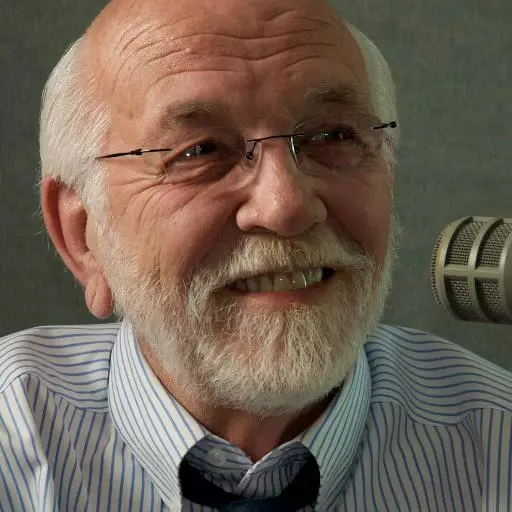
A Fresh Word from God, Part 4


Guest (Male): Welcome to Key Life and today we'll wrap up our week-long sermon from Steve called A Fresh Word from God. And this message is brought to you by the Vault Project, an ongoing effort to restore, preserve, and curate classic sermons from Steve. You can help in this work for as little as $5 a month while also getting access to those vintage messages. More info at keylife.org/vault. And now, here's Steve.
Steve Brown: Truth always is. I told you about the time one of our daughters came home with a Confederate $10 bill. That reminded me of the time when the Confederate troops were fleeing the capital and they had wagon loads, millions of dollars of Confederate money. They were accosted by the Union troops. The Union troops put them in prison, took their money away, and they were cold and hungry. They didn't have anything else to do, so they played poker with Confederate money.
They played for $100,000 a game. This was big stakes. That's what the world's doing, playing poker with funny money. What Jesus did, he came up and said, "Don't you guys know that's funny money? When you finish your poker game, it's going to be just as meaningless and just as empty, and you've got all of eternity to be lost." One of the poker players looked up, took his stogie out of his mouth, and shot Jesus to death. They're still doing that because the message is from God and the message is you're playing poker with funny money. People who think it's a real game are not going to like what we say. Those who love truth are going to be drawn to Christ; those who don't love truth are going to be repelled by him, and they're going to be angry.
If you see a person who purports to be from God and everybody thinks he's wonderful, you stay away from him. Fifthly, when God speaks through a man or a woman, that message will not only be consistent, attractive, convicting, and divisive; that message will also be selfless. Matthew 3:11: "I baptize you with water for repentance, but after me will come one who is more powerful than I, whose sandals I am not fit to carry." Over in John's message about John the Baptist—there were two different Johns incidentally—the third chapter, verses 27 through 30, John the Baptist says this: "A man can receive only what is given him from heaven."
John the Baptist said, "You yourselves can testify that I said, 'I am not the Christ but am sent ahead of him.' The bride belongs to the bridegroom. The friend who attends the bridegroom waits and listens for him and is full of joy when he hears the bridegroom's voice. That joy is mine, and it is now complete. He must become greater, and I must become less." On Wednesday evening, I've been teaching on personal eschatology and about dying. One of the things that I've taken care to do on Wednesday evening is to teach you how to die and how to face your own death.
If you go to any Christian bookstore, you'll find a lot of books on how to live, but you won't find very many on how to die. A Christian needs to recognize there are two things about death: first, you can't get out of it, and secondly, it's unnatural. So we're all afraid of death and we all need to face it. We can't do it with platitudes and religious, pious-sounding words. You've got to face it square on. When you first face your death, it's very debilitating and scary. You can stand it for about 15 seconds, 30 seconds. Then you go to a party or watch a television show, and then come back to it and face it again.
Take it and do it for 45 seconds, then a minute, until you can stare death straight in the face. Listen, you've got to die before you die because if you don't, when it comes the time to die the second time, it will be very, very hard. When I was teaching that Wednesday night, people were saying, "Well, Steve Brown doesn't have any problem with it; he's a pastor. He's religious and he's spiritual." Let me tell you something: just the opposite. I have a lot more trouble with it than you do. If you're up in front of people all of the time teaching, it can be an ego trip. Ego is the reason it's hard to die.
Every time I write a new book and it comes out and I hold it in my hand, I don't want to die. Every time I listen to one of the radio broadcasts or speak to a group of executives or to a Bible conference somewhere, I don't want to die. It's very hard. It's very hard to face the reality of the death of myself so that when it comes my second time to die, I'll be able to die. What happens is that some people don't ever face that. So this becomes a stroking kind of thing where ego grows and they become very selfish and self-centered.
Let me read you something that Bob Welpon's mother has on her refrigerator. It's this attitude that you ought to sense in somebody who teaches God's word. "Lord, thou knowest I am growing older. Keep me from becoming talkative and possessed with the idea that I must express myself on every subject. Release me from the craving to straighten out everyone's affairs. Keep me from the recital of endless detail. Give me the wings to get to the point. Seal my lips when I'm inclined to tell of my aches and pains. They are increasing, Lord, with the years, and my love to speak of them grows sweeter as time goes by."
"Teach me the glorious lesson that occasionally I may be wrong. Make me thoughtful but not nosy, helpful but not bossy. With my vast store of wisdom and experience, it does seem a shame not to use it all, but thou knowest, Lord, that I want a few friends at the end." That's the tone. That's the attitude of a person who really has a message from God: the recognition that it's in your bones and you've got to say it, but extreme humility, extreme fear, extreme humanness. And then finally, and sixthly: when you hear somebody who sounds like they're speaking from Sinai, ignore them.
Then finally, very quickly, when God speaks through a man or a woman, the message will not only be consistent, attractive, convicting, divisive, and selfless; it will be hopeful. Matthew 3:12: "His winnowing fork is in his hand, and he will clear his threshing floor, gathering the wheat into his barn." Who's the wheat? We're the wheat. What's John saying? John is saying you're going to be home someday and it's going to be all right. Do you know what makes literature universal? Plays? Hope.
You see, there are some playwrights, there are some novelists who simply write into the morass and don't tell you how to get out. They give you the pathos of living but they don't give you anything more. Tennessee Williams—and I like Tennessee Williams' plays—but I want you to know they're going to die with this generation. Do you know why they're going to die? They're not universal. Do you know why they're not universal? They don't have any hope. They don't have any hope. Hopelessness will kill the universality of literature.
A friend of mine told me about a Scottish minister who died in a small village in Scotland, and somebody said, "Now there is no one left to celebrate the triumph of the ordinary man." I got a letter this week from one of our couples who are looking for a church in another city they've just moved to. In a previous letter, I had asked them to be sure and be looking; they needed to be with God's people. I'd asked them what they had found. Do you know what they said? They said, "Every time we go to church, we feel condemned and we feel guilty."
Then they said in a letter, "We know we're sinners and we know that we're only saved by the blood of Christ. But it seems to us that when we go to church, there ought to be some hope. I don't want to be beat over the head all of the time." That's sad, isn't it? That's sad because if it's not filled with hope, it didn't come from God. If you come to church and you just feel wiped out when you leave, if you feel more of a sinner than you did—unless you're not a Christian, you ought to; I hope you feel really guilty and miserable.
I hope you go through awful times, your bank goes under, and you go bankrupt until you receive Christ. But those of you who are Christians, if you come here and you don't feel any hope when you leave, then what I said didn't come from God. That's what it's all about. You know what bugs me about atheists and agnostics? They're so sour. They don't laugh at anybody unless they're laughing at somebody else. Derision is the only form of laughter you usually see from unbelievers. One of the sad things is that believers have gotten this idea that to be sour is to be spiritual.
It's not true. We've got something to be hopeful about. We have something to look forward to. If there's no laughter, you stay away from it. If there's no joy, it came from the pit of hell. If there isn't hope, it's not God's message; it's man's message. In Strasbourg, Germany, there's a clock in a church belfry. These words are around the dial of the clock: "One of these hours the Lord will return." Don't you like that? One of these hours the Lord will return. You see, we know the final chapter. We know how this thing's going to work out. It's going to be cool. We're going to get home, and it's going to be great.
I'm almost finished. Stay with me just a second. Eric Peterson tells about Sir Robert Watson-Watt. He's the man who invented radar. He got arrested for speeding in Canada. They got him with his own invention; they got him with radar. So Watt wrote a poem that is not great poetry or even greatly moving, but it makes a point. This is the poem that Watt, after being arrested and caught in a radar speed trap after he had made the invention, wrote: "Pity Sir Robert Watson-Watt, strange target of his radar plot. And this with others I could mention, a victim of his own invention." Well, John's message was not his own invention and that made it hard. It eventually cost him his life, but it gave him eternity. He's in heaven now. In heaven, it's all together different and we're going to discover that. In heaven, the only people who speak, speak for God. But between now and then, beloved, you've got to be careful. You think about that.
Guest (Male): And thank you, Steve. That wraps up this special sermon week of Key Life. All this week, we heard a message from Steve called A Fresh Word from God, originally given back in 1986. He was just 45 years old then. Crazy. Be sure to join us again tomorrow for the nearly world-famous Q&A with Steve and Pete. Tomorrow, they'll tackle the tricky questions you've sent in, including this one: How do you get rid of a Bible? I think I know where that question is coming from, but I am not sure, so be sure to tune in and we will find out together.
Well, if you enjoyed this week's sermon, I have some great news. You can find it right now in the Vault. That's keylife.org/vault. This one sermon is actually part of an entire series on the book of Matthew. That series spanned three years and 132 sermons. Wow, that is a deep dive. But hey, maybe you're not looking for that kind of commitment. All good, we have you covered with a number of one-off sermons as well. These sermons go all the way back to the early '70s.
It's all part of the Vault Project, our effort to digitize, restore, and curate these timeless sermons. We have hundreds of these sermons available already and, with your help, we're adding new content every single month. Go to keylife.org/vault to see the behind-the-scenes video, check out an absolutely free sample, and learn how you can play a crucial part in this important work. Again, that's keylife.org/vault, V-A-U-L-T.
I recently came across an interesting quote: "Without a good question, a good answer has no place to go." And it's true. If we can't ask the questions, how can we get the answers? Well, here are some big questions that perhaps you have pondered: If we're called to radical obedience, then why is it that we struggle so much? And why do we feel guilty? Well, the fact is we are weak and needy people, and so when we run to Jesus, we find the power we lack.
Steve spoke about this in a message called "When Being Bad Isn't Bad Enough." We'd like to send you that full sermon on CD for free. So claim yours right now by calling us at 1-800-KEY-LIFE. That's 1-800-539-5433. You can also email steve@keylife.org to order that CD, or to mail your request, go to keylife.org/contact to find our mailing addresses. Again, the CD is called "When Being Bad Isn't Bad Enough." Finally, a question: Will you join the work of Key Life by giving? You can charge a gift on your credit card, include a gift in your envelope, or simply text KEYLIFE to 28950. Key Life is a member of ECFA in the States and CCCC in Canada, and we are a listener-supported production of Key Life Network.
Featured Offer

Are you feeling guilty? Maybe it’s what you said to your husband or wife last night...what you did years ago…the places where you’re struggling right now. What do you do with your guilt? Ignore it or bury it? Or is there another way, one that can handle guilt for good? Guilt can lead us back to Christ to find true and lasting forgiveness. His death paid the debt for all our sins. He loves us that much.
Past Episodes
- A Fresh Word from God (Steve Brown)
- Acts
- Acts (Steve Brown)
- Acts Overview (Steve Brown/Justin Holcomb)
- Adam and Noah (Steve Brown/Jerry Parries)
- All You Wanted to Know About the Bible but Didn't Ask (Steve Brown/Pete Alwinson)
- Amazed by Grace (Steve Brown/Matt Heard)
- Among Friends
- Anger and Forgiveness (Justin Holcomb)
- Babette and the Lavishness of Grace (Steve Brown/Matt Heard)
- Big Message, Little Place
- Big Message, Little Place (Steve Brown)
- Calibrate: Sitting at the Feet of Jesus (Matt Heard)
- Christmas Day (Steve Brown)
- Christmas Eve: A Grace Gift Exchange (Steve Brown/Matt Heard)
- Christmas Gifts: The Four Mondays of Advent - Part 1 (Steve Brown/Matt Heard)
- Christmas Gifts: The Four Mondays of Advent - Part 2 (Steve Brown/Matt Heard)
- Christmas Gifts: The Four Mondays of Advent - Part 3 (Steve Brown/Matt Heard)
- Christmas Gifts: The Four Mondays of Advent - Part 4 (Steve Brown/Matt Heard)
- Christmas Special (Steve Brown/Pete Alwinson)
- Comfortable Words (Justin Holcomb)
- Coming Alive (Matt Heard)
- Embracing the Story of the Gospel (Matt Heard)
- Engaging Your Story (Matt Heard)
- Epiphany: Light for the Nations (Steve Brown/Justin Holcomb)
- Experiencing Awesome (Pete Alwinson)
- Galatians
- Getting Saved (Steve Brown)
- God's Grace is Enough (Steve Brown/Jerry Parries)
- Grace Through the Centuries (Steve Brown/Justin Holcomb)
- Gratuitous Grace (Justin Holcomb)
- Heart Matters (Matt Heard)
- How to Handle Hallway Experiences (Steve Brown/Jerry Parries)
- How to Trust God in Difficult Times (Steve Brown/Jerry Parries)
- Humility and How We Achieved It (Steve Brown/Pete Alwinson)
- It's about Forgiveness (Steve Brown)
- It's All About Grace (Jerry Parries)
- It's All About Worship (Steve Brown/Pete Alwinson)
- Jesus Saves Sinners for God's Glory (Steve Brown/Pete Alwinson/Justin Holcomb)
- Journey to the Cross (Steve Brown/Matt Heard)
- Joy is Plural (Matt Heard)
- Laughter and Lament (Steve Brown)
- Lent: God's Kindness Leads to Repentance (Steve Brown/Justin Holcomb)
- Lies from the Enemy (Steve Brown/Jerry Parries)
- Living Your Best Life (Jerry Parries)
- Love (Pete Alwinson)
- Loving Like Jesus (Matt Heard)
- Peter: The Patron Saint of Failures (Justin Holcomb)
- Philippians (Steve Brown)
- Psalms of Lament (Justin Holcomb)
- Real Power (Pete Alwinson)
- Resurrection: It Really Happened and It Changed Everything! (Steve Brown/Pete Alwinson)
- Thankful for the Gospel (Steve Brown/Matt Heard)
- Thanksgiving in Troubled Times (Steve Brown/Pete Alwinson)
- The Covenants: Adam and Noah (Steve Brown/Jerry Parries)
- The First Episode of Key Life (1986) (Steve Brown)
- The Gift of Forgiveness (Steve Brown/Jerry Parries)
- The Gifts Christmas Brings (Steve Brown/Jerry Parries)
- The Good Things God Has Done For You (Jerry Parries)
- The Graced Church (Pete Alwinson)
- The Grammar of Gratitude (Matt Heard)
- The Kingdom Manifesto
- The Kingdom Manifesto (Pete Alwinson)
- The Kingdom Manifesto: The Poor in Spirit, Those Who Mourn, & The Meek (Pete Alwinson)
- The Kingdom of God (Steve Brown/Pete Alwinson)
- The Last Week (Steve Brown/Justin Holcomb)
- The Life We Long For (Matt Heard)
- The Life You've Always Wanted (Steve Brown/Matt Heard)
- The Power of Confession (Steve Brown/Jerry Parries)
- The Power of Pentecost (Steve Brown/Jerry Parries)
- The Purpose of Christmas (Steve Brown/Jerry Parries)
- The Spirit Who Gives Life (Steve Brown/Justin Holcomb)
- The Voice of Jesus (Justin Holcomb)
- The Weird Ways of God (Steve Brown)

Featured Offer
Are you feeling guilty? Maybe it’s what you said to your husband or wife last night...what you did years ago…the places where you’re struggling right now. What do you do with your guilt? Ignore it or bury it? Or is there another way, one that can handle guilt for good? Guilt can lead us back to Christ to find true and lasting forgiveness. His death paid the debt for all our sins. He loves us that much.
About Key Life Network
Because life is hard for everyone, grace is for all of us. And grace means that because of what Jesus has done, when you run to him, God’s not mad at you.
All of the radio shows, sermons, books, and videos we produce work together toward one mission: to get you and those you love Home with radical freedom, infectious joy and surprising faithfulness to Christ as your crowning achievement.
Learn more: http://www.keylife.org
About Steve Brown
He’s not your mother and he’s not your guru. He’s Steve Brown - a speaker, author, former pastor and seminary professor, and founder of Key Life Network, Inc.
At Key Life, Steve serves as Bible teacher on the radio program Key Life and the host of the talk show Steve Brown, Etc. Prior to Key Life, Steve served as a pastor for more than thirty years and continues speaking extensively.
Steve has also authored numerous books, including How to Talk So People Will Listen, Three Free Sins, Hidden Agendas and his latest release, Talk the Walk: How to Be Right Without Being Insufferable (now available as an audiobook).
Contact Key Life Network with Steve Brown
steve@keylife.org
http://www.keylife.org/
P.O. Box 5000
Maitland, FL 32794
In Canada, send requests to:
Key Life Canada
P.O. Box 28060
Waterloo, Ontario N2L 6J8
1-800-KEY-LIFE