
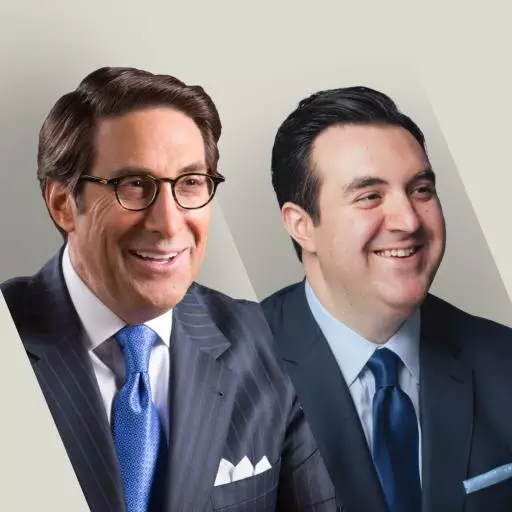
Sekulow Weekend


Logan Sekulow recaps the news of the week.
Logan Sekulow: It's been quite a busy week. A major new ACLJ case and a terror attack shutdown within seconds of disaster. Keeping you informed and engaged, now more than ever, this is Sekulow. We want to hear from you. Share and post your comments or call 1-800-684-3110. And now your host, Logan Sekulow.
Welcome to Sekulow. It has been quite a busy week here at the ACLJ and we're going to recap a lot of it today. Of course, the two major stories that came out this week involve a brand-new ACLJ case. If you have not followed what's been going on, it was a home school graduate, 22 years old, not a kid, a certified EMT, and rookie of the year volunteer firefighter in his hometown in Fremont, Nebraska.
He was told, "You know what? There's a job opening. Why don't you apply to become a full-time paid career fireman?" He thought, "This is it. This is going to be my time. This is my moment and what I've been wanting to do with my life." Then they said, "One small problem. You have been completely denied." Why? Because of his qualifications? No.
He is a certified EMT. He is currently working on his associate's degree in fire science. He is a rookie of the year firefighter. But what was it? It was that home school diploma. It doesn't hold up to the rigorous test of what needs to be the qualifications to be a firefighter in Fremont, Nebraska. But the ACLJ jumped in and said, "No, you can't do this."
It was clear he was being targeted specifically because someone just had it out for homeschoolers. You guys made a stink about it, we jumped in, and he's going to be joining us. You're going to see a segment we did with him a little bit later in the show today. I always think you should see the client, hear from them, and listen to them when you can because it is so important to have that point of view.
When you see this story, you're not going to believe it. They did have a City Council meeting where they said, "Maybe we need to write that wrong because the ACLJ is breathing down our neck." All our other supporters are giving us calls. All of this is happening all at once. We need to make sure that we take care of this.
Though the new resolution says a home school diploma is fine, it originally didn't say it wasn't. They retconned and fixed that, but it doesn't give this kid a job. It doesn't protect the rights of homeschoolers around the country. So, we're going to take it as far as we have to. This is a big lawsuit that we are going to be a part of and you need to join with us at the ACLJ.
Of course, updates are coming out of that foiled terrorist attack. Again, when you hear that, you may think they stopped it ahead of time. No, it was a mid-terror attack over the skies, headed to Israel, headed to Tel Aviv. Hundreds on board. They were able to overtake it. We'll hear from Jeff Ballabon from ACLJ Jerusalem.
I want to give a full recap of all that's been going on this week. It's been so busy. I want to make sure you didn't miss segments with Jeff or segments with our client, Andrew Coats. Again, I'm a home school graduate and a current home school parent. The lawyer for Andrew, the ACLJ attorney, is also a home school graduate.
So of course, it's a little important to us. It hits home for us. We are going to take this as far as we can. It is an old-school ACLJ-style case. We've been supporting the rights of homeschoolers for nearly 40 years. I want you to be a part of that as well. So if I could encourage you, please go to ACLJ.org and support if you can.
Help us end this week strong. If you've ever considered donating, this is a great time to do it. All of our content and all of our legal help is available without a paywall. If you're one of our ACLJ clients, you get an ACLJ attorney at zero cost. If you want to watch our show, it's at zero cost.
If you want to read our incredible content or share it with your friends, you're not going to get a pop-up saying you need to sign up. But that is only because people like you support the work on a continual basis. People that become ACLJ Champions and people that say, "Yes, I will dedicate $5 or $500 a month to this great organization." The best media minds and the best legal minds are all because of you.
We're a little bit different here. We don't just tell you what's happening; we get stuff done. Be a part of these world-changing efforts here at the ACLJ today. Go to ACLJ.org. Great content is coming up, so don't go anywhere. Think about supporting the work. We'll be right back with more on Sekulow.
Jeff Ballabon is joining us from ACLJ Jerusalem. We are covering the news as it is the top story right now around the world. As of right now, the passengers are reuniting with their families at Ben-Gurion Airport in Tel Aviv. Jeff, we all woke up to this. I got up around 5:00 this morning, opened my phone, and I saw this thwarted attack.
They kept referring to it as a 9/11-style terrorist attack. When you hear that initially, you're going to think we stopped something early on. But that was not the situation. This happened mid-air where you had a pilot attack another pilot to allegedly hijack this plane filled with Israelis on the way to Tel Aviv.
Thankfully, the crew and a lot of the other passengers took things into their own hands to not let this happen and have now flown to safety. We can show some of the images, some of which are bloody. I'm just going to give you a fair warning for those who are watching right now. There are videos and pictures that are way worse than this, where I've seen blood splattered all over this flight.
They did what they needed to do to protect the flight against the pilot who was potentially hijacking this flight to do nefarious things. Of course, the press is being a little bit cautious in what they're calling this, but I think, Jeff, it is clear where the trajectory of this is going to go.
Jeff Ballabon: The press is, as usual, refraining from saying what's obvious for as long as they can refrain. But there are numerous reports that the copilot is Omani and that he was yelling "Allahu Akbar," which tends to tip the hand as to what the intentions are of this attack. The concerns were that not only could they have taken these Israelis and other passengers on the plane hostage, but they could have used it to do a 9/11-style attack by crashing the plane into some site in Israel.
There are many things that could have happened that, thank God, were averted. Across Israel, from the upper echelons politically and militarily to the people on the street, the reaction is one of gratitude. There's a belief that this is a genuine miracle and pride that the Israeli passengers were able to overwhelm this attacker, breach the cockpit door, and thank God the flight was safe.
The rudder was broken. Even being able to land the flight was extraordinary. My understanding is there were also maybe some Russian and Ukrainian passengers who were helpful in terms of landing the flight. So thank God this has a relatively happy ending in a terrible crisis averted, but it was obviously terrifying for the long minutes that the passengers had to endure.
Logan Sekulow: It should be a wake-up call. There were two pilots who happened to be on board, deadheading to Tel Aviv to be pilots for another flight. That happens all the time. So they happened to be on board and were able to fly this to safety. As you said, it is a miracle, but it's a miracle that we also have to take as a serious warning.
When you see what's happening, this could have very easily gone the other way. Sure, we can all sigh a bit of relief and cheer on these passengers as we should for being heroes in this situation. But that doesn't mean the threat isn't there. It's hard to protect yourself from certain things, like the pilot deciding he's going to take things into his own hands and cause this kind of chaos.
Thankfully, thank God, there were other people on board who were able to overwhelm him. But this could have very easily gone the other way, and we would have had a very different attitude today.
Jeff Ballabon: This is a very spectacular example of a problem that we see in America across the board, too, where people with a particular Islamist, violent, jihadist ideology become doctors and nurses and threaten to use their position to kill people they disagree with or people they consider infidels.
In other words, there's a genuine problem of a strain of Islamism that is a proximate threat to a lot of us. This is a particular spectacular example, but we at the ACLJ have dealt with this in terms of licensing medical professionals here in America who threaten to use their license to commit harm to patients who they disagree with.
Logan Sekulow: I thought this morning when we were discussing who would be on, I have a lot of friends that are currently in Israel or just made themselves back. Because of the seriousness of this, it's just weird what enters your mind right now. But you had Prime Minister Netanyahu say the pilot tried to crash this plane and this clearly was a terrorist activity.
Then of course you have the American journalists who are slow to report this. Fox has been very clear on it, but of course, you have the New York Times headlines that just say, "Breaking news, a plane flying from Israel was diverted after an altercation between the pilot and copilot." It sounds like they were having a marital argument and we had to land the plane.
Then you had the BBC putting, "Israel-bound flight diverted after flight fight between pilots." Again, "fight between pilots," sure, but they didn't put on there that he brutally stabbed him and essentially had done everything but kill him. Thankfully, as of right now, he's in critical condition but hopefully will survive.
Jeff Ballabon: The media plays this role in trying to create a narrative, but I think most people see through it at this point. They're doing what they see as their job, which is spinning a narrative, and it's hopelessly not related to actual reality. These things should matter to all of us because anybody who gets on public transportation needs to worry about these things.
We'd like to know that our media is telling the truth. My favorite was the BBC actually repeatedly referring to Ben-Gurion Airport, which is named for the first Prime Minister of Israel, as Ben-Gvir Airport, which is a current Israeli politician who the left likes to demonize in every way possible. You actually couldn't make that kind of garbage up.
Logan Sekulow: One of our team members just sent me a text and said it was a fiery but mostly peaceful hijacking. That's true because that's what we've seen the media play out here. They can't say anything when it comes to Israel without giving some sort of caveat to it not being somehow terrorist-related.
I think for this moment, we at least need to be relieved and be thanking all these people who were involved. Everyone who was on board, a lot of them have made statements already saying clearly this was an attempt at a terrorist attack. I don't care how the media is going to spin it. Those are the people that lived it and were in the air. They experienced it firsthand as this plane was nosediving 10,000 to 15,000 feet in a few seconds and the chaos that was ensuing around them.
Jeff Ballabon: The Israelis are rightfully grateful to God and also proud that their citizens were able to take control of the plane, especially because again, these are the same people involved in the incredible operation with the pagers or Israel's ability to take over the airspace over Iran.
This is a civilian army. It's an army, but it's drawn from its civilians because of a national draft. These are regular everyday people conducting business or coming back from vacation doing truly heroic things, just like special forces because many of them wereSpecial Forces.
Logan Sekulow: I wish I could cut to the celebrations happening in Ben-Gurion Airport right now as you have people arriving with balloons and Israeli flags. A hero's welcome for these passengers who are just making their way. What a day they have had. I think this is a day we need to make sure we don't forget because it has a happy ending.
It's easy to move on very quickly. Jeff, I'll give you a last minute here to wrap up. What do people need to take away from this? Of course, that is part of the reason the ACLJ team is there as well, to make sure that these things don't get forgotten and that we elevate what needs to be elevated.
Jeff Ballabon: Everything changed after October 7th, 2023. We're now in the middle of a holiday of Tabernacles, Sukkot, which culminates in the final day of Simchat Torah, rejoicing in the Torah, which was the day of the attack. So it's very much on people's minds right now.
Israel, with all of its power and strength, is still a very deeply traumatized country by that. To see this, thank God, as a miraculous and successful happy ending, it's a moment of blessing and something we all need to appreciate.
Logan Sekulow: It feels like a modern story from a Jewish holiday where this happened. In many ways, it feels very appropriate. Jeff, thanks for joining us and popping on today. I know it wasn't in the plans, but I always appreciate it. I know a lot of you who are watching right now want to call in with your thoughts on this at 1-800-684-3110.
But you also know about that case, the homeschooler in Nebraska who wanted to be a firefighter and was told his high school diploma was not good enough. We've got an update in the next segment. We're going to be joined by one of our ACLJ attorneys, Nathan, from Washington, DC, and we're going to go into some details with him.
You're going to see why it's important for us and why it hits close to home for us because as a homeschooler, I know Will's a homeschooler, I've got home-schooled children, this is something that's very important to all of us. We've got an update and then later on we'll even have an update from that City Council meeting that happened last night.
Some good news, which is exciting. However, it doesn't stop the work of the ACLJ because this kid, who's 22 years old, still doesn't have a job, and we want to make sure the wrongs are all fixed for him and every homeschooler out there. We'll be right back with more on Sekulow. Don't go anywhere. Phone lines are open for you at 1-800-684-3110.
Welcome back to Sekulow. Look, this segment will be the end of our first half hour. If you don't get us on your local station, you can find us broadcasting on ACLJ.org, YouTube, Rumble, and Facebook. We are broadcasting there live 12:00 to 1:00 PM Eastern Time. You can catch it archived immediately following.
It's a podcast available on all outlets. Again, phone lines are open for you at 1-800-684-3110. Before we move on a bit from what happened in Israel, again, of course, that flight, I do want you to hear a bit more from Prime Minister Netanyahu because there was a bit more when he talked about the nature of what was happening inside that cockpit to give you a bit more of the surrounding.
Benjamin Netanyahu: They subdued him by the way, just understand this, they had to tie his hands, so they used the cord from the headset. And then after that, they landed. This was a miraculous escape from a terrible tragedy.
Featured Offer


Featured Offer
About SEKULOW
The American Center for Law and Justice (ACLJ) focuses on constitutional law and is based in Washington, D.C. The ACLJ is specifically dedicated to the ideal that religious freedom and freedom of speech are inalienable, God-given rights. In addition to providing its legal services at no cost to our clients, the ACLJ focuses on the issues that matter most to you — national security, protecting America's families, and protecting human life.
About Jay Sekulow
An accomplished and respected judicial advocate, Sekulow has presented oral argument before the U.S. Supreme Court in twelve cases in defense of constitutional freedoms. Several landmark cases argued by Sekulow before the U.S. Supreme Court have become part of the legal landscape in the area of religious liberty litigation; these cases include Mergens, Lamb's Chapel, McConnell v. FEC, Operation Rescue v. National Organization for Women, and most recently Pleasant Grove City v. Summum.
In 2009, Townhall Magazine named Sekulow to its "Townhall of Fame" and recognized him as "one of the top lawyers for religious freedom in the United States." In 2007, the Chicago Tribune concluded that the ACLJ has "led the way" in Christian legal advocacy. In 2005, TIME Magazine named Sekulow as one of the "25 Most Influential Evangelicals" in America and called the ACLJ "a powerful counterweight" to the ACLU. Business Week said the ACLJ is "the leading advocacy group for religious freedom." Sekulow's work on the issue of judicial nominees, including possible vacancies at the Supreme Court, has received extensive news coverage, including a front-page story in The Wall Street Journal. In addition, The National Law Journal has twice named Sekulow one of the "100 Most Influential Lawyers" in the United States (1994, 1997). He is also among a distinguished group of attorneys known as "The Public Sector 45" named by The American Lawyer (January/February 1997). The magazine said the designation represents "45 young lawyers outside the private sector whose vision and commitment are changing lives."
Sekulow brings insight and education to listeners daily with his national call-in radio program, Jay Sekulow Live!, which is broadcast throughout the country on nearly 850 radio stations. Sekulow also hosts a weekly television program, ACLJ This Week, which tackles the tough issues of the day. He is also a popular guest on nationally televised news programs on ABC, CBS, NBC, CNN, FOX News, MSNBC, CNBC, and PBS.
Contact SEKULOW with Jay Sekulow
jsekulow@aclj.org
http://aclj.org/
American Center for Law and Justice
PO Box 90555
Phone: 757-226-2489
1-800-684-3110
1-877-989-2255