
Sekulow Weekend


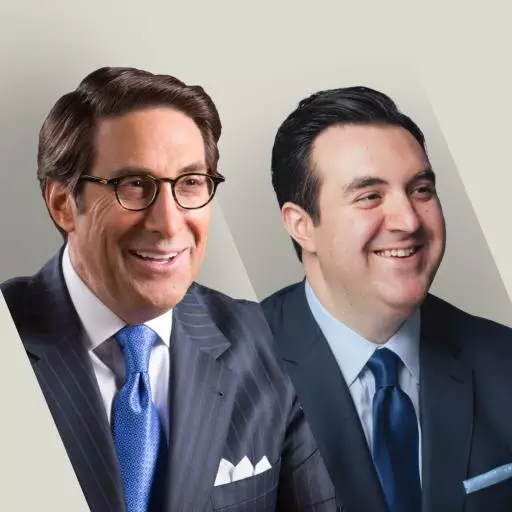
Logan Sekulow is joined by Jordan Sekulow and Will Haynes to discuss the ongoing conflict between the US and Iran.
Logan Sekulow: Welcome to Sekulow. Phone lines are open for you at 1-800-684-3110. I did want to take a minute to thank everyone who supported the ACLJ during the Double the Difference drive, the Double Your Impact drive—all those double drives. Now you get a little break as we can just say thank you. It was a great month, and again to all the members and all the new champions, thank you again so much. Months like this make the whole organization possible, and really it's because of you.
Phone lines, like I said, are open at 1-800-684-3110. As we weren't sure what we were going to talk about, more news is coming out of Iran, and it seems like we may be reentering another conflict. Will the war in Iran resume? Of course, this comes after the ceasefire for a number of weeks now as the new demands have rolled in from Iran to reopen the Strait of Hormuz, and they are far from ideal.
Will: That's right. So, the Iranians have now sent a 14-point proposal to end the war to President Trump. It has a 30-day deadline on it. So they're giving the President and the American government—the administration—30 days to respond to this and to make this happen.
It has no mention of the nuclear program, which is the key sticking point for the United States. That is one of the reasons that this entire conflict began was over the nuclear program. So, the main point that they make in this is that both sides will lift the blockade on the Strait of Hormuz. The United States will withdraw its forces from the Middle East, end all hostilities in the region, including Israel and Lebanon, which is currently in a ceasefire as well, and all sanctions on Iran will be lifted.
The Iranians now seem to think they have the upper hand. This may be because they're starting to see Democrats in Congress say, "Hey, War Powers Act, you're up on this 60-day deadline," which is creating a little bit of a pushback from the administration.
Logan Sekulow: We'll get into that in just a little bit because the President and the administration have doubled down on what could be the resume of this war, or is this a new conflict? We'll debate that coming up in the next segment.
I think you could probably go both ways here. You could have that conversation either way, but certainly President Trump has decided which way he is going to go. Again, Iran's 14-point plan really just says, "Give us everything we want in the war, we'll reopen, but also you're not going to get anything in return."
Will: Exactly, especially with the sanctions part as well, saying you have to lift all sanctions on us. The majority of those sanctions are because of their nuclear program. Now there's others for human rights, for supporting terrorist organizations, etcetera, but a vast majority are due to their nuclear adventurism.
Logan Sekulow: And I want to clarify, in this, also had no mention really of any sort of nuke program or uranium or any of the things that are happening.
Will: No, they said actually the opposite. Their Foreign Ministry spokesperson said that will not be a part of any deal to end this conflict. So clearly they're thinking they have some momentum here, whatever that may mean. Maybe because of the political winds, maybe they're reading some of the polls that are out.
Logan Sekulow: So what comes next? What is the move for the Trump administration? What is the move for Iran? If Iran is not in the business of essentially surrendering, does this war kick back off? What do you think? What do you hope happens? 1-800-684-3110. This after a confusing few weeks as the President even had to cancel some of his plans on meeting, saying we don't even know who we're meeting with—are we meeting with a low-level official? What is it?
What do you think? Phone lines are open at 1-800-684-3110 to be on the air today, and I'd love to hear from you. Again, thank you again for supporting the work of the ACLJ during the Double the Difference drive. It meant a lot and got us pretty far, got us very close to the budget. We will have other months and other opportunities. Of course, you can continue to support, but I also ask you, if you can, just go spend some time on the free content that we're able to provide because you donate. That is at aclj.org, or subscribe right now on our YouTube channel. You're watching; it's a great way to get notified when we go live each and every day from 12:00 to 1:00 p.m. Eastern Time. And again, even if you don't get the full hour on your local radio station, hopefully you're watching us anyway online at aclj.org or any of our live streaming options.
Logan Sekulow: Welcome back to Sekulow. Phone lines are open for you at 1-800-684-3110. I see a bunch of you are just joining us right now. President Trump's been given a list of demands from Iran—that's the best way to describe it—to reopen the Strait of Hormuz completely and what it would look like moving forward as there is a lot of global pressure to get that done.
At the same moment, we are in the middle of a ceasefire. It's easy to forget that that has happened, and we've been in a ceasefire for a number of weeks now. What does that look like moving forward? I feel like President Trump is at least laying out the plan that essentially says we're about to go back in action.
Will: Well, and there's reports that he's frustrated at the inaction on both sides. Either get back to the operations or get to the table. Clearly the Iranians have taken some sort of step back with this latest proposal, also giving a 30-day deadline, now starting to dictate the timeline to the U.S. It does seem that maybe that has stepped back.
But I think it could also show us that when the President decided to remove the United States from talks just a few days ago—really a little bit over a week—when he said we don't really even know who we are negotiating with, that clearly is a signal that things like this were going to start happening.
Now on the other side of that, the U.S. started an operation helping ships traverse the Strait of Hormuz, especially some American-flagged vessels that have shipping containers that are going through that Strait of Hormuz. Then Iran had struck with a drone attack targeting both a UAE tanker and the South Korean government. They are saying they are investigating what appears to be an attack from the Iranians. So Iran is attacking vessels in the Strait of Hormuz. The United States is saying through Scott Bessent that we actually control this. Now there will be some time to let this unfurl and put this back into a perspective. Now I think what you're going to see is what he's referencing is maybe hostilities getting back up to speed, especially with what we're seeing from this type of demand and timeline.
Now back here at home, you have Democrats saying, "Listen, War Powers Act, you hit 60 days."
Logan Sekulow: Let's back up so people don't know. With the War Powers Act, President Trump and the administration really had the ability to go and do this without any sort of confirmation, any sort of vote, any sort of authority given. They had the authority to do it temporarily. It's a 60-day window where if you need to go get something done, you can go get it done and handle it and get out. Now 60 days is almost up. President Trump's got a bit of a caveat to that, and I don't think he's ill-willed or ill-intentioned. I think it's actually probably somewhat accurate, but it may depend on how you read the Act itself how you want to describe it. But 60 days are up from the first day of the engagement, but it has been a number of weeks since there has been. So that one ended.
Will: Well, exactly. So the 60 days and then you have an additional 30 days, so 90 days total where you can wind down hostilities. The Democrats that are detractors of this operation in Iran are saying, "Listen, you hit 60 days, we better see this wrapping up now."
Now the administration has the opposite take. They're saying no, that operation, Operation Epic Fury, for all intents and purposes ended when we started a ceasefire.
Logan Sekulow: And didn't they give this one a new name?
Will: Well, exactly. This is specifically the shipping route one. I believe it is Operation Freedom of something. But when you start to look at this, you're talking about did that happen? Did when a ceasefire happened, even if you don't withdraw everyone, the United States, it seems, did not conduct operations? We did see Iran violating that, shooting drones at Gulf states, at Israel.
Logan Sekulow: Project Freedom?
Will: Project Freedom is specifically focused on the Strait of Hormuz. So once again, who's right? Now with a Republican majority, I don't think it matters that much because who is going to be the ones that would hold an administration accountable? You see all these resolutions they keep trying to pass; they keep failing. If for some reason you start to get poll numbers for people that are nervous in the midterms, you could see people start to peel off and get a resolution passed that is saying the President has gone too far, we need to wrap this up.
Logan Sekulow: And it's certainly not as popular as it once was to have this kind of ongoing conflict. Again, a lot of people thought when day one you had essentially the destruction of the top leaders in Iran, that this could go very quickly. Now in general, it really still has only gone a couple months here. We're not talking about a very long-term engagement, but there is hesitancy heading into midterms as we've seen the polls start to really show where things are going to be heading.
So who knows? You may have some Republicans that also decide this is not worth it—the juice is not worth the squeeze. Maybe we'll hold the President's foot to the fire at this point. What do you think? 1-800-684-3110. We've got a phone call coming in. Let's go to Dale in California. Dale, you're on the air. Let's give Dale a second here. Dale, you there? Ah, put Dale on hold. Let's see if we can get back to him. I think he's just listening on the radio the old-school way, Will.
Will: I hear that. Speaking of old-school way, you've got a villain on your shirt today.
Logan Sekulow: Oh yeah, I got Darth Vader. It's May the Fourth, and you know what? I have a few Star Wars shirts. This is a very 90s-looking one of Darth Vader.
Will: You know he's the bad guy, right?
Logan Sekulow: I mean, in your version of the story. But I think that's everyone's version. You telling me the Rebel Alliance are liberals? Is that what you're saying? He's a strong leader is what I'm told. You know what, at the end of the day, he is the hero of the story.
Will: Well, he does. Yes, there is redemption.
Logan Sekulow: People always say that. They're like, he's the hero. At the end of the day, Tony Soprano loved his son too. After a lot of genocide, actually, I mean he was blowing up whole planets. Whole planets! And then he was like, you know what I don't want you to do is do something to my son. And I kind of can get that. But it is Star Wars day. I'm excited. Me and my kids dressed up. Everyone dressed up, and it is fun to celebrate something. But remember President Trump, he talked about the leader himself?
Will: He did. That's right. Let's take a listen. This is President Trump; this is a flashback to just a few months ago. This is October.
Donald Trump: We have Darth Vader. You know Darth Vader, right? Darth Vader is a man who—I think he's sitting right—is that Darth? Stand up, please, Darth Vader. I mean, they call him Darth Vader, but he's actually a very nice person, Russell Vought.
Logan Sekulow: See, I wish we didn't reveal. I like the idea of just—I love that he says "Darth Vader, stand up." That is the most President Trump thing. Who was he talking about?
Will: It's Russell Vought. He's the Director of the Office of Management and Budget for the administration.
Logan Sekulow: Stand up, Darth Vader's here. All right, we're having a little fun here. Phone lines are open at 1-800-684-3110. We got Dale back? Is he good to go? Dale, California, go ahead.
Dale: So I wanted to ask why we're having a ceasefire when there's tankers of Iranian oil going along the coastline of Iran and Pakistan and they're dumping their oil into a refinery either in India or Pakistan. Which allows them to get money, which will allow them to build more things. So during a ceasefire, they have money to build more things, and they would have money to build a ballistic missile. And I find it hard to believe that they were so dumb that they didn't isolate the refinery so they could have a nuclear bomb someplace really secret that no one knows about. So I'm just concerned about that. When you let your guard down a little bit, then things really happen bad.
Will: Well, Dale, I think to that point, according to the administration, that is not happening. That the Iranian ships are not getting through, they're not going through the coastline, they're not getting to secret places to offload their oil. As a matter of fact, some of the reporting is that they're actually about to be in a bit of a bind because their refineries are about to hit capacity of all the storage that they can have in there. Then they're going to have to stop production, which causes a whole host of issues when they want to restart that production.
So there has been a lot of propaganda out there. One, you saw even Senator Murphy that said something to the effect of like, "Awesome," when that report that 26 ships had gotten through, and people called him out for that. And he's like, "What? I can't be sarcastic anymore?" It's like, no. But also that story wasn't even true. It came out later that it was just Iranian propaganda. I think that goes back to a lot of what we've talked about here—this entire conflict is how well the propaganda machine from Iran has permeated the entirety of American society.
Logan Sekulow: Oh yeah. I mean, I think it's—we're living in a very different time, everyone. I'm looking at comments on social media—Instagram, TikTok, everywhere that we are, everywhere that people are chatting—and it is very interesting to see. Now somewhat, of course, you can say that's bots, that's not real. I can see the ones that are real, though. You can feel the ones that are real. You can feel how society is reacting, and look, I think there is a reason to question something like a military conflict of this scale. I understand that. I have no problem with debating whether or not we need to be at war with Iran. I believe that originally when we were positioned this, we were talking about regime change and all of that. That's where I was more leaning, and then it became a little muddier as time went on.
However, that's not really what's happening. You are having, as Will said, Iranian-backed propaganda seep its way into the mainstream media. You are having the conspiracy theories take over. I was even watching CNN on the way in. I flipped through all the channels; CNN was saying how the conspiracy theories have taken over the right and the left and how they're even sitting there going, "We don't know what to do." And this was coming from CNN, and I kind of want to go, "Well, you're part of the problem," but it is what it is.
Phone lines are open at 1-800-684-3110. Ann and Gene, stay on hold, we'll get to you. Rick Grenell's joining us in the next segment, and then we'll hop around, get some more calls from around the planet. 1-800-684-3110.
Logan Sekulow: Welcome back to Sekulow. We are going to be taking your calls and comments about this at 1-800-684-3110. And as I teased also, back half of the show—which some of you don't get on your local terrestrial radio—you need to be finding us always on aclj.org, on YouTube, Rumble, however you get your podcast. We're there live streaming each and every day, 12:00 to 1:00 p.m. Eastern Time, and of course, archived later on if you're listening to us. There's a second half that runs, and that second half is going to be very interesting. Jeff Ballabon is joining us, the head of ACLJ Jerusalem. He is back in Jerusalem, so we're going to discuss how things are looking actually from a standpoint in Israel right now.
Then following that, we're going to have on former Turner executive, currently the Chief Media Officer for Real American Freestyle, Eric Bischoff, who you may know from his time in WCW and the WWE. But we do want to talk about the passing of Ted Turner because whether you probably agree or disagree with him on his politics, he had a gigantic impact. Probably there's at least an argument to be made that we wouldn't be doing this show, this kind of content, if it wasn't for people like him. So we're going to discuss that a little bit later in the second half.
That being said, you also have, speaking of media, you have former President Barack Obama making the rounds talking about the current conversations that are happening. He's of course promoting his big giant Obama Center in Chicago. He's finally doing press; you don't see him out there all that much. Now he's doing that, and he's out there talking about this and he's started to really have that conversation of what a future relationship with the Republicans looks like, what the future looks like with conservative media. It gets very political, as you'd expect.
Will: Yes, I mean, he starts getting into the proper role of the Attorney General. Remember Eric Holder—his wingman? Let's hear that. This is again, this is Barack Obama just last night on Stephen Colbert. Stephen Colbert's show is wrapping up, by the way, any day now—I think it's the end of the month—but he's having some big guests on, one of them former President Obama. Take a listen.
Barack Obama: We're going to have to do some work to return to this basic norm and we probably now have to codify it. The White House shouldn't be able to direct the Attorney General to go around prosecuting whoever the President wants prosecuted.
Stephen Colbert: Because technically it's under the Executive Branch.
Barack Obama: Technically, but the norm is that it's independent. The idea is that the Attorney General is the people's lawyer. It's not the President's consigliere.
Stephen Colbert: Even when it's Bobby Kennedy?
Barack Obama: Especially when it was Bobby Kennedy. Two of the core principles of a democracy—we can survive a lot. Bad policy, funky elections—there's a bunch of stuff we can overcome. We can't overcome the politicization of the criminal justice system. The awesome power of the state. You can't have a situation in which whoever is in charge of the government starts using that to go after their political enemies.
Logan Sekulow: We just did a 600-page report with the DOJ on how just under the Biden administration's four years—not as effective as the Obama administration's eight, but under just their four years—how they politicized the justice system to go after their political enemies. And it happened to be pro-lifers and religious people, people of faith—cases that we're still taking all the way to the U.S. Supreme Court as we speak.
And so again, it's a little bit much when you had Eric Holder as the Attorney General. This was a guy who, again, you couldn't get much closer than Bobby Kennedy being AG. I do have to say, at least Colbert brought that up, saying it's the people's—we easily forget JFK put his brother.
And it's still, I mean, the people's attorney, but it's the people's attorney—still, it's the Executive Branch, which is run by the President. The President chooses the Attorney General. And again, the way they characterize it is you shouldn't be able to just criminally investigate whoever you want just because the President wants to. That's not right.
But the President can certainly have input, because the people elected the President. They didn't elect the Attorney General. The Attorney General got confirmed by an elected Senate. So if the President thinks there was wrongdoing in any way, he can certainly recommend that the Attorney General have one of their massive investigation teams at least take a look. I don't think that's an abuse of the system.
And by the way, when you have statements like this coming out of Eric Holder—remind people, way back, this is 13 years ago—he had no problem making a statement like this.
Eric Holder: I am still the President's wingman.
Logan Sekulow: And that's—so to reframe it as if historically these roles have not been what President Trump—or like the President Trump has remade these roles—is kind of factually inaccurate. I think that it's just President Trump talks about it more openly. So whereas Barack Obama's not going to be the one—we always said this during the IRS investigation of the Tea Party groups—we always said Barack Obama is not going to go up there and say, "I ordered this." You're never going to get an email saying from Barack Obama. Now you get emails from other officials saying, "Let's do this for him." "Let's do this so we can get jobs inside the administration." We saw that from Lois Lerner. "We can get politically appointed jobs, we get better positions." We'll work with the FBI, we'll work with the DOJ because they will like that we are doing this, but you're never going to get him on the record saying, "Go and do this."
The difference is President Trump hides nothing behind closed doors. So he literally tells the American people exactly what he's thinking of doing. And so instead of hiding it—
Will: Maybe sometimes to his detriment.
Logan Sekulow: Maybe, because the truth is, as we proved in that 600-page report on the Biden administration, they politicized the DOJ. We know the Obama DOJ was heavily politicized. And again, they kind of—and they were kind of the start of that coming back where we had a gap period where, honestly, yes, there's always been this talk, that talk. But where again, certainly you would have DOJs with different priorities based off who was in charge that you could agree with and disagree with, but they really hypercharged the politics behind their DOJ. And the fact that he wasn't just saying it at a press conference makes no difference. And it doesn't mean it's necessarily illegal. You can disagree with it, say it's wrong, but you see how they're trying to codify. What they mean there is they want—
Will: When they say that word, that's a very specific word.
Logan Sekulow: They want Congress to pass a law that the President signs to restrict presidential power when it comes to the Department of Justice. What president would not veto that? And by the way, what Congress does Barack Obama honestly see in the future is going to agree to do that?
Hey, phone lines are open for you and we're going to take your calls actually in the next segment. We usually hold off, take calls towards the end, but we got a packed second half of the show. So if you aren't joining us online or you're not joining us in a way that gets the full broadcast—but like SiriusXM does, Salem News Channel, YouTube, Rumble, however you get your podcast, that's the full hour. Some of your more traditional terrestrial radio stations, they may not carry the full hour or they may split it up. You can always join us live 12:00 to 1:00 p.m. Eastern Time on all those different platforms, and of course you can find us archived however you get your podcast. We are there.
The second half is going to be packed. But we got three lines open right now, 1-800-684-3110. It's going to be a really interesting back half of the show. We're going to move a little bit more to the conversation back to Iran in the next segment because we have three calls lined up. All are about that. We'll try to take as many as we can. A couple of them are ACLJ champions. ACLJ champions are people that give on a monthly reoccurring basis. So I really appreciate ACLJ champions and they get bumped to the front, so two—so they'll go first. Liz, you'll be up first, then we'll move to Mike, and then Tony you'll be after that. So stay on hold if you're on hold. We will do our best to get to as many of you as possible in the next segment.
Then after that, we're going to talk about ACLJ Jerusalem. As the head of ACLJ Jerusalem, Jeff Ballabon will be joining us live from Israel. And then we're going to discuss the impact and the legacy of Ted Turner, who just passed away. Of course, a lot of you may have disagreed with a lot of his political statements, but there is no doubt that a lot of what we get to do here today, and really 24-hour news or any of this kind of—none of that existed before Ted Turner really changed the game. So we're going to be joined by Eric Bischoff, former Turner executive, head of WCW, was an executive at the WWE, Hall of Fame—or he's a WWE Hall of Famer and now is the head of Real American Freestyle on Fox Nation. We're going to talk all about that in this coming half hour. Join us at aclj.org. We'll be right back.
Featured Offer


Featured Offer
About SEKULOW
The American Center for Law and Justice (ACLJ) focuses on constitutional law and is based in Washington, D.C. The ACLJ is specifically dedicated to the ideal that religious freedom and freedom of speech are inalienable, God-given rights. In addition to providing its legal services at no cost to our clients, the ACLJ focuses on the issues that matter most to you — national security, protecting America's families, and protecting human life.
About Jay Sekulow
An accomplished and respected judicial advocate, Sekulow has presented oral argument before the U.S. Supreme Court in twelve cases in defense of constitutional freedoms. Several landmark cases argued by Sekulow before the U.S. Supreme Court have become part of the legal landscape in the area of religious liberty litigation; these cases include Mergens, Lamb's Chapel, McConnell v. FEC, Operation Rescue v. National Organization for Women, and most recently Pleasant Grove City v. Summum.
In 2009, Townhall Magazine named Sekulow to its "Townhall of Fame" and recognized him as "one of the top lawyers for religious freedom in the United States." In 2007, the Chicago Tribune concluded that the ACLJ has "led the way" in Christian legal advocacy. In 2005, TIME Magazine named Sekulow as one of the "25 Most Influential Evangelicals" in America and called the ACLJ "a powerful counterweight" to the ACLU. Business Week said the ACLJ is "the leading advocacy group for religious freedom." Sekulow's work on the issue of judicial nominees, including possible vacancies at the Supreme Court, has received extensive news coverage, including a front-page story in The Wall Street Journal. In addition, The National Law Journal has twice named Sekulow one of the "100 Most Influential Lawyers" in the United States (1994, 1997). He is also among a distinguished group of attorneys known as "The Public Sector 45" named by The American Lawyer (January/February 1997). The magazine said the designation represents "45 young lawyers outside the private sector whose vision and commitment are changing lives."
Sekulow brings insight and education to listeners daily with his national call-in radio program, Jay Sekulow Live!, which is broadcast throughout the country on nearly 850 radio stations. Sekulow also hosts a weekly television program, ACLJ This Week, which tackles the tough issues of the day. He is also a popular guest on nationally televised news programs on ABC, CBS, NBC, CNN, FOX News, MSNBC, CNBC, and PBS.
Contact SEKULOW with Jay Sekulow
jsekulow@aclj.org
http://aclj.org/
American Center for Law and Justice
PO Box 90555
Phone: 757-226-2489
1-800-684-3110
1-877-989-2255