
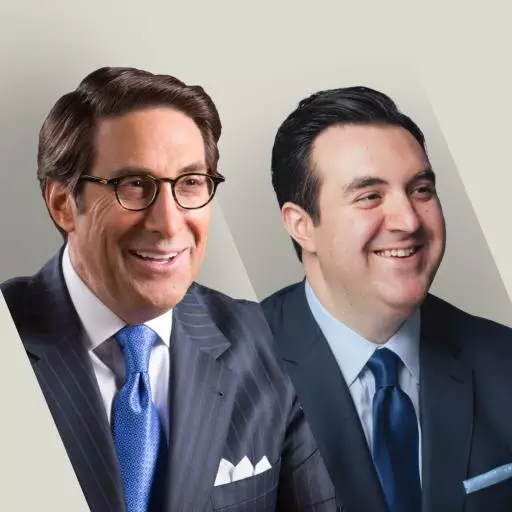
Sekulow Weekend


Logan Sekulow and Will Haynes break down the Supreme Court overturning Trump's emergency tariffs.
Logan Sekulow: Welcome to Sekulow. We made it to another Friday. Here we are. I thought today maybe we would be talking about Iran, but no, the Supreme Court has ruled on President Trump's tariff policy. We'll get into that and what it looks like. It is definitely not a win for President Trump, though it is a little unclear all of the little nuances that come out of the Supreme Court.
We're going to break a lot of that down coming up. Also, the phone lines are open for you at 1-800-684-3110. I'm sure a lot of you have a lot to say about this tariff situation. Make sure to join us for the next hour. We're going to be here again at 1-800-684-3110 to have your voice heard on the air today. Later on in the show, we're actually going to be joined for a segment I did for CCM Magazine by John Michael Finley, who is the star of *I Can Only Imagine 2*, which comes out in theaters today. That's going to wrap up the show, so something a little bit different to wrap up your week. But that's going to be a lot later. Let's cover the breaking news story right now out of the Supreme Court of the United States. Will, what's up?
Will: That's right. We got the opinion this morning from the court, and the short version of what they found is this. This comes from the opinion from Chief Justice Roberts. Fulfilling our role, we hold that the IEEPA, which is the International Emergency Economic Powers Act, does not authorize the President to impose tariffs. Therefore, they are overturning and upholding an appeals court judgment which blocked the use of tariffs under this statute.
But it's a lot more complicated than that. Top line is that they overturned the use of the tariffs under this Emergency Economic Powers Act. But what does it mean in reality? Well, there's a lot of that that we will get to. But once again, this is one of those opinions that we've spent all morning looking at and consulting with the attorneys at the ACLJ.
Just listen to this because this is how convoluted sometimes these opinions come down. Chief Justice Roberts announced the judgment of the court and delivered the opinion of the court with respect to parts one, two-A-one, and two-B, in which Sotomayor, Kagan, Gorsuch, Barrett, and Jackson joined, and an opinion with respect to parts two-A-two and three, in which Gorsuch and Barrett joined. Gorsuch and Barrett filed concurring opinions. Kagan filed an opinion concurring in part and concurring with the judgment. Sotomayor and Jackson joined. Jackson filed an opinion concurring in part and concurring with the judgment. Justice Thomas filed a dissenting opinion. Kavanaugh filed a dissenting opinion in which Thomas and Alito joined.
So, a lot of opinions out there and a lot of dissents. We'll break it all down for you, but once again, sometimes these very nuanced questions of law come down in a very convoluted way when it comes to the Supreme Court based on ideologies and the way that the law is read. We'll get into all that to explain it so hopefully you can understand better what this actually means.
Logan Sekulow: And what this does mean, at least it gives you a positive spin. It gives you a talking point to maybe some of your more liberal friends and neighbors when they say the Supreme Court is overrun by Trump supporters who only will do what President Trump has to say. Well, clearly not, because they ruled how they felt the standard of the law should be. They did not vote on political lines. Again, you can agree and disagree, and I certainly see the comments that a lot of you clearly disagree with the Supreme Court of the United States in this moment.
We are going to take your calls and comments at 1-800-684-3110. This is a great time to get on hold. We're going to take a lot of calls today. It is just me and Will today, and then later on, we have John Michael Finley joining us from *I Can Only Imagine 2*. But it is a packed show, so be a part of it. I want you to support the work of the ACLJ at ACLJ.org. You can sign those petitions that we have. You can get involved. You can check out the app. All those things are great, but they're all available because people like you support us financially. I'm going to ask you to do that today. It is the end of the week. Become an ACLJ Champion if you can. That's someone that gives on a monthly basis, like a membership. It can be at any level, five dollars and up, really. I would just love to see the amount of champions go up this year. Let's get that number up higher. Become a new ACLJ Champion today if you are one, or up your donation if you can. We'll be right back.
Jay Sekulow: The challenges facing Americans are substantial. At a time when our values, our freedoms, and our constitutional rights are under attack, it's more important than ever to stand with the American Center for Law and Justice. For decades now, the ACLJ has been on the front lines protecting your freedom, defending your rights in courts, in Congress, and in the public arena. We have an exceptional track record of success.
But here's the bottom line: we could not do our work without your support. We remain committed to protecting your religious and constitutional freedom. That remains our top priority, especially now during these challenging times. The American Center for Law and Justice is on your side. If you're already a member, thank you. If you're not, well, this is the perfect time to stand with us at ACLJ.org, where you can learn more about our life-changing work. Become a member today at ACLJ.org.
Guest (Male): Welcome to the all-new ACLJ app. Expert analysis and insight big tech can't censor. Customize your news and get real-time alerts on the issues you care about. Advocacy is now at your fingertips. Take action, make a difference, support the causes you care about with just one tap. Be the first to know. Breaking news alerts sent straight to your inbox. Everything you need all in one place. Stay informed, stay empowered. Download today.
We are so excited to announce the ACLJ's brand-new app, completely redesigned to provide you with the best tools available to partner with us at the ACLJ. You can watch the daily *Sekulow* program, sign the petitions, customize your ACLJ membership experience, donate with the click of a button, and receive up-to-the-minute critical updates that the mainstream media can't censor. Just scan the QR code on your screen or go to your phone's app store, search ACLJ, and click install. It's that simple.
Jay Sekulow: For decades now, the ACLJ has been on the front lines protecting your freedom, defending your rights in courts, in Congress, and in the public arena. The American Center for Law and Justice is on your side. If you're already a member, thank you. If you're not, well, this is the perfect time to stand with us at ACLJ.org, where you can learn more about our life-changing work. Become a member today at ACLJ.org.
Logan Sekulow: Welcome back to Sekulow. Phone calls are coming in right now. We're certainly going to take some. We need to reset a little bit because a lot of you are just joining us right now. Maybe you haven't seen the news this morning. The Supreme Court, as the title suggests, dealt a pretty massive blow to President Trump and the Trump administration, saying that their rules on tariffs overall will be considered a loss. Now, there are some nuances to it. We do have to break it down.
We're going to discuss other topics as well, including a potential strike, a smaller strike that could come from Iran. We've got a little alien talk because we know that President Trump last night put out a statement saying that we're going to start declassifying a lot of the conversations surrounding UFOs, UAPs, and all of those things. We'll discuss that a little bit, why this is happening right now, and why President Obama maybe is to blame. But we'll discuss that. Later on the show, as I said, we're going to have John Michael Finley, star of *I Can Only Imagine 2*. So Will, let's break this down again.
Will: That's right. I'm going to start with the opinion because really, there's a tale of two opinions here. One is the opinion of the court. That is the Chief Justice that authored that and has the majority in parts and on the judgment. So at the end of the day, sometimes you get a concurring opinion on some of it but not all of it. The real opinion of the court is only part of what the author wrote. They also concur in the judgment. So at the end of the day, even the liberal members said, "Hey, we agree, let's overturn the tariffs," even if we don't agree with all of your rationale for why.
What this all stems from is the President used the Emergency Powers Act, the International Emergency Economic Powers Act, IEEPA, which is what it's called for short. He declared early in his term a national emergency both on drug trafficking, and that's how he handled a lot of the tariffs with the southern border and other countries that may enable trafficking in some ways, as well as the trade deficit emergency. That is where the vast majority of the global tariffs landed.
This suit that was brought against the administration was from a company that was saying that they were being harmed by it. It's Learning Resources Incorporated et al; there were other members that joined on with that. But they were the head of the plaintiffs here, and they were bringing it against the United States to try and overturn these, saying it's harming their business and that it was beyond the President's scope of power.
The court agreed with them to a degree, saying that the fact that this law, IEEPA, has the words "regulate" and "importation" does not give the authority to levy tariffs or duties. I'll read from page five. It says, based on the two words separated by 16 others in section 1702-A-one, whatever, of IEEPA, "regulate" and "importation," the President asserts the independent power to impose tariffs on imports from any country of any product at any rate for any amount of time. Those words cannot bear such weight.
So they are saying that this broad interpretation of IEEPA does not grant the authority for the President to use what they describe as, and is correct, a tax. The power to impose tariffs, this is also from the opinion, is very clearly a branch of the taxing power. They cite *Gibbons v. Ogden*, and they say a tariff, after all, is a tax levied on imported goods and services. They continue to go on until they give their final judgment. We claim no special competence in matters of economics or foreign affairs. We claim only, as we must, the limited role assigned to us by Article Three of the Constitution. Fulfilling that role, we hold IEEPA does not authorize the President to impose tariffs.
So, all that to say the opinion says that tariffs are a tax and that the Congress, when in giving this law, IEEPA, did not specifically grant the power to the President to use the taxing power through tariffs. Because it doesn't explicitly say it, this broad interpretation will not stand and we overturn the tariffs.
Logan Sekulow: We've got a lot of calls coming in. A lot of them are very similar, to be honest, so we're going to try to sort through these. Cliff is an ACLJ Champion, so Cliff gets to go first. Cliff's calling from Illinois. Cliff, go ahead.
Cliff: Hello. What I said to the screener is if you take a tool out of the President's, the executive branch's, hands, and he doesn't have emergency powers to deal with unreasonable nations, whoever they may be, through tariffs, what would be his only decision to go after ones that are being unreasonable with us? Either you go to my whims, or I'm going to bomb you to oblivion.
Will: Well, Cliff, that is part of the problem that Justice Kavanaugh saw with this ruling. I want to bring that up as well because the court, once again, is also only talking about peacetime. This International Emergency Economic Powers Act is dealing with emergencies that the President declared but not necessarily wartime tariffs, which there are other laws that deal with that because we are not at war with every country in the world and these were global tariffs.
But here is the concern, Cliff, that Justice Kavanaugh brought. One is that he says in his dissent, the sole legal question here is whether under IEEPA, tariffs are a means to regulate importation. The statutory text, history, and precedent demonstrate the answer is clearly yes. Like quotas and embargoes, tariffs are a traditional and common tool to regulate importation.
He goes on to even draw the analogy of which the Chief pushed back and did not agree with, but that the predecessor to this law was Trading with the Enemy Act. In 1971, President Nixon imposed a 10 percent tariff on almost all foreign imports. So the President, using the predecessor to this law, Richard Nixon did a basically a blanket tariff of 10 percent. That was upheld by the Supreme Court in the 70s.
Now, this is a new law that replaced that Trading with the Enemy Act, which had different language but kind of kept the same core language when it came to this. That's where Justice Kavanaugh is saying, "Look, Congress didn't specifically then ban the tariff portion of which was upheld by this court." Then he also goes on to say this is going to create a mess, by the way, because there's a bunch of other statutes that allow the President to impose tariffs. He goes on to say, and I think this is a fascinating statement, basically, in essence, the court today concludes that the President checked the wrong statutory box by relying on IEEPA rather than another statute to impose tariffs.
So the court didn't even say the President can never impose tariffs. They just said maybe he filed it incorrectly. Exactly, that maybe using IEEPA, which was a quicker way to do it than some of these other statutes, they're just saying under IEEPA, no tariffs. Justice Kavanaugh had a big problem with that. He brought the wrong document to the DMV. Tried to get that REAL ID, and that's what happened. Sometimes it takes you a few times to go back.
Logan Sekulow: There are a lot of comments coming in asking specifically about, okay, what does it mean for the tariffs right now? As of today, are they done? Do they not exist? Where are we now with those tariffs, including, by the way, some of you who are in small business who have maybe had some concerns with the tariffs? Maybe you're looking at a little relief here.
Will: When it does come to it, as of this, the tariffs that were imposed under IEEPA, the lower court is upheld that blocked them. So therefore, they are going to no longer be in effect. But here's another problem. So the government is no longer going to be collecting the tariffs, but they've collected billions of dollars of tariffs.
One thing the court didn't address, and it is remanded back to a lower court, so maybe we will see something out of a lower court of how to address this, but the Supreme Court didn't address how to handle the money that they're now saying was collected improperly, which are billions of dollars. Even Kavanaugh points to that, saying that this is going to be a situation because we don't even say how the refund process is likely to be a mess and how is that going to play out at this point? We don't know at this stage of the game.
Logan Sekulow: President Trump will be holding a press conference a little later, so we'll be covering that if there is anything that comes on. We're also going to be discussing the potential for a limited strike to Iran that may or may not be coming sooner than later. We'll discuss that coming up. If you've got a question or comment about that, give me a call at 1-800-684-3110. Of course, the ACLJ is always in big legal fights. When you hear the Supreme Court, I hope you think of us first. We've got two cases headed to the Supreme Court of the United States potentially, and in this critical period, we're going to need your support financially or even just your prayers. We appreciate that as well.
But if you can give and become a champion today, it's a recurring monthly donor. I'll ask you to do that at ACLJ.org. Those cases you know: the U.S. Supreme Court on behalf of Calvary Chapel defending it against Governor Newsom's attempt to crush it under $1.2 million in fines that were enacted during the pandemic. We're still trying to cash in on those $1.2 million in fines. And in this week, the Supreme Court just ordered CNN to respond to our petition, so you know that's going to be a fun one as well. These are two that I know you are on our side, and I want you to be a part of it. It's the important work of the ACLJ. Go to ACLJ.org today, become a champion if you can, read more, watch more, get engaged. We'll be right back on Sekulow.
Guest (Male): Welcome to the all-new ACLJ app. Expert analysis and insight big tech can't censor. Customize your news and get real-time alerts on the issues you care about. Advocacy is now at your fingertips. Take action, make a difference, support the causes you care about with just one tap. Be the first to know. Breaking news alerts sent straight to your inbox. Everything you need all in one place. Stay informed, stay empowered. Download today.
We are so excited to announce the ACLJ's brand-new app, completely redesigned to provide you with the best tools available to partner with us at the ACLJ. You can watch the daily *Sekulow* program, sign the petitions, customize your ACLJ membership experience, donate with the click of a button, and receive up-to-the-minute critical updates that the mainstream media can't censor. Just scan the QR code on your screen or go to your phone's app store, search ACLJ, and click install. It's that simple.
Jay Sekulow: The challenges facing Americans are substantial. At a time when our values, our freedoms, and our constitutional rights are under attack, it's more important than ever to stand with the American Center for Law and Justice. For decades now, the ACLJ has been on the front lines protecting your freedom, defending your rights in courts, in Congress, and in the public arena. The American Center for Law and Justice is on your side. If you're already a member, thank you. If you're not, well, this is the perfect time to stand with us at ACLJ.org, where you can learn more about our life-changing work. Become a member today at ACLJ.org.
Logan Sekulow: Welcome back to Sekulow. Phone lines are open for you at 1-800-684-3110. I wanted to take a call, actually, right off the bat that we were discussing in the previous segment. Let's go to Trevor, who is calling on line one. Trevor, go ahead.
Trevor: I wanted to know, first of all, this Supreme Court ruling seems very off to me. And number two, with the way our economy is going, as a mom-and-pop business owner, and I'm calling from Texas by the way, how would this affect us immediately, especially getting goods from other countries?
Will: Well, here's also part of the problem that Justice Kavanaugh brought up. Based off the ruling, the President has the power to regulate the trade. He could shut off the entirety of foreign imports. Just say we're no longer importing anything. Obviously, that would destroy our economy.
Here is the direct quote. As they interpret the statute, meaning the majority, the President could, for example, block all imports from China but cannot order even a one dollar tariff on goods imported from China. So that goes back to the point of it. If you then put the President in a corner and say, "Hey, you can't do the tariffs," then this President is going to find ways to push back on the things that he sees are harming the economy, such as the trade deficit. So could he start blocking trade with countries? Yes, he could. And I think even under the way the Supreme Court ruled on this, they would say, "Yeah, you're allowed to do that under this law, you just aren't allowed to use a tariff."
Now, here is the question to the mom-and-pop shops as well. In the short term, it may not harm the businesses as much as it's going to be a big mess for our government because of the refunds that the government may have to pay back to those that were the importers that paid the tax. Because once the goods come in, the person that brought them in paid the tax to the government on it. Then that tax, that tariff, is normally baked into the price that then goes to the businesses. So a lot of mom-and-pop shops, unless they are directly importing and not getting from an American supplier, they're already baked in at that price. It shouldn't affect them. What you could see, though, is that prices on goods in the United States that are imported will go down, which in turn, once again, could also bring demand back to mom-and-pop shops for certain items that maybe weren't selling as good.
Logan Sekulow: I mean, let's just be honest. There have been economic issues that have come with the tariffs. A lot of people like you who have called in or people that have been supportive of President Trump have said, "I'm willing to take on those," but it doesn't mean the cost of goods haven't gone up. It doesn't mean importing things hasn't gone up. We know this.
Look, I'll be honest, we're currently in the process of redoing a studio space and just camera gear, those kind of things, have gone up sometimes by thousands of dollars. Multiple thousands. So your budgets have just doubled and tripled. Sure, that may be a bit of a relief as we start rebuilding here, but that doesn't necessarily mean we agree or disagree with the ruling of the Supreme Court of the United States.
Will: Right. And that's why it is a complex question as well. When you talk about tariffs, you talk about what the government originally was funded in this country through tariffs. One of the very first taxes that Congress, as is their authority under the Constitution, one of the first tax bills they wrote was a tariff bill. That is how they raised revenue for the government. That is not to say that where this lands, that it doesn't mean that's a good thing or a bad thing. It's just it was how it was done.
Then you had people like Woodrow Wilson, and you had the income tax law that was then not supposed to be for the entire country, only the top one percent of earners, and it was a very small percentage, and then now we have a very progressive income tax system. What the President was doing here was using tools of the past, one to keep people in check, but also, to his own admission, was raising revenue for the government, which may have been some of the downfall in this case because the justices did see that and they relied so heavily on the revenue portion, even if, as Justice Kavanaugh points out, that, "Listen, there's precedent here that we could have allowed this." The President was very proud of the fact that he was raising revenue for the country through this means, and that is traditionally the Congressional role. What do we know about Chief Justice Roberts? If he can find a way to make it a tax, he's going to make it a tax and find a way out of it. He loves a tax.
Logan Sekulow: Let's take another call about this. Look, I want to know from you. We have a second half hour of the show coming up. We've got a lot of you watching right now. We have some other topics we wanted to hit today: what's going on in Iran, of course. There is some talk of alien talk and what that looks like with the UFOs and President Trump making a big statement last night. What does that look like? Is that a distraction? Is it real? We can break all that down. Or do you want us to stick on this topic? Let me know in the comments what you'd like us to do.
I do want to say one thing. We had someone that said, "Buy American, stop lying about your camera equipment." Good luck. Camera equipment is made in China, in Japan. If you want to see us on a broadcast, which we do every day, those items are made not in America. Yes, I agree that the goal and what the President wants is more things to be manufactured here, but you cannot buy the types of cameras to produce this type of show anywhere. Canon is Japanese. Sony is Japanese. Anything you're looking at is made not in America. Now, there may be American companies, but they're also not making them here. So yes, and if you are expanding, if you're doing a studio, everything is going to go up in price. It's going to go up because those countries that manufacture this, even if you're buying it through an American company, that's getting hit with a tariff. So that is just a little bit of the way to correct that.
And you know that, honestly. Everyone, look at the computer you're watching us on or the phone you're watching us on. If you're on YouTube right now, you likely are watching or interacting with us by a non-American-made piece of technology. Yes, you have an Apple iPhone, which of course Apple is an American company and it says "Designed in California," but where is it manufactured? This is why you have to look at a broader scope on this. And that's why I said, look, there may be some economic relief on certain things. But that doesn't necessarily mean you agree with what the Supreme Court's ruling.
Phone lines are completely jammed. We are going to take your calls coming up at 1-800-684-3110. But I want to take this last minute of this half hour. One, if you don't get the full hour of the show, if you only get some of you on local terrestrial radio, you only get half an hour. You can find us live every day. You can find us on ACLJ.org. However you get your podcast, YouTube, all that. But we are live every day, 12 to 1 PM Eastern Time. That's available on ACLJ.org, on YouTube, on Rumble, on the Salem News Channel, a lot of different sources, Sirius XM that carry us for the full live hour.
We want you to be a part of that conversation. What's great if you interact on YouTube or Rumble or Facebook is you can be a part of a chat, a group of people who are like-minded or sometimes not and have great conversations. I feel like the side conversations sometimes get more interesting than the show itself. Be a part of that community. You can find all of it at ACLJ.org because we do have a full second half hour coming up. Like I said, at the end of the show, we're going to be joined by a special interview I did for CCM Magazine with John Michael Finley from the new movie *I Can Only Imagine 2*. It'll be a nice way to wrap up your week here with us. So you want to stay tuned for that.
But again, only got 45 seconds in this second half hour. Find us later or find us archived at ACLJ.org. But we're live right now for another half hour. But if we do lose you here, you got other things you got to do, become an ACLJ Champion while you're at it. That is someone that supports the work of the ACLJ monthly. You sign up like a membership and, again, you can do that at any level. We consider all of you monthly supporters ACLJ Champions, whether you're giving five dollars a month or five hundred dollars a month. So do it today if you can. Create that great baseline for us. We really could appreciate it. Gives us a great way to budget, plan out our year. So if you're watching right now, you can scan the QR code or easily just go to ACLJ.org/Champions. We'll be right back.
Jay Sekulow: For decades now, the ACLJ has been on the front lines protecting your freedom, defending your rights in courts, in Congress, and in the public arena. The American Center for Law and Justice is on your side. If you're already a member, thank you. If you're not, well, this is the perfect time to stand with us at ACLJ.org, where you can learn more about our life-changing work. Become a member today at ACLJ.org.
Featured Offer


Featured Offer
About SEKULOW
The American Center for Law and Justice (ACLJ) focuses on constitutional law and is based in Washington, D.C. The ACLJ is specifically dedicated to the ideal that religious freedom and freedom of speech are inalienable, God-given rights. In addition to providing its legal services at no cost to our clients, the ACLJ focuses on the issues that matter most to you — national security, protecting America's families, and protecting human life.
About Jay Sekulow
An accomplished and respected judicial advocate, Sekulow has presented oral argument before the U.S. Supreme Court in twelve cases in defense of constitutional freedoms. Several landmark cases argued by Sekulow before the U.S. Supreme Court have become part of the legal landscape in the area of religious liberty litigation; these cases include Mergens, Lamb's Chapel, McConnell v. FEC, Operation Rescue v. National Organization for Women, and most recently Pleasant Grove City v. Summum.
In 2009, Townhall Magazine named Sekulow to its "Townhall of Fame" and recognized him as "one of the top lawyers for religious freedom in the United States." In 2007, the Chicago Tribune concluded that the ACLJ has "led the way" in Christian legal advocacy. In 2005, TIME Magazine named Sekulow as one of the "25 Most Influential Evangelicals" in America and called the ACLJ "a powerful counterweight" to the ACLU. Business Week said the ACLJ is "the leading advocacy group for religious freedom." Sekulow's work on the issue of judicial nominees, including possible vacancies at the Supreme Court, has received extensive news coverage, including a front-page story in The Wall Street Journal. In addition, The National Law Journal has twice named Sekulow one of the "100 Most Influential Lawyers" in the United States (1994, 1997). He is also among a distinguished group of attorneys known as "The Public Sector 45" named by The American Lawyer (January/February 1997). The magazine said the designation represents "45 young lawyers outside the private sector whose vision and commitment are changing lives."
Sekulow brings insight and education to listeners daily with his national call-in radio program, Jay Sekulow Live!, which is broadcast throughout the country on nearly 850 radio stations. Sekulow also hosts a weekly television program, ACLJ This Week, which tackles the tough issues of the day. He is also a popular guest on nationally televised news programs on ABC, CBS, NBC, CNN, FOX News, MSNBC, CNBC, and PBS.
Contact SEKULOW with Jay Sekulow
jsekulow@aclj.org
http://aclj.org/
American Center for Law and Justice
PO Box 90555
Phone: 757-226-2489
1-800-684-3110
1-877-989-2255