
Sekulow


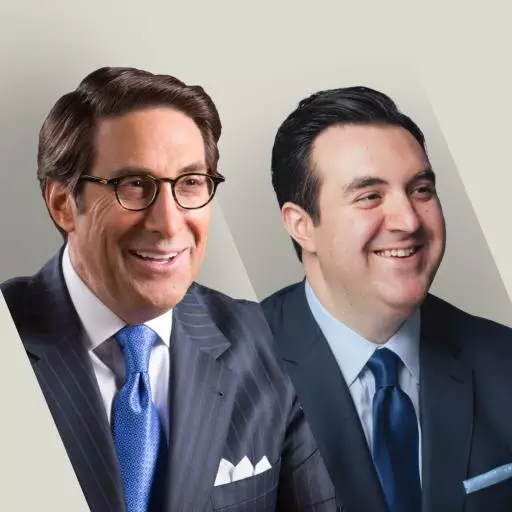
Will Haynes is joined by ACLJ Chief Councel Jay Sekulow to discuss Jack Smith's investigators secretly obtaining text messages from members of Congress.
Guest (Male): Today on Sekulow, we have breaking news. Jack Smith's investigators secretly obtained text messages from members of Congress.
Guest (Male): Keeping you informed and engaged. Now more than ever. This is Sekulow. We want to hear from you. Share and post your comments or call 1-800-684-3110. And now your host.
Guest (Male): Welcome to Sekulow. Will Haines in studio today. We are talking about this breaking news item. This is a release that comes from Senator Grassley and Senator Johnson as they are conducting oversight into Jack Smith's Arctic Frost investigation. That was the entire special counsel investigation into President Trump.
Guest (Male): Now as we found out details along the way that were shocking. We first learned that they were getting subpoenas and warrants for the toll records, the phone records of U.S. Senators. They went to their phone companies and they issued warrants. We also know that then they were trying to seek the records of more than 400 conservatives and conservative-related organizations.
Guest (Male): If that wasn't enough, this new release is that they secretly obtained the text messages, not just the if they sent and received like the toll records, but the actual content of text messages from 44 members of Congress amid this entire probe.
Guest (Male): This is a letter that was sent from the office of the Assistant Attorney General, Patrick Davis, to Chairman Grassley, that talks about this. And it says that, and this is the bottom line, folks, although a filter team, I'm sorry, I'm going to go right back to this page because it says subsequent email documents, the files that are saved directly to the Special Counsel's Team Shared Drive.
Guest (Male): Thus, the Special Counsel's investigative team apparently bypassed the filter team and directly accessed these text messages. The FBI then identified the people whose phone numbers sent or received the text messages, and it is 44 members of Congress, including 20 U.S. Senators, and then 24 members of the House of Representatives, including some Democrats like Cory Booker, Congressman Adam Smith from Washington, and the now current mayor of Los Angeles, then Congresswoman Karen Bass.
Guest (Male): Where's the outrage from them? We're going to break it all down for you what this means, the shocking kind of details that go along with this, and I'll be joined by Chief Counsel of the ACLJ, Jay Sekulow, in the next segment, as he will break this down for you as well.
Guest (Male): It's shocking because they went around their entire process. The filter team was in place from the Department of Justice to try and mitigate these issues, to try and make sure they weren't accessing text messages from sitting members of Congress that they weren't supposed to. And this is where it's the craziest part of it all to me.
Guest (Male): On June 2nd of 2023, Senior Assistant Special Counsel Thomas Windom, he asked the National Archives and Records Administration General Counsel, all text messages from October 2020 through January 20th, 2021, for phones associated with a long list of White House individuals. I mean, that includes people like the current CIA director, by the way. And we'll talk about that as well.
Guest (Male): But these individuals, any of their records, and the National Archives turned them over August 21st, 2023. And within 26 minutes from that email coming from National Archives to the Special Counsel's team.
Guest (Male): The Senior Assistant Special Counsel had downloaded all the files and disseminated them and started getting people to review them before this filter team even had a chance to open the email. Folks, we're going to talk about this, the seriousness of this, and some of the work of the ACLJ that is ongoing on this very issue when we come back.
Guest (Male): Call me if you want to talk about Jack Smith and the egregious abuse of power that we are seeing from this former special counsel. 1-800-684-3110 to talk to me on air. As well, you can support the work of the ACLJ. And I'm going to tell you specific things our attorneys are doing right now about this when we come back and later on in the broadcast. But support us, your donations are doubled at aclj.org/liberty.
Guest (Male): That's right, aclj.org/liberty. Donate today and have your gift doubled.
Guest (Male): We hold these truths to be self-evident that all men are created equal, that they are endowed by their creator with certain unalienable rights, that among these are life, liberty, and the pursuit of happiness. Those are the words of our forefathers written in the Declaration of Independence.
Guest (Male): They are the cornerstone on which our constitutional republic was built. And over the past 250 years, we have formed a great nation. A nation the world has looked to for guidance, for support, and for protection. This month we celebrate our liberty, but that liberty is fragile and requires every American to defend it.
Guest (Male): That's why this month we've launched the ACLJ Liberty Drive. In honor of America's birthday, we're redoubling our commitment to continue fighting against any attacks that would strip us of that freedom. We owe it to our forefathers. You can join the fight right now through our ACLJ Liberty Drive. Go to aclj.org/liberty today and have your tax-deductible gift doubled, dollar for dollar, to enable the ACLJ to fight to defend our God-given liberties.
Guest (Male): We've witnessed monumental legal victories from defending the 14th Amendment and protecting our sacred American right to vote, the overturning of Roe v. Wade, and standing up for the religious liberty of our kids and seniors. But even with the many historic wins we've achieved, the battle is far from over.
Guest (Male): The attacks on our constitutionally protected rights persist. Countless unborn babies remain in jeopardy, and across the globe, innocent Christians are being targeted and killed across this country and around the world. This fight isn't just the ACLJ's. It's all of ours.
Guest (Male): It belongs to every American who wants to preserve the values and beliefs on which this nation was founded. None of the victories we've won would have been possible without the unwavering support of ACLJ members and ACLJ Champions. It's been an honor to fight for you all these years. Join us in fighting for freedom. Have your donation doubled at aclj.org/freedom.
Guest (Male): Welcome back to Sekulow. I'm joined on the phone right now by Chief Counsel of the ACLJ, Jay Sekulow.
Guest (Male): This came out yesterday evening as Senator Grassley, the chairman of the Senate Judiciary Committee, as well as Chairman Ron Johnson of the Senate Investigations Committee, released this information. I think it was Senator Johnson that said it shouldn't be shocking at this point, but it should be outrageous to those that see this news. Because it appears that there are no depths to the constitutional violations and the ways that the special counsel decided to run roughshod over the Constitution.
Guest (Male): I want to get your take when you saw this, Jay, about what the special counsel was doing, obtaining the text messages from sitting members of Congress.
Jay Sekulow: I think what Senator Johnson said is exactly correct. No one's shocked, although it is shocking that he did this, but it's not shocking because we saw the abuses taking place by the Department of Justice, with Jack Smith in particular.
Jay Sekulow: The outrage is palpable, and that is when you sit back and see a list of, you know, 30-something US senators and House of Representative members that have now had their text messages reviewed by a special counsel from the Department of Justice. So you have the executive branch spying basically on the legislative branch.
Jay Sekulow: You're talking about constitutional violations of which we have not seen in our lifetime. This is the quintessential example of not just government overreach, but government run amok with no moorings, with no guideposts, and with no any kind of influence that would stop it.
Jay Sekulow: They were on a runway that was never-ending to violate the Constitution here, and and they did. Now the question's going to be how do you hold them accountable, and we're looking at that as well. But this is beyond the pale. It is beyond the scope of legitimate prosecutorial inquiry.
Jay Sekulow: This was the executive branch, as I said, spying on members of the United States House and Senate and people that they were talking to. And I think you may have had news media people. I mean, you're talking like I could think of First Amendment violations, 14th Amendment violations.
Jay Sekulow: I mean, you could write a a a a when we used to have phone books. This could be a phone book full of violations. We'll see what the Department of Justice does, but I will tell you this, the ACLJ, we're looking at it and we will take action.
Guest (Male): I think what is one of the more shocking parts of this, and we knew how aggressively he was operating as a special counsel and and was kind of ignoring the rules of the game as he went along.
Guest (Male): But when you read this that the Department of Justice had a filter team in place to try and filter out, that's exactly what they do, when they receive records that the special counsel can legitimately ask for, supposed to filter out things that may be attorney-client privilege, that may be speech and debate clause violations if he were to get his hands on for members of Congress, anything that could have raised even a a a hint of a constitutional violation.
Guest (Male): But it appears they they when you read the timeline, it was within 30 minutes that they were aggressively trying to go around that process, and I think that's what's the biggest thing for me.
Jay Sekulow: The taint team by the way, because I dealt with that in representing President Trump. I mean, I dealt with these taint teams. It's it's kind of ridiculous anyways. But your point is well taken, and that is they distributed this material in a nanosecond, and they did that because, I'm assuming.
Jay Sekulow: We don't have I don't have evidence of this, but the timeline certainly indicates that they did this so they didn't have to go to the taint team. Now, what the taint team would or would not have done with this, I don't know, but the idea that the executive branch of government, the Department of Justice, was was looking at the access records of and text messages of sitting members of Congress is unbelievable. Taint team or not.
Jay Sekulow: So, I mean, you know, in one sense the least of their problem is they didn't go through a taint team. That's an internal violation of their own policies, not shocking there either. But, you know, I'd like to know who knew this too, by the way. What did Merrick Garland know this? Did President Biden know this? Did others within the Department of Justice know this?
Jay Sekulow: I'd like to know those answers. So, I'd like to send out a Freedom of Information demand that says, who received this? Who got it? Who distributed it? Who was on that list? Was there information going from the Department of Justice to the White House about these very messages?
Jay Sekulow: Then, of course, you have the fact that AG Jack Smith went up before Congress and at a minimum obfuscated. He he basically either dodged the question but left a clear impression that he did not see these documents. I mean, we could play that, Will, I think that's not a bad idea.
Guest (Male): Yeah, I think this is the perfect time to play this because this is from just December of 2025. This isn't, you know, when some of those depositions that we talked about with James Comey, that where he was either dodgy or it appeared he lied to Congress, were from years back. This is months old at this point.
Guest (Male): When you hear this, this is bite one. It's it's a congressional attorney doing a deposition of Jack Smith. And this goes to that question of toll records and text messages. Let's go ahead and play bite one.
Jack Smith (Audio): Did the records that you requested from the senators include the content of the phone calls? No. The records that you requested, the toll records from the members of Congress, include the content of text messages? No.
Guest (Male): So right there, did the toll records from the members of Congress include the content of text messages?
Jay Sekulow: He's going to say, well, the technicality is technicality is, you know, these weren't toll. I mean, that they go to technicality. But let me say what he did. He left the clear impression to the American people and to members of Congress that it was just what we used to call these pings.
Jay Sekulow: I knew that I texted you, you texted me. I don't know what was said. That is not the case. They had the substantive text messages of these members of Congress and the people that they were texting. So Jack Smith at a minimum, you know, evaded the question. And I think really committed a a form of perjury.
Jay Sekulow: Because he now, he may have a technical defense because of the way it's a toll records versus, you know, text messages and how he got the text messages through the process. But the fact is, what we cannot lose sight of is a member of Congress had his text messages reviewed by the Department of Justice, the executive branch again.
Jay Sekulow: Overseeing, quote-unquote, invading the confines of the legislative branch. In the United States, you know what we call that? Unconstitutional and unacceptable.
Guest (Male): One one question that this leads to for me, and this is something you've been critical of the special counsel process for years. If people have been following this broadcast or the ACLJ, they they know your thoughts on the special counsel process. You've had to deal with special counsels, maybe more than anyone in the United States today when it comes to the Mueller probe and all of those issues.
Guest (Male): There was a lot of questions about even the the way that Jack Smith was appointed, if that was even constitutional. I know that it was raised by Justice Thomas in a dissent about or a concurrence rather, whether this was even a process that follows the Constitution.
Guest (Male): Do you think that this could be, especially now that we see Cory Booker, Karen Bass, Adam Smith, Democrats having their rights violated by this special counsel. Could there be a push within Congress to maybe change some of this?
Jay Sekulow: There should be. Listen, I have been, Will, as you said, I have been critical of special counsels going back to the Bill Clinton era. I didn't like independent counsels before, but at least they were accountable to the to to the executive branch, to the way the Constitution set up.
Jay Sekulow: These special counsels are accountable to nobody. They're not really technically accountable. I mean, in a technical sense, they're accountable to the Department of Justice, but they operate totally independently. That that process is ridiculous. It violates the Constitution. It creates a star chamber, and we shouldn't have that in the United States of America. It's not worth the risk to our constitutional republic.
Guest (Male): Thank you so much for joining me on this important topic. And folks, we're going to be talking more about this in the next segment. If you want to call in, 1-800-684-3110. But I'm also going to talk about what our attorneys are doing right now. You heard our Chief Counsel Jay Sekulow allude to that earlier in this segment.
Guest (Male): We've already been investigating this through FOIA requests, through lawsuits that we have filed, including a lawsuit this week that was filed. I'll tell you about in the next segment. Our attorneys right now, because this is new information, are going over what we already have to see which parts of it there may be overlap, so that we know the best way forward to figure out who received these informations.
Guest (Male): Who was privy to this information? Was it the Attorney General? Was it the President of the United States? We are looking at what we've already got in place and to see where we need to go next. We are that nimble here. We are able to turn on a dime when we have news like this come out that was gotten from the chairman of the Senate Judiciary Committee.
Guest (Male): This is a big deal, folks. And as we heard, this could be the impetus for change when you start to see even members of Congress that are Democrats, that are in the opposing party here, so to speak. It shouldn't be partisan. What's happening here is an attack on on our constitutional framework, on our Congress, on co-equal branches of government.
Guest (Male): If you think that a special counsel, oh, it would never happen to an ordinary American. They're doing it to sitting US senators and congressmen. We'll be right back with more on Sekulow, but you can support our work by going to aclj.org/liberty and donating today.
Guest (Male): Over the past 250 years, we have formed a great nation. A nation the world has looked to for guidance, for support, and for protection. That's why this month we've launched the ACLJ Liberty Drive. We're redoubling our commitment to continue fighting against any attacks that would strip us of that freedom. We owe it to our forefathers.
Guest (Male): You can join the fight right now through our ACLJ Liberty Drive. Go to aclj.org/liberty today and have your tax-deductible gift doubled, dollar for dollar.
Guest (Male): Welcome back to Sekulow. Will Haines here, and I want to hear from you as you're hearing this news. Does it surprise you? Is it outrage you? Call me at 1-800-684-3110.
Guest (Male): I think even if you heard me and Logan talking yesterday, and we're talking about the the way that these ad hominem attacks go forward. We we had this issue with the Supreme Court, and we kind of derailed our conversation because people going after sitting members of the court and saying the, you know, people clearly have other things in mind rather than their duty to the court.
Guest (Male): We went after this, this ad hominem attack situation that we see so frequently. I think also you can be cautioned that if if everything is an ad hominem attack and everything is outrageous, then can you truly be outraged by something? I think this is something you should be outraged by.
Guest (Male): This is where a special counsel that was outside of the traditional framework of the Department of Justice, because of how this is set up, that is very light accountability to the Department of Justice, was able to go and and dig deep and do whatever he wanted. And his team could do whatever they wanted, and didn't really even pay attention to the rules and the guidelines that are there, and tried to find clever ways around them.
Guest (Male): I'm going to play this bite. This is from the special counsel, Jack Smith, in a deposition before Congress in December. What is the context of this deposition? They were deposing him because they were finding out all these things that happened regarding this this operation, the special counsel's investigation.
Guest (Male): Things like getting the phone records of sitting US senators. They were outraged. But they tried to play it down. They said, no, it's not that big of a deal. We were just getting the toll data, you know, if a congressman called or a senator called someone at the White House. That's all we could see.
Guest (Male): We could we weren't spying on them. We were just getting information, right? That's what we were told. So, he had the opportunity also to come clean then and say, hey, by the way, we also scooped up all these text messages. They didn't.
Guest (Male): Then down the line, more reporting that they not only went after members of Congress, but everyday Americans and people that were in conservative organizations. Turning Point USA was a part of that. This special counsel was targeting conservative organizations, trying to get their records.
Guest (Male): Oh, but don't be outraged. It was legitimate. It's fine. It was nothing, no invasion of privacy, whatever. Then we get to the revelation today, that not only did they seek the toll records, but they scooped up 44 members of Congress, their content of their text messages.
Guest (Male): So, we find this out today, but back in December, based off the toll records investigation, he was deposed by Senate investigators. And it's an eight and a half hour deposition. It wasn't a 30-minute interview. Eight and a half hours.
Guest (Male): And multiple times the content of text messages is brought up. We played a bite for you in the previous segment. I want to get byte 10 queued up for everyone. This is more from the investigative team asking Jack Smith, the former special counsel, about contents of text messages.
Guest (Male): I want you to listen very carefully what question is asked and how he answers it. Let's go ahead and roll this from the deposition in December.
Jack Smith (Audio): The telephone out of calls or for you know, the content, that's mostly text messages. Did you see search warrants for the content of any text messages for members? For members? I no, I just all records. Correct. Okay. And for not telling the members, you know, by going through this NDO process, I mean, they didn't have an opportunity to litigate this speech or debate concerns. That's correct. Uh and that's not bigger, you know, I understand your position and and as I I said before, uh we respect the speech or debate clause. I'm aware of no case in the Supreme Court or the DC Circuit uh that says that getting non-content toll records from a third-party uh violates the speech or debate clause. Particularly, where, and I think I'm for important point here, is um these records uh were not um sought um to use against um members of Congress who are targets.
Guest (Male): Okay. So there's a lot to break down there, and I wanted to play this longer bite because the the the first part is about content, right? And he says the attorney, who's asking the questions, the investigator, says, did you seek a search warrant for the content of any text message from members?
Guest (Male): And Jack Smith goes from members, he's clarifying, did I seek a search warrant from members for content from members? And the attorney affirms that, says, yes, that's what I'm asking. He says, no, I don't recall getting a search warrant for the content of their text messages. And so the attorney then once again clarifies, it was just toll records, to which Jack Smith replies, correct.
Guest (Male): That first part, let's break it down. Because on the face of it, we know that they reviewed content of text messages. Here's where he's being tricky. How he got this was by going to the National Archives and asking for the content of text messages not from members of Congress, but from President Trump, Mark Meadows, Dan Scavino, Ivanka Trump, Stephen Miller, Peter Navarro, John Ratcliffe, Kash Patel, Rudy Giuliani, Kellyanne Conway, and Mike Pence.
Guest (Male): And then they didn't go to the filter team. So any person that that list of White House officials, including the president and vice president, any person they were texting with, they got all that information from October to January 20th of 2021.
Guest (Male): So, he's relying on the technicality. It's the lie of omission, where he says, no, I didn't seek a search warrant for the content of members text messages. But I definitely got it. He doesn't say that part. And then where it even goes on to show because this was eight and a half hours, and he had multiple opportunities to talk about what he did get where he's still hiding it from the investigators is when you hear that later part, where they're saying, hey, and it gets into this non-disclosure order that they sought.
Guest (Male): So members of Congress didn't know their toll records were being sought. And the judge, we talked about that, didn't know it was members of Congress when they were requesting this. They were hiding the ball again from the judge that signed off on non-disclosure orders, so the targets of the investigation didn't get uh notified that they were having their information sought.
Guest (Male): And he says, because the attorney's saying that we think this is unfair, you didn't let members of Congress know that you were seeking their toll records. And he says, I understand your position. And as I said before, we respect the speech and debate clause. It doesn't appear that way. He says, I'm aware of no case in the Supreme Court or DC Circuit that says getting non-content full records from a third party violates the speech and debate clause.
Guest (Male): Because the other is not revealed. There is no direct questions asked of the special counsel about, hey, but what about you reviewing all this content and the way you did it without a filter team? So his defense if they tried to say, you perjured yourself, you lied before Congress, he's going to be like, they didn't ask me about this.
Guest (Male): They were asking about this. They were asking about me getting a warrant for their records. He's very crafty and very tricky. But you know what's about to happen? Senator Grassley, chairman of the Judiciary Committee in the Senate said, he's coming back. We're having more hearings on this.
Guest (Male): But right there, you can see how tricky he's being with the investigators. Not forthcoming. And he's trying to make it seem like they never saw the content. But they did. We're going to talk about more of this when we get back on Sekulow. Support the work of the ACLJ at aclj.org. Your donations are doubled.
Guest (Male): Over the past 250 years, we have formed a great nation. A nation the world has looked to for guidance, for support, and for protection. That's why this month we've launched the ACLJ Liberty Drive. We're redoubling our commitment to continue fighting against any attacks that would strip us of that freedom. We owe it to our forefathers.
Guest (Male): You can join the fight right now through our ACLJ Liberty Drive. Go to aclj.org/liberty today and have your tax-deductible gift doubled.
Featured Offer


Featured Offer
About SEKULOW
The American Center for Law and Justice (ACLJ) focuses on constitutional law and is based in Washington, D.C. The ACLJ is specifically dedicated to the ideal that religious freedom and freedom of speech are inalienable, God-given rights. In addition to providing its legal services at no cost to our clients, the ACLJ focuses on the issues that matter most to you — national security, protecting America's families, and protecting human life.
About Jay Sekulow
An accomplished and respected judicial advocate, Sekulow has presented oral argument before the U.S. Supreme Court in twelve cases in defense of constitutional freedoms. Several landmark cases argued by Sekulow before the U.S. Supreme Court have become part of the legal landscape in the area of religious liberty litigation; these cases include Mergens, Lamb's Chapel, McConnell v. FEC, Operation Rescue v. National Organization for Women, and most recently Pleasant Grove City v. Summum.
In 2009, Townhall Magazine named Sekulow to its "Townhall of Fame" and recognized him as "one of the top lawyers for religious freedom in the United States." In 2007, the Chicago Tribune concluded that the ACLJ has "led the way" in Christian legal advocacy. In 2005, TIME Magazine named Sekulow as one of the "25 Most Influential Evangelicals" in America and called the ACLJ "a powerful counterweight" to the ACLU. Business Week said the ACLJ is "the leading advocacy group for religious freedom." Sekulow's work on the issue of judicial nominees, including possible vacancies at the Supreme Court, has received extensive news coverage, including a front-page story in The Wall Street Journal. In addition, The National Law Journal has twice named Sekulow one of the "100 Most Influential Lawyers" in the United States (1994, 1997). He is also among a distinguished group of attorneys known as "The Public Sector 45" named by The American Lawyer (January/February 1997). The magazine said the designation represents "45 young lawyers outside the private sector whose vision and commitment are changing lives."
Sekulow brings insight and education to listeners daily with his national call-in radio program, Jay Sekulow Live!, which is broadcast throughout the country on nearly 850 radio stations. Sekulow also hosts a weekly television program, ACLJ This Week, which tackles the tough issues of the day. He is also a popular guest on nationally televised news programs on ABC, CBS, NBC, CNN, FOX News, MSNBC, CNBC, and PBS.
Contact SEKULOW with Jay Sekulow
jsekulow@aclj.org
http://aclj.org/
American Center for Law and Justice
PO Box 90555
Phone: 757-226-2489
1-800-684-3110
1-877-989-2255