
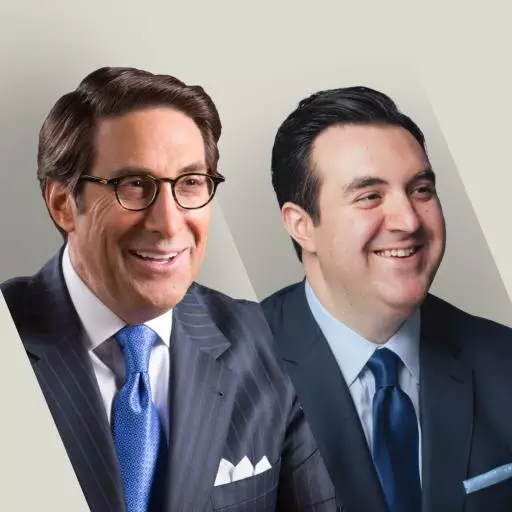
Sekulow


Will Haynes and Jordan Sekulow break down the Supreme Courts release of several historic opinions.
Will Haines: We have breaking news as the Supreme Court releases historic opinions. We'll break them all down for you today on Sekulow.
Announcer: Keeping you informed and engaged now more than ever. This is Sekulow. We want to hear from you. Share and post your comments or call 1-800-684-3110. And now your host.
Will Haines: Welcome to Sekulow. Will Haines here. Jordan Sekulow joining me in studio. Today was the final day of opinions for the Supreme Court's term as they normally like to get out before the July 4th holiday. They were able to get the rest in. What we see here are, as per usual, the most contentious issues end up being the ones that they release last.
We had decisions in the executive order related to birthright citizenship. That case, *Trump v. Barbra*, was decided and the opinion written by the Chief Justice. We had a National Republican Senatorial Committee versus the Federal Election Commission. That is a campaign finance ruling that the ACLJ filed in. We'll break that down for you as well. That opinion was written by Justice Kavanaugh.
Then we also had a second one from Justice Kavanaugh, which related to biological males playing in female sports at the state level where states like West Virginia and Idaho had laws banning that and the questions around Title IX and equal protection. All of those issues came up. That was also authored by Brett Kavanaugh.
We're going to break it all down. We hope to have the Attorney General of West Virginia, J.B. McCuskey. Obviously, that was a big case for his state, West Virginia. We will see. Obviously, it’s a very busy day. If we don't get him today, we'll have him on soon. But Jordan, the most contentious is always the final day, and that's what we got today.
Jordan Sekulow: The ramifications of the case out of West Virginia that I believe 25 other states, or 26 states in total, the red state AGs all joined in very clearly and saying this is not about being anti-trans people, this is about protecting women's sports and girls' sports.
So while we've had this debate going on in the country, what we're talking about here is state sporting. So we're talking about high school, we're talking about younger kids. We're not talking about what happens in college and what happens with the NCAA and these other entities. We're talking about states that have said we're not going to have genetic boys on girls' teams. We're just not going to allow it.
We have a history of people who have been injured. We're seeing these races being won ten times faster by those who are born as boys and competing as women. All it does, and I thank West Virginia and I thank those other 25 states that joined with West Virginia and the Supreme Court. As a father of two daughters and a son and watching them grow, even though my son is the middle child, you see the strength difference already between him and even his older sister. You can already see some of the strength difference. Imagine as that plays out. So it's a huge win for all of us who are parents and especially those of us who have little girls as well as boys.
Will Haines: Well and once again, that opinion was handed down and was a very conservative opinion in the sense that it said the states can make their laws. This isn't a constitutional issue as of this point.
Jordan Sekulow: Right. They have not made a universal national ban. So this is very much going to be battles that happen in your state. Now, like we said, many states, more than half, already have laws doing this. And so they were waiting for the Supreme Court to clarify those laws.
The question for you is if your state is not covered and you're in one of these blue states that wants to push further and further and you've got a great athlete who happens to be female, a daughter, do you stay in that state when you know that it could be tough to ever reach the podium? We've seen it already happen because they are having to compete against boys.
That's what the Supreme Court said you do not have to allow in your state. They didn't say your state can't do it. So it's a choice of you've got the right to travel in the United States, the right to live where you want. People should think about that now when they are deciding on a move. Folks, when we get back, we're going to talk about the other decisions from the Supreme Court and the big one on birthright citizenship, that executive order. We'll let you know how it came down in the analysis when we come back on Sekulow.
Will Haines: Welcome back to Sekulow and I think we're going to dive right now into *Trump v. Barbra*. This is the most contentious issue of the term. This was the executive order from the President that defined the way that citizenship would be conferred on those that are born in the United States. This was trying to restrict the citizenship granted to those that are born here to parents that are not citizens of the US, whether they come here illegally, or through a travel visa. They come here, have their child, and they call it birth tourism. Here's what happened.
The majority of the court, which was Chief Justice Roberts joined by Sotomayor, Kagan, Barrett, and Jackson, affirmed that what the 14th Amendment is saying is that if you are born here, you are granted citizenship. There has been some pushback saying that the court didn't have to go that far. They could have just ruled on the executive order, so that's some of the chatter I'm hearing.
But you also see how contentious even within the court it was because you're seeing a concurrence by Justice Jackson for different reasons than what the Chief wrote. You see Justice Kavanaugh concurring that the executive order must be struck down and that federal law would give them citizenship, but he's not willing to rule that the 14th Amendment's text says that.
Jordan Sekulow: He's saying if this was done through the legislative process, I may have a different decision here.
Will Haines: Exactly. Then you have a dissent by Justice Thomas who was joined by Justice Gorsuch, a dissent by Justice Alito, and another dissent by Justice Gorsuch. So you're seeing a lot of different opinions and a lot of different reasons for not agreeing with this.
Here's a key takeaway. This is from our attorneys because we have a wonderful team here. As soon as these come down, they're writing memos for us and giving us the analysis. This is a key takeaway from Nathan who wrote this for us. It's a 6-3 outcome affirming broad birthright citizenship, but the court is sharply divided on the why. Five justices read the clause as adopting the traditional soil rule with almost no exceptions. Being born on American soil. While three insist on a narrower domicile plus exclusive allegiance test. That would be the minority that dissented.
This split will shape future fights over immigration enforcement and any congressional attempts to limit birthright citizenship. So right there, one, and this is something I said yesterday, Jordan, that when you see the left try to attack the Supreme Court as being packed by Trump or saying they need to expand the court so they can get their way, the fact that we are getting decisions that may not make everyone happy shows that it's working.
Jordan Sekulow: Well, see, this is the difference, folks, between Republican and Democrat judicial nominees. And when I say that, I mean it's not the nominees themselves who are placing that partisan role, but when they are nominated by a Republican or Democrat president.
You basically know where the Democrats are going to go 99.9% of the time. They're going to be in agreement. They're going to be their block. You could almost not have any briefing on it. You could almost not have any argument. You could just literally read what this case is about and what it entails, and you'll say they're going to figure out a way to rule for this side. Whether they're in the majority or not depends on the politics of the day, but they're going to figure out how to go with this side that they agree with the most on a philosophical matter, not on whether it's legal or the best interpretation of the Constitution and statutes.
The difference with the conservative nominees is that on the same day that you can have restrictions totally knocked down between campaign financing between the RNC or DNC and campaigns. There were all these limits on how much they could coordinate and whether free speech came into that, and the court again was equally divided there. The conservative six said you can do this and this ban is wrong.
You look at that. You look at the continued cases. You go from birthright citizenship but then you go into the issue of girls and boys sports. And again, it aligns very closely with what you think politically, not necessarily what's rational or legal. It's like, because the politics of those who nominated me support this issue even though they may not be legal scholars, I'm going to figure out a way to get there for them and I will be that dissenting voice if I have to.
So on the same day, you can have the boys banned from participating in girls' sports, which is a decision I think most Americans agree with right and left if you're actually telling the truth. There are less and less places where people feel comfortable doing that.
Then you get to birthright citizenship, a little bit more complicated. So does this line and how that's interpreted, is it going to hold? As of now, it's going to hold. I was at that oral argument. It was extremely complicated, which is why, Will, you've got all these opinions and different dissents coming out.
Is it over? Maybe for now, but not necessarily for the future because there were so many different views about why it was right or why it was wrong. And then of course you look at these cases on the executive orders, on the ability to appoint and get rid of officers. This was yesterday, of course, the Labor Relations Board versus the Fed.
We are at an interesting point at the US Supreme Court where yes, there have been cases that have increased presidential power. At the same time, this same court has issued opinions that actually pull back on some of the power that they just created in a case that was announced just moments before.
Will Haines: Right, exactly. When you look, there was almost some confusion within. You had the FTC versus the Fed, right. Is that really going to stand long-term? That remains to be seen. They were able to kick the can a little on that case because they said there was no hearing on the misconduct, so at least have the misconduct hearing and then see what happens. But they also said it wouldn't necessarily be barred by this.
So I think again, the court is going in a direction that I think most people philosophically understand, but the left is going to make every one of these out of politics. It's a huge loss for President Trump on the executive order. But the interesting thing about the executive order was if you go to that Kavanaugh kind of phrasing there, it's saying this might not have been the best route to do it. I am not holding today that you can't do it and it doesn't necessarily need a constitutional change.
Now, we have an aging court right now, so we believe we will see shifts in the court in the next few years. That will of course depend on who is the President of the United States. It is frustrating to be on the side where unfortunately we can't just say, well, 99% of our justices are going to vote this way and occasionally get thrown off. We are in the intellectually honest party where people who believe the same basic principles can still get to a different opinion using the same analysis and I think we respect that in the United States. It can be frustrating sure, I absolutely get that. But that is what you do when you have intellectual honesty and that's what the left is lacking.
Intellectual honesty, even media honesty, we saw something today that was quite unique. And Rob is in South Carolina, we're going to get to you in the next segment. So hold on there, Rob, but if you want to call and have questions about these opinions, call us at 1-800-684-3110. We'll break it down for you and we'll try to answer any question you may have on the way that the court ruled.
But when you start to look at the media, Nina Totenberg, who's normally very good with her sourcing at the Supreme Court. She's the legal analyst and journalist at NPR and has been there a long time. Normally, if she's printing something then she's got very good sourcing. NPR ran and published that Justice Alito was retiring from the Supreme Court. There's the headline if you're watching, it says Justice Samuel Alito, who wrote the opinion overturning *Roe v. Wade*, retires.
Moments later, NPR had to retract that story and this is what it looked like if you went to that page. People tried to share the link. Editor's note, NPR retracts the story. Jordan, we still may see an Alito retirement because Nina Totenberg normally wouldn't have written that unless she had sourcing that at least led her to believe it was very close to being true. They obviously had the story ready to publish. It has not happened yet, but once again, that's the media trying to get out ahead of stuff.
Jordan Sekulow: Unfortunately, because of the media cycle, there's a number of those stories already ready to go. Even if people are passing away sometimes, they have the block print ready to go based off of just so that they can rush to the media then kind of fill in the parts.
Does this mean that it's not going to happen? Absolutely not. What it does mean is that someone made a phone call and said, "I did not say to run this." It could have been her, or it could have been from the Supreme Court and they called and said there's been no planned announcement yet and you need to make clear that this is wrong.
Does that mean that tomorrow or Monday Justice Alito may announce something? No, of course not. He can do that whenever he wants. Could be this afternoon. But it was very bizarre again. On a day that was already busy enough, to throw that wrench in was unnecessary by the media. It's not like they needed help getting clicks right now. You've got more clicks on SCOTUS because it covers so many different issues today from birthright citizenship to presidential power yesterday. All of these issues together, I think for those who watch the Supreme Court, it's been a very interesting morning.
Will Haines: That's right and we're going to take your phone calls in the next segment and break down this Federal Election Commission case when we come back on Sekulow.
Welcome back to Sekulow. Will Haines here, Jordan Sekulow in studio and we're breaking down these opinions from the Supreme Court. I briefly want to go over this before we get to phone calls because this is something that the ACLJ filed in and it's *NRSC v. Federal Election Commission*.
What this does is it challenged rulings from the FEC that were put in place to limit how much a political party, if you are a candidate that is running for office under a political party, Republican, Democrat, even independent, it limited how much that party that you are running for office under can coordinate with you on ad spends on buying advertisements.
I know people love a good political ad, so this is going to get people fired up. But when you look at it, it is a First Amendment issue. It is putting guardrails and things on the First Amendment which are not in the text of the Constitution. I think a lot of this, when you look at it, it's not just even about spending money in campaign ads, it is truly a First Amendment issue and when the ACLJ is able to file in these things, it is to uphold and support the First Amendment first and foremost.
Jordan Sekulow: Yes, and let me just be clear to people, the Supreme Court has had a history going back into the 70s that political speech includes financial moves because that's a way you can speak on behalf in support of a candidate. So you taking your own resources or an entity taking its own resources to get behind a candidate is a way that speech can actually be conducted.
That's not just the symbolism of you've got to be on the street corner or the bumper sticker, but they are saying it's similar to the bumper sticker. It's similar to going door-to-door because you're providing resources of your own to the candidates and political parties that you prefer.
I will walk you back to 2004, the first time I worked in a presidential election where a lot of these big restrictions kick in because you're dealing in all 50 states. For the first part of the year, I remember the fundraising team, finance team as it'll often be called. This was Bush-Cheney Re-elect 2004. They were in the same office with us from the political team.
Then because of deadlines, there were like those 90-day things and six-month things, the finance team for the most part moved next door. It had a different name, it was like Bush-Cheney '04 Victory Fund. You would have these funds set up. They would then be in charge of fundraising. We would still be producing content, but it would be that content that you could pull offline and make into your own videos. They were unrestricted so they did not have to follow the restricted fundraising rules that federal candidates have.
The 26, 2700 dollars you can do for both one for the primary and then again for the general, so it's closer to almost 6000 dollars per individual and you can make that donation at one time. But then they split off. It created this whole industry of all of these separate types of groups to be able to raise money but then not coordinate.
What the Supreme Court said today is if these are all people coming together and using their rights, using their financial ability to speak into the political process, you can speak into the political process by providing the candidate of your choice enough resources so that their speech is amplified.
That could be through online, through ads, traditional advertising, t-shirts, hats, bumper stickers, or events. In a sense, all of that is speech and speech is so protected in the United States that when you're spending your money, the government shouldn't be able to tell you, "Well, if you donate to this group, they can only spend it this far." It's different than coordinating support for the candidate.
It was also a joke. This whole idea was that we were playing with smoke and mirrors that I think always made many of us in the political side slightly uncomfortable. Maybe the election law attorneys liked it more than those, but you were constantly having to get approvals over sometimes very mundane spending because you were worried about the penalties and even criminal penalties that could arise out of a mistake in whose money was spent to do what activity.
I think we should go ahead and take this call. We've got about three and a half minutes left in this segment. This is Rob calling from South Carolina. Maybe it'll encourage you to call as well if you have questions about some of these opinions that came out of the Supreme Court today. Rob, you're on Sekulow. Go ahead.
Rob: Yeah, can you hear me?
Will Haines: We got you, Rob. Go ahead.
Rob: Okay. On birthright citizenship, what constitutes subject to jurisdiction and then what constitutes allegiance to the United States?
Will Haines: Okay. So the big hinge question here in the 14th Amendment is that question you're asking. It says all persons born or naturalized in the United States and subject to the jurisdiction thereof are citizens of the United States and the state wherein they reside. That is the text of the 14th Amendment.
What the Supreme Court ruled was that in this, and it's a lengthy opinion by the Chief Justice, that effectively that phrase, if you are born here, you are subject to the jurisdiction thereof. That obviously is what the issue with some of the dissents are still arguing. They say they disagree with that.
But this is what the majority held, Rob, that the citizenship clause guarantees birthright citizenship to nearly all children born in the United States, including those whose parents are unlawfully or temporarily present because it incorporates the common law rule of jus soli without a domicile requirement. And the quote "subject to the jurisdiction thereof" means full territorial power rather than exclusive allegiance or permanent residence.
That is what the Supreme Court argued in their majority opinion. That's what they held, rather. So that's the answer to your question. I know you also said to the screener how could they rule in favor of birthright citizenship when people that are applying for citizenship have to prove their allegiance to the United States. That's a different test. That is the naturalization process, which is through a different process that is set up legislatively. The government can naturalize someone to be a citizen.
But it’s a completely different argument because even those who have birthright citizenship, and if you are born here to American citizens, you get citizenship without proving your allegiance to the United States if you are born naturally to citizens of the United States. So they are two different processes.
Jordan Sekulow: Yeah. So it's been an expansion of and really a clarification of what it means as to who can receive birthright citizenship. There are still some exceptions within this, foreign diplomats' children and things like that.
The idea, and I knew this all along too which was likely, is that it's one thing to punish the parents of illegal immigrant children who were born here because they decided to break the law, but the child had no say in that. They end up born in America, and so where should their citizenship fall when it was really not them that were breaking the law but their parents?
It was a complicated case. It's one I think we'll keep looking at as well. But for now, that's been settled and as Will said, it is very different. We will be back with more on Sekulow. Support the ACLJ and all the work we do at aclj.org. Consider donating today.
Featured Offer

Featured Offer
About SEKULOW
The American Center for Law and Justice (ACLJ) focuses on constitutional law and is based in Washington, D.C. The ACLJ is specifically dedicated to the ideal that religious freedom and freedom of speech are inalienable, God-given rights. In addition to providing its legal services at no cost to our clients, the ACLJ focuses on the issues that matter most to you — national security, protecting America's families, and protecting human life.
About Jay Sekulow
An accomplished and respected judicial advocate, Sekulow has presented oral argument before the U.S. Supreme Court in twelve cases in defense of constitutional freedoms. Several landmark cases argued by Sekulow before the U.S. Supreme Court have become part of the legal landscape in the area of religious liberty litigation; these cases include Mergens, Lamb's Chapel, McConnell v. FEC, Operation Rescue v. National Organization for Women, and most recently Pleasant Grove City v. Summum.
In 2009, Townhall Magazine named Sekulow to its "Townhall of Fame" and recognized him as "one of the top lawyers for religious freedom in the United States." In 2007, the Chicago Tribune concluded that the ACLJ has "led the way" in Christian legal advocacy. In 2005, TIME Magazine named Sekulow as one of the "25 Most Influential Evangelicals" in America and called the ACLJ "a powerful counterweight" to the ACLU. Business Week said the ACLJ is "the leading advocacy group for religious freedom." Sekulow's work on the issue of judicial nominees, including possible vacancies at the Supreme Court, has received extensive news coverage, including a front-page story in The Wall Street Journal. In addition, The National Law Journal has twice named Sekulow one of the "100 Most Influential Lawyers" in the United States (1994, 1997). He is also among a distinguished group of attorneys known as "The Public Sector 45" named by The American Lawyer (January/February 1997). The magazine said the designation represents "45 young lawyers outside the private sector whose vision and commitment are changing lives."
Sekulow brings insight and education to listeners daily with his national call-in radio program, Jay Sekulow Live!, which is broadcast throughout the country on nearly 850 radio stations. Sekulow also hosts a weekly television program, ACLJ This Week, which tackles the tough issues of the day. He is also a popular guest on nationally televised news programs on ABC, CBS, NBC, CNN, FOX News, MSNBC, CNBC, and PBS.
Contact SEKULOW with Jay Sekulow
jsekulow@aclj.org
http://aclj.org/
American Center for Law and Justice
PO Box 90555
Phone: 757-226-2489
1-800-684-3110
1-877-989-2255