
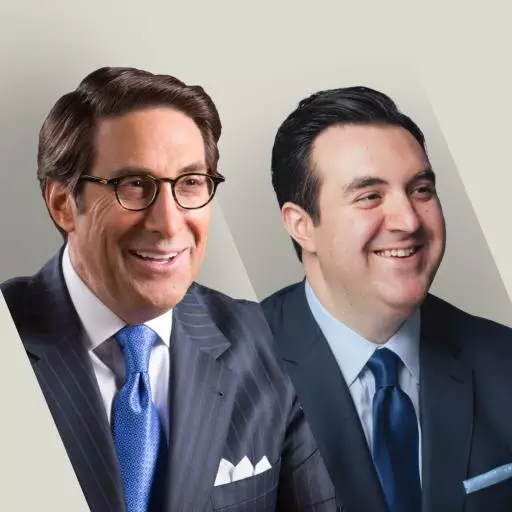
Sekulow


Logan Sekulow breaks down the Vice President's press conference detailing and defending the Memorandum of Understanding with Iran.
Logan Sekulow: The memorandum of understanding has been signed by President Trump. That happened just really a few hours ago, but overnight that happened. That was at Versailles, where it was signed. Now we have the agreement, and at the same time, we have Vice President Vance currently, right now as we are live, taking questions from reporters specifically on the Iran deal.
We know he has been heading up a lot of this and taking a lot of flak for it. Look, I know you guys have a lot of questions or comments about this. Maybe some positive, maybe some negative. It is okay. Give me a call. 1-800-684-3110. I want to hear from you. You are as much a part of this show today. It is just me and you today. We will have Rick Grenell joining us a little bit later.
But let's break it all down. We are going to go through it point by point, discuss it, and then at the very end of the show, we are actually going to have Will Haines read you pretty much the entire plan and what it looks like and give you a little commentary as well. So you are actually going to hear it word for word. I think that is very important. That will be at the very end of the show.
But I think we should start off. Again, Vice President Vance is speaking right now. This just happened moments ago. Let's go to bite 13.
JD Vance: Number one, they would have to get a lot of money in order to rebuild their nuclear program. You are talking about billions and billions of nuclear infrastructure that the United States destroyed. In order for them to rebuild that program, they would have to get a lot of money, and we have them in an economic chokehold right now that we are not going to release until they fundamentally change their behavior.
What would that look like? That would mean a real inspections regime. That would mean a real enforcement regime. As the MOU contemplates, that would mean the destruction of their enriched stockpile. All of these things are the sorts of steps you are going to take if you are serious about ending your nuclear weapons program.
And that again is why I go back to this fundamental trade that is built into the deal. They need money to do anything. Their economy is in absolute dire straits, but in order for them to get any integration into the world economy, they are going to have to show us and verify for us that they are changing their behavior. That is why the deal is set up in the way that it is.
Logan Sekulow: I think that is maybe one of the big fundamental misunderstandings that is happening within this. Again, that was JD Vance. He is currently still speaking, by the way, on this topic right now from the White House. This is happening in real-time, and we are making sure we are covering it. If anything needs to come in, right now it is kind of like question and answer time. We are going to have some more statements from him coming up throughout the show, as well as from President Trump and others.
Again, I think one of the big misunderstandings is how the financial part of this is going to work. You are seeing that $300 billion number be thrown around a lot, and what they are not saying is, of course, any sort of investment—we are not talking about, again, American taxpayer investment, we are talking about even just investments from the world stage—would have to be at a point where Iran is showing that they have changed and continue to change.
It is not like, here is a check, go ahead and do what you want to do. There is a lot of conversation. Look, I think there is good and bad here. I don't want to sugarcoat it and act like we think that all of this is good. But I do think there is a little bit more blue sky than people are showing, even in the conservative press. There is some good in this. Do I think it is the perfect deal? No, but again, it is also not the final deal. It is still the memorandum of understanding that has been signed.
A final deal will still come 30-plus days from now, and that is if Iran sticks to what they agreed to, which again is essentially holding on any sort of enrichment, any sort of nuclear—pretty much staying the status quo, which at this point is at zero due to the original attacks. And we obviously have to see how Israel reacts. We have to see how all this reacts. We have a lot of commentary to go through, but I want to hear from you. 1-800-684-3110.
Again, the signed memorandum of understanding with Iran happened late last night, and it happened at Versailles with French President Emmanuel Macron sitting right next to President Trump as he is set to return to the United States today. So that is just an interesting visual to think about, the fact that this deal happened in the Palace of Versailles. What a world we live in. And what a President Trump kind of move. 1-800-684-3110. I do want to hear from you. If you are watching online, let me know in the comments right now where you are watching from. Be a part of the show today at ACLJ.org. Support the work if you can. Become an ACLJ Champion. Be right back.
Narrator (Male): The challenges facing Americans are substantial. At a time when our values, our freedoms, and our constitutional rights are under attack, it is more important than ever to stand with the American Center for Law and Justice. For decades now, the ACLJ has been on the front lines protecting your freedom, defending your rights in courts, in Congress, and in the public arena. And we have an exceptional track record of success.
But here is the bottom line: we could not do our work without your support. We remain committed to protecting your religious and constitutional freedoms. That remains our top priority, especially now during these challenging times. The American Center for Law and Justice is on your side. If you are already a member, thank you. And if you are not, well, this is the perfect time to stand with us at ACLJ.org, where you can learn more about our life-changing work. Become a member today. ACLJ.org.
Welcome to the all-new ACLJ app. Expert analysis and insight Big Tech can't censor. Customize your news and get real-time alerts on the issues you care about. Advocacy is now at your fingertips. Take action, make a difference. Support the causes you care about with just one tap. Be the first to know. Breaking news alerts sent straight to your inbox. Everything you need, all in one place. Stay informed, stay empowered. Download today.
We are so excited to announce the ACLJ's brand-new app, completely redesigned to provide you with the best tools available to partner with us at the ACLJ. You can watch the daily Sekulow program, sign the petitions, customize your ACLJ membership experience, donate with the click of a button, and receive up-to-the-minute critical updates that the mainstream media can't censor. Just scan the QR code on your screen or go to your phone's app store, search ACLJ, and click install. It is that simple.
Logan Sekulow: Welcome back to Sekulow. Of course, phone lines are open for you, and I want to hear from you. As you may know, the agreement has been signed. President Trump signed it late last night at the Palace of Versailles. I want to break down some of the information that has come out from it. We will go through some of the details, but I also want to not ignore right now that JD Vance, who has taken a lot of credit or maybe a lot of blame depending on what side you are on for this deal, is talking right now as we speak about this.
So I think we should hear from Vice President Vance. And when we get done with this bit, I will also break down some of the big talking points, the big headlines. And then later on in the show, we have Rick Grenell joining us. He will give us an insight. And then at the end of the show, I want to make sure you hear the deal yourself.
So Will Haines put together a great video package—our team did with Will—where Will just broke it all down, read it essentially word for word for you. So you are not going to want to miss that. That is going to be the very end of the show. Between now and then, though, I want to take your calls at 1-800-684-3110. I want to know what you think of this signed agreement now that we have all seen it. But let's hear again from Vice President Vance, and then we are going to break more down.
JD Vance: Now what I would say to some of the critics of the deal that I have heard, that say, well, Iran is going to get all this benefit. I will repeat what I have said, and I am probably going to have to repeat it a number of times, is what is the benefit that the Iranians get that they didn't have before? And the answer is nothing. They don't get anything unless they change their behavior.
If they change their behavior, that is a thing to celebrate. That is going to transform the Middle East for a generation. If they don't change their behavior, they don't get the benefit of the bargain. And I think I have to be honest, I think fundamentally this idea that—and it is a misrepresentation of the MOU—this idea that the Iranians get all these benefits before the deal is actually consummated, the idea that they get benefits before they change their behavior, is fundamentally a talking point that is issued by people who want the conflict to continue indefinitely despite the fact that that is not good for the American people and it is not good for the region.
Logan Sekulow: I think the idea here is, look, if we are not going to have the full-blown regime change of which we thought was—how do you do that from the inside out? So of course, you get rid of—I think there is some good here—you got rid of some really, really bad people. You got rid of the Ayatollah. You got rid of a lot of the pretty much the entire top-line government.
And now you have a government that maybe—and I am being very hesitant on the maybe—is willing to work with you and work on a global stage. You have a Strait of Hormuz opening. You are going to have oil prices drop. That is going to happen, as long as this deal sticks, that is going to happen in the next number of weeks. We know oil prices already dropped, but I am talking about specifically for you at the pump. We know that is going to happen.
But look, President Trump wanted this war to be over. I think that is very clear. Did not want it to keep going on. The first paragraph of this memorandum of understanding, I will read for you, says: The United States of America and the Islamic Republic of Iran and their allies in the current war, by signing this MOU—again, people are using the MOU pretty regularly now, Memorandum of Understanding, a deal memo if you will—declare the immediate and permanent termination of military operations on all fronts, including in Lebanon, and undertake from now on not to initiate any war or any military action against each other and to refrain from the threat of use of force against each other, and ensuring the territorial integrity and sovereignty of Lebanon. The final deal would confirm the permanent termination of the war on all fronts, including in Lebanon and other provisions.
So starting off strong. Starting off with not only is this war ending, so is Lebanon. You can't even threaten war in this agreement ends. Now think about that. How often did we have the Ayatollah going on social media on X giving these wide-open threats all the time to the United States of America and to Israel? So essentially, that is saying that that would violate this term. So if you have leadership that is just even willing to threaten—now, you could probably say the same for President Trump. He has been willing to threaten quite a bit and sometimes take action when needed.
Now, in conversations with Israel, Israel kind of has said that they don't necessarily know that this interferes with their conversation or their conflicts with Lebanon. However, if the US cannot get involved, that is going to limit how Israel responds. And that now is an interesting little piece that Iran has in this agreement, saying, well, if you go support Israel and help them when they are attacking us or attacking one of our neighbors here or supporters, well then the deal is off as well. So again, I am going to tell you when there is good and bad in this, where I think there could be some interesting parts.
Here is another one. The United States of America and the Islamic Republic of Iran undertake to respect each other's sovereignty and territorial integrity and refrain from interfering in each other's internal affairs. Well, what does that look like? That means we are talking about the regime change concept. We are essentially letting that one be and saying we are going to stay out of your business, you stay out of ours.
Now again, all of this is a memorandum of understanding, and it is an interesting point. I do want to go ahead and take a phone call. Let's go to John, who is calling from California, who is watching on the Salem News Channel. Go ahead, John.
John (Caller): Hello, my name is John. Yeah, I was just making a point that Trump's a crafty fox, and trust him. He knows what he is doing. He just outwits our opponents and some of the Republicans. They are just not crafty enough. They are playing checkers, he knows how to play chess. He keeps two or three moves ahead. It is a very smart move. They can't do anything right now.
Logan Sekulow: If anything, John, it definitely pushes back any sort of deal. I think that the deal long-term, we will learn whether we feel like it is excellent or not. JD Vance actually just said people will realize this deal is actually excellent long-term. That was probably one of his final comments before just exiting the stage right now at the White House. He had been speaking for a good 40 minutes or so, 45 minutes, taking questions about the deal in Iran.
And of course, one of the big sticking points is the removal of the naval blockade for any impediment for the Strait of Hormuz or any of that. So you are going to have a little bit more open, and that is good for America. But look, let's just be honest, that is good for China, that is good for Russia, that is good for other countries as well. It is not just great for America.
I do think there is some political pressure here and President Trump was seeing where the American people were standing, and maybe it wasn't exactly where he thought. Now, I do think that this is crafty, as our caller just said. It is not a good or bad necessarily deal—there is good and bad in it—but I do think that, not to be an apologist for this administration—you know I never am like that—but I am willing to look a step forward and look a little step deeper and go, well, this is interesting.
He has done that before. It is the Abraham Accords. It is all of these things that never actually happened. It is saying, you know when they were talking about Gaza originally, going, what if we develop it into this Riviera of the Middle East? What would that look like? It is not necessarily the right plan or the wrong plan. It is a different plan. It is a third option. It is not just is it Israel's land, is it a Palestinian territory. It is what about over here?
I think that is what is happening very much in this situation. It is going, what if we try this? If we are not going to have a full-overthrown government, a free Iran where the people have risen up and we have created an entire new entity, how do we bring this once-thriving nation to the table? And look, I would love to see that happen again in Russia and Ukraine as well.
I think that that is a big piece of this puzzle that we haven't really addressed yet, which is how this is going to play in with that. That is another one that President Trump could figure out a way to get back to the table. I think you have a global economy issue when you don't have Russia at all. You have China, but you don't have Russia. Let's talk about that. Let's move forward with that. I want to play one more soundbite before we go to break from JD Vance as he was wrapping up today. Let's go bite nine.
JD Vance: This plan in Iran is already bearing real fruits for the American people. Last night, 12.5 million barrels of oil went through the Strait of Hormuz. That is a high since the beginning of the conflict. Oil prices are down nearly at their level from the pre-war conflict. Gas prices dropped below $4 a gallon today for the first time since the conflict and importantly, they are going to keep falling further given how low oil prices are.
On the military side, the Iranians for the second night in a row did not shoot at any ships in the Strait of Hormuz. So far, they are honoring their end of the commitment. And on the blockade, Centcom has allowed north of a dozen ships to go through our naval blockade, and so we are also honoring our end of the early part of the agreement.
Logan Sekulow: I do love that this is how we are judging Iran is they made it two nights without shooting. It does feel ridiculous when you say that, like, oh, look at that. Two full 48 hours, 48 hours in a row. But I understand you take any win you can at this point. And look, I have to say, I refilled my gas tank last night. I was running on fumes. Closest I have probably been to running empty. And I can't tell you how long I was at a movie with my daughters and I was like, we got to stop.
And I refilled my tank from zero to completely full. And I mean zero, it was close. I was on the edge. I was about to have to call my wife and be like, look, I don't want to embarrass myself here, but we ran out of gas. And I refilled my tank, and it was at a fairly reasonable cost. Still expensive, but there wasn't three digits there in the dollar figure. It was under 100 bucks, it was like 70 bucks. I got a pretty big SUV. I was pretty happy with that.
It is weird what makes you happy these days. I want to hear from you. 1-800-684-3110. When we get back, I want to take some calls. If you are watching online right now, call me too. Look, it is just me sitting here alone today. Be my friend. Be nice. Give me a call. 1-800-684-3110. And we will keep walking you through this deal. And again, like I said, Rick Grenell is going to join, and then at the very end, we are going to walk you through essentially word for word of this deal. Will Haines is going to lay it all out for you. So that is coming up in just a minute. Hey, become an ACLJ Champion if you can. ACLJ.org.
Narrator (Male): Expert analysis and insight Big Tech can't censor. Customize your news and get real-time alerts on the issues you care about. Advocacy is now at your fingertips. Take action, make a difference. Support the causes you care about with just one tap. Be the first to know. Breaking news alerts sent straight to your inbox. Everything you need, all in one place. Stay informed, stay empowered. Download today.
We are so excited to announce the ACLJ's brand-new app, completely redesigned to provide you with the best tools available to partner with us at the ACLJ. You can watch the daily Sekulow program, sign the petitions, customize your ACLJ membership experience, donate with the click of a button, and receive up-to-the-minute critical updates that the mainstream media can't censor. Just scan the QR code on your screen or go to your phone's app store, search ACLJ, and click install. It is that simple.
The challenges facing Americans are substantial. At a time when our values, our freedoms, and our constitutional rights are under attack, it is more important than ever to stand with the American Center for Law and Justice. For decades now, the ACLJ has been on the front lines protecting your freedom, defending your rights in courts, in Congress, and in the public arena. And we have an exceptional track record of success.
But here is the bottom line: we could not do our work without your support. We remain committed to protecting your religious and constitutional freedoms. That remains our top priority, especially now during these challenging times. The American Center for Law and Justice is on your side. If you are already a member, thank you. And if you are not, well, this is the perfect time to stand with us at ACLJ.org, where you can learn more about our life-changing work. Become a member today. ACLJ.org.
Logan Sekulow: Phone lines are open for you at 1-800-684-3110. Thanks for joining me today. We are going over a lot of the deal points that are in the now-signed agreement from both sides. Again, Memorandum of Understanding. There will be a more formal version of this, but as of now, President Trump has signed, so has some of the leadership in Iran. And here we are, folks. I would say it is pretty easy to declare that the war or conflict in Iran, at least for now, if everyone does what they say, is concluded, is over.
President Trump clearly wanted to get this done before the midterms. I think we would be dishonest if we didn't think that that did push some of this, not that he necessarily gets swayed one way politically or not, but I don't think there is anything wrong with saying that this is something they wanted to get done quick. He never wanted this to be a long-term conflict.
And now you have the right and the left trying to kind of go into panic mode, as I don't think anyone thought that this was possible, that we would actually have this wrapped up. And that is the problem. When you present something new, no one knows how to react. So you hear $300 million going to Iran and you go, how could that be? Just like the Obama deal. And then you look at it a little closer and you go, oh wait, it is $300 million in investment funds that these companies are going to come in from other countries, and that is going to be over a large portion of time.
And we are just talking about really, can Iran become a player on the global stage once again? And I think that is a very President Trump kind of move. It is a very interesting third way to go. I don't dislike that. I am honest with you when I feel like there is a problem. Did I like that we weren't going to have a full regime change? And essentially this plan says pretty much black and white that is not going to happen. Now I don't love that. But is this the next best option? Yeah, probably.
There is a lot to break down specifically in this deal. We can go line for line. I think you have heard a lot of it and we will in the final segment of the show. Will Haines recorded a very special presentation because, look, we went off the air and they released this, I mean within minutes they had released it. And of course, the right and the left freaked out. You had people on both sides, some of them praising it that I wouldn't expect, some of it not liking it, which I wouldn't have expected.
One of the big sticking points I think a lot of people are concerned about is one—and this wasn't even in the deal, but it was addressed—is that they still will have missiles. And it is not in the deal, but it says they will still have missiles and President Trump said, well, if Saudi Arabia gets missiles, how come they can't get missiles? Missiles can take down a building, but they can't blow up the universe. And I think people had a little bit of a visceral reaction to that. Because you get nervous when you hear those kind of people who have been this rough, who have killed hundreds of thousands of people over the course of their entire run. You do get a little nervous when we are making that casual, when you see what happens in Israel, when you see the raining down of rockets.
And one of the other things is this whole status quo conversation. Like here is one of the talking points. Pending the final deal, the United States of America and the Islamic Republic of Iran agree to maintain the status quo. The Islamic Republic of Iran will maintain the current status quo of its nuclear program and the United States will not impose any new sanctions and will not deploy additional forces into the region. Well, that is concerning, to be honest.
Now, what is status quo? If it is status quo of right now, well they don't have a lot of options because the facilities were destroyed. But if we are talking about going back to where things were, I don't know how you trust that. That is something to be a little bit nervous about. JD Vance did talk specifically about the missile conversation, and I want you to hear. Look, I am playing a lot of sound today, but I think it is important. This is not a deal to be overlooked and go like, whatever, I will move on with my day. That is why at the end of the show, we are going to break it all down really, really specifically because I do think you need to know. Let's go bite 24.
JD Vance: What has changed about the Iranian ballistic missile program is it matters much less the number of missiles they have, the number of bullets. What matters much more is the number of launchers they have and importantly the teams on the ground that have the capacity to launch those missiles. Their ability to launch missiles has been substantially degraded. Is it zero? No, but it is substantially degraded and in that sense, we haven't abandoned the mission, we have accomplished that particular part of the mission.
If you look at the Gulf Arab allies and obviously the Israelis who faced a brunt of these missile attacks, each of them feels substantially safer today from the Iranian missile threat than they did before. Obviously, that is something that we would like to continue. All the President said yesterday is that you can't expect any country to give up its right of self-defense. You have to have parity, and that is what the President of the United States was talking about.
Logan Sekulow: You heard some chaos break out after that to try to get the next question in. I think that that is maybe glossing over it a little bit. I understand these are talking points. Also, what do you think about JD Vance in this situation? Clearly someone who is considering running for president. And again, we are so close to that—it is hard to explain, it is like talking to your kids. Like 24 months from now we will be starting the process of early voting, and for a kid that feels like forever. In politics, it does not. In politics, that is nothing.
These people are starting to at least dip their toe in running, whether it is Gavin Newsom, whether it is Marco Rubio, whether it is, of course, Vice President Vance. He stepped up to the global stage this week. How do you think JD Vance is doing? Let me know by giving me a call at 1-800-684-3110. I played you a lot of sound today. He's pretty—I will be honest, I was pretty impressed with him. Again, I think he actually did a very good job. I am not saying that I think he should be necessarily the guy or not the guy, but he did a very good job.
Let me play this bite. All right, I want to hear even more. This is kind of a fun part of this. Of course, he's been making the rounds. He's been promoting a book but also showing up on a different podcast and some of the ones I really enjoy, or he's been showing up on some mainstream media outlets. And of course, he showed up on The View this week. This is again, Vice President Vance. He kind of addressed that in jest when talking about if he should be the person who is doing these high-stakes negotiations based on his background. Bite 15.
JD Vance: I have seen some progressive criticisms of me personally saying, what experience does the Vice President of the United States have with hostile, high-stakes negotiations? And I would point those progressive critics to the fact that just two days ago I spent over an hour on The View. So I actually have great experience in very hostile negotiations and I've used that—I mean, look, Joy Behar is way tougher than the Iranians, and she and I are best friends now. So we're going to get to a good place here. We're already at a good place.
Logan Sekulow: I don't know if that joke landed in the room as much as he wanted it to be. You didn't hear a big uproarious laugh from the press. Maybe they weren't paying attention, they're focused on getting their next question in. But a pretty funny statement, a pretty trying-to-be-real statement saying, look, I was on The View for an hour, Joy Behar is way tougher than the Iranians, trying to kind of downplay it.
And I do think the American people are like, all right, you could say that a little bit later, how about not during this memorandum of understanding conversation. But I also think that room is not necessarily lit up for comedy. But it's a funny joke, and I think you're starting to see a more presidential casual conversation starting to come out of Vice President Vance. I think he'll need that to secure the nomination. I don't think it's his by any means. I don't think it's his for the taking.
When we get back, we have a second half-hour coming up. In the next segment, I am going to take your calls right off the top of the second half-hour. I don't usually do that, but we've got Rick Grenell, and then we're going to have that special presentation at the end. So the next segment is for you. Give me a call at 1-800-684-3110. Migration over to ACLJ.org, to YouTube, to Rumble. Even if you're not watching live 12:00 to 1:00 PM Eastern Time, the whole show is available there, full television-style production. I want you to join us that way. That is the best way to do it. And of course, support the work of the ACLJ, because none of this happens without your support. Those advertisers you hear on your local radio station, that's not going to us. Only through your support can we keep this going.
Featured Offer

Featured Offer
About SEKULOW
The American Center for Law and Justice (ACLJ) focuses on constitutional law and is based in Washington, D.C. The ACLJ is specifically dedicated to the ideal that religious freedom and freedom of speech are inalienable, God-given rights. In addition to providing its legal services at no cost to our clients, the ACLJ focuses on the issues that matter most to you — national security, protecting America's families, and protecting human life.
About Jay Sekulow
An accomplished and respected judicial advocate, Sekulow has presented oral argument before the U.S. Supreme Court in twelve cases in defense of constitutional freedoms. Several landmark cases argued by Sekulow before the U.S. Supreme Court have become part of the legal landscape in the area of religious liberty litigation; these cases include Mergens, Lamb's Chapel, McConnell v. FEC, Operation Rescue v. National Organization for Women, and most recently Pleasant Grove City v. Summum.
In 2009, Townhall Magazine named Sekulow to its "Townhall of Fame" and recognized him as "one of the top lawyers for religious freedom in the United States." In 2007, the Chicago Tribune concluded that the ACLJ has "led the way" in Christian legal advocacy. In 2005, TIME Magazine named Sekulow as one of the "25 Most Influential Evangelicals" in America and called the ACLJ "a powerful counterweight" to the ACLU. Business Week said the ACLJ is "the leading advocacy group for religious freedom." Sekulow's work on the issue of judicial nominees, including possible vacancies at the Supreme Court, has received extensive news coverage, including a front-page story in The Wall Street Journal. In addition, The National Law Journal has twice named Sekulow one of the "100 Most Influential Lawyers" in the United States (1994, 1997). He is also among a distinguished group of attorneys known as "The Public Sector 45" named by The American Lawyer (January/February 1997). The magazine said the designation represents "45 young lawyers outside the private sector whose vision and commitment are changing lives."
Sekulow brings insight and education to listeners daily with his national call-in radio program, Jay Sekulow Live!, which is broadcast throughout the country on nearly 850 radio stations. Sekulow also hosts a weekly television program, ACLJ This Week, which tackles the tough issues of the day. He is also a popular guest on nationally televised news programs on ABC, CBS, NBC, CNN, FOX News, MSNBC, CNBC, and PBS.
Contact SEKULOW with Jay Sekulow
jsekulow@aclj.org
http://aclj.org/
American Center for Law and Justice
PO Box 90555
Phone: 757-226-2489
1-800-684-3110
1-877-989-2255