
Sekulow


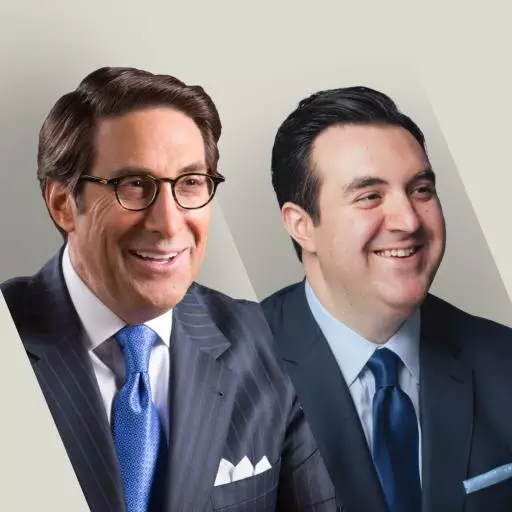
Logan Sekulow and Will Haynes break down the outline of a deal with Iran as President Trump arrives in France for the G7.
Logan Sekulow: Welcome to Sekulow. Midway through June, everybody. June 15th, 2027. I feel like this weekend was the big kickoff to the 250 celebration. You had a weekend of sports. And of course, a weekend also that allegedly, apparently, on paper, on President Trump's 80th birthday, the night of UFC Freedom 250, what happened? Allegedly, apparently, according to the deals that we have not yet seen, but we know the deal is coming, signing on Friday, the war in Iran, in theory, has come to an end.
Now again, we all hold our breath. We got five days until anything is signed. It's like the worst version of a home closing where you're just sitting there waiting. You're like, "We got a deal, but we got to wait to this day where we all sit in a room with a lawyer who tells us they want an extra few days." I feel like that's coming. But as of right now, according to President Trump, "Let the oil flow." This was right before again, the big UFC event that happened on the White House lawn. What a spectacle. If anyone watched that, I loved it.
Will: I feel like most people were watching Stanley Cup Finals last night. I'm kidding, I'm kidding.
Logan Sekulow: A couple of people pumping their fist in there. Bunch of Canadians in there. That's fine. I give you a pass if you are in Las Vegas or if you're one of the teams that are involved. Other than that, hopefully you were watching the UFC, which was wonderful on the lawn of the White House. I know there's been a lot of controversy. I thought it was great.
Again, phone lines are open for you because really, allegedly, the deal has happened and we've got the bullet points to go through. After UFC, President Trump boarded Air Force One and headed to France again for a big summit, the G7 summit. Phone lines are open. 1-800-684-3110. Should we break down these points now or wait until we get back from the segment?
Will: I think we can start with some of them, but then we'll go through it. I think the main thing is that both sides have declared an immediate and permanent end to all military operations.
Logan Sekulow: Permanent. That's a big word. I honestly did not read that until just before we came on air. I was looking through it. Permanent end to military operations. They are declaring this over. I think that is something we have to take for real consideration here, that we're not talking about another temporary ceasefire, a hold. We are talking about a permanent end to this war. We know President Trump has wanted to wrap this up.
Israel got a little bit heated again over the weekend. There was some stuff that happened that the Trump administration was not thrilled about. I think you're going to read this deal and go, "Do I think there's some good stuff in it? Sure. Do I think gas prices are going to come down in the next few weeks?" That's the hope. I think it really kind of has to would be the plan. I think they said it could take up to a month or so to really settle in, but maybe it even comes quicker than that.
But is it a good deal in terms of the American people, our safety, and really the effort that we put in in Iran? Did we come out as what you would say the "victors"? We're going to break that down. What do you think? 1-800-684-3110. I'll read this from President Trump. He said this again, midday yesterday, "The deal with the Islamic Republic, which I have to say before I read this, didn't feel like it got near enough news. I was sending it around. Everyone was like, 'What?' I didn't get a push notification. I don't know why this wasn't like top-of-the-line story."
But again, President Trump said, "The deal with the Islamic Republic of Iran is now complete. Congratulations to all. I hereby authorize the toll-free opening of the Strait of Hormuz and simultaneously herewith authorize the immediate removal of the United States naval blockade. Ships of the world, start your engines. Let the oil flow. President Donald J. Trump."
A little bit later, "Ships are starting to move. Many loads up with oil out of the Strait of Hormuz. They are going along the Southern Highway, which is totally safe, secure, and pristine. There are other areas of travel also. President Donald J. Trump." Again, why it matters, we're going to break that down. Coming up in the next segment, we're going to restate it all. Phone lines are open for you at 1-800-684-3110. I also want to encourage you, as we are heading halfway through this month, to consider becoming an ACLJ champion, someone that gives on a monthly basis. We'll be right back with more on Sekulow.
Logan Sekulow: For a lot of people, this news was a bit of breath of fresh air. President Trump right now meeting with Emmanuel Macron, the President of France. If there's anything that we need to break into that, we will. Talking about the Iran deal, but probably nothing that's really worth covering right now live on air. A lot of you are probably curious about what does this mean beyond the end of the actual war?
I guess the main thing people are going to be looking at, and the main point of friction probably with the American people, is gas prices. I think that's the number one. Gas prices have skyrocketed. Let's not pretend they haven't. Let's not pretend it hasn't hurt a lot of people. I understand President Trump's wanting to end this war because of that even alone. I think there's a lot of questions of whether this deal got us any further than where we were a few months ago. Let's start with the obvious. How does it affect you economically? Will, what does this look like in terms of specifically the prices of gas?
Will: One thing you have to look at is you look at the price of oil. Remember, those are futures. So that is people purchasing when they say the price of oil, the dollar per barrel, that is what you lock in a contract for an amount of oil at some future date. We are already seeing that drop tremendously because of this news. Almost immediately, it started plummeting. It was overnight. That market is kind of always ongoing, even though there's open and closes to the markets, but there's after-hours trading, etc.
Even the futures that were at a high of 112, I think is where the peak during this conflict back in April, it's down already to $74. Just today, it's down 4% total, so $3. It's dropping very rapidly, and I think that will continue as more ships are able to get out of the Strait of Hormuz and get oil to the world. So that is one thing that you look at when you factor that in. That doesn't necessarily immediately change the price of the dollar, the gallon of gas. It does have some effect on it.
We already have seen a drop in the average gas price in the United States from a high of around $4.50, which is outrageous, down to about $4. You're seeing a 50-cent average drop around the country. That's a good sign that there is downward pressure on that pricing. Now, it does take a while for that dollar amount to get priced into what you pay at the pump. It could take very quick. It could also be weeks that that actually gets baked into what you're paying at the pump.
With the downward pressure though, I think you will see prices continue to fall. But to get back to normal, yeah, it will probably be a few weeks. You also have to think of the consideration that sometimes gas prices naturally go up during the hot months, the summer months as it is. You take all these factors in, but it is getting back to normal.
Logan Sekulow: I think if people just saw, let's say in Tennessee, I think if you saw a three starting it, you'd feel a little bit of a relief. If you saw a two, you'd be thrilled. But if you saw a three, $3 a gallon. In our lifetime as drivers, we're not talking about other than the times of crisis, let's say after a hurricane or when there's been true gas shortages that have occurred or oil leaks, everything where those temporarily spiked, we've never seen it this high.
Will: And what you will also see is the demand that is still there, and during summer months demand is higher, you will see the supply start to reach that globally, and that will naturally draw down the prices as well because then people aren't trying to sell it at a premium to other countries if they're an American producer, etc.
But you also have to think the price per barrel on crude oil futures back the day before the conflict started was $67.02. You're at 74.35 right now. That's about a $7.30 difference. When you think about being up to 112, you're starting to be in the range of back to normal already. I think after the signing on Friday, you'll see the futures be back at where it was before the conflict even started.
Logan Sekulow: Vice President Vance was asked about this this morning on Good Morning America, and I think maybe it gives us a better idea of what we're talking about here. And again, I keep going back to it, it's like you're signing a mortgage here. It's like you're getting everything set up for a home closing. Byte 16 here's JD Vance.
J.D. Vance (Audio Clip): We already signed the deal digitally yesterday, and there's been no money released, and that won't change, George. Again, this is a performance-based thing. If we see the Iranians making, for example, taking action to eliminate their stockpile of enriched material, then yes, sanctions relief will follow. If we see the Iranians taking action to allow the kind of verification regime that we need to see to know that they're not going to build a nuclear weapon, then yes, sanctions relief will follow.
Logan Sekulow: Just waiting for the inspection. That's what's happening here. I like that they digitally signed it. They went on DocuSign. They all had to pick. I want to know what their digital signatures look like. The Iranian regime. Hopefully, it's just they typed it out and it's in the pre-chosen font instead of them trying to meticulously sign it in Farsi. That could be more difficult. If we know the head of Iran is currently maybe incapacitated, who's to say? So it's a little easy to forge that, I feel like, with a DocuSign. Let's start those conspiracies.
I think we need to break down what the deal points are. Because now we've gone through the good: you're going to see gas prices drop, end of a war, end of a conflict. That's a positive. Now, the determination based on this deal of what we got, what we lost. Is this a win? Is this a loss?
Will: I like that. That was a Logan freestyle. Suessian Iran War is not the children's book you want to read. This is what we're looking at because it is going to be a structured thing. It is tiered. You see that both sides have agreed that they declare an immediate and permanent end to all military operations. They signed this memorandum of understanding that the end of the war will be signed this Friday in Switzerland.
Logan Sekulow: Is this going to be like a made-for-TV moment?
Will: I think it will be. We know the President obviously is in France for the G7. It's in the French Alps, very close to Switzerland, to Geneva, to be able to do that. The Deputy Foreign Minister of Iran is saying that the memorandum will be published after it is signed. This is a "you've got to sign the deal to find out what's in it" situation. I don't know if that's a good sign or a bad sign. You be the judge.
Then you have Iran and the US both saying the Strait of Hormuz would start to reopen. The US blockade on Iranian ports will lift as soon as the memorandum is signed. This is the actual signature. We don't know who from the Iranian side will be there to sign it. That will be interesting to see as we continue forward.
There will be an agreement that more difficult areas of dispute, notably the nuclear issue and US sanctions on Iran, will be conducted more negotiations over the next 60 days.
Logan Sekulow: Yes, the war is over as of today. There's no firing happening, there's nothing going on, the straits are reopened. However, there are still some deal points beyond reopening the Strait of Hormuz and the end of the war. Those are two big ones that need to be negotiated. One of those big ones is how this is going to work in terms of the nuclear materials and the removal of that. President Trump kind of said in there, "This is no rush."
Will: And once again, this is what we've got. I want to hear from people. Do you think this is going to pan out well? Do you think it's going to end terribly? You're seeing a lot of both sides arguing. You're seeing people on the left tear it down. You're seeing people on the right say, "Keep going and destroy the entire regime." And you're seeing people that are on President Trump's side say, "You're just a panicker over here on the far right that you're a neocon." All these words are being thrown around.
Meanwhile, we haven't even really seen the full text. We're just getting reporting on what both sides are telling the press. If the Iranians say it and the US says it, then the press is kind of taking that as a confirmation. But yeah, they're agreeing that the war is over before finalizing details on the uranium.
And you hear from JD Vance that that's kind of the benchmark to this, is that they believe this already puts in motion them to never have a nuclear weapon because both sides say that Iran agreed it will neither produce nor acquire nuclear weapons. Here's where the difficult part of this continues, of what they're going to do with the nuclear issue and US sanctions, because it's easy to end the war. But Iran has been saying for decades we're not trying to get a nuclear weapon when they indeed were. I don't care what you look at, look at what they were doing, the entire goal was to get a nuclear weapon.
Logan Sekulow: There's ending the war and winning the war, and those can be very different things, as we've seen in American history. I want to hear from you. We're going to take some calls coming up in the next segment. 1-800-684-3110.
With that also, the ACLJ itself, we are currently, and this just happened overnight tonight, we will be delivering an oral intervention at the UN Human Rights Council. Understand the work of the ACLJ, all this is happening right now and we are there, and that of course is in response to the UN's blindness towards Hamas during the October 7th attacks. We keep going here at the ACLJ, but none of it happens without you. Go to ACLJ.org right now. Become a champion if you can. We'll be right back.
Logan Sekulow: Welcome back to Sekulow. Phone lines are open for you. We're talking about the deal in Iran. The deal is signed. The strait is partially open. President Trump just said that in France right now where he is. Phone lines are open for you.
Will: I like the way you say "France".
Logan Sekulow: You know, I am of the world. I'm what they call a global citizen. I'm a citizen of the world. One world, really, is what I like. A government that is one government that's over all the world. A kind of new world order is what I'm looking for, but also run by America.
There are a lot of states out there potentially. That's what we were watching the fights last night. There was a Canadian, Georges St-Pierre was there in the guy's corner, one of his trainers. I forget the guy's name exactly. He was fighting an American. And my son said, "This fight is for Canada. For control of Canada. Will we win it and finally get to take Canada?"
Will: I mean, do you feel bad for Canadians that now out of the mouth of children it's like anytime a Canadian's on TV in the United States, the joke is "winner takes Canada"?
Logan Sekulow: We went and visited Canada last year, which I loved by the way as a global citizen. And there's a lot of merchandise that's like "Keep Canada ours," "Hands off Canada" or something. I don't know, there's a lot of that kind of talk and honestly, I kind of wanted to pick up some of the merch. It looked cool. But unfortunately, that was during the time President Trump was pitching for us to take over Canada during the Trudeau days. Phone lines again are open. Let's take some of them. Let's go to Robert who's calling in Maryland. Line one, ACLJ Champion. Go ahead, Robert.
Robert (Caller): I wanted to ask the both of you, with the details beginning to come out about the memorandum of understanding, which I understand is a framework for peace, do you believe that the Iranians are going to abide by any of the conditions that they've released already? I personally don't believe that they are because you can guess what's right. For 47 years they've been telling the entire world they're not working toward a working nuclear weapon, which of course we all know they have been and they've been funding proxies. I believe that if we don't destroy the regime and go for regime change, we're just pushing down the road them cheating on just about everything they're saying they're going to do because of the ideology that they believe.
Logan Sekulow: Robert, I think regime change in the way you and I both believe it is off the table. I think that we're finishing up here this conflict with Iran because of a few different reasons. One, the American people are hurting and I think President Trump knows that and realizes that's probably more important than what's going on in the Middle East right now—not necessarily more important, but it may be more important also as you head towards the midterm elections. I don't want to be that person who says that's the case.
But I do think we have a deal and the deal is mixed on in terms of was it worth it? Was it worth what we started with with this attack, taking out their leadership, everything that went down, the pain that did come from it? Did we come out of this in a better place? Now, if no money takes place, changes hands, there are some things that could be very positive that come out of this. So I don't want to pretend that it is some sort of loss. I don't think so. But to not think that the American people's response to this had no impact on it, I think would be naive as well.
Will: And I think here's my kind of take on this, Robert. One, since this is just a framework and it's the memorandum of understanding, an invitation to understanding as the great poet laureate of America, MXPX, had said, but when you look at this and knowing that there's 60 days of negotiations, I think that we will find out more then. It is a big step for the Trump administration to get to this point where there's a sign on both sides.
Senator Graham said that Congress will review any final deal. That is unlike the JCPOA where Congress had no part in it. So that's a positive step forward. Here's really the meat of it though, is that they've ended this conflict. I think no matter what, there are successes out of that. The Ayatollah being dead, the four layers of Iranian leadership being dead is a good thing for the world.
Now, here's my concerns: that the memorandum of understanding is we will no longer try to produce or obtain a nuclear weapon. Same rhetoric they've said forever; we know that they were trying to do it. Good news is a lot of their capacity is completely flattened for now. That doesn't mean that they don't then put all their effort back into trying to get there.
Now, the sanctions and financial impact part. This is where a lot of people will get nervous because it enriches a regime that last time they were enriched, what did they do? They planned October 7th, they got very quickly to weapons-grade material. And this says that the US will agree not to impose any new sanctions on Iran until a final deal is reached. So we're not going to put any new sanctions. That's probably fine; we've got good ones in place right now.
They added the US would waive oil sanctions on Iran for a specified period and after that the final agreement, all US and UN sanctions will be lifted to an agreed timetable. I understand this negotiating point. Lifting just oil sanctions gets them some revenue to start to rebuild their country that's been bombed incredibly for months. Do I like it before a final deal that they start to get their own revenue? It's not us paying them money, but starting to have access to that starts to get a little dicey.
Then it says the US has agreed to release 25 billion of Iran's frozen assets, including direct cash transfers, cooperation among regional countries, and financial credit lines. Okay, starting to give them a little bit more access to cash. If they use it to rebuild their country and take care of their people, then that's an appropriate thing to do. The problem is every time we've done that in the past, they do it to sow more terror around the world. There's other issues here about Washington preparing a reconstruction and redevelopment plan to be negotiated with Iran in the next 60 days. I hope that's not our taxpayer dollars going to that plan.
And then Trump said Iran will not be provided with cash but with sanctions that could potentially be lifted. So right here, coupling that with what JD Vance said on CBS yesterday, saying that if they're willing to honor their obligations, if they are going to allow real inspections of their nuclear program, then we will welcome you back into the world economy. My concern here is with that statement. Because yes, the nuclear program is stopped, but that's not the only thing that Iranians have done. I'm not even talking about the Israel situation. I'm talking about American situation. They have sown terror around the world, they have killed American troops, they have killed Americans around the world. If that's not in the writing too—hey, also stop funding terror, we're going to watch your transactions—then I don't know that this is a good deal.
Logan Sekulow: If we're not allowing Russia to be part of the global economy right now or the American economy because of their current conflict with Ukraine, which again, I think is valid that they would not be a part of the American economy, but we're holding different standards to similar, if not even more extreme countries and regimes. What are we doing here? Again, is this a political move? I want to hear from you. 1-800-684-3110.
Some people asked how do we have this information from this deal? Has this deal been released? I believe Pakistan was part of it and released some of it.
Will: So what the press has been doing to try to get these details, and once again everything could be in flux, but they're not taking one side's—they're doing real reporting, folks. They're not taking one side's "here's what's in it." They are talking to American officials, they're talking to Iranian officials, and they're talking to Pakistani officials. They're kind of triangulating what all three sides are saying is in it and then they're saying, "Okay, this is probably a good idea here."
Logan Sekulow: Second half hour of the show coming up in less than a minute. Don't go anywhere. Go to ACLJ.org if you lose us.
Will: For decades now, the ACLJ has been on the front lines, protecting your freedoms, defending your rights in courts, in Congress, and in the public arena. The American Center for Law and Justice is on your side. If you're already a member, thank you. And if you're not, well this is the perfect time to stand with us at ACLJ.org where you can learn more about our life-changing work. Become a member today. ACLJ.org.
Featured Offer

Featured Offer
About SEKULOW
The American Center for Law and Justice (ACLJ) focuses on constitutional law and is based in Washington, D.C. The ACLJ is specifically dedicated to the ideal that religious freedom and freedom of speech are inalienable, God-given rights. In addition to providing its legal services at no cost to our clients, the ACLJ focuses on the issues that matter most to you — national security, protecting America's families, and protecting human life.
About Jay Sekulow
An accomplished and respected judicial advocate, Sekulow has presented oral argument before the U.S. Supreme Court in twelve cases in defense of constitutional freedoms. Several landmark cases argued by Sekulow before the U.S. Supreme Court have become part of the legal landscape in the area of religious liberty litigation; these cases include Mergens, Lamb's Chapel, McConnell v. FEC, Operation Rescue v. National Organization for Women, and most recently Pleasant Grove City v. Summum.
In 2009, Townhall Magazine named Sekulow to its "Townhall of Fame" and recognized him as "one of the top lawyers for religious freedom in the United States." In 2007, the Chicago Tribune concluded that the ACLJ has "led the way" in Christian legal advocacy. In 2005, TIME Magazine named Sekulow as one of the "25 Most Influential Evangelicals" in America and called the ACLJ "a powerful counterweight" to the ACLU. Business Week said the ACLJ is "the leading advocacy group for religious freedom." Sekulow's work on the issue of judicial nominees, including possible vacancies at the Supreme Court, has received extensive news coverage, including a front-page story in The Wall Street Journal. In addition, The National Law Journal has twice named Sekulow one of the "100 Most Influential Lawyers" in the United States (1994, 1997). He is also among a distinguished group of attorneys known as "The Public Sector 45" named by The American Lawyer (January/February 1997). The magazine said the designation represents "45 young lawyers outside the private sector whose vision and commitment are changing lives."
Sekulow brings insight and education to listeners daily with his national call-in radio program, Jay Sekulow Live!, which is broadcast throughout the country on nearly 850 radio stations. Sekulow also hosts a weekly television program, ACLJ This Week, which tackles the tough issues of the day. He is also a popular guest on nationally televised news programs on ABC, CBS, NBC, CNN, FOX News, MSNBC, CNBC, and PBS.
Contact SEKULOW with Jay Sekulow
jsekulow@aclj.org
http://aclj.org/
American Center for Law and Justice
PO Box 90555
Phone: 757-226-2489
1-800-684-3110
1-877-989-2255