
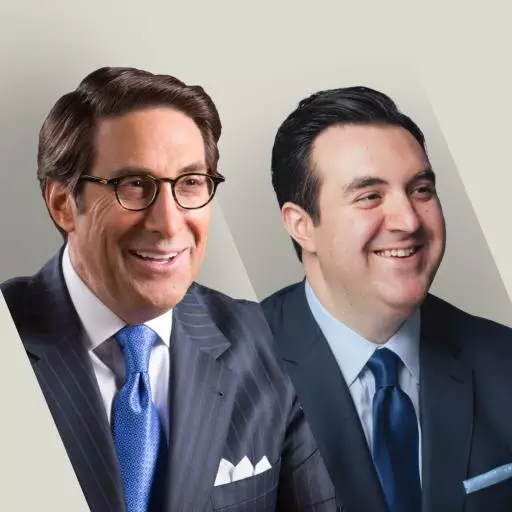
Sekulow


Logan Sekulow and Will Haynes discuss President Trump threatening to take Kharg Island.
Logan Sekulow: Welcome to Sekulow. It is June 11th. Welcome to the show. Will Haines is in the studio. We're going to have Mike Pompeo join us a little bit later. We do have some breaking news items. One of them is about the war in Iran. President Trump this morning said that they are not opposed to and are considering all the options, including the seizure of Kharg Island, which is obviously a major area for the oil industry in Iran.
We're going to talk about that, but I also wanted to let you know we are live right now as there is a breaking news item. The Pentagon is currently on lockdown. We don't have a lot of information right now other than that there is a hazmat crew on site. There was potentially some sort of sensor that went off due to a substance that was found in the air. There may be some sort of issues. I don't want to bring up any big conspiracy theories or even theories at this point. We're just going to let you know that we are covering that.
Will Haines: Here's exactly what is known at this time. If you're watching us live, they have sensors that monitor the air quality within the Pentagon. One of those sensors or more picked up what they call a scent of a biohazard. They took precautions immediately, evacuated certain areas, put the Pentagon on lockdown in certain sections, and have issued a shelter-in-place order for the Pentagon as well as called in hazmat crews.
They expect this lockdown to last several hours, according to what is being reported. There is also something being tested, a substance. Whether or not this substance actually is a biohazard, they will find out, but it doesn't appear it was just a malfunction. There is something to be tested.
Logan Sekulow: Hopefully, this is just being ultra-sensitive as a precaution. We will keep an eye on it, though, and we will cover it as we can. If you've not been to the Pentagon or never experienced it, when they say the Pentagon is on lockdown, you're talking about nearly 30,000 people who work in the Pentagon. It's almost like a city being on lockdown. This is a giant structure with tens of thousands of people who work there on a daily basis, so it's no small thing to lock down the entire Pentagon facility. We know at one point it was an evacuation of certain portions, but now it is on lockdown, which could last a few hours.
On the other side of things, President Trump has made some pretty strong statements specifically about Iran, including the potential need to take Kharg Island. Kharg Island, for those who don't know, Will, you can give us a brief background on it. This is where the major oil refineries exist. We're talking about gas prices going up significantly in America. It is largely due to the fact that Kharg Island exists right now and we're in a conflict with Iran.
Will Haines: That's right. Kharg Island itself is where 90% of Iran's oil exports go through. If you were to seize control of that, you effectively seize control of the entire Iranian oil industry. It wouldn't just be blockading their ships from going to sell it. You then have control of the oil itself.
This is also where President Trump has paid homage to what we did in Venezuela, specifically saying that when we took control of Venezuela's oil and gas markets, it worked out very nicely and brilliantly for both of us. We'll get into more of that, read the exact statements, and have sound from the President when we come back.
Logan Sekulow: We should hear directly from the President because he even questions whether it is not only worth it—in terms of he believes it's very much worth it for the economic impact that it could have—but he's not sure that America has the stomach for it. Does that mean the loss of life that could come from this? Is it about troops that essentially have to be on the ground? We are talking about taking a major oil refinery. There's going to have to be crews, staff, and people who understand what they're doing here if you want to take control of this.
Phone lines are open for you. What do you think? 1-800-684-3110. We are also covering that hazardous material found at the Pentagon as the Pentagon is currently on lockdown. We're going to keep that coverage going. If anything new breaks, we will do it while we're live here 12:00 to 1:00 PM Eastern time. We'd love for you to join us. Phone lines are open. 1-800-684-3110. We'll be right back.
Logan Sekulow: Welcome back to Sekulow. We have two touchpoints right now that we're covering. One is President Trump just this morning making his statement saying that he believes it's time to seize Kharg Island, basically the oil refineries of Iran. On the other hand, right now, as we speak live—and I don't want to blow this out of proportion and I also don't want to pretend it's not happening—there's been a hazardous material incident at the Pentagon. Hazmat crews have entered. There is a large police presence. They are on lockdown potentially for a number of hours. This came from some sensors, and now they are testing materials.
We're just getting the details out. I know there's not a ton of information yet to share, but I wanted you to know that we are keeping an eye on it. If there is more than just the baseline conversation, we will talk about it. The Pentagon, for those of you who maybe can't picture this, is almost the size of a city. We're talking about tens of thousands of people. Close to 30,000 people work daily at the Pentagon. This is a large, incredibly large facility, so for them to go on a full lockdown, it is not so simple.
It may be simple in terms of they probably have the actions ready to go, but it is incredibly disruptive for the people who work there. You have to think how many people work there who are not involved in this kind of work, who are just staff, and for all their families. We're going to see how this plays out over the next few hours, but we'll definitely see how it plays out while we're on air. In the meantime, Will, there are updates in this war in Iran as escalations are growing.
Will Haines: One, the Pentagon is going to be on high alert precisely because of what our other topic is. The Pentagon is the Department of War's facility, where the branches of the military have their staff and all of the planning and things that go along with our military operations. That is the headquarters for it. At the same time that you're having the President issuing statements—this is the second day in a row that the Iranians and the United States have been trading fire back and forth after that Apache helicopter was shot down on Monday.
Now the President is saying we will be hitting Iran again very hard tonight. The United States will be hitting Iran very hard tonight at some point in the not too distant future. We will be taking Kharg Island and other oil infrastructure points and assume total control of their oil and gas markets, much like we have with Venezuela, which is working out brilliantly for both Venezuela and the United States of America. We should also play this sound because it happened just this morning when the President called into Fox and Friends. Here's what the President had to say this morning.
Donald Trump: Look, my preference has always been take Kharg Island. Brian knows that, and Lawrence knows it. I spoke to them a long time ago. I said my preference would be that. I don't know that America has the stomach for it, to be honest with you. You'd make a fortune, but I don't know that America has the stomach. I think they'd like to see us come home.
Will Haines: Why would the President say, "I don't know if America has the stomach for it"? Obviously, he's going to do what he thinks is the best outcome for America. However, he is paying a tribute to the division here at home over this war. Even on the conservative side, even under his base saying, "We're done with this." He's saying, "I don't know if America has the stomach to do what he thinks is necessary." Kharg Island is controlled by the IRGC and the military. It's not just out there on its own with oil companies operating it and maybe some security guards.
It is fortified because it is the very heart of their oil industry. It is the heart of their economy in many aspects. They will not give that up without a fight. It wouldn't just be air raids destroying things. If you want to take the hub of their industry, you would have to go in and seize it. What would that require? Special forces, Marines, and actual troops going into combat with other troops that are trying to protect that. That would come at a cost. That would come at the cost of potentially American lives.
Anyone who is looking at this, yes, what we did in Venezuela was seamless with no loss of life. There were casualties, and even that was concerning to a lot of the American people. This would be much more difficult than the sneak attack of taking Maduro in the middle of the night and then asserting control over their entire industry. This would be a real fight with the Iranians.
Logan Sekulow: I want to hear from you about this. Phone lines are open. We're going to take some calls right now at 1-800-684-3110. Let's go to Michael in Florida watching on Salem News Channel. Go ahead.
Michael: I just wanted to say that everybody in America must say, "Thank God they're in America." Thank God for Trump. I'm not a Trump man and I'm not a politician, but what he has done to finish this war that's been going on for 47 years where they've killed Americans and they've killed people all over the world. My children found Fox for me about 30 years ago. I'm 82. I told them 28 years ago, if you're going anywhere else, it should be Iran because Iran is the biggest perpetrator of terror in the world. It's the same thing today.
Hezbollah, Hamas, and the only thing that worries me about the news often is they don't give it to you straight. For example, if Hezbollah fires rockets into Israel for like 100 rockets every day, then Israel hits back and they say, "Oh, Israel attacked Lebanon," meaning Hezbollah. It's weird the way the news often comes through.
Will Haines: Michael, even that where we talk about the terror proxies, Hezbollah, Hamas, the Houthi rebels, and even their own IRGC agents around the world. I think that is why this other story that we are covering—the Pentagon being on lockdown right now—is why a place like the Pentagon is on heightened alert for some sort of biohazard that could be released into the air system. The threat abroad that we are currently engaged in with the President now saying, "Hey, we may take out their entire economy," is a regime that uses terror to its advantage and has for the last 47 years.
These two stories aren't isolated when you start to see how quickly a sensor going off at the Pentagon leads to an entire lockdown because of the very words that the President is putting out there saying, "We're going to hit them again tonight, third night in a row, much harder. You know what we're also going to do? Take their entire oil industry too." That is when the Pentagon and any other place in Washington, DC, is naturally going to be on high alert for some sort of terroristic type threat that could be coming.
Logan Sekulow: We are getting some sources indicating that this was a false alarm situation, but I've only seen a few sources who have said that they have received that. I'm going to wait until we have an official word here before I report that. Hopefully, that's the case. Hopefully, this was a false alarm or it was an alarm that was very sensitive and was set off and people jumped into action as they should. We'll keep you updated on that. Hopefully, that is true and the Pentagon is safe.
With that, I do want to hear from you. When these situations happen overseas in Iran, you also want to start thinking about what this looks like at a global impact. When you've had a decades-long impact, maybe you have kids or grandkids, and we got a call related to that. Phone lines are open for you if this moves you to call in, 1-800-684-3110. I'll be honest, my voice is struggling a little bit right now. If you want to call in, it'll do me a big favor with some of this airtime. Jill in New Jersey, go ahead.
Jill: Hi, guys. Love the show. I'm strong on God being in control. However, he's not here yet, and I feel that if we're going to have any kind of future for our kids, grandkids, and the United States, we have to end this. We have to kill the threat of what Iran does to the whole world. We can't let this go. We have to continue on with the fight and let our future children live in peace.
Will Haines: Jill, I hear you loud and clear. The fact that what Iran did to begin their revolution as the Islamic Republic was take Americans hostage. We all remember the imagery, we've seen it, and we know about the Iran hostage crisis. Iran has continued to hold the world hostage in many ways for 47 years with the threats that they put forward, with their terror proxies, and with the global instability they've caused. It is time for the hostage crisis—not in the literal sense of what happened at the embassy, but what has happened around the world—to end.
Logan Sekulow: The fallout has lasted decades and decades, our entire lives. This all really started, and now here we are finally handling it. None of that has been done exactly how we've all expected or planned, and maybe that's true for President Trump, but here we are. At the same time, we are monitoring that lockdown at the Pentagon. The shelter-in-place order is still in effect as far as we know. We will keep that updated as well. Go to ACLJ.org right now and become a champion if you can.
Logan Sekulow: Welcome back to Sekulow. Phone lines are still open for you at 1-800-684-3110. President Trump is saying it's time for action. I think we should actually play back what President Trump had to say for those who are just tuning in right now.
Will Haines: Take a listen to what the President had to say just this morning.
Donald Trump: Look, my preference has always been take Kharg Island. Brian knows that, and Lawrence knows it. I spoke to them a long time ago. I said my preference would be that. I don't know that America has the stomach for it, to be honest with you. You'd make a fortune, but I don't know that America has the stomach. I think they'd like to see us come home.
Logan Sekulow: When he's talking about having the stomach for it, let's just be brutally honest. At that point, we are talking about the loss of lives of our troops. Do they have the stomach to take on what it would look like to take Kharg Island? He said it's always been his preference and he understands the economic impact from it. He points to Venezuela as saying, "Look what we've done there." We know people are hurting at the pump. All expenses have gone up. That is something President Trump certainly ran against. I don't think he really wanted to be two years into his term and talking about inflation.
People had hoped President Trump would come in and the opposite would happen. That's how he sold it. Whether you agree with that or not, that is how it was sold. Now things change, time changes, and the world is very different. Think about 2000 and 2001 pre-9/11 and what President Bush at the time was running on. He was running on compassionate conservatism and being a different kind of Republican. All of that changed on September 11th.
A similar situation started occurring when there was this uprising that was happening from the Iranian people saying, "We are done with being murdered in mass in our streets," and President Trump saying, "We are going to stand behind you." That does change the American psyche. Looking at our chat and the calls that come in, part of me feels like though there is a social media pushback and some of those voices who were on President Trump's side have flip-flopped because of this, you still see a mass majority of our listeners and supporters who feel like this is a necessary war.
I'm leaving that up to you to make that decision. I'm not saying whether it is or not. To me, when I thought about the original version of this, it was a full regime change, new government, and a free Iran. That is very different from where we are right now: "Let's take Kharg Island and get our oil prices down." I'm not saying that's not necessary or not good. I'm just saying that I understand his concern with people risking their lives over it. We have a call about that. Let's go to Wallace on line two, watching on the Salem News Channel. Go ahead.
Wallace: I think this is an acceptable risk for loss of life in the military if we have to take Kharg Island because we've already had casualties. The barracks bombing in Beirut—I think nobody's ever compensated us for that. Now President Trump is doing the right thing going forward, and any military man knows when you involve yourself in an operation, there's a possibility of casualties. I'm sure Pete Hegseth and the generals under him are going to try to minimize those risks and those casualties as much as possible, but I agree. I think they should do it.
Will Haines: Wallace, you're exactly right. The Iranians have killed Americans and have American blood on their hands, and they have for a very long time. You mentioned the bombing of the Marine barracks in Beirut. You also have to realize that during much of the Iraq war, many of the casualties of Americans were not from the party of Saddam Hussein. They were from Iranian proxy terror groups or Iranian militias that were either funded directly or sent by the Iranians and the IRGC to exert their control over Iraq.
That is exactly what most of the fighting was for the length of time we were in Iraq. It wasn't just the initial phases fighting back against the regime that was in control there. It was actually fighting against the insurgency of Shia militias that came from Iran that were trying to take control of Iraq. They were killing Americans. It went from a regime change war and a mission for weapons of mass destruction to a proxy war with the Iranian regime. It was direct fighting between the United States military and Iranian-backed militias.
It's a fantasy to pretend like we haven't been in conflict with Iran for a very long time. That's not what the media would have you believe. They would have you believe that all of a sudden everything was fine. No, it's been going on as Wallace pointed out for a very long time, and we have lost a lot of lives. The difference here is that hopefully the end goal of this conflict is to end the loss of life of Americans by Iranians.
End the ability they have to hold the world hostage and have the region be ground to a halt whenever they decide they want it to. People can say they've never exerted this force over the Strait of Hormuz before, but are you kidding me? Their very existence and the threat that was there caused everyone to have to tiptoe around the Iranian regime and just to let them be more entrenched. That in and of itself is exerting control over the Strait of Hormuz. They may not have closed it to raise prices, but it existed.
Logan Sekulow: Just because you didn't know it was happening doesn't mean that it wasn't happening. Just because you weren't paying attention doesn't mean that it never existed. We run into this problem a lot on social media, whether it's Iran, Israel, or America. Our brains are very forgetful. We have a very short-sighted view of history. Sadly, we have to come back here each and every day, Monday through Friday, and sometimes we have to give a little bit of a history lesson.
We have a phone call from an ACLJ champion before we go to break. Julie, go ahead in California.
Julie: My first question is why would we even talk about taking this island because we've lost the surprise? With the way we have these stealth soldiers who can go in and half the time they don't even know they're there, they could have taken this probably without much risk if we didn't talk about it and tell the enemy what we're going to do.
Logan Sekulow: Julie, I think there is some truth to that, but a lot of it is a negotiation tactic. On the other hand, I don't think taking this necessarily goes in without the loss of life. We don't necessarily fully grasp the concept of Iran in this country—how big, how vast, and how powerful really that country is on a grand scheme of things. We're able to go in with technology and strategically take out the heads of it, but we are not talking about a little desert country in the middle of the Middle East. I feel like that is the way we picture it, even though we know that's not the case.
Will Haines: Iran knows that that's a very sensitive target because it is where 90% of their industry goes through. If you want to wipe out their economy or have that leverage over them, then you go after that. That is one of the reasons why it is controlled by the military and the IRGC. It's not just all of a sudden they're surging resources to it; that's just who is in control of it. I understand similar people saying the President shouldn't talk about it because you lose the element of surprise.
They have fortified this knowing, even before there was a conflict, that would be a target. That would hurt the IRGC's ability to maintain control over the country because they run the economy there. I don't think anything was given up by mentioning it. They already knew that that was a target.
Logan Sekulow: Phone lines are open for you. I want to hear from you. We have a second half-hour of the show coming right up. If you don't get us on your local station, find us streaming live now or later archived however you get your podcast.
Featured Offer


Featured Offer
About SEKULOW
The American Center for Law and Justice (ACLJ) focuses on constitutional law and is based in Washington, D.C. The ACLJ is specifically dedicated to the ideal that religious freedom and freedom of speech are inalienable, God-given rights. In addition to providing its legal services at no cost to our clients, the ACLJ focuses on the issues that matter most to you — national security, protecting America's families, and protecting human life.
About Jay Sekulow
An accomplished and respected judicial advocate, Sekulow has presented oral argument before the U.S. Supreme Court in twelve cases in defense of constitutional freedoms. Several landmark cases argued by Sekulow before the U.S. Supreme Court have become part of the legal landscape in the area of religious liberty litigation; these cases include Mergens, Lamb's Chapel, McConnell v. FEC, Operation Rescue v. National Organization for Women, and most recently Pleasant Grove City v. Summum.
In 2009, Townhall Magazine named Sekulow to its "Townhall of Fame" and recognized him as "one of the top lawyers for religious freedom in the United States." In 2007, the Chicago Tribune concluded that the ACLJ has "led the way" in Christian legal advocacy. In 2005, TIME Magazine named Sekulow as one of the "25 Most Influential Evangelicals" in America and called the ACLJ "a powerful counterweight" to the ACLU. Business Week said the ACLJ is "the leading advocacy group for religious freedom." Sekulow's work on the issue of judicial nominees, including possible vacancies at the Supreme Court, has received extensive news coverage, including a front-page story in The Wall Street Journal. In addition, The National Law Journal has twice named Sekulow one of the "100 Most Influential Lawyers" in the United States (1994, 1997). He is also among a distinguished group of attorneys known as "The Public Sector 45" named by The American Lawyer (January/February 1997). The magazine said the designation represents "45 young lawyers outside the private sector whose vision and commitment are changing lives."
Sekulow brings insight and education to listeners daily with his national call-in radio program, Jay Sekulow Live!, which is broadcast throughout the country on nearly 850 radio stations. Sekulow also hosts a weekly television program, ACLJ This Week, which tackles the tough issues of the day. He is also a popular guest on nationally televised news programs on ABC, CBS, NBC, CNN, FOX News, MSNBC, CNBC, and PBS.
Contact SEKULOW with Jay Sekulow
jsekulow@aclj.org
http://aclj.org/
American Center for Law and Justice
PO Box 90555
Phone: 757-226-2489
1-800-684-3110
1-877-989-2255