
Sekulow


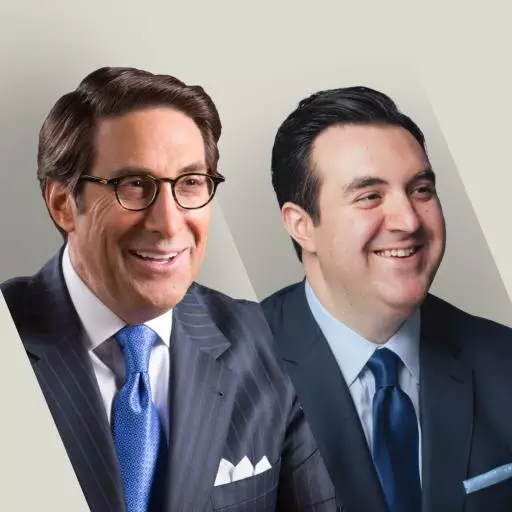
Will Haynes is joined by ACLJ Attorney Nathan Moelker to discuss the US and Iran reaching a deal pending President Trump's approval.
Will Haynes: Today on Sekulow, we have breaking news as reports say the US and Iran have reached a deal. It is up to the president to approve it. Keeping you informed and engaged. Now more than ever, this is Sekulow. We want to hear from you. Share and post your comments or call 1-800-684-3110. And now your host, Will Haynes.
Welcome to Sekulow. Will Haynes here today, and we have a packed show for you today. But we are talking about this report that comes out of Axios. They got the scoop on this that the US and Iranian negotiators have reached an agreement. That is right, they have reached an agreement, and now it is up to President Trump to give the final approval on this agreement.
What it would look like is a 60-day memorandum of understanding that extends the ceasefire and sets the framework for negotiations to go forward on Iran's nuclear program. So this agreement, while it would not be a final deal, a final agreement, would be that very critical first step to getting to a final deal and to ending the conflict there in Iran, opening the Strait of Hormuz and all of the things that go with that. But most importantly, it gives that initial step of what a negotiation around Iran's nuclear program and ambitions would look like.
We want to hear from you today. What do you think? Do you think they will get to a final deal? Do you think they will get even to this memorandum of understanding, that critical first step to be able to continue negotiations? Call me 1-800-684-3110 as we break all of this down, including the new skirmishes that started overnight where Iran was sending one-way drones across out of their territory in the direction of United States assets, a ballistic missile towards a US base in Kuwait.
They were all intercepted and taken out before they reached their intended targets. However, that is not very much in the spirit of a ceasefire, now is it, Iran? Give me a call, 1-800-684-3110. Do you think they can get to a deal? Do you think they can even get to a memorandum of understanding, an extended ceasefire, an extended period of calm, so to speak, to be able to negotiate on the things that really matter to the President, to the United States, and to the American people?
I want to know what you have to think about that. We also have one of our great attorneys here, Nathan Moelker, who will be joining me a little bit later to talk about a critical court filing the ACLJ just submitted and what it means as a federal judge, surprise surprise, tried to strip the President of his authority when it comes to sanctions. I want to hear what you think about that after that segment as well, so stick around.
It is a very important topic as we here at the ACLJ continue to defend the Constitution and the rule of law in America. But this is fascinating that this memorandum of understanding would, according to the reports, be a 60-day memorandum, extends the ceasefire and launches negotiations on Iran's nuclear program, moving the timeline of the ceasefire further down the road as the negotiations continue.
It would be very much a first step, but it also would be kind of that good faith situation where they are saying, "Look, we understand this is the framework that we're going to be talking about." It gets you over that first hurdle of, "Can we even deal with these certain issues?" and gets you to what you need to be talking about. As one US official told Axios, "This is an agreement to get everyone to the table. We will work out the details in the negotiations."
We have some sound from the Secretary of State, Marco Rubio, we will be playing as well. But this is in line with what he had been saying all week. When you get past that first hurdle, when you say, "Hey, here are the things we agree will be in our deal. Now we have to negotiate the language, we have to negotiate how it looks on paper, how we enforce this, what those mechanisms are."
I see once again a lot of people saying, "I don't trust Iran to make a deal." But do you trust the President and his administration to make one for you, the American people? Give me a call, 1-800-684-3110. We will be right back with more on Sekulow after this quick break.
Guest (Male): The challenges facing Americans are substantial. At a time when our values, our freedoms, and our constitutional rights are under attack, it's more important than ever to stand with the American Center for Law and Justice. For decades now, the ACLJ has been on the front lines protecting your freedoms, defending your rights in court, in Congress, and in the public arena. And we have an exceptional track record of success.
But here's the bottom line: we could not do our work without your support. We remain committed to protecting your religious and constitutional freedoms. That remains our top priority, especially now during these challenging times. The American Center for Law and Justice is on your side. If you're already a member, thank you. And if you're not, well this is the perfect time to stand with us at ACLJ.org, where you can learn more about our life-changing work. Become a member today. ACLJ.org.
Will Haynes: Welcome to the all-new ACLJ app. Expert analysis and insight Big Tech can't censor. Customize your news and get real-time alerts on the issues you care about. Advocacy is now at your fingertips. Take action, make a difference, support the causes you care about with just one tap. Be the first to know. Breaking news alerts sent straight to your inbox. Everything you need, all in one place. Stay informed, stay empowered. Download today.
We are so excited to announce the ACLJ's brand new app. Completely redesigned to provide you with the best tools available to partner with us at the ACLJ. You can watch the daily Sekulow program, sign the petitions, customize your ACLJ membership experience, donate with the click of a button, and receive up-to-the-minute critical updates that the mainstream media can't censor. Just scan the QR code on your screen or go to your phone's App Store, search ACLJ and click install. It's that simple.
Welcome back to Sekulow. Will Haynes here. Go ahead and give me a call. Do you think the US can make a deal with the Iranians? I know we don't trust the IRGC, we don't trust the Iranian leadership there, but do you trust the President and his team that they are going into this knowing you can't trust the Iranians? That they are going into this clear-headed and knowing that whatever deal they would make would have to have the right mechanisms to enforce it.
Do you trust the President and his negotiating team and his cabinet to make a deal like that with the Iranians? Give me a call, 1-800-684-3110. I am seeing comments come in on YouTube. One says, "I don't want a deal with them at all. I want freedom for the Iranians who don't want an Islamic regime. They want the Shah for the most part. I don't know all of his views, but probably preferable." We have another comment that says, "The IRGC is not a rationally thinking group."
So when you start to look at what we're dealing with here, what does this mean? What would a memorandum of understanding even mean, which is what is being reported is on the table at this point? I think we should go ahead and play this. This is from CNN. This is by Barak Ravid where it talks about how this could play out. Axios got the scoop on this this morning, other outlets are starting to report it as well. But let's go ahead and play bite four from Barak Ravid on CNN about what is potentially coming our way.
Barak Ravid: US and Iranian negotiators have reached a deal on a memorandum of understanding that will extend the ceasefire by 60 days and launch negotiations, direct negotiations on Iran's nuclear program. This I hear from two US officials and another regional diplomat involved in the mediation efforts. The US officials told me that President Trump still hasn't gave the final sign-off on this deal. The US officials told me Trump has related to the mediators and through the mediators to the Iranians that he wants, quote, "a few days to think about it." But US officials are optimistic that this deal is likely to go through unless some surprising thing happens over the next 24 to 48 hours.
Will Haynes: And remember where we were over the weekend, over a holiday weekend where many of the cabinet officials as well as the Vice President, they were told, "Cancel your plans, come back to Washington." We also saw that there was supposed to be that cabinet meeting at Camp David, but then they moved it to the White House. The President, according to all reports and he himself, was ready to renew strikes against the Islamic Republic of Iran over the weekend, over the holiday.
What happened? They pushed those back because, as he said, they are making good progress, these negotiators. So when we hear that the deal is before the President, he has not given the final sign-off, he wants to think it over, I think that he is giving it serious thought. But also we wouldn't be at this place if he didn't have trust that what his negotiators were at least getting the United States towards was something that he was already leaning towards accepting.
Now, once you get something that both sides have agreed upon and he has to sign off on it, we will see if all of the language is acceptable to the President on his terms. But when we're looking at all this, we also look at what the Secretary of State, Marco Rubio, said just yesterday during that cabinet meeting. Which, once again, the fact that these cabinet meetings are now live and they have cameras in there is such a contrast. Even one of our producers pointed this out yesterday. Back in 2016 and you get the leaks out of the cabinet meetings, like, "Oh, this cabinet member was saying this and was going against the President, pushing back."
Now it's out there for everyone to see. There's no opportunity to leak what's in the cabinet meetings because they are live streamed. But let's go ahead and play bite nine from Secretary Rubio about these negotiations yesterday, before this news that a deal could be imminent and that a memorandum of understanding could be signed soon within the coming days if the President signs off on it. This is bite nine.
Marco Rubio: If there's an agreement to be made, we want that to be made. I think there's been some progress and some interest and we'll see over the next few hours and days whether progress could be made. I just want to remind everybody, Mr. President, you know this well, you have other options available to you if that doesn't work. But the bottom line is that we prefer the negotiated diplomatic route and we're going to give it every chance to succeed. I know you're giving it every chance to succeed, Mr. President. But here's the bottom line because I keep getting asked: "What is this all about?" It's very simple. Iran and these people in charge of Iran can never have a nuclear weapon. And they will never have a nuclear weapon, and they most certainly will not have one as long as you're President of the United States.
Will Haynes: Once again, that being the reiterating at the end of that bite, what the goal of this incursion, this skirmish, this war, whatever you want to call it, this operation against Iran for the administration and for the president. What was that goal? What would success look like? Iran not having a nuclear weapon. And Secretary Rubio reiterated that at the end of that bite that we just played, as well as saying, "And they will not have that as long as you are President."
Obviously, in the United States, presidents come and go, and parties change who has the administration. So they cannot say that a future president would go ahead and just rip up this deal, much like President Trump did with the terrible IRGC. But what their goal is to make this so locked and secure and solid that no matter what a future president does, if they want to change terms with Iran, it protects the United States going forward from having a nuclear weapon. That was the stated goal, and that is what their goal remains through all of this.
So I go back to even the comments that we saw on our channel and that we sympathize with of the free Iran, the people of Iran taking back their country and their great history. That wasn't the goal and wasn't the goal of Operation Epic Fury. The stated goal was to make sure they never have a nuclear weapon, which also gives the people of Iran more power. If the weakened regime, you have seen layers and layers of their own leadership be wiped out, you then have new leadership that sees how quickly they can be taken out, as well as the regional strength of the threat of a nuclear Iran goes away. A lot of their internal power diminishes also.
We are seeing reports that Iran is taking steps to turn the internet back on to their people. We know that it is a controlled internet as it is, but that the people of Iran since the end of February, since the operation began, have not had that outside contact with the outside world. They have not been able to, except for those few that were able to smuggle in or get a Starlink. They were not able to see what the world was saying about this operation, only what state media was saying.
And we even saw early days the propaganda from their state media saying the Ayatollah was not harmed in the airstrikes, but we know he was killed as one of the first targets of Operation Epic Fury. So what will happen internally when the people of Iran start to understand what is going on, what the situation is, how little their regime was able to stand up to the United States and Israel during this operation? When they see things like the way Iran attacked the UAE, Kuwait, Bahrain, Qatar, other regional Gulf member states that you wouldn't have expected before this.
When the people start to see that, "Oh, you are attacking our neighbors for no reason." You have made what was a relative secure region a little bit less secure government. Will they then decide now is the time with this weakened regime to overthrow the government? That is an unknown, but that's not what this stated goal is and that's not what the details of this memorandum of understanding are. Does the time period also weaken the regime more that as they are negotiating focused on that, do people within their own country rise up? I would love to see it, but I don't think that that is what the goals are here.
I want to hear from you. Do you think that this administration can get to a good deal for the American people? Simple question. Can President Trump and Marco Rubio and Pete Hegseth and all of the cabinet members that make up this administration, can they get to a good deal? Can the negotiators deliver for the President on something that is good not just for the administration but for the American people? I want to hear from you. Call me at 1-800-684-3110.
In the next segment, ACLJ attorney Nathan Moelker will be joining me. We're going to be talking about a federal judge, surprise surprise, trying to strip the President of a very important power. And the way that it was done will surprise you. Stick around because we filed a critical brief in this. We are fighting back as the appeal process through this goes forward. But once again, I want to hear from you. 1-800-684-3110 on this Iran topic. We've got a lot more to get to ahead, a lot more sound to play from the administration. But once again, support the work of the ACLJ. Go to ACLJ.org today and support our work. It's critical and you're about to hear something now.
Will Haynes: Welcome to the all-new ACLJ app. Expert analysis and insight Big Tech can't censor. Customize your news and get real-time alerts on the issues you care about. Advocacy is now at your fingertips. Take action, make a difference, support the causes you care about with just one tap. Be the first to know. Breaking news alerts sent straight to your inbox. Everything you need, all in one place. Stay informed, stay empowered. Download today.
We are so excited to announce the ACLJ's brand new app. Completely redesigned to provide you with the best tools available to partner with us at the ACLJ. You can watch the daily Sekulow program, sign the petitions, customize your ACLJ membership experience, donate with the click of a button, and receive up-to-the-minute critical updates that the mainstream media can't censor. Just scan the QR code on your screen or go to your phone's App Store, search ACLJ and click install. It's that simple.
Guest (Male): The challenges facing Americans are substantial. At a time when our values, our freedoms, and our constitutional rights are under attack, it's more important than ever to stand with the American Center for Law and Justice. For decades now, the ACLJ has been on the front lines protecting your freedoms, defending your rights in court, in Congress, and in the public arena. And we have an exceptional track record of success.
But here's the bottom line: we could not do our work without your support. We remain committed to protecting your religious and constitutional freedoms. That remains our top priority, especially now during these challenging times. The American Center for Law and Justice is on your side. If you're already a member, thank you. And if you're not, well this is the perfect time to stand with us at ACLJ.org, where you can learn more about our life-changing work. Become a member today. ACLJ.org.
Will Haynes: Welcome back to Sekulow. Will Haynes here, and I'm joined in this segment by Nathan Moelker, one of our great attorneys in our DC office to talk about this really critical issue. This is a fascinating one because it's not one you're going to hear on even the conservative news channels because it isn't one that you would hear normally a lot about, prosecutors at the ICC. It's just not the headlines that people are going for at CNN, at Fox, at MS Now.
But that's why you watch Sekulow. That's why you pay attention to the work of the ACLJ, because this is a very critical issue for protecting the constitutional order of our separation of powers. When you look at what the President did here within his authority and what a federal judge tried to take away from the President. Nathan, could you give us a little bit of a background of what this case is even about? There's a blog everyone can go read after this show that has a lot more information. It's written by Nathan, says, "Federal Judge Tried to Strip the President's Power to Defend Israel. ACLJ is Fighting Back." But give us a little bit of background on this case and how we got to where we are today.
Nathan Moelker: Thank you. So this case is really important because as you say, this gets to the fundamentals of executive power. President Trump issued a number of sanctions designed to recognize the fact that the ICC is going after an ally of the United States, going after Israel for illegitimate reasons. And so the President issued sanctions pursuant to his responsibility over foreign affairs. And so he issued those sanctions and of course, as always happens, people brought lawsuits.
This particular lawsuit was actually brought by the family members of Francesca Albanese, the UN Special Rapporteur. So they brought this lawsuit and they claim as her family members that they're now worried about whether they can give her gifts for Christmas or whether they can live with her as a family because of these sanctions. Which, sympathetic or not, what this federal judge then did is the real problem. Because rather than saying, "You know what, your right to be worried, let's make sure that you as a family are protected," he invalidated the sanctions across the board. So he completely struck down all sanctions against the UN Special Rapporteur just because of a single alleged harm to a family member. And so that kind of judicial overreach is a pattern we're seeing over and over again right now.
Will Haynes: ICC, this is something that if you watch the Sekulow broadcast, if you follow the ACLJ, you're more familiar with probably than the average American. The United States is not a party to the International Criminal Court, therefore they don't have jurisdiction over the United States. That doesn't mean that they haven't tried. They have tried throughout their history to go after US soldiers because what they see as war crimes, what they view in their omniscience at the International Criminal Court, they can pick and choose what a war crime means.
They we know are going after Israel trying to arrest Bibi Netanyahu, who is also not a party to the ICC. They are trying to exert this global power, this global law enforcement authority over countries that have not even signed on to the Rome Statute, that have not been a party to their court. So of course the President you would think if they are trying to exert authority where they do not have it, has those powers to issue sanctions. That's broad foreign policy powers of the United States and the Treasury, which is under the executive branch.
And you have this judge that takes a case which just once again, Nathan, you said the absurdity of a family member saying, "We're afraid we can't give Mom a Christmas present because of sanctions." Well, one, the law does not take into account feelings. The law takes into account facts and the way this plays out. But Nathan, this judge did this. What is the ACLJ doing now?
Nathan Moelker: Yeah, so this case has been moving very, very quickly as it should because this concerns matters of national security. So the judge issued his order just a couple weeks ago on the 13th. Last week, the Trump administration appealed to the DC Court of Appeals and what they did is they asked the US Court of Appeals for the DC Circuit to please stay this order. Let us put these sanctions back in place because this is a matter of national security.
So what the ACLJ did is over the long weekend, we prepared our brief that we filed this past Tuesday supporting that motion for a stay. What we're urging the court to do is, no, the President, not a federal judge, is the one who should be deciding international sanctions. It's not up to a judge in DC to decide what international sanctions should look like when these kinds of problems happen for our national security. It's a matter for the President, not a single unelected judge.
Will Haynes: If you take this example to the extreme, I feel like most people would say sanctions against Vladimir Putin are appropriate at this point, or sanctions on Russian oligarchs. If all of a sudden a family member were to file in US court saying, "You can't do this because we're afraid we might get caught up in it because, yeah, I mean, yeah, Dad's Vladimir Putin but I want to give him a Christmas present." Just the absurdity of the argument and then the federal judge saying, "You know what? You're right. And who knows who else could get caught up in this? We're just going to get rid of the entire sanction scheme, the entire thing." That is what we're talking about here. It's up to the discretion of the executive branch, the sanctioning of individuals and the Treasury and the President ultimately. The President is the executive branch under the Constitution. And so Nathan, that is exactly what we look at here. If you were to take the hypothetical that they made real here and apply it to any other person on the sanctions list, you start to quickly see how absurd on the face of it this ruling is.
Nathan Moelker: Exactly right. And I think too, I think it's important for everyone to emphasize as important as the ICC is, I know not all of us are necessarily dealing with the ICC on a daily basis. But what we are seeing every single day are these attempts to put obstacles in the way of letting Congress and the President do their jobs. People trying to run to the courts as an end-run around the systems that are supposed to be in place. And so I think that's what this case is very fundamentally about. Should a judge be the one deciding policy for the entire country, or should the people we've elected?
And so that's really what our brief is getting at at a really fundamental level is: no, it's not a judge who should be deciding what country should be sanctioned. Congress has set up a system and under that system, it's the President who has the authority to make the sanctions. And that's the thing we're urging the Court of Appeals, and of course if necessary this could even go to the Supreme Court, and we're urging those appellate courts to hold this district judge accountable.
Will Haynes: Nathan, thank you so much for that update. We'll have you back on as this proceeds through the court system. Folks, once again, this is one of the reasons why you watch this broadcast. I know it, because you hear things like this. That isn't making headlines in the mainstream media. It may not have the most clickable headline when it's put on a YouTube video or a Rumble video or a segment on Fox News. But it is critically important work.
Sometimes the most important work doesn't make a great headline, it doesn't seem urgent or breaking as news needs to be to get attention in the day of algorithms. But that's why you watch this broadcast, because we are going to tell you about this work, this critical work. And that is why you support the ACLJ. It's issues like this that many people may ignore but are fundamental to protecting our Constitution and rule of law. Support the ACLJ at ACLJ.org today.
For decades now, the ACLJ has been on the front lines protecting your freedoms, defending your rights in court, in Congress, and in the public arena. The American Center for Law and Justice is on your side. If you're already a member, thank you. And if you're not, well this is the perfect time to stand with us at ACLJ.org, where you can learn more about our life-changing work. Become a member today. ACLJ.org.
Featured Offer

Featured Offer
About SEKULOW
The American Center for Law and Justice (ACLJ) focuses on constitutional law and is based in Washington, D.C. The ACLJ is specifically dedicated to the ideal that religious freedom and freedom of speech are inalienable, God-given rights. In addition to providing its legal services at no cost to our clients, the ACLJ focuses on the issues that matter most to you — national security, protecting America's families, and protecting human life.
About Jay Sekulow
An accomplished and respected judicial advocate, Sekulow has presented oral argument before the U.S. Supreme Court in twelve cases in defense of constitutional freedoms. Several landmark cases argued by Sekulow before the U.S. Supreme Court have become part of the legal landscape in the area of religious liberty litigation; these cases include Mergens, Lamb's Chapel, McConnell v. FEC, Operation Rescue v. National Organization for Women, and most recently Pleasant Grove City v. Summum.
In 2009, Townhall Magazine named Sekulow to its "Townhall of Fame" and recognized him as "one of the top lawyers for religious freedom in the United States." In 2007, the Chicago Tribune concluded that the ACLJ has "led the way" in Christian legal advocacy. In 2005, TIME Magazine named Sekulow as one of the "25 Most Influential Evangelicals" in America and called the ACLJ "a powerful counterweight" to the ACLU. Business Week said the ACLJ is "the leading advocacy group for religious freedom." Sekulow's work on the issue of judicial nominees, including possible vacancies at the Supreme Court, has received extensive news coverage, including a front-page story in The Wall Street Journal. In addition, The National Law Journal has twice named Sekulow one of the "100 Most Influential Lawyers" in the United States (1994, 1997). He is also among a distinguished group of attorneys known as "The Public Sector 45" named by The American Lawyer (January/February 1997). The magazine said the designation represents "45 young lawyers outside the private sector whose vision and commitment are changing lives."
Sekulow brings insight and education to listeners daily with his national call-in radio program, Jay Sekulow Live!, which is broadcast throughout the country on nearly 850 radio stations. Sekulow also hosts a weekly television program, ACLJ This Week, which tackles the tough issues of the day. He is also a popular guest on nationally televised news programs on ABC, CBS, NBC, CNN, FOX News, MSNBC, CNBC, and PBS.
Contact SEKULOW with Jay Sekulow
jsekulow@aclj.org
http://aclj.org/
American Center for Law and Justice
PO Box 90555
Phone: 757-226-2489
1-800-684-3110
1-877-989-2255