
Sekulow


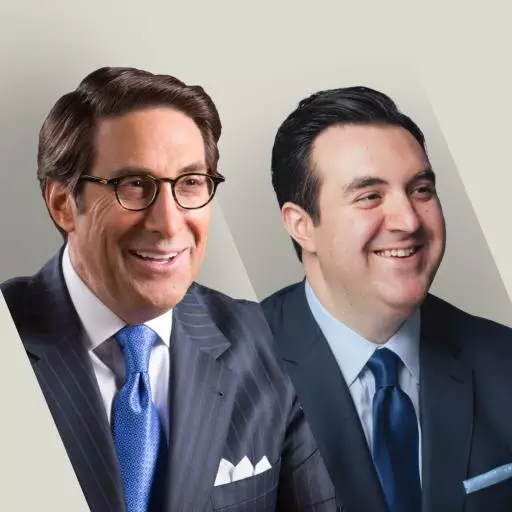
Logan and Jordan Sekulow are joined by Will Haynes and Billy Hollowell to discuss an update on the redistricting efforts in Virginia.
Logan Sekulow: Welcome to Sekulow for your Monday, it is May 11, 2026. Welcome to the show. We have in studio Will Haynes and Jordan Sekulow. Later on, it’s a packed show. Billy Hallowell is joining us in studio to discuss his new special, Investigating the Supernatural. We had him on last week, and we’re going to discuss that as well, sort of his background in the world of news commentary, editorial journalism.
Towards the end of the show, Rick Grenell is going to be here, so it’s going to be a packed hour. Of course, you can call in as well at 1-800-684-3110. Always the most important voice in the room is you. We’d love to hear from you. That’s at 1-800-684-3110.
Many of you have started to tune in. Maybe you saw the headline on YouTube or on Rumble, and you saw what’s going on. We know a lot of you had interest in the redistricting plans that came across last week. Now we have, once again, a response. You had Republicans in Texas start this, then it went to California, then it went to Virginia, then it went back to the South as the South kind of redistributed everything. Now you have a group of Democrats not thrilled about this and trying to move their way to the Supreme Court.
Will Haynes: That’s right. On Friday, the Supreme Court of the Commonwealth of Virginia put out a ruling saying that the referendum violated the state constitution. The way it was presented, the question presented, and a lot of the mechanisms violated state law—not federal law, state law. Because of that, the Commonwealth’s Supreme Court ruled that the vote was not legally viable. It didn’t matter because what they did, the way they got that to the ballot, was unconstitutional within the state.
The leaders of the state, the newly elected Attorney General, wasted no time. They issued, with the House of Delegates Speaker, a joint motion requesting the State Supreme Court delay issuing its mandate, essentially the judgment, saying that this does not go forward because they want to appeal to the US Supreme Court.
That is the normal path. Once you’ve exhausted your state courts, you can have that Hail Mary attempt at the US Supreme Court. But even in their motion that they filed to the Commonwealth’s Supreme Court, they did it so quickly, unnecessarily so, they had misspellings. They misspelled the state name. The Speaker of Virginia spelled it "Virgnia."
Logan Sekulow: How is that possible with autocorrect when you’re writing it up? How does that not pop up right away? It’s the first sentence. This is who you work for; it’s your home state. That doesn’t pop up? And what you said, "No, no, I got it right, my spelling is better."
Will Haynes: Right. They also misspelled the word "senator" in that same filing. Also a difficult one. What they wrote doesn’t exist. It’s not even a word. They wrote "Sintator." They are quickly trying to get this before the US Supreme Court, but Jordan, it’s a tall order for them to try to get this overturned because it mostly relies on state constitutional law—something that the Supreme Court is likely not going to weigh in on.
Jordan Sekulow: The Supreme Court, in the case that has everyone upset on the left about the redistricting, said there’s a federal side to this and there’s the state side. When it’s the federal side about what every state must do, they cleared the deck on that and they went back to the states. They said the state supreme courts are really the place to go and the legislatures, then to the courts if you want to challenge it.
This is one I could see the Supreme Court not taking because they’ve already answered the question clearly, and I don’t think they need to rehash that. You’ve already had a final decision. This is your last resort, and if you’re taking it seriously, maybe spell your commonwealth's name correctly—or senator.
Logan Sekulow: But when we come back, there’s more because the Democrats have other tricks up their sleeve. Just wait, folks, you’re going to want to hear this. You don’t want to miss it, and I want to hear from you. We’ll slow it down a little bit in the next segment, giving you what’s really happening and where it’s going to go from here.
I do want to hear from you. If you have a question or comment, this is actually the time to call in because we have so many guests joining us in the second half as well as in the third segment. In the next segment, I’m going to take some calls if they come in. 1-800-684-3110. Call in right now and get your voice heard today. We’ll be right back with more on Sekulow. If you’re on YouTube right now, let me know where you’re watching from.
Welcome back to Sekulow. As I said, the phone lines are open. You can call in at 1-800-684-3110. In the break, we were able to see when the numbers start spiking, so I know a lot of you are tuning in wanting to know the big headline that we broke with, which was that Democrats are rushing to the Supreme Court. Let’s slow it down a little bit.
This has to do with the redistricting. We’re also going to discuss a little bit later what’s going on with the Russia-Ukraine war, as there’s been a very interesting development which may lead potentially, according to Vladimir Putin, to an end to that conflict. It’s been many years now. I don’t even think a lot of us are paying that close attention to it at this point, but for those that are, I’m sure if you’re there on the ground, you are. This could show some signs of heading towards an ending.
We’ll discuss that a little later with Rick Grenell. Also, like I said, we’re going to have on Billy Hallowell from CBN. He’s got a new special out, Investigating the Supernatural. We’ll be talking to him in the next segment. It’s going to be packed. If you want to call in, it's a good time to do it at 1-800-684-3110. But let’s restate what we were discussing, and that is that Virginia Democrats have something to say right now.
Will Haynes: That’s right. What we’re seeing here is that they lost at the Commonwealth level Supreme Court on Friday, where the court issued a decision saying that the referendum violated the state constitution. Remember, they had to change their state law and rules for this little anomaly to try and make things "fair," as they said, to redraw their map to yield a 10-to-1 Democrat advantage over the current 6-to-5 advantage that they currently enjoy there in the state when it comes to their congressional delegation.
The State Supreme Court said, in a very well-reasoned opinion, that this didn’t follow state constitutional law. Therefore, the vote didn’t matter; it’s null and void. You saw the hysteria online of people saying, "We’ve got to get rid of these judges, this is terrible." Honestly, Democrat leaders are looking at ways to do that. But Jordan, what happened here goes back to the analysis you gave, and the former Attorney General Ken Cuccinelli, who came on this show, gave as well. What they did, the mechanism, didn’t follow the law.
Jordan Sekulow: This isn’t some radical right-wing court coming down and striking down the only last semblance of democracy that we have in this country. It’s that they didn’t follow the rules, and the court struck it down. They didn’t follow their own rules about how you redistrict, and they tried to do this mini-redistricting that then would have to be paid for and do another redistricting after the next census in two years. This is tons of taxpayer money wasted in Virginia.
Remember, a lot of this comes out of what California did. Now, what’s the pushback? Well, Tennessee decided, "Let’s redraw our map and it’s going to be tougher for a Democrat to win." You know what the Supreme Court says? "We don’t look at politics." We look at you trying to put certain people—it doesn’t matter if they’re race—but you’re trying to draw districts by the intent instead of race. Making minority-majority districts are somehow constitutional; they’ve actually said no, that’s unconstitutional.
Will Haynes: I think we should take this phone call because one, we know that now the Democrat leadership in Virginia is trying to go to the US Supreme Court. This is kind of their last-ditch effort. They have a few other tricks up their sleeve we’ll talk about in a moment, including one that was discussed with the Minority Leader of the House, Hakeem Jeffries, which is to completely fire their entire Supreme Court to get a new Supreme Court to try and undo what they see as injustice. But let’s go to Bob from Florida because he has a very interesting point. Bob, you’re on Sekulow.
Bob (Florida): The thing that I wanted to discuss is obviously the Democrats are trying to do this on racial lines and that’s illegal. But what the Republicans are missing out on is look at the Northeast. President Trump got 40 to 45 percent of the vote, and there is no representation. That seems to be okay on the left, and that’s done on political lines.
If they cannot figure out a way to win the messaging battle and make the Democrats openly admit that they believe that on a racial level all minorities should be Democrats—because that’s obviously not the case—they’re allowing this messaging to say you’re pulling away their right to vote. They still have the right to vote. Make them say that a white representative can’t properly serve a minority district. They’ll never do that.
Will Haynes: Well, Bob, what they’re doing is they’re going back to their old playbook. I agree that that’s what’s ridiculous about this entire discussion. In the Northeast, in Massachusetts, even in Illinois—actually states that are comparable in size to Tennessee that they’re attacking right now—they're saying that Tennessee is trying to do this to be a racist thing. No, you look in Massachusetts, you look in Illinois, they have states where there’s a sizable percentage of people who vote for Republicans and have zero representatives.
Logan Sekulow: You could say in Tennessee it’s not dissimilar in the fact that you have 35-40 percent of people that are Democrat voters in the presidential. Let’s say presidential, I’m sure it’s different in the midterms. But in the presidential, you’re talking about 40 percent that are voting blue.
Will Haynes: I think that’s the point. As soon as they point to a state they don’t like, they say that’s the racism of Tennessee instead of pointing out that we’re at a place now where this is all politics. It’s the political game they’ve been playing in their states for decades. It doesn't mean we have to like it, but as soon as you do it in a Republican state, you still may not like it. This maybe shouldn’t be the way this happens. But the disparity here, Jordan, is that when Republicans play the game they’ve been playing for decades, it’s racism, and when they do it, it’s saving democracy.
Jordan Sekulow: That’s right. So it’s okay for them to gerrymander; it’s just not okay for Republicans to redistrict following their decisions to make these very bold moves. It’s not like Gavin Newsom hid what they were trying to do. He said, "We’re going to add more Democrat seats, we’re going to take out Republican seats." So it’s purely partisan. What the Democrats didn’t understand is that once you go there, that’s where the Supreme Court says, "We don’t care." Your political view is not a protected class in itself.
Of course, your right to vote is protected. But your political party view is not. That’s not a class. You can decide that day what party you want to vote for. Even in primaries, you just have to pick one, but you can still. Then again, you go into the election booth for the general election, it doesn’t matter what your party is; you can still vote for different people from different parties. That’s why it’s not a protected class. They didn’t realize the can they were opening in Republican-majority states like Tennessee.
Will Haynes: I think also to that point is when they’re trying to say that when it’s done in the South or in a Republican state, it is racism, but when it's their states, they’re trying to protect democracy. Here’s the report out of the New York Times over the weekend that leaders from Virginia were talking with Hakeem Jeffries. Here’s the idea that they were coming up with.
That would be to quickly pass a law in Virginia that would lower the mandatory retirement age for the Virginia Supreme Court. At the state level, they would move it from mandatory retirement of 75 down to 54, which would replace the entire State Supreme Court.
Logan Sekulow: So everyone retires at 54? You’re going to have a Supreme Court of 50 and under? All appointed by one governor, a Democrat, with a Democrat legislature that was just elected? Talk about court packing. Instead of adding seats, they literally just figured out a way to have everybody mandatory retire at 54 years old. I guess their thinking there is it’s not age discrimination at that point. You’re not saying you’re too old to be—even though a lot of them do have a mandatory requirement of 70.
Will Haynes: A lot of people want to restart their careers at 54. That’s when you’re getting to those positions in a lot of places. 40 to 50 years old, you’re just being considered for that. They are showing their cards here. It is all about coalescing power and they’re going to do it through any means necessary. This is the party of "no kings." This is a very authoritarian move when you’re going to say we’re going to get rid of an entire court because of one opinion that we didn’t like.
Logan Sekulow: And make a crazy law of this 54-year-old retirement. Even that, I wonder if that could be challenged because it’s so arbitrary and it’s directed directly at members. You can’t say this is so general. They picked a number to make sure it would clear the entire court. If the 53-year-old that’s about to turn 54 has to retire—that is, again, using politics to personally take out your political partisan vendettas.
What it has done is opened up more red states to say, "We can play this game, and we’re not going to be ridiculous like you are, and we’re not going to have a problem and you’re going to lose seats." This is what the Democrats started, and this is why there’s some renewed hope about the midterms for Republicans.
I want you to be on the show today if you can. Give me a call. We have a few lines open still at 1-800-684-3110. In the next segment, we’re going to bring on a guest, Billy Hallowell is going to be joining us in studio. Billy is in studio today, so it’s going to be fun to chat with him. Fair warning, we are getting into some pretty heavy material here. Then we’ll continue on this discussion, and also talk a little bit more news and updates with Rick Grenell.
If you want to be on the air, this is a great time to do it. 1-800-684-3110 to get on hold. Look, the ACLJ provides so much incredible work. Go to ACLJ.org right now. If you’re looking for a great resource where you can send your friends clips or show them what’s happening, all of it is there. No paywall needed. ACLJ.org. We’ll be right back in less than a minute.
Welcome back to Sekulow. As I said, the phone lines are open. You can call in at 1-800-684-3110. We had a guest on last week, and I said, "You know what? Let’s have him on again today." He happened to be in Nashville. Billy Hallowell is joining us. Last week we discussed his new film series that is on CBN.
We probably should restate what that is because it is a little bit of a departure from the work that we do here each and every day. However, in our conversations, it doesn’t necessarily not relate because it feels like we are dealing with a spiritual battle that is beyond anything we may read in the news. You can feel it. I think a lot of people recognize it but aren’t sure what they are recognizing. They’re just recognizing an unsettling feeling, and you have really done a deep dive into this.
Billy Hallowell: The film is Investigating the Supernatural: Angels and Demons. You’re so right. I think people see something and they say, "That was evil." Even atheists will say this. It’s like, "Well, what about it was evil? Where does that come from? What does that mean?" Like you guys, I come from the news world. So I’m looking at the news and what’s happening, and the more I look at what’s happening in scripture, I’m understanding that better. It’s kind of like taking that Ephesians 6 lens to it.
Logan Sekulow: This special is really well done. As you said, your background in journalism and really doing the work is there. So it’s not like you’re just taking the word of people and saying, "Yeah, 100 percent, this is authentic." You’re letting the viewer decide some of that, but also you’re going in there not as the person who wanted to be necessarily convinced of all of this early on.
Billy Hallowell: Going into it, I’m a skeptic on every one of these stories. I go in and I’m like, "Okay, you’re telling me you had this encounter with a demon or an angel, or you’re telling me that you had this healing? Prove it to me." And so we take an investigative journalist’s approach to these topics. Our first film was on miracles, this one’s on angels and demons, and our next one is Heaven and Hell, which will be near-death experiences.
We just felt really strongly that if there’s evidence that these things are happening still, we should unpack it, we should uncover it, we should present it and show it. We have reenactments, and then let people make a decision for themselves. I will tell you this, I have challenged people and I’ll do it again now: if you watch the film at CBN.com/Supernatural and you have another explanation for what is going on in these stories, I want people to come and tell me.
Will Haynes: You and I have had many discussions for more than a decade now. I remember booking you on this broadcast back in the 2012 election cycle talking about political news. But in this, it almost feels like such a shift from the topics that we’re used to talking about. But if you were to go back and even think: why would some of the things that are in scripture, especially when it comes to evil forces and dark forces, why would they stop?
Even with a critical lens, we as a modern society are so quick to say that seems like a crazy story. Why would things like that stop? Then you start to look through this investigation. Is that kind of what you feel? When I read what’s in scripture and I read these things that were very clearly happening, there are a lot of parallels with things that we even see in the world now that are unexplainable through any other lens.
Billy Hallowell: 100 percent. It’s funny, you look at what happens in scripture. I think a lot of us read the Bible as though it’s this book of fables. Even though we say we believe it, it’s like we’re reading it differently than we would the news. And yet if those things all happened, why would they have stopped? The thing for me that was the most convicting in all of this was Ephesians 6, because I’ve read that a million times as a Christian. I’m 42; I’ve literally probably read it a million times, and I’ve just glazed past it.
If you pause and you stop at Ephesians 6, Paul is saying we live in a world that is comprised of a spiritual battle. All of us are consumed with the "us versus them." That’s the distraction, and that’s what culture wants us focused on. That’s what cancel culture was; it’s Democrats versus Republicans. Don’t get me wrong, I love a good political battle and I think we have to have them. Those are good things, but that’s not the real battle. Paul says the real battle is spiritual and it’s pouring over.
Logan Sekulow: We also see in real life some of the most horrendous criminal cartels, like MS-13, who embrace Satanism. It’s interesting because you don’t think of cartels embracing religion, but yet that’s a big part of their indoctrination. What we read in the Bible is that when you start welcoming that into yourself, that is when the demons show up. You’re encouraging that.
That’s when those guys can carry out these heinous acts of atrocities and it’s like it doesn’t even affect their mindset. You can see them in prison; they’re dead in the eyes. They embrace evil, they’re going to put 6-6-6 on everyone, and are encouraging them to kind of take them over. That tracks to what the Bible says as well and the teachings both in the Old and New Testament.
Billy Hallowell: 100 percent. How can you understand anything that’s happening in your life, politics, or the issues you just mentioned, if you don’t understand scripture? So I think a lot of us, even as Christians, we’re not looking through that lens of scripture to look at these events of the day. A lot of times we’re like, "That doesn’t make sense. How did we get to a place in this country where we were allowing children to be essentially castrated? How are we allowing these things?"
Well, there’s a spiritual element to it, and if you’re not seeing that, you’re going to be very confused about everything. Being able to look at things through that lens transformed me, and our hope is that people will see that evidence and start to look at everything through that lens.
Logan Sekulow: I see some comments coming in, and of course, I know it is brought up in this, which we did have big news last week with the UFOs. That kind of plays into your special.
Billy Hallowell: It does. There is a battle over this even in the church, even among Christians, about what they think is going on with UFOs and aliens. Now, some people believe aliens exist and some people don’t. But we do deal with this in the film. We felt it was important a year ago when we were working on it. We had no idea it was going to release as this was all happening.
We have Hugh Ross, who’s a brilliant astrophysicist. He’s in the film, and from his perspective, he believes that 99 percent of the time, there’s a natural explanation for what people are seeing, meaning it’s military technology or it’s something else that we don’t know about. But that 1 percent, this residual, it is something. We are seeing something.
So there’s no debate: people are seeing something, but what is it that they’re seeing? Hugh would say they’re seeing a spiritual manifestation. That Ephesians 6 battle is being visualized and seen by people—meaning that maybe there aren’t really aliens; maybe they’re just demons manifesting as aliens. That would be his position on it, and I think it’s an interesting position.
Logan Sekulow: And look, again, what I like about the work that you do is though you are laying out the evidence, it isn’t definitive, saying this is 100 percent the story. You’re just saying, "Here are the stories we’re hearing."
I’m sure in the follow-up, it’s going to be very similar where you’re going to have people debating near-death experiences. That opens a whole other theological debate that I do not want to have nor am I prepared to have. I think what’s interesting is that you knew opening this door was going to be tough. It could be dark, but also wasn’t necessarily where you wanted to go. But I’m happy that you’re the one doing it because you’re telling it from a non-sensationalist point of view.
Billy Hallowell: I want facts. I want you to prove it to me. And I think if you can prove it—and I know we have a few seconds left—if we can prove that these things are still happening, it opens up a renewed doorway of how we reach people with the gospel. If you want to reach people with the truth and you can prove that these things are happening, it’s an apologetics tool.
Logan Sekulow: That’s great. You can get it right now. It’s available at CBN.com/Supernatural. You can stream it, or you can order a DVD still if you’d like. Billy’s been a good friend of ours. We’re happy to have him on. Stick on for the next segment. We’ll let you promote it again one more time. Then we’ve got a packed second half of the show.
Give me a call at 1-800-684-3110 to be on the air right now. And again, if you want to support the work of the ACLJ, go to ACLJ.org right now or just look at all the incredible resources that we provide. If you need legal help, it’s all there ready for you. No paywall. ACLJ.org. We’ll be right back in less than a minute.
Featured Offer

Featured Offer
About SEKULOW
The American Center for Law and Justice (ACLJ) focuses on constitutional law and is based in Washington, D.C. The ACLJ is specifically dedicated to the ideal that religious freedom and freedom of speech are inalienable, God-given rights. In addition to providing its legal services at no cost to our clients, the ACLJ focuses on the issues that matter most to you — national security, protecting America's families, and protecting human life.
About Jay Sekulow
An accomplished and respected judicial advocate, Sekulow has presented oral argument before the U.S. Supreme Court in twelve cases in defense of constitutional freedoms. Several landmark cases argued by Sekulow before the U.S. Supreme Court have become part of the legal landscape in the area of religious liberty litigation; these cases include Mergens, Lamb's Chapel, McConnell v. FEC, Operation Rescue v. National Organization for Women, and most recently Pleasant Grove City v. Summum.
In 2009, Townhall Magazine named Sekulow to its "Townhall of Fame" and recognized him as "one of the top lawyers for religious freedom in the United States." In 2007, the Chicago Tribune concluded that the ACLJ has "led the way" in Christian legal advocacy. In 2005, TIME Magazine named Sekulow as one of the "25 Most Influential Evangelicals" in America and called the ACLJ "a powerful counterweight" to the ACLU. Business Week said the ACLJ is "the leading advocacy group for religious freedom." Sekulow's work on the issue of judicial nominees, including possible vacancies at the Supreme Court, has received extensive news coverage, including a front-page story in The Wall Street Journal. In addition, The National Law Journal has twice named Sekulow one of the "100 Most Influential Lawyers" in the United States (1994, 1997). He is also among a distinguished group of attorneys known as "The Public Sector 45" named by The American Lawyer (January/February 1997). The magazine said the designation represents "45 young lawyers outside the private sector whose vision and commitment are changing lives."
Sekulow brings insight and education to listeners daily with his national call-in radio program, Jay Sekulow Live!, which is broadcast throughout the country on nearly 850 radio stations. Sekulow also hosts a weekly television program, ACLJ This Week, which tackles the tough issues of the day. He is also a popular guest on nationally televised news programs on ABC, CBS, NBC, CNN, FOX News, MSNBC, CNBC, and PBS.
Contact SEKULOW with Jay Sekulow
jsekulow@aclj.org
http://aclj.org/
American Center for Law and Justice
PO Box 90555
Phone: 757-226-2489
1-800-684-3110
1-877-989-2255