
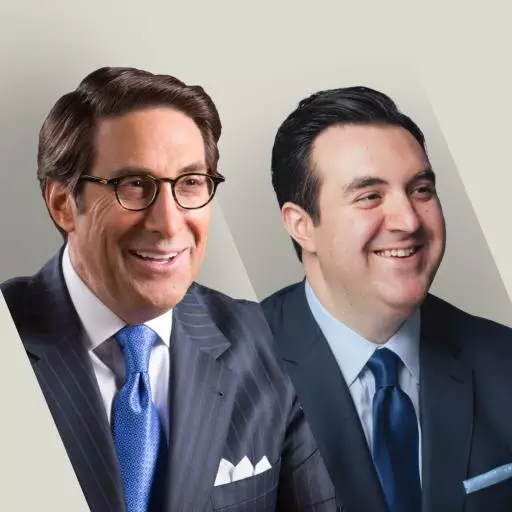
Sekulow


Logan Sekulow is joined by Mike Pompeo to discuss the ongoing battle of redistricting.
Guest (Male): On today’s show, the battle of redistricting begins. Keeping you informed and engaged, now more than ever. This is Sekulow. We want to hear from you. Share and post your comments, or call 1-800-684-3110. And now your host, Logan Sekulow.
Logan Sekulow: Welcome to Sekulow. Look, it’s just me today. Logan Sekulow here in the studio. It’s just going to be me and you, everybody. So if you want to call in, I’d love for you to be part of the show. Let’s get through it together. 1-800-684-3110. We are going to be joined by Mike Pompeo a little bit later, and then Billy Hallowell, who you may know from CBN and plenty of other news outlets. He pops around on podcasts all the time. He’s going to be joining us to talk about his new film as well as the current state, and his is very much related to sort of the spiritual warfare side of what’s happening, angels and demons and all of that. We’re going to break all that down with Billy a little bit later. So stay tuned for this show. It’s going to be unlike most of our normal shows.
But of course, we’re going to start with some of the breaking news items. One of them is this now, what feels like full speed ahead, on redistricting throughout major states, but obviously primarily it seems like in the South. We’re talking about Florida, Texas, Louisiana, Tennessee, Alabama, and Mississippi. We know Georgia is saying maybe not right now. We know Brian Kemp in Georgia has a very different kind of role he plays there with Atlanta being such a major city. Now look, we have had this discussion of whether we feel like this was a good thing or a bad thing when Texas started it and then California really went wild, and then the Supreme Court ruled, and now all bets are off.
Here’s the truth, though. We’re in the real world of where we stand right now politically, and we’re in a real world of where we stand legally now. So all bets are off. So whether we like it or not, do you think this is what needs to happen? We have Florida, where they’ll be adding four Republican seats. Texas, they’ll be adding five Republican seats. Louisiana, one to two seats. Tennessee, one seat. And look, Tennessee is already one of the reddest states in the country in terms of the map here. Alabama, they’ll be adding one seat. Mississippi, up one seat. And remember the law pretty much ruled that it doesn’t matter if it’s partisan, it doesn’t matter where the politics land. If it represents the people, that’s how it should be, and they can make that decision, and the voters can decide that.
Tennessee lawmakers on Wednesday, they unveiled their proposal for a new congressional map. We saw Florida, Ron DeSantis did as well. What do you think? 1-800-684-3110. Is this just the new reality that we live in, or do you think there should be something more? Give me a call, let me know. Is it saying, "Hey, do you take the..." and I think look, conservatives have had issues with this, and I understand it, because the moral high ground, you may think of, "I’m not for gerrymandering, I’m not for redistricting." But the truth is, this is what the Supreme Court ruled, and therefore, do you do what you’ve got to do? You are still playing by the rules and understand that politics is politics. I want to know from you as our viewer, as our listener. 1-800-684-3110. That’s at 1-800-684-3110.
We’re also going to be discussing some updates out of Iran, so if you want to call in about that as well, that’s at 1-800-684-3110. That’s going to be talking about more with Mike Pompeo, that’ll be in the third segment. And again, we’ve got a packed show. Billy Hallowell joining us in the back half of the broadcast. So again, stay tuned. Be a part of the show, though, with me today. If I’m going to be sitting here alone, I want to hear from you, not just seeing your comments on YouTube. It’s going to be a lot harder for me to read those comments when I have to filibuster here for the next hour. So I want you to call in and be a part of this show.
Of course, we are talking that really what happened was Texas started this in some ways, California went wild. We know that. And now there had to go to the Supreme Court and there had to be a response. And they said, "Hey, redistricting like the judicial system, it can be redistricted based off of partisan politics." That’s what even the Tennessee House Speaker wrote in his post on social media. Of course, they are talking about getting rid of really one of the few Democrats that are even have a spot. So what does that look like moving forward? What do you think about this? I want to hear from you. I'm just reading through all the facts. This is pretty wild. Of course, it is once again focused on the American South. So that should be fun. 1-800-684-3110. I want to thank you all also for supporting the work of the ACLJ and continue to support the work of the ACLJ.
Become a champion if you can. That’s something you can do anytime, and that’s just opting in. If you’re already a donor, you can become a monthly donor. It helps create a great baseline for us to understand what you want to talk about, where you want to go, what cases you want us to file. Be a part of that team today at aclj.org and opt in and becoming a champion. Phone lines are open for you at 1-800-684-3110.
Guest (Male): The challenges facing Americans are substantial. At a time when our values, our freedoms, and our constitutional rights are under attack, it’s more important than ever to stand with the American Center for Law and Justice. For decades now, the ACLJ has been on the front lines, protecting your freedoms, defending your rights in courts, in Congress, and in the public arena. And we have an exceptional track record of success. But here’s the bottom line: we could not do our work without your support. We remain committed to protecting your religious and constitutional freedoms. That remains our top priority, especially now during these challenging times. The American Center for Law and Justice is on your side. If you’re already a member, thank you. And if you’re not, well, this is the perfect time to stand with us at aclj.org, where you can learn more about our life-changing work. Become a member today. aclj.org.
Guest (Male): Welcome to the all-new ACLJ app. Expert analysis and insight Big Tech can't censor. Customize your news and get real-time alerts on the issues you care about. Advocacy is now at your fingertips. Take action, make a difference. Support the causes you care about with just one tap. Be the first to know, breaking news alerts sent straight to your inbox. Everything you need, all in one place. Stay informed, stay empowered. Download today. We are so excited to announce the ACLJ's brand new app. Completely redesigned to provide you with the best tools available to partner with us at the ACLJ. You can watch the daily Sekulow program, sign the petitions, customize your ACLJ membership experience, donate with the click of a button, and receive up-to-the-minute critical updates that the mainstream media can't censor. Just scan the QR code on your screen or go to your phone's App Store, search ACLJ and click install. It's that simple.
Logan Sekulow: Welcome back to Sekulow. We do have quite a few calls coming in about this, and I want to make sure we have time to take this. One of the facts that one of our producers brought up, he said remember that this gives ten GOP seats in the midterms potentially before votes are cast. What do you think about that? What do you think about that sort of move that would happen before midterm elections, which are only a few months away? I also want to say, I wonder if anyone watched the—and I know it became national news—the California mayoral debate that happened last night. The Los Angeles mayoral debate with Spitzer Pratt, Karen Bass. It was a fun one to watch because you could see how quickly, one, Spitzer Pratt really dominated this and shows where California stands right now. And of course, California has a large reason to be involved in this situation.
Of course, maybe there was the cause. You could say Texas maybe led the charge early on. But this is something the Democrats have been doing for a very, very long time. We got a call coming in about this. Let’s go to Martin in North Carolina. Martin is an ACLJ champion. So ACLJ champions, as I said earlier, are those that give on a monthly basis like a membership. And one of the little perks I like to give is that you get to be bumped to the front of the line. He hasn’t been on hold the longest, but he gets to go first. Martin, go ahead.
Martin: Thank you, sir. My comment/question is, I have seen—I always try to validate the shorts that I see on Facebook or wherever—that we know gerrymandering's been going on for decades. It's nothing new. And that the statement was made that the reason we're in the situation we're in now is then made by the Democrats trying to isolate certain racial segments and things like that. If that is true, then would this be the downfall of kind of like the Democratic Party and winning things, now that they can't use racial profiles to win?
Logan Sekulow: Yeah, I mean, I think what that shows is that one of the things the Supreme Court ruled is yeah, it doesn't have to be—we are not creating districts based on someone's skin color. And there will be a debate on both sides of that, by the way. There'll be a debate saying, well, that's not fair because this needs to represent the people. And if the people in this area are predominantly whatever race they are, that may mean they vote in a certain way. That shouldn't matter. And kind of flip that and it shouldn't matter in the same way on the other side. But they're both going to play that same argument, which is it's racist to go this way, it's racist to go that way. Probably depends on where you land politically and how you feel whether you are in sort of the old school way of thinking in terms of your—maybe you were brought up in the '70s and '80s and said, you know what, none of this should matter and the color of your skin does not matter. We all are equal here. Or do you go in the sense of going we need to be representative of a specific people?
And if we think, especially the Democrats think, these people will vote our way, that needs to be how it's split up. We've seen states where there is—looks like there is a pipeline or looks like there is a river being cut through for their district that's clearly intentionally made to keep out Republican voters or keep out conservative representatives. If you've been to some of these states, you know that it's not as one-sided as it feels. Look, a state like Tennessee, it's pretty red. Okay, I'll be honest. We live in Tennessee. You have Nashville and Memphis, the actual epicenters, maybe they are moderately blue if you actually broke down the issues people cared about. But in terms of the mass majority of the state, it's a pretty red state. Florida has changed rapidly in the last 10, 15 years. Have you seen such a mass—should we say—migration to Florida to become this sort of epicenter of freedom as they call themselves, the Free State of Florida? So does this just represent them? That's a bit of a question that you can have for sure.
We do have other calls coming in at 1-800-684-3110. And we also have comments coming in and people are saying, like one of our Rumble comments said, we need to use the Democrats' playbook. No more. We can do it better because we are better than them. I think that is a tough pill to swallow for a lot of people, including even myself, to go, hey, do you now just play by the rules that are set? Now, with the Supreme Court ruling, that does change it even for me a little bit. Because before then you could say, okay, now we're just sinking as low as they are in terms of doing this. But the Supreme Court ruled and said this can happen. Look, I understand. I'm a realist in that sense of saying now it's politics, now it's game on.
And hopefully, sure, we'll see better results. We'll see better results and you'll have good representatives across the country. Now of course, it's focused a little bit more on the South right now. I do want to take some more calls because again, coming up after this segment, we have Secretary Mike Pompeo who will be joining us. We’re going to get an update from Iran about what's going on there. It feels like every week we have him on, we say we’re close to a deal and then it gets a little quiet. So we’ll discuss that.
And then later on in the broadcast, in the second half hour, we’ll be joined by Billy Hallowell. He has a new documentary series with CBN. They really get into the spiritual warfare side. You know that’s always a topic that I’m a little more interested in than maybe even our viewers are. But he’s also been in the world of politics and commentary for a very long time. So he can talk about how that all plays in on the spiritual side of this political fight. Let's go ahead and take another call. Let's go to Ronald in South Carolina on Rumble. Ronald, go ahead.
Ronald: Yes, thanks for taking my call. This only concern that I may see about this is the fact that it's now become a game of politics, just as you have mentioned before. And because of the fact it's become a game of politics and where your chess pieces lie, everybody is just being used as pawns to be shoved into one district or another. And then comes down to the point to where are they actually working for the people? Are they actually doing things for the people, or are they just trying to do things to get themselves re-elected for the next term?
Logan Sekulow: Yeah, I mean, that's always a big question. It's one of the big concerns of politics in general is, honestly, the whole re-election cycle. Everything that people have to go through. You know, I've been kind of one of those weird advocates that says I kind of wish the presidency was a six-year, one-term deal where you didn't have to spend half your term worrying about re-election. Because we know after two years, pretty much nothing gets done until that president gets either re-elected or booted out. And it's sort of a shame that the machine has to operate that way. Now, do I ever think that this concept will work or will happen? I think it would work. I think it would change the entire landscape of politics. But do I think that will ever happen? No, I don't, because there's too much money being made in those re-election campaigns. There's too much money at stake to have such a broad term.
And people don't like change, and I understand there's some of that. And you can see that even with some of the redistricting here that some people are concerned about it. But again, if you look back at the history of this, this is now just Republicans playing a bit the game that they have been pushing against for a while and embracing it. Look, I think that you could say that for mail-in voting that Republicans took a very negative, anti-mail-in voting stance. Not to say that was the wrong stance. But what did it cause? We saw the results of what happened in 2020.
Now, you have them at least embracing it a little bit more. You have them embracing social media more. As we know, you have someone who has been able to—I don't care how you feel about him politically and of course I disagree with him on almost everything—not only a gifted speaker, but is a guy who understands and has a team that really understands how to utilize TikTok, how to utilize Instagram, how to connect with people in different ways. It's no different than that in some ways, which is again, playing the cards that are being dealt. And if the Supreme Court says this is what has to get done, then maybe it's time for us to start playing those games too. Maybe it's time for Republicans to start playing those games. Maybe it's time for Democrats to start playing those games, for Christians to say this is what we think. There's a lot that can come out of something like this.
And you may have a bigger divide in the nation where you will have really, really definitively red states and you'll have really, really definitively blue states. And that is a bit of a shame. But look at Republican voters in Tennessee, you still have 30% or so of the votes, 40% of the votes in a presidential campaign—sometimes more—that will vote for the Democrat. It's not like even the most separated states where you feel like yeah, that's dominated. If you saw a map of just Republican representation, it would be almost all red. It doesn't mean those people don't exist. And how do we work and live with those people? I think that it's very easy to do that. I think it's something we should always be crossing party lines, discussing, having real conversations. Politics should not get in the way of everything.
But I'm also not blind to the fact that this is what happens when politics starts getting played at a very different level. Rules are made and they're going to jump on them. And you may like it, you may not like it, but it is what it is. We do have a comment coming in, a call coming in from Robert, and it's going to kind of help set us into the next segment. So I'm going to take this, going to move our conversation a little bit to Iran. But we'll come back to this, so stay on hold if you're still on hold. Robert, go ahead in Maryland.
Robert: Yes, I wanted to ask the question: do you believe that we're going to go back to combat operations against the nation of Iran at the end of this ceasefire?
Logan Sekulow: Yeah, Robert, I’m going to discuss that at length with Mike Pompeo coming up. I think he’s a great person who has been directly involved in the previous Trump administration with Iran. Of course we know they were not thrilled with him with what happened with Soleimani and all of those things that led through that. Look, I think that there is a good chance that a what you'd say a war without saying the word war because they don't like using the word war. Do I think that a combat operation will restart in Iran? I think there's probably a good chance of that because you're negotiating with people who I don't know are willing to really do the deal that we need to get done. Now President Trump is also not stupid. He looks at the reaction the American people are giving and if right now they are not giving a full-blown support of this war, I would not be surprised if he figures out a way to pivot, claim victory and move on, even if you don't necessarily agree with it being a victory.
So Robert, we’re going to break all that down coming up with Mike Pompeo in the next segment. Following that, again, second half hour of the show. I want you to keep calling, be a part of the show. And we’re joined by Billy Hallowell. Again, thanks for supporting the work of the ACLJ. Do it today at aclj.org. We’re done with the big double-impact drive kind of things right now, but if you want to go to aclj.org, great ways you can get involved. Join the email list. Subscribe on YouTube. Do these easy free things to keep you updated and gives you great content you can share with your friends. That’s what we want to do here. We don't want to ever have to put content behind a paywall because it’s supported by you. We’ll be right back.
Welcome back to Sekulow. We are joined by a great member of the ACLJ team, someone who has been an incredible commentator here and provided expert insight. Of course we're talking about Iran. There's really no one better that we can have than Secretary Mike Pompeo who's joining us right now. Secretary Pompeo, it feels like that this could be a repeat. This could be a conversation that we have each and every week where it feels like maybe we're at the end of the road here, maybe a deal could be had. What does it look like? We know Iran is currently reviewing the latest proposal. Again, who that is, who we're talking to, it's still always a little unclear. The ceasefire is kind of holding right now.
So do you feel like there is an effort here to get this across the finish line? I don't know where we're at. I feel like we say this a lot. There's always a post—you know, we have Marco Rubio saying, "Hey, that operation is over. It is complete. Now we’re moving on to another one." And then you have President Trump saying, "We’re really close to it being over, but if not, we’re going to bomb them into oblivion." It doesn't always read kind of like we're talking out of two sides of our mouths here at the same time. But where do you feel like we stand right now? One of our callers called in and asked that, said do we feel like combat begins soon? What do you think, as they are reviewing, again, whoever "they" is, the latest potential peace deal?
Mike Pompeo: Perfectly, with great precision. Look, there’s a great deal of uncertainty. I don't think the public knows. I think there’s lots of conversations going on. But if you made me assess just given what I'm observing, we still have enormous leverage. That is, we have economic coercion in place and we have military dominance. We have demonstrated that. Second, it is the case that the Iranians have broken this ceasefire. They fired into the United Arab Emirates at Fujairah and there has been very little, at least overt, response to that. I think that emboldens the Iranians. I think they see that and they recognize President Trump would prefer not to go back at this.
But I would remind everybody who’s watching—I wouldn't remind the Iranians, they are theocrats, they’re not thinking about it this same way—but I'd remind everyone: President Trump is not likely to settle for something that is short of his stated objectives. He’s talked about getting all the enriched material out of Iran. He’s talked about them putting down their capability and their desire for a weapon system around that nuclear material. And then he’s talked about their ballistic missile program that threatens not only the Middle East and Gulf states, but Europe and the broader West. I think if he can get a verifiable agreement that leads to that, he’ll take it. But I think that’s unlikely, which means that it is probably the case that we will still be at this.
And you know, I hear people saying are we going to go back into combat? That’s a reasonable question. I would tell you those soldiers, sailors, airmen, and Marines that are in the neighborhood today feel like they’re in a conflict still. Whether call it a war, call it what you will, but they are prepared to do the necessary to continue to deter Iran. And then lastly, you’ve got to get the Strait open. We have the capacity to do that. I think President Trump began that effort. He’s now trying to figure out if he can do it with a negotiated solution. But I’ll bet we’re going to have to go exercise more power and more force to get the Strait reopened. A real necessity not only for the United States, but for global trade more broadly.
Logan Sekulow: You bring up a good point. As someone who's been associated with this and obviously has a deep military background, when there is a ceasefire, when there are these moments, it is easy for us to just go, "Okay, war over, go home." What is it like for these servicemen that are there? Does it almost feel like there's more uncertainty with that because they're just on hold? Not to put yourself in their shoes, but just in a way, what does that look like from a military standpoint?
Mike Pompeo: Well, I served during the Cold War. I was never in combat, but I can tell you we were patrolling the East German border. It was cold. But when we went out there each day, we took it very seriously. We recognized we had a real mission. This is a much hotter space and every ship that is sailing, every aircraft that is launching, every cyber warrior who is protecting our security systems here at home, and folks who are manning our satellite systems—they feel like they are on a hair-trigger edge to be sure that they can stop any attack the Iranians launch. The Iranians have shown their willingness to do this. So I imagine it’s not that the bullet didn’t fly today, perhaps at your ship or the missile didn’t land in your neighborhood, but if you’re sailing there’s mines. If you’re in the air there’s a risk of a shoulder-fired missile. It feels very much like you’re in a conflict. And I am sure that the Department of Defense is preparing every mission with that in mind.
Logan Sekulow: The guards are not down with that also. There are talks that this peace deal would discuss the transferring of Iran’s enriched uranium out of the country, possibly even here to the United States. How big of a role will that play, do you think, in getting this deal done, again, with the current IRGC that is running Iran?
Mike Pompeo: President Trump’s made that a prerequisite for peace. He has said if you don’t get rid of the enriched uranium—the highly enriched uranium, that is near weapons-grade uranium that you possess that you ran through your centrifuges—we’re going to stay at this. we’re going to go back and bomb you again. I can’t imagine them giving that up. I hope I’m wrong. I hope they’re loading it on their trucks and preparing it for delivery to some place safe and secure that the United States can monitor. But it seems to me unlikely that the IRGC, who views the Strait of Hormuz and that highly enriched uranium as their sole leverage to continue to maintain power and force inside of their own country—it seems like a very difficult deal to cut while you have that leadership still largely in charge.
Logan Sekulow: I'm not even sure if we can picture what that looks like, Secretary Pompeo. It's not unlike what I just said, the ceasefire. It's like we use terms that Americans are used to hearing—enriched uranium. And I'm like, I don't know how that's stored or how you transfer something like this. I think that's something we all need to do maybe a little bit of research on as well because I feel like we start to use these terms very flippantly.
Mike Pompeo: Product, you load in canisters. You can touch it, right? This is real stuff. It’s not some mystical software. It is real material that has been spun up. And so you would transport it in a secure convoy. But it’s not terribly difficult to actually do that. It’s an achievable goal if it’s not buried beneath tons and tons of dirt, which is what I actually think we now know and believe where it actually exists.
Logan Sekulow: Well, I appreciate you joining us today. I always love hearing your expertise, especially when it comes to Iran. Maybe next week we’ll come on and we’ll say there’s a deal, or maybe next week I’ll go, "We’re just as close to a deal." I don't feel like we need to ad nauseam do this, but it becomes part of the news cycle. President Trump says something, Marco Rubio says something, and we’re back doing it. So I appreciate you coming in and always give us an update, even if that update is, "Hey, it could be more of the same and who knows."
Mike Pompeo: Thanks, Logan. Have a good one.
Logan Sekulow: Thanks, appreciate it. All right, second half hour of the show is coming up. I want you to be a part of it today. There are many ways you can get involved, one of which is to just give me a call. We have four lines open right now. I’ll be taking calls at the end of the show, maybe even some in the next segment. 1-800-684-3110. If you don't get the second half hour live, which I’m really talking to you on Terrestrial Christian Talk Radio, some of you don't get the full hour live. Always join us for the full hour live, 12:00 to 1:00 PM Eastern Time. That’s on aclj.org, that is on YouTube or Rumble. Even if you’re hearing this later on, tape-delayed, you can find us always live, 12:00 to 1:00 PM Eastern Time. Work your way back from there wherever you are in the country and be a part of the live show. It is a great way to do it.
I watch a lot on YouTube and on Rumble because you can comment, you can be a part of it. You can find it, though, on wherever you get your podcast. aclj.org, Facebook as well. We are on all the platforms that we can be live and it’s archived however you get your podcast. So I always want to make sure people know that. When we come back from the break, though, we are going to kick off this second half hour. I’ll take some calls and then we're going to be joined by Billy Hallowell. With that, though, let me know in the chat where you’re watching from. We only got a very short segment, 55 seconds or so that I can breathe, and in that I’ll be reading the chat and seeing where you guys are watching from. Again, that is on YouTube and Rumble. I’ll be flipping back and forth between those two outlets, so know that I’m there watching your comments.
But it’s a great time to call in. Get on hold and I will do my best to take your calls coming up. And I’ll be honest with you if it’s something that I feel like I can comment on or I can’t. It’s the beauty of this show. When I’m flying with just me, I’ll be honest with you. 1-800-684-3110. Always support the work of the ACLJ by just reading the content, watching the content, sharing the content. All of it available on our social platforms and on aclj.org. We’ll be right back with more on Sekulow, less than a minute break.
Guest (Male): For decades now, the ACLJ has been on the front lines, protecting your freedoms, defending your rights in courts, in Congress, and in the public arena. The American Center for Law and Justice is on your side. If you’re already a member, thank you. And if you’re not, well, this is the perfect time to stand with us at aclj.org, where you can learn more about our life-changing work. Become a member today. aclj.org.
Featured Offer


Featured Offer
About SEKULOW
The American Center for Law and Justice (ACLJ) focuses on constitutional law and is based in Washington, D.C. The ACLJ is specifically dedicated to the ideal that religious freedom and freedom of speech are inalienable, God-given rights. In addition to providing its legal services at no cost to our clients, the ACLJ focuses on the issues that matter most to you — national security, protecting America's families, and protecting human life.
About Jay Sekulow
An accomplished and respected judicial advocate, Sekulow has presented oral argument before the U.S. Supreme Court in twelve cases in defense of constitutional freedoms. Several landmark cases argued by Sekulow before the U.S. Supreme Court have become part of the legal landscape in the area of religious liberty litigation; these cases include Mergens, Lamb's Chapel, McConnell v. FEC, Operation Rescue v. National Organization for Women, and most recently Pleasant Grove City v. Summum.
In 2009, Townhall Magazine named Sekulow to its "Townhall of Fame" and recognized him as "one of the top lawyers for religious freedom in the United States." In 2007, the Chicago Tribune concluded that the ACLJ has "led the way" in Christian legal advocacy. In 2005, TIME Magazine named Sekulow as one of the "25 Most Influential Evangelicals" in America and called the ACLJ "a powerful counterweight" to the ACLU. Business Week said the ACLJ is "the leading advocacy group for religious freedom." Sekulow's work on the issue of judicial nominees, including possible vacancies at the Supreme Court, has received extensive news coverage, including a front-page story in The Wall Street Journal. In addition, The National Law Journal has twice named Sekulow one of the "100 Most Influential Lawyers" in the United States (1994, 1997). He is also among a distinguished group of attorneys known as "The Public Sector 45" named by The American Lawyer (January/February 1997). The magazine said the designation represents "45 young lawyers outside the private sector whose vision and commitment are changing lives."
Sekulow brings insight and education to listeners daily with his national call-in radio program, Jay Sekulow Live!, which is broadcast throughout the country on nearly 850 radio stations. Sekulow also hosts a weekly television program, ACLJ This Week, which tackles the tough issues of the day. He is also a popular guest on nationally televised news programs on ABC, CBS, NBC, CNN, FOX News, MSNBC, CNBC, and PBS.
Contact SEKULOW with Jay Sekulow
jsekulow@aclj.org
http://aclj.org/
American Center for Law and Justice
PO Box 90555
Phone: 757-226-2489
1-800-684-3110
1-877-989-2255