
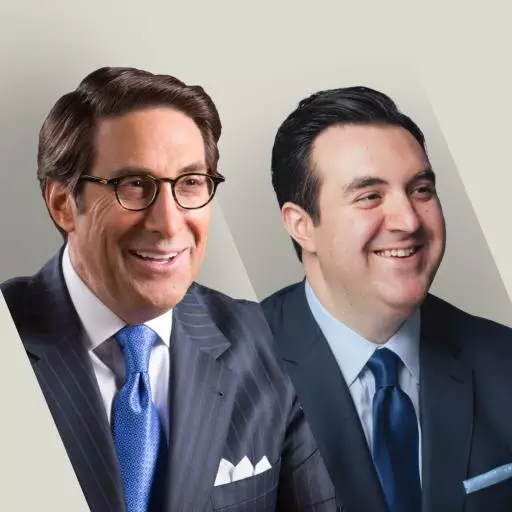
Sekulow


Logan and Jordan Sekulow break down Sec. of State Marco Rubio's presser yesterday and the status of the operation in Iran.
Guest (Male): On today's show, Marco Rubio's bombshell press briefing declares Operation Epic Fury is done. Keeping you informed and engaged, now more than ever. This is Sekulow. We want to hear from you. Share and post your comments or call 1-800-684-3110. And now your host, Logan Sekulow.
Logan Sekulow: Welcome to Sekulow. This is Logan Sekulow. Jordan Sekulow in studio as well. We've got a packed show for today. We are leading with the news of Marco Rubio. He took over the press briefing yesterday. You keep making the joke that Marco Rubio takes over every job, and he's leaning into it, certainly going out there now, hosting the press briefing.
He had a lot of fun with it, but also made some pretty big remarks in terms of where we are with the war in Iran. President Trump responded to those this morning, so again, doubling down a little bit on where we are in terms of the current situation in Iran. One of the big statements was, and I quote—we'll play it—"The operation is over," referring to Epic Fury.
Now, of course, that could mean a drawdown situation. There's reports obviously coming out that we are getting closer and closer. Even Axios put out a report. Fox News is covering it right now. It does feel like maybe closer than ever that we are headed towards a wrap-up of this. Let's actually hear to kick this conversation off. Let's hear from Marco Rubio. Again, this was just yesterday discussing this. Bite two.
Marco Rubio: The operation is over. Epic Fury is—the President notified Congress—we're done with that stage of it. We're now onto this project of freedom. As far as a negotiation is concerned, I think the President's been clear that part of the negotiation process has to be not just the enrichment, but what happens to this material that's buried deep somewhere that they still have access to if they ever wanted to dig it up.
That has to be addressed, and that's being addressed in the negotiation. I'm not going to go further on what progress has been made on that topic because I don't want to endanger the negotiations, but suffice to say that the President and this entire team is aware of the centrality of that question.
Logan Sekulow: And of course, there's a lot more from that. We'll break that down. And Jordan, President Trump did respond as well.
Jordan Sekulow: He did. He said that assuming that Iran agrees to give what has been agreed to—and we'll walk through that when we come back—
Logan Sekulow: I mean, that is an interesting statement just saying "agrees to what has been agreed to."
Jordan Sekulow: Yes. This is wise because this is a 14-point plan to end the war that gives a 30-day time period to finalize a full agreement. So this is an agreement to finalize an agreement. But during that, you would have a cease to hostilities for at least those 30 days, or until one side breached in the other's mind.
Usually, that would be us saying that they've done something they were not supposed to do. I think we also learned that last time you have to be so specific with Iran because they will continue other military operations and say, "Well, you didn't say we couldn't hit it at this. You didn't say Hezbollah couldn't fire at this US base or Israel or this or that." So I would expect that, but you can see that Marco Rubio doesn't want to get into more of the details than we'll go through when we come back at the break.
Logan Sekulow: Because the post goes on, and the post goes on from President Trump. It doesn't end with they agreed. It ends with a typical President Trump kind of statement.
Jordan Sekulow: No, he says, listen, if the blockade of the Strait of Hormuz is not open to all, which means Iran also—he does say that, so it's not like we'll still be trying to blockade Iran—but they stop having both them and their proxies fire on commercial vessels.
If they don't agree, the bombing starts. And it will be, sadly, at a much higher level and intensity than it was before. So this is still a moment where we have not yet gotten 100 percent that they've agreed to the 14-point plan to end the war that would lead to the 30-day negotiation to finalize a plan on things like nuclear materials, I would imagine, the Strait of Hormuz.
What does Iran need to do with those nuclear materials? Is it that we give them to you if you actually want nuclear energy and the medical research and things like that, but you can't be enriching your own, which they've never created a nuclear power plant. They've never done medical research. All they've done is high-level enrich uranium.
Logan Sekulow: Right. And what does that mean? Of course, we know what that means. Phone lines are open for you. What do you think? Do you think this is a good messaging? We're having a lot of statements from Marco Rubio. And look, we are—you want to start thinking about it—we are about a year away from when you're going to have a real big beginning of an election season.
Only probably about 12 months before you start seeing it for a presidential run. And Marco Rubio is certainly one of those voices that people have discussed. What does this look like? Do you like the way he's coming out here, making these statements? He also took some humor in it, of course, discussed the fact that he was DJing over the weekend. We'll get that and more coming up.
We also have former Turner executive, current head of RAF on Fox Nation, Eric Bischoff, joining us about the passing of Ted Turner. We're going to discuss that a little bit later. We'll be right back.
Logan Sekulow: Welcome back to Sekulow. Just a reset a little bit. We are talking about Marco Rubio's press briefing yesterday, of course, sitting in for Karoline Leavitt as she is out on maternity leave. But this happened. Marco Rubio kind of put up a pretty strong statement saying that the operation in Iran, the first operation, Operation Epic Fury, is over, that the President had notified Congress that it was over, and now they were moving into a new phase of this.
At the same time, President Trump put out a statement this morning saying, hey, we believe that we have come to an agreement. Of course, he threatens that if that agreement doesn't stand—he wants to assume that with Iran, you never can really be sure that all bets are off at that point if this agreement doesn't pass—but this agreement would get the Strait of Hormuz fully open, even to Iran, and would get a deal on the table.
Jordan, you brought up in the break—and I think a lot of questions and comments are going to come through about this—which is we've heard this kind of talk already a few times of it sounding like it was coming to an end. This may be the closest. But when does it really feel like the end for the American people?
Jordan Sekulow: For the American people—and I'm not talking about those who've got family necessarily who are serving overseas—that's different. I think that doesn't come to an end until this calms down to where it was before, which is always kind of at a heightened level if you're in that part of the world, but certainly not at the heightened level that we've seen since the beginning of Epic Fury.
Even really over the summer when I was over in Europe and that strike on Iran's nuclear facilities, this has been pretty hostile with the Houthi rebels, Hezbollah's leadership being taken out but still firing back, the war in Lebanon, Israel and of course Gaza since October 7th, and getting into two and a half, closer to three years since then.
Of course, politics coming into play: midterm elections, primaries going on right now as we speak in states across the country. But I would think that for the American consumer, this is all wonderful when prices start going back down, especially at the pump. Because when people can rethink, "Maybe we can take the vacation this summer that we didn't think we could take because the plane ticket prices were getting so high and so many flights were getting canceled."
"Maybe we can make the road trip that we thought, you know what, that's going to be double what we were budgeting for. Maybe we need to do something closer to home or just be at home for the summer." I think that's when, for the American people, that impact is, okay, it's over, we're no longer taking the negative impacts of a conflict.
And then the spin is: is reopening a Strait of Hormuz that was open before this conflict began, what else are we getting? And what we don't know through this plan is exactly where Iran's nuclear enrichment goes in the future. We do know that if they agree to the 14-point plan, they have to pause nuclear enrichment for 30 days. That's the 30 days where it's a window to finalize the agreement.
Logan Sekulow: Kind of a cease-fire, a cease nuclear enrichment, which I don't know how much they can even do right now because like Marco Rubio said, most of that is buried somewhere underground. We would lift some sanctions so that their economy would not be on the edge—well, it already has been—of just totally crumbling, which on the one hand keeps the current regime in place, which is really a regime led by the Iranian Revolutionary Guard. It is not a regime led by the Ayatollah anymore because that Ayatollah is still in a coma, it appears.
Jordan Sekulow: Marco Rubio did—the Strait is supposed to be open, and the uranium stockpile is supposed to be—that would be the key provision for me. In that 14-point plan, they have to agree to removing their uranium stockpile from Iran. And can that be completed in 30 days? When you talk about what Marco Rubio said, which is that some of it is buried underground—
Logan Sekulow: And the idea physically, I don't think we can even really picture what the process is to remove it. And who's the party that goes in? Is that the IAEA? Is it some international body? I don't think we want American engineers there on the ground in Iran messing with their nuclear equipment and the danger there. But what does that look like? And then again, I think that what would help is putting some names to—not that everybody's going to remember these Farsi names—but who are we negotiating with? Who in Iran can agree to this today?
Jordan Sekulow: President Trump has even questioned that in his statement. Does that mean that the IRGC is not going to be firing at our ships the moment we think that this is signed? Because just remember, maybe a week ago, President Trump said, "I'm not going to negotiate because I don't even know who I'm negotiating with." Six hours later, 19-hour flights to Pakistan.
Logan Sekulow: Well, and I'm certainly not going to do it. Well, then what has changed in the last week and who are we actually talking to? I think Jordan is right. That would be a very interesting move to let the American people in on some more information of what it actually looks like in the current IRGC.
Jordan Sekulow: There's got to be someone there. If you're not dealing with them, you're not dealing with reality because the regular military in Iran and the regular political leadership in Iran—knowing that the current Ayatollah, it appears they haven't really pushed back on it at all, is in a medical coma, something like that at least, not able to lead.
And so it's the IRGC. So the only reason I could imagine that they are not naming this person is that that would put a target on them within the IRGC by radicals, except for the fact that this: they've got to be strong enough to agree to something like this and actually get it done. If they're worried that that person would be assassinated or taken out of leadership because they're negotiating with us, how on earth would they be able to handle the removal of uranium stockpile from Iran or guaranteeing that the Strait will be open and in a peaceful way for commercial vessels?
Logan Sekulow: I would like to actually play another bite from Marco Rubio. I think it's good to hear from him himself. And look, I think while we do this, we are posing that question, which is: do you feel like this conflict is over until you see it at the pump? That is something that we are all dealing with right now. I was talking to a friend just trying to sell his car.
It's a big gas-guzzling SUV. And he said, look, in a normal time, especially when used cars start thriving again, he said, I thought I would have sold this in days and weeks. Now, all of a sudden, no one's interested in this SUV because we all are dealing with what we're dealing with at the pump. All of us are trying to fill up our cars and going, wow, this is the highest in our lifetime probably we've seen.
Jordan Sekulow: It doesn't really matter if you're in a lower gas tax state or a higher gas tax state. It's way higher than it's been in a long time.
Logan Sekulow: If you look at the average of where we are, let's say in Tennessee, it's triple what it was at probably the mid-to-low point. It is nearly a dollar-plus more than it has been, or two dollars more than it has been sort of in the average. Let's hear from Marco Rubio discussing this, but if you feel that way, I want you to call in: 1-800-684-3110.
A lot of you are watching right now. If you can't call in, let me know in the comments. If you're watching on YouTube or Rumble, I'd love to hear from you about those specific questions. Is that really where you're going to see the box get checked that the war in Iran, the conflict in Iran, has come to an end, therefore you can now move on with your life, take vacations, do what you need to do? But let's hear from Marco Rubio discussing the economy, actually in not only here, but in Iran. Let's go to bite 20.
Marco Rubio: They are facing real catastrophic destruction to their economy, generational destruction to their economy, generational destruction to the wealth of their country, imposed on themselves by the actions that they're taking. They should check themselves before they wreck themselves in the direction that they're going.
So, look, the time's come for Iran to make a sensible choice. And it's not easy for them to do that, obviously, because they have a fracture in their own leadership system, and apart from that, I mean, the top people in that government are to say the least, you know, they're insane in the brain. And so we need to address that.
Logan Sekulow: Again, he does say "insane in the brain," which is a funny reference there, but he's taking a very serious conversation, which is there is a big destruction happening right now. They do want to see some turnaround of their economy. And of course, we want to see some turnaround economically as well. But Marco Rubio clearly also has been out there making these sort of rounds. He is, of course, a very high-level official. You don't expect him to see Secretary of State—
Jordan Sekulow: Well, this is when you move from Secretary of War to Secretary of State, is when you're talking negotiation. So he's had to move back because you're trying to say, look, this is not about the ongoing military operations. Those have come to an end as of right now. He would, of course, come back again center stage if, as President Trump said, Iran is not able to move forward on this 14-point plan.
And I'd say the biggest sticking point for me is not their pause on nuclear enrichment because I think that's probably paused whether they like it or not. It's removing the uranium stockpile. What do we mean by that in 30 days? And then of course, again, at some point we have to know as the American people—I mean, yes, gas prices start coming down, that would be the Strait of Hormuz reopening to commercial vessels, making it safe once again for that to travel.
Even though most of our oil and gas doesn't come through there, it affects the world economy. Only about 20 percent of ours does, but it all comes into play. And it's making jet plane ticket prices a lot more expensive and they're cutting flights. You can already see it starts affecting the whole economy: people with rental properties, road trips that you decide, you know what, not this year.
Logan Sekulow: Used to be able to fly so you drive; now you can't drive.
Jordan Sekulow: It takes a little longer sometimes on the flights, but it's caught up now. And this is because they pre-buy jet fuel. So the pre-bought jet fuel has started to wear out and they're having to plan that these planes aren't going to go through. And then remember, at the end of this, it is not as if the US is taking military action off the table in the next 30 days.
And anytime within the next 30 days that Iran doesn't come to and meet these terms. I do want to know how they meet removing uranium stockpile from Iran. That's not something I don't think you can do in 30 days, but what does that mean exactly? Who is going to lead that effort internationally and who's going to check that box?
Logan Sekulow: Well, we also have conversations now starting again, of course, you have the midterm elections coming up and you have what could someone like Marco Rubio do for a presidential run. But you also have to look at: he needs to wrap this up. He needs to have a success story to do that. So what does that look like over the next year, really, that he would need to get that done to have probably a successful run?
At the same time, who else is making the media rounds to talk about this? Former President Barack Obama. He was on the Late Show yesterday, one of the final Late Shows. He has been showing up. Obviously, he is promoting the opening of his new presidential library. Is it in Chicago? I guess it's in Chicago. That is a pretty cool-looking structure, very interesting. He's doing a lot. He's finally doing press. You don't see him out there all that much.
Now he's doing that, and he's out there talking about this, and he started to really have that conversation of what a future relationship with the Republicans looks like, what the future looks like with conservative media. It gets very political, as you'd expect.
Jordan Sekulow: Yes. He starts getting into the proper role of the Attorney General. Remember Eric Holder? His wingman. Let's hear this. This is Barack Obama just last night on Stephen Colbert. Again, Stephen Colbert show wrapping up any day now. I think it's the end of the month. But he's having some big guests on. One of them, former President Obama. Take a listen.
Barack Obama: What we're going to have to do is some work to return to this basic norm, and we probably now have to codify it. The White House shouldn't be able to direct the Attorney General to go around prosecuting whoever the President wants prosecuted. Because technically it's under the executive branch, but the norm is that it's independent.
The idea is that the Attorney General is the people's lawyer. It's not the President's consigliere. Right? Even when it's Bobby Kennedy. That was Bobby Kennedy. And so two of the core principles of a democracy—we can survive a lot. Bad policy, funky elections, there's a bunch of stuff that we can overcome. We can't overcome the politicization of the criminal justice system. The awesome power of the state. You can't have a situation in which whoever's in charge of the government starts using that to go after their political enemies.
Logan Sekulow: We just did a 600-page report with the DOJ on how, just under the Biden administration's four years, not as effective as the Obama administration's eight, but under just their four years, how they again, they politicized the justice system to go after their political enemies. And it happened to be pro-lifers and religious people and people of faith, cases that we're still taking all the way to the US Supreme Court as we speak.
Eric Holder said that he was the President's wingman. Do we have sound on that? Do we have that as a bite? I don't know if it's a bite. We do? Okay, we'll pull it up. But again, saying those famous words—
Jordan Sekulow: And so to reframe it as if historically these roles have not been—like the President Trump has remade these roles is kind of factually inaccurate. I think that it's just President Trump talks about it more open. So whereas Barack Obama's not going to be the one—we always said this during the IRS investigation of the Tea Party groups—we always said Barack Obama's not going to go up there and say, "I ordered this."
You're never going to get an email saying from Barack Obama. But you get emails from other officials saying, "Let's do this for him. Let's do this so we can get jobs inside the administration." We saw that from Lois Lerner. "We can get politically appointed jobs. We get better positions. We'll work with the FBI, work with the DOJ because they will like that we are doing this."
But you're never going to get him on the record saying, "Go and do this." The difference is President Trump hides nothing behind closed doors, so he literally tells the American people exactly what he's thinking of doing. And so instead of hiding it—
Logan Sekulow: Maybe sometimes to his detriment.
Jordan Sekulow: Maybe, because the truth is, as we proved in that 600-page report on the Biden administration, they politicized the DOJ. We know the Obama department DOJ was heavily politicized. And they kind of were the start of that coming back, where we had a gap period where, honestly, yes, there's always been this talk, that talk, but where, again, certainly you would have DOJs with different priorities based off who was in charge that you could agree with and disagree with, but they really hypercharged the politics behind their DOJ.
And the fact that he wasn't just saying it at a press conference makes no difference. And it doesn't mean it's necessarily illegal. You can disagree with it, say it's wrong. But you see how they're trying to codify. When they say that word, that's a very specific word. They want Congress to pass a law that the President signs to restrict presidential power when it comes to the Department of Justice.
What president would not veto that? And by the way, what Congress does Barack Obama honestly see in the future is going to agree to do that? Phone lines are open for you, and we're going to take your calls in the next segment. We usually hold off, take calls towards the end, but we got a packed second half of the show.
So if you aren't joining us online or you're not joining us in a way that gets the full broadcast—but like SiriusXM does, Salem News Channel, YouTube, Rumble, however you get your podcast, that's the full hour. Some of your more traditional terrestrial radio stations, they may not carry the full hour or they may split it up. You can always join us live 12:00 to 1:00 PM Eastern Time on all those different platforms.
And of course, you can find us archived however you get your podcast. We are there. The second half is going to be packed, but we got three lines open right now: 1-800-684-3110. It's going to be a really interesting back half of the show. We're going to move a little bit more to the conversation back to Iran in the next segment because we have three calls lined up, all are about that.
We'll try to take as many as we can. Couple of them are ACLJ Champions. ACLJ Champions are people that give on a monthly reoccurring basis, so I really appreciate ACLJ Champions and they get bumped to the front. So there's two, so they'll go first. Liz, you'll be up first, then we'll move to Mike, and then Tony, you'll be after that.
So stay on hold if you're on hold. We will do our best to get to as many of you as possible in the next segment. Then after that, we're going to talk about ACLJ Jerusalem. As the head of ACLJ Jerusalem, Jeff Ballabon will be joining us live from Israel. And then we're going to discuss the impact and the legacy of Ted Turner, who just passed away.
Of course, a lot of you may have disagreed with a lot of his political statements, but there is no doubt that a lot of what we get to do here today, and really 24-hour news or any of this kind of—none of that existed before Ted Turner really changed the game. So we're going to be joined by Eric Bischoff, former Turner executive, head of WCW, is a WWE Hall of Famer and now is the head of Real American Freestyle on Fox Nation. We're going to talk all about that in this coming half hour. Join us at ACLJ.org. We'll be right back.
Featured Offer


Featured Offer
About SEKULOW
The American Center for Law and Justice (ACLJ) focuses on constitutional law and is based in Washington, D.C. The ACLJ is specifically dedicated to the ideal that religious freedom and freedom of speech are inalienable, God-given rights. In addition to providing its legal services at no cost to our clients, the ACLJ focuses on the issues that matter most to you — national security, protecting America's families, and protecting human life.
About Jay Sekulow
An accomplished and respected judicial advocate, Sekulow has presented oral argument before the U.S. Supreme Court in twelve cases in defense of constitutional freedoms. Several landmark cases argued by Sekulow before the U.S. Supreme Court have become part of the legal landscape in the area of religious liberty litigation; these cases include Mergens, Lamb's Chapel, McConnell v. FEC, Operation Rescue v. National Organization for Women, and most recently Pleasant Grove City v. Summum.
In 2009, Townhall Magazine named Sekulow to its "Townhall of Fame" and recognized him as "one of the top lawyers for religious freedom in the United States." In 2007, the Chicago Tribune concluded that the ACLJ has "led the way" in Christian legal advocacy. In 2005, TIME Magazine named Sekulow as one of the "25 Most Influential Evangelicals" in America and called the ACLJ "a powerful counterweight" to the ACLU. Business Week said the ACLJ is "the leading advocacy group for religious freedom." Sekulow's work on the issue of judicial nominees, including possible vacancies at the Supreme Court, has received extensive news coverage, including a front-page story in The Wall Street Journal. In addition, The National Law Journal has twice named Sekulow one of the "100 Most Influential Lawyers" in the United States (1994, 1997). He is also among a distinguished group of attorneys known as "The Public Sector 45" named by The American Lawyer (January/February 1997). The magazine said the designation represents "45 young lawyers outside the private sector whose vision and commitment are changing lives."
Sekulow brings insight and education to listeners daily with his national call-in radio program, Jay Sekulow Live!, which is broadcast throughout the country on nearly 850 radio stations. Sekulow also hosts a weekly television program, ACLJ This Week, which tackles the tough issues of the day. He is also a popular guest on nationally televised news programs on ABC, CBS, NBC, CNN, FOX News, MSNBC, CNBC, and PBS.
Contact SEKULOW with Jay Sekulow
jsekulow@aclj.org
http://aclj.org/
American Center for Law and Justice
PO Box 90555
Phone: 757-226-2489
1-800-684-3110
1-877-989-2255