
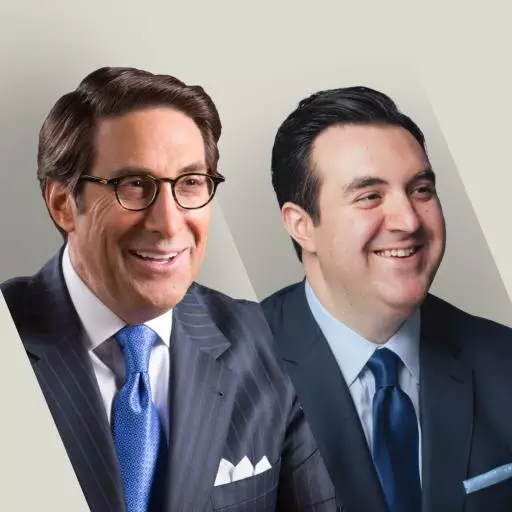
Sekulow


Logan Sekulow and Will Haynes are joined by Cece Heil to discuss the judge in the WHCD case apologizing to the alleged shooter.
Logan Sekulow: Welcome to Sekulow. It is Tuesday, May 5th, 2026. Welcome to the show. We have a packed one coming for you. C.C. Heinz will be joining us, giving you an update of what's going on with the ACLJ's work in Pakistan. But with that, of course, we're going to cover what happened in Iran. There are some updates there, including a sinking of seven small Iranian boats. We're going to discuss what that looks like in terms of: is the ceasefire over? Is it continuing on? President Trump has been speaking. Right now, he said it was—I believe the word that they used was—only a skirmish. But we're going to discuss that a little bit more at length.
Also, sometimes you think you've seen it all. But you had a situation where that suspected shooter, who ran through the hotel and ended up canceling the White House Correspondents' Dinner, shot a Secret Service agent allegedly, was arrested, and has been held. They've actually been holding him in pretty severe circumstances. They've been keeping him essentially at a suicide watch scenario. This is due to the fact that he had written what could have at least been portrayed as a letter inferring that he would probably not make it through. So this is someone who they were concerned about.
The judge was very upset with the conditions they were keeping him in and had to issue an apology. He didn't have to, but he decided he was going to issue an apology to him. "My apology should be to you, sir. Whatever you've been through, I apologize for the prior week." He then later on said it could drive someone crazy in the situation and then even referred back to: he doesn't remember people like the January 6th people getting treated this way as well.
Guest (Will): That's right. So what we're seeing here is now this judge—this is a magistrate judge in Washington, D.C., Zia Faruqui—that has issued this apology in his courtroom yesterday and has ordered the government to provide an update on the condition of this attempted assassin. Fortunately, no one was killed by this individual who wanted to take out as many Trump administration officials as he could, according to his manifesto. He even told the FBI, after he was taken into custody, "I didn't expect to survive that."
So the inference from both the manifesto and what he told the government was: I did not expect to be alive right now. Now he's facing attempted assassination charges and many other charges against him. The government put him on, like you said, suicide watch in protective custody in a restraint that would not allow him to do something drastic so that he could face the U.S. justice system. And you now have this judge that is issuing apologies, is very troubled, is asking for a hearing on this.
And we're starting to see, as you said, even drawing this in and making it political by comparing it to, say, January 6th suspects that were held in the same condition. Those individuals were not attempting an assassination in that way. There were crimes where people violate the law. There are different ways that people are held. And when you have someone that was attempting a mass shooting and survived it, that isn't the norm in this country.
Logan Sekulow: I understand the idea of treating everyone fairly and that we have a justice system that is fair. No problem with that. But when you immediately start making it political, even if you disagree—if you went in and said the judge said, "I think that we have gone too far here, let's adjust this"—there are ways to do that without just making it another political moment, which makes this judge seem biased.
And here we are again, bias and leaning toward the support of the alleged shooter. We've seen the footage. We know what happened here. We've seen the manifestos. Sure, you're innocent until proven guilty, but there's a reason he wasn't released on bail. Phone lines are open for you at 1-800-684-3110. What do you think about this situation? I would love to hear from you.
Logan Sekulow: Welcome back to Sekulow. We do have a bunch of lines open for you if you want to call in: 1-800-684-3110. Let me know in the comments also where you're watching from. If you're watching on YouTube, I'm going to ask you to hit that thumbs up and the subscribe button. Both of those really do help us out. Get some interactions going right now.
I think there are certain words, honestly, that we may have said due to this person being on a certain kind of watch that may have thrown off YouTube's algorithm to share the show. And that is one of those words we're supposed to not say, and I realize that we said it. So I'm going to ask you to engage and get involved so hopefully we get more people out there and more words are spread.
Because this is a ridiculous scenario where a judge, Zia Faruqui, is sitting there and apologizing profusely, pretty much saying, "I should be the one apologizing to you for your conditions being kept." Of course, this is someone who is an alleged shooter. This is someone who did actually appear to shoot a Secret Service agent. And we know we've seen the manifestos that were released. He was going through person by person. We know who he was going after, Will.
Guest (Will): That's right. And when you hear what the judge said, that he's very troubled by what the conditions are in which this individual, Cole Allen, is being held, it sounds like things have not been the way they're supposed to be. These are all quotes from the magistrate judge, Zia Faruqui. Now, I feel like there is a line that should be parsed out as well, where, yes, a judge does want to make sure that constitutional rights of those detained are being followed and that they are afforded those rights that are guaranteed by the Constitution to individuals.
But it's a different thing when the judge starts making comparisons to other political cases that aren't apples-to-apples. He starts to look at an individual and is saying, "I'm deeply sorry." He has ordered the moving forward with a hearing on his conditions, even though his own attorneys said it wasn't necessary to do so.
And when you hear also from Jeanine Pirro, who is the U.S. attorney for the Washington, D.C. district, she says: "Welcome to Washington, D.C., where a U.S. magistrate judge believes a defendant armed to the teeth and attempting to assassinate the president is entitled to preferential treatment in his confinement compared to every other defendant."
When you start to look at this and think about the ridiculousness of how far this judge went in making those comparisons between January 6th defendants—someone that maybe walked through an open door—you think of how many defendants there were in the cases and how aggressively the government prosecuted January 6th cases under President Biden.
You think of individuals that just went in and were having the full book thrown at them for a grand conspiracy against the government. And then you compare it to an individual whose own words were: "I went there, I traveled across the country for the express purpose of doing this, of taking out as many people as I can. I did not expect to survive this ordeal." And then you also think about how almost rational we talked about, which was the scary part of that manifesto, that it was so thought out in not just—obviously the individual is deranged to even think they could do this—but not in the way of just out-there rationale.
Logan Sekulow: We've seen many of these alleged assassins over the years who have released statements, or sometimes they're even just impossible to read. Or they're conspiratorial, or they are mind-control devices. They are talking about themselves as some sort of Jesus-type figure. There's always something metaphysical, spiritual, or mentally deranged. When you read his, it came off like somebody making jokes and having a good conversation. But he was being very specific.
This wasn't someone who—of course, they are deranged, it's very sad that this is something they felt like they had to do—but this is not someone with a lot of issues like that. This is someone who clearly was very intelligent, was a smart person who had many degrees, was an educator, who over the last few years clearly had a lot of issues with what was going on with the President of the United States and this administration.
It is not unlike we have seen happen to countless of others, just many of them haven't taken it quite this far yet. And look, we have a lot of calls coming in specifically about this now, and I want to encourage you to call in as well at 1-800-684-3110. We have about three lines open. I want to go to Ann Marie, who's calling in South Carolina. Ann Marie, go ahead.
Ann Marie: Hi, I just wanted to say that I think this judge should recuse himself. He's already proven himself biased by his statement. I think he's asking to be removed.
Guest (Will): Well, and to that point, Ann Marie, he said he was concerned that the treatment of Cole Allen could lead the defendant to believe he's not getting a fair proceeding. There's also the flip side of that: the appearance of the judge, instead of calling balls and strikes as a judge should, but actually involving himself in a way that appears biased, could make the entire trust in the judicial system have issues as well. So I think that while he is saying that he believes that he wants it to still appear fair, him introducing into his own language another political case, I think just goes to show that there is some sort of bias potentially there.
Logan Sekulow: Well, all it does is show that you're just comparing, "Well, you are against President Trump, they were for President Trump, therefore I feel for you because you are being unjustly treated because you are against President Trump." Let's not forget that after January 6th, very quickly after, Donald Trump was not the President of the United States anymore, about 15 days later. So the situation just again turns this all into some sort of political show.
Now, I'm looking at the comments right now, and not unexpectedly, we have comments that are coming in from all sorts of political spectrums. But again, this is one of those topics where I feel like the conspiracy theories have run so wild. Now, look, you may say we live in a world where we do question everything, and it's understandable when you've had situations where you feel like the government has lied to you or so on, where you will question everything that happens. But there are also things that are easily provable.
I saw one comment that just came in that said, "Well, you know, Cole Allen was wearing an IDF sweatshirt." Yeah, we've seen that picture. You know what all the experts show? He's missing a bunch of moles, his ear's wrong. Why? Because it's not real. And let's say he was wearing an IDF sweatshirt. You know who's also worn an IDF sweatshirt in his life? This guy right here. I have them in my closet. Why? Because I visited Israel, and you buy them. They're tourist items that you buy.
And who knows what this guy's political thoughts are on Israel, or where they were 20 years ago, where they were 10 years ago, or where they are today? When you start putting all these pieces together and think like you're some sort of expert in putting clues together and you're going to solve this mystery better than the experts, better than actual people working on it, it's where it becomes also dangerous on both sides of the aisle here. I don't even know if these are aisles at this point. These are just some sort of chasm of lunacy that we are having to deal with on a daily basis that I'm personally pretty sick of.
I am sick of everything being blamed on Israel. I'm sick of everything being blamed on the idea that everything is fake and that everything is some conspiracy theory. Look, there are some things that I understand have been proven true over time, and that does, like I said, make you question the reality in which you live sometimes, and I get that. I'm not saying there's no legitimacy to that. But there is no legitimacy to this situation. Look at the video. Look at what we've seen. Look at his manifesto. You think that they hired a guy to go through all of this and then be arrested, treated poorly, then made into a political situation, then of course it became a conspiracy? You have Wolf Blitzer thinking he was getting shot. This is just crazy that you think that this is where we are right now. You have another shooter who was captured yesterday in front of the White House. Are they all not real? All of this is a show? All of this is Israel working with the Americans? Come on, let's just—we've got to be better than this.
Guest (Will): And here's the problem with that, right? Is how quickly you saw people during the event of the White House Correspondents' Dinner say, "This is fake." And then the easy thing is: if it was fake, why did they catch the individual? There's going to be justice, there's going to be a trial. If this person was a patsy or this was some fake thing, why would someone agree to that?
Then you have this judge saying, "How dare you be making sure this person is protected," who didn't expect to live through this situation. The government has had, in recent history, high-profile individuals detained heading to trial that didn't make it to trial. And what did that do? Created an entire cottage industry of conspiracy theorists that will not, no matter what is shown to them, no matter who they trusted before, will not believe when someone tells them the opposite of what the conspiracy theory tells them.
So I think it is in the government's best interest that justice be served, that this person get to have a fair trial. And so protecting that individual in custody—if, heaven forbid, something did happen to that individual while in the custody of the government, those conspiracy theories would be turned into "told-you-so's." And I think that's what another thing the government is trying to avoid here.
Logan Sekulow: All right, hey, some phone lines are open. Maybe I've spurred some of your interest: 1-800-684-3110. We are seeing numbers bounce back a little bit, so I appreciate it for those of you that are interacting and commenting in the chat right now. Again, I think we set off some red flags here, so I appreciate you doing that. If you are new to this show, I ask you to subscribe. If you've been here a while, though, just hit the thumbs up, shoot us a comment. Know that I really would appreciate that. Let us know where you're watching from if you don't have anything to say or to contribute in terms of the content of the show.
Logan Sekulow: Welcome back to Sekulow. We are going to be taking your phone calls and comments at 1-800-684-3110. Of course, we were talking about that judge who's really concerned, troubled over the living conditions of the alleged White House Correspondents' Dinner shooter. Of course, that is what we're dealing with.
But we do want to actually pivot a little bit. That one is more of the political side of America right now. But worldwide, there is so much happening in terms of Christian persecution and worldwide religious freedom that the ACLJ focuses a lot of our team on. Sometimes it doesn't get as much airtime because we know it's not necessarily why you tune in each and every day. But I always want to make sure that we do spend an ample amount of time letting you know about the incredible work we're doing and the updates that are going on.
Because when a lot of you support, you support because of not just that we're bringing you a fun, entertaining, interesting news show every day, but because of the actual work that we are doing, whether that is here or abroad. And Will, I know you wanted to take it from here. We're going to give a little update on what's going on in Pakistan.
Guest (Will): That's right. And I wanted to bring C.C. on to talk about this as well because I realized that when we many times bring up an individual client—like a couple of weeks ago, we talked about that we received that letter from a client thanking the ACLJ for standing with them and just really even the joy in the face of death row in Pakistan that we saw from that client as we continue to fight for their freedom—but as we are off-air and we're talking with the attorneys and seeing all the work going on, sometimes it gets lost that we aren't showing you, those that support us, the ACLJ champions and members, just how much this is.
And it dawned on me that when we talk about an individual case in Pakistan, it may come across as we sit around waiting to get a client in Pakistan that we could maybe represent and try to help out. But we have this recent update, and this is an eight-page document of different cases that our office in Pakistan is currently working on and current clients. And this document for internal use has imagery and photos, some of it we could not show on the broadcast, it's graphic. Some of it involves children that we are fighting for.
And it just goes to show that sometimes maybe people don't realize that this is a full office, this is a full operation in Pakistan, constantly fighting for those that without something like the ACLJ's office there, they would have no one to stand up for them and try to defend them.
Guest (C.C. Heinz): Yeah, the Organization for Legal Aid is the ACLJ office in Pakistan, so it is a functioning law office. We have attorneys, we have investigators. And really, OLA has risen to the top. Christians are the minority in Pakistan, and our law office there has risen to the top as being one that will defend Christians. And like you said, we have right now six blasphemy cases. Actually, one we actually won in March where the judge dismissed the case. So we have still five pending cases, and four of them are on death row.
We have five sexual assault cases, and some of those involve girls as young as seven. And then we have seven murder cases. And I'll explain that a little bit more. In Pakistan, you don't just have a prosecutor; the victims actually can have attorneys that help prosecute the case. And this is very important, especially when Christians are the victims. So when you have these sexual assault cases, when you have these murder cases where a Christian has been murdered or attacked and is the victim, a lot of times the perpetrators never are brought to justice.
But here is where the OLA steps in, and we help the prosecutor prosecute these cases, and we are very successful on that. We make sure that the perpetrators that have murdered people, that have committed crimes against Christians, that they are actually held accountable. And so that is what's going on on a daily basis in Pakistan. We are constantly getting new clients because as the OLA's reputation rises, especially in the Christian community, when Christians are harmed, they immediately reach out to the OLA. And there's no charge, just like the ACLJ, there's no charge to these people at all.
Guest (Will): And I think once again, Logan, when you think about that, that many times we talk about the urgency of some of these death penalty cases—that it is an individual that is being charged with this blasphemy charge and put on death row and languishing there facing a hanging by the government for their crimes against the government or against Islam or another religion when they have these blasphemy cases—but in reality, even that other side, when we defend and we help out get justice for victims because they are looked down upon in the society when they are the minority in the society, that it doesn't just bring change and justice for that individual, but also it puts people that may think they can get away with those crimes on notice.
That normally they wouldn't have someone to stand up and help fight it. But when there is an organization like us there, that brings change also.
Logan Sekulow: Yeah, and I think you need to understand that when you do support the work of the ACLJ, it does go into different places. There is the European Centre, there's the ACLJ in Jerusalem, there's our work in Pakistan. It's not just that the primary work is the work that's happening here in the States. There are all these other options because we need to have those offices. Religious freedom isn't just being persecuted; it's actually being persecuted a lot more and a lot more egregiously in other areas of the world. And thankfully, we have a far enough reach and, honestly, people like you that support—a big enough audience to where we are able to fund these offices all over the planet.
Guest (C.C. Heinz): Yeah, and I would say you hear more about Christian persecution now. We even have celebrities talking about the Christian persecution that's happening in Nigeria. And I would like to credit our office a lot for that, because for decades, decades we have been pushing this issue of what is going on across the world and how Christians are targeted around the world specifically and only because of their faith. And so I think some of the things that we've seen with Nigeria putting on the Country of Particular Concern list, I want to take some of that credit because, again, we have been doing this for decades and now finally the world is listening.
Logan Sekulow: That's right. And look, we have a lot of you watching right now, and I appreciate it. Look, we just got out of a big Double Your Impact drive and a Double the Difference drive, but I want you to know that the ACLJ work continues on. It's not just in these big fundraising months. We are able to accept donations, of course. Donations are available always; you can always donate at ACLJ.org. But we also right now have some petitions about religious liberty and religious freedom, and they're free. You could just be a part of them. Put your name, share them with your friends. It's an easy way to do it. Just go to ACLJ.org/sign right now.
If you do that, you can sign our petition right now, whether that is the work that we are doing for religious freedom here in the States, including in Colorado and New Jersey, all these different places. And of course, there is all of our work overseas. And look, as I told you, it's not necessarily the easiest thing to come on here and talk about. These are very serious issues, these are very dark issues. They involve a lot of pain for people who are just trying to live their own faith. But we have an incredible team that's able to work with them and work all over the world.
And that's only because of people like you. So again, I'm not asking for a donation right now. What I'm asking you to do is just get engaged. Go to ACLJ.org, download the app, spend some time subscribing to our channels, just be a part of the community here, share it with your friends. Those are easy ways, free ways that you can be involved. Nothing is ever behind a paywall here at the ACLJ in terms of content because people support it financially. Because of that, we make it very easy to share the content that we produce. All of it's available on our website. You can sign the petitions, all of those things. Join the email lists. Great ways to engage.
Look, we have a second half hour coming up on the show. If you don't get us on your local markets, we are telling everybody: come join us online. Go to ACLJ.org, join us on YouTube, join us on Rumble. It is such a more interactive experience, and you can be a part of the show by calling in as well. But again, if you're listening, this is the end of the first half hour. Whether you're listening to us live from 12:00 to 1:00 PM Eastern Time, or if you're catching this later on, there's a whole another half just waiting for you. So go to ACLJ.org right now, be a part of the show wherever you get your podcasts or streaming live on ACLJ.org, YouTube, Rumble, or the Salem News Channel. Be right back.
Featured Offer


Featured Offer
About SEKULOW
The American Center for Law and Justice (ACLJ) focuses on constitutional law and is based in Washington, D.C. The ACLJ is specifically dedicated to the ideal that religious freedom and freedom of speech are inalienable, God-given rights. In addition to providing its legal services at no cost to our clients, the ACLJ focuses on the issues that matter most to you — national security, protecting America's families, and protecting human life.
About Jay Sekulow
An accomplished and respected judicial advocate, Sekulow has presented oral argument before the U.S. Supreme Court in twelve cases in defense of constitutional freedoms. Several landmark cases argued by Sekulow before the U.S. Supreme Court have become part of the legal landscape in the area of religious liberty litigation; these cases include Mergens, Lamb's Chapel, McConnell v. FEC, Operation Rescue v. National Organization for Women, and most recently Pleasant Grove City v. Summum.
In 2009, Townhall Magazine named Sekulow to its "Townhall of Fame" and recognized him as "one of the top lawyers for religious freedom in the United States." In 2007, the Chicago Tribune concluded that the ACLJ has "led the way" in Christian legal advocacy. In 2005, TIME Magazine named Sekulow as one of the "25 Most Influential Evangelicals" in America and called the ACLJ "a powerful counterweight" to the ACLU. Business Week said the ACLJ is "the leading advocacy group for religious freedom." Sekulow's work on the issue of judicial nominees, including possible vacancies at the Supreme Court, has received extensive news coverage, including a front-page story in The Wall Street Journal. In addition, The National Law Journal has twice named Sekulow one of the "100 Most Influential Lawyers" in the United States (1994, 1997). He is also among a distinguished group of attorneys known as "The Public Sector 45" named by The American Lawyer (January/February 1997). The magazine said the designation represents "45 young lawyers outside the private sector whose vision and commitment are changing lives."
Sekulow brings insight and education to listeners daily with his national call-in radio program, Jay Sekulow Live!, which is broadcast throughout the country on nearly 850 radio stations. Sekulow also hosts a weekly television program, ACLJ This Week, which tackles the tough issues of the day. He is also a popular guest on nationally televised news programs on ABC, CBS, NBC, CNN, FOX News, MSNBC, CNBC, and PBS.
Contact SEKULOW with Jay Sekulow
jsekulow@aclj.org
http://aclj.org/
American Center for Law and Justice
PO Box 90555
Phone: 757-226-2489
1-800-684-3110
1-877-989-2255