
Sekulow


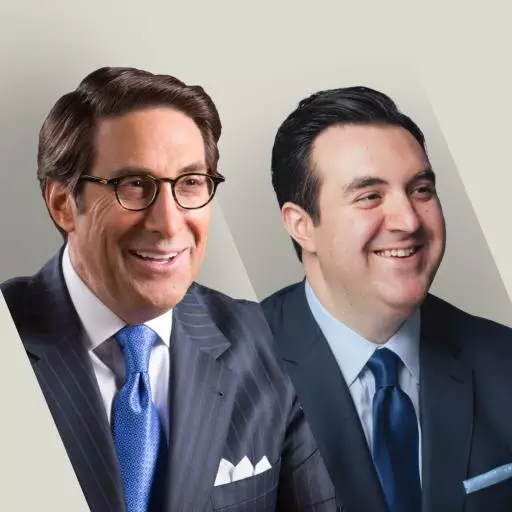
Logan and Jordan Sekulow are joined by Will Haynes to discuss President Trump's declaration that the blockade on Iran will continue.
Announcer: Today on Sekulow, we have breaking news as President Trump declares the blockade on Iran will remain. Keeping you informed and engaged now more than ever. This is Sekulow. We want to hear from you. Share and post your comments or call 1-800-684-3110. And now your host, Logan Sekulow.
Will Haynes: Logan Sekulow will be joining us briefly. I'm Will Haynes, and Jordan Sekulow is joining me in studio as well. A lot of news on this Friday as we see that the Iranians have agreed to fully open the Strait of Hormuz for commercial vessels.
This is a statement from the Iranian spokesperson foreign minister. In line with the ceasefire in Lebanon, the passage for all commercial vessels through the Strait of Hormuz is declared completely open for the remaining period of ceasefire on the coordinated route as already announced by ports and maritime organization of the Islamic Republic of Iran.
President Trump echoing this to a degree. The Strait of Hormuz is completely open and ready for business and full passage. But, and this is important, the naval blockade will remain in full force and effect as it pertains to Iran only until such a time as our transaction with Iran is 100% complete. This process should go very quickly in that most of the points are already negotiated. Thank you for your attention to this matter, President Donald J. Trump.
So, folks, the market is reacting wonderfully to this news as well as the price of oil. Last I checked, it was down 12% already, back into the low 80s. We are seeing the reopening of business for the majority of the world, but this blockade on Iran, which would have never happened if Iran didn't try and play a game of chicken with the President of the United States, and guess who blinked first? The Iranians. Jordan, this is a big deal here on this Friday.
Jordan Sekulow: Yeah, this is a huge deal because it's also impacting those who relied on violating the sanctions to try and get cheap Iranian oil and gas. Who are those? One is an adversary, at least economically, and closer to almost becoming militarily: China. And then Russia. So they're not getting their cheap oil and gas.
But our friends in the Gulf, our friends around the world, are receiving the gas and oil they need to keep their economies afloat and bring prices down. That is a great move. I think what it shows you is the strategic power of our military, not just to go on a bombing campaign that took out all the leadership in Iran, but to be able to just sit on the coast of their ports and basically shut down an economy. It's why you never want an economy based off one good.
Iran now, again, you tried to play chicken with the most powerful country in the world. You'll usually almost 99.9% of the time you'll lose. I think when President Trump is there, it's closer to 100%.
Will Haynes: Folks, if you want to join this conversation, call us at 1-800-684-3110. What do you think about this? Also, the shift in narrative now as the President, who was not using the Strait of Hormuz as a bargaining chip in these negotiations, now is. And whose fault is that? The Iranian leadership or whatever they may be that is in Iran at this point. Give us a call, 1-800-684-3110. Jordan, you have something else?
Jordan Sekulow: Remember, Iran was at a point where the US, to give up their uranium, was willing to split some surcharge to pass through the Strait of Hormuz with Iran. Now that's off the table because of the way they treated our Vice President and negotiators. They basically came in and, as usual with Iran, said, "Oh, yes, we'll come negotiate," and they were willing to negotiate on no major points.
So President Trump, who everyone said the whole time has no plan, he's doing this blindfolded, thinking he can just bomb his way out of everything. Well, one, the US probably can bomb its way out of a lot of things. That's number one, but we don't always want to do that because of civilian life. So two, we have multiple plans. This one only hurts our enemies.
So do we really care how long it hurts? Which also could cause the people to be able to rise up in Iran. It's still not over yet.
Will Haynes: That's right. Folks, we're going to get into more of this as well as taking your calls, but support the work of the ACLJ. We are at the end of our Law and Justice Week and you can double the difference when you give today at aclj.org.
Guest (Male): Let's be honest. There's a lot happening in America right now. It can be overwhelming. Our values, our faith, our freedoms, they're constantly being challenged in courtrooms and on Capitol Hill. You might worry about the country you'll leave behind for your kids, your grandkids. You might feel you have no say over it, but your voice has power. You make a difference.
Right now, when you support the work of the ACLJ, you'll make double the difference. Our legal teams are fighting in courtrooms across the country, defending your rights to speak, to pray, even how to educate your kids. Right now, when you go to aclj.org/difference, your tax-deductible gift will be doubled dollar-for-dollar to defend your most essential liberties. You're not just supporting the critical work of the ACLJ, you're doubling your impact to defend the rights given to us by the US Constitution. Double the difference. Go to aclj.org/double today.
Will Haynes: We've witnessed monumental legal victories from defending the 14th Amendment and protecting our sacred American right to vote, the overturning of Roe v. Wade, and standing up for the religious liberty of our kids and seniors. But even with the many historic wins we've achieved, the battle is far from over.
The attacks on our constitutionally protected rights persist. Countless unborn babies remain in jeopardy, and across the globe, innocent Christians are being targeted and killed across this country and around the world. This fight isn't just the ACLJ's. It's all of ours. It belongs to every American who wants to preserve the values and beliefs on which this nation was founded.
None of the victories we've won would have been possible without the unwavering support of ACLJ members and ACLJ champions. It's been an honor to fight for you all these years. Join us in fighting for freedom. Have your donation doubled at aclj.org/freedom.
Welcome back to Sekulow. A lot to cover. One of the reasons if you clicked this broadcast and you're seeing "Breaking: Trump Declares Blockade Will Remain," this is one thing we wanted to focus in on because a lot of the push notifications people are receiving are that the strait is open. The Strait of Hormuz is open. It is, for all commercial traffic that doesn't include Iran.
How did this happen? What we're looking at here is there was a post on X this morning by the Foreign Minister of Iran that said, in line with the ceasefire in Lebanon, the passage for all commercial vessels through the Strait of Hormuz is declared completely open for the remaining period of ceasefire.
We know that yesterday afternoon, the President announced that Israel and Lebanon had come to a ten-day ceasefire when it comes to Israel's actions against Lebanon, going after Hezbollah. But also, we know that the leaders of Israel as well as Lebanon are going to meet in the White House, Jordan, for the first time in 35 years to continue these talks. First of all, when did you ever think you'd hear that the leaders of Lebanon and Israel would be getting together for more talks, not just this ceasefire?
Jordan Sekulow: Their statements are interesting because they say when Israel hits Hezbollah in Lebanon, then we have to get engaged. It ends up being Lebanese troops, not Hezbollah troops, but Lebanese government troops who are still loyal to the Lebanese government, which is not controlled by Hezbollah. It has Hezbollah members in its parliament or legislature, but is controlled actually by a separate party that is not supported by Hezbollah and does not support Hezbollah.
What they've said is let's work together to destroy Hezbollah. I mean, Will, that's unheard of as well, that Lebanon's military would be willing to work with the Israeli military once again. It's been a long time since that's happened to get rid of this radical group. I think the reason why is not just because Israel showed that we can do this on our own if we have to, but two, the Lebanese are not as afraid of the Iranians.
Will Haynes: Once again, you're also looking at what the real remaking of the Middle East in this. You're hearing the Saudis are considering using Israeli ports on the Mediterranean to move their oil. Talk about something you never thought you'd hear. We'd always had this discussion of whether Saudi Arabia would join the Abraham Accords. We know they were close in 2020 and then obviously all that was derailed by President Biden. But these new friendships with the Israelis that are starting to spring up as a result of this action in Iran, these are generational changes in and of themselves.
Jordan Sekulow: Yes, because economic friendships, when you're talking about state-to-state, nation-to-nation, those are the tightest relationships. I mean, the only tighter would be going to war together. Those countries already allow us to keep sizeable military bases inside their countries and they have to deal with terrorism because of that, but it also protects their governments.
But that economic tie to Israel and Saudi Arabia would be a more direct tie than anything I could even imagine diplomatically because they'd both be financially benefiting. Thus, it could be something where they're tied together in a way where you must trust each other on both sides for generations to come. That's how you change hearts and minds of these kids who even in Saudi Arabia, where the schools are not as extreme against Israel, change their whole mind about Jews, Christians, and this idea that in the world economy, we have to deal with everybody if we're not going to go the route of radical Islam just to give our life because of our religious belief.
Will Haynes: Now, here's where the other interesting chess move here is today. Remember, after the talks fell apart, after J.D. Vance decided to leave Pakistan last weekend after 21 hours of negotiating with the Iranians directly, which in and of itself is historic that the United States Vice President was directly negotiating with the Iranians.
When that fell apart and he said, "I'm going home. They're not budging on the key points on our non-negotiables. They are not budging," the President immediately said, "Here's what we're doing Sunday morning: full blockade of all the Iranian ships." We sent US destroyers, not just on the open sea side of the Strait of Hormuz, but up through the Strait of Hormuz to blockade the ports.
So that the Iranian vessels that the Iranians were letting through the strait so that they could make money, their economic lifeline, he said, "We're shutting that down." It was a bold move. There were people on the left saying, "Oh, it's going to put American lives at danger," more, etcetera. But what we saw is that it started to work and it put the pressure on the regime. That wasn't something that we were doing prior to them shutting down the strait.
Then they got to the negotiation table in this ceasefire, which they never really abided by. Now they've reopened the strait. They're trying to say it's because of Lebanon. We know that really the blockade is putting extreme pressure on the regime. Those that are technically the leadership right now, which could easily turn over very quickly, they have lifted their closure of the Strait of Hormuz, but the President said, "We're keeping ours."
Your economic lifeline is not resuming. We kind of like the way things are right now. You're seeing our markets react fantastically today and the oil price dropping quickly, around 12% the last I checked. I'll get a more updated number for you. But that is a resetting of what had happened because of their blockade of the Strait of Hormuz, all the panic that people were saying was going to continue on forever. You're seeing as President Trump said, this is going to be a short-lived increase in prices.
We understand it hurts. It's not ideal. But at the end of the day, this is something that has been a problem, a thorn in the side of the Americans and has taken so many American lives for 47 years. The short-lived temporary spike in gas prices, I would argue is worth it. But Jordan, there is another side to this, because the President is saying, "We're keeping this blockade until we sign a deal."
Here's what that means. One, the economic pressure remains. Two, there's reports that we could be back at the negotiation table this weekend with Iran. Already starting to hear some rumblings of where that deal, the President keeps saying it's close and the war may end soon, what that deal may look like.
Jordan: So what the deal may look like is some unfreezing of Iranian assets in the United States. They have billions and billions in assets. You remember we criticized President Obama with the JCPOA because the JCPOA was so bad and it allowed Iran to continue its nuclear weapons program and its nuclear program and gave them, I think at the time, it was like $7 billion in cash.
The only other thing we got was they had released one of our clients, Saeed Abedini, a Washington Post reporter, and one other person. I remember Saeed said after that, when he found out that we put $7 billion into the hands of that regime, he felt horrible for those Christians in Iran while he was being escorted out of the country by the US and said he would have opposed that as a Christian pastor.
This, though, remember, is not your taxpayer dollars. So if you see this number of $20 billion, but we get all the uranium, and that means all of their uranium, that's $20 billion worth unfreezing if we truly do get all their uranium. I don't think President Trump would ever make a deal where we haven't secured all that uranium for ourselves, everywhere it is and everywhere it could be, before they get that money.
Will Haynes: And once again, this will and where I think we will be skeptical until we see what the deal looks like because we 100% were critical of the JCPOA. It allowed them to continue enriching uranium. There was actually no moratorium on it. They just had to keep it within the levels that they lied about, which we know they lied about.
It had the ridiculous IAEA inspectors, which had to give like 40 days advanced notice that they were going to come look. There were no real safeguards. But yet they just got enriched and what did they do? They carried out more terror. If this is a true shutdown of their program, we take all the uranium, the President even said we will get the nuclear dust created by the B-2 bombers when they blew up the facilities so things that could be technically mined and re-put together and reused in a way or create a dirty bomb or anything like that.
And it's also no real taxpayer dollars. It is unfreezing of assets that are sanctioned. The sanctions are mostly because they have a nuclear program. If we can get rid of the nuclear program, then they shouldn't be sanctioned because those sanctions would go away. Now, human rights abuses, things of that, that other sanctions I believe we'll have to see what the deal looks like. Those, I imagine, would still remain in place, trying to use those to encourage them to change that behavior or upset the applecart and see real regime change there.
Once again, the difference will be in the details. Will this unfreezing of assets and lifting of sanctions be because of a genuine dismantling of their nuclear program? That is something we could get on board with. If it is another JCPOA that looks strong but isn't, I think we will vocally speak out against something like that. The details will matter. We will be following it and they could be meeting as early as Saturday, once again restarting this tomorrow.
We have much more ahead. If you are watching, go ahead and leave a comment where you're from, call us at 1-800-684-3110 or join us, give to the ACLJ at aclj.org/justice. Stand with us.
Will Haynes: We've witnessed monumental legal victories from defending the 14th Amendment and protecting our sacred American right to vote, the overturning of Roe v. Wade, and standing up for the religious liberty of our kids and seniors. But even with the many historic wins we've achieved, the battle is far from over.
The attacks on our constitutionally protected rights persist. Countless unborn babies remain in jeopardy, and across the globe, innocent Christians are being targeted and killed across this country and around the world. This fight isn't just the ACLJ's. It's all of ours. It belongs to every American who wants to preserve the values and beliefs on which this nation was founded.
None of the victories we've won would have been possible without the unwavering support of ACLJ members and ACLJ champions. It's been an honor to fight for you all these years. Join us in fighting for freedom. Have your donation doubled at aclj.org/freedom.
Guest (Male): Let's be honest. There's a lot happening in America right now. It can be overwhelming. Our values, our faith, our freedoms, they're constantly being challenged in courtrooms and on Capitol Hill. You might feel like you have no say over it, but you make a difference. And right now you can make double the difference.
Our legal teams are fighting across the country, defending your rights to speak, pray, and even how to educate your kids. Join the fight. Go to aclj.org/double to have your gift doubled today.
Logan Sekulow: Welcome back to Sekulow. I'm here now. Logan is here. Jordan's here, Will's here. Thanks for joining us. I was stuck in the Strait of Hormuz. It was blockaded. I could not get through. Unfortunately, we had horrible traffic. I've been in the car four hours today. So, you know what, I made it, though, a little bit late. But we're here. Phone lines are open for you at 1-800-684-3110.
I mean, I could have given up at some point. I thought about it. I could have done the phone zoom. I thought about it. I was going to do it from the car, or just say, you know, y'all can handle it. But I'm here. We're going to do a good rest of the show. Will knows what we're talking about. I was listening, though, I'm not going to lie. I'm glad you tuned in. There's ways you can find the show.
There was. I was watching it on YouTube. But I thought I have SiriusXM, there's so many different ways. I had to make a decision. I felt like one of our listeners: how do I take this in? So I pulled up a YouTube feed.
Will Haynes: Did you like and subscribe while you're at it? Maybe leave a comment where you're listening from?
Logan Sekulow: I think I was already there. But this is Law and Justice Week. We are wrapping that up here at the ACLJ. It is still part of the Double the Difference drive which goes for the rest of the month and you can be a part of that at aclj.org. Will, did we want to play a video here? Do you want to give a bit more update?
Will Haynes: Yeah, I think before we get back to this Iran topic, our team put together this video because the Law and Justice Week was really focusing on the work that we do at the Supreme Court. At the beginning of the week, I talked a little bit about that history and how we've been a part of so many landmark decisions that the ACLJ and your dad have really helped shape the way that the Constitution is carried out and protected through the Supreme Court precedents that have come down over the great history of the organization. So they put together some of those, some highlights of that to kind of show this work. Let's go ahead and roll that for people before we get back to the topic of the day.
Guest (Male): The ACLJ has spent decades fighting for your freedoms. And that fight has taken us all the way to the United States Supreme Court.
Guest (Narrator): Mergens lawsuit has emerged as a major test of the Federal Equal Access Act, a 1984 law which says if public schools make their facilities available for non-curriculum related activities, religious groups must get the same access.
Guest (Female): We wanted to have the Bible study meeting in the school, and we thought it'd be no problem to start.
Guest (Narrator): In today's Supreme Court hearing, the lawyer for the school board argued the 1984 law shouldn't apply because the activities of all the other student groups were related to classwork. The lawyer for the students countered that the school board was violating free speech.
Guest (Narrator 2): By a surprisingly decisive margin, the Supreme Court ruled today that a student Bible study club has as much right to meet in a public school as any other group. The vote was eight to one.
Guest (Male): The highest court in the land is the ultimate authority on constitutional interpretation and the final arbiter of how the law is enforced. The pro-choice movement was humming along. No real opposition, and then suddenly hundreds of people are coming into the streets kneeling at clinics.
Guest (Narrator): On this day, October 16, 1991, these people were lined outside the United States Supreme Court building waiting to get a seat to hear arguments on a case called Bray v. Alexandria Women's Health Clinic. At stake was whether federal courts should use their authority to stop pro-life advocates from blocking entrance to abortion facilities.
Guest (Jay Sekulow): The opinion of the court in number 91-85, Bray against Alexandria Women's Health Clinic, will be announced by Justice Scalia. Opposition to abortion does not qualify as a class-based animus, nor does opposition to abortion reflect an invidiously discriminatory animus against women in general.
Guest (Male): When Roe v. Wade was overturned, the Supreme Court quoted our case, Bray v. Alexandria Women's Health Clinic, in its historic ruling. That's the power of precedent. A case we argued didn't just win, it shaped the legal landscape, influencing how courts interpret and apply the law for generations ahead.
Guest (Narrator): In 1988, this Long Island church, Lamb's Chapel, asked the Center Moriches School District for the use of this high school gymnasium to show a film series on family values. But the school district refused the request, saying the film series' religious content violated a New York state law prohibiting religious activities on school property.
Guest (Male): You cannot eliminate religious speech or give it a special disability because you disagree with it.
Guest (Narrator): The church appealed, and today Justice Byron White, writing for the Supreme Court, rejected the school board's arguments and said denying access violated the church's right to free speech.
Guest (Male): We won that case unanimously and then a whole arena, if you will, of litigation exploded. We have cases at the Supreme Court right now that could have a major impact on your rights, like freedom of speech, and even your right to go to church and worship together without consequence. And that's why your support of the ACLJ is so critical. Getting cases of this magnitude to the Supreme Court takes a lot of work and resources. It's because of ACLJ members and champions that we can continue to engage these critical cases and defend the freedoms afforded to all of us by the Constitution.
Logan Sekulow: And again, that is just a look during Law and Justice Week at the work of the ACLJ historically. Again, we're talking back, flashing back 30, 40 years at this point that the work of the ACLJ has been at the Supreme Court of the United States. And it continues at the Supreme Court of the United States to this day. We are actively working on cases, whether it is the situation with CNN, because that's a deadline right now. That should be happening as we speak.
Will Haynes: That's right. So we know that CNN will be submitting their reply. I'll get the exact date. I believe it is this Friday. But once again, that is a very important case that we have before the Supreme Court. We know that it could really reshape the way that the entire media industry is able to operate. And when we look at all of these things and put it together, we know we talk about what's there before with the Calvary Chapel case. We know that that is going before conference next week. And today their response is due and then we will have a reply brief that is due May 1st. So all these things are moving so quickly.
Logan Sekulow: Quickly, but we've been doing it for decades. And the team, though some faces have changed, some names have changed over the years, as people have come and gone, people have started here, retired here, the mission remains the same. And the organization is stronger than ever right now because of people like you who support the work financially.
And look, we got a lot going on in the back half of this show. Jeff Ballabon from ACLJ Jerusalem is going to join us. Of course, Israel plays a major part in what's happening with Iran. And according to President Trump, he said that Iran will never close the strait again is what they're saying. So what does that look like and what do the real negotiations look like also with Israel and Lebanon? We're going to get into that in the second half hour of the broadcast.
And also, I want to hear from you. Give me a call at 1-800-684-3110. That's 1-800-684-3110. And if you don't get us on your local station or you want to mix up the way you see or experience this show, join us online, live every day, 12:00 to 1:00 PM Eastern Time at aclj.org. You can also find us on YouTube, on Rumble, however you stream your podcast, you can get us there whether in video or audio form.
And if you do it live, you get to be a part of the live chat that happens. Join with some like-minded, sometimes not so like-minded individuals. You know how social media can be, but it's a lot of fun. We love reading the comments. And look, if you're reading the comments right now, let me know where you're watching from. I'd appreciate that and hit that thumbs up.
With that being said, we only got about 55 seconds left in this half hour. I want you to see what we've done historically and understand the ACLJ continues forward. As Will said, today is CNN's final deadline to reply to us at the Supreme Court of the United States and then we will respond as well. And we will see what happens. It is a big day for the ACLJ at the Supreme Court. Just happens to coincide with the end of Law and Justice Week. And I want you to be part of that.
And what's really great during these special months and really these special weeks also is that all donations that are made are doubled because people like you have pledged to give a matching gift of whatever comes in. So whether you're giving $10 or $1,000, you can do it right now at aclj.org and your gift will be doubled. You can double the difference of your gift right now. Your donation doubled at aclj.org. We're back in less than a minute. Coming right up.
Guest (Male): There's a lot happening in America right now. Our values, our faith, our freedoms, they're being challenged in courtrooms and on Capitol Hill. You might feel like you have no say over it, but you make a difference. And right now you can make double the difference. Our legal teams are fighting across the country, defending your rights to speak, pray, and even how to educate your kids. Join the fight. Go to aclj.org/double to have your gift doubled today.
Featured Offer

Featured Offer
About SEKULOW
The American Center for Law and Justice (ACLJ) focuses on constitutional law and is based in Washington, D.C. The ACLJ is specifically dedicated to the ideal that religious freedom and freedom of speech are inalienable, God-given rights. In addition to providing its legal services at no cost to our clients, the ACLJ focuses on the issues that matter most to you — national security, protecting America's families, and protecting human life.
About Jay Sekulow
An accomplished and respected judicial advocate, Sekulow has presented oral argument before the U.S. Supreme Court in twelve cases in defense of constitutional freedoms. Several landmark cases argued by Sekulow before the U.S. Supreme Court have become part of the legal landscape in the area of religious liberty litigation; these cases include Mergens, Lamb's Chapel, McConnell v. FEC, Operation Rescue v. National Organization for Women, and most recently Pleasant Grove City v. Summum.
In 2009, Townhall Magazine named Sekulow to its "Townhall of Fame" and recognized him as "one of the top lawyers for religious freedom in the United States." In 2007, the Chicago Tribune concluded that the ACLJ has "led the way" in Christian legal advocacy. In 2005, TIME Magazine named Sekulow as one of the "25 Most Influential Evangelicals" in America and called the ACLJ "a powerful counterweight" to the ACLU. Business Week said the ACLJ is "the leading advocacy group for religious freedom." Sekulow's work on the issue of judicial nominees, including possible vacancies at the Supreme Court, has received extensive news coverage, including a front-page story in The Wall Street Journal. In addition, The National Law Journal has twice named Sekulow one of the "100 Most Influential Lawyers" in the United States (1994, 1997). He is also among a distinguished group of attorneys known as "The Public Sector 45" named by The American Lawyer (January/February 1997). The magazine said the designation represents "45 young lawyers outside the private sector whose vision and commitment are changing lives."
Sekulow brings insight and education to listeners daily with his national call-in radio program, Jay Sekulow Live!, which is broadcast throughout the country on nearly 850 radio stations. Sekulow also hosts a weekly television program, ACLJ This Week, which tackles the tough issues of the day. He is also a popular guest on nationally televised news programs on ABC, CBS, NBC, CNN, FOX News, MSNBC, CNBC, and PBS.
Contact SEKULOW with Jay Sekulow
jsekulow@aclj.org
http://aclj.org/
American Center for Law and Justice
PO Box 90555
Phone: 757-226-2489
1-800-684-3110
1-877-989-2255