
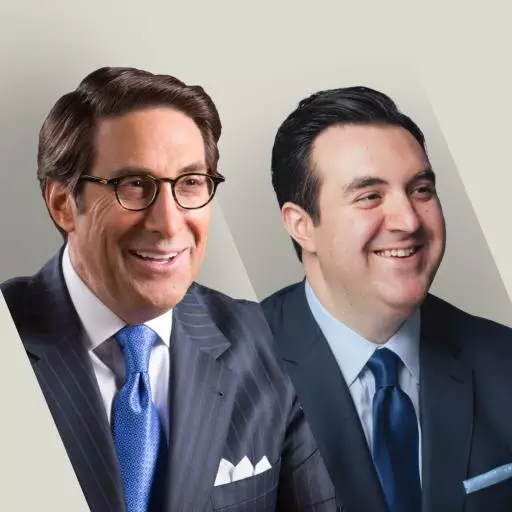
Sekulow


Executive Producer Will Haynes discusses the the US blockade of the Strait of Hormuz after peace talks fail in Pakistan.
Will Haines: Welcome to Sekulow. Will Haines in studio today and it's just me flying solo today, so give me a call at 1-800-684-3110 because I want to hear from you. We are talking about the negotiations that took place in Pakistan over the weekend with Vice President Vance as well as Steve Witkoff and Jared Kushner with the Iranians. They negotiated for 21 hours and were unable to reach a deal.
Not only that, the Vice President felt like after those 21 hours, the red lines that the United States had in place—their non-negotiables, so to speak—Iran was not going to budge on, mainly reopening the Strait of Hormuz with no tariff or tax or toll placed on it by the Iranian regime as well as the enrichment program going away for Iran. Iran seemed to be way too entrenched in the idea that they will continue their nuclear ambitions.
So what did the Vice President do? He came back to the United States and walked away from the table. The Americans gave the Iranians a chance to continue for that regime, whatever it looks like, to continue, and they were unable to come to the negotiating table in good faith in a way of saying, listen, we know this is all about our nuclear ambitions and maybe we will retain the right in some way that we can do this, but we are agreeing that we will not. We will end these nuclear ambitions.
As a result, President Trump did something that I don't think was on a lot of people's radar. He has imposed a naval blockade of the Strait of Hormuz. This is, as you remember, Iran saying they had closed the Strait of Hormuz. It was supposed to be reopened as a part of this ceasefire. But what did we see? Iran picking and choosing who was allowed to go through. Not a true reopening of the Strait of Hormuz.
Who are they letting through? The ships that were going to make them money, the ones that were going to help prop up the regime. The economic lifeline of Iran, they wanted to keep flowing through the Strait of Hormuz, meanwhile the world economy was still feeling the strain of their so-called blockade. So the President was fighting naval blockade with naval blockade and implemented today at 10:00 AM Eastern time this morning a naval blockade of our own using our great Navy on both sides of the Strait of Hormuz, sending destroyers deeper into the Persian Gulf than they had been before to stop the Iranian economic lifeline, saying that any vessel entering or departing the blockaded area without authorization is subject to interception, diversion, and capture.
So we are using the strength of the US Navy, the finest navy in the world, to put pressure back on Iran. This is now an economic phase of this conflict with Iran. How do you feel about it? Is that something you expected from President Trump that out of those talks—not just a resume of the air campaign immediately, still letting this so-called ceasefire go on for a little bit longer even though they’ve stepped away from the negotiating table as it is—and putting this economic pressure on the Iranian regime? What are your thoughts?
I also want to later in the program talk about that story that broke over the weekend where Eric Swalwell, the representative from California, has suspended his gubernatorial campaign. We'll talk about that later in the broadcast as well, what that means for the race for governor of California, what it means for the Democratic Party, and what it means going forward with this political world that we are living in.
And I want to tell you, we are launching this week our Law and Justice Week here at the ACLJ. You can double the difference when you support the ACLJ by going to ACLJ.org/justice, but we're going to really break down the work of the ACLJ when it comes to our Supreme Court work and what that means. We’ll be right back.
Welcome back to Sekulow. Will Haines here, and I am taking your phone calls on this issue and many others at 1-800-684-3110. But I also want to read from you this something President Trump posted on Truth Social just about an hour before the broadcast started, and it says, "Iran's navy is laying at the bottom of the sea, completely obliterated. 158 ships. What we have not hit is their small number of what they call fast attack ships because we did not consider them much of a threat. Warning, if any of these ships come anywhere close to our blockade, they will be immediately eliminated, using the same system of kill that we use against the drug dealers on boats at sea. It's quick and brutal. PS, 98.2% of drugs coming into the US by ocean or sea have stopped. Thank you for this your attention to this matter."
What he's referring to there is these fast boats that are able to quickly get to places. They use them to board vessels. It's really not the type of naval ship that you're thinking, but they also are able to use them to place mines, things of that nature. They're a very disruptive force in the Persian Gulf. When you think about the navy that he's talking about, that is talking about the more traditional destroyers, battleships, things of that nature, that were targeted earlier on in Operation Epic Fury.
What we see now is this move by President Trump after the failed talks in Pakistan over the weekend where he is really putting the economic pressure on the regime. If they aren't able to make money to replenish their stocks, replenish their military, that's a big strain on their ability to continue. Now it becomes this point of pressure for both the world economy because of the way that Iran is blocking the Strait of Hormuz and has been even after agreeing to open it.
Remember, it is supposed to be free-flowing traffic at this point with this ceasefire. It was a part of the negotiation of the ceasefire to continue these talks. They haven't really lived up to their end of their deal. Surprise, surprise. It's the Iranians. Do you really expect them to live up to their end of the deal?
But now after giving them the opportunity to show good faith, to open up the strait, to not be firing on their Gulf neighbors, which they've continued to do, the US has shown restraint. We haven't been running our air campaigns. We haven't been launching attacks on the regime since that ceasefire last Tuesday.
But remember, it's only a two-week ceasefire. Now the President is putting ships in place and our Navy in place to try and push back on the control they've put over the Strait of Hormuz. This is the more naval chess game, the game of risk if you will, where they're putting assets in place to try and allow traffic that they authorize to go through while not allowing the Iranian vessels that will provide economic benefit to the Iranians through.
What does it also do? It also puts pressure on China, a big customer of Iranian oil. If that oil isn't able to go through, China has to go to other markets. They have to do make other deals. That also does put also on the global supply. If there is less supply, but the demand is coming from places it isn't normally like China, that could push prices up even further. So it's really who can outlast at this point.
And we also know that there's just over a week left in this ceasefire. We'll see what happens, how it plays out from there. Will we go back to a bombing campaign? Will we go back to a strategic strike campaign? I want to hear from you. 1-800-684-3110. Let's go ahead and take Matthew calling from Colorado on line one. Matthew, you're on Sekulow, you're listening on radio. Go ahead.
Matthew: Yes sir. I was in the US Navy from '77 to '81 and in the winter and fall of '79, my ships went up and down the Iranian coast dozens of times. I was just sad that we didn't take care of this situation way back then.
Will Haines: Matthew, one, thank you for your service and being there firsthand and knowing that. We've heard from a lot of individuals calling into this show that served in the military, that were deployed in that region, that say the exact same thing. Our members of the military know specifically, not just from Matthew's era but all the way up to those that were in the global war on terror, they know the bad actors that Iran are. They lost men and women in uniform that were fighting alongside them to Iranian proxies, to Iranian militias in Iraq. They know that Iran has US blood on its hands.
If you hear from callers that call into this show like Matthew and others that were in different eras serving in our military, they all have a pretty uniform message. Obviously they don't speak for every individual that's ever served, but the ones that call into this broadcast seem to have a pretty uniform message: take care of the problem.
The problem is the regime. It is the Islamic Republic. It should've been dealt with a long time ago. Many Presidents had an opportunity to do this and always said it was a priority of theirs that Iran never have a nuclear weapon. But we know that they've had a centrifuge program since the 80s. We know that they have enriched uranium up to the point of just being a week away from turning that 60% uranium to 90% enriched uranium, which can go on a warhead.
They have put all the pieces in place. We know what their aspirations are. Don't let people tell you that this fatwa that was in the early 2000s that outlawed having a nuclear weapon is something that they actually believe. That's them lying to the world and trying to say, look, we're good. We're good here. We just want it for medical isotopes. We just want it for civilian power.
We know those are lies because they've been working on this program for decades. They have a nuclear power plant. How much of that material that they've enriched has gone to their nuclear civilian nuclear power program? Zero. They get it from Russia. It's all a lie. And that is going back to even this ceasefire saying we will open the Strait of Hormuz. They just lie.
Now, I also think that the talks that happened in Pakistan were a very smart strategic move for the domestic audience of the United States. Because there are those, even on both sides of the aisle, that are very apprehensive, skeptical of this campaign in Iran. Many on the right that have turned away publicly said this is President Trump's being controlled by Israel. He's not. The United States is doing the bidding of Israel. We should have never been in this.
No, the President was always clear-eyed what the mission was here. The President has also not just gone in with the military, has given them the opportunity to negotiate. But from a position of strength, that if you don't get there, we are going to make sure you don't have a nuclear program one way or the other. And even after this campaign, allowed them to come to the table, met with the Vice President of the United States in Pakistan.
And what happened? They were unable to accept the red lines the United States have: an open Strait of Hormuz with no toll by Iran as well as abandoning their nuclear ambitions forever. They just can't get there. They wouldn't do it.
And I also think it's important because JD Vance speaks more to that isolationist group of the conservatives and Republicans in America, those that are skeptical of this Operation Epic Fury in Iran. He went there. He was given the power to go there and make these deals, do this negotiation. And after 21 hours, he walked away.
He's going to come back and I think he is in a unique position to sell to the American people what the next step is. Because we aren't just going to walk away. Be like, we're done here. Pull all the military back. We're done, we did enough. There will be something next.
And right now, this strategic blockade is very important because it is putting another layer of pressure on this very fragile regime. The concept of the Islamic Republic is standing for now. But as we've seen how quickly leaders are gone through, we hear from different individuals claiming to speak for the Islamic Republic, whether it be their parliament leader, the speaker of their parliament, or whether it be the written statements we see from their so-called supreme leader, the son of the Ayatollah Khomeini, who was killed in the very first day of Operation Epic Fury.
They don't really know who is leading this at this point. So therefore, put more pressure on, and this economic layer is just the next level of that. And we will see where it goes from here, but you better believe something is coming next. And that is the plan that the President, the Vice President, and the military advisors are all putting in place right now.
I want to hear from you. 1-800-684-3110. Tell me what you think about this layer of it. It wasn't really something we expected that the US would come out of this and immediately say, you know what, we're going to do a blockade on your ships. But here we are. Tell me what you think. 1-800-684-3110. We will also be talking about Eric Swalwell leaving the governor race in California, what the impact of that is, what the strategy of that is for the Democrats now in California. If you want to talk about that, 1-800-684-3110. But when we come back, I'm going to talk about our Law and Justice Week just launched here today. And if you want to double your impact, ACLJ.org.
Welcome back to Sekulow. Will Haines here today, and we are going to take a little bit of a diversion from the Iran topic and other things going on today because I want to tell you about something we launched today. This is our Law and Justice Week at the ACLJ. And we know based off the nature of media these days is that we have new people joining our broadcast, joining our media, our radio program, watching us on Salem News Channel all the time.
They come here, they find great analysis from experts. They hear about our legal work. But the ACLJ may still be new to them, not fully understanding or grasping what all we do at this organization and why supporting us matters. Not just for the truth that we will tell you here, breaking down topics, breaking down the legal angle of them, or talking about our work, but the organization which we have now been blessed by God to be around for more than 35 years, fighting all the way up to the Supreme Court and winning massive victories, not just for our clients here at the ACLJ, but for the American people, for the American framework of law along the way.
I personally, I have been around this organization my entire life. I have known the Sekulow family my entire life. And I have been able to see growing up the great work of the ACLJ throughout all of the eras, all of the battles that have been fought. And it's remarkable. And that's why I am proud to work here and to be a part of this and to be a part of this broadcast now. I've been the executive producer of this broadcast for many, many years.
And now as I speak to you, I've never been able to give that perspective of what I've seen from someone who's been in the control room, like many of my colleagues here that are some of the best in the business at what we do when it comes to broadcasting. But we also have the best in the business on the legal side. I have a document here I'm going to be going through this week. It's three pages of work that we are doing right now that is either directly at the Supreme Court or just below the Supreme Court that could reach there.
We have two cert petitions. That's where you ask the Supreme Court to take your case. It's been through the district court level, the appeals process, and then for one reason or another, you are now at the Supreme Court asking for the highest court in the land to decide and rule in your favor. But it's not a guarantee when you appeal all the way up to the Supreme Court. They only take a handful of cases a year.
And when they take that case, you know that it means they see that there is something of national importance here, that they need to make sure is corrected, or that they can reiterate what the lower court said so that it applies nationally. Two of those cases are *Dershowitz v. CNN*. We'll be talking about that later in the week. But if you've never heard of us or never heard of this case, that's a very important case where we are directly going against the media landscape, where they can lie so clearly and with intent, knowing what they are saying is false, and have this wall of separation, this superpower against defamation claims.
That would be going against this precedent that an earlier court set in *New York Times v. Sullivan*. We'll talk about that later in the week if you haven't heard about it. Many of you regulars know exactly what I'm talking about with this, but it's a very important—we are asking the Supreme Court to take that case.
Another one is *California v. Calvary Chapel*. Now this is a very important case as well, because as we talked about even last week, all the fraud that's rampant in California. And we'll be talking about California a little bit later with that governor race that was shaken up a little bit over the weekend. But we know that California has a history of targeting people of faith.
They have done it systematically, whether it be when Kamala Harris was the attorney general and we had to fight there where they were trying to force pro-life pregnancy resource centers to advertise where individuals coming to that clinic could get an abortion. Something antithetical to the message of a pro-life pregnancy resource center, they were forced by the state to advertise where you could go get an abortion. We fought that. We won that. Because that was unconstitutional. It was an attack on people of faith and people that are pro-life.
Right now we have this case that we are asking the Supreme Court to hear. And it's been distributed for conference, meaning that the Justices of the Supreme Court will see all the briefing. They will see our cert petition where we ask the court to take it. They will see California's reply saying why the court should not take it. And our final response to their response, which is once again addressing some of their claims. There are also amicus briefs that go into this where outside groups know this is of importance and they weigh in too.
They tell either the court on the side of us saying, "Hey, you should hear this, this is outrageous," and try to reiterate those arguments, maybe from a different perspective, as well as those that maybe support California say, "No, don't hear this. Let the lower court standing stand." And this is a case that is nearly six years old, where the state of California went after Calvary Chapel San Jose and they wanted nothing but to shut them down during COVID.
And I have a video I'm going to play you later, I just realized, explaining all this because I think it is so important, especially if you're new to the organization, why we do what we do and how much work it takes, how long this takes, the resources that it takes to do this. But we have asked the court to take this because Calvary Chapel in San Jose is still facing $1.2 million in fines from the COVID pandemic over masking rules.
We learned last week how deep the fraud in California goes, where one fraud ring that was doing hospice fraud defrauded the state of $267 million. That's one fraud ring, 21 people, $267 million. They were able to defraud the state to get that money. Is that because the state is so hyper-focused on trying to collect COVID fines in 2026? They're willing to fight this all the way to the Supreme Court. They could have found a way to make this go away.
They are spending way more money as a state to make a point to collect this money from a church when we know how loose the rules were for bars, nightclubs, for Governor Gavin Newsom himself when he wanted to go to a fine dinner. But if you're a church, we're going to make sure you pay. That is what they're doing in California and that's what we fight for here at the ACLJ. We fight for the church.
We fight for your First Amendment rights, whether it be freedom of religion, freedom of speech, freedom of assembly. We fight for that here. And you know what? That church that's facing a $1.2 million fine, guess how much they're paying the ACLJ for the best lawyers in the business? Zero dollars. They are paying zero for this representation at the Supreme Court.
So that's where you come in. As we fight this week for Calvary Chapel, for all Americans of faith during this Law and Justice Week, you can stand with us. You can go to ACLJ.org/justice. The difference you make is doubled. Your donation, whatever it may be, is matched.
And that goes to not only help fight these cases in *Calvary Chapel v. California* or fight against the mainstream media and how they get away with so much libel and slander and defamation with no consequences. It goes to the other three pages of legal work that have Supreme Court and national implications. So I encourage you, as someone who has watched this organization my entire life and am proud to work here and make a difference, I encourage you to join me. Double the difference at ACLJ.org today.
Welcome back to Sekulow. Second half hour of the broadcast. If you want to talk to me on air, 1-800-684-3110. We just came off of a great first half hour talking about this blockade that the President has put in place with our Navy, as well as I was able to go through and really break down why it's so important the work we do at the Supreme Court.
And what's remarkable too is how many cases that this organization has been able to take to the Supreme Court. I mean, statistically, you are not likely to get a case heard by the Supreme Court. There are so many cert petitions filed every year and they only have so much time. They only take so many. Some they may just say no, they may also write orders or remand it back down. There's all different paths that the Supreme Court can take.
But actually granting cert and having oral argument is the anomaly because of how many come in. And the ACLJ over the years has had dozens of cases actually heard by the Supreme Court. And we win those cases because this organization employs the best lawyers and we know we are also on the right side of the law, the right side of the Constitution.
So we'll get into more of that later. I did want to go back to this Iran issue, and this is a question that comes up frequently. We see it pretty regularly around this entire situation. This was a question that came in from Rumble and it was specifically asking, if we don't get our oil from the Persian Gulf or from Iran even, and we are mostly energy independent here in the United States—we, and by that it means that we produce more oil here than we consume.
Now we do still buy oil from other countries as well, so it's not energy independent in the sense that we are the only ones using the oil that we produce and the oil we produce is the only oil that we consume. So we do still buy outside oil, but we are a net exporter, meaning oil that's produced is more than we use and a lot of it is sold around the world as well.
Because of the way the oil market is and the way that it's a commodity, oil is traded on commodity markets. That the price of a barrel of oil is a mechanism of supply and demand, global supply and demand because it's a commodity. And so when the supply, the global supply—no matter who's producing it—is decreased, but the demand stays the same globally, that naturally forces the price up.
In economics, it's an equation of supply and demand. When you don't have equilibrium between supply and demand, or you have enough supply to meet the demand where those paths cross, that's where the price is set. But when you have the supply drop, there's a gap and that forces prices up not just in places that are receiving it from the Persian Gulf, but around the world. Because other countries are trying to then fill their supply needs going to other places. That naturally drives up the price of oil.
So even though we are energy independent and we are a net exporter, because we are a net exporter, it also drives up the price of oil. That's going to happen naturally when 20% is blockaded. 20% of the world's oil, one-fifth, is blockaded. That is naturally going to drive up the price of oil everywhere. And that is also because we don't have nationalized oil industry here. It is a free market in that sense. The price is set by supply and demand on a global scale and not as simply as I laid out.
But yes, that is the direct impact of when 20% of the global supply is impacted, it's going to drive prices up everywhere globally. So I hope that explained it for you. I had a comment in Rumble and I wanted to get to that. And we'll talk more about it later. But once again, we are in our Law and Justice Week. I just explained really the importance of our work at the Supreme Court. It's an honor to work for an organization that has such a pedigree when it comes to winning at the Supreme Court and standing for your First Amendment rights. And once again, you can join us today at ACLJ.org.
Welcome back to Sekulow. Final segment of the broadcast. Before we get to some phone calls, and Gary I'm going to go to you first when we get back from this, but I do want to play this video. This is something our team put together. It is on this Calvary Chapel versus California case that we are asking the Supreme Court to take. It has been distributed for conference, meaning that the Justices will look at the briefing on Friday, April 24th, so just under two weeks from now.
So if you can support the work, go to ACLJ.org/justice and have your impact doubled. But if you can't, there's something you can do right now and that is pray. Pray that justice will be done here. Pray that our attorneys—all the hard work that our attorneys and other organizations' work that we have put in—will be looked at by these Justices and they will say yes to taking this and hearing it and setting it right. But pray for our team, pray for Calvary Chapel that has $1.2 million fine still in the balance. So you can pray, but you can also join with us. Donate today, help this fight at ACLJ.org. But I do want to play this video really quickly about it and then I'm going to get to some phone calls. Let's roll it.
Jordan Sekulow: A lot of people just give up on their religious liberty, their free speech. They just walk away.
Guest Female: The San Jose church that defied Santa Clara County's public health order will have to pay more than a million dollars in fines.
Jordan Sekulow: Calvary Chapel San Jose, just like many other churches throughout the state of California, was punished by draconian orders issued by Gavin Newsom during COVID-19.
The freedom to believe as you want to believe and to worship who you want to worship, but they're coming and saying, "No, you can't sing, you can't gather." San Jose, California, this is where it all started, where the lockdowns were invented. So there'd be prayer meetings, and they'd come in, and they'd count the people, and they'd have their charts. I mean, they were definitely harassing us.
Santa Clara County says the church blatantly violated public health orders during the COVID-19 pandemic by continuously holding large indoor church services and not requiring face coverings for anyone along with little social distancing. It takes clients that are willing to stand up with courage, like Pastor Mike McClure in Calvary Chapel San Jose.
They refused to comply with orders that the courts recognized violated their fundamental rights to freely live out their faith and express their fundamental religious beliefs. Nonetheless, California has still decided to fine them millions and millions of dollars simply because they chose to meet. They fined us—originally, my understanding was it was up to over four million dollars of all those $5,000 when you add it all up.
We have been working on this case since May of 2020. And so what's that take us to? I mean, that's almost six years now. We are asking the Supreme Court to take this case, not just to correct the wrong done to Calvary Chapel for the future as well. We saw how the government can overreach, not just at the federal level, state and local level. And they purposely said this to us early on. The county says, "We'll just wear you out. You know, we'll just attack you."
Did they actually say—is that a quote?
They did. They told us, "Look, we have more money, we have more lawyers."
It's disgusting. The county's health orders did not treat churches equally to other gatherings, whether that be restaurants or sporting events. People were able to freely remove their masks and live their lives, but churches—churches were uniquely singled out. Freedom for people to choose. It's not like you have to follow the church and do whatever we say. No, it's just let people believe in God, worship God, and don't dictate how we do that. I mean, that's a total violation of the First Amendment.
The Supreme Court has the authority to choose which cases it does and does not take, whether the Supreme Court is going to take this particular case or not. If it does, then we will be going before the Supreme Court on the merits and urging the court to once and for all hold that religious freedom is meaningful, even in cases of emergency, that the Constitution continues to protect the right of churches to worship freely. Equal treatment—that's what the Constitution demands, and what we hope to have the opportunity to fight for at the Supreme Court.
Will Haines: I hope that gave you a little bit of insight also into the history of the case, but why it's so important. As Jordan said in that piece, it's not just about Calvary Chapel, it's also about everyone. One of the arguments California tried to make in their response to us was that this was a once in a hundred years pandemic, the odds of it happening again are not likely. It's like, no, that's not the point. You don't get to have these constitutional violations and target this church specifically just because it's an anomaly. Let's get back to the phone calls. Let's go to Gary calling on line three from Michigan. Gary, you're on Sekulow.
Gary: Thank you for taking the call, sir. Good stuff as always. I'm a former army—army guard veteran. My father had a Purple Heart and four Bronze Stars in World War II liberating North Africa and Europe. He made it through the war and lived quite a few years after that. But with the Iran situation, I'm not a geopolitical expert like you all are and some of your guests, but I mean, this is a religious fanaticism that we've been fighting with these folks or these type folks for 2,000 years, and are we really going to be able to stop them without totally wiping them out? And if we do that, there'll be somebody standing in line behind them.
So I don't know, is there a different—and about the nuclear places, is it possible at all that they might agree to having US and maybe NATO officials come in there, stay there at every site they have and monitor their nuclear development? And if that goes south, then maybe we could reconsider a more forceful plan. That's my thoughts on it, sir.
Will Haines: Gary, I agree with you. As we know from scripture, Matthew 24, where Christ said there will always be war and rumors of war. Yes, this isn't a new thing as well as when you have what I call the apocalyptic genocidal death cult in the leadership of the Islamic Republic, that cannot remain because they will always try to reload and find a different path forward because their theology calls on the destruction of America and Israel so that they can rule the world.
So yes, the Islamic Republic at some point needs to fall. But as well, thank you and your family for your service. The NATO and US inspectors, that's what Obama tried to do with the IAEA, the UN inspectors. They cheat. We know they cheat. So it's very hard unless they are there, boots on the ground, an occupation so to speak. I don't know that that's the path forward. But it's an interesting thought. Thank you for calling Gary. Let's go to one more call today. I want to take Brian calling from Virginia because he has an opposing opinion. Brian, go ahead.
Brian: Hey, I'm an army veteran and I hope this blockade works, but I just wonder how it's going to go because really we should open the strait, escort the ships through. But like what happens with China? China gets a third of their oil from Iran. Are we going to block Chinese ships from going and getting oil from them?
Will Haines: Brian and I fully agree with you on this point. There is risk to this. This isn't just a, "Oh, why didn't we do this earlier?" One, yes, it does start to force China. I think the strategy is get China to tell Iran to knock it off or come to the table. That is the hope. But once again, also, this could spark a bigger resumption to hostilities. If they fire on one of the US Navy vessels, breaking that ceasefire, any sort of thing like that, yes, it could get bigger. It could get worse in some ways.
As well as someone commented, I have a family of eight and the gas prices are hurting. I hear you 100%. And that is also where this is this chess match to some degree economically of who can sustain the pain longer. Because now they're forcing that pain on the Iranians. So we'll talk about it more as we go on this week. But once again, this is the start of the Law and Justice Week. Go ahead and put that graphic up for everyone. This is the start of our Law and Justice Week where we talk about our work at the Supreme Court. And folks, you can have your difference doubled at ACLJ.org. Stand with us today.
Featured Offer

Featured Offer
About SEKULOW
The American Center for Law and Justice (ACLJ) focuses on constitutional law and is based in Washington, D.C. The ACLJ is specifically dedicated to the ideal that religious freedom and freedom of speech are inalienable, God-given rights. In addition to providing its legal services at no cost to our clients, the ACLJ focuses on the issues that matter most to you — national security, protecting America's families, and protecting human life.
About Jay Sekulow
An accomplished and respected judicial advocate, Sekulow has presented oral argument before the U.S. Supreme Court in twelve cases in defense of constitutional freedoms. Several landmark cases argued by Sekulow before the U.S. Supreme Court have become part of the legal landscape in the area of religious liberty litigation; these cases include Mergens, Lamb's Chapel, McConnell v. FEC, Operation Rescue v. National Organization for Women, and most recently Pleasant Grove City v. Summum.
In 2009, Townhall Magazine named Sekulow to its "Townhall of Fame" and recognized him as "one of the top lawyers for religious freedom in the United States." In 2007, the Chicago Tribune concluded that the ACLJ has "led the way" in Christian legal advocacy. In 2005, TIME Magazine named Sekulow as one of the "25 Most Influential Evangelicals" in America and called the ACLJ "a powerful counterweight" to the ACLU. Business Week said the ACLJ is "the leading advocacy group for religious freedom." Sekulow's work on the issue of judicial nominees, including possible vacancies at the Supreme Court, has received extensive news coverage, including a front-page story in The Wall Street Journal. In addition, The National Law Journal has twice named Sekulow one of the "100 Most Influential Lawyers" in the United States (1994, 1997). He is also among a distinguished group of attorneys known as "The Public Sector 45" named by The American Lawyer (January/February 1997). The magazine said the designation represents "45 young lawyers outside the private sector whose vision and commitment are changing lives."
Sekulow brings insight and education to listeners daily with his national call-in radio program, Jay Sekulow Live!, which is broadcast throughout the country on nearly 850 radio stations. Sekulow also hosts a weekly television program, ACLJ This Week, which tackles the tough issues of the day. He is also a popular guest on nationally televised news programs on ABC, CBS, NBC, CNN, FOX News, MSNBC, CNBC, and PBS.
Contact SEKULOW with Jay Sekulow
jsekulow@aclj.org
http://aclj.org/
American Center for Law and Justice
PO Box 90555
Phone: 757-226-2489
1-800-684-3110
1-877-989-2255