
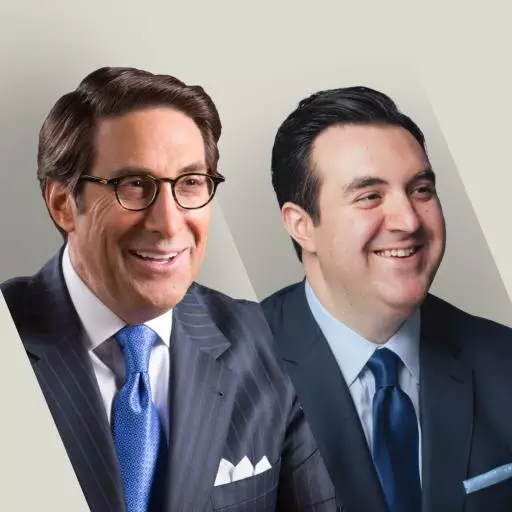
Sekulow


Jordan and Will discuss J.D. Vance's historic trip to Pakistan to negotiate in peace talks with Iran. They also discuss the recent discovery of millions of dollars of fraud in California. That and more today on Sekulow!
Will Haynes: Welcome to Sekulow, happy Friday everyone. Will Haynes here, joined in studio by Jordan Sekulow, and we're going to get right into it. The Vice President of the United States has boarded Air Force Two, headed for Islamabad, Pakistan. That is where peace talks, a summit of sorts, will be taking place tomorrow with the Iranians, led by the Vice President of the United States.
It's a very historic moment for the fact that it is the Vice President that is meeting with these leaders, if you want to call them that, of Iran to negotiate what is hopefully, to some degree, some sort of peace agreement as long as it's good for the United States. Jordan, we've seen this week a ceasefire announced. We've seen that Iran, as per usual, moves the goalposts. They don't normally agree to everything they say the first go-around. The Strait of Hormuz is kind of open.
Jordan Sekulow: A few more ships have gotten through, but they're letting who they want through. There's also reports they are starting to try to charge that toll.
Will Haynes: Has anyone paid the toll yet? Do we know?
Jordan Sekulow: That's what's unclear, because paying that toll to Iran, depending on what country you're in and where you do banking, with all the sanctions that are on providing any kind of support to the Iranian regime, giving them $2 million without a special exception or exemption from the United States and other Western powers, you could have serious trouble with your bank accounts unless you're basically Russia or China that could, and I likely don't really see Iran charging those two for some reason.
But it would be interesting to know if they are actually collecting on that and has it even reached a dozen?
Will Haynes: We don't have a total number. The backlog is huge. We have seen even aerial footage, they track the radars and the navigation systems on these giant ships that ships are making it through, but it is being a pick-and-choose situation by the IRGC. So even that, having a fully open Strait of Hormuz, is not them living up to their end of the ceasefire.
We know that there are still some attacks happening in places like Kuwait and the UAE, not as many as had happened before, but they have not completely lived up to this ceasefire. It seems very much in the vein of Hamas. Maybe it's a sign that they don't have control over all of the commanders of the IRGC forces, and that could also be a reflection of how these talks could go.
If these individuals don't have the authority to speak for the entirety of the IRGC and the Islamic Republic, is there even a deal that's possible to get made? But we have seen that the Vice President of the United States, in a historic move, is on his way as we speak to Pakistan for these talks.
Jordan Sekulow: Yes, and I mean there was all this confusion, was Israel included? Iran says no. But then Iran also said that Lebanon should be included. So is that why they're still striking at Israel and don't think they're violating a ceasefire because Lebanon wasn't mentioned at all? You realize how much they care about their satellite terror groups and military groups because that's how they maintain power just outside of Iran, but on Israel's border and in the entire region as a threat.
I think the other part, Will, that we want to kind of look at is who is really able to make that decision for Iran? There was another statement put out by the new Supreme Leader who is still, as we know, hospitalized and they have not really disputed that he is in a coma because they can't put out a video of him speaking or even audio where he's threatening the West. Now, he does allow the threat to be carried out not just through military action but through financial reparations, which the President talked about splitting the accounts supposedly of that $2 million. So there's a lot to talk about there, a lot to talk about with ACLJ cases as well.
Will Haynes: That's right, and we will be covering this and more. Also, an update on that California fraud situation that we talked about yesterday on the broadcast. You don't want to miss that. Stick around. Also, give us a call. If you want to talk about this, the Vice President going to Pakistan, if you want to talk about that fraud situation in California when it comes to the hospice fraud, give us a call at 1-800-684-3110. Jordan and I will be taking as many phone calls as we can today, 1-800-684-3110, and we will be back in just a moment.
Welcome back to Sekulow. Will Haynes here, joined in studio by Jordan Sekulow, and we've got a lot to cover. We're starting off here talking about the Vice President headed to Pakistan for this historic meeting, summit, peace negotiations, talks with Iran tomorrow. This is something that has come about since the ceasefire was announced on Tuesday evening ahead of that deadline, that very critical deadline the President Trump put in place.
There was a lot of misinformation this week about what Iran submitted as far as their ten points that they would be negotiating from. But what we also learned was that all the news organizations, and we called this out early, we said there's even discrepancy between Fox and CNN and New York Times and Wall Street Journal, all had different versions of a ten-point plan. What that turned out being is that leaks happened. Earlier versions that were completely shut down by the administration were leaked out.
They had said this is a non-starter, if you want to actually be serious, get back to the drawing board. And that what was not released to anyone, actually surprisingly, was what Iran was bringing to the table saying, here's our starting point. That obviously is not the deal, that is what will the beginning of negotiations starting Saturday. We will see what happens here, but I think we should play Vice President Vance this morning on the tarmac before boarding Air Force Two to fly across the ocean to Pakistan. This is bite one.
JD Vance: We're looking forward to the negotiation. I think it's going to be positive. We'll of course see. As the President of the United States said, if the Iranians are willing to negotiate in good faith, we're certainly willing to extend the open hand. If they're going to try to play us, then they're going to find that the negotiating team is not that receptive. So we're going to try to have a positive negotiation. The President has given us some pretty clear guidelines and we're going to see. So I hope you guys have a safe flight. We'll certainly take some questions later on, but for now let's get on the plane and hit the road. Thank you all.
Will Haynes: So Jordan, the Vice President very clear that the instructions from the President of the guidelines what they can negotiate about did come from President Trump. Obviously there's some intrigue here because Vice President Vance has been kind of in the background on the Iran issue. Obviously the Secretary of State, who's also National Security Advisor, as well as Secretary of War, had both been more at the forefront during Operation Epic Fury.
Now we're seeing JD Vance, who historically has been more skeptical of engagement. He is an Iraq War veteran, played more to the more non-interventionist party of MAGA. These are not necessarily negatives or pejorative things to say about him, that's just where he kind of fit. Now he is being placed in this position of negotiation. I think it's very telling, one, to the base, but also maybe to the Iranians who are going to be sitting there. It isn't the Secretary of State who had been so hawkish for a very long time about the Iranian regime.
Jordan Sekulow: Right, I think listen, if Iran wants to take this seriously, we'll know this weekend if they are because there are certain items the US has been very open about, like the enrichment of uranium. We've even talked about a swap program where if they really need uranium for this scientific research, that we would provide it, we would oversee it, we'd make sure it's not used for any purposes other than that research, peaceful purposes or for power, but not for military use.
And that's been talked about already by the Trump administration. Iran is again, are they going to flinch at all? Are they going to move at all and willing to negotiate at all when it comes to enriching their own uranium? Because that alone could scuttle the entire deal. So there are some big issues that could make this a very short negotiation. So it's how realistic the Iranians come into actually knowing that they're going to have to give some things up to continue not just a ceasefire but kind of a new working relationship, if you will, with the United States.
And do they even want that? Because I contrast that with the new Supreme Leader's statement that was put out, and I'm assuming it's being written by the other Ayatollahs who make up like the Guardian Council and the Iranian Revolutionary Guard. And he's saying basically either to the Gulf states, he was really talking to, he said you need to kick the United States out, well we have a lot of military bases in those Gulf states, that you're part of the evil and that we are going to get reparations for those who were killed and the infrastructure that's been damaged whether that comes through basically money or blood.
Pretty strong statement during a ceasefire when you're also supposed to be going into negotiations. Now, these are negotiations that are about ending a war, so the stakes are high and it's very tense and our military is staying over there full-powered and has this time to even build back up with more power. So I think we would know by the end of this weekend if these negotiations have any chance at success at all. On top of that, will this ceasefire be able to hold for two weeks?
I mean it really kind of defines what you mean by the ceasefire. If you just mean the US and Iran aren't directly attacking each other, then maybe yes. If you broader ceasefire in the region, never occurred. Iran kept striking, they kept striking other Muslim countries, they kept striking Israel. So again, you could say in some terms there really isn't a ceasefire. There was an agreement between just the US and Iran to halt their hostilities.
And then of course that was supposed to come with the Strait of Hormuz being completely opened. More vessels have gotten through but again, it's not fully operational and Iran was never in a position where the world accepted them to be able to make the decisions about how the Strait of Hormuz could operate. They could try to do things negatively and they have before, but they weren't like officially in charge. Now it's kind of like the world, at least for now, has ceded that control to them. We will see, because the Strait of Hormuz as we speak right now, like we were talking about the ceasefire, you really can't say it's open. It's not.
Will Haynes: Right. Jordan, this is something we actually talked about with Secretary Pompeo yesterday, which was fascinating. I actually wish we had more time with him on it because he was the director of the CIA, he was the Secretary of State, and we talked about because Trey Yingst is reporting at Fox that there's incoming rockets from Hezbollah pretty much nonstop overnight. Iran was trying to tie Hezbollah as a part of this ceasefire, meanwhile they previously had always argued that they had no real control over their proxy.
We knew that was a lie, but that was something they were always trying to put out there as a narrative. We're seeing how pervasive this propaganda has gotten within American mainstream thought that Iran has put out. I mean I see here on Rumble a comment that someone said the Iran regime has had a nuclear fatwa since the early 2000s, so far Israel and the US have threatened to nuke a civilization. First of all, the President didn't threaten to nuke the civilization, but even that, the Iranians lie. They've lied since 1979 when the Islamic Revolution happened for 40-something-odd years.
Now we're looking at, I want to give a little history for folks, because we know they lie. They can say they have a fatwa, they don't care what the Americans be like, "Oh they would never lie." And they lie to even those who could be their allies, like when the IAEA stepped in to play that role, they were not fully forthright with them. And so even when the UN wanted to kind of broker that Iranian nuclear deal, they weren't playing fair with them and they were lying to them. So it's not just lying to their enemies, that's just their modus operandi is if we need to lie, we'll lie, and then if we get caught we'll say, "No, no, we never really said that the ceasefire was going to include everybody, we just meant the United States."
And Jordan, you brought up that point that even the US had offered, and this was before even the outbreak of the war, this was when negotiations were still ongoing. We offered, as you brought up, a swap. Hey, we're going to take all this highly enriched uranium away, we will provide in perpetuity enough uranium at the appropriate scientific level for your power plant, of which they have a nuclear power plant, and for medical isotope research. They began their nuclear centrifuge program in the late 80s, so ten-ish years after the Islamic Republic was founded. That's when they started this scientific program.
They got a nuclear power plant in 2011. Guess how much enriched uranium that they have enriched has gone to their power plant or scientific medical isotopes? Zero. That's a fact. They don't dispute that. As a matter of fact, they were the ones bragging how much material they had for warheads in those negotiations. So when we talk about it being a nuclear issue, they can lie all they want, say it's for scientific, it's for civilian power purposes.
You know where they get all their nuclear material for their power plant? From Russia. They're already taking a deal to power their power plant. Since the late 80s, a centrifuge program has done nothing for the Iranian people. It's only gone to further their goal of being a nuclear arms state to fulfill their apocalyptic death cult dreams. And finally, a President of the United States, Jordan, is saying enough.
Jordan Sekulow: Yes, enough is enough and if you see what we can do, you know what we have the power to do next. So if you want to negotiate in good faith, we'll meet you in Pakistan. We're sending the Vice President and a couple of other our folks who you've already been negotiating with, send people who can actually are ready to negotiate. Now, this is supposed to last up to two weeks, so I think it either is serious enough this weekend that they continue it or it totally falls apart.
I mean I think those are really the only two options. Kind of the same thing with the ceasefire which is barely holding, is that it holds for a week or two or it totally falls apart too because the negotiations fall apart. We'll see if Iran is going to be fair about it.
Will Haynes: Welcome back to Sekulow. Will Haynes joined by Jordan Sekulow in studio today. And if you want to call us about the talks with JD Vance in Pakistan or even what we're about to talk about, this fraud situation where millions and millions of dollars are being stolen from the American taxpayer, give us a call at 1-800-684-3110. Do you think JD Vance is going to be able to move the needle a little at all on this? Give us a call at 1-800-684-3110.
But Jordan, we talked about this yesterday and there's an important update. We talked about how much fraud is being uncovered that the task force led by the Vice President that was tasked to him at the State of the Union is already finding billions of dollars in potentially fraudulent contracts. But lo and behold, after our broadcast yesterday, there was a press conference held by the Attorney General of California.
Jordan Sekulow: And this is something that was mocked three weeks ago because the same independent journalists that had gone and shown a lot of the daycare fraud in Minnesota was now showing there's hospice fraud in California, alleging it, going to places of business. Even like CBS News started to do reports on this because there's these entire office complexes that have like 80 companies, none of them seem to be operating. And if you drove by, you might think, "Oh, there's a lot of business here," but you look, there was like no one in the parking lot.
If you look a little closer and you realize are there any lights on in there? And then maybe like a couple people shuffling around every once in a while who will crack open a door or talk through some kind of microphone, but they won't actually engage with whoever's at the door.
Will Haynes: That's right. So yesterday, Attorney General of California announces that they have filed charges against 21 suspects that was a major hospice fraud scheme that defrauded California, they say, of $267 million. In addition, they seized handguns as well as $757,000 in cash. But that number, this is one fraud scheme, $267 million. They say it defrauded Californians.
However, the Department of Health and Human Services actually gives 75% of the funding to the Medi-Cal program of which this money came. So it's not just Californians defrauded, it's all of us. And Jordan, I think it's so interesting because all of a sudden people start talking about it and you hear this, this is from one of the individuals that was the Department of Health. This is from the Department of Health Care Services Director. She said our safeguards worked as designed.
Hold on. $267 million was defrauded from the state and they're saying, "We got it, we caught it." No, that tells me that your safeguards didn't work. It only started to appear when Gavin Newsom's popularity for a certain office nationally is starting to rise and conservatives are starting to point out how bad the fraud is in your state.
Jordan Sekulow: Right, and in other blue states. So they saw what happened with Tim Walz. I mean Tim Walz, the Governor of Minnesota, taking himself out of politics after deciding not to run again for reelection in Minnesota. He was a former vice presidential nominee not so long ago, and now because of that fraud that was going on within the Somali community, he just took himself out, said I'm not going to seek reelection. And I mean Gavin Newsom's folks probably had to look at the same thing and say, "Okay, we better figure out right now what's going on in California."
It's a lot bigger state, getting a lot more of your federal taxpayer dollars, including from all of us, not just from Californians' taxes. And we have got to try to get ahead of this or else that could mean put Newsom in the same situation that he wasn't an effective governor and thus if you're going to allow this kind of fraud at such a basic level with these programs where again, $267 million, 21 people with charges against them, only five have been arrested of those 21 so we don't know where the others are.
And it all comes about after people start paying attention to it. That's not a system working, that's politics responding to a reality that you know what, we can try to show that Gavin Newsom is taking this seriously. We'll get people to say, "No, it works right." I mean it wasn't working right because $267 million went out the door to supposedly facilities that were carrying out hospice services that provided no services whatsoever. People literally came in, bought hospice companies that previously existed, and then started the billing.
No clients, no services, and after $267 million then your system finally said, "Wait, there may be a problem." No, you saw what happened in Minnesota, you saw that people are starting to focus on this and saying, you know we know that there is fraud within government. But how bad is the fraud in these blue states that want more and more of our taxpayer dollars?
Will Haynes: Well and even to this point, Jordan, the Governor himself in the press release said for years California has led the charge to protect public programs from fraud and abuse. We know from the Manhattan Institute, Christopher Rufo wrote a report detailing investigation that they think $180 billion has been defrauded under Gavin Newsom's governorship. We know that that's not the truth when he says they've led the charge to protect the people from fraud.
What we do know, they've led the charge going after Calvary Chapel, taking it all the way to Supreme Court trying to get just $1.2 million from that church for COVID fines. And let us just tell you as an organization that you know we ask for your support because we know what it costs to take cases all the way to the US Supreme Court, fight them along the way. It's a lot more than that $1.2 million.
Jordan Sekulow: Now, the precedent that it sets is bigger than the $1.2 million as well because what California wants to say is that even if we got it wrong at the time, if the fine was legitimate until the court said it wasn't, we should be able to collect on that $1.2 million and they're willing to fight that, continue to use taxpayer dollars, they're not willing to drop the case. It's not like they have to go into court and say Calvary Chapel you win, what you did was right.
They could just say, "You know what, this was a confusing time legally, some of these cases we lost in court, we're not really sure that over $1.2 million this is worth California taxpayers' money or time for the California Attorney General's office and these different agencies." And so we'll just let it be. And instead, they've decided to commit their time and resources to going after Calvary Chapel, one Calvary Chapel church, which by the way for that church having $1.2 million in fines hanging over your head is a huge deal.
It's a huge concern constantly. Are you going to survive based off a court opinion that could come out next? Will you be able to still survive as a church? To California, we know they weren't noticing $267 million being missing per se, it took a while to finally catch that. So yes, as you said for the church, it's everything. But we do have an update there. On April 24th, so not long, be in prayer folks, the Supreme Court has announced that they will take the Calvary Chapel case into conference.
This is basically when the justices, they've had they've seen the briefings, they've seen the replies, they come together. You know that the kind of unwritten rule is the rule of four that you need four justices to say they want to hear the case. So it's not a guarantee that one side will win because the Supreme Court's decided to hear the case, but we know the date. The justices on April 24th will be coming together to consider our Calvary Chapel case.
So we need you to be in prayer because that's not a guarantee that the case is going to be taken by the Supreme Court. That's when they make the decision. Pray that they do because that is how ultimately we can get this $1.2 million fine lifted from Calvary Chapel but also protect your places of worship in the future next time the government tries the kind of overreach they did during the COVID pandemic where they were treating bars and casinos better than places of worship. Support the work of the ACLJ, you could make a difference right now folks, double the impact of your donation at ACLJ.org. That's ACLJ.org. Donate today.
Featured Offer

Featured Offer
About SEKULOW
The American Center for Law and Justice (ACLJ) focuses on constitutional law and is based in Washington, D.C. The ACLJ is specifically dedicated to the ideal that religious freedom and freedom of speech are inalienable, God-given rights. In addition to providing its legal services at no cost to our clients, the ACLJ focuses on the issues that matter most to you — national security, protecting America's families, and protecting human life.
About Jay Sekulow
An accomplished and respected judicial advocate, Sekulow has presented oral argument before the U.S. Supreme Court in twelve cases in defense of constitutional freedoms. Several landmark cases argued by Sekulow before the U.S. Supreme Court have become part of the legal landscape in the area of religious liberty litigation; these cases include Mergens, Lamb's Chapel, McConnell v. FEC, Operation Rescue v. National Organization for Women, and most recently Pleasant Grove City v. Summum.
In 2009, Townhall Magazine named Sekulow to its "Townhall of Fame" and recognized him as "one of the top lawyers for religious freedom in the United States." In 2007, the Chicago Tribune concluded that the ACLJ has "led the way" in Christian legal advocacy. In 2005, TIME Magazine named Sekulow as one of the "25 Most Influential Evangelicals" in America and called the ACLJ "a powerful counterweight" to the ACLU. Business Week said the ACLJ is "the leading advocacy group for religious freedom." Sekulow's work on the issue of judicial nominees, including possible vacancies at the Supreme Court, has received extensive news coverage, including a front-page story in The Wall Street Journal. In addition, The National Law Journal has twice named Sekulow one of the "100 Most Influential Lawyers" in the United States (1994, 1997). He is also among a distinguished group of attorneys known as "The Public Sector 45" named by The American Lawyer (January/February 1997). The magazine said the designation represents "45 young lawyers outside the private sector whose vision and commitment are changing lives."
Sekulow brings insight and education to listeners daily with his national call-in radio program, Jay Sekulow Live!, which is broadcast throughout the country on nearly 850 radio stations. Sekulow also hosts a weekly television program, ACLJ This Week, which tackles the tough issues of the day. He is also a popular guest on nationally televised news programs on ABC, CBS, NBC, CNN, FOX News, MSNBC, CNBC, and PBS.
Contact SEKULOW with Jay Sekulow
jsekulow@aclj.org
http://aclj.org/
American Center for Law and Justice
PO Box 90555
Phone: 757-226-2489
1-800-684-3110
1-877-989-2255