
Sekulow


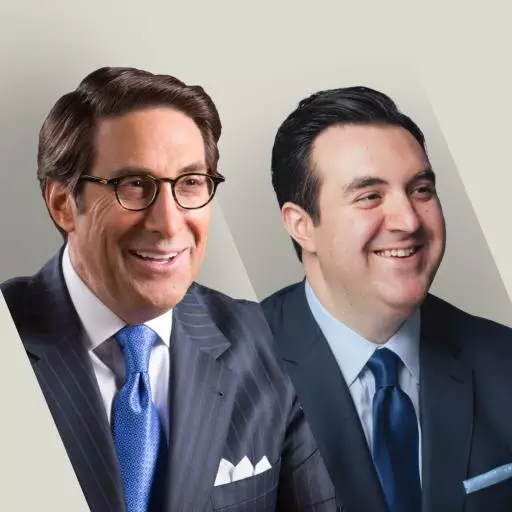
Logan and Will are joined by Mike Pompeo and Rick Grenell to discuss the uncovering of billions of dollars of fraud by the Fraud Taskforce, headed up by J.D. Vance. That and more on Sekulow!
Logan Sekulow: Welcome to Sekulow. It is a Thursday. We're back. Phone lines are open for you at 1-800-684-3110. That's 1-800-684-3110 to have your voice heard on the air today. We want to hear from you. We're going over some interesting topics today. We've got a packed show filled with my buddy Will Haynes joining me right here, Mike Pompeo, Rick Grenell, and of course you. So give me a call at 1-800-684-3110, be a part of the show today.
We're covering a breaking news item that came out. It's pretty interesting. A lot of you have asked about the fight to end fraud and to expose fraud that was going on around the country. Of course, we remember what happened in Minnesota and we knew that there was stuff happening even into California, and it feels like that maybe went away. But again, that is the problem with the news cycle.
Because if you actually were able to do some digging, you would find out that Vice President Vance has a task force they've been leading, and they have uncovered billions upon billions of dollars in potential fraudulent businesses happening within America.
Will Haynes: That's right. I think this is very important to bring to our audience because we know we see that people will even call in and ask, "Hey, I mean, I know the Iran thing is going on and that is a big deal and we will cover some of that today. There's some interesting developments there as well. But what happened to all the fraud? Where are the arrests? Where is it going?"
We remember that the President tasked the Vice President at the State of the Union with this new fraud task force. Now they put it together, they started work, and there's a new report that this task force has flagged nearly 6.3 billion dollars in government contracts going to potentially fraudulent businesses.
They have sent out letters to nearly 400 businesses that have contracts with the government that are suspicious. These quote-unquote "businesses" have 30 days to respond to show proof of existence in many cases that it even is a real business, but also with the location and almost show your work.
It also goes to show that how quickly you could find 400 businesses and nearly 6.3 billion. We're not that far away from that creation of this task force. They're already identifying it, already getting to work, and we're going to see what comes of this.
Now once again, the legal system takes a while. One, you can cancel a contract pretty quickly if it's a fraudulent business, but then it will take time for the Department of Justice to build a case to bring cases if there are people that are guilty of fraud and need to be charged with that. But I like what we're seeing here.
Logan Sekulow: Yeah, there's also reports that over 180 billion dollars was lost in the state of California due to some very interesting programs that essentially were maybe good-hearted in nature or helpful if you were someone who was maybe voting on that side of it, saying, "Hey, if you're taking care of someone who needs special attention or care at home with your mom, whatever it may be, your grandmother, taking care of people who need help, there would be some financial assistance."
The big problem with a lot of that was that it was very self-regulated, which meant what? A lot of people sadly decided to essentially abuse the government system upwards of 100 billion dollars. We'll get into that and more coming up here in the next segment. I want you to be a part of the show though, when you are hearing about this.
Are you happy to see fraud now being uncovered? Do you feel like this needs to be a top news story? Are you rather be focused on Iran? What's going on in your world right now? I want to hear from you. We are starting to wrap up this week, so it's always good to hear from you. And as we are wrapping up this week, we're also starting to wrap up our Double the Difference first week of our Double the Difference drive. Your donations are doubled right now. You can be a part of it.
Have your gift doubled today through our Double the Difference drive at ACLJ.org or ACLJ.org/double if you want to go straight to it or scan that QR code that you see on the screen. Be the difference today and help us make a tax-deductible gift, keeps this show going, keeps our legal work going. None of it happens without you on an individual basis or maybe you can opt in and be an ACLJ Champion. That's someone that gives on a monthly recurring basis. Do that today if you can. And of course, unlock that pledge at any donation level at ACLJ.org. We'll be right back.
Welcome back to Sekulow. Phone lines are open for you at 1-800-684-3110. Just checking out all the people who are just tuning in right now. We are covering a very interesting news item today. It's a little bit of a break from the war in Iran. We are going to give you some updates on what's going on in Iran a little bit later in the broadcast.
But this has to do with the ongoing fight against fraud, something that I know a lot of you care a lot about and that has become a bit quiet over time. We know the President put in place a special task force, J.D. Vance in charge of it, and then honestly, haven't heard a whole lot. Haven't heard a whole lot mainly because we've rightfully so been very distracted by what's been going on on the world stage.
But that doesn't mean that the administration and those in power are not at work. And we are seeing hundreds of billions of dollars being uncovered in fraud across the country, including in state of California, where again programs that probably were made, were conceptualized let's say to do good, end up being taken advantage of by the wrong people and then you have massive fraud because there's no oversight, there's no one actually checking in.
Very similar honestly to what happened in Minnesota where there was obviously the thought process of, "Oh, we should fund childcare services." Again, probably from a noble thought to start with, but when you had no oversight, the rampant abuse gets out of control.
Will Haynes: That's right. And what we're looking here is two different stories that kind of came out both around the same time that are different but related. Fraud is fraud I guess. So the first is that this task force that was created by the President, announced at the State of the Union, but just not even quite a month has gone by since the executive order that created this task force led by the Vice President to seek out and eliminate fraud, has uncovered 6.3 billion dollars in potential fraud already in less than a month.
They've sent out letters to these businesses that have these contracts that they believe could be fraudulent and they have 30 days to prove to the task force that they have a physical address and that they are legitimate, that they exist, and that this contract is not just fraudulent grift on the American taxpayer. At the same time, there's this new report out of the Manhattan Institute. It's a think tank out of New York, focuses a lot on city policy and American policy.
It's not a foreign policy think tank as much as it is focusing on how to develop from a conservative perspective America. And this very interesting piece authored by Chris Rufo of the City Journal, that's the Manhattan Institute's publication, comes out quarterly. And these are normally well-researched, more think tank-y style articles, not as much like the quick hit that you'd get on a news site.
And it is done an exposé that is claiming that California has lost at least 180 billion dollars due to fraud under the Gavin Newsom governorship and it centers on three main sources: Medi-Cal fraud, which is the state Medicaid program, unemployment fraud, and general welfare fraud. 180 billion dollars in one state. On top of that, you see what has been uncovered in Minnesota. You see what in less than a month the new task force has been able to find as potential fraud in just contracts with the government.
It goes back to that the left never wanted oversight to happen and they were so upset about it and they were saying you can't start looking into these programs, you can't start looking into where the money is going under these bureaucracies.
Logan Sekulow: Well, let's just be honest. They partially won. Oversight did not—oversight though still exists in theory, it does not exist as it once did in the early days of the administration.
Will Haynes: But they were able to go and venue shop courts, get judges to put a hold on it, say no, you can't start canceling contracts, you can't start reigning in waste, fraud, and abuse. But yet, even though that oversight mission that first started was derailed in some ways, you see that this is still something this administration cares about and clearly the American people do as well.
So I am very much excited that this new task force is going forward because it also seems so easy to uncover it when you start looking into where this money's going, where these contracts are headed. And we knew it, we knew it existed. But when you're talking about one state, 180 billion dollars in this report, they're saying that is the GDP that was lost to fraud of New Zealand, of an entire country.
The GDP equivalent was lost to fraudsters. That is your money, especially when you're talking about Medi-Cal fraud, because that isn't just the Californians that are paying taxes. That is every American that is paying taxes to the federal government. Medicare dollars are sent to the state to administer that program and it is being robbed of the American people.
Logan Sekulow: And it's going to be very tough to give any sort of consequences to this because California was not doing a good job of staying on top of it. So if they didn't need to provide records of this kind of fraud, who knows if anyone could be held accountable in terms of the individual people. We have a question about that coming in. Let's go ahead and take it. Allen, Oregon, you're on the air.
Allen: Hi guys. I appreciate what you're talking about today. I'm a retired math teacher and one of the things that I found out early on in my 30-year teaching career is that students will cheat if they're allowed to cheat. The ability to stop the money, you're talking about fraud, that's one of three issues I wanted to talk about. Merely the ability to stop the money going out the door from the federal government is going to stop the ability of these people to cheat in large. You can adjudicate and try to bring them to justice if they've done it in the past, but stopping them from doing it in the future would be my first initial concern.
Logan Sekulow: And Allen, I think that's an interesting point you bring up. Like I said, with something like the California situation where a lot of people are being essentially paid to stay home with a family member who was in need, that was the concept, to then prove that that wasn't happening in a way is probably easier said than done because they didn't seem to have the proper checks and balances for actually if this was going on. Likely this was something you applied for or accepted or not and then probably very little oversight.
Will Haynes: Well, and I think on many levels, that's why it is so important with everything going on. We focus on a lot of things here at the ACLJ. We decide daily, it may not even be the top news story, but sometimes we need to bring it to you. We know you care about it, we know you want to hear about it. But as Allen brought up, it's not just trying the individuals.
If the Department of Justice can bring a fraud case against individuals or a scheme that they find, they will and I have confidence in that. That is the part of what this task force will be doing, making recommendations to the Department of Justice, criminal referrals, things of that nature. But on top of that, these stories like we see from the Manhattan Institute, putting this out there because we know that a lot of the major fraud programs happen in liberal-run states because they are liberal with the way that they allocate the taxpayer dollars.
They don't have as many checks and balances, they don't want oversight, they want the bureaucracy to be running things. And when you see how bad it gets in some places, you can't stop talking about it. This is a time when Gavin Newsom is trying to make a national name for himself. Will he be able to explain away this story? Or will people see that and be like, "Huh, if your state lost 180 billion dollars under you as governor, what would happen to the nation if your policies that you did in California were implemented nationwide?"
We already have a problem. So I think it also takes waking people up and holding their elected representatives accountable for the spending that's going on. And this is a left and right issue. This is something that the American people care about. It is something that helped President Trump get elected was getting rid of waste, fraud, and abuse.
So just because the news cycle moves on doesn't mean that you have to and doesn't mean that you can't talk to your representatives, talk to your friends and family in the community and say, "This is what's going on, I want answers from my leaders what they are doing about this." Because if they just care about more pet programs and more billions of dollars going to places that are not traceable or unaccountable, they maybe shouldn't be my elected representative anymore.
Logan Sekulow: In the next segment, we are going to pivot just a little bit, but if you want to call in about this, this is a good time to do it. We are going to take calls throughout the show today because we do have a packed show with guests, our guest commentary by Mike Pompeo, by Rick Grenell. In between those times, we'll have time for you.
That's at 1-800-684-3110. That's if you want to call in about this topic. But we're also going to move in the next segment to discuss with Secretary Pompeo amongst many other things that you have another J.D. Vance situation where J.D. Vance has now been tasked to lead the U.S. delegation at peace talks with Iran in Islamabad. We're going to go through that coming up in the next segment, what that looks like, what that process is.
If you have questions or comments related to that as well, hit them in the chat or give me a call. Four lines open, 1-800-684-3110. One person wanted me to say four out of six. So we've got six lines and your calls are ready to be taken at 1-800-684-3110. Be a part of the show today and if you can, support the work of the ACLJ, our hard legal work and of course all of this incredible media operation. None of it happens without you. Everything is supported by you, the ACLJ donor, the ACLJ Champion, or the viewer, the listener. Go to ACLJ.org. We'll be right back.
Welcome back to Sekulow. Secretary Pompeo, Mike Pompeo is joining us right now, a person who's been a great member of the ACLJ team and a great person to always get updates and commentary of what's going on in the news, what's going on in the world in a way that really very few broadcasts can get into in long form and we're always appreciative to have Secretary Pompeo.
A lot's been going on right now obviously with the war in Iran. Now you have Vice President J.D. Vance who has been assigned to lead what is going to be now a negotiation with Iran could happen in Islamabad. We know that we have a very fragile ceasefire right now and that's even a bit blurry even in itself.
We also know Secretary Pompeo that you've dealt with at least a version of this regime before. You have seen what they're capable of and also the level of honesty that may come in and out of this. And we've had our discussions here about how much you can trust these kind of negotiations. Over the last few days, has anything changed from your point of view in how we go out and negotiate with a current Iranian government?
Mike Pompeo: This is a tough problem. I don't think my view has changed terribly. What will be most interesting I think is to see who shows up for the other side. Which leader raises his head and says, "Yeah, I'm the leader, I run this country, I can deliver on the promises that I'm about to make to you, I can actually do a deal."
That will be step one for Vice President Vance and Mr. Kushner, Mr. Witkoff to figure out, "Do we have a legitimate representative of all of Iran sitting across the table from us?" And then second, and I think they would all know that and I know President Trump knows it too, this is not about trust. This is about verifying, about watching, observing what's actually happening on the ground.
You talked about the ceasefire. It doesn't look like much of a ceasefire to me. President Trump said we can't have a ceasefire until the Strait is open. Reporting to me suggests that the Strait is not open today. You can't have free transit. And there's no way the Iranians are going to get to collect a toll. Allowing the Iranians to collect a toll would be not terribly different than delivering pallets of cash, something President Trump has talked about for years and years and years.
And so I think the task before the group that's headed to Islamabad is very difficult but also important. It's important that we show up with a legitimate offer that says, "If you're prepared to do the things that we demanded, the very reason that we conducted Operation Epic Fury and you're up for the game of saying nope, the regime is fundamentally changed, whether the players have changed or not, the regime itself is changed."
If they're prepared to actually do that, which I'm skeptical of, but if they are, then we can get a great outcome for the people of Iran. Importantly a great outcome for the Gulf Arab nations and a really important outcome for the United States of America as well.
Will Haynes: One thing that I'm kind of curious your take on, one, we've been cautious and skeptical of any sort of negotiations even leading up to this. And now we know that it is a different type of negotiation after you have conducted such an aggressive military campaign against them. The Ayatollah is no longer there.
But even in this ceasefire as we call it, we already see that Iran is up to their old tricks of moving the goalpost. It was originally a ceasefire between the United States and Israel and the Islamic Republic of Iran. Then Iran's like, "Well no, you have to stop bombing our proxy as well." And once again, they move the goalpost, they make extra demands.
So even there, their negotiating tactics have not changed. Even if the people have, they have not changed. And I think it goes back to your question of verifying, not just verifying a deal if one were to come out, but verifying they can even make a deal. And if they make a deal, other opportunistic IRGC members don't all of a sudden stage an internal coup and take them out because they want power. I think the caution is different, but is still very much real of can this happen?
Mike Pompeo: No, you've got it exactly right. The irony is that for years they said we don't have anything to do with Hezbollah and now they're claiming now a deal with us is of course it's a deal in Lebanon as well. Anyway, unsurprising that they're trying to extend their reach. Also unsurprising that they're already negotiating in the press.
They're very adept in the way they use social media. We saw this during all of Operation Epic Fury and indeed following Operation Midnight Hammer. They close off the internet to their own citizens and then they try to propagandize around the world. No, the challenge you've identified is very real.
The first task for the Vice President and for his colleagues will be to determine if they have a counterparty that actually can control the decisions of the Islamic Republic of Iran. That is not a small thing. When you step up in Iran today and say, "I'm going to meet with the Americans," it's entirely possible you get killed by your own team or the risk to you that you will be killed by us in the aftermath of a failed negotiation is very real.
And so they have a tough problem on their side to show up with a legitimate negotiating partner. But look, we'll see. We'll know in relatively short order. And the thing that gives me great confidence is that President Trump's been down this road. He's done lots of deals. He knows the nature, the intrinsic nature of the Islamic Republic of Iran.
He knows these are—what did he call them? Evil, I won't use the word. Anyway, he used harsh language to describe them as crazy people. That is true. And he is trying to figure out how it is you can get an arrangement with these crazy people that reduces risk to our military, but gets the outcomes that he set out as the American objectives before we entered Operation Epic Fury.
Will Haynes: Something you said actually brought up a question that I wanted to ask you. You mentioned how advanced they are in their use of social media and propaganda around the world. We've known that they've been good at this for a very long time. Even the way that actors out of Iran may have propped up Hamas and propagandized the world with things surrounding October 7th or other Israel actions.
I don't think I've ever seen to this level how quickly you've seen Iranian propaganda seep into mainstream voices in the United States. We've seen it far and wide in on both sides of the aisle. I just wanted to get your opinion as someone who has served as both CIA Director and Secretary of State, two positions that really have to be aware of that intelligence issue that can happen when your enemy is able to infiltrate the minds of the people. What's your take on it and how can we fight back against that?
Mike Pompeo: This is really important. This is happening in a way that I don't think we've seen quite as quick and as deep ever in recorded history. I think the nature of social media today permits that. But you have seen folks that just have an absolute hate for Donald Trump make statements that are deeply un-American.
And that presents a real risk to our soldiers, sailors, airmen, and Marines. That propaganda has infiltrated into places that you wouldn't have expected. You're right, both in the liberal left and then in pockets of the so-called conservative right that just didn't grasp that these are evildoers that for 47 years got away with it.
And finally, a President said, "The risk is too great and we're going to go take this on and confront it." It's not inexpensive. It's not without risk. But I, President Trump, am going to do that. And yet they have tried to thwart his very effort to keep us safe at every turn using Iranian propaganda.
Look, the Iranians believe that they're winning this in their own little oddball way. They're not winning. The United States has the capacity to do the necessary to keep the American people safe. And this negotiation is part of that effort. And I'm very confident President Trump will not leave this halfway done.
Logan Sekulow: Secretary Pompeo, thank you so much. I hate to cut you off, we're just running out of a hard break here. But I really appreciate all of your guidance in this. Look, there's also great articles from Secretary Pompeo on ACLJ.org, which is where you can catch the second half hour of the broadcast there, YouTube, Rumble, however you get your podcast. We are available right there. We'll be right back in just under a minute.
Featured Offer

Featured Offer
About SEKULOW
The American Center for Law and Justice (ACLJ) focuses on constitutional law and is based in Washington, D.C. The ACLJ is specifically dedicated to the ideal that religious freedom and freedom of speech are inalienable, God-given rights. In addition to providing its legal services at no cost to our clients, the ACLJ focuses on the issues that matter most to you — national security, protecting America's families, and protecting human life.
About Jay Sekulow
An accomplished and respected judicial advocate, Sekulow has presented oral argument before the U.S. Supreme Court in twelve cases in defense of constitutional freedoms. Several landmark cases argued by Sekulow before the U.S. Supreme Court have become part of the legal landscape in the area of religious liberty litigation; these cases include Mergens, Lamb's Chapel, McConnell v. FEC, Operation Rescue v. National Organization for Women, and most recently Pleasant Grove City v. Summum.
In 2009, Townhall Magazine named Sekulow to its "Townhall of Fame" and recognized him as "one of the top lawyers for religious freedom in the United States." In 2007, the Chicago Tribune concluded that the ACLJ has "led the way" in Christian legal advocacy. In 2005, TIME Magazine named Sekulow as one of the "25 Most Influential Evangelicals" in America and called the ACLJ "a powerful counterweight" to the ACLU. Business Week said the ACLJ is "the leading advocacy group for religious freedom." Sekulow's work on the issue of judicial nominees, including possible vacancies at the Supreme Court, has received extensive news coverage, including a front-page story in The Wall Street Journal. In addition, The National Law Journal has twice named Sekulow one of the "100 Most Influential Lawyers" in the United States (1994, 1997). He is also among a distinguished group of attorneys known as "The Public Sector 45" named by The American Lawyer (January/February 1997). The magazine said the designation represents "45 young lawyers outside the private sector whose vision and commitment are changing lives."
Sekulow brings insight and education to listeners daily with his national call-in radio program, Jay Sekulow Live!, which is broadcast throughout the country on nearly 850 radio stations. Sekulow also hosts a weekly television program, ACLJ This Week, which tackles the tough issues of the day. He is also a popular guest on nationally televised news programs on ABC, CBS, NBC, CNN, FOX News, MSNBC, CNBC, and PBS.
Contact SEKULOW with Jay Sekulow
jsekulow@aclj.org
http://aclj.org/
American Center for Law and Justice
PO Box 90555
Phone: 757-226-2489
1-800-684-3110
1-877-989-2255