
Sekulow


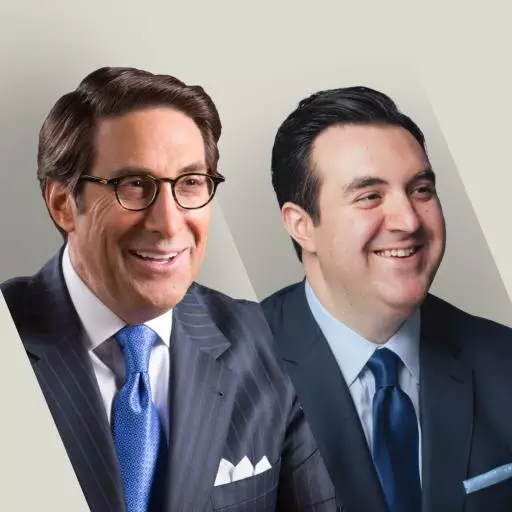
Logan and Jordan Sekulow are joined by Will Haynes to discuss details on the Iran ceasefire agreement.
Logan Sekulow: Welcome to Sekulow. It's Wednesday. We're halfway through the week. It doesn't feel like it, but somehow we are here. It feels like we should already be at the end of the week with the amount of crazy and chaos that has happened.
Now look, when we went off the air yesterday, we all were talking about the looming threat coming from President Trump to end the civilization in Iran. Now we discussed at length whether this was a negotiation tactic, whether President Trump was going to have to go ahead with these attacks, and what it would look like.
A few hours later, around 6:00 or 7:00 PM, there was finally an announcement that a plan had been put in place for a ceasefire with Iran. This two-week ceasefire included what would look like the opening of the Strait of Hormuz.
However, just how it seems to be, a few hours later, we know that there were attacks still happening in Israel. People were confused. We're going to break all that down, as well as some of the information and some of the misinformation that is coming out about what this potential peace plan or agreement with Iran looks like. Maybe there are going to be some pieces in there that you're not going to be too thrilled with. Again, all of this is starting to come out from various sources, so certainly be checking your facts, but we're going to try to give you the most reliable information we have over the next hour.
Will Sekulow: That's right. What I would say to people and caution people, if you're going on X right now or on Facebook and you see someone post a ten-point plan and call it a deal with Iran, go ahead and disregard it. Neither the United States nor Iran has released the official reply from Iran.
The way this worked is that we put in 15 points that we wanted Iran to agree with weeks ago. That is part of the reason President Trump was pushing them and finally got to yesterday that he will see the death of a civilization. Iran finally last night, before the deadline, released their ten-point reply. This isn't an Iran deal in any sort of fashion. This is a two-week ceasefire now that the two sides have put out what they think they want out of this, and they can negotiate that forward.
Now, there are reports from even legacy media that differ about what those ten points are because they're getting it from secondhand sources. I will say that Iran's ten-point reply is not something the United States should accept. If they did, it would be very dangerous for the world. We will get into what some of those that are coming from legacy sources, some sources that maybe have better connections. But I would caution everyone, if you're seeing a ten-point plan on X posted by even someone you trust, I wouldn't trust that that is what is being negotiated at this point.
Jordan Sekulow: No, there's bits and pieces being reported by mainstream news outlets like Will said, but even some of those conflict, like this $2 million fee to pass through the Strait of Hormuz. Just to remind you that before this conflict began, and this was even after the attacks over last summer, Iran was not technically in control. They weren't operating. It's not the Panama Canal. They weren't the country in charge, so they weren't implementing any kind of fee.
Obviously, there was always concern about being attacked, not just by Iran but by its proxies. So you always look to whether or not that was going to be safe passage for 70% of the world's oil. Now, it's only 20% of the US oil, and I think we could quickly if we needed to, based off our own stockpiles and what we have here in the United States, not be reliant on any of that. But we purchase that from some of our allies and friends in the Gulf States to keep those relationships moving. You want the Strait of Hormuz open.
But I do want to remind people, it was open until this began, and that was not the issue of why we went to war this second time or the air campaign in Iran. It was not to reopen the Strait of Hormuz. It actually closed the Strait of Hormuz and has now put Iran in this position where they say they want to be in charge. The US is saying through President Trump that it could be a joint operation between the US and Iran where we will split the fees. We haven't gotten a response back from Iran on that. But yet, the big picture issue is still the nuclear issue.
Phone lines are open for you. I want to hear from you at 1-800-684-3110. We're going to keep it going in just a minute. Be right back.
Logan Sekulow: Let's be honest, there's a lot happening in America right now. It can be overwhelming. Our values, our faith, our freedoms, they're constantly being challenged in courtrooms and on Capitol Hill. You might worry about the country you'll leave behind for your kids or your grandkids. You might feel you have no say over it. But your voice has power. You make a difference.
Right now, when you support the work of the ACLJ, you'll make double the difference. Our legal teams are fighting in courtrooms across the country, defending your right to speak, to pray, even how to educate your kids. Right now, when you go to ACLJ.org/difference, your tax-deductible gift will be doubled, dollar for dollar, to defend your most essential liberties. You're not just supporting the critical work of the ACLJ, you're doubling your impact to defend the rights given to us by the US Constitution. Double the difference. Go to ACLJ.org/double today.
We've witnessed monumental legal victories from defending the 14th Amendment and protecting our sacred American right to vote, the overturning of Roe v. Wade, and standing up for the religious liberty of our kids and seniors. But even with the many historic wins we've achieved, the battle is far from over. The attacks on our constitutionally protected rights persist. Countless unborn babies remain in jeopardy, and across the globe, innocent Christians are being targeted and killed across this country and around the world.
This fight isn't just the ACLJ's, it's all of ours. It belongs to every American who wants to preserve the values and beliefs on which this nation was founded. None of the victories we've won would have been possible without the unwavering support of ACLJ members and ACLJ champions. It's been an honor to fight for you all these years. Join us in fighting for freedom. Have your donation doubled at ACLJ.org/freedom.
Welcome back to Sekulow. If you're just joining us, we are going to break down at least the current structure of what we know about this deal with Iran. This obviously happened late in the evening yesterday before the countdown expired, as President Trump announced that a deal had been made with Iran.
The details of that deal have just come out of different sources. So we have to be very, very careful with what we report, what we tell you about, and understand that a lot of this is just current information that is getting itself out there. There was a deal put in place or presented by Iran that we have seen. That deal, at least for collectively from us, feels like there are many goals and many points in that plan, which we can address, which really should be deal breakers.
Will Sekulow: Well, and to be clear on that as well, we are seeing reports about what the Iranian ten-point thing is. Take everything even from legacy media, even though they have editors and legal departments they feel comfortable putting this out, it is still reports because we have not seen the actual document that was presented to the US negotiators.
We may not, because as President Trump said on Truth Social last night, we received a ten-point proposal from Iran and believe it is a workable basis on which to negotiate. So he sees this as the back and forth of negotiation. Now, we also know that some of the things being reported have in a way been confirmed by the president that it's at least similar.
One, the Strait of Hormuz issue, which a lot of people came out and were like, Iran has put in their proposal that they will control the Strait of Hormuz, which would be different than it is now, as Jordan pointed out. That would be a win for Iran. There was conflicting on whether they would control it and there would be this $2 million per ship toll. Some reports are saying Iran would split with Oman, which is on the other side of the Strait of Hormuz. President Trump told Jonathan Karl, long-time reporter from ABC, that he asked him if he's okay with the Iranians charging a toll for all ships to go through the Strait of Hormuz. The president responded with, "We're thinking of doing it as a joint venture, a way of securing it, also securing it from other people." So that's different than the report of Iran and Oman. That would be Iran and the United States, which also raises some concerns of having some sort of business relationship with the Iranian Revolutionary Guard.
Jordan Sekulow: Right, because this is the Islamic State of Iran. You're talking about doing business not with a new government, not with new freedoms for its people. The president has been saying "new regime," but all that really means is a new group of people in the same government, in the same regime. They are the same regime, new people, because they killed some of their top leaders, and other leaders then rose up from that from the religious side, the political side, and the Iranian Revolutionary Guard side and their military.
What we saw was that Iran did not crumble because of leadership, top leaders being taken out. There might be an Ayatollah who's not even in conscious and they're still operating and able to get this done. At the same time, I don't think President Trump ever wanted to carry out what he threatened to carry out, knowing President Trump. I think he knew that with Iran, you have to push them as hard as you can with the toughest language possible. He did that over the last few days and finally got to an agreement he felt like he could at least be comfortable with for hopefully two weeks while they negotiate.
Here's what we'll see. Is the Strait of Hormuz actually going to be open? How safe will that passage be? And why is Iran continuing to attack our allies who have also endorsed this deal, including Israel, but not just the Jewish state of Israel, the UAE and Kuwait? So Iran is saying no, this was just a deal between us and the US. We can still fire at these other places. So Israel was being fired upon after the 8:00 PM deadline Eastern Time, and they had that in Tel Aviv from Iran, not just from Hezbollah.
So you've got a situation which is, again, always very complicated in the Middle East. But do we actually get to a real Middle East ceasefire? Then does the Strait of Hormuz actually open? And does this last for even two weeks? What makes me nervous, I had the team print it out, is that we end up with another one of these. Remember this? The Joint Comprehensive Plan of Action, the JCPOA from the Obama administration that got called the Iran Nuclear Deal, July 14, 2015? About 11 years ago, unsigned, basically bullet points of goals that President Trump immediately left and said the US is no longer part of when he became president the first time and when he became president again. So to get an actual deal, are there going to be signatures? Is this just a play for a ceasefire to see, again, what we can get done for our allies?
Because at this point, what we see in just as if you pause it right now, the Islamic Republic of Iran and their regime is still very much in charge of the 90 million people in Iran and actively bombing Israel, the UAE, and Kuwait, where a lot of American military is. That's part one. Part two, they are now controlling the Strait of Hormuz. They were not in control of the Strait of Hormuz before this campaign began. They, of course, could disrupt ships passing through and have done that before, but they were not in control and no one was ever negotiating to say, "Hey, you can ultimately be in some kind of control or power-sharing agreement."
Would you actually be comfortable, I want to ask this question to our audience, with the United States of America doing a business deal on the Strait of Hormuz with the Islamic Republic of Iran, which killed 30,000 of its citizens just in the past six weeks because they were rising up against the regime because we were urging them to do so?
Will Sekulow: And I do want to add to this as well, Jordan, a couple of points along those lines of where it differs from something like a JCPOA. Iran reportedly is requiring this or wanting this to be done through a joint resolution, binding resolution at the UN. More serious than the JCPOA, but at the same time, binding at the UN, you have wiggle room there.
But they are trying to make it where it wasn't just what Obama did with them where the next president could pull out. Two, some of the points that are being reported that should be non-starters are them wanting to continue enrichment of uranium to a certain level, much like the JCPOA, as well as a withdrawal of US military forces from the Middle East. Not just what we have built up, but that would be all our bases. That would be a non-starter for the United States.
As well as this issue of whether or not they then control the Strait of Hormuz going forward. There are also reports now that Iran is kind of trying to move the goalpost because of the Lebanon issue with Hezbollah, that they are trying to say we want for this ceasefire to hold it to include Hezbollah. That would be them trying to move the goalpost already while they are still hitting people like Kuwait and the UAE.
Even if you take Israel out of it, which you shouldn't, they are hitting the members of the Gulf States that have traditionally been more neutral towards them continuing. They are doing this when their ceasefire biggest problem was the fact that those countries had the US bases and that is where attacks were coming from in many cases. The fact there that they are continuing to hit these Gulf nations isn't going to make this easier to get to a deal.
Jordan Sekulow: I think what our job to do is, is to come out clearly, and that's why I asked that question: would you really be comfortable? And I want to hear thoughts on it at 1-800-684-3110. Would you really be comfortable with the US in a business relationship with the Islamic Republic of Iran and basically splitting tolls through the Strait of Hormuz? I guess it would be 50/50, we get a million dollars per ship, they get a million dollars per ship? Because then you are just entrenching the Islamic Republic of Iran and its worst actors for as long as that deal lasts.
When would that come to an end? It would be very difficult to get out of a deal like that if things were running smoothly for economic purposes. But then how does Israel defend itself if under this deal Hezbollah is allowed to continue to grow as a military? Are they allowed to continue to shoot at Israel, but Israel can't fire back? Is that part of this deal? And of course, the whole reason we're here is to prevent Iran from a nuclear weapon. In everything they've said, they're saying we're going to continue to enrich uranium. They've never given that up.
Logan Sekulow: Phone lines are open for you and we do want to hear from you today.
Will Sekulow: Which may be the reason it never gets through. I hope we don't get a deal like that because I cannot see the US agreeing to a deal where Iran is allowed to enrich uranium.
Logan Sekulow: Well, I think we need to discuss going in the next segment. You brought up the Strait of Hormuz was open. This was not one of those talking points. Now it's become really the dealmaker. Is this something that honestly our government did not expect to be something they were willing to risk as Iran?
Will Sekulow: I would say, though, that was always the calculus that Iran could close the Strait of Hormuz because of where they had military.
Logan Sekulow: Could but would. It seems like it's become the one thing people have talked about. It's the one big moment here, and like you said, it wasn't closed beforehand, even after last summer's air raid. Let's keep talking about it. The phone lines are starting to fill up. 1-800-684-3110. Rick Grenell will be joining us later in the show, so we have some time even in the next segment to hear from you.
And hey, we haven't spent a lot of time talking about it because of the news of the day, but the ACLJ, we're in the middle of the Double the Difference drive. Be a part of it right now. Make your donation today and your financial contribution will be doubled, matched by an ACLJ member or champion. In the next segment, I'll also break down some of the key things that are happening right now as we speak that the ACLJ team is working on. Some for the individual, some for as big as nations. We'll be right back with more on Sekulow.
Logan Sekulow: There's a lot happening in America right now. Our values, our faith, our freedoms, they're being challenged in courtrooms and on Capitol Hill. You might feel like you have no say over it. But you make a difference, and right now you can make double the difference. Our legal teams are fighting across the country, defending your rights to speak, pray, and even how to educate your kids. Join the fight. Go to ACLJ.org/double to have your gift doubled today. You're doubling your impact to defend the rights given to us by the US Constitution. Double the difference. Go to ACLJ.org/double today.
Welcome back to Sekulow. We are going to take your calls in this segment. A lot of you are calling in right now. I think there's a call right now we should take right off the bat because Alex is calling on Line 1 with a question I think a lot of people are asking. Alex, go ahead.
Alex: Hi guys, glad you're there. Thank you for the show. I'm very concerned. I would hope that the framework of this peace agreement, if it does happen and it ends up being something solid, that the military excursion that we've embarked upon, are we still going to get the benefit of taking the oil to guarantee we're paid back for that?
Jordan Sekulow: Well, here's one thing I know about Iran, Alex. Money's only ever gone one way: from the US to Iran. That is whether we were trying to get back Americans who were held hostage or facing the death penalty, or to try and make other deals because of their nuclear program. So we released funds that we had under seizure here in the United States that were Iranian funds. I've never seen funds go from the Islamic Republic to the United States. So that would be something new.
Now, what is proposed by President Trump this morning is that the possibility that we split some kind of tollage fees in the Strait of Hormuz that did not have a toll before. This would also include, by the way, not just the US working with the Islamic Republic of Iran. We don't know how much of this is bluster. We don't. And I will give that to President Trump, he is the master of that. So even this two weeks, we have no longer how—I don't want to make too many judgments yet. What we can talk about is what we know and that's about it. Everything else is speculation. I mean, you look down on Twitter and people are writing things that there's no way we'd agree to, there's no way Iran would agree to, so they couldn't be the actual points.
But would the world accept the US and Iran charging $2 million a vessel? It's not like we can just say that, sure, and yes, they need the oil, but that is a bizarre business relationship for the US because under that kind of agreement, is the Islamic Republic of Iran going to allow any more freedoms for its people? Is it going to stop funding terror groups that kill Americans?
Logan Sekulow: And we're doing an equal deal with that leadership.
Jordan Sekulow: Yes, that's it. How does that all work out in two weeks? The fact is that would take an actual regime change. A regime change means it's no longer the Islamic Republic of Iran. I do see a lot of conversation because those clips are going around where there are still obviously attacks happening within Israel. People are questioning, "Well, doesn't that violate this ceasefire?" So we have some clarification on that.
Will Sekulow: According to the ceasefire, it is between the United States and Iran. Then Iran continued to strike places. Even though Israel was in for this ceasefire, it was explicitly not covering the other parties that are involved in this at this point. Iran decided—Israel was still striking Hezbollah in Lebanon, not Iran as a part of this. Iran still was striking Israel, but not just Israel. They were striking the UAE. Kuwait had one of the largest incursions since the start of this from Iran, which is curious why they would still be trying to provoke even their neutral parties in the Gulf historically.
Logan Sekulow: And yet they have. And Candy, I know I'm going to go to Candy on Line 2. I know I kind of beat you to the punch here on this question, but you also have a follow-up, so if you have anything else, I'll let you go there. Candy in Georgia, go ahead.
Candy: Hey. I'm personally against the ceasefire, number one, because they shot down two of our pilots, fortunately we were able to rescue them. And they already broke the ceasefire. They're shooting missiles.
Logan Sekulow: Well, and again to clarify, they are shooting missiles not at the United States of America. Supposedly under the Iranian interpretation—I don't know if the US, by the way, has accepted this interpretation yet, so that's got to be clear too—but under the Iranian interpretation, Candy, because I asked this question last night too, which is are they doing their final barrage? Before 8:00 PM Eastern Time, and then they continued. They continued into Israel, they continued into the UAE, they continued into Kuwait, and they have continued.
Right now, Iran's official position is this is just between the US and Iran. We're not firing at US bases or US personnel in the region, and the US is not going to be firing on Iran in this mostly air campaign that we've been launching. So that, I don't think, can last two weeks if war's basically continuing except between us and Iran because we can't let our allies like the UAE and Kuwait get blasted by Iran and we're not helping to respond to those attacks. We got them into this and we're not going to fire back to protect them and their interests when they are the ones who host our military bases? I don't care for that.
Will Sekulow: Well, and once again, there's new reporting coming out about this. This is from the Wall Street Journal literally moments ago that Israel was informed late about the ceasefire deal and wasn't pleased with it. Once again, though, for all those crazy people on the right that say Israel controls us, how did we do this without them giving the stamp of approval?
But once again, this also goes to show from the Wall Street Journal reporting that Iran has told the mediator—so those are the Pakistanis in this case—that their participation in the upcoming talks with US officials in Islamabad are conditional on a ceasefire in Lebanon as well, warning it might also reverse its decision on reopening the Strait of Hormuz. The Iranian mediators have also warned they would continue to carry out attacks on regional countries including Israel if attacks on Lebanon and Iran by Israel continue.
So this is a fragile ceasefire as it was already, but you're starting to see them move the goalpost. It wasn't agreed upon that it would include places like Lebanon, where probably at this point their most valuable proxy is in Hezbollah. But once again, this could fail quickly. This is why this is not a deal, this is just a ceasefire is something to keep reiterating because remember what we heard yesterday morning from the detractors of the president? President Trump is a war criminal. Today, he has surrendered to Iran. And so the fact that they are so willing to politically spin something that is as fragile as a ceasefire, it's like they want the United States to fail in general just completely across the board.
Logan Sekulow: Midterm election year. Exactly. And it's the politics of war. Like you said, on the one day you are a war criminal if you continue this. The next day, you are weak because you have gotten into a two-week ceasefire to try and negotiate with the Islamic Republic of Iran. I'm going to keep calling them the Islamic Republic of Iran because you keep hearing regime change from the administration and that's just not how I define, or I don't think really anyone defines regime change. A regime change means it's no longer the Islamic Republic. It may still be Iran, but it's not being run by Islamic authoritarians and religious leaders who are Twelver Shia Islamists, like the Ayatollah and the supreme leaders and these Guardian Councils. That has not occurred. And the Iranian Revolutionary Guard is in firm control of—again, they may not have the capabilities they had three, four weeks ago.
Will Sekulow: Yes, but still using words creatively. It's still saying a regime change to the American people with an assumption of what that means, and it simply is not what it means right now.
Logan Sekulow: Now, we'll see how everything plays out. We do have a second half hour coming up. We want you to be a part of that as well. Stay on hold if you're on hold. A lot of you are called in, the phone lines are jammed. Rick Grenell is joining us in the second half hour. If you don't get us on your local station or you're looking for a different way to experience the show, go to ACLJ.org or find us on YouTube, Rumble. A lot of people on Facebook today. Hello to our Facebook audience. Some of the originals are back over there. So a lot of you are joining us. Throw in the comments where you're watching from. We always like to see that because we know we have people watching from around the world. That's one of the greatest things about being online is we can reach pretty much everyone.
And you can be a part of that as well by going to ACLJ.org and make a donation today. Keep this free, keep this a part of everyone's world at ACLJ.org today.
There's a lot happening in America right now. Our values, our faith, our freedoms, they're being challenged in courtrooms and on Capitol Hill. You might feel like you have no say over it. But you make a difference, and right now you can make double the difference. Our legal teams are fighting across the country, defending your rights to speak, pray, and even how to educate your kids. Join the fight. Go to ACLJ.org/double to have your gift doubled today. Double the difference. Go to ACLJ.org/double today.
Featured Offer

Featured Offer
About SEKULOW
The American Center for Law and Justice (ACLJ) focuses on constitutional law and is based in Washington, D.C. The ACLJ is specifically dedicated to the ideal that religious freedom and freedom of speech are inalienable, God-given rights. In addition to providing its legal services at no cost to our clients, the ACLJ focuses on the issues that matter most to you — national security, protecting America's families, and protecting human life.
About Jay Sekulow
An accomplished and respected judicial advocate, Sekulow has presented oral argument before the U.S. Supreme Court in twelve cases in defense of constitutional freedoms. Several landmark cases argued by Sekulow before the U.S. Supreme Court have become part of the legal landscape in the area of religious liberty litigation; these cases include Mergens, Lamb's Chapel, McConnell v. FEC, Operation Rescue v. National Organization for Women, and most recently Pleasant Grove City v. Summum.
In 2009, Townhall Magazine named Sekulow to its "Townhall of Fame" and recognized him as "one of the top lawyers for religious freedom in the United States." In 2007, the Chicago Tribune concluded that the ACLJ has "led the way" in Christian legal advocacy. In 2005, TIME Magazine named Sekulow as one of the "25 Most Influential Evangelicals" in America and called the ACLJ "a powerful counterweight" to the ACLU. Business Week said the ACLJ is "the leading advocacy group for religious freedom." Sekulow's work on the issue of judicial nominees, including possible vacancies at the Supreme Court, has received extensive news coverage, including a front-page story in The Wall Street Journal. In addition, The National Law Journal has twice named Sekulow one of the "100 Most Influential Lawyers" in the United States (1994, 1997). He is also among a distinguished group of attorneys known as "The Public Sector 45" named by The American Lawyer (January/February 1997). The magazine said the designation represents "45 young lawyers outside the private sector whose vision and commitment are changing lives."
Sekulow brings insight and education to listeners daily with his national call-in radio program, Jay Sekulow Live!, which is broadcast throughout the country on nearly 850 radio stations. Sekulow also hosts a weekly television program, ACLJ This Week, which tackles the tough issues of the day. He is also a popular guest on nationally televised news programs on ABC, CBS, NBC, CNN, FOX News, MSNBC, CNBC, and PBS.
Contact SEKULOW with Jay Sekulow
jsekulow@aclj.org
http://aclj.org/
American Center for Law and Justice
PO Box 90555
Phone: 757-226-2489
1-800-684-3110
1-877-989-2255