
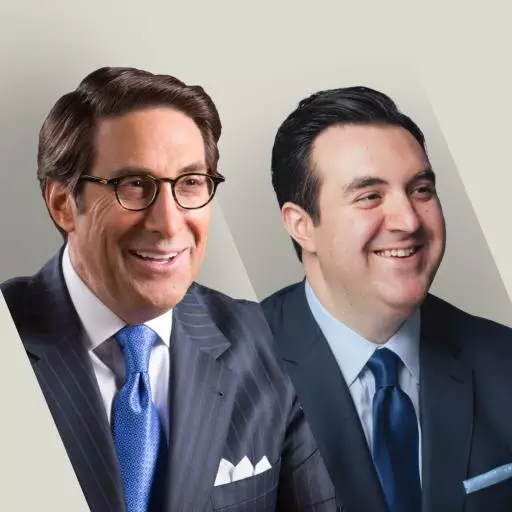
Sekulow


Logan and Jordan Sekulow are joined by Will Haynes to discuss the amount of American troops that have mobilized in the Middle East.
Logan Sekulow: Welcome to Sekulow. We have a packed show for you today. Will Haynes is in the studio, and my brother, Jordan Sekulow, is in the studio. We have Christie, one of the ACLJ attorneys, with a good victory report coming on one of the cases we've been following. You're going to be excited to hear that a little later in the show. There is some big news happening right now, and we are in the last couple of days of our "Double Your Impact" drive. We're going to cover all of that today as the military begins yet more of an uptick in the Middle East.
More than 50,000 troops have now assembled in the Middle East. Now, I want to clarify because you're going to be seeing that headline a lot, or you're going to see things that suggest 50,000 new troops have been deployed. That is not the case. What the case is is that we are now totaling roughly around 50,000 troops in the Middle East. That is about 10,000 more than normal, which is a sizable uptick. That is not nothing.
However, you are going to see a lot of people saying 50,000 and they're going to be inferring, especially like the New York Times article that came out today, that there are 50,000 new troops arriving in the Middle East. This is not accurate. There are 10,000 additional troops that have been added to the normal standard procedure of 40,000 that already exist in the region. Of course, the talks of boots on the ground and what that looks like has been a major point of discussion as President Trump has been weighing the going back and forth on if this is going to happen or if it won't.
Jordan Sekulow: That's right. When you look at this number and see places like the New York Times put, "There are now over 50,000 American troops in the Middle East," they are trying to make it seem like this is an influx of 50,000 US personnel. In reality, there is normally about 40,000 around the Middle East at the bases in Saudi Arabia, Bahrain, Iraq, Syria, Jordan, Qatar, UAE, and Kuwait. Some of those personnel may have changed as they pulled less operational individuals back or some of the families that may have wanted to get out during the time when the war initially broke out, and they are putting in more combat-ready troops.
About 5,000 extra between Marines and sailors just arrived in the region. We also know that 4,500 are involved because the Gerald Ford had to go to Crete for some maintenance, so there is that net gain of really about 1,000 there. But once again, that is still 20% to 25% more troops in the region, which you would expect during a wartime. It is all building toward whether or not the President is going to do an operation to either go after Kharg Island, which is where those oil and gas refineries are, or send in a ground operation to secure that enriched uranium which is popping up everywhere. I want to know if our audience would support something like that if it was a boots-on-the-ground operation to get uranium.
Logan Sekulow: It is safe to say if you had asked me a year ago if this was something that was in President Trump's playbook, I would have said no. I have to say his tone has shifted quite a bit. I won't say he's enjoying wartime, but he's certainly celebrating the military successes. He is certainly not backing down from it. He talks a lot about blowing stuff up, eliminating top leaders, and doing the kind of things that President Trump probably would not have done a year ago. Now, the times have changed, and the world has changed.
What do you think? I want you to let me know. Phone lines are open for you at 1-800-684-3110. Jordan is here, and we have one of our ACLJ attorneys, Christie, joining us a little later on the show. We're going to keep that discussion going with a big ACLJ victory report. It is one you're not going to want to miss, a real heartwarming one. I am looking in the chat right now. Let me know how you feel about that boots-on-the-ground scenario. Tell me if you think it's going to happen and do you want it to happen? Are you okay with it? I don't think any of us want it to happen if we could avoid war, especially putting our own troops in harm's way. But are you okay with it happening?
Jordan Sekulow: Anytime you have a direct combat in that way—even the air campaign isn't without peril for our US servicemen and women—when you add that element of a ground strike, whether it be just Marines or just special forces or if it's a more broad type of incursion, there is another layer of danger. This big operation is getting some reporting out of the Wall Street Journal first, stating the President is weighing whether or not to send in a military operation to secure a thousand pounds of uranium from Iran.
The difference here, rather than a special forces strike on a leader or even securing that oil and gas island, is that now you're talking about a major logistical operation. You have to have people going in, and you're going to have enemy fire coming in on any kind of aircraft or vehicles delivering those troops. We know that a lot of these locations are underground and they have been previously bombed, so we don't know how the structures are. The uranium has also been moved around because this isn't just from this conflict but from months ago.
Logan Sekulow: In the first major strikes over the summer, I was in Strasbourg, France, at our European Center for Law and Justice when the US and Israel made those first hits at the Iranian nuclear site. How stable are those sites to begin with? When you start putting troops on the ground to move out what is a thousand pounds of a very dangerous hazardous material, the likelihood of mass casualties—meaning helicopters going down or planes being shot down—is much more likely.
Jordan Sekulow: Right. And that is where you would have comments coming in saying, "How can you do this?" It is not like just going and getting Maduro. It is not like taking out leaders or a person. This is going in and securing an area for a period of time that would include engineers to extract it. You can't just go and grab this like a bank robbery. It would take days. You would have to have a military campaign that basically weakened their defenses so much in those areas that you almost are waltzing in.
The US military certainly can do that, but what we have seen so far is this discussion of, "We'll negotiate, we won't strike your energy yet, but if you don't negotiate, we will." If something like that occurs and Iran goes dark, does it make it easier to go in and extract uranium? Likely. But it is still a mission that is a lot more dangerous than anything done from the air. The IRGC is not an insurgent terror group in Afghanistan. They are special forces. Those guarding this uranium are going to be their elite.
Logan Sekulow: It is not the same type of mission as kicking down doors in Baghdad and finding an insurgency. This is a well-trained operation that would be able to inflict a lot of pain on the United States if not done in the most secure way. The explanation to the American people by the administration leadership would have to be much more direct than it has been so far. We would have to see real addresses from the President directly into the camera to the American people before you start sending troops on the ground.
Enlisted people, even if it is mostly special forces, are going to be in camo on the ground. It is going to take engineers, and you are going to have to explain to the American people why it is worth US lives to do this now and why it is necessary. I think that can be done if you really can put this together, but you also have to think about this being a way to show some cards to the Iranians to say we're willing to go this far. If you're not going to negotiate with us, we'll shut down your energy and you won't know who we're coming for.
Jordan Sekulow: I think some of the blackout that has gone on in Iran—the power outages, the control of the internet—has created a visualization for the American people of what this war could look like. Then you start adding onto things like extracting uranium. Most people have to start Googling how you even store uranium or how you extract it on a plane. It is going to be a harder pill to swallow because it almost feels like an action movie. It doesn't feel authentic. If you start sending in camo troops on the ground, there has to be a very specific mission.
Logan Sekulow: Well, that goes back to what President Trump has said since before he was President: that Iran cannot have a nuclear weapon. That has always been the singular goal of this. Getting rid of the Ayatollah for many of us was an added bonus, but the mission here is to stop Iran from being a nuclear power. When they were bragging about how much enriched uranium they could get to a warhead, that tells you where their mind was at. Without securing that, I think it opens the President up to a lot of criticism from both sides. They may not have the ability to rebuild a warhead or the centrifuges, but they still have that enriched uranium.
Jordan Sekulow: Americans, too, have to realize they have the ability still to shut down world shipping and the 20% of goods and oil that goes through the Strait of Hormuz. They have the ability still operationally to shut that down without you risking serious life by moving vessels through. It is almost the weird negative of such massive success early on in this war. Where day one you had the removal of the Ayatollah and within three days you had a destruction of their entire leadership, there is now going to be a much shorter window because the mission seems smaller to the American people. You took out the bad guy, so what are we doing now?
Logan Sekulow: You're even hearing some senators like Senator John Kennedy from Louisiana who said last week that it is about time we wrap up Iran. But the original goal was always to eliminate the nuclear threat. That was always clearly stated. We have to take out the uranium and the entire capacity for them to create a nuclear weapon. If that means securing this, whether it be through some sort of deal or by military force, I think that is 100% in line with the goals of the President, Secretary of War Hegseth, and Marco Rubio. I'd like to take this call. Let's go to Anne in Pennsylvania. Anne, go ahead.
Anne: Hi, guys. I think the bottom line is we have to talk about how much is at stake here. The enemy is so vicious, and the level of evil is what Trump is taking into consideration. He has all the intel. We have 40 years of torture, abuse, and savagery on the Iranians and the Persians, and thousands of Americans have been slaughtered for 47 years. We have a Democrat party that has been saying for many years that Iran cannot have uranium enrichment and nuclear weapons, and the President knows exactly this.
He does not like war. He hates war. He was against the Iraq war. He is the commander-in-chief and he knows what the intel is. I just feel it is really shameful that people are so quick to judge. When I first heard this morning you guys announcing that there were troops on the ground, I had no idea and I actually got really happy. I'm not happy that troops are on the ground or that we have a war, but regime change needs to happen. I'm happy because I trust President Trump and I know that he knows what he's doing. It makes me happy that we finally have a president.
Logan Sekulow: Anne, I am only cutting you off because we're actually out of time for this segment. I think that is very interesting because you seem to have trust in the President, but on the other hand, you're concerned about it. You are terrified, but you are happy.
Jordan Sekulow: Also, to clarify, they are not on the ground in Iran at this moment. The 50,000 are at the bases around there or on naval vessels. We usually have 40,000, so this is an additional 10,000. If we weren't in this conflict, you could move 10,000 troops like this and it would not even make a blink on the fourth page of the New York Times because it would be seen as a training mission. Once those troops are on the ground and it's not just secret covert operations, we've entered a whole new world. I think President Trump is going to do everything possible not to have that happen.
Logan Sekulow: Welcome back to Sekulow. Every day this month I have wanted to highlight something interesting the ACLJ legal team has been working on. As we wrap up our "Double Your Impact" drive here at the end of the month, I am excited to share a victory with you. When we talk about the world stage, the ACLJ is involved on the highest level with the biggest government issues happening in Nigeria, in Israel, in Europe, and of course here in the States.
But we also still are representing the individual student who needs our help. Sometimes you get to do that twice because we have some great clients who know their rights and are happy to proclaim the name of Jesus whenever they can. Well, that is precisely what happened. I have a smile on my face because I know this is a positive.
Will Haynes: That's right. We brought this up when we had Christie on a little over a week ago when this issue came back up. Christie was the initial attorney for this client back when she first had an issue in Washington state where she was being subjected to bag searches making sure she had no contraband. What was the contraband? Christian material and things to share her faith with her fellow classmates. We had to represent this student again now that she's in middle school. Christie, give us a little bit of background of what happened here.
Christie: Our client was a sixth grader now in middle school. It's fun that we represented her when she was a second grader, and four years later, she is still on fire for the Lord sharing her heart with others about Jesus. But she was pulled out of her math class by the vice principal and told that she needs to stop sharing the Christian tracts with others.
On top of that, when she asked why other people are allowed to go to the ICE protests and bring ICE protest signs into the school but she can't talk about her religion, she was told that's because it was an opinion and opinions are allowed but her religious views weren't. Additionally, she said, "Well, what about the Christian club that I want to start?" She was told she had to have a teacher sponsor that club.
All of these things are fundamental violations of her constitutional rights. She is allowed to talk about her faith at school. She is allowed to start a Christian Bible study. We at the ACLJ have been fighting for this for 30 years. This is what we do, and yet there are still vice principals who don't know the law.
Will Haynes: Christie, we fortunately already had a connection with this client because she is not going to give up on sharing her faith, and we have already had a victory for her. What did we hear back right before a deadline that we gave the school district?
Christie: The best news for our client was that within one week of sending a demand letter, we received a letter back from their counsel. We had said you have to give us a response by Friday at 5:00 PM, and literally at that deadline, we received a letter saying that yes, she is allowed to do these things. She does have this right and they will ensure that she gets that.
What a wonderful victory for our client. She doesn't have to go through a lawsuit and all of the stress and trial that comes with it for a family. We were able within one week to get her all of the results. That's what is so important about the ACLJ, where we are able to fight for our clients and stay with them for many years as they continue to grow. She is now going to be able to be in her middle school without any more issues coming in from the administration.
Jordan Sekulow: We'll see what happens in high school, right? Christie, we were in Washington, D.C. last week with our team talking about this. On the one hand, it's shocking that these school districts have to learn their lesson so many times. But on the other hand, you get one administrator—a vice principal in this situation—and a student who has been through this before with the ACLJ and knows what their rights are.
They pick on this student once before and do it again, and we are able to vindicate their rights within a week. But it does underscore to people why you've got to speak out and why you've got to be that student who is willing to tell your parents if this happens. You can't just roll over if the administration says you can't do this.
Christie: Exactly. I'm a parent myself. How many children are wanting to talk about their faith with others at school? It is fundamental to our religion and our faith, yet you have these administrators bullying them. How intimidating for her to have been pulled out of her math class by the second highest person in the school and told she can't do something. She knew that was wrong and she stood up for her faith. You want to encourage them to stand up for their faith and show them that you're willing to fight for them too, which is where we can step in. In this instance, what a blessing that we didn't have to sue; we were able to get this resolved in one week.
Jordan Sekulow: I see a lot of comments coming in right now. People are asking where and why this happened. Of course, this happened in Washington, but what everyone needs to know is that this is happening everywhere. This is not just in states that you would historically think are maybe more left-leaning. This is happening in Texas. We have cases all over the country where this is happening on what feels like a daily or weekly basis. It doesn't fall under any lines of blue or red.
Christie: This was Washington state, but we've seen this happen in Texas and in Georgia. This is everywhere. It is administrators who don't understand the law, even though they're going to training. I know that tax dollars are being spent to teach them what the law is, and yet they're still doing this to students. We have to hold them accountable. That is part of why we need our donors' help to help these children from administrators who are just violating the law left and right.
Jordan Sekulow: Think about your local school system. You could be in a very red state, but the public school system is still controlled by those teachers' unions. Even when they get the training, they unfortunately often have this anti-religion bias. We saw that you can't start a Bible club at this middle school even after this school district has been through this before with us. They still try to get the student to roll over. It doesn't matter the politics of who your congressman is; your public school system is still where there are a lot of battles.
Logan Sekulow: You may be watching this and thinking about a similar situation that happened to your son or daughter, or maybe there is a workplace issue you've had. Anything that falls within our scope, never feel bad about reaching out at ACLJ.org/help. You fill out a simple form and you get attached to one of our ACLJ attorneys, and we'll very quickly tell you whether it's something that we think applies. You're not sent to a call center; you are assigned to an attorney in our legal team.
Jordan Sekulow: There is no cost to the client when we take on these cases. You may think a demand letter wouldn't have cost much if they went to an outside counsel, but it would. Any sort of law firm is going to be billing you for that. Not at the ACLJ. When you send that letter, you have to back it up with the ability to actually go to court. We can do that with your resources. Be part of our matching challenge now and donate today at ACLJ.org. You have to be ready to go out to court in whatever state or school district it is.
Logan Sekulow: Right now your most sacred rights are under attack. Your right to free speech, your right to worship, and your right to educate your children the way you choose. These attacks will have a destructive impact on the future of our republic. We're fighting in courtrooms across the country to defend and uphold our values. Protecting the rights of kids to pray and share their faith is how the ACLJ got its first case to the US Supreme Court. Today we would take that case as long as we needed to.
Every victory makes a major impact, and it's only possible because of the support of ACLJ members and champions. This is your opportunity to double your impact to defend freedom for you, your children, and generations to come. Go to ACLJ.org/impact and have your tax-deductible donation doubled today.
Jay Sekulow: We've witnessed monumental legal victories from defending the 14th Amendment and protecting our sacred American right to vote, to the overturning of Roe v. Wade, and standing up for the religious liberty of our kids and seniors. But even with the many historic wins we've achieved, the battle is far from over. The attacks on our constitutionally protected rights persist.
Countless unborn babies remain in jeopardy and across the globe, innocent Christians are being targeted and killed. This fight isn't just the ACLJ's, it's all of ours. It belongs to every American who wants to preserve the values and beliefs on which this nation was founded. Join us in fighting for freedom. Have your donation doubled at ACLJ.org/freedom.
Featured Offer

Featured Offer
About SEKULOW
The American Center for Law and Justice (ACLJ) focuses on constitutional law and is based in Washington, D.C. The ACLJ is specifically dedicated to the ideal that religious freedom and freedom of speech are inalienable, God-given rights. In addition to providing its legal services at no cost to our clients, the ACLJ focuses on the issues that matter most to you — national security, protecting America's families, and protecting human life.
About Jay Sekulow
An accomplished and respected judicial advocate, Sekulow has presented oral argument before the U.S. Supreme Court in twelve cases in defense of constitutional freedoms. Several landmark cases argued by Sekulow before the U.S. Supreme Court have become part of the legal landscape in the area of religious liberty litigation; these cases include Mergens, Lamb's Chapel, McConnell v. FEC, Operation Rescue v. National Organization for Women, and most recently Pleasant Grove City v. Summum.
In 2009, Townhall Magazine named Sekulow to its "Townhall of Fame" and recognized him as "one of the top lawyers for religious freedom in the United States." In 2007, the Chicago Tribune concluded that the ACLJ has "led the way" in Christian legal advocacy. In 2005, TIME Magazine named Sekulow as one of the "25 Most Influential Evangelicals" in America and called the ACLJ "a powerful counterweight" to the ACLU. Business Week said the ACLJ is "the leading advocacy group for religious freedom." Sekulow's work on the issue of judicial nominees, including possible vacancies at the Supreme Court, has received extensive news coverage, including a front-page story in The Wall Street Journal. In addition, The National Law Journal has twice named Sekulow one of the "100 Most Influential Lawyers" in the United States (1994, 1997). He is also among a distinguished group of attorneys known as "The Public Sector 45" named by The American Lawyer (January/February 1997). The magazine said the designation represents "45 young lawyers outside the private sector whose vision and commitment are changing lives."
Sekulow brings insight and education to listeners daily with his national call-in radio program, Jay Sekulow Live!, which is broadcast throughout the country on nearly 850 radio stations. Sekulow also hosts a weekly television program, ACLJ This Week, which tackles the tough issues of the day. He is also a popular guest on nationally televised news programs on ABC, CBS, NBC, CNN, FOX News, MSNBC, CNBC, and PBS.
Contact SEKULOW with Jay Sekulow
jsekulow@aclj.org
http://aclj.org/
American Center for Law and Justice
PO Box 90555
Phone: 757-226-2489
1-800-684-3110
1-877-989-2255