
Sekulow


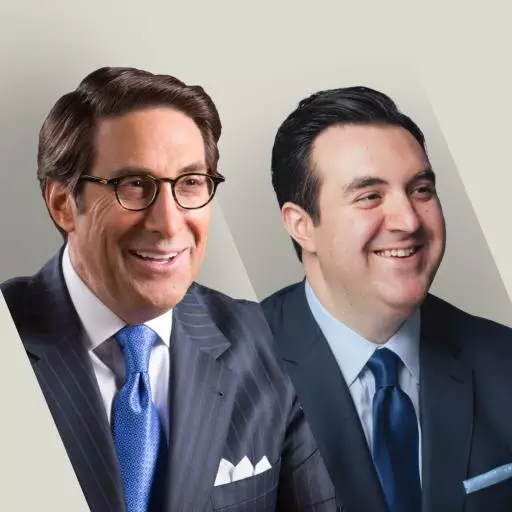
Logan Sekulow and Will Haynes discuss the subpoena for James Comey in a grand conspiracy probe.
Logan Sekulow: Welcome to Sekulow. It's Friday. We made it here. Will and I are... you know what, let's just be honest with you. There's a lot of news going on, but sometimes there's not a lot of news. Sometimes we have to come up with what we're going to talk about. This one is another interesting one because when you put a James Comey in the title, you may go, "Logan, is it 2016 again? Are you running a tape on a Friday? Did you find a tape from ten years ago now?"
We actually are talking about something that did happen close to ten years ago at this point now because James Comey has been subpoenaed in what they're considering the "grand conspiracy," as Tulsi Gabbard even referred to it as. The grand conspiracy, the case against ex-officials who investigated and prosecuted President Trump, of course saying that they were trying to stop the election back in 2016. I guess we have updates on that because we have new people in charge. Where are we at, Will?
Will: That's right. As you remember, when Tulsi Gabbard became the Director of National Intelligence, she did start looking at the work product of the intelligence community. That is part of what is her purview. There are 19 intelligence agencies that are under the purview of the Director of National Intelligence. She released a lot of findings about the way that they abused the system, changed the rules, and made up things, including things that previously they had discredited, in order to try and frame President Trump, who had then been elected at that point, and say he was a part of a Russia collusion conspiracy, which ended up being the Russia collusion hoax. We've been through all that.
She referred to it, though, as this grand conspiracy within different intelligence agencies with James Comey, with James Clapper, with John Brennan. Even the President of the United States at the time, Barack Obama, was caught up in this as well. Now we know that a federal prosecutor has empaneled a grand jury in Florida and is looking into this, conducting this investigation, presenting evidence before a grand jury about this grand conspiracy probe in what the end game of a prosecutor would be to seek indictments of individuals.
What we now know is that a subpoena has been issued to James Comey to testify before this grand jury. We will see where that goes, but it also tells me that the higher-named players, the bigger players, are now being subpoenaed to come give this testimony. It is probably getting close to the time where the prosecutor would try to get the indictment returned by a grand jury.
Logan Sekulow: Phone lines are open. We'll even break down a little bit later what it means because there are some moments here of whether this is in a statute of limitations, where we're at. We can discuss that as well, the legal side of it. We will be joined by one of our ACLJ attorneys as well with a big update as today, or yesterday, was the deadline for California for Gavin Newsom to respond, and they did. We'll get to that coming up in the third segment of the day.
I want to hear from you at 1-800-684-3110 as we wrap up this week. We are over halfway. It's March 20th at this point. March 20th. We are almost to the end of our Double Your Impact Drive. We're in a very special week next week where we are going to be showcasing a lot of different things. I'm just going to tease that out there, but this will be the last week of the traditional Double Your Impact Drive, the last day of it.
Be a part of it today. Your donation matters and your donation is matched. Go to ACLJ.org. Have your tax-deductible donation doubled today. Gavin Newsom finally responded yesterday in the state of California. We'll talk about that. We have critical filings due today for the pro-life preachers. We have a lot going on in the world of the ACLJ. It's not just a show. You know that. We have a big legal side. We want you to be a part of it again at ACLJ.org.
In the meantime, phone lines are open for you at 1-800-684-3110. We have some time today to hear from you. Give me a call at 1-800-684-3110. When we get back, if you were just tuning in right now, James Comey is subpoenaed. We will discuss what it means and what will happen next.
Welcome back to Sekulow. We're going to take your calls at 1-800-684-3110. I do want to hear from you today. Give me a call. It's Friday. We made it to the end of the week. I'll be honest, it is a little bit of a light news day. We'll take some calls and comments on any of the topics we brought up today. ACLJ work, Iran, whatever you want to chat about.
Will: SAVE Act, remember we talked about that earlier in the week.
Logan Sekulow: SAVE Act. How about some of the topics the news has moved on from? Whatever you want to talk about, give me a call. I'd love to hear from you at 1-800-684-3110. A lot of you are just joining us right now. We can see when the numbers kick in specifically on YouTube and Rumble. A lot of you are probably tuning in right now going, "What is this with James Comey?" James Comey has been subpoenaed. Why and why now? How is it okay that it's almost a decade later that they can still do this? Let's start with what is it, Will? Why is it happening? Why does it matter? Do we need to look into this at all?
Will: Last year, a U.S. prosecutor, a U.S. Attorney, had sought a grand jury to be empaneled in Florida, which the judge complied with and granted that. He went to investigate this grand conspiracy that Tulsi Gabbard and Director John Ratcliffe of the CIA had both talked about, where it wasn't just instances of them trying to weaponize the government and the intelligence community against the President-elect. It was this "grand conspiracy," as the name she gave to it.
When you look at this, the prosecutor has been working now since last year and has subpoenaed more than 130, or issued more than 130 subpoenas since that grand jury was empaneled. This investigation isn't at the beginning. Now you're seeing that the former FBI Director, James Comey himself, is being subpoenaed in this investigation.
To me, that looks like they do all the grunt work. You start with probably the lowest players in this or people that may have information and you build up. Then you've got your narrative before the grand jury. Then you're going to have the people that you're probably seeking an indictment against. Both James Comey, James Clapper, John Brennan, those are the ones that... remember John Brennan said, "I know that the dossier, we don't think it's true, but doesn't it ring true?"
Those are the types of things that are going to potentially get them in trouble, was the way they weaponized the intelligence against the person who had just been elected by the American people. When you get to that point, they start subpoenaing the players that are probably the target of the investigation. You almost infer that they are getting close to asking for charges to be returned from the grand jury, that they are getting near the end of the investigation stage and potentially going towards an indictment.
Logan Sekulow: I want to bring that up because this is not some willy-nilly thing that just happened. Tulsi Gabbard was talking about this almost a year ago at this point. Last July she was discussing this with reporters during a White House presser. I think we should flashback. Let's hear from it. This is our friend, former colleague, Tulsi Gabbard.
Tulsi Gabbard: Based on what you now see, do you believe President Obama is guilty of treason? I'm leaving the criminal charges to the Department of Justice. I'm not an attorney, but as I have said previously, when you look at the intent behind creating a fake, manufactured intelligence document that directly contradicts multiple assessments that were created by the intelligence community, the expressed intent and what followed afterward can only be described as a years-long coup and a treasonous conspiracy against the American people, our republic, and an attempt to undermine President Trump's administration.
Will: Remember, Logan, that is the Director of National Intelligence back in July.
Logan Sekulow: Right. Nearly a year ago. People may start pushing narratives going, "Well, they're only doing this right now to distract from what's going on." This is clearly, as you said, a late-stage process of this.
Will: After she presented this information, there were also criminal referrals that were given over from John Ratcliffe, the CIA Director, to the Department of Justice. The Department of Justice started working on that almost a year ago. We always talk about sometimes the wheels of justice turn very slowly. We talk about some of our cases how it takes years to get the resolution finally, and sometimes it goes all the way to the Supreme Court. When they are doing an investigation and trying to do it the right way in order to secure an indictment if they believe that there's been a violation of the law, you don't want it to be rushed.
I would also point to some of the charges against James Comey that were dropped in the Northern District of Virginia were because it was kind of rushed. They were up against a timeline with the statute of limitations and rushed to get it done, and that judge threw them out. I feel like the U.S. Attorney in Florida is wanting to do this in such a way that it is, if there are indictments, charges to be brought here, it is not going to be just thrown out because it was rushed. It's going through a process.
Now, this conspiracy angle that both Tulsi Gabbard brought up, but then also the way that it's being described by the media, if that is what the U.S. Attorney is doing... now remember, grand jury proceedings are secret. We won't know what is said in that. We don't know and should not know. Those are secret for a reason. But if that is the angle they are going for, a conspiracy, that is where the timeline of the statute of limitations shifts. Because if you have an individual crime, then the crime itself, there's normally about a five-year statute of limitations.
Logan Sekulow: If you can tie it back.
Will: Some things have different things, different extended, but typically one of these if it was just an individual action would be like a five-year statute of limitations. 2016 is way beyond that.
Logan Sekulow: Ten years.
Will: The difference is that with a conspiracy charge, if the individuals guilty of that conspiracy, or alleged to be guilty of that, are continuing the conspiracy, they haven't given it up. They're tied to it. When you hear from these individuals, they still repeat the same lines from that time. Then that conspiracy can be looked at by the U.S. law and courts and prosecutors as an ongoing conspiracy.
The point of the 2016 election may be well over, but the continuance of that to still hold the line on their narrative that they weaponized the government for can extend that. Even some reporters point back to some testimony that even in 2023 James Comey had given that would be in line with the original conspiracy that they are alleging. That could also extend it. So there's a lot of wiggle room when it becomes a conspiracy.
Logan Sekulow: I want to hear from you about this. We do have some calls coming in on some unrelated topics. We'll get to those coming up. But if you do have a question or comment related to this, 1-800-684-3110. Of course we look to what's next. What does this mean? But also, what does it mean when you talk about future Presidents and the future President of the United States?
Yesterday we spent a good portion of our show talking about Gavin Newsom and the Newsom family, as an unearthed clip of his wife really going after, directly by name, evangelical conservative Christians was played over and over again by us and by a lot of outlets that wanted to share that this is what we're talking about from the state of California. In response to that also, the ACLJ has been hard at work in a battle with the state of California as they have fought to claim over a million dollars in fines that they had levied against Calvary Chapel of San Jose.
A lot of these came during COVID times, the early days of COVID when we were unsure. Everyone was unsure what was going on. Now we are quite a bit removed. We are six years removed from the original... about this week, about six years ago from the pandemic of the first week when everything shut down. We know the impact that happened. We know so much more now six years later.
Now we have gotten some official responses. Yesterday was the official day to hear from California. We're going to have our ACLJ attorney Nathan joining us in the next segment to break down the update coming out of California. Because as much as you want to discount what happens in California or New York or any of these places... we have a lot of listeners there, we have a lot of supporters there. But I know I see some of the comments coming in saying, "Why do I care?"
Because these big metropolitan areas, these big states, California, where there's a lot of people, often impact what happens around the country. First starting in your major cities, and then we've seen how it actually impacts smaller towns, smaller communities, smaller school districts, all of those things throughout the country. That's why the ACLJ has to be there for all.
Whether that is going up against the Governor and going up against the state of California, the government in California, obviously not the people of California. Or we have to be there for an individual student who needs support. Or we need to be there for a President of the United States. Or we need to be there for the people in Nigeria, Christians that are being persecuted. Or we need to be at the UN Human Rights Council talking about Israel. We have to be there because there's often people who go on and go, "I feel like there is nothing I can do." But the ACLJ is there and we are there and can be your voice.
I encourage you, as we wrap up today and start really heading towards the end of our Double Your Impact Drive, there's only a week left in it. Really today's the last day of the traditional Double Your Impact Drive. We're going to have a special week coming up next week. I encourage you to support the work of the ACLJ right now. Leave the QR code up on the screen. I'd appreciate you doing that right now. If you're watching, scan it or just go to ACLJ.org. All donations are doubled right now.
That is just some of the work that we're doing. We have so much happening again around the country. We have a robust legal and media team, our presence on Capitol Hill and around the world, whether United Nations or however it may be, whether European Center, ACLJ Jerusalem. None of this happens without your support. Go to ACLJ.org right now. We'll be right back.
Welcome back to Sekulow. We do have some lines open at 1-800-684-3110. In the back half, just me and Will, so we would love to hear from you at 1-800-684-3110. Go ahead and get on hold. Yesterday was a big day for the ACLJ, of course in our fight for Calvary Chapel San Jose versus the state of California. If you want to know what side we're on, I feel like you probably could figure it out.
Of course we are on the side of Calvary Chapel. One of our attorneys, Nathan, is joining us right now. Will, give a little bit of a setup here because the response came in. Yesterday was a big deadline.
Will: That's right. Remember, we filed our cert petition, that's the petition asking the Supreme Court to take up this case, back in December of 2025, right at the end of the year. That automatically triggers a clock for the state to respond. The original response due date for California was January 16th of this year. They filed a motion to ask for an extension. Not unusual. That happens, especially at that level, at the Supreme Court, to move that, and it was granted to move it to February 17th.
Then we were waiting mid-February for a response from the state of California, and lo and behold, they asked for another extension. This is where it gets into a little bit of uncharted territory, asking for a second extension, but the Supreme Court rather did grant this second extension to push that response deadline to yesterday, March 19th. Nathan, we got the response from the state yesterday late in the afternoon. There you see it on the screen. That is their brief they filed in the Supreme Court. The purpose of their response, because it is at this cert petition stage, we are asking the court to take this up. Their entire goal here is to tell the Supreme Court and ask them to say you don't need to deal with this, don't waste your time here, let's just move on. What's kind of your breakdown of the response from California?
Nathan: It's really interesting what they do in this brief, and I'm not sure it's very consistent with the fact that they took this long to write it. Because rather than arguing that the state court got it right, instead they try to argue that this case isn't worth the Supreme Court's attention. What they try to do is essentially say, "Well, COVID was a long time ago. It doesn't still matter. Why would we think that a case about COVID fines would still have implications for religious liberty today?" That's their main argumentative tactic.
Of course, as we all know, that's just not consistent with the ongoing trends we see from the left. The battle has not stopped since COVID-19 with restrictions over churches and whether they can meet and when they can meet. The battle just keeps going every single day.
Logan Sekulow: Nathan, it feels like if that was the case, then drop the fines. If they decided that it was no longer of value to them and didn't matter anymore, well, there's a simple solution to that in many ways.
Nathan: Exactly right. I think it's particularly striking because this is the argument they have to make. First they argue that the case doesn't matter, but then of course they have to say these fines were justified. They try still relying on that same logic that we heard five or six years ago. They still try to blame churches for the spread of COVID and blame churches for allowing people to meet as if that somehow caused the spread of disease. They continue with the exact same arguments they've always been making, and now they're making them to the Supreme Court.
Will: I also feel like some of these arguments in here are that it happened, but it's so unlikely that we're going to have another once-in-a-century pandemic that forces us to put these rules back in place. Their focus here in what I found interesting is on the restrictions themselves and not even that they are still forcing this fine. Now, I understand that is the root of all of this, but in what I read their brief, about 28 pages, I saw nothing really about the issue of even still holding these fines against them and the precedent that that could set. Because they're trying to argue this isn't even precedential. Like in the state, we're not even going to use these fines against someone else later because this happened here. That's another way they're trying to say it's not worth the Supreme Court's time.
Nathan: Exactly. But the fundamental reality is that fines like this have a huge effect, not just on our client and its offerings and tithes that are being taken by the state, but have this effect on every other church in California, too. I love all our work, but this case is particularly personal to me. My dad's a pastor and he ministered at a church in California during COVID-19. What every church in California saw was these draconian orders. These fines are just this last attempt to still wring one more thing out of churches.
What we pointed out in our cert petition, the Supreme Court had to multiple times over and over again issue rulings that California courts were getting it wrong, that the California government was getting it wrong with its COVID orders. This is really just the next case in a long line of cases that the ACLJ was involved in from the start of California going after churches, punishing churches just because they were seeking to worship freely in accord with their conscience.
Will: Nathan, this was obviously their brief in opposition to our cert petition. Will we have another brief in responding to their opposition, or what are the next steps here as we await what hopefully is a grant order from the Supreme Court?
Nathan: Our reply brief is due April 2nd. We have a little under two weeks to get our brief into the Supreme Court. Unlike California, we don't plan to ask for extra time. Rather, we're seeking to get this before the Supreme Court as soon as we can to urge the Supreme Court to take the case. Once our brief is submitted, at that point we'll be waiting to see what the court may do. Sometimes that can take a rather long time, sometimes it might happen more quickly. Really the next question is going to be: Will the Supreme Court take this case on the merits and protect religious freedom in California once and for all? That's what we'll be watching for after April 2nd.
Logan Sekulow: All right, we'll keep an update on that. This is a continual struggle with California. We want to be there to support our friends, our allies, Christians in California, people that want to practice their faith openly, loudly. We know the Governor himself is not too big of a fan of that, and specifically we know the Governor's family is not too big of a fan of that. Maybe we could even flashback to remember this was unearthed yesterday from just a couple years ago while all this was happening. This is the Governor's wife, Jennifer Newsom.
Guest (Female - Jennifer Newsom): But again, what the folks on the far right are missing is just this... they're living in this silo, this evangelical conservative silo that ultimately is pulling us back as a country to a time and a place where we don't deserve to be and we're not going to be because honestly young women and fathers of daughters are awake now and they're woke and they're not going to let us go back. Obviously California has a huge responsibility to lead.
Logan Sekulow: Of course. We want to actually be there for you, the Californians who are listening right now who are evangelical Christians who maybe are stuck in that silo of evangelical Christianity. Of course we want to be there for everyone around the country and around the world as well. When you're being called out specifically, that is why we are representing Calvary Chapel. That is why we keep people like Rick Grenell, who joins us on the broadcast in California. It's why we have Jeff Ballabon, Israel, New York.
These areas where we know there's a lot of you out there who support similar thoughts, beliefs, and values, but maybe you're not heard because the government of the state decides to belittle you. We're not going to stand for that. We're going to stand up for you, but it only happens if we give the best of the best, the best attorneys, the best media team. We can only present this show with excellence with your support. Go to ACLJ.org and do it today. Make a donation because we are wrapping up our Double Your Impact Drive. Don't miss your opportunity to have your donation matched today at ACLJ.org. Second half-hour of the show coming up on ACLJ.org.
Featured Offer

Featured Offer
About SEKULOW
The American Center for Law and Justice (ACLJ) focuses on constitutional law and is based in Washington, D.C. The ACLJ is specifically dedicated to the ideal that religious freedom and freedom of speech are inalienable, God-given rights. In addition to providing its legal services at no cost to our clients, the ACLJ focuses on the issues that matter most to you — national security, protecting America's families, and protecting human life.
About Jay Sekulow
An accomplished and respected judicial advocate, Sekulow has presented oral argument before the U.S. Supreme Court in twelve cases in defense of constitutional freedoms. Several landmark cases argued by Sekulow before the U.S. Supreme Court have become part of the legal landscape in the area of religious liberty litigation; these cases include Mergens, Lamb's Chapel, McConnell v. FEC, Operation Rescue v. National Organization for Women, and most recently Pleasant Grove City v. Summum.
In 2009, Townhall Magazine named Sekulow to its "Townhall of Fame" and recognized him as "one of the top lawyers for religious freedom in the United States." In 2007, the Chicago Tribune concluded that the ACLJ has "led the way" in Christian legal advocacy. In 2005, TIME Magazine named Sekulow as one of the "25 Most Influential Evangelicals" in America and called the ACLJ "a powerful counterweight" to the ACLU. Business Week said the ACLJ is "the leading advocacy group for religious freedom." Sekulow's work on the issue of judicial nominees, including possible vacancies at the Supreme Court, has received extensive news coverage, including a front-page story in The Wall Street Journal. In addition, The National Law Journal has twice named Sekulow one of the "100 Most Influential Lawyers" in the United States (1994, 1997). He is also among a distinguished group of attorneys known as "The Public Sector 45" named by The American Lawyer (January/February 1997). The magazine said the designation represents "45 young lawyers outside the private sector whose vision and commitment are changing lives."
Sekulow brings insight and education to listeners daily with his national call-in radio program, Jay Sekulow Live!, which is broadcast throughout the country on nearly 850 radio stations. Sekulow also hosts a weekly television program, ACLJ This Week, which tackles the tough issues of the day. He is also a popular guest on nationally televised news programs on ABC, CBS, NBC, CNN, FOX News, MSNBC, CNBC, and PBS.
Contact SEKULOW with Jay Sekulow
jsekulow@aclj.org
http://aclj.org/
American Center for Law and Justice
PO Box 90555
Phone: 757-226-2489
1-800-684-3110
1-877-989-2255