
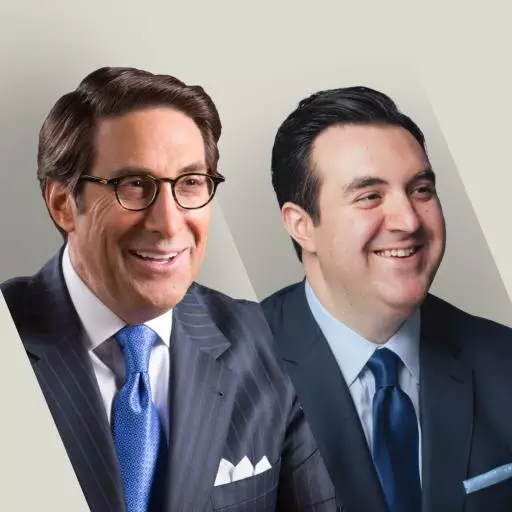
Sekulow


Will Haynes and Jordan Sekulow break down President Trump's response to Iran's new Ayatollah.
Will Haynes: Welcome to Sekulow. I'm Will Haynes. I'll be joined momentarily by Jordan Sekulow. And we have a packed show for you today. I want to hear from you at 1-800-684-3110 to join the conversation in what we saw over the weekend was that the Iranian Council of Experts decided to move forward and pick their new Supreme Leader.
The Supreme Leader is someone that was talked about. This was the son of the now deceased Ayatollah. And we know his name is Mojtaba Khamenei. He's 56 years old, the son of Ali Khamenei, and was very close to the IRGC. What does this tell us? It tells us that the Iranians are doubling down, that they are showing, trying to show the world that they are not planning on going anywhere.
Meanwhile, the US stepped up the bombings in what we saw over the weekend, hitting places like oil refineries and making it a lot more painful on the Iranian regime as they try to hang on. We're going to break all this down, talk about what it means. But as the skies over Iran were lit up with the explosions at these oil refineries, both putting a strain on the economic viability of the regime as well as their own internal energy viability, you see that the hardliners within Iran are not showing any sign of backing down.
Jordan is joining me remotely today. But Jordan, what we see from this is that the mullahs and those within Iran are trying to signal some sort of strength in the midst of what has been a very impressive US and Israeli operation thus far.
Jordan Sekulow: Well, I think what they're trying to put on display is that they have the Guardian Council of 88 and that they were able to get together, put a new leader in power who oversees and acts also as commander in chief of the Iranian armed forces and then of course works with, as he has very closely, the Iranian Revolutionary Guard Corps and some of these militias as well.
So, I think it's more of a show than it is an actual sign of strength. Remember, President Trump has still told the Iranian people to stay indoors. He hasn't yet said this is the moment to go outside and seize the government because of the amount of firepower the US is unleashing on this radical, dangerous regime to the entire world, but especially to our ally Israel.
And ultimately, their number one target is the United States of America, your children, your grandchildren. That's who they really want to annihilate. And so, I think, Will, it was a show of stability. But when you look at the images coming out of Iran and how the lack of their ability to respond now, it does appear that we control the air. I think that tells everything.
Will Haynes: Yes. And as Jordan said, and we will continue to talk about this, what does it mean even for the United States? What does it mean for us here at home as we saw some incidents over the weekend that kind of raised some alarm here in the United States?
But the President said to ABC News, this is in a written interview that we've seen thus far, they've not released this audio statement, but he told ABC News that the new leader is, quote, "not going to last long" if they aren't getting the approval of the President. We'll also contrast that with what happened in Venezuela where you see the US now working with leadership there post the capture of Nicolas Maduro.
But folks, we are also launching something interesting this week that we really think is the perfect time to do this. And this is our seven days of global impact. Because here at the ACLJ, while our domestic work here in the United States is vitally important to your freedoms, we also work around the world.
And we're going to show each day more ways that you may not hear about on the daily broadcast that we're engaged around the world fighting for freedom, fighting for liberty, and for the ability to practice your faith. Go to aclj.org/global to double your impact today.
Will Haynes: Welcome back to Sekulow. I'm Will Haynes. I'm joined by Jordan Sekulow and we are talking about the move by the Iranians over the weekend where they chose a new Supreme Leader. This is Ayatollah Mojtaba Khamenei. It is the son of Ali Khamenei, the now dead Ayatollah and Supreme Leader of Iran. This is the first time in Iranian history since the revolution that this is now the third Supreme Leader but only the first time that it has been passed down in the family.
This individual, he's 56 years old. He is a hardline figure much like his father. And it is a signal to the world from the Iranians that they are not backing down or going along with the President's calls for unconditional surrender. Now, what it also tells us, Jordan, is how closely this individual is tied to the IRGC, the Iranian Revolutionary Guard Corps, which is really the unit and secondary military.
There are two real militaries in Iran. There's the normal army and then there is the IRGC. The IRGC is really tasked with protecting the Islamic Republic in ideology as well as they have their hands in almost all of the economic affairs of the Islamic Republic. It's very powerful, very wealthy.
But they also are the main exporter of terror. They are the ones that control the proxy groups, whether it be Hezbollah in Lebanon—you saw an IRGC commander that was taken out over the weekend in Beirut by the Israelis. You also have to think about the Houthis as well as Hamas and other subgroups, the militias that attack US troops in Iraq. Those are all also all controlled by the IRGC.
In reality, this is not an unexpected move by a regime that is in the midst of conflict, that is trying to fight. But at the end of the day, not unexpected, but we also hear from the President, he doesn't expect this individual to last long because this isn't what the US wants. I want to get your take on that as well as the connection of this new Supreme Leader to the IRGC. Do you think he is going to have supreme authority or do we really know that the IRGC itself is the only thing running the country at this point?
Jordan Sekulow: I think the IRGC, this was their move to try and hold on to some kind of power. So yes, I think he's kind of Ayatollah in name only. They picked the son. They basically control him as you said. The relationship there so deep, he would not have become Ayatollah but for the IRGC. He will not survive, and he might not survive anyways, but he will not survive at all in Iran without the backing of the IRGC.
So they are the ones that will fight until the last man is standing because their entire life, not just their military life, but their business, the reason why there's so many billionaires in the IRGC is because it's a terror business that exports that terror around the world for a price.
They also run so much of Iran's industrial work and oil and covert operations with oil trying to get that to China and other places that will still buy this illegal crude oil. So Will, I think this is an attempt to hold on to power. But I don't think we can make a judgment call about what really happens next because until the US and Israel air campaign is over or becomes targeted enough for people in the streets to reemerge from their homes and to try and take their government as President Trump has talked about, we won't know how successful all of this is.
We know it's been a success from the air in disrupting the entire Islamic Republic of Iran. Will the people be in charge of Iran ultimately a month from now? We don't know. Will there be a civil war? We don't know. Will there be more covert actions? We don't know.
But we are certainly on a path to putting the Iranian people in a position so that they can attempt to take power by taking out so much of—you heard the President say it, Will, the Iranian navy, air force, military and IRGC that is on the ground in Iran operating. We have air control. We even told the UK, "Back off. We don't want your help anymore because we've got this under control."
Will Haynes: Well, and as you mentioned, the air superiority is such an important thing. Many of the so-called experts that have been talking about if the US were to engage Iran in this way, they would never be able to get air superiority. And that was part of the reason why all of these experts said that there would be such a huge cost on American lives if we were to engage Iran.
None of them believed what we have done now was even possible. So I think that is also where the President does get, he and his leadership team, the joint chiefs, the Secretary of War and the military commanders that have been given the ability to fight this operation, this war in a way that previous military leaders were not allowed to, it appears, because of how quickly and strongly the US was able to accomplish that aspect of it.
I think that gives the President some more leeway as far as achieving the stated goals of no nuclear Iran and allowing for an opportunity of the people to take their country back. I want to hear from the audience as well. What do you think about that?
Do you think the fact that there has been success thus far gives the President some more time on this? Call me at 1-800-684-3110. Or do you believe that things, like we're seeing oil hitting $100 a barrel, do you think things like that that could cause economic stresses back at home could force the hand of the administration to pivot in some way?
I want to hear from you. But Jordan, even what we saw over the weekend, we saw multiple flights in the US diverted because of some ended up being miscommunications, but clearly the American aviation security, the airlines are on high alert. We saw Kansas City, the entire airport and parking garage evacuated. People were evacuated to the tarmac for two hours because of bomb threats.
This is at the same time that ABC News is reporting that the US intercepted an encrypted communication believed to have originated in Iran that may serve as an operational trigger for sleeper assets outside the country. That is a big concern here.
We also saw what happened in New York over the weekend where individuals that were protesting were attacked by counterprotesters that may have had ties to the Islamic State and were throwing incendiary devices in what could have been IEDs. Jordan, what are your thoughts on that as we look at the repercussions, something we've been concerned about, but it starts to seem that the government as well as the companies that protect our skies and provide air travel are also taking this very seriously right now?
Jordan Sekulow: Yeah, I mean, just by using certain words on a plane, you're going to be removed from the plane, the plane's going to be diverted. We know there are Iranian sleeper cells inside the United States for decades.
We know this was occurring under the Biden administration because the ACLJ uncovered that two came across the border with Mexico. And they actually put their pictures up for a bit and then they took them down minutes later. We were able to fight and got that information back up.
So we know that terrorists used our porous southern border under Democrats to get across. The question, and I think, Will, you posed it best, are we going to see some lone wolves or are these actually cells operating? Is there an operator left in place inside Iran?
But again, at this moment, I would tell people we have to remain vigilant. We are in a conflict with a country whose number one slogan is death to America. And I think President Trump, what he wants to leave to the American people is a different Iran, an Iran that's main slogan is not to kill all Americans and our allies and our military.
They've got blood on their hands. They have the US blood on their hands before. They have it now. And listen, anything we can do to free up the Iranian people inside the Islamic Republic of Iran to take back that government, I could imagine, Will, just a decade from now an Iran that is a great partner with the United States of America.
And think about how that would change the global political landscape if China and Russia have a US ally in Iran instead of one of the few countries they have left to ally with right now in the Islamic Republic.
Will Haynes: Well, and I think Jordan, that's also why the President, when he says this Ayatollah will not last long, is such a real threat to someone like that that is in that position because we know that it cannot be that they replace the Ayatollah with the next Supreme Leader who still lives by the ideology death to America and death to Israel.
And I think that we will find out how those operations take place in the very near future. That's got to be a lonely job being the Supreme Leader of Iran right now with how much of the leadership has already been taken out, but also a very frightening job knowing that you are the biggest target of the might of the American military and the Israeli military.
We'll get into more of this in the next segment. We'll be joined by Jeff Ballabon and we're also going to talk more about this seven days of global impact that we are talking about this week at the ACLJ. You may be aware of this broadcast or the work we do domestically, but how much of an impact when you support the ACLJ that you make on the world itself? Go to aclj.org/global to support us today.
Will Haynes: Welcome back to Sekulow. We're being joined by our senior counsel as well as the director of ACLJ Jerusalem, Jeff Ballabon. But really, why I wanted to talk with Jeff today is because of the work that we do internationally. And I thought he would be a great person to join me today to kick off this seven days of global impact week that we are showcasing here at the ACLJ.
Because we do. We talk about a lot of domestic issues and policy here on this broadcast. We talk about the work we do even for children that are persecuted at their schools, that are having their rights violated, pastors that are having their rights violated, churches that are being attacked by Gavin Newsom trying to take the tithes and offerings away and put it in state coffers.
But that isn't all we do. We also have such a robust international operation here at the ACLJ that you support when you support the ACLJ. And right now that support is doubled. Your impact is doubled not just here at home but around the world.
And so Jeff, I wanted to talk to you because it ties in with everything that's going on in the news with this conflict with Iran. You were supposed to be headed back to Israel yesterday. But for obvious reasons, flights are not all just wide open heading back to Israel.
But your work doesn't stop. You're at a conference today talking about law and antisemitism. And so that work pivots sometimes because of the nature of what you do as director of ACLJ Jerusalem. So even just to tell people how their support of ACLJ has a global impact when it comes to fighting antisemitism, standing with Israel, and even the work we've done at the UN pushing back on the Iranian regime, it's all vital and we can't do it without the support of those that give to ACLJ.
Jeff Ballabon: Sure. So I'm joining you from a conference center so I'm using this, hopefully you can hear me clearly. I was supposed to be flying to Israel yesterday, flight was cancelled and instead there was a conference taking place in New York on law and antisemitism. And the opportunity came to be here but also to present because we obviously are known to have expertise in this area.
And so pivoted and all day yesterday and all day today at this conference and this conference touches on so many of the things, William, that you just mentioned that ACLJ is involved in at the highest levels, expertise. First of all, there are Americans here obviously, but it's also lawyers and law professors and jurists from around the world, also some students, to talk about what's going on on campus.
And the issues have to do with the instrumentalities of the law and how they can help, what the limitations are, how to do better, because antisemitism is become a reality in so many places. And so we're talking about both to protect ourselves and others, by the way, we talk about Zionism as well.
As we know, most Zionists today are not Jews because there aren't that many Jews in the world. Most Zionists today are actually Christians. And even association with supporting Israel can lead to harassment. So that's been part of the topic conversation here. While I'm here, I met actually a professor who was an ACLJ client, who we thank God were very successful.
He said he wasn't happy with the lawyers he had before and we took over the case and it was very successful for him. The result of that conversation led to, we haven't yet seen it, I mean I've seen it, haven't yet shared it internally, other professors coming to me with cases of potential antisemitism litigation in terms of their own universities that's gone on.
So there are cases we'll be looking at that may become potential ACLJ clients. But then there's the more broad situation here. Obviously here with the expertise in terms of the limitations of the law and the uses of the law, but also in terms of what's happening on a geopolitical level and how this dialogue impacts the fate of Israel and Israelis, but also Jews around the world and those who support us.
Will Haynes: And Jeff, as you mentioned, that's another way that we are involved. We fight for students, we fight for professors that are discriminated against at elite universities because they are Jewish or, in some cases, they aren't Jewish but they are just friendly to the Israeli people or to Jewish people.
And especially when we've come out of this era of the Biden DEI initiatives throughout government and that how that has gone through all levels of academia, the only people group that it was culturally and I would argue they thought legally acceptable to discriminate are people that are Jewish or support Jews. If you were in those two categories, then you had no hope when it came to the administration protecting you.
Jeff Ballabon: Yeah, unfortunately and we've been talking about this for a while now. Now even on the ideological and political, what had been thought of as right, there's a schism there. And there's also an attack by people claiming to be American nationalists or Christians, attacking Christians directly as being the worst people in the world for supporting the Jews, right?
"Jews are bad but Christians who support us are even worse." This is a fight that's going on right now at the most important levels of our culture, of American culture. And we have to be present to push back against it because their goal is indistinguishable, in fact they use the same phrases that the Islamist world and the progressive world use, which is that Judeo-Christian concepts are satanic, blasphemous, evil.
It's a disaster culturally and this is the moment right now. This upcoming election, the fact that we're involved on a policy level, the fact that we're so close to so many members of Congress and also to the administration becomes unbelievably important because this cultural fight is being fought out in politics right now.
And there was a time not that long ago where Democrats were pro-Israel and talked of themselves as Zionists. Now it's almost impossible. Now you see Gavin Newsom wants to be a presidential candidate and he's using the worst kinds of blood libels about Israel. It's horrific stuff that wouldn't have been unimaginable 15 years ago.
Well, unfortunately, it's happening around the country on the Republican side also and there has to be pushback because America won't survive if both parties go.
Will Haynes: And you know, there's a lot of talk as in some spaces even on the conservative right where they talk about the Uniparty where, both Republicans and Democrats are all bad, they're all going for the same goal. What we have seen emerge is a Uniparty of the most radical left and most radical right that are all of a sudden coming together.
You call it the horseshoe, where they're fighting the same evil battle. And all of a sudden they discover these thousand-year-old tropes and get attracted to this type of rhetoric. And it's evil. And we fight against it. We've been fighting against it for decades and we'll continue to, Jeff.
Jeff Ballabon: Yeah, I've always believed that the horseshoe metaphor symbol was wrong because it is actually a circle that completes itself. And the far fringes really agree on the same thing, which is their hostility to Judeo-Christian American civilization, to the greatest civilization ever created by humanity because it's built on biblical ideas.
Well, we're seeing it being fought right now real time, physically, spiritually, materially. And being here at this conference is one important part of what we do, but also representing cases is what we do. And dealing with, now that I'm here in New York, we have delegations coming in that I wasn't going to be able to meet but from other countries that I've met through my work at ACLJ Jerusalem who are here also to talk about these issues.
And we're all gathering together at the end of this week. So the work continues because there's always work to be done everywhere.
Will Haynes: Jeff, thank you so much for joining me today. Get back to your conference. But once again, folks, when you partner with the ACLJ, you make a global impact. You make a huge impact here at home, but all over the world.
We've got a case I can't wait to tell you about tomorrow—a victory out of Pakistan that you're not going to believe. But we are in Pakistan. We are in Europe. We are in Africa. We are in Jerusalem. When you support the ACLJ, your impact is not just here in the United States, it is a global impact. Have your impact doubled at aclj.org/global.
Featured Offer

Featured Offer
About SEKULOW
The American Center for Law and Justice (ACLJ) focuses on constitutional law and is based in Washington, D.C. The ACLJ is specifically dedicated to the ideal that religious freedom and freedom of speech are inalienable, God-given rights. In addition to providing its legal services at no cost to our clients, the ACLJ focuses on the issues that matter most to you — national security, protecting America's families, and protecting human life.
About Jay Sekulow
An accomplished and respected judicial advocate, Sekulow has presented oral argument before the U.S. Supreme Court in twelve cases in defense of constitutional freedoms. Several landmark cases argued by Sekulow before the U.S. Supreme Court have become part of the legal landscape in the area of religious liberty litigation; these cases include Mergens, Lamb's Chapel, McConnell v. FEC, Operation Rescue v. National Organization for Women, and most recently Pleasant Grove City v. Summum.
In 2009, Townhall Magazine named Sekulow to its "Townhall of Fame" and recognized him as "one of the top lawyers for religious freedom in the United States." In 2007, the Chicago Tribune concluded that the ACLJ has "led the way" in Christian legal advocacy. In 2005, TIME Magazine named Sekulow as one of the "25 Most Influential Evangelicals" in America and called the ACLJ "a powerful counterweight" to the ACLU. Business Week said the ACLJ is "the leading advocacy group for religious freedom." Sekulow's work on the issue of judicial nominees, including possible vacancies at the Supreme Court, has received extensive news coverage, including a front-page story in The Wall Street Journal. In addition, The National Law Journal has twice named Sekulow one of the "100 Most Influential Lawyers" in the United States (1994, 1997). He is also among a distinguished group of attorneys known as "The Public Sector 45" named by The American Lawyer (January/February 1997). The magazine said the designation represents "45 young lawyers outside the private sector whose vision and commitment are changing lives."
Sekulow brings insight and education to listeners daily with his national call-in radio program, Jay Sekulow Live!, which is broadcast throughout the country on nearly 850 radio stations. Sekulow also hosts a weekly television program, ACLJ This Week, which tackles the tough issues of the day. He is also a popular guest on nationally televised news programs on ABC, CBS, NBC, CNN, FOX News, MSNBC, CNBC, and PBS.
Contact SEKULOW with Jay Sekulow
jsekulow@aclj.org
http://aclj.org/
American Center for Law and Justice
PO Box 90555
Phone: 757-226-2489
1-800-684-3110
1-877-989-2255