
Sekulow


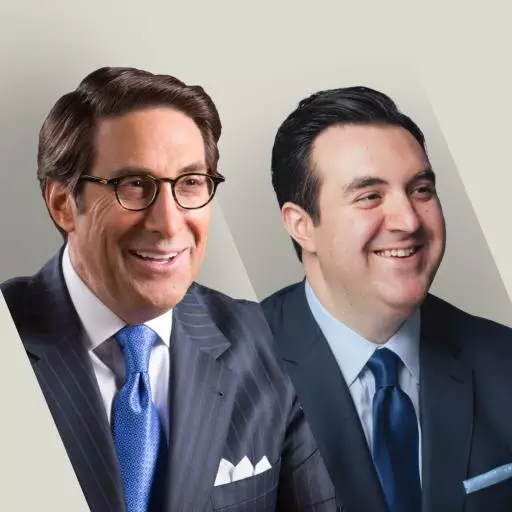
Logan Sekulow and Will Haynes break down an air strike taking out the Iranian council electing the next Supreme Leader.
Logan Sekulow: Welcome to Sekulow. President Trump right now is speaking, and we're going to be addressing that. We'll have some comments from President Trump that are happening right now specifically about, of course, the war in Iran, what that looks like, and what the next process is. Maybe we should kick off with President Trump here in just a minute, but the big breaking news out of it is that Israel, according to the reports, Israeli Air Force on Tuesday, obviously today, struck the building housing Iran's Council of Experts.
That was the group deciding who their next leader would be. Of course, we're talking about within the same regime. We are talking with the IRGC. This happened as they all got together to meet to make the decision, and Israel swooped in and apparently, what it looks to be, took out that council.
Will: That's right. So the Council of Experts is actually within the constitution of Iran. Their role is to select the next Ayatollah, should there be a death of an Ayatollah or should there be an incapacitation of the Ayatollah where they're unable to perform as the supreme leader. In this case, obviously, they come up with a shortlist. If the Ayatollah is still alive, they normally have a succession plan. That's what had been discussed, how the supreme leader had been talking about who could succeed him as the next supreme leader.
There are 88 members of this Council of Experts, and they met in a building of which they meet. It was hit and leveled by an Israeli air strike. So even as the regime tries to regroup and tries to put new leadership forward, we know there's an interim leadership right now that is two clerics and the current president of Iran that is trying to hold down the fort as this war wages. But what we're seeing now is that a leveled building with 88 members of this council that from their constitution says that's who picks the next leader, has been completely wiped out.
Logan Sekulow: The goal may not be stated that it's regime change, but it's very clear that that is what the goal is of the United States and Israel. Honestly, the entire Middle East and what appears to be now parts of Europe. Now, I did want to hear from President Trump. There has been a lot of questions about whether Israel's involvement pushed the hand of President Trump. Were they the ones who were actually doing this? That they control, they pull the strings, as you say. I want you to hear from President Trump himself when addressed with this question by a reporter.
Guest (Male): President, did Israel force your hand to launch these strikes against Iran and pull the United States into this war?
Donald Trump: No, I might have forced their hand. You see, we were having negotiations with these lunatics, and it was my opinion that they were going to attack first. They were going to attack if we didn't do it. They were going to attack first. I felt strongly about that. We have great negotiators, great people, people that do this very successfully and have done it all their lives very successfully. Based on the way the negotiation was going, I think they were going to attack first, and I didn't want that to happen. So if anything, I might have forced Israel's hand. But Israel was ready, and we were ready, and we've had a very, very powerful impact.
Logan Sekulow: Very powerful impact, to say the least. President Trump continues on. We'll have more with him right now as he is doing this live from the Oval Office. We'll discuss more when we get back. Also, when President Trump is addressing these questions, it's a really wild time. You've got to remember that we are involved in this and we've been involved in the work going on, whether it was in Iran, the Middle East, or Israel. These are all core ACLJ topics. These are things that we have been dealing with for decades now.
So when you're looking for who to support, a great place to do it is putting it behind our legal team and our media team here at the ACLJ. It is Double Your Impact Drive. We just launched it. All donations are matched right now. Help us fund these important fights. Of course, there is Iran and its terror proxies. They are firing missiles right now. We know Jerusalem and across Israel, the war is escalating. Americans are dying, Israelis are dying. But we have our office in Israel, we have our office in Europe, and we have our UN representation. We have ways to make a big impact, but none of it happens without you. So I'm going to ask you to double your impact today by giving during this drive. Right now, scan your QR code or go to ACLJ.org.
Phone lines are open for you at 1-800-684-3110. As we said, President Trump is speaking right now on the situation in Iran. As of this morning, we had a direct hit from Israel on the council vote that was deciding who is going to be the next supreme leader. Of course, this is amidst what is hoping to be a regime change fully, and it seems like Israel is not going to back down on that. You think they would not get together in a room and all these things would happen. It feels like it would be pretty simple to go, you know, I bet Israel knows where we are. I bet America knows where we are. Maybe we don't need to be all collectively joining together this group because it's a large group.
Will: It's 88 members of this council. I assume that there's probably staff and others that go along with this. It is a government function, and they met in the building of which they meet. They didn't decide, hey, let's also go outside the city, let's go somewhere else, let's find a nice ballroom that we can visit. No, they went to the meeting room and they gathered as they were to vote on the shortlist of candidates that had been drafted by a more secretive committee that they were going to choose who their next leader is.
As it happens, Israel struck and leveled the building of which they were in. There's some footage you're seeing if you're watching on YouTube or Salem News Channel right now of that building that has just been completely ripped through by this Israeli air strike. This comes also as the aggressiveness of Iran has ratcheted up. We have seen that they have hit with drone strikes. They hit the embassy in Saudi Arabia, the US embassy in Saudi Arabia. They hit the US embassy in Kuwait. There has now been a statement issued by the State Department for all of Americans in the Middle East to try to find a way to get out. Get out of the Middle East.
Travel advisories just in general across the board to Americans globally, even in the United States. Just be on your guard, be aware because you as an American are now a target by Iran and their terror proxies. This is ongoing. We are seeing more success. They are saying that the United States now has air superiority in Iran. They've taken out all of their detection radar and all of their missile defense systems. So the United States can freely move about the Iranian countryside and hit targets as needed, same with the Israelis.
We're also seeing what Iran did not necessarily want to have happen. Qatar launched air strikes on Iran. That is the first Gulf state to actually launch a retaliatory strike on Iran. That is because they were able to stop an attack by the Iranians on the Doha International Airport. The Iranians were trying to, once again, take out civilian infrastructure, take out a commercial airport. That was stopped, but Qatar is the first Gulf state, which traditionally is very friendly with, even helpful to, the Iranians, to see it unjustified what Iran was doing to them, and they have struck back. I think you will see more of that.
We were warned that any attack on the leadership of Iran in taking out the Ayatollah would lead to all sorts of warfare and even potentially pit the Gulf states against the US and Israel. We are seeing the opposite of that. Because of the reckless nature of Iran's response, we are now seeing Gulf states join the side of Israel in a historic time to strike Iran. You are seeing Saudi Arabia poised to potentially strike Iran. Now, the Saudis and the Iranians were not on good terms. However, they like to stay out of it. I think you could see them get into it very soon.
Logan Sekulow: I think that's a good point because as Americans, if we're not really attuned to what's going on, you kind of paint Israel versus everyone and not realizing that there's a lot of infighting as well within these nations. You have a not-good relationship between Saudi Arabia and Syria, and Saudi Arabia and a lot of the countries in the area. If you could have good relationships with them, it is why I said look at who is complaining about this. Very few nations. A lot of the nations who you probably just would have expected to be on Iran's side are not.
The ones that are, of course, are some big dogs. You have Russia. I'm sure you have some in China, though I don't think the statements have been made officially. Russia did come out pretty aggressively. So, of course, you do have those remnants, but a lot of the Middle East and a lot of Europe, once you can get out of your anti-Trump mindset, which so many people are stuck under that they can't see any good that can come out of anything that this administration does, if they could get out of the fog, they could see that, oh yeah, this could be good long term.
Will: Well, here's another thing I want to address as well because we're also starting to see people repeat a line that has been used by many people. Trump didn't start a new war; he is ending a 47-year war. There's been some criticism by some conservative influencers and media personalities that say that's just the talking point, you're taking what's coming down from the White House and repeating it. You've never thought that before in your life. There's one thing that the ACLJ has been consistent about, and it is this topic.
We made a movie, The Export, probably 15 years ago talking about what Iran's goal was, why they could not have a nuclear bomb. Obviously, the failed attempts at diplomacy over and over and over again left only one solution. Even in the meeting in Geneva with the Iranians and Steve Witkoff and Jared Kushner, they were admitting that they had enough material for multiple nuclear weapons. When all these individuals are out there saying there was no reason for this, there was a reason. There's been a reason for a long time, and this needed to happen.
Beyond that, the boldness of the Iranians to say these things with our negotiators proves they had no real motivation for civilian or for peaceful purposes of their nuclear enrichment program, and they were even willing to admit this at this point. They have gotten so bold beyond what the lies they would tell the IAEA. Here is what they told Steve Witkoff.
Steve Witkoff: And let me say this because I forgot this small little detail. In that first meeting, both the Iranian negotiators said to us directly, with no shame, that they controlled 460 kilograms of 60% and they're aware that that could make 11 nuclear bombs, and that was the beginning of their negotiating stance. So they were proud of it. They were proud that they had evaded all sorts of oversight protocols to get to a place where they could deliver 11 nuclear bombs.
Will: This is what everyone has been saying for a long time, but also I think it's important to remember the US doctrine of peace through strength all the way back through Ronald Reagan. The entire point of peace through strength is that we are so strong that if you do not come to a peaceful resolution to this, we will use our strength to attain those objectives. For the last decades, you have seen presidents that want to push peace through strength and say we are tough, but with no real consequences to it. That entire doctrine is meaningless if, when a rogue state is bragging about having enough material for 11 nuclear bombs, your strength doesn't mean anything to them.
Under Obama and Biden, it clearly showed the Iranians it meant nothing, so they're going to keep doing what they're doing. So this is necessary to also re-establish the United States' doctrine of peace through strength. President Donald Trump has put this off for a long time, not wanting to start another war, as they say. But at the end of the day, he also believes in the strength of the US military, and if he doesn't act, then it's completely meaningless and a waste of a line item of a trillion dollars in the US budget.
Logan Sekulow: He brought up that he was realizing in negotiations that likely this was not going to go well; they were going to strike first. I don't think that that is bravado. Look at the kind of statements the Ayatollah was making before his demise on social media, even publicly, saying we're going to smack you so hard you can't stand up. Those were the kind of things that they were saying, making those threats while also in the middle of negotiations. President Trump certainly had his threats in there as well.
But there is a point where you have crossed a line, and I think what he realized, and I think what a lot of, hopefully, the Western world realizes, is that when you have a different baseline for morality, you are going to not have the same kind of negotiation abilities. President Trump may be able to get in there and negotiate with the best of them, but the best of them in the Western world at least still value humanity, at least still value their own people. But that is not the truth in this area of the world, specifically in countries like Iran that have been under essentially dictatorships for five decades.
They don't want to give up power easily because these people have had no problem killing their own in the streets. You could say that about a lot of the countries, sadly, in this world. So remember, not everyone shares that same humanitarian Western Christian, Judeo-Christian worldview. With that, I want to hear from you at 1-800-684-3110. The ACLJ, as I said, there's not been something that we have been more really a part of than what's been going on in the Middle East in terms of our international work. We've had the ACLJ Jerusalem for many years, our European Center for Law and Justice, we're at the UN. We are constantly fighting for Christians and Jewish people and people of all faiths all over the world who are being persecuted. In moments like this, you need to stand up. If you're looking for a place to be a part of it, this is a great one. Go to ACLJ.org. Double your impact during Double Your Impact Drive right now.
Welcome back to Sekulow. I did want to hear from you at 1-800-684-3110. A lot of great comments are coming in. Obviously, we are following the news. President Trump is speaking right now. He is with, I believe, the German Chancellor at the White House in the Oval Office. They have been going back and forth discussing Iran. We will have some new sound that we will be playing here in any moment, so stay tuned for that. Also, we do have to address the big topic of the day, which is, of course, that direct hit that happened to Iran's council that was meeting to vote for their next leadership.
Who is going to be the supreme leader of Iran? They all got together, and what happened when they all got together? Israeli Air Force came in, knew where they were, leveled it. This is the kind of war we're dealing with right now. Is there hope for regime change? Absolutely. Do I think we're going to get there? I do think we're going to get there, but it may be a little bit longer, and you never know what a new regime could look like. What I do like with President Trump, what they've said, is it's going to be in the hands of the people. This isn't Iraq, and hopefully, that leads to a better place. Let's go ahead and take a call. Bill's calling in Wyoming. Bill, go ahead.
Bill: Hi, thanks for taking my call. I'm just thinking and wonder what you think that maybe since they didn't invite them, Israel decided to go ahead and put in their vote, maybe even give a proxy vote for the rest of the world. I'm just kind of wondering what the Congress is going to do because they might haul off and extend this war by trying to limit President Trump. What do you think?
Logan Sekulow: Well, Bill, I think Israel did vote in the council's meeting today by proxy, as you said. They sent bombs to the building and made it clear how they felt about the new potential Ayatollah supreme leader coming out of that council today. We're also hearing, yes, there are going to be some votes this week in Congress that are brought by the likes of Thomas Massie and Ro Khanna trying to basically end this conflict, which I feel like could be a dangerous precedent if you have started a mission and then say we need it to be called off.
Those are expected to fail. There are enough Democrats even that understand at this point now that we are engaged, they may be publicly saying, yeah, I'm glad the Ayatollah is dead, but however, the President shouldn't be doing this. I think the way the math will line up will be that those votes will fail, and it will not be brought out. But yes, there is a lot of talk about the War Powers Act, the War Powers Resolution of 1973. There's actually another caller about that, so I think we should go ahead and take that. Let's go to William calling in California. William, you're on Sekulow.
William: Thank you for taking my call. Yeah, could you please explain the War Powers Act of 1973? I remember I was in the military, and I remember about that, how President Trump did not have to go through Congress because of the War Powers Act, and it's not illegal. All the liberals here in Burbank are all upset and trying to claim it was wrong. So if you could clarify that, I'd appreciate it. I'll continue to support you, and thank you for everything you do.
Logan Sekulow: Hey William, thank you also for supporting the work. I feel like this is the statement that was passed around through liberal media and social media, which is he didn't have the right to do this, he didn't seek approval. Of course, they're not going to do their digging, they're not going to actually see what the law says, they're just going to copy and paste. But what is it, Will?
Will: That's right. So the War Powers Act of 1973 came about during President Nixon's time. He actually vetoed it, but it still passed with two-thirds majority overriding the veto in Congress. This had to do with the Vietnam War time, the bombings in Cambodia by the Nixon administration, and basically Congress wanting to lean more heavily on their power to declare war, which is in the Constitution and which is in direct conflict with the powers of the Commander in Chief. They're a check on each other, so to speak.
But what the War Powers Resolution of 1973, or the War Powers Act as it's also sometimes called, states in its attempt to put a check on the Commander in Chief's power is that it requires the President to notify Congress within 48 hours of committing armed forces to military action. A lot of that is kind of irrelevant at this point because of the internet and how quickly Congress is going to be notified when all the news agencies are reporting that it happens. But still, even here, they notified Congress that they were taking this action. A lot of times they do that through the Gang of Eight, which is kind of this bipartisan foreign policy sounding board that the administration will use.
But then on top of that, it forbids armed forces to be committed for more than 60 days plus a 30-day withdrawal period, so really up to 90 days, without an authorization of use of military force from Congress. A lot of scholars think that this law in and of itself is unconstitutional. I don't think there's ever been a direct challenge on it, but it still remains as the law of the land, and it does have this tension between Congress's authority to declare war, of which Congress doesn't really do much anymore, but the authorization of use of military force.
That is what guided the entire war on terror. There was never a declaration of war from Congress; it was an AUMF, which comes out of this War Powers Resolution. Even that authorization of use of military force was used for 20 years, and it was used as a basis for air strikes even on ISIS, even on Libya. So this is nothing new. But also, it says that the President can do it for no more than 60 days. So even there, the statutory language itself disproves the Thomas Massies, the Ro Khannas, even the Senator Rand Pauls that are trying to say this is a violation of it. No, even in the very text, you can do 60-day things, and then if Congress says, hey, we authorize use to continue, it can continue indefinitely. So really here, those that are trying to say this is a violation of that, it doesn't really hold water. It's also sometimes a bludgeon from the opposing party. That's what the Republicans said when Obama was bombing Libya.
Logan Sekulow: It's like he can't do this. It's like he can. He actually can. You may not like it; it may not be the right policy, but the Commander in Chief has a lot of leeway with how he commands the military. And we tell you that. We're always honest with you, even if you don't agree with it, even if you think now if one plays it that way, we can play it that way. You can. Politics will always be that way. It's always this until the shoe's on the other foot and then they switch the way they decide to yell and scream. That's just the nature of the beast.
Phone lines are open at 1-800-684-3110. I did want to take this minute though to really encourage you to take a look at our new drive right now. We are trying to make a big impact right now. ACLJ Champions, I need y'all to step up, but I also need new ACLJ Champions. I just saw, and I'll be honest, we dipped below 20,000 ACLJ Champions this morning. That's not good. It means some of you canceled, and we need some new ACLJ Champions, people that are willing to commit to being a part of the team each and every month.
If you can't do that, though, if you make a one-time donation, any donation that comes in this month is effectively doubled during the Double Your Impact drive. Your donations are matched. Double your impact. I want you to be a part of it right now. Help us defend freedom for this nation today and generations to come and around the world, by the way. The ACLJ has had our global initiatives for so long, and now you are seeing why. Sometimes they're not the easiest things to talk about, but we've been mobilizing our international office, including our Jerusalem office, always to make impact during critical times, and this is a critical time.
Make an impact with us. We have just launched the Double Your Impact Drive. I need you to do that. We've got a second half hour coming up. Easy way to help is just go to ACLJ.org. Second half hour is coming. If you're watching on social media, watching on YouTube or wherever it is, stay tuned. We're not going anywhere. If you're listening on terrestrial radio, flip on over to ACLJ.org, YouTube, Rumble. You'll find us there broadcasting. We'll be right back with more on Sekulow when we take in your calls.
Featured Offer


Featured Offer
About SEKULOW
The American Center for Law and Justice (ACLJ) focuses on constitutional law and is based in Washington, D.C. The ACLJ is specifically dedicated to the ideal that religious freedom and freedom of speech are inalienable, God-given rights. In addition to providing its legal services at no cost to our clients, the ACLJ focuses on the issues that matter most to you — national security, protecting America's families, and protecting human life.
About Jay Sekulow
An accomplished and respected judicial advocate, Sekulow has presented oral argument before the U.S. Supreme Court in twelve cases in defense of constitutional freedoms. Several landmark cases argued by Sekulow before the U.S. Supreme Court have become part of the legal landscape in the area of religious liberty litigation; these cases include Mergens, Lamb's Chapel, McConnell v. FEC, Operation Rescue v. National Organization for Women, and most recently Pleasant Grove City v. Summum.
In 2009, Townhall Magazine named Sekulow to its "Townhall of Fame" and recognized him as "one of the top lawyers for religious freedom in the United States." In 2007, the Chicago Tribune concluded that the ACLJ has "led the way" in Christian legal advocacy. In 2005, TIME Magazine named Sekulow as one of the "25 Most Influential Evangelicals" in America and called the ACLJ "a powerful counterweight" to the ACLU. Business Week said the ACLJ is "the leading advocacy group for religious freedom." Sekulow's work on the issue of judicial nominees, including possible vacancies at the Supreme Court, has received extensive news coverage, including a front-page story in The Wall Street Journal. In addition, The National Law Journal has twice named Sekulow one of the "100 Most Influential Lawyers" in the United States (1994, 1997). He is also among a distinguished group of attorneys known as "The Public Sector 45" named by The American Lawyer (January/February 1997). The magazine said the designation represents "45 young lawyers outside the private sector whose vision and commitment are changing lives."
Sekulow brings insight and education to listeners daily with his national call-in radio program, Jay Sekulow Live!, which is broadcast throughout the country on nearly 850 radio stations. Sekulow also hosts a weekly television program, ACLJ This Week, which tackles the tough issues of the day. He is also a popular guest on nationally televised news programs on ABC, CBS, NBC, CNN, FOX News, MSNBC, CNBC, and PBS.
Contact SEKULOW with Jay Sekulow
jsekulow@aclj.org
http://aclj.org/
American Center for Law and Justice
PO Box 90555
Phone: 757-226-2489
1-800-684-3110
1-877-989-2255