
Sekulow


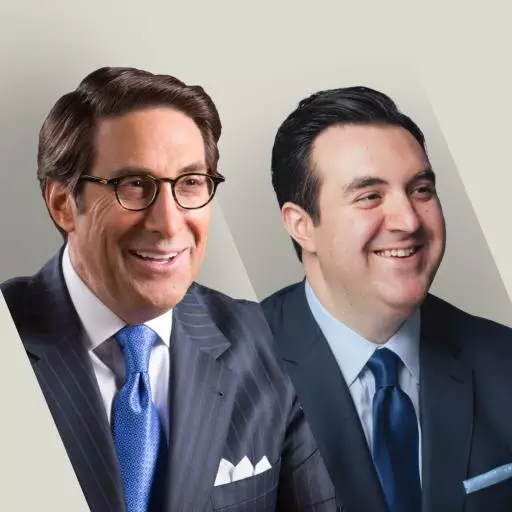
Logan and Jordan Sekulow are joined by Will Haynes to discuss Operation Epic Fury in Iran.
Logan Sekulow: Welcome to Sekulow. I think it is probably no surprise what topic we are going to be hitting today. Obviously, pretty quickly after we went off the air, within a few hours, there was the beginning of what is a pretty much full-scale war that feels like has broken out now in the Middle East with Iran.
President Trump is speaking right now. We are monitoring that if you are watching it live. If there is anything worth covering, we will get to it. Mike Pompeo is going to be joining us, as well as Jeff Ballabon from ACLJ Jerusalem. Jordan is in studio, Will is in studio. It is going to be a packed show.
Of course, we want to hear from you as well. I want to know—let’s open up the phone lines at 1-800-684-3110. 1-800-684-3110 to be on the air today. Again, give us a call, I would love to hear from you. Like I said, President Trump is speaking as we speak. Do we want to go ahead and play something from President Trump?
Let’s go ahead and roll this. This just happened moments ago. It is a White House event where a Medal of Honor is being given out. It is a Medal of Honor ceremony, but of course, he updated quickly the American people on Operation Epic Fury. Let’s go ahead and play this bite.
Donald Trump: Let me provide a brief update on Operation Epic Fury. Today, the United States military continues to carry out large-scale combat operations in Iran to eliminate the grave threats posed to America by this terrible terrorist regime.
Following our obliteration of Iran’s nuclear program in Operation Midnight Hammer a short while ago, we warned Iran not to make any attempt to rebuild at a different location because they were unable to use the ones that we so powerfully blew up. But they ignored those warnings and refused to cease their pursuit of nuclear weapons.
In addition, the regime’s conventional ballistic missile program was growing rapidly and dramatically, and this posed a very clear, colossal threat to America and our forces stationed overseas. The regime already had missiles capable of hitting Europe and our bases both local and overseas and would soon have had missiles capable of reaching our beautiful America.
The purpose of this fast-growing missile program was to shield their nuclear weapon development and make it extraordinarily difficult for anyone to stop them from making these highly forbidden by us nuclear.
Logan Sekulow: And that was President Trump just moments ago. He is still speaking right now. Again, this was at a Medal of Honor ceremony. He has actually moved on from the Iran topic at this point. But he spoke at this ceremony as well as Secretary of War Pete Hegseth spoke this morning.
We will get into that as well. He laid out a three-part objective that the United States military is carrying out, as well as a loose timeline. Obviously, you have to let them fight and achieve the objectives. However, what we are seeing here now also, and we will discuss, is the pushback you are seeing from the left and some within the MAGA base.
We will talk about the successes that we have seen already, as well as a lot of the other analysis that we uniquely are able to provide for you here at the ACLJ. If you have ever been supportive of any war—I am not talking about if you are a Quaker and you are opposed to war—but if you have ever supported a war and you find yourself on the other side of this one, I think you have got to look at yourself in the mirror and realize that you just have a problem with anything President Trump could possibly do.
Look at the people in the streets. Look at the Persian people. Look at the screaming in celebration everywhere but Iran. All over the world, praising Netanyahu even, praising President Trump, and praising America. That is what we love to see around the world.
So if you have a problem with that, I think you need to check yourself and look yourself in the mirror because that is not what is happening worldwide. This is a big moment. Of course, there could be issues, but we will cover those as well. 1-800-684-3110 if you want to be on the air. We have three lines still open for you.
The ACLJ, we were built for moments like this. We are working across the globe to make an impact. You know that. Our work internationally has been a huge part of the ACLJ. We always try to focus on it when we can. You need to get engaged. That is why we will have Jeff Ballabon on from ACLJ Jerusalem and Mike Pompeo a little bit later on in the show. So stay tuned, do not go anywhere, and give us a call.
Logan Sekulow: Welcome back to Sekulow. We are going to take your calls and comments at 1-800-684-3110. I am going to slow it down a little bit in this segment to really give you an update of where things stand right now with this war in Iran. Who is with us? Who is against us?
How much news were you looking at through what, 4:00 AM our time? Yeah, and there were even attacks that happened in our own country that I think a lot of people missed completely. They were not large scale, but you had multiple people die in Texas that looked to be a direct correlation to an act of terror.
All signs point to this was a retaliation. That was in Austin at a bar. The guy had a shirt on that said Allah underneath that shirt, supposedly an Iranian flag, and he also screamed Allahu Akbar when he opened fire, injuring over a dozen people and killing two. Killing two, and he was also killed as well. Remember, that is happening now on your own soil. So be vigilant and be careful. We are under high alert.
Jordan Sekulow: Well, as well as they are telling people in NORCOM, which is America Northern Command, that you are not allowed to wear your uniform off-base right now because you could be potentially a target. That is talking about people in the United States going to work on the base, say in any of the bases in the United States, that you do not wear it from your house to the base. You put your uniform on when you get to work and you take it off before you go home.
This is when our ACLJ work, where we exposed that there were terrorists crossing the border and under the Biden administration, they quickly took those photos down of those guys that they apprehended. We said that the porous border was being utilized by countries like Iran and their terror proxies to get terror cells into the United States because they could blend into a Central American crowd with their beards and the kind of skin tone and they can walk right through.
We know they have arrested two even under Biden and they took those pictures right down. We did that work at the ACLJ so that it was exposed that they knew too that terrorists were pouring in. So they do believe that there are—and we can talk to Mike Pompeo about that—these cells in the United States. Can they be activated?
The question is, is there anyone left to activate them right now and are they willing to do it knowing that right now there is currently not much leadership in Iran? Iran is still sending up fighter jets and missiles.
Logan Sekulow: Sure, and it could be lone people who are just infuriated by the news. We have always got that issue. Because that is what this could have been in Texas. It is inspired by, it does not necessarily always have to be a direct order. I think he had been a naturalized citizen of America for the last 15, 20 years, from Senegal, I believe.
There are some phone lines open and a lot of you calling in. I want to take a call real quick. Let’s go to John in Florida on line two. John, go ahead.
John: Hey, thanks for my call. I tell you what, I am more glad than ever I voted for President Trump. Iran was like a big festering boil that had to be lanced and I am glad he did it because I tell you what, we have more people in the Middle East backing us up on this—UAE, Egypt, and Saudi Arabia—than we do in the Western European allies in Europe. And I tell you what, the last two Democratic presidents we had were like President Numnuts.
Logan Sekulow: John, I want to cut you off there. But Jordan, we look at this and exactly what John said. I think there are two really important things to put out here. He is talking about the previous presidents. One, those that say that President Trump started a war—no, he is ending a war that has been going on since the Iranian Revolution in 1979.
Remember, they have been killing Americans wherever they can since 1979. Now that is one point, that this is hopefully an end to that war, not a beginning of a new war. Two, he is talking about the Gulf states. Iran’s miscalculation here—and maybe it is because of the loss of leadership initially, like the very first strike took out their supreme leader—but the recklessness that you have seen of attacking the UAE, Qatar, Kuwait, the international airport, the main terminal in Kuwait.
You are talking about Bahrain, all these countries that are actually friendly with Iran. Many of them are not just neutral but friendly with Iran and they are not attacking military installations, they were attacking with ballistic missiles civilian sites, hotels in Dubai, the commercial airport terminal at the international airport in Kuwait.
Jordan Sekulow: That is such a big miscalculation because now you are seeing Saudi Arabia leading with these other Gulf nations saying, "Hey wait a second, we’re going to strike back too. What are you doing here, Iran?" Yes, I think listen, Iran’s entire miscalculation was they lost Hamas after October 7th. They lost—50% of Gaza is now not even under control of any Hamas element.
Hezbollah was decimated and Nasrallah taken out and you’ve had I think two more successors to him taken out, Hezbollah, the pagers, all of that. So they no longer had—and in Syria because of the overthrow of the Assad government and really their own civil war that’s been ongoing since the end of ISIS—they’re not effective anymore for Iran.
So Iran no longer had the surrounding terror groups ready to go whenever Israel would strike. We knew that when Israel took action after October 7th and there was minimal action by those groups. Hamas did what they could with their small rockets but they didn’t do much. Iran fired what they could and we’re seeing that firing into Israel seems like it’s gotten less and less by the day.
The decision though to try and hit the UAE, Saudi Arabia, Qatar—yes, we have bases in those places and but they weren’t just hitting those American bases. That is how, again, the Middle East unites around the Abraham Accords and we can, without necessarily putting hundreds of thousands of boots on the ground, President Trump could be known as the president that did bring peace to the Middle East.
It doesn't mean that everywhere is going to be perfect all the time and that it is all going to be a Democratic republic because that does not necessarily work in this part of the world. But what it does mean is that there are new allies. And when Israel is being fired on by the same enemy as the UAE is being fired on and Qatar and Bahrain and Yemen is firing—the Houthi rebels are firing at our allies as well—this is a new alliance.
It shows, by the way, we can be allies with Israel and those other countries at the same time to take out a country and leadership which is the terror leader of the world, Iran, and do it together without Europe. Europe looks like a joke right now. They were condemning this and saying these actions should not be taken. I know the Saudis have to say one thing on TV and another thing in person. They do not want a nuclear Iran and this is probably the end of that.
Logan Sekulow: Yeah, I think that there is also, like you said, a rallying around Israel that could very well happen from these other, like you said, Western-leaning—certainly Saudi Arabia is, they want you to come. And yes, same with Abu Dhabi and Dubai, those are areas when you see them that they are getting hit with rockets, that is horrible for their business.
But they kind of had to happen once, that is what I mean, so in the future you know that Iran is not there in that capacity anymore. They likely, if things went as well as we prayed for, Iran would be a partner with those countries and Israel again. Right, and I think that trajectory looks like it could get there.
Jordan Sekulow: Well, and I think one thing that we do need to be clear on too is that this is early stages. This is just the third day of this war and US troops have been killed. It is easy to be triumphant when you have taken out one of the most manifest evils on the planet, the Ayatollah, which should be celebrated even without the conflict being done yet.
But it means that we still are not done and the Secretary of War laid out the three objectives of this as operations are ongoing: destroy Iran’s offensive missile capabilities, cripple its navy, and prevent Tehran from obtaining a nuclear weapon. There are reports right now that Isfahan is being bombarded. That is one of the key nuclear sites so a new wave of attacks is targeting that. That are the reports.
There is a lot of other things to get into as well as the press got an opportunity yesterday with a three-hour phone call with the administration on background from administration officials giving some of the details of what led to this, the reasons they believed that they were at a dead end with Iran.
Things like the United States offered to provide Iran with nuclear material for their civilian purposes, for what they claim they need, to do medical research, for domestic energy production—things that they have never actually used their enriched uranium before for their own purposes, they normally just buy it from Russia.
The United States offered to give them that nuclear fuel in perpetuity if they would give up their own centrifuges and enrichment. That was not enough for Iran. Iran was just trying to kick the can down the road and deny that they were building a nuclear weapon when all the signs are that that’s why they have the 60% uranium, they have their own centrifuges that could get it from 60 to 90 in just a matter of a week.
Their entire goal was a nuclear weapon and we now see that when you did not put checks on their ballistic missile program like President Obama refused to do during the JCPOA, how much that technology has advanced in Iran as we see the missiles that they are using to strike even their friends.
Logan Sekulow: Yeah, and I do want to bring that up. There has been a lot of conversations around, "Well, President Trump said he would always be at the negotiation table, that this would be conversations that would happen." I do think there is such a fundamental—it is hard for us to wrap our heads around it, but we have worked in this for so long, it is a little easier for us.
But there is a fundamental disconnect between your values and the values that someone like the Iranian government, the Ayatollah, has. For human life, for humanity, for people in general. Those are Western values. Those are Christian values. Those are not values that find themselves native.
They are not just born into us. It feels like they are sometimes, but they are not. So when you try to get to the negotiation table with people that do not value their own people or do not value their own lives or do not value any kind of peace, you end up with these kind of situations. We are going to take your calls coming up, 1-800-684-3110. I believe we have Secretary Pompeo up next in the next segment. All right, stay tuned. You are not going to want to miss that.
Logan Sekulow: Welcome back to Sekulow. We do have Secretary Mike Pompeo joining us, obviously been a member of the ACLJ team for a number of years. He is joining us by phone. Obviously, a very busy time for you, Secretary Pompeo. Last week we had you on talking about what the next move would be, and now we saw what happened over the weekend. I just want to get your general assessment of Operation Epic Fury right now as we state this morning after so much has played out over the last few days.
Mike Pompeo: Goodness, it’s hard to know where to begin. It is truly epic. Make no mistake about it, indeed it is a historical game changer. What’s already happened is historic, and I suspect what happens over the coming weeks will prove even more so.
This is a president who made the proper determination that the risk to the United States—for America, the security risk was just too great to sit by while they continued to try to rebuild the nuclear program, to continue to put missiles in place. They’d cut a deal with the Chinese to take antiship missiles, some thousand of them over the course of the next several months, putting our fleet at real risk.
This was necessary. The timing was necessary. And what our military has accomplished is truly remarkable. A couple thousand strikes against military targets taking down dozens of senior Iranian officials. Many said this could not be pulled off. President Trump I think was convinced that it could be, and in spite of the fact that we all mourn the loss of the four soldiers who have perished to date, this was a noble and remains a noble and righteous effort.
I hope that President Trump will continue to work at this problem set until the Iranian regime has been fully defanged and the Iranian people get a fair shot at moving this country in a fundamentally different direction.
Jordan Sekulow: Mr. Secretary, one of the curious tactics from the Iranians that we’ve seen is the way in retaliation their first strikes weren’t against US military bases and US military ships or even the Israeli homeland, but were against nations that are traditionally either neutral or friendly to the regime.
Striking civilian targets in Qatar, in the UAE, in hitting the airport in Kuwait. These are not who you would think a retaliation from Iran would be. Do you think this is desperation due to the fact that their leadership was just wiped out? Miscalculation by individuals not used to making these calls? Or do they have some other bizarre strategy trying to pull in their neighbors into the war against them? I just kind of want to get your take on that.
Mike Pompeo: My sense is this was a massive strategic miscalculation on the part of the Iranian leadership, however one defines that today. I think their theory of the case had to have been if they go after civilian targets—think about this, they’ve killed 30,000 of their own, so for them this is not a humanitarian problem, they’ll kill anyone.
But I think they thought if they went after civilian targets, those Gulf Arab states would cry uncle, would demand that the United States back off and stop the campaign. I think that was their thought process.
It turns out that the Gulf states weren’t about to demand the United States back off but instead are now working to make sure that we continue to press on. I think that was their miscalculation. It was a massive error. It made clear to the people, not just the leadership but the people living in Saudi Arabia, Kuwait, the United Arab Emirates, Jordan—all the places that they’ve struck—it made clear to the people there, the ordinary Muslims living in those countries, that Iran is their enemy, not—that the problem is Tehran, not Jerusalem.
And this will come back to haunt those Iranian leaders for as long as we allow them to live. And I hope that’s a short period of time.
Jordan Sekulow: Secretary Pompeo, this is Jordan. I wanted to ask you this. As this campaign continues—and it’s tough to predict—but what you think would be best for the Iranian people? President Trump has said right now, "Stay at your home, stay safe," that bombs are going to be dropped, missiles are going in, there’s war.
But ultimately you will have an opportunity to take back your government. How do you see that working once the military operation has completed a task where civilians in Iran and those political prisoners in Iran who may ultimately be released can go back and hit the streets and attempt to take back their government?
Mike Pompeo: Jordan, I think President Trump’s made clear that that’s his objective, right? It’s to accomplish a couple things. One, take out the senior leadership—a lot of progress made, but not mission accomplished. Second, to take down their capacity to inflict harm in the region.
So not just long-range missiles, but mid-range missiles, launchers, everything associated with the Shahed infrastructure, their drone infrastructure, to just take it all down to the ground. And then to create the space for the people of Iran—whether those are civilians, those are bureaucrats, people who were part of the infrastructure of Iran long before the regime took office.
If he can create the space for them, then they’ll get a chance to build a nation that is fundamentally more different. Just Jordan, you and I have talked about this for years. A normal country. That’s all we’re asking for. And if they can build out just a normal nation, which I think they’re going to have a chance to do, the people of Iran will be better off, the region will be safer, and it is a really good thing for the United States of America because we will no longer have to focus in this place.
We can turn our attention to the risk from China that we both know is the one that’s going to be with us for an awfully long time.
Logan Sekulow: It definitely gives them an opportunity here to finally do something. Secretary Pompeo, I did want to quickly ask. You obviously had some relationship with the Iranians. You have had some issues, maybe personally, that they have not been too thrilled with you over the years.
How does it feel in that situation, even just coming across of knowing what it has been like for years of you personally having to deal with some of the ramifications and the fallout of what happened with some of the amazing work that you were able to do?
Mike Pompeo: You know, it is remarkable to watch the consistency of President Trump, right? We took out Soleimani in the first administration. The maximum pressure campaign worked. As a result of that, you’re right, they have been trying to kill me.
No, no, they’ve been trying to kill me. And I suspect there are some in Iran, Iranian leaders that are still alive that are staying on that mission. We all around the world need to watch what they might try to activate across the world over the coming weeks while they still have some capacity to exert some influence.
But this isn’t about me personally. This is about the security of the American people. And we are far safer today, no matter what any Democrat senator might try to tell you. We are far safer today than we were just 72 hours ago.
The risk to people traveling in the region and risk to us even here living in the United States is much lower as a result of the bold and brave decision President Trump made and the amazing work of the United States military alongside our Israeli partners.
Logan Sekulow: Just quickly, Secretary Pompeo, you mentioned China as a threat that we really need to be able to focus our attention on post-Iran and this region of the world. And there were reports that China is trying to resupply this regime as we speak.
That they have tried to get military cargo planes in with weaponry to kind of rearm the Iranian military, the IRGC. How far do you think China will go in trying to preserve an Iranian leadership that looks their direction instead of to the US and the West?
Mike Pompeo: Well, I think they’ve demonstrably failed to help Iran in the moment that mattered most. So anybody who’s thinking about China as a military partner’s probably looking for a different solution today.
But your point’s a good one. The Chinese aren’t going to walk away from what is a central pillar of their security apparatus in the Middle East, right? They have counted on the Iranians to provide them cheap crude oil.
They’ll stay at this. They will try to win the postwar political fight. And we need to make sure that the leadership in Iran, as it rises up and reforms after this effort, is with the West, is firmly ensconced with the United States and the Gulf Arab states and not the Chinese Communist Party.
Logan Sekulow: That’s exactly right. We want to get that in. Absolutely. Secretary Pompeo, on days like today, there’s really no better voices we could hear from, people that have been directly involved in this, and I think that’s always important to hear from you. So thank you so much.
Look, we got a second half-hour. The first half-hour flew by. Second half-hour coming up and we’re going to be joined by Jeff Ballabon, head of ACLJ Jerusalem. It’s going to be a packed show. Some more, you want to be a part of it. I’d love to hear from you.
Look, how do you feel? Will and I have been texting late at night with mixed emotions about how we feel about everything. It is such a wild time. Obviously, a moment that should be celebrated, definitely will be talked about in history if things pan out the way we hope they do. 1-800-684-3110 or join us however you get your podcast, right now live for second half-hour coming up.
Featured Offer


Featured Offer
About SEKULOW
The American Center for Law and Justice (ACLJ) focuses on constitutional law and is based in Washington, D.C. The ACLJ is specifically dedicated to the ideal that religious freedom and freedom of speech are inalienable, God-given rights. In addition to providing its legal services at no cost to our clients, the ACLJ focuses on the issues that matter most to you — national security, protecting America's families, and protecting human life.
About Jay Sekulow
An accomplished and respected judicial advocate, Sekulow has presented oral argument before the U.S. Supreme Court in twelve cases in defense of constitutional freedoms. Several landmark cases argued by Sekulow before the U.S. Supreme Court have become part of the legal landscape in the area of religious liberty litigation; these cases include Mergens, Lamb's Chapel, McConnell v. FEC, Operation Rescue v. National Organization for Women, and most recently Pleasant Grove City v. Summum.
In 2009, Townhall Magazine named Sekulow to its "Townhall of Fame" and recognized him as "one of the top lawyers for religious freedom in the United States." In 2007, the Chicago Tribune concluded that the ACLJ has "led the way" in Christian legal advocacy. In 2005, TIME Magazine named Sekulow as one of the "25 Most Influential Evangelicals" in America and called the ACLJ "a powerful counterweight" to the ACLU. Business Week said the ACLJ is "the leading advocacy group for religious freedom." Sekulow's work on the issue of judicial nominees, including possible vacancies at the Supreme Court, has received extensive news coverage, including a front-page story in The Wall Street Journal. In addition, The National Law Journal has twice named Sekulow one of the "100 Most Influential Lawyers" in the United States (1994, 1997). He is also among a distinguished group of attorneys known as "The Public Sector 45" named by The American Lawyer (January/February 1997). The magazine said the designation represents "45 young lawyers outside the private sector whose vision and commitment are changing lives."
Sekulow brings insight and education to listeners daily with his national call-in radio program, Jay Sekulow Live!, which is broadcast throughout the country on nearly 850 radio stations. Sekulow also hosts a weekly television program, ACLJ This Week, which tackles the tough issues of the day. He is also a popular guest on nationally televised news programs on ABC, CBS, NBC, CNN, FOX News, MSNBC, CNBC, and PBS.
Contact SEKULOW with Jay Sekulow
jsekulow@aclj.org
http://aclj.org/
American Center for Law and Justice
PO Box 90555
Phone: 757-226-2489
1-800-684-3110
1-877-989-2255